February 8th, 2012 | No Comments »
Distilling the art of film making to its purest form of visual storytelling, “The Artist” is a breathtaking masterpiece of cinematography. A story set in the glamorous days of early Hollywood, it effortlessly transports the viewer into the meticulously recreated world of silent black-and-white film. An authentic, warm and enchanting journey combined with a universal story of fame, pride, fortune and affection brings one of the most remarkable films in the recent history. The weeks leading to the Oscars awards ceremony are a very hectic time for Laurence Bennett, the production designer of the film, and it is a great honor to interview him about his work on “The Artist”.

Laurence Bennett.
Photography by Jamie Trueblood.
Kirill: Let’s start with your background. You worked outside the movie industry for about ten years, and then moved to work on TV and movie productions.
Laurence: I started working in design when I was quite young. Between the school and college I worked in a small design firm. I studied in Los Angeles and in Japan, and after finishing college I moved to Ireland for ten years. I worked in theater and taught in the National College of Art. I was a painter and working in theater was really my introduction to show business. In the mid-seventies I had friends from Los Angeles who were getting into film business, and one summer I came back and worked with them doing miniature models for a big television special. That was my introduction to Hollywood, and interestingly, the production office we had on a small side street for “The Artist” was right across the street from the place where I worked 35 years earlier.
Kirill: In the last few years you worked on action thrillers such as “In the Valley of Elah”, “One Missed Call”, “Traitor” and “The Next Three Days”. How did you get to work on “The Artist”?
Laurence: It was sheer luck. One of my agents called me and connected me with the line producer who was assembling crew for Michel Hazanavicius [director]. We met, talked and hit it off, and I went to Los Angeles to meet Michel. The next morning we were out scouting together working on the picture.
Kirill: Did you have any hesitations joining such an unusual production?
Laurence: I embraced it whole-heartedly. I was very excited.
Kirill: Were you particularly connected to the 1920-30s era before you’ve started working on this film?
Laurence: I’d always been a fan of the movies of the era. My knowledge wasn’t as deep or as broad as it is now, because of all those months I’ve spent living and working in the period with Michel, Guillaume [Schiffman, cinematographer] and all my friends. There’s real magic in the pictures that came out of Hollywood in those early days. They were inventing the language of the cinema, and at the same time inventing the business of Hollywood. They seemed to have had a great time doing it, so I encouraged my crew to take on the same spirit of fun in approaching this project.
Kirill: Can you describe what happened during the pre-production stage, as you were working with Michel and Guillaume on the overall story and look, and the particular scenes?
Laurence: Michel arrived with the entire story boarded. His vision for the project was so complete and so whole. He had very specific ideas for most of the shots. The trick for me was trying to build the world around these shots that the characters would live in. We spent a good two and a half months in pre-production. We watched dozens and dozens and dozens of movies together. Michel introduced me to the works of F.W. Murnau, King Vidor, Fritz Lang and Josef von Sternberg. Also in Los Angeles there’s always an opportunity to see restorations of older works. Mark Bridges the costumer and I went to see the new restoration of “The Four Horsemen of the Apocalypse” [1921] which was Rudolph Valentino‘s big breakthrough film. And when you see good cinematography and design from the period that’s well restored and printed, the photography is so remarkably beautiful. Really exceptional stuff.

“Ritz” theatre marquee. Sketch by Laurence Bennett.
Kirill: Michel and Guillaume worked together before. How did you get into the rhythm of working with them?
Laurence: They are also very close friends. They were very welcoming to me into the process. It was great, the pre-production was absolutely delightful. It was time of shared exploration, kicking ideas around and finding things, seeing what would work.
Kirill: Were you aiming to limit your setups and techniques to what would be available to production designers and art directors of that time?
Laurence: Very much. There’s a directness and simplicity and real grace around the art direction of the time. I tried to mimic that. One thing was very important to us – the supremacy of the story. We were telling the story of George and Peppy and Jack the dog. Nothing was ever to upstage them, nothing was ever to get in the way, they were always center and clear in the story telling. I felt a real responsibility to make these living breathing environments that they operated in to never be a distraction, and to always support the believability of their situations.

Artwork: Beauty Spot Poster.
Graphic designer – Martin Charles.
Kirill: Did you research the specific setup techniques of the era, along with the additional materials like fabrics?
Laurence: It’s all terribly important. Fortunately I had a team of very talented people, between my set decorator Bob Gould and the prop master Michelle Spears. They researched and put together many of these things to look at. Guillaume, Michel and I did extensive camera tests for materials, paint, pattern, make-up and costume. Testing in the various art departments went on right through the photography. Whenever we were putting together a palette of materials and textures and finishes for a particular set, we would test them in black-and-white.
Kirill: “The Artist” is your first production without color. Having such an important tool removed from your fingers, did you spend more time on contrast, textures and light to compensate for the lack of color?
Laurence: Certainly I focused a lot more on texture and pattern that I ever have before. Even the luster of finishes, the shine or the lack of shine. Without chroma cue for separating things within the frame you have to rely a lot more on rim light and contrast of light and shadow. I really found pattern and solids and different textures to be a great way to differentiate planes within a frame.
Kirill: Did you remove the color from the actual sets?
Laurence: I decided on an approach that was rather split. Because there’s so much film work within the film, with all the studio sets and the movies that we see in the movie, I decided to do all of those in black-and-white. The naturalistic sets within the story were rendered in naturalistic tones.

Restaurant set. Sketch by Laurence Bennett.
Kirill: And then you have another aspect of the era, shooting in the Academy ratio of 1.33:1, with much less horizontal space. How did that affect the preparation and setups when the audience sees less?
Laurence: You see different things. I’ve done 1.85:1, and most of my recent work has been 2.35:1. In 1.33:1 you see a lot of ceilings and floors, whereas you don’t in 2.35:1. So the composition would have a lot more above and below. It’s a different way of looking, a rather more awkward framing, and it’s difficult to adjust to. All of the location photographs, all of the sketches that I’ve prepared for Michel – everything was presented in 1.33:1 so that we would get used to that format.
I spent a lot more attention to the floors particularly. One of the things that was typical of the film sets of the time was that they seldom had ceilings. We had some ceiling pieces, elements and headers, but floors were a larger concern.
Kirill: Did you build your sets in the studio stages?
Laurence: It’s a big mixture. We had many many locations, all of the historic locations of the period – Peppy’s house, George’s mansion, the theaters. We did a lot of work on the back lots at Paramount – Los Angeles streets, the pawn shop, the tuxedo shop, George walking around, a little bit of the driving stuff, Peppy on the bus. Other driving stuff was done in an old Los Angeles neighborhood. The exteriors of the theaters were done at the Warner Bros back lot. And everything else was done on stage – George’s apartment after his fall, the screening room, the jungle, all of the little sets you see within the movies. We had a tremendous number of stage sets.

Magazine cover of “Screenland”. Graphic designer – Martin Charles.
Kirill: What happened to those sets? Are they gone, and was it hard to see them demolished?
Laurence: That’s what always happens. You hope that pieces would be recycled in other things. We used only painted backdrops outside the sets, and I tried whenever possible to use the oldest black-and-white ones. There are only very few still available, but there was one in particular that spoke to me. There’s a movie that Peppy does within the movie, “Guardian Angel”, and it has a North African, Moroccan feeling. The backing outside that set was from “Casablanca” [Humphrey Bogart, Ingrid Bergman, 1942]. And when I found that, it was a very rare and wonderful thing, like unrolling a holy relic. It was painted in black-and-white in the early 1940s. It was a real honor and thrill to be able to use it.
Kirill: You mentioned one of the historic location used for Peppy’s house. This is the old Mary Pickford residence. What is it used for these days?
Laurence: It’s a residence. A family owns it, and they recently did a major restoration. It’s in a beautiful shape. We looked at it and fell in love with it, and only then realized its provenance. When George wakes up from his convalescence in Peppy’s guest bedroom – that was Mary Pickford’s bedroom in the few years when she was seeing Douglas Fairbanks before they got married. It’s pretty remarkable.
Kirill: Was access to all the historic locations one of the main reasons to shoot in Los Angeles and not Europe?
Laurence: There was another reason. Michel and Thomas Langmann the producer had a very strong feeling about making the story in Hollywood because the story itself is about Hollywood – and I loved them for that.
Kirill: There was this odd piece floating around about a UK theater issuing refunds to people who didn’t know that it was supposed to be a silent film. On one hand, the story becomes more accessible when you remove the sound, but on the other hand, do you feel that the modern audience is ready to see such a movie?
Laurence: I think those stories are very exaggerated. It seems to have been one cinema in some place in the UK. I would hope that the picture opened up to a much broader audience the incredible strengths of a pure version of visual storytelling. Cinema is first and foremost a visual medium. I would hope that it’s exposed people to broaden their horizons a bit. The universality of the story by lack of dialog is quite incredible. I only realized it the other morning as I was doing a radio interview with a journalist in Bogota, Colombia, and there were journalists from Spanish-speaking world in four different countries asking questions. It was an incredibly emotional experience seeing people moved by the picture, hearing people’s questions and reactions from around the world.
Kirill: Even as the sets are in the background and the main focus is on the characters does not mean that you have less work to do.
Laurence: It’s a collaborative art form and I never worked on a production where both the cooperation and collaboration between various art departments was as strong and joyous as it was on this picture. Also, because of the uniqueness of the approach to storytelling I think it was much more essential that we worked in sync. This picture is nothing without what I think to be a good solid cinematography, design, costumes, make-up and hair. The casting is phenomenal, the extras casting – everything that was done by all the departments was so strong that it supported a very strong picture.
Kirill: The movie itself covers a roughly five year period, from 1927 to 1932, with the Great Depression striking right at the middle point. If you just watch the movies from the era, the glamour did not go away; in “The Artist” there’s a certain transition as George goes broke, with much less glamour surrounding him. How did you alter the visual language throughout the story?
Laurence: And then you notice as he’s pulled back to life by Peppy’s faith in him, the movie ends with a glorious, very high style finale, as he returns to a very glossy career. It was obviously by intent that the picture is taking a dark, slightly expressionist turn. His crisis was an opportunity to really darken the story and let the threat and his conflict be demonstrated visually in a different way.

Still picture of one of Peppy’s 1931 movies. Photography by Peter Iovino.
Kirill: Do you notice any significant difference in the visual look of the movies from 1930s as they switched to sound?
Laurence: Last week I was actually watching a few pictures from the very early 1930s. Cedric Gibbons, the production designer who is best known from that period, was responsible for not only changing the look of the Hollywood product, but also influenced interior design and product design around the world. He was responsible, more than anyone I can think of, for popularizing deco. He had been to the exposition in Paris in 1925, and he returned to Hollywood with this incredible enthusiasm for the modernism, the modern hope that its flair personified to him, and he began putting that into the scenery.
There’s one set that’s very influenced by Gibbons in “The Artist”. The set where Peppy is filming when she receives news of George’s accident when she reads the newspaper – it’s derived very directly from a set that Gibbons used both in “Our Dancing Daughters” and “Our Modern Maidens”.
Kirill: You mentioned the scene where Peppy is riding on the bus. There’s a few dozen other cars in the movie. Can you talk about the logistics of getting access to all these vehicles?
Laurence: They are real vehicles, and it’s tremendously difficult. The picture vehicle people worked long and hard to secure those cars and trucks and buses. There’s an amount of very common ones available in Hollywood, but for very special ones you need to go to the collectors. The bus was particularly hard to come by. We used the vehicles as is with no modifications, but the search for a couple of them was particularly prolonged and difficult.

Kirill: Does that authenticity extend to the lower level of details of accessories such as microphones, hair brushes or light bulbs?
Laurence: We decided early on that we wanted to be true to the spirit of the period, rather than being slavish to detail. But certainly everything is quite authentic, requiring a little bit of looking and thinking. It also depends. The light bulbs, for example, are reproduction bulbs. But the sockets are from the period. We custom-made George’s table, but other items such as dressers and make-up tables were readily available.
Kirill: How much time and attention did you spend on the costume design? Was it a separate mini-production of its own?
Laurence: That was all Mark Bridges the costume designer who is a genius, and I think he has a lot of very deserved attention to this picture. There is a good bit of period wardrobes still available, but the problem is that it’s not in a very good condition. It falls apart as fabric deteriorates over time, so he built a lot of things. A lot of Peppy’s dresses, for example, were built from the styles of the time. He did a brilliant job saying a lot about the characters’ progressions through their arcs, but also helping bring them to the right amount of attention within the frame at any given time. Things like white colors on Peppy’s dresses and hats really bring attention to her face and focus her even in a crowd. Between lighting and costumes a lot was done that really highlights the characters.

Kirill: You’re recreating a very glamorous era in Hollywood’s history, but also an era that has the vast majority of its films well preserved (unlike the early movies that have been largely lost). Were you trying to avoid comparisons to any specific real-life actors, or was it a mixture of original storylines and homages?
Laurence: George Valentin begins as Douglas Fairbanks, morphs into John Gilbert and then becomes Fred Astaire. We were trying to be nimble in how we portrayed the characters and allowed them to grow a bit. There are obviously certain studios and stars and products from the time that were very much on our mind, but it was also important that we’re not too tied to any particular ones.
Kirill: Did you ever think about how the film would’ve been accepted had it been made back in the 1930s?
Laurence: I’d like to think that the story that Michel wrote is so strong, and Jean [Dujardin] and Berenice [Bejo] performances are so winning, that I think that it would charm audiences anywhere, anytime.
Kirill: There’s so much that has changed in the ways movies are made in the last 80 years. Without any specific reference to the current explorations of 3D shooting and projection, do you think there’s going to be a similar “nostalgic” movie made in 2100s about the modern movie making?
Laurence: We have no way of imagining. The technological changes and growth in the art and the crafts of cinema in the past 90 years – no one could have ever foreseen. There’s certainly some parallels in new technology now and what was going on with the conversion to sound, but who knows what sort of changes there’ll be. One thing I can say though is that good stories are always good stories. I am such a sucker for being told a story and being taken on a trip that when I watch a film form any country at any time and it’s good, the technology doesn’t really enter my appreciation of it.
Kirill: What was the role of visual effects in “The Artist”?
Laurence: There are several exterior scenes with an amount of CG augmentation and erasure. Philippe Aubry was the visual effects supervisor and he was with us through much of the shoot. He did a fantastic job in doing just the right amount and keeping the level of detail just perfect. He worked on a handful of very key scenes – the exteriors of the theaters, assembling the entire crowd within the cinemas for the big shots where we had around 200 people and needed 1200, the entrance to the studio. I built the gate and suggested to Philippe what we might put in the background, and he created it digitally.

Exterior of Kinograph Studios, sketch by Laurence Bennett.
Kirill: What about the scene in the staircase as George and Peppy pass each other by as the studio moves to the sound productions?
Laurence: That’s a real beautiful historical building in downtown Los Angeles – the Bradbury Building, seen in many movies including “Blade Runner”.
Kirill: What’s next for you, besides the very hectic weeks leading to the Oscars? Do you think there’s a place for more productions of this type, or is it a one-off never to be repeated?
Laurence: I can’t really think much beyond that. Right now that’s keeping me pretty busy. I don’t think there’s going to be a big rush to make black-and-white silent movies [laughs]. What I hope is that there will be people willing to take chances to explore more off-mainstream approaches. I’ve been fortunate to have been involved in a couple of indies that really broke through, and when you’re working on something that could in fact be very special – but you’re not sure if anyone’s going to see it… Two pictures I’ve done – “Crash” and “The Artist” were different. When a small picture gets a chance to be seen so widely, and gets so much attention, it’s pretty remarkable the impact it can have.

And here I’d like to thank Laurence Bennett once again for his work on this extraordinary film, for graciously agreeing to answer my questions and for sharing the materials used in this interview.
January 18th, 2012 | Comments Off
You may not see them on the screen, but their influence extends to every set and every scene in your favorite movies. In the last few years Katie Spencer took the role of set decorator on such wonderful productions as “Pride & Prejudice”, “Atonement”, “Miss Pettigrew Lives For A Day” and “Sherlock Holmes”. In this conversation she talks about the craft of set decoration, taking a closer look at the artistic and financial aspects of movie productions, supporting the main story while not drawing too much attention to the set objects and, in particular, her work on the movie “Hanna“.
Kirill: Tell us a little bit about yourself
Katie: I went to drama school in London in the early eighties to do the stage management and technical course. Then I worked in theatre for a few years, and while at The Royal Court Theatre I answered an advert in the UK “Stage” magazine for trainee buyers at the BBC. I trained as a freelancer at the BBC doing different buying jobs on a variety of programmes, and then transitioned from television into film, from buying into decorating as a natural progression.
Kirill: What is set decoration?
Katie: It is what you make of it. To me the most important thing always is the script, whether it came from a book, or an original screenplay the development of the characters within their environment is paramount. It’s all about the different characters. People may live in exactly the same time 2012 and be roughly of the same age, but they will never live in the exact same environment. To me, it’s making the written script come alive with the background, enhancing and not overshadowing. Set decoration is making the environment and the characterization work from t he script.
Kirill: Do you ever get scripts that go very deeply into describing the environment?
Katie: It’s very rarely that a film script would describe the environment in detail at all, unless it’s something very specific about a certain small prop that is essential to the narrative. Normally it would be along the lines of “He is a vicar, he lives in an 1880s vicarage, and needs to have a drawing room, a sitting room and a bedroom etc.” So there’s always a lot of freedom, which is lovely. Therefore you have to have an understanding of the character because there is little written in the way of stage directions of how this person would live. Unless it’s a big stunt sequence . Even careful storyboarding has little information about the background details.
Kirill: So within this freedom, how do you research the specific period?
Katie: If it was something that absolutely happened, then you have a duty to be as accurate as possible. like the Dunkirk beach sequence in “Atonement”, myself and the production designer Sarah Greenwood went to Dunkirk to see the town and its history for ourselves. Back in the UK we spoke to the veterans, and researched the war museums – portraying a story that is very near history comes with the responsibility to be authentic. And if it is “Sherlock Holmes” which is pure fiction, or “Hanna” which is contemporary, but fiction as well, you would still go to museums etc and the process is the same, you read, you get as much as you can from anywhere. Picture references are invariably the best type of research.

Kirill: Most of your movies are period productions. Do we get to see the original artifacts, or mostly replicas?
Katie: It’s nice to use authentic furniture, dressing and small props as much as possible, because there is something very exact about them as they bring their own histories and stories. Also you’re going to see them – a pen or a wallet – on the big screen in the cinema at ten times its real size, and authenticity then is invaluable. However sometimes they just don’t exist or aren’t available anymore and that’s when they become expensive prop makes. Or you have to or would want to make the furniture and drapes anyway because you can’t get them in the color or fabric scheme that you need. It’s a mixture. However it is nice to use as many authentic pieces as possible, and then bring in what you have made to further enhance the visuals.
Kirill: Does the complexity of your job scale with the overall budget of the movie?
Katie: It does to a certain extent. Obviously the bigger the budget, the more opportunity and scope there is. But sometimes when you have a smaller budget, it can be more complex and difficult because you don’t have that money to buy your way out of trouble, the “get out of jail” money as we call it. It’s always better to have money than not, but it doesn’t mean to say that the complexity is more. It’s very dependent on the film you’re making and there is never enough money no matter how much you have. It’s always tricky, always a difficult balance of money and time.
Kirill: Does it happen that you buy an item that caught your eye for an off chance to use it in your next productions?
Katie: You do sometimes, especially if you know that something is coming up when you don’t have so much money. So you buy it thinking that you can use it, but usually at the end of a tough shoot even things you loved at the time you just don’t want to see it again. You close the door on that and leave it behind you. I don’t have a store for things that I use again and again, just a few favorite items.
Kirill: Do actors sometimes bring family memorabilia?
Katie: I’ve never know that, and I would never advise anybody to bring anything of a sentimental value to a film set. Occasionally things go missing and the chances are that it will be that precious item that will get lost.
Kirill: After working on period productions, what was different for “Hanna” in the way of research, where we don’t have any special expectations apart from it being roughly modern?
Katie: I look at all films as set in their period. We’re living in a period now, and I think that modern is quite hard to do, and to do it well. The audience has much more knowledge, and you have to make them believe in the environment. When you’re doing something from 1780, not a lot of people are going to say “I wouldn’t do that”, but if it’s something set in 1980 onwards then they would. But from my point of view as a set decorator, I don’t live in a house that is completely 2012. I have a mixture of contemporary and some period items. So again it comes back to the character. We did “Hanna” and we also did a film in the States called “The Soloist” which was contemporary and was set on Skid Row in Los Angeles. The visual can be wherever you want to take it, apart from so many more computers, mobile phones etc in contemporary. It becomes more technical, which is great if you love that.

Kirill: Do you feel that you sometimes shape the viewers’ perspective about the specific era?
Katie: I think that if the film is done well, like “Dr Zhivago”by David Lean – that’s the first film I remember visually and I always thought that Russia WAS going to be like that, like an iced datcha. I think a good film does settle in your consciousness, and often it’s the visuals of it. You think “Japan must be like that because I saw it in this brilliant film.”
Kirill: Does it happen that you’re requested to draw inspiration from another production that the film director particularly likes, essentially extending the visual influence of that film?
Katie: That does happen, and it happened more in the early television days, when you’ve strived to have something out of the little you had. But now because of the Internet and because research is so much easier now where you don’t need to travel half a day to the photographic library, I think that people are more independent rather than trying to recreate the look we saw in a film before. It’s easier to find the references and new ideas.

Kirill: Let’s talk about the specifics of “Hanna”. The opening sequence is the isolated environment, with vast spans of snowed forest in an abandoned winterland, going from the cold blue colors of the outside to warm golden amber yellows on the inside. How did you approach defining this look?
Katie: “Hanna” was a fascinating contemporary film to do because of her journey. There was a certain amount of rewriting in that script. To get to the starting base, you think about the whole arc and where she ends up. The cabin was the first thing we shot. And to get that cabin right, or as right as we could, to make her journey believable was quite tricky. First, we had to build it where we thought would be snow, and when there came time to shoot, there wasn’t enough snow. So we shot the opening sequence with the deer in Finland, as it was a very mild winter in Bavaria. There were many discussions about the look of the cabin, what it would be like, whether it would be more like an Inuit cabin or a teepee. And then we’ve realized that they had to have lived there for ten years at least, and you think how much they would have foraged from the outside. She couldn’t live in a sort of 20,000 BC world which is not modern at all, otherwise she couldn’t survive when she goes from it. So we decided that he [father] would forage and steal things from the local towns, and there is a mix of very simple and primitive, like cooking on a spit, sharpening stones and crossbows, but they also have a gun and books. Hanna had to have an understanding of the outside world. It was a fine line between being contemporary and really naive, but still believable to make it work for the action of the story.

There was a lot of research into cabins from all over the world. Then we settled on a more traditional Northern European cabin and built it – as much as possible – in a naturalistic way. We made the candles to look like they came from the wax of the animals, made the characters reuse tin cans, construct their furniture from found objects and so on, it was really an interesting set to do. Quite tricky too, because you need the surprise of the modern era elements coming in, when Erik brings out the machine that alerts Marissa. Hopefully we’ve found that balance between her naive life, and not being too unknowing of the outside.

Exterior and interior set details.
Kirill: As you said, you’re planning the sets to serve the overall story. After being held in a very high-tech detention facility with very little control over the environment, Hanna next goes to a very primitive Moroccan hotel room. This was one of my favorite sequences, being very much set-driven with the appliances behaving like actors, springing to life and practically confronting her. What was the process of planning and shooting this sequence.

Katie: We actually did it in Morocco. It was adjacent to the hotel, a sort of an empty shed used to store old cars. The idea then became to keep it as a store room but have one of the spaces for people to sleep. It was written as hotel room, and that’s why it had a shower, a fan and a TV – coming on to frighten Hanna. Keeping these elements in but setting it in a store room made for difficulties. It worked and didn’t work. It worked for how the rest of the hotel played, but it was quite difficult to accomplish, to get all these objects in there and in there for a reason. Into this revised setting we had to create an environment for the caretaker and for Hanna, to make it a cross between the Arab world and the western world where everything comes alive to frighten Hanna. You don’t see so much of it in the movie, but part of the set was filled with product placement items that we got for free on a very tight budget. Orangina is this little bottle, it’s very African and it’s very European. And very orange and very odd, very Hanna.
So she had this little bed in the corner, and set decorating is very much about taking away and not only putting in, so sometimes you need to see very few things and that tells just as much of the story. Actually the wiring was so bad in Morocco, it was actually quite dangerous when the fan was turned on and the lights were going on and off. Saoirse Ronan is such a good actress and she can convey so much with her look, but it was very tense as it had its own inherent danger.

Kirill: Is the final movie close to the actual set? How much was changed in editing and post production?
Katie: We had very little time and money to do reshoots, so you see what is actually there. Paul Tothill is a great editor and Joe Wright is a very clever director. They have a gift of assembling it all brilliantly, as we didn’t have the leisure of extra time or extra money.
Kirill: How does your usual day go? Are you on the set as they shoot, making sure that things stay in place between the takes?
Katie: There are so many sets, quite often up to eighty. Therefore we’re often working ahead of the shooting crew. Say, at the first day on the Moroccan set we would see Joe [Wright] in, see the actors in, see the first take, make sure everybody’s happy. There is a standby art director on camera who is there all day every day with the shooting crew because we have to move on and do the next set. As nice, or as not nice to be with the shooting crew every day, we don’t have that luxury.

Kirill: Hanna goes through the different environments, from an isolated cabin to the high-tech detention facility to the Moroccan hotel to the “regular” apartment where her grandmother lived. And then suddenly she goes to an almost fantasy world of an abandoned amusement park, with the wonderfully designed Wilhelm Grimm house. Is this intentionally forcing her to the different facets of the outside world?
Katie: Sometimes you find a location that was not written in the script. We found this amusement park on the eastern side of Berlin, and it got rewritten into the script. We built a lot there, and it was the most phenomenally unusual place, last used around 1981. At the end “Hanna” was constantly being revised, mainly for budgetary reasons. There was a different ending at one point. There is this fairytale feel about it – to bring in this amusement park and the Wilhelm Grimm side of it. That was the case of a location leading the script. We built the Grimm house, we built certain things like the wolf’s mouth, and it just added to the whole fairytale element of Cate Blanchett being the wicked witch and Saoirse on her journey. It was great fun to do.

Kirill: Did you find this location before the shooting started?
Katie: It’s all before you start shooting. You have around 12-week prep where you’re researching. You have to have all the ideas before you start shooting. When you start shooting, the horse is out of the stable and you have to keep up just ahead of the shooting crew. Sarah [Greenwood] the production designer goes on provisional scouts with the location manager, and I would often go with her. After the provisional scouts the director would then join to be shown what locations have been found. We scouted different places, for all the different possibilities of the script that wasn’t quite finalized. And this is when we came upon this abandoned amusement park and it was just so visual that it was impossible not to use it.
Kirill: What happened to that Grimm house that you’ve built?
Katie: There was some debate about it. There was some legal problem with the amusement park about who owned it, and the history of bankruptcy. The person who owned it wanted to keep it, as it was good thing for him as ideally he would’ve liked to open the park again, but the reason why it failed to begin with was because it didn’t supply any car parking and there was no train station in the vicinity. Once the Berlin wall came down, it was a whole different ballgame anyway. He wanted to keep the house, but there health and safety issues – which are everywhere. We had built it as a film set. It wasn’t safe enough for an amusement. So I believe it was taken down, but there were still discussions as we were leaving Germany. But normally all the sets are taken down, and very few are kept.

Various parts of the Wilhelm Grimm house set.
Kirill: Where did you spend the most time on this movie?
Katie: The cabin was tricky. Morocco was tricky, especially logistically. We did this camel market where Hanna walks through on her way to the hotel. We were in a dry riverbed, we had dressed the market, berber tents, stalls everything. Now we were waiting for the 200 camels garnered from 100s of miles around all of which had to be walked in, because there was no transport. Sometimes you feel very lucky to be doing what you’re doing. You travel, and it can be stressful, but I will always remember that early morning as I was thinking whether the camels were going to arrive, will we get only six of them, and they will be shooting in a couple of hours, and then suddenly over the hill came these scrawny animals – working camels, not tourist camels. It was one of the most remarkable experiences of my life as the sun came up and all these camels, two hundred camels coming over the hills our way. It was wonderful.

So logistically even when there are no walls on the set it is quite tricky. The Wilhelm Grimm house wasn’t that tricky. In a way you had a template there with the amusement park, so it wasn’t the hardest. Sometimes what seems to be the simplest sets are the hardest to do. Cate Blanchett’s apartment – because we couldn’t find the right location for Marissa (finding America in East Berlin) and we wanted to keep it as bleak and neutral as possible. Things that you don’t think will be simple end up being difficult, and things that people go “Wow” were actually quite fun to put together. You can never tell.
Kirill: After “Hanna” you worked on the second installment of “Sherlock Holmes” and now on “Anna Karenina”. As you said everything is a period production, but you are going back to earlier periods. Is there any special treatment to sequels where you want to maintain some visual continuity?
Katie: It again goes back to the script. With “Sherlock” he is still living in the same house, so of course we had to redo it. For the first movie we built the interior of Sherlock’s house on Baker street in New York, because Robert Downey Jnr needed to be in New York. Now we had to recreate it and build it here in the studios in London. You follow the script, and the script for “Sherlock Holmes” is always completely bonkers and is always being revised by Robert, Jude [Law] and Guy [Ritchie] with a lot of improvisation. In this script he turned the apartment into a jungle and you think “How is that going to work, what do you mean it’s a jungle in there?” That’s difficult to do, because you don’t want it to look like as a period house with a few rubber plants in. We also had many sets built that were meant to be in Paris or Germany, and a chase across Europe. Doing “Sherlock Holmes” is not like doing any other film because you get a very free hand which is lovely, but you are never quite sure what will come out of the rewrites. But it’s fun and entertaining.
Kirill: Do you tweak the production and visual aspects on the look of the specific actors, things like skin tone or physical frame?
Katie: It does. Skin tone affects the colors of the walls and similar things. Physical frame is an interesting thing. If you’re doing Gollum’s house, you design it around what Gollum is. And to another extreme of Father Christmas’s house, it would have the matching aspect. It does manifest how they carry themselves and what they look like. It’s really important to see who’s playing the parts. Quite often the supporting cast comes in after the major casting is done, and you need to know whether Marissa in “Hanna” is going to be Cate Blanchett or Judy Dench. It puts a whole different slant on how they would live and what they would wear. Costumes are very important, because what you wear is often reflected in how you live.

Kirill: Do you think that actors bring certain visual heritage from their previous movies? For example you worked with Keira Knightley on “Pride & Prejudice”, “Atonement” and now “Anna Karenina”, and she’s in a lot of period movies – do you expect the audience to expect her to look in a certain way?
Katie: Keira is quite a good point, because she does do a lot of period films. She’s been asked many times about this, and she’s said it’s because of better scripts. We’re not quite finished with “Anna Karenina” and we’re actually going to Russia at the end of the month to do more shooting, chasing the snow again. So you know you’re doing the beautiful Anna Karenina and then you talk to makeup to find out she’s going to be slightly different, also being older than Vronsky is another interesting aspect. Having worked with Keira you also know how she works within sets and that’s really helpful. Robert Downey Jnr is very interested in how his character lives, more than anybody else, I think. He’s very methody in that way, and he would take something from the Baker street set and use it as one of his continuity props. Knowing that made “Sherlock Holmes 2″ a little easier since I knew how he works.

Kirill: Going back to Gollum, he is not a real physical character, but rather motion capture further enhanced and brought to life in an advanced computer-generated environment. Do you see virtual set creation and manipulation encroaching on your turf, being something that you adapt to and help shaping?
Katie: I think that if it continues that way, it will encroach on everybody’s turf. I think it will be the hardest for art directors as opposed to production designers because they will always have the overall view of the look and visual effects. It will still affect set decoration, but as the actors still have to interact with their immediate environment hopefully there will employment for us. There’s a place for it and it’s absolutely fabulous when it works well. When CGI and non-CGI melt together you get a brilliant effect, but it can also be overused. I think that teenagers especially get bored of CGI if it’s not done well. If you would’ve said this to me years ago, i would’ve thought that CGI would come further and there’d be more CGI films – like “Sky Captain and the World of Tomorrow”. Perhaps because we’re going through a period of recession it seems to be more nostalgic coming back to more traditional film making. If I was offered a completely CGI film to do, and a normal film, I would go for a normal film.
When it does work as a set extension, enhancing sets on a traditional film, it’s brilliant. But you shouldn’t be aware that there’s CGI anywhere. You shouldn’t know where one ends and another begins. You shouldn’t lose the magic of it actually being done in camera.
Kirill: Did you do any set augmentation in the second installment of “Sherlock Holmes”?
Katie: We did the exteriors of Baker street in London, we build a Paris cafe with the Eiffel Tower behind. This is where CGI is nowadays in period films – cityscapes. We had brilliant people doing CGI and it works well. It was the most CGI of any of my films, and it’s just the nature of this film really.
Kirill: Are there any particular productions that influenced or impressed you over the years?
Katie: If you see any Coen brothers film, you just know it’s going to be beautifully realized for the story, for the character, for whatever period it is set in. I also love Ang Lee films, and he takes real challenges going between one and the other in different genres. You can’t not look at the sets, and you recognize different things. And now we’re in the middle of the voting season [Oscars], and with all the DVDs you just forget and get mesmerized by something – that’s the best thing of all, really, when you’re just a viewer. I love all films, the 40s, the 30s, and some silent films. They’re visually stunning.

And here I’d like to thank Katie Spencer for finding time in her busy schedule shooting Anna Karenina to talk with me about her work. Her latest movie, “Sherlock Holmes: A Game Of Shadows” is playing in the theaters, and she’s in the middle of shooting “Anna Karenina” which continues her collaboration with actors Jude Law and Keira Knightley, production designer Sarah Greenwood, art director Nick Gottschalk and supervising art director Niall Moroney. Also, special thanks to Sarah Horton for putting me in touch with Katie.
January 16th, 2012 | Comments Off
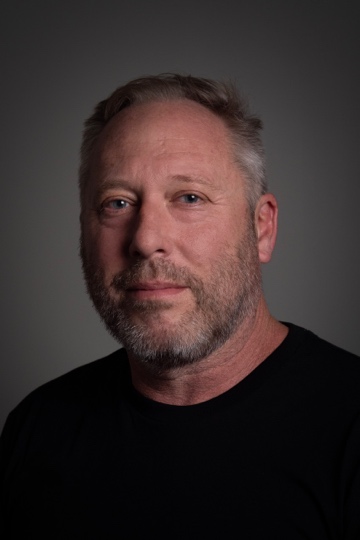
I am very thrilled to have the honor of interviewing the cinematographer Roberto Schaefer ASC. Over the last decade he has been the director of photography on “Monster Ball”, “Stay”, “Stranger Than Fiction”, “The Kite Runner”, “Finding Neverland” and, most recently, the latest installment in the Bond series, “Quantum of Solace” featuring Daniel Craig, Olga Kurylenko, Judy Dench and Gemma Arterton. Roberto has been gracious to find time in his busy schedule to talk about his work on “Quantum of Solace” and the visual turn that the iconic series has taken since Daniel Craig has joined it.
Roberto’s picture courtesy of Douglas Kirkland
Kirill: Tell us a little bit about yourself and your path to become a cinematographer
Roberto: I am a graduate of a fine arts college where I majored in Multi-Media which at the time was mostly conceptual, installation and every other art that didn’t fit into the classic categories. I minored in still photography. When I was growing up I, as so many others did, made films with my father’s 8mm camera and later on super 8mm, usually inspired by songs or sounds. I endeavored to become a fine artist but was somehow swayed into the path of commercial motion pictures by way of feature news, documentaries, music videos, and TV commercials.
Kirill: What is the essence of what you do, and what advice would you give to aspiring cinematographers?
Roberto: I attempt to find images in the words that I read on the page, and what is in between the lines. Look within yourself for inspiration and believe in your gut instincts.
Kirill: “Quantum of Solace” is 22nd movie in the Bond franchise. Did you spend time researching the previous installments to keep some of the visual elements?

Roberto: Along with the director and the production designer we watched most of the earlier films to look for the keys to the kingdom. In the end I think that we were most taken with the “Goldfinger” period and the 1960′s design aesthetic. I paid homage to that film in one of our iconic setups where the girl was covered in oil instead of gold. I did a match frame to the original shot but with out the cheeky chair.
Kirill: With Daniel Craig playing Bond in “Casino Royale”, the movies have transitioned to a more gritty, dusty, cutaway type of action. How does this affect your planning and execution?
Roberto: Following the lead set in Daniel’s first outing, “Casino Royale”, we needed to keep him more real, less enigmatic. We tried to allow his persona to show through his emotions and personal attachments while allowing him to be brutal and ruthless in his quest. In doing so we allowed him to guide us on his journey and kept it real. Action sequences and the like were kept more realistic than earlier Bond adventures. There was an attempt to achieve a more tactile, more visceral effect to the fights and chases. Marc Forster [director] and I worked very closely with 2nd unit to plot out the frames and action that they would shoot and we joined with them on several occasions to overlap 1st and 2nd units in order to try and keep a uniformity to the film.

Kirill: What happens in the weeks before the shooting begins? Do you scout locations, discuss storyboards, try preliminary shoots?
Roberto: We were very fortunate on “Quantum” with the extreme support of the producers to have ample prep time to scout possible locations very early on. Then when the choices were made we went back to plot our scenes and later again for the tech scout. In the meantime Marc and I sat for weeks going through the entire script from cover to cover and back again to make shooting plots and lists for the entire film. That was to work off of like a blueprint for all departments to understand our vision. We didn’t do any storyboards but we did do the aerial diagrams that we’ve done for most of work together. I did some early testing on film and cards to find the look that I was hoping for. The only thing we couldn’t do was shoot anamorphic due to a very constrained post schedule with a release date already in place 4 1/2 months from picture wrap!
Kirill: Most of the scenes in “Quantum of Solace” were filmed in outside daylight. What difference does this have over your control of lighting?
Roberto: I don’t really think of it as mostly in outside daylight. If you consider 55 vs. 45% it may be possible but I’m not convinced. In any case as in any scenes shot day exterior you need to try and control scheduling so the relation of the sun to your location works at the various times of day. And there is often need for more large diffusion or negatives control as well as bigger lights to keep the light consistent throughout a scene which might take several days to shoot.
Kirill: The high-tech setting of MI6 office is washed in wide swaths of white light. What is the message and how do you convey it?
Roberto: I guess that I need to rewatch the film because I don’t recall that much wide bathing of white light. For sure in M’s office there is a large frosted window to give an opportunity to make a severe lighting change when the walls in her office shift to viewing screens. This was an effect we shot with motion control as the aide goes into her office but it was eventually cut from the film due to the length of the scene.


Kirill: The last scene in a secluded Bolivian facility is full of explosions and fire. How does this affect or limit your equipment and shot setup?
Roberto: That entire scene of the interiors was shot on the big 007 stage at Pinewood. The set was built full length which was about 2/3 the size of the real hotel in Chile where we shot the exteriors. The SFX team did real explosions, air canons, and fire on stage, most repeatable. It is always tricky working around real flames and burning set pieces but we took all safety precautions and put the cameras as close to the positions that I wanted as possible. We used a telescopic crane as well as dollys, tripods and hand held to get what we needed. The flames were mostly controllable so we never felt too at risk. The stuntmen and Daniel did have to be covered in fire retardant gel for some of the shots, especially those running through the burning hallway and into the final room. I worked very closely through months of prep with the SFX co-ordinator to ensure that we could get the best shots to tell the story. I showed him my ideas of coverage and he did his best to make it work as well as some great suggestions for the sequences.

Kirill: What is the process of working with visual effects, particularly with the touch-based interfaces in MI6 office? Do you continue this through the post production stage?
Roberto: I had a very close working relationship with VFX throughout the entire prep and shoot and during the various stages of the DI [digital intermediate] too. I had worked with them on 4 previous films so we know each other pretty well. They had an extensive pre-vis group working full time at Pinewood for all the effects on the film and I spent a lot of time going in there and mapping out shots and sequences. Choosing lenses, moving camera positions, making moves, etc. As for the touch based computer table which was based on real DoD technology we just shot the table and actors to predetermined scripted moves using real placeholders on it which were then converted in post. I did shoot some tests for light levels and image “wrap” around the fingers to establish what would work best to enable us to use the correct illumination values on set that would remain consistent for the final VFX work.
Kirill: How much time did you spend on planning, shooting and editing the aerobatic battle in one of the first sequences (where Bond and M’s bodyguard hang on ropes, jump on crashing platforms and fall through sheets of glass)?

Roberto: That was one of my favorite sequences which I didn’t get to shoot in the end. It was eventually given over to 2nd unit to shoot on stage next to us. In the beginning I did map it out with Marc and the 2nd unit director Dan Bradley, who had a lot of great input on making the scene exciting. I did an initial lighting scheme for the stage to try and match the real Sienese locations. I worked very closely with Shawn O’Dell who DP’d most of the 2nd unit work. I did insist on one segment of the scene which was where 007 and the bad guy fight and fall over the edge of the bell tower and down through the glass dome into the art gallery. I insisted that the camera continue through the dome with the actors and into the fight inside the gallery without cuts. I had seen a scene in Bourne where he jumps off a rooftop in Morocco and through a window into an apartment. I was really wanting the camera to follow him all the way into the room but it cut before it got there. I requested that we do more and continue it in. With VFX and Dan we choreographed a series of 3 shots with CG enhancements to make it do just that. I was very excited by the results. All real actors and sets. From there Dan choreographed with the stunt co-ordinator the fight action spinning around the room on ropes. That was also pre-vised so I could see what it should look like at the end. Marc and I did visit them on the set when we could break away every now and then.
Kirill: What are your thoughts on shooting or post-converting to 3D?
Roberto: I have not shot 3D and not really cared much for it. I’ve seen some good work and some terrible. I think it works best in CG / animation like “Avatar” though “Pina” was really enchanting. As far as post-conversion goes I think it is a great idea if it can be done well. It frees up the camera and lighting to work smaller and more efficiently. That said, it must be agreed that the movie will be converted to 3D after production finishes and not decided upon only then. You would obviously set shots , choose lenses and moves dependent upon that understanding.

And here I’d like to thank Roberto Schaefer once again for this interview. I’m definitely looking forward to seeing more of his work in the future.
December 6th, 2011 | Comments Off
The Band Perry’s “If I Die Young”, LeAnn Rimes’ “Probably Wouldn’t Be This Way” and The Secret Sisters’ “Tennessee Me” are some of my favorite music videos in the last few months, and imagine my delight to find that they were all directed by the same man – David McClister. I’m very honored that David has found time in his busy schedule to answer a few questions I had about the art and craft of directing music videos, and to delve deeper into the particulars of some of the videos in his portfolio.

Kirill: You’re a photographer and a music video director. Tell us a little bit about your background.
David: I studied English and Art History in college. We didn’t have a film program there, so it was the closest I could come to actually studying film. Both disciplines have served as great backgrounds for film making and music videos – the English background for writing treatments, and the Art History background for concepts and inspiration. I started out as a film maker first, then at my wife’s encouragement, I began approaching some of the artists that I wanted to work with that couldn’t afford to do music videos. That’s when I picked up a still camera and started shooting stills and fell in love with it, especially the spontaneity and level of intimacy you have with the artist. I’ve been doing both mediums for about 10-12 years now.
Kirill: Let’s talk about the creative process behind music videos. What is your interaction with the performer to define the story and the look?
David: Each project is different. In a typical process, the director will be sent the song, along with an idea how much money they have to spend, and often an idea where they want to shoot – depending on their touring schedule, where the artist lives and so forth. Sometimes they’ll have an idea of the creative direction – do they want a performance-driven piece, a narrative-driven piece, or something totally different from what they’ve done before. So a lot of times they’ll give you a bit of an idea of where they’re thinking they want to go with it.
On my side, what I typically do is download the song and go to a very quiet, often dark place, put on the headphones and listen to it, keeping in the very back of my mind what they think they might want to do. The record label, the artist, the management may have ideas on where they think they want to go with this particular video project, but you never know where the music is going to take you creatively. Once you have the idea, that’s part one. The second part is to write a treatment, and that can take very little time, or it can take days. Sometimes it’s very easy to put into words exactly what you’re thinking, and sometimes it’s a little bit harder to describe your visions.
Kirill: Is a treatment some kind of a story board with sketches of different scenes?
David: It’s very open to how a director wants to present it. I think the more visual the presentation, the better. You have to keep in mind that not everyone that is going to be looking at the treatment is a visual person – so you should try to be as specific and visual as you can to show them what you’re thinking, from hair and makeup to production design to photography to wardrobe to props. It could be anything that is key to your idea.


Top – treatment proposal for Dia Frampton‘s “The Broken Ones”. Bottom – still from the final video.
Typically it’s one to three pages of text, and then some visuals to go with it, and hopefully that gives them a strong idea of what you’re seeing in your head. The video that I just shot last week in Los Angeles is for a song that I fell in love with, from an artist named Dia Frampton from the last season of “The Voice”. When soliciting treatments for her song, Dia shared several links to past videos that she really loved that she wanted all the directors to have a look at. The record label and management also had some notes on what they thought they wanted to do with the video. But I felt so inspired by the particular song and so strong about the idea that came up with, that I went with that. It was totally not what they said they were looking for, but I got the job.
I guess the lesson I’m trying to make is that if you’re passionate about your idea, you pursue it. You go for it, and hopefully that passion comes across in your presentation.

Kirill: You worked with LeAnn Rimes and The Band Perry on multiple videos. Do they get more open to your ideas and trust your direction more after the first collaborations?
David: Definitely. The comfort level grows, the confidence level grows, and I think there becomes sort of a shorthand between you and the artist. You tend to really know each other, to know each other’s likes and dislikes. The process becomes very unspoken, the same as when you work with the DP [director of photography] or production designer on several jobs. Plus, the more you work with the artist, the more you see the potential, their strengths and weaknesses, and what you can do to take them to a different level. You see things on set – production-wise or performance-wise – and you think that this will be great to explore later on in another video down the road. And of course you’re always sharing ideas, even when you’re not working on a job together.
And to the credit of both artists that you’ve mentioned, LeAnn and The Band Perry, they’re constantly trying to reinvent themselves, to push themselves to do concepts they haven’t done before, to show new sides to their fans, to keep it fresh and to continually challenge themselves. They’re not only doing it musically in the studio, but they’re also challenging themselves visually, to try things that might be a little bit outside their comfort zone.
Kirill: How big is a typical production in terms of your crew?
David: It depends, obviously, on the budget and, kind of hand in hand, on the idea behind it. The bigger the budget, the bigger the artist, the more people there are involved, and there will also be a lot of media there covering the video itself, so it can become a pretty huge event. I did a video a couple of months ago that was very low budget for a song I really loved, and it was more of a photoshoot, with less than ten people on the set. And the one last week with Dia, because of the excitement about the project and “The Voice” we had around 40 people with cast, crew and all the extras.
Kirill: How much time do you have to shoot a video?
David: It’s hard to get multiple days for shoots anymore. Typically they’re almost always single day shoots, and you’ve got an average range of 12-14 hours to shoot it. Depending on the idea and budget we can have a single camera or multiple cameras. Oftentimes I’ll employ multiple cameras if I can pull it off, just to get more coverage and to keep the day moving, and to get as much variety as possible. To me, you want all the images to be beautiful, but you want a great variety to keep the audience interested for the full three or four minutes. You need to be consistently showing something new, some new information. I don’t think you can show the audience everything in the first 30-45 seconds and expect them to be as engaged three minutes later. You need to be consistently creating something new for them to look at.

Kirill: And how long is the post-production stage?
David: Part of that depends on the format you are shooting – if it’s film, you probably didn’t shoot more than a couple of hours of footage – so 2-3 days possibly on the first cut. If it’s digital, you might have shot several hours of footage, which is obviously a lot more for the editor to look through. In that case it might be a week before you have a first cut ready to show everyone.
Kirill: There’s a lot of attention to details in your videos. Does this go back to capturing the viewer’s interest and have them go back to watching the video again and again?
David: I think that’s the key. As the director you have to keep in mind that the fans, even the casual ones, are going to watch that video numerous times. To maintain that attention, to keep their attention and focus you need to have a lot of depth, a lot of layers to your video, and to pay a lot of attention to the details throughout. It goes beyond the props, the framing and the editing. It needs to be multi-layered, and hopefully each time they watch it, even many views later, they’re picking up little details that they didn’t pick up on in previous viewings.
Kirill: And on the other hand, there’s a certain fleeting aspect to a music video. In a few weeks there’s the next song, the next album, and people don’t go to a music store to buy a DVD with that video.
David: I don’t think it’s as fleeting you might believe. What amazes me is I will still get comments from an artist or someone about a video that was done years ago that made a strong impression on them. I think videos, even though they tend to come and go fairly quickly on broadcast, have a lasting impact on the audience. I know that when I listen to certain songs, on the radio or in my home, I find myself watching the video in my head – but then I’m a director, so maybe it’s part of it. But I think in general it stays with people even more than photography, which is an image that you can hold in your hand – unlike video – but there’s something about video that connects with an audience that really makes a lasting impression, something that people think about years later that stills have a hard time competing with.


Top – treatment proposal for Dia Frampton‘s “The Broken Ones”. Bottom – still from the final video.
Kirill: With music programming practically disappearing from MTV and VH1, once mammoth conduits of music videos, a large swath of the audience gets new videos from YouTube and other streaming sites. Do you still plan and construct your sets for high-definition, high-quality capturing?
David: Well, I grew up when MTV was still playing videos, and that’s how I discovered so many artists. FM Radio wasn’t the answer either, so the only way I could discover new music was on MTV. So it is sad that it has changed. There were so many incredible videos that came about because of that.
With the Internet, YouTube, iTunes, being able to download videos – it’s a new dawn. I think people are very much into music videos again, and they have been for several years now. There was definitely a period after MTV and VH1 changed their programming to be all content, and before Internet took hold and the music business knew how to use it, that there was a real down period with music video. But it’s back, there’s a real buzz about it. Unfortunately most people only see it on a small screen. I still prepare my shoots as if they’re going to be on a big screen.
Probably the main difference with videos now comes from shooting primarily with digital cameras. The more we see the digital formats, which have different look than 35mm or 16mm film, we as an audience become more accustomed to that look. I’m not saying it’s a good or bad thing, it just is what it is. It’s just the nature of an evolving medium.


Top – treatment proposal for Dia Frampton‘s “The Broken Ones”. Bottom – still from the final video.
Kirill: What happened after that down period? Do you see bigger budgets, do you see artists pushing to shoot more videos from a single album?
David: I don’t know that it has changed that much. The music business has been through a difficult time over the last several years. As far as the music videos and photo shoots, the budgets aren’t where they used to be. But the creativity level has not changed, and it’s more challenging now with limited budgets.

Kirill: There’s an almost cinematic quality to your videos, with so much attention to focus, framing and lighting. It feels like I’m watching a small movie. Is this something that you insist on doing when you’re negotiating with the artist and the label?
David: At a certain point you have a body of work and a style that the artist, the management and the record label all know. When they come to you, they kind of know what they’re going to get, in a sense. My approach is pretty consistent in all the things you’ve mentioned, and this is just how I see things.
Kirill: There’s a certain style to shoot a video where the song takes an almost back stage to whatever story is shown, and the main attention is kept on the actors playing out that story. All your videos place main emphasis on the performer. Is that a conscious choice?
David: I never really thought about it. I think it’s incredibly poweful and cinematic when you have an artist giving a very strong, emotional and honest performance. There’s something about it that resonates with the audience, and if you have an artist that can really pull it off and the right song, there’s no need to cut away from that.
Kirill: Has it ever happened that a certain look or a set that you’ve created for a video affected the tour stage setup later?
David: Yes, I’ve been told that. I know that it’s happened with LeAnn, and it’s happened with The Band Perry too. They’ve been so happy with the choreography and the set, that they took it to award shows and on the road. It’s very rewarding that your work is being carried over to that level.
Kirill: Let’s go back to keeping the audience interested throughout the entire length of the video. Oftentimes you present us a story that happens in the background, cutting back and forth between figments of it, presenting a puzzle of a sorts. Do you feel constricted by this very short time frame, and by not being able to actually put that story into a spoken word?
David: Actually I feel the opposite, I feel like I have a lot of freedom. If you talk about a puzzle, I try to make most of my videos to be like a film, to have a conflict, to have a narrative arc, to have a payoff at the end. Hopefully, for the audience, the resolution is not the one you expect. For example, with Lady Antebellum “Need You Now” video, most people expected to see the two lead singers get together, but they ended up with two different people at the party at the end of the video. I wanted it to have a bit of a twist, something unexpected.

Kirill: While this video was a more literal interpretation of the lyrics, LeAnn’s “Nothin Better To Do” is a more loose version that captures the mood of the song, but takes it to a more open-ended visual journey.
David: Being literal is pretty boring, it gets very old to show exactly what the singer is saying on record. Obviously there are times when a song demands it, but in most cases I find it boring, and hope to reinterpret it in a different way. It can be the setting, the characters, the time period, the look of the film – and hopefully something that when you listen to the song as a fan, you thought it was going to be one way, and when you see it, you’re pleasantly surprised that it’s something that you hadn’t expected, and you enjoy it and have fun with it.

The particular video you’ve mentioned was a lot of fun. It’s actually a character that LeAnn had in mind when she wrote the song, a distant family member. And so we were able to take that as our inspiration and build around it, and it was a very long shoot, about 18-20 hours in a single day. It’s still performance-driven, an homage of sorts to the great director and choreographer Bob Fosse, and very much like a movie.
Kirill: Let’s talk about “Tennessee Me”. It has a lot of jumps, camera shifts, focus shifts, and feels like an unearthed home-edited piece stitched together from multiple reels.
David: We did almost all of it in camera. We shot on a 35mm camera (An Arri 435), and we tried pretty much everything you can possibly imagine with it. We changed camera speeds in camera while we were shooting, we would go forward and backward at times – and that’s how you get the double exposures. They were not layered in post, but rather in camera. And the overall effect, as you said, is that I wanted it to feel like a found film, an amateur film in the way it was photographed by a friend of family member many years ago, left in the attic and then found years later and played on a home projector. That was the intention of it, and that’s how we photographed it.

I liked that they allowed us to keep some scenes out of sync, where the voice didn’t match up perfectly with the picture. There were several instances where that happened, and always by the end of the shot it’s back in sync, but there are moments when it’s out of sync, lending itself to the amateur home film feel, like it was cut and spliced together on an old film splicer.
Kirill: And you can do this only once
David: In a way yes. You can definitely take some of the things that you learned and apply them to other jobs, but you don’t want to repeat yourself and do exactly the same thing. The original inspiration for the look was going to be toned black and white ambrotypes. Then, as we were shooting it, the girls looked so amazing in color that I changed my mind and we ended up toning the color film to a bit more of a hand tinted look. I have had the good fortune to work with a colorist in San Francisco named Chris Martin who has worked his magic on many of my transfers.

Although I couldn’t be there, I sent him several references and we talked on the phone about the shoot, the concept and the overall feel I was going for. He ended up transferring it about six different ways. The intent was that different sections of the ‘found’ film would have aged differently over time, and then been spliced together to make the film.
Kirill: And then you have “Hey Mama” by Mat Kearney where it looks like you just grabbed the camera and started following the guy on the street.
David: It was sort of an homage to a collection of documentary photographers that greatly inspired me over the years, Danny Lyon, Robert Frank, Bruce Davidson, Susan Meiselas - all phenomenal shooters. We shot it in New Orleans on 16mm black and white over the course of two long days using all natural light. Some of the people were cast, and others were just pulled off the street for a few minutes. I can’t say enough about how great it was to shoot in New Orleans and how wonderful everyone was to us while we were down there. I think the idea worked really well with that song, and Mat did a tremendous job.

Kirill: Film camera, all natural lighting, constricted time limits. Did you actually have time to look at the raw footage and make some adjustments or corrections?
David: No, as it was film, there was no way to go back and look at what we had shot. We actually didn’t have a monitor to look at either, but I had a good feel after each scene about exactly what I had. I had a very detailed shot list, and kept a mental note of what we were getting.
Kirill: And then, as an almost diametrical opposite, “And It Feels Like” from LeAnn Rimes with explosion of color, wide swaths of pinks and magentas, soft focused crystal chandeliers and richly decorated interiors.
David: We shot it in 35mm anamorphic, and I remember I was drawing inspiration from films of Stanley Kubrick, specifically Eyes Wide Shut. Norman Bonney was the director of photography and he did an amazing job. I told him during prep that I really wanted to push it color-wise, to be really bold. I wanted each room to have a different color, a powerful color wash. So I gave each room in the house a very dominant color theme, from the performance room where it’s all pinks and purples, to the study where they’re having pre dinner cocktails which was heavy yellow, to the dining room that was heavy red where things don’t go as she expects them to go when her ex lover shows up to the party with someone else on his arm. The colors were set to enhance the emotion of the scene, and I think it works very well.
You go in with a very concrete set of ideas when you write the treatment, but it’s a very fluid process. You’re consistently changing throughout the process – the pre-production, the day of the shooting itself, post – you see what works, what doesn’t work and have new ideas that continually come up during the process.
In the treatment for that specific video I did not say that I was going to have such a heavy color wash. The pitch was all about the narrative storyline. Once I saw the location, and the more I looked at it, it just sort of happened.

Kirill: Does it happen that you watch a music video done by somebody else and think to yourself that you would’ve done it in a completely different way?
David: No, I never think that. I don’t watch a lot of other videos. I tend to draw inspiration from films, photography, painting and so forth.
Kirill: Do you see yourself branching off into longer formats, documentaries, short movies or full-length features?
David: Definitely. I just finished a short film about six weeks ago that I’m very excited about. I’ll be submitting it to festivals in the coming months and have several more shorts that I’m prepping to shoot in 2012. I think every music video director has feature film aspirations, and I’m certainly no different.

And here I’d like to thank David McClister once again for his great work, and for this wonderful opportunity to glimpse into the world of directing music videos.