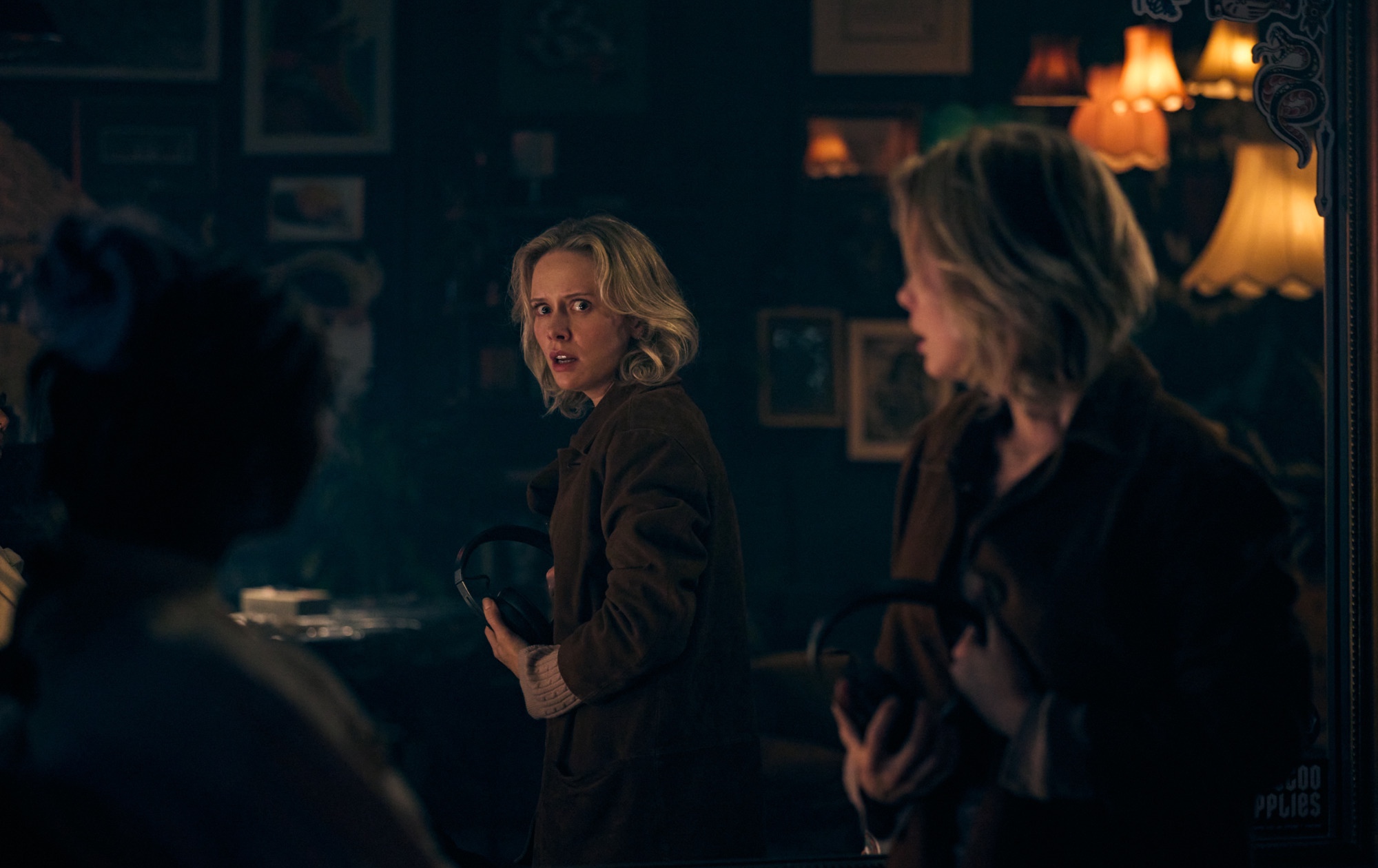
 Production design of "Insidious: Out Of The Further" by Nick Bassett, courtesy of Sony Pictures
Production design of “Insidious: Out Of The Further” – interview with Nick Bassett
Continuing the ongoing series of interviews with creative artists working on various aspects of movie and TV productions, it is my pleasure to welcome Nick Bassett. In this interview, he talks the role of production design and the bigger changes in the art department in the last few decades, key ingredients to longevity in the industry, experiencing stories on the big screen, and the enduring appeal of the horror genre. Between all these and more, Nick takes a deep dive into his work on “Insidious: Out Of The Further”.
 Kirill: Please tell us about yourself and the path that took you to where you are today.
Nick: I was always quite good at art from a young age. Later on I went to an all-boys high school, and while I did fine there, their art department was pretty terrible. I ended up switching to a different high school, and their art department was great. They had an option to take it as two subjects, which was a rare occurrence for local high schools.
That was a memorable year for me, and from there I decided to do either fine arts or a design school. I chose an industrial design school, and in some ways I looked at that with a bit of regret. It’s such a luxury to be able to do pure art and indulge in that. For some reason, there was a slightly more cautious side of me that advised that I should go down a path of something that may lead to a career, rather than just a freelance artist. About 2.5 years into the 4 year program I decided it wasn’t for me. While I liked it overall, I just wasn’t learning much. I felt a need to go and do something practical.
One of the part time tutors at the school was designing furniture, making jewelry and other bespoke things. He was a trained jeweler, but not a trained furniture designer, and that triggered my imagination that there is a world where you can just go out and do this thing. I worked with him for a while and learned about jewelry, welding, metal casting and other practical things. Along the way there was a small opportunity to make props. That was my first introduction to the world of TV commercials, and from there through word of mouth I discovered the existence of the film industry.
I always wanted to do my own design and my own products. I might have had lofty ideas of being like Philippe Starck, some superstar designer [laughs]. Everyone at design school thinks they’re going to be the next big thing, and that’s kind of mad to think when you have so much global competition.
I probably had a few opportunities where I could get into the film industry. One was through TV commercials, and the other was where I’ve met people who are making props in the old fashioned way. They make fake giant ice creams and closeups of pouring fake chocolate for beautiful Cadbury ads. It’s really detailed work and they were working at such a precision level.
And then this one weekend I was up at my family home, and this red Ford Mustang pulled up outside my mum’s house. I look outside, and I see a camera crew, and they were making an episode of the TV show called “High Tide”. People were wearing Hawaiian shirts, as that episode was supposed to be set in Hawaii. That moment was a trigger for me, as it looked so fun. My partner at the time, who is my wife now, had been offered a running job on that show, and while she turned it down, she asked me if I wanted to take it. That was it, and I thank her for it.
It gave me the very bottom rung as an art department runner – with the potential that you could see that you could move all the way up to doing production design. The head people in that art department were trained architects, and that was so interesting. I could see a path where it wasn’t going to be a dead end.
I then worked my way all the way through, and I’ve been doing this now for 30+ years. I went from running to set dressing to standby working on the floor of the set. And then back into the art department, after earning my way back through – and always doing design projects on my own on the side. That was all in New Zealand. The industry was quite new there. There’s always been a film and TV industry, but it was very small, and you had these American projects coming in. Everyone was putting on American accents for these superstar actors [laughs]. It was a major trigger to your imagination to work on a detective show set in California or Hawaii or some other place that wasn’t local.
It took about 8 years for me to find my way to the film industry. I was 17 when I went to design school, about 21 when I first heard about this industry, and 25 when I realized that it was a career that you could stick with. There’s no straight path in the film industry. It’s one of those jobs with no promises or guarantees.
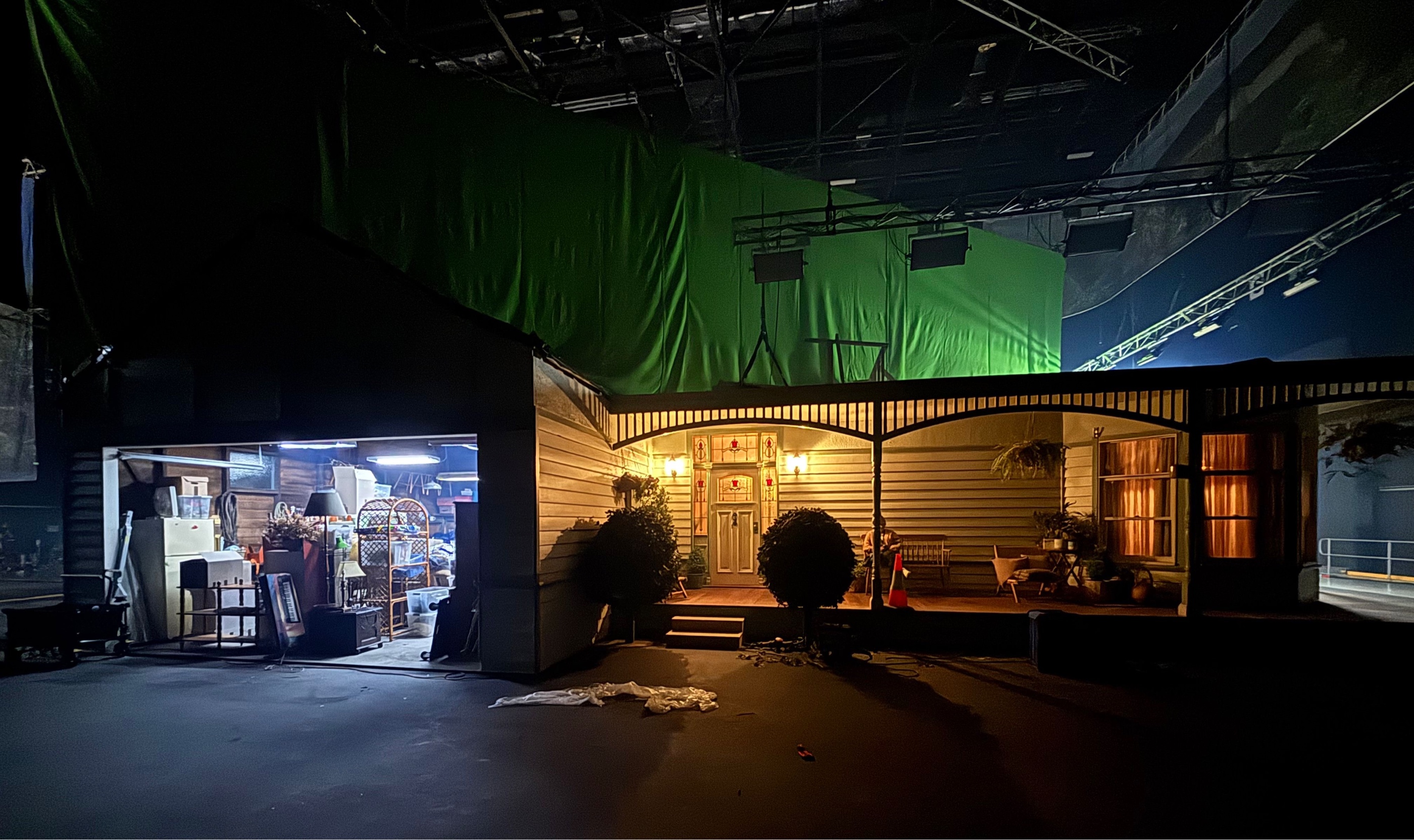
On the sets of “Insidious: Out Of The Further”, courtesy of Nick Bassett and Sony Pictures.
Kirill: As you look at these 30 years that you’ve been doing this, you’ve probably seen quite a few changes in and around the art department. What would you say are the bigger changes?
Nick: When I was starting out, everything was hand drawn, and now it’s all in 3D computer programs. On some of the smaller shows back then it was just sketches and no working drawings [laughs]. The scale of every movie is different, but the basic practice now is a lot more. We’re having to document what we do a lot more and sell the concept, so we can share it with other departments.
The best time you’ll ever have is when you start in the film industry because you don’t know anything. When you know more, it gets harder, because now you realize what you didn’t know. I imagine there’s very few people who feel like experts in our industry, because there’s so much to learn all the time and no two projects are the same. You’re always learning, and you’re always feeling like there’s more to learn.
We have a better understanding of the importance of color, of how the costume works with the backdrop, and how all departments interlace. I often work on horror shows, and you have so many departments that have to mesh together. It’s a really big responsibility to communicate clearly and to leave a documented trail of what we’ve decided to do to prevent surprises on the day. Our industry in New Zealand has seen a massive change since back then. We learned from overseas crews that were coming in, and now in New Zealand you see a much more professional department that takes it seriously.
It’s a competitive industry, and one that has matured quite a bit. A lot of people want to be in it. A lot of countries are competing for work. So everyone needs to be really good at what they’re doing. You can’t relax in it too much.
Technology is coming in more and more, but it’s always been there. Everyone has always been progressing. I started back in the days of film, and then digital started coming in, and we were learning how digital cameras are different from film cameras. They were much cleaner, and they were picking up detail that we wouldn’t have noticed before. That was a long time ago now, but it’s just another example of how you’re constantly training your brain to cope with technology changes.
Now we’re in a much faster tracked prep period. Our pre-production period is very quick now. It’s not enough to be good at it. You also have to be fast and efficient, and do work with fewer people. There’s nothing stable about it. It keeps evolving. I like to embrace technology as much as possible. One thing I do is I stay with the basics. I try not to jump ahead of myself. Technology can quickly get you something that looks finished and resolved, all the while you still have to go through the creative stages.
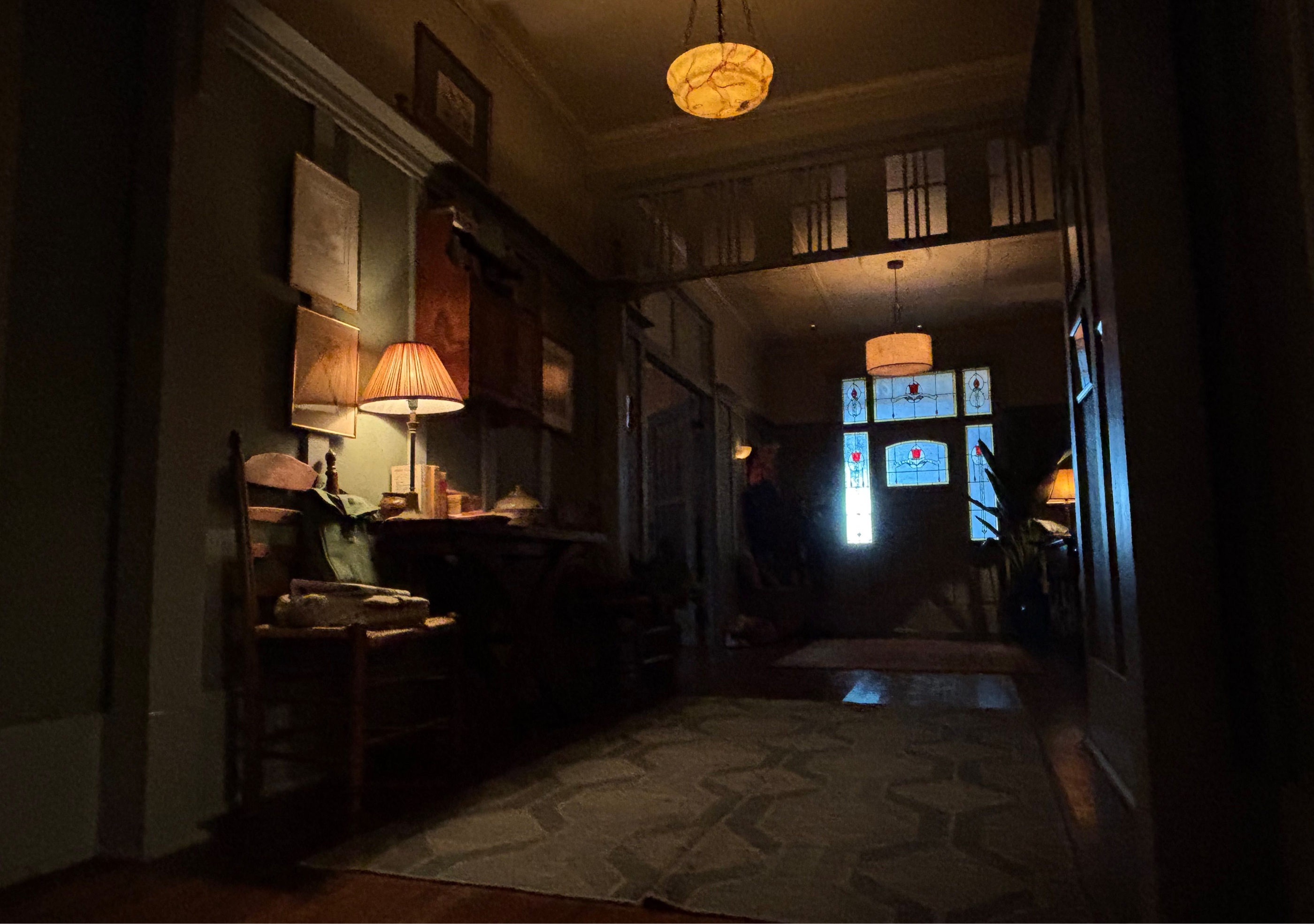
On the sets of “Insidious: Out Of The Further”, courtesy of Nick Bassett and Sony Pictures.
Kirill: What are the bigger misconceptions or misunderstandings about what production design is?
Nick: In a way, it’s quite easy to explain production design. But then you have multiple departments on bigger projects with visual effects, special effects and in-camera work that are creating worlds, and it’s possibly easy to think that the production designer is responsible for all of that. But of course there are high ranking and experienced people within each department that we integrate with – extending to costume, make-up and others.
The best description of my job is that we build a robust world. If we’re doing a fantasy, I present as many images that will help tell a story and give all the other departments everything they need to do their job. It’s almost an endless task, but at no point do you take credit for all of the hard work, because everyone is contributing their part. I happen to be the head of the department that starts earliest, and then people come into it, and it keeps building.
If you’re outside the industry, none of it might make any sense to you. When I say I’m a production designer and I explain what goes into it, people ask me to explain it again and again. If I say that I’m responsible for designing the set, they ask why don’t you just film in real places [laughs]. It takes a long time to explain that 90% of what we’re seeing on camera is created and painted, even if it’s a small piece of it.
This job is about leadership and motivation. You’re pushing your own department as far as you can with the resources you have to give as much information and answer as many questions for other people starting. I love it when other people grab hold of things and run as well and we’re all working together. When you get the script, we’re trying to push this locomotive to get it moving. We’re trying to get ideas and build sets and design everything. And once it starts moving, you have to try and outrun this thing – because the momentum of a film with its schedule is a powerful thing.
Another part of the production design job which is not spoken about as much is that we’re involved with very early decisions. Are we going to rent soundstages? Are we going to shoot on location? What are we going to build? What is this going to cost? What countries are we going to film? You go with your gut instinct so often, and these decisions then inform the budget of the whole project. It’s an exciting moment when you read a script and see a problem that you have to crack. Some things are not as easy to solve as others. The logistics of it is like a jigsaw puzzle that we’re solving together.
What can we cram into these sound stages? How can we turn them around and how are we going to work with the producers to give them what they need before all the other crews start? It’s a hidden part of the job, and people may not understand how mechanical a lot of it is at the beginning. You break them down methodically, and in some ways these become the interesting challenges.
Kirill: Getting to “Insidious”, how did it find its way to you, or maybe how did you find your way to it?
Nick: “Insidious” was a Blumhouse project, and they do a lot of joint projects with Atomic Monster. I was working on Lee Cronin’s “The Mummy” in Dublin, which is another Atomic Monster production. Dave Garbett was the cinematographer on it, and we’ve worked together a lot in the past. His name came up for “Insidious”, and then my name came up in the mix as well.
I had a Zoom call with the director. You read the script, you put some ideas together – not necessarily visuals, but more of your thoughts on what we can talk about during the call. Jacob Chase the director has seen some of my earlier work, and we had a common love of the same projects. So I ended up wrapping one movie in Dublin, then home for a week, and then to Melbourne to make “Insidious”.
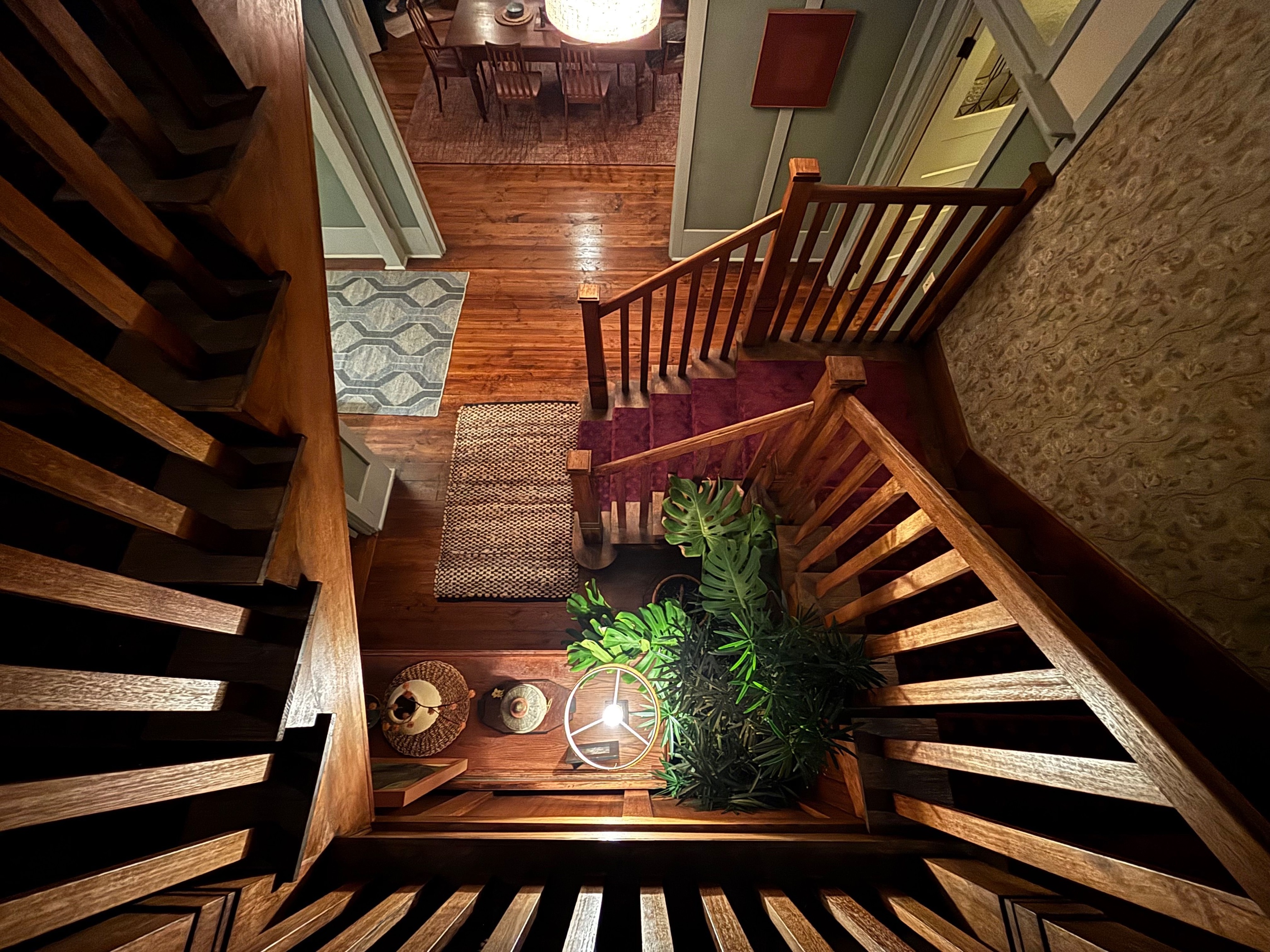
On the sets of “Insidious: Out Of The Further”, courtesy of Nick Bassett and Sony Pictures.
Kirill: I’m not sure how it is in the rest of the world, New Zealand included, but it feels that Americans love horror movies – going back decades all the way not just to the ’70s, but to early black-and-white ’30s. How do you explain this phenomenon of the evergreen obsession with the horror genre?
Nick: For me it’s quite simple. The closest thing to it is a rollercoaster ride or going to a theme park. If you want to have a night out and have a lot of laughs, you go to a horror movie. Horror and comedy are quite closely interwoven, and they evoke similar emotions. If you want to experience something intense for a short period of time, horror is a really good way to do it.
I find that horror fans are quite forgiving of bad horror, if you will. They like the genre and they’ll go anyway. People go to horror movies with their mates. People go to horror movies on a date. Many people take horror seriously, but for the average person it’s just a laugh. They’re normally often absurd. It’s something crazy and ridiculous – but you can watch it, laugh at it, cry at it, or jump at it, or whatever. You experience this emotional range, and then hop off that rollercoaster ride, and still have time for dinner.
It appeals to people who want a short blast of excitement, and other movies don’t promise that. Superhero movies can deliver it in ways, but that often involves a lot more buy-in or a more extreme world building. Horror can boil down to something very simple. “Insidious” has this simple idea of this gateway to the Further. You can get into the groove of it quite quickly. And it’s usually moving at a good pace.
You’re on this theme park ride. You hop on this ride with your friends, you have this journey, and you can talk about it afterwards. It’s generally not overly complicated, and you can all get it. It’s a lot of fun for filmmakers. We know what we’re trying to do. We’re trying to make a fun ride.
Kirill: This is the sixth installment in the “Insidious” franchise. Do you feel that there’s a certain expectation from the audience in how this world is “supposed” to look like?
Nick: This franchise is quite carefully guarded. Jacob came up with a new idea for it, but you have James Wan, Leigh Whannell and Jason Blum all involved, and everybody is aware of the fan base for the project. There is a version where we could have taken the story and changed everything. There is a bit of a time gap from the last one, but you don’t want to suddenly start so fresh that people are confused about what that franchise is.
There’s an expectation to change and develop and progress, but we certainly didn’t want to take for granted the fact that it has a big fan base. Jacob knows all these movies intimately. He knew every detail of the previous films. At that point, I have a lot of trust in the director, because they have been involved in many conversations before I started.
We wanted this one to be a bit of fun to see all these characters from previous movies come back, to celebrate the franchise a little bit, and then to bring a new idea to it – but not bring so many ideas that it felt like a different franchise. You have a spectrum of fans, and I’ve seen this through my involvement in the “Evil Dead” movies and TV shows. Some fans love the humor in it, and some fans hate it. You’ll never please everyone.
Jacob wrote a great script for “Insidious”, and everyone loved the idea. We tried to make the best movie we could make, and honor the previous films, and not have it feel totally disconnected. We are aware that we’re introducing new characters, and it’s a challenge. We had 10 weeks for pre-production, and a lot of things were happening quickly.
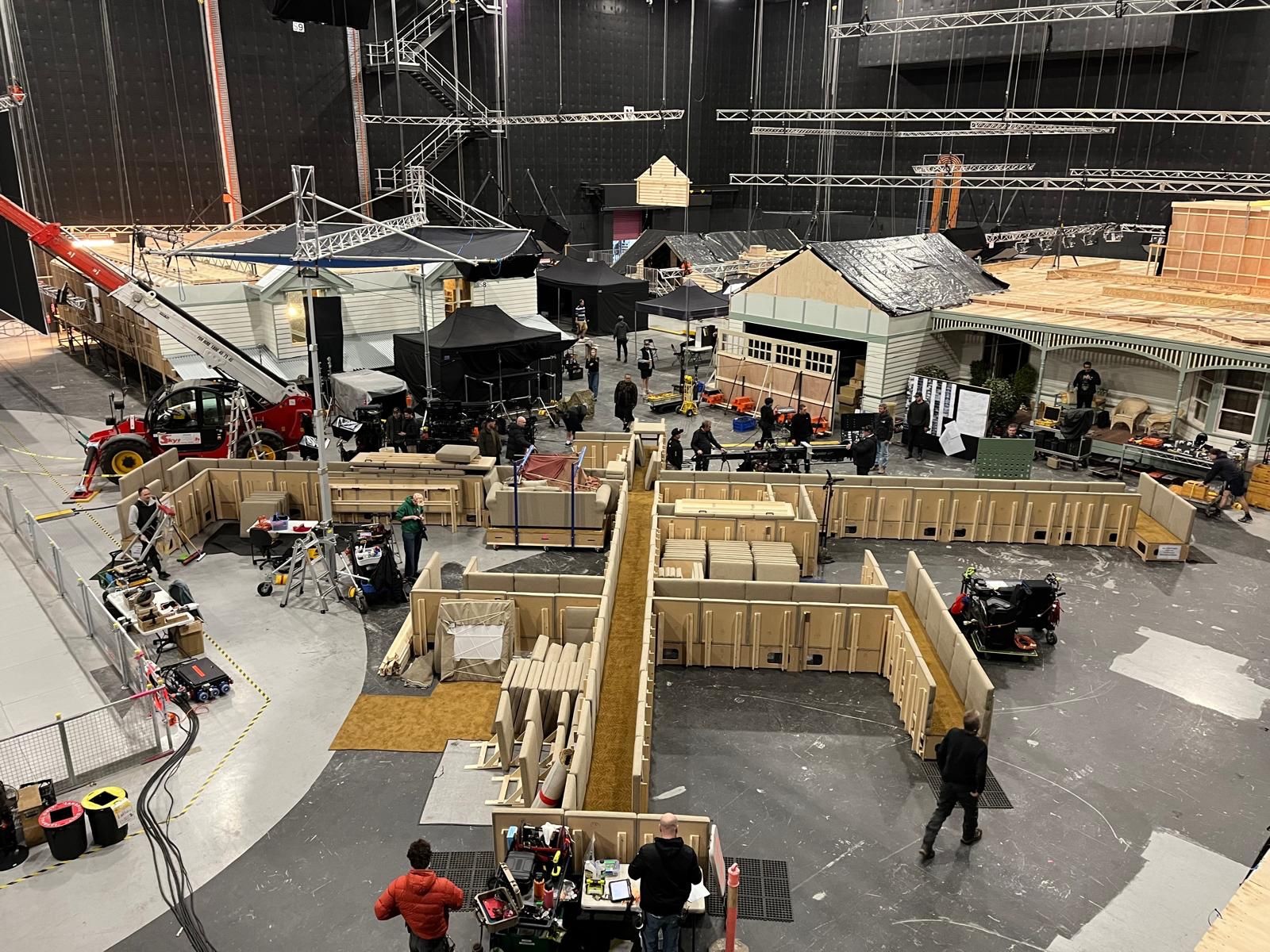
On the set of the pillow fort tunnels of “Insidious: Out Of The Further”, courtesy of Nick Bassett and Sony Pictures.
Kirill: The main character Gemma spends her time between the cluttered house and open, spacious dental clinic. How did you approach thinking about these two spaces?
Nick: I gather as many references at the beginning of the movie as possible. Then I lay the movie out on a board in its chronological order and look for moments. Color is one moment. Space is another moment. As you’re saying, one moment can be claustrophobic, and then the next can be more open or sparse. The dentist office is the extremely opposite to her family home which was damp, dark, and depressing in some ways. One version of that family house is quite warm, if you turn all the lights on. But we saw it as dim and heavy, and the opposite to the clean and clinical world of her workplace.
And then we’re bringing in the Further concept, so we wanted spaces that can open up and be something else that she falls into. Some of those decisions are 100% creative as a look, and others have practical ramifications that you have to consider.
When she came back to turn her childhood home into a family home for her and her daughter, we didn’t want to completely remodel it and lose some of the character we had earlier. It was a more realistic renovation – a lot of paint rather than knocking walls down. We tried to do it in a way that we felt was believable. You’re creating your own backstory. You read the script, and there’s a scene here and a scene here – but there’s not a lot of description of what happened in the middle. What happened in the 20 years that we don’t have in our movie?
Our job as an art department is to build that backstory. We’re always talking about these moments that will help us get to what that look is in creating our own story. It’s a lot of fun. You’re essentially writing your own script to fill in the blanks and checking it with the director. We’re trying to put ourselves in that situation as designers. What would be the history of it? What part of America are they in? What’s the climate like? What’s the school like? What can we add to build more of a backstory?
You may not see it on screen in detail every time. One interesting thing with horror is that the camera is always moving past things, and you never know where that camera’s going to land. A shot might be designed in a certain way, and then suddenly it’s revolving around some random part of the set, and it’s going to be huge on screen. I want to detail everything correctly. I’m obsessed about every little corner of the set.
There’s a common saying in the industry that people don’t notice these details, and if they do, you’ve lost them as the viewer. But I believe that the details are the key to it. You may not scrutinize the details, but you will be aware of it. You’re aware of the architectural things that are wrong. You might not spot it straight away, but there’ll be something about it that won’t ring true. It’ll nag your subconscious.
When an actor walks into a set, and they open the drawer. and it’s full of school reports or whatever is the right thing – or it’s the dentist’s office, and they pull out the drawer, and it’s full of dental gear – that’s a grounding moment for the actor. It’s the exact opposite of standing in front of a blue screen and talking about what our hope is. Everything they’re touching helps them play the role they’re playing, and I take that seriously. I give that detail everything I can. I believe it makes a big difference.
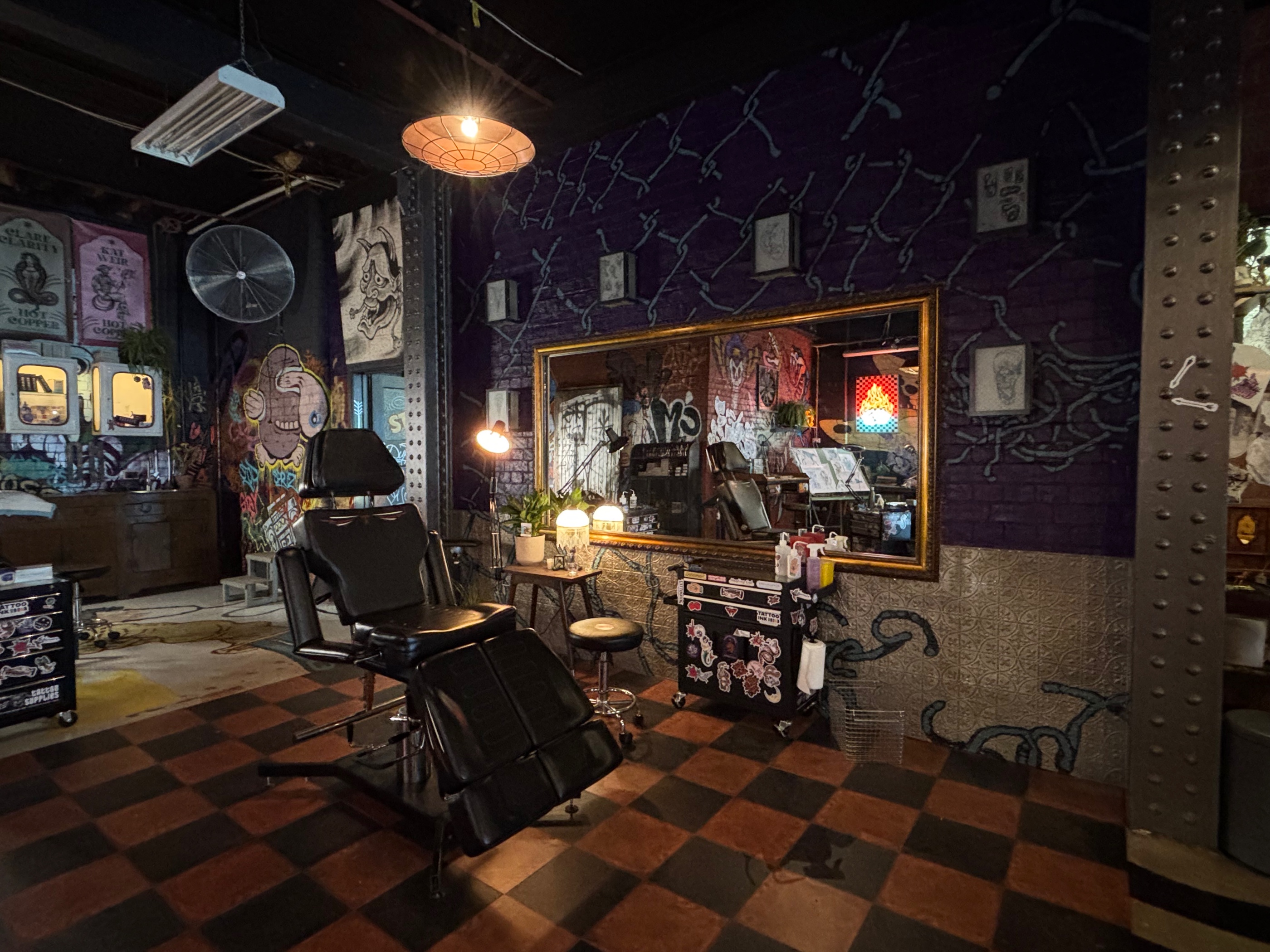
On the sets of “Insidious: Out Of The Further”, courtesy of Nick Bassett and Sony Pictures.
Kirill: What was your thinking about the tattoo parlor? What design elements did you want to see there?
Nick: A typical tattoo parlor you would walk by on the street now is a clinical space. They are quite like a barbershop or a dental clinic. I was talking about it with Jacob, and we decided that it would be better to go for a different look. We didn’t want it to be too clinical and too clean. Our movie takes place in Pittsburgh, and I researched some local areas, and we found an old industrial building with a cool exterior. It was also an opportunity to break out of the suburban world that we were in.
For the mirror sequence, we built the wall with the mirror in it, and then cut a hole that matched that removable mirror. Then we duplicated the set in reverse, and we did it in camera for the most part. That took a lot of rehearsing. You’re trying to move quickly and build these sets, and they’re waiting for you to start the rehearsals. The pillow fort was another example of giving the crew a lot of time to get their head around how they’re going to film it. You stop your art department work for a moment, and you let the camera team and the director and the actors figure out what they’re going to do. Then we come back and address the changes that they require.
For the tattoo parlor we wanted a hit of color and a feeling of looseness to its aesthetic, before we’re returning to that suburban setting. Sometimes you want to have more fun. You pick an angle and that’s what we did on that one.
Kirill: The Further is the last big place in this story. How do you know how much is too much, or how little is too little? How do you strike that balance?
Nick: Five movies have been made, and this concept of the Further has been around for a while. Jacob was leading the way on that. One of the things that we talked about early on was about not trying to reinvent that yet. There’s a lot of room to play with that, but we felt in this movie it was good to keep it familiar to people.
One thing that we added was in the bathroom where you pull out and withdraw the camera into this Further space, and we came up with this idea of a textured black. We pulled the walls off the set, extended the walls out, and painted black marks all the way down the walls that had a texture to them. You start to fade it into the wallpaper as an in-camera transition into complete darkness.
Overall, we didn’t want to veer too far off track. We didn’t want it to feel like a different movie. It was carefully considered. There’s a world where you could investigate that more, and I suspect that will happen. But as you’re introducing new characters and new places, it was wise to hold on to a few of the elements from the previous films.
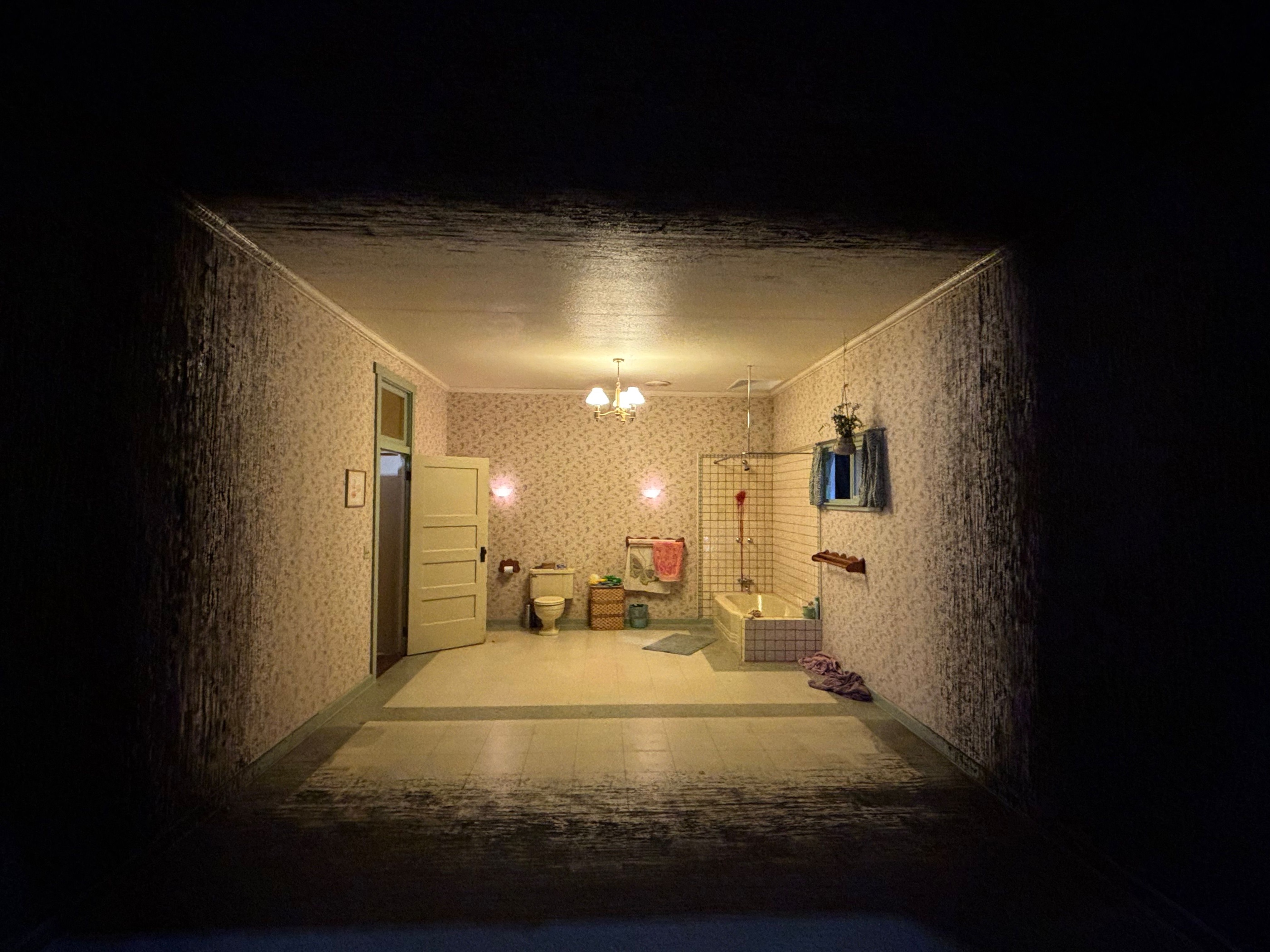
On the sets of “Insidious: Out Of The Further”, courtesy of Nick Bassett and Sony Pictures.
Kirill: Why should people go to the movie theater to watch this production on the biggest screen they can get?
Nick: It’s not my department, but the sound quality of a cinema isn’t something that an average viewer is going to get at home. It’s a much more immersive experience. I saw “Insidious” a few weeks back when it came out, and you see so much visual richness in it, and that is all intended. People watch movies on their cell phones and on airplanes, and that’s about the worst version of watching a movie that you can imagine [laughs]. The cinema is a superior experience.
The other part of it is to go to a theater and hear people react to it. That reaction is what I remember going to the cinema as a kid – and all through my life. It’s infectious. If someone laughs, it will trigger other people to laugh. If someone screams, it will trigger others. Horror is great for that. If you’re in a full cinema and it’s a good horror movie, it’s a moving energy. This is something that people are discovering again. I do believe we’re going through a new version of people falling in love with cinema again. A full cinema is an amazing experience that has such a huge buzz. It’s creating so much energy.
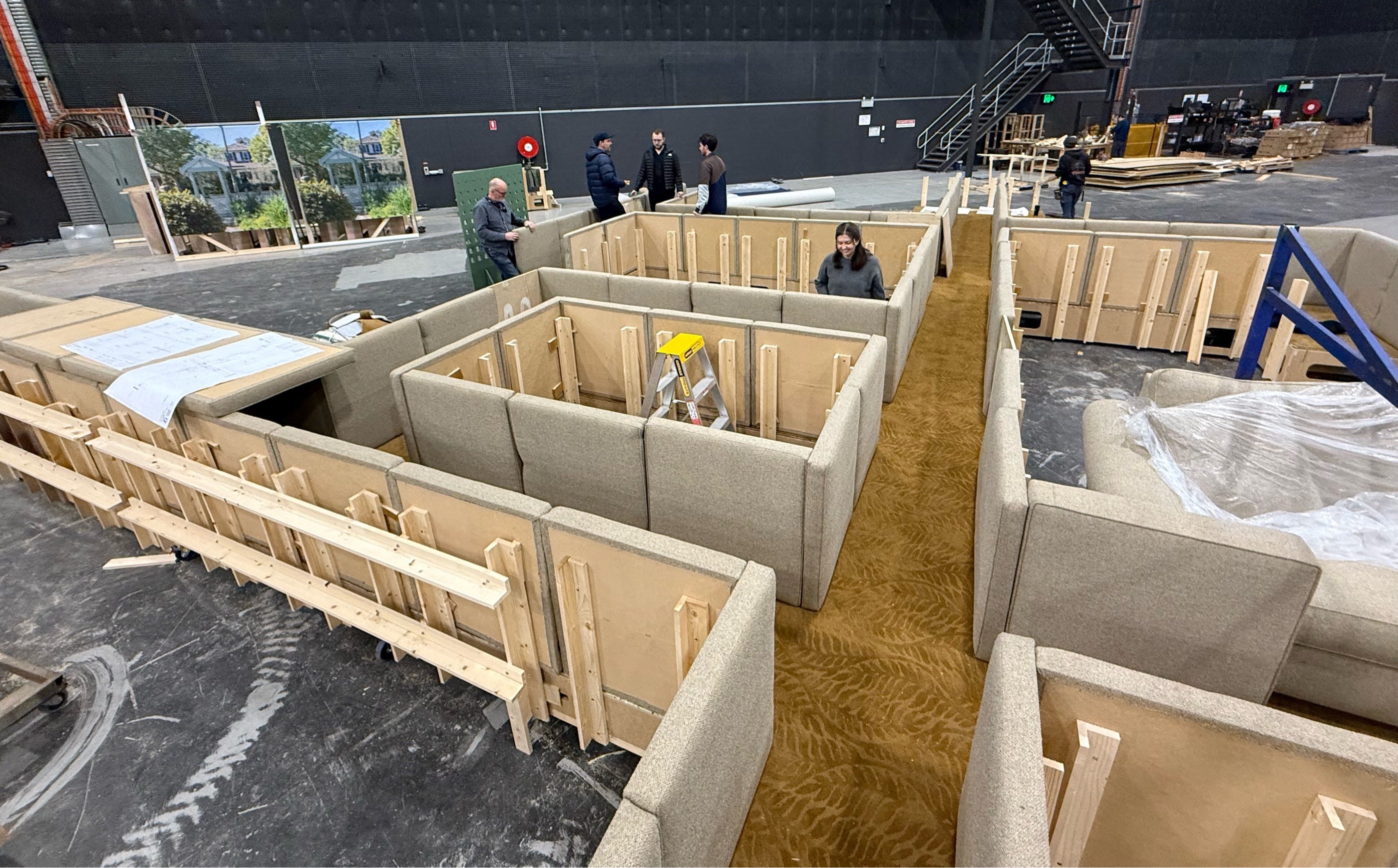
On the set of the pillow fort tunnels of “Insidious: Out Of The Further”, courtesy of Nick Bassett and Sony Pictures.
Kirill: How do you see generative AI today?
Nick: It’s very present. Even if we’re not using it, it’s talked about all the time. I see those conversations continuing for a long time.
As every creative tool, it’s occasionally quite useful. I’m definitely having a play with using it as a creative device. It is allowing me to get my ideas in order in quite a good way. I don’t see it as something that would give me a brilliant idea, but rather something that is a tool for visual enhancements.
We know all of the perils of it, and it’s almost like a cautionary thing we go into. That said, it’s not replacing anyone. I need set designers. I need builders. I welcome their opinions. My use for AI right now is to get my ideas across. If I want to apply different colors to the 3D set drawing, I could spend a long time doing that in Photoshop, or I can ask the AI to do a quick pass for the colors. It’s a useful tool that speeds my process, and things are speeding up already in the art department as I mentioned earlier.
I am slightly fearful of this aspect. I worry that it’s going to put everyone under much more time pressure. Ultimately, it might not be good for us to arrive so quickly at things that look finished. It might feel like great success to present these amazing things, but it can’t come at the expense of skipping steps and not fully figuring out what works and why it works. I really do like to go back to basics and allow my brain to think about it. But I’m always looking for tools to help me speed up my visual communication – so I’m right on the fence with it.
My kids are in creative fields and I worry for them. The current language around AI is so negative. As a young creative person it’s feeling very threatening, and I worry about that. I was lucky that I got to start at the bottom of an industry. I’ve been able to work as a creative person my whole life, and I’ve been able to do it in a slow-paced, methodical way. And now the expectation is that you can be an expert much quicker. I worry that we’re going to speed up and we’re not going to enjoy the learning.
I sit right on the fence with it. I see it as a useful tool now. I see it as a cautionary tale. What I hope is that anyone who’s interested in design or quality will keep learning to question things. Travel as much as you can. See as much as you can. Talk to people as much as you can. Learn and train your brain to see what reality is. It’s an interesting time. We’ve been through interesting times before, and this feels a little more unpredictable.
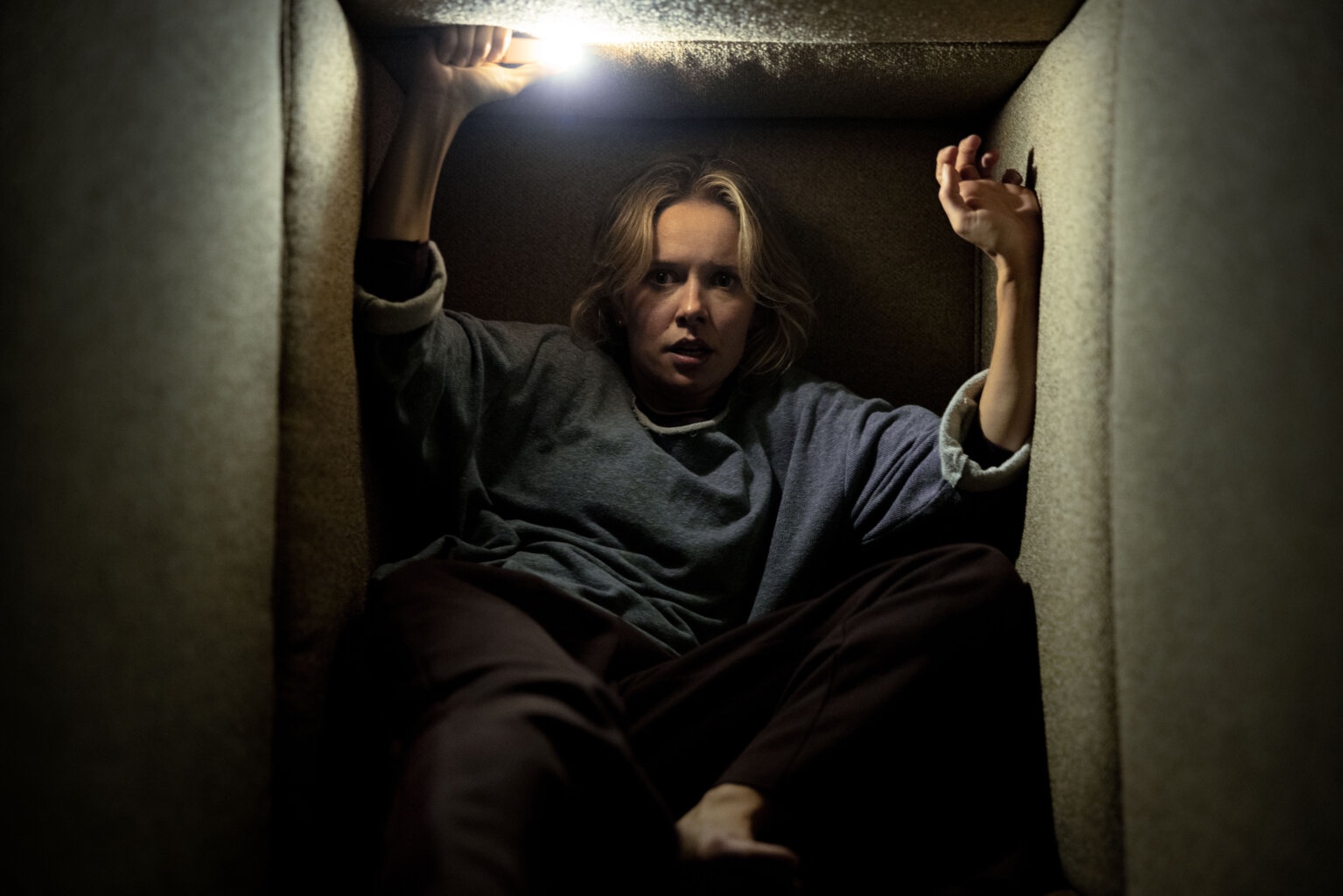
The final still of the pillow fort tunnels of “Insidious: Out Of The Further”, courtesy of Sony Pictures.
Kirill: What are the key ingredients or maybe the secrets to longevity in your field?
Nick: It needs to click for you that you’re there to tell a story. I don’t think everyone clicks to that straight away. You’re really there to bring this story to life. Once that clicks, it hooks you in and you realize there’s nothing as much fun as that. You’re privileged to be able to do it.
And then you have to figure out a way to survive the ups and downs of the career path and the financial side of it. If you really enjoy and see the potential in that, that does motivate you to have longevity in the industry.
Having done movies and TV shows seen by a lot of people, you wouldn’t want to listen to the critical audience too much [laughs]. You’re on your own journey. I’m trying to learn as much as I can as I go on each job. What have I learned on this one? How can I bring that to the next one? How can I teach or encourage people to do good work?
It’s a rewarding industry. If you think you’re going to be famous and make a lot of money, it’s definitely not the right fit. It can happen, but it happens to very few [laughs]. Those who love storytelling are hooked for life.
Kirill: If you’re randomly switching TV channels, what would be a movie or two that always grab your attention and make you stop flipping?
Nick: When I’m just trying to relax, I’ll always go to comedy movies. Watching high concept superhero movies is too much for me. I work in the industry and I know how hard they are to make. So I go to things that are quite basic. My wife always laughs. She’ll put on a movie and I’ll fall asleep if it’s too much action. But if it’s two people talking and it’s a good drama movie, I can hook into it. The simpler, the better.
I am drawn to ’80s comedies. That’s my default if I want to relax. I don’t watch all the horrors that come out. I work on them, and I don’t watch them, funnily enough. If someone says watch it as a good reference, I’ll dive into it.
I love a Larry David sketch or Seinfeld. That’s me through and through. You look at the set behind them, and it’s the most basic set you could ever imagine. But it’s so clever in my mind because I’m listening to what these people are saying.
Kirill: Of all your professional travel for work in the last couple of years, what was your favorite dish or cuisine?
Nick: Good Japanese is my default. Melbourne has incredible food throughout the whole city. I wish I remembered the name of this great Japanese restaurant down this little alleyway. It was a street vendor and it was the best. It’s great to go to such a place with somebody who you know well, who you work with a lot, who you travel with a lot. You find a good restaurant, and you can chat about your day and also eat this great food. Anyone who’s traveling to Melbourne will be absolutely spoiled for food.
And here I want to thank Nick Bassett for sharing his time with me to talk about the art and craft of production design, and for sharing the supporting materials. I also want to thank Alix Becq-Weinstein for making this interview happen. “Insidious: Out Of The Further” is playing in movie theaters now. Finally, if you want to know more about how films and TV shows are made, click here for additional in-depth interviews in this series.
