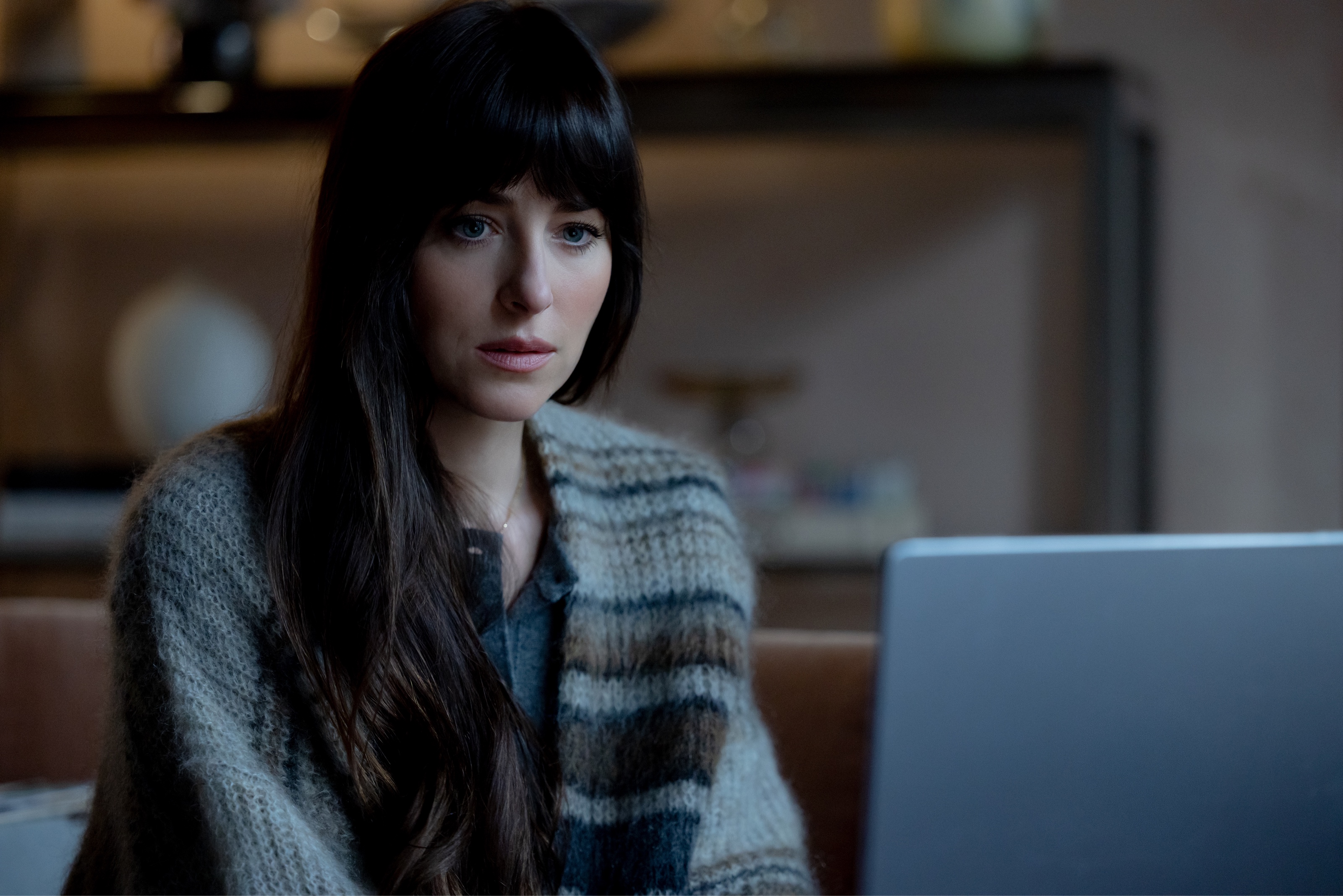
 Costume design of "Verity" by Jacqueline Demeterio, courtesy of Amazon MGM Studios.
Costume design of “Verity” – interview with Jacqueline Demeterio
Continuing the ongoing series of interviews with creative artists working on various aspects of movie and TV productions, it is my pleasure to welcome Jacqueline Demeterio. In this interview, she talks the challenges of working on contemporary stories, her thoughts about generative AI, and key ingredients to longevity in the industry. Between all these and more, Jacqueline takes a deep dive into her work on the just-released “Verity” that is playing in movie theaters in its second week.
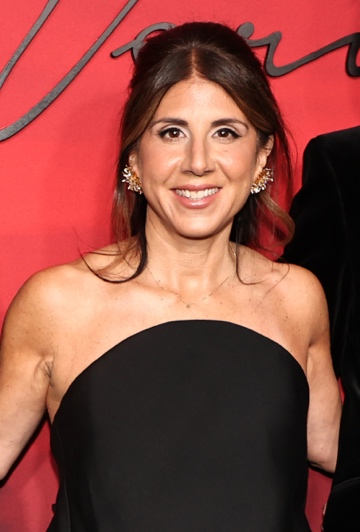 Kirill: Please tell us about yourself.
Jacqueline: My name is Jacqueline Demeterio. I’m the costume designer on the film “Verity”, and I have been a costume designer since 2007.
Kirill: I was looking on your IMDB page and most of your recent productions are contemporary stories. What do you feel is the biggest challenge with working on contemporary productions?
Jacqueline: Contemporary has changed so much with the whole social media aspect and people have such easy access to identifying your work immediately. You put something on screen, and they identify the designer of it or the brand and where you can purchase it. Your work is vastly shown across everywhere [laughs].
Contemporary fashion is a lot of what I do. For me, it’s about being able to create characters as well – and not just to look like it’s just fashion pieces. It’s important to have each character have their individual style that tells their story on the screen. It’s storytelling through costumes. If you’re doing period pieces, you can be much more specific with making pieces and building pieces. I still make and build pieces in contemporary style, but there is also a lot that is purchased or shopped or lent from different design houses. It’s about making it speak to the audience and not just look flat.
Kirill: Something that stood out to me in “One Night Only” was that little sequin dress, and on “Verity” you have this beautiful red dress. Do people reach out to ask where they can get some of the pieces that you brought to the screen?
Jacqueline: They reach out a lot, even about work that I’ve done years ago. People are still asking me where I got things for the movie “The Intern” which was the first time I worked with Anne Hathaway back in 2014. “Younger” from 2015 was a big show, and they started streaming that on Netflix a couple of years ago. So there was a whole new fan base that came through, and I was getting all these inquiries about where people could buy this or buy that. What can I tell them? I shot that ten years ago. It’s not available anymore [laughs].
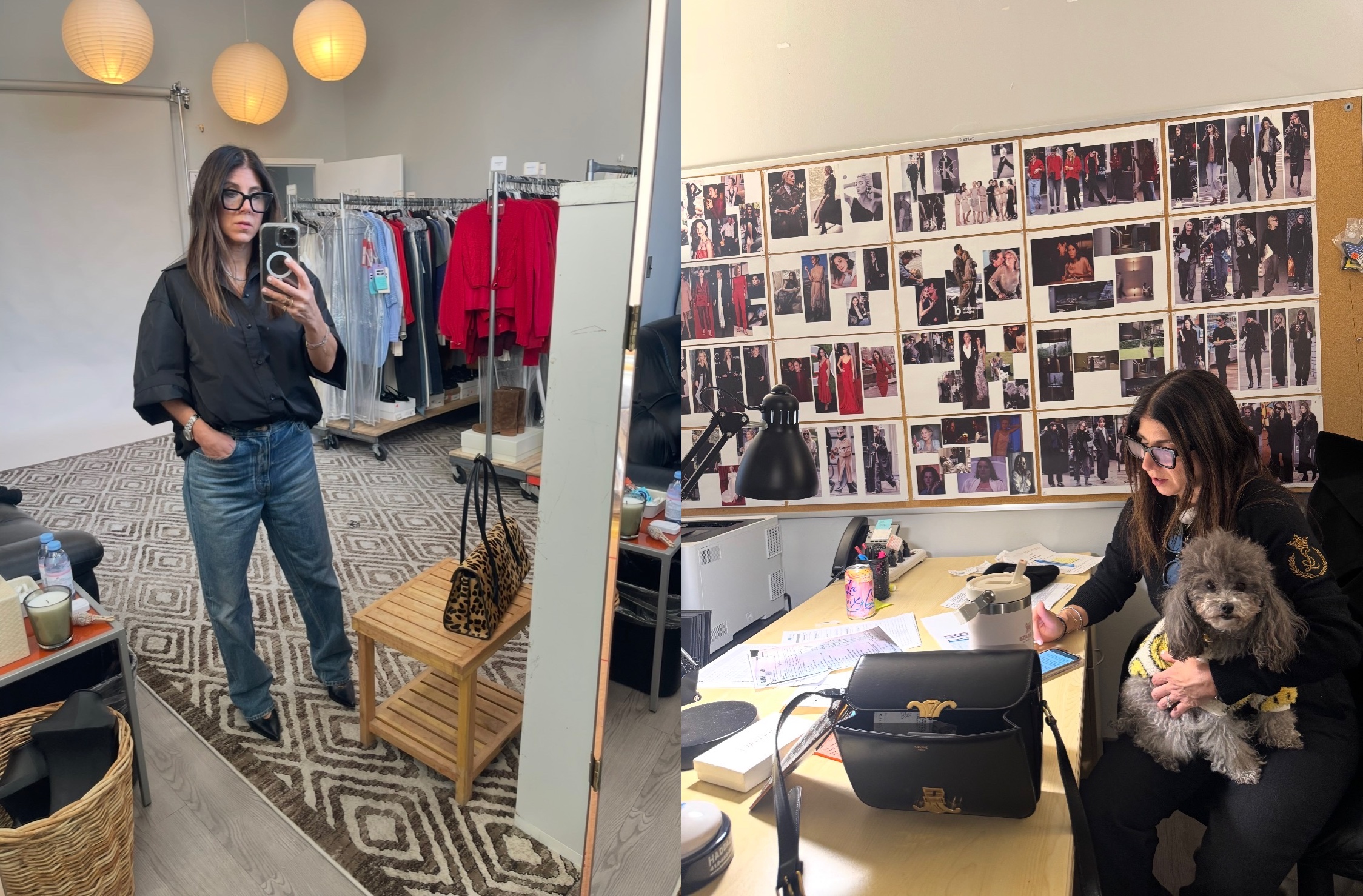
Behind the scenes of the costume department of “Verity” with moodboards and costumes. Courtesy of Jacqueline Demeterio.
Kirill: Getting to “Verity”, when and where did it find you, and how did you get to join it?
Jacqueline: I did a movie called “The Idea of You” with Michael Showalter, and we had a wonderful experience working together. For Anne and I this is our fourth project together. When Michael asked me to do “Verity”, I immediately said yes because we had such a great collaboration on “The Idea of You”, and I was more than happy to join him again.
Kirill: How much do you have to work with when you read the book and when you read the script in terms of the costume, and how much is yours to explore?
Jacqueline: Going back to “The Idea of You”, I read the book first, and then I read the scripts – and things were different. I felt that I was getting a little confused when I was putting the ideas of what I had from the book into the script. They were two separate things, and I didn’t like that.
When I started on “Verity”, I read the book, but I said to myself that I want to make what we’re doing on screen. There definitely should be some crossover, but I knew that we were doing things a little bit differently. So I wanted to do it from my own visual standpoint and not have the book too much in my thought process. I did pull some inspiration from it, and then it went into the discussions with Michael, the discussions with Anne, the discussions with Dakota, the discussions with Josh about how they saw the characters. Of course they read the book as well, so that was important, but we wanted to make it our own as well.
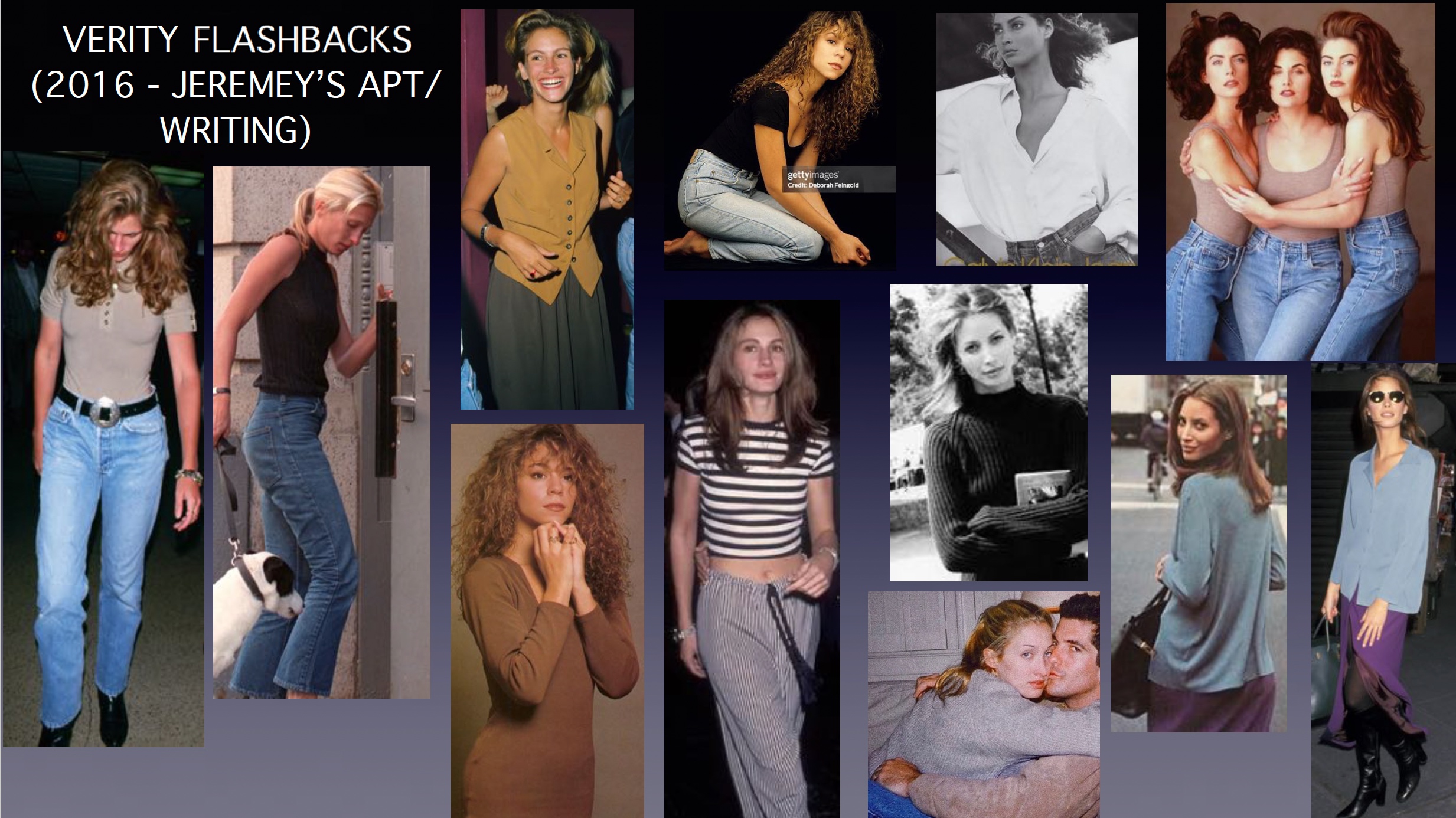
Costume moodboards for “Verity”. Courtesy of Jacqueline Demeterio.
Kirill: What is your approach to the main characters – one at a time, or all at the same time?
Jacqueline: It’s important to do both. I usually start with the individual to get my thought process going, but I also think of them together. I start to make my inspiration boards for each character. Then once I start to do fittings, I have to always think about how everybody is going to look as a whole. How is this all looking when they’re together? Is this how this character is dressing? If this is the thought process behind this character, what does it mean for this character when they’re together?
I start individually and then bring them all together. At that point, if I think things aren’t working as a whole, then I will pivot.
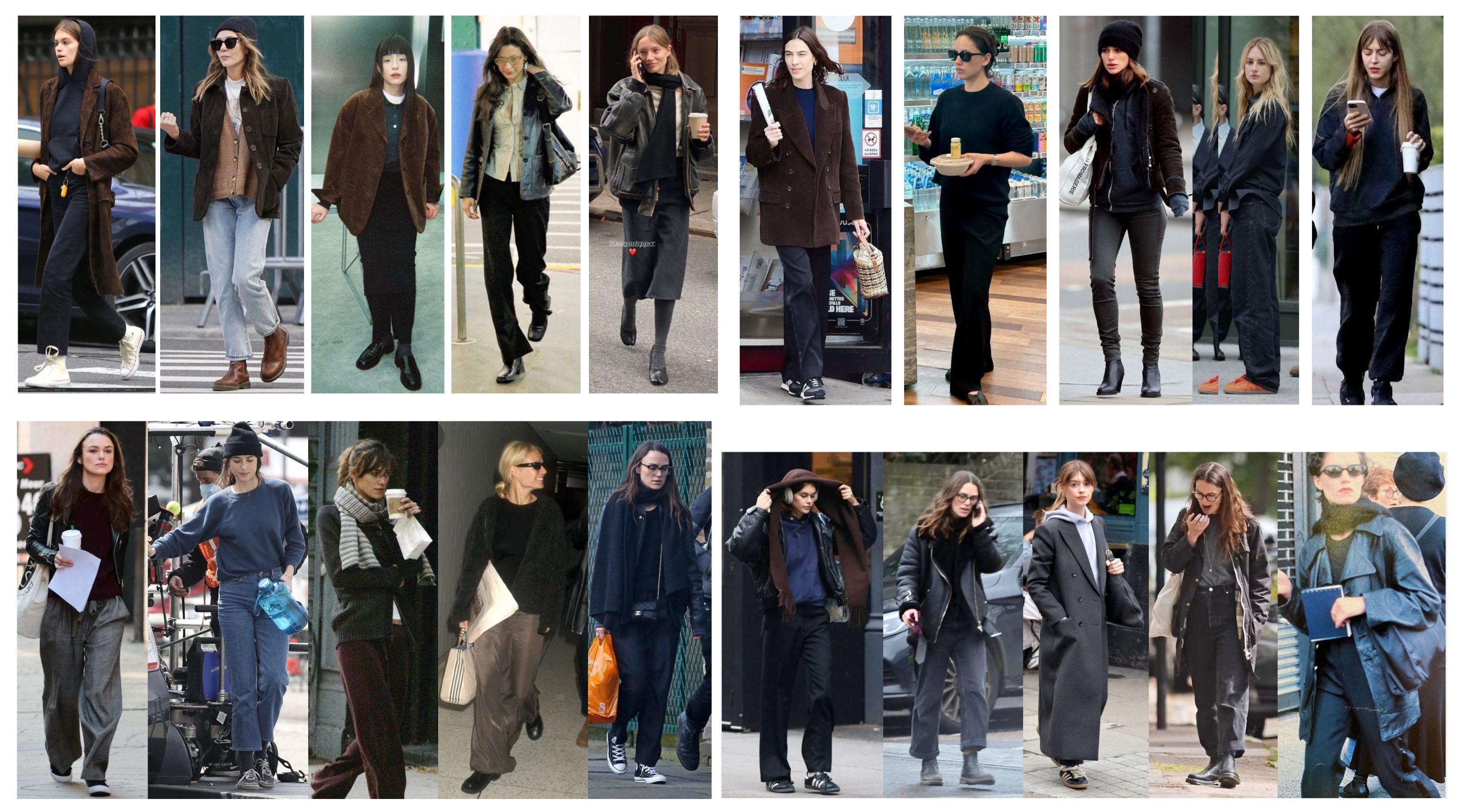
Costume moodboards for “Verity”. Courtesy of Jacqueline Demeterio.
Kirill: Starting with Lowen, how do you see her arc from a struggling author living in a rundown apartment to her gradually taking over this glamorous life of another woman?
Jacqueline: She definitely starts out as an edgy Brooklyn girl, and that had to reflect in her clothes. At the beginning she doesn’t have a lot of pieces in her wardrobe in that tiny apartment. When we first meet her, she is a bit guarded. She’s coming to this house and she’s layered with her sweaters and her leather jacket. She has a little bit of a tough exterior. There’s a protectiveness around her. She’s not vulnerable at this point, but she’s got a lot of mixed feelings. I think she’s coming into this a little bit trepidatious.
It was important to also have the differentiation of her being this edgier character coming into the luxurious home and wardrobe of Verity. You needed to have them contrast. She starts out that way, and over time that she spends in that house, she starts to have all these different feelings. You see her evolve into feeling that maybe I could live this life.
You really see that when they go out to dinner for her birthday and she gets into the red Versace dress. That’s the first time you see her transform. Then she evolves, and then at the end you see her evolve into her version of a successful writer. By the end she is much more put together, chic, a little bit more like luxurious high end – but there’s still a feeling of Lowen to me. It wasn’t too much of a departure, but her version of what her success would look like.
Kirill: What does high end mean today? Is it more muted colors and emphasis on more expensive fabrics?
Jacqueline: High end would be luxurious fabrics. It could fall into quiet luxury, but it’s definitely fabrication, the way things fit, the silhouettes, the way that they’re photographed. There’s a lot of thought process in fabrics and how they’re going to photograph.
We looked at what that silk charmeuse was going to do on camera and the lighting, and what it was going to do in the water. It’s all thought out. It has to look luxurious – this to me is what high end is.
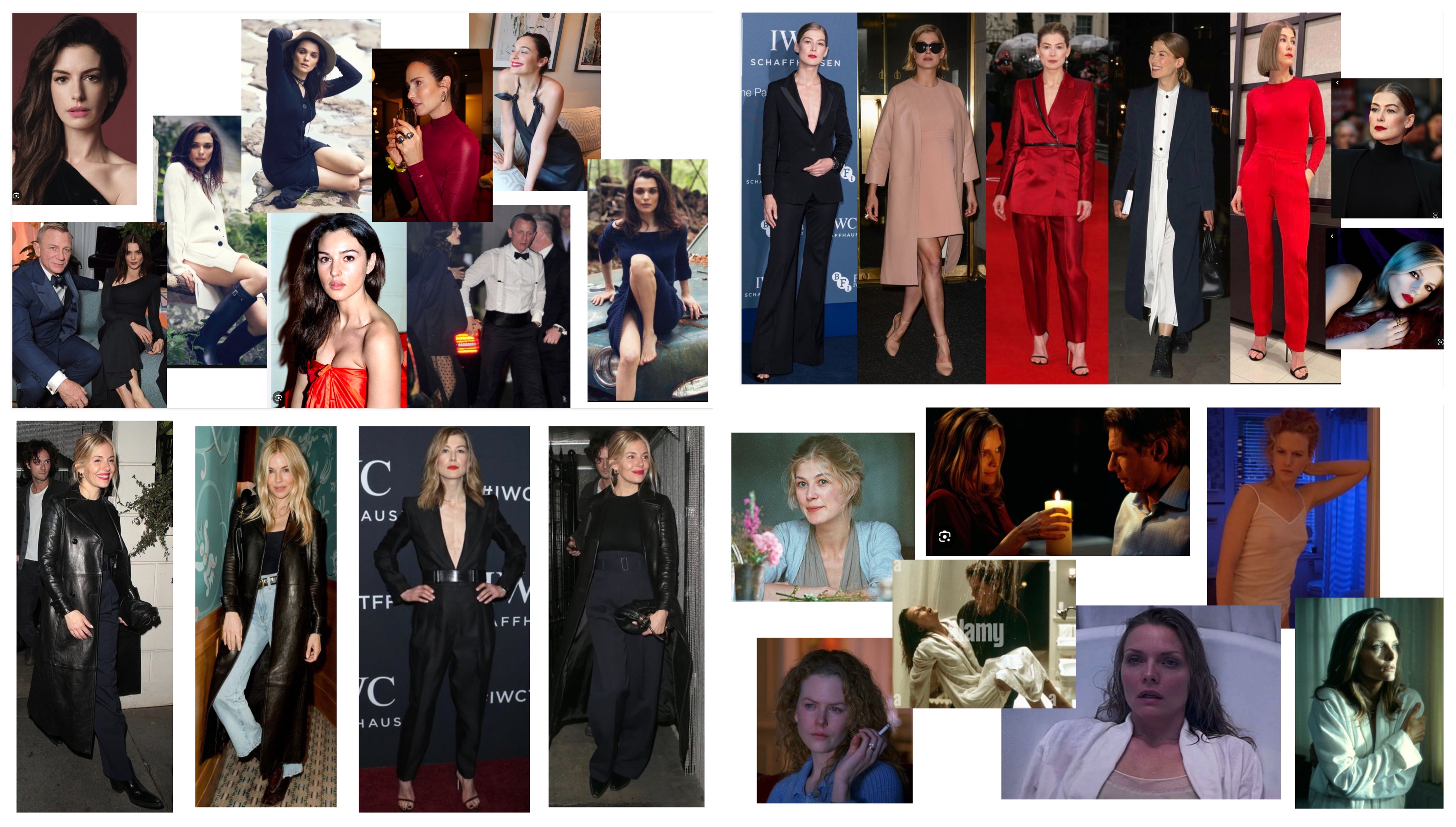
Costume moodboards for “Verity”. Courtesy of Jacqueline Demeterio.
Kirill: The way Verity’s story is told through costume on the screen has three parts. There’s the period when they just started dating while she wasn’t a famous writer. Then there’s the jump forward to her being a worldwide known author. And in between the flashbacks she’s homebound and bedridden. Would that be a fair assessment of your intent?
Jacqueline: I’m happy that you recognize that because that was very intentional. That was a collaboration between Anne and I and Michael. We wanted that to be three separate things, or rather four. There is a coma look to separate her in the wheelchair and her being bedridden.
When she’s first starting out in the apartment and she doesn’t have a lot of money, she looks softer. We used softer colors. She had a pretty yellow sweater. She looked a little bit more vulnerable. Between Anne and I we kept saying that she was a little coquette.
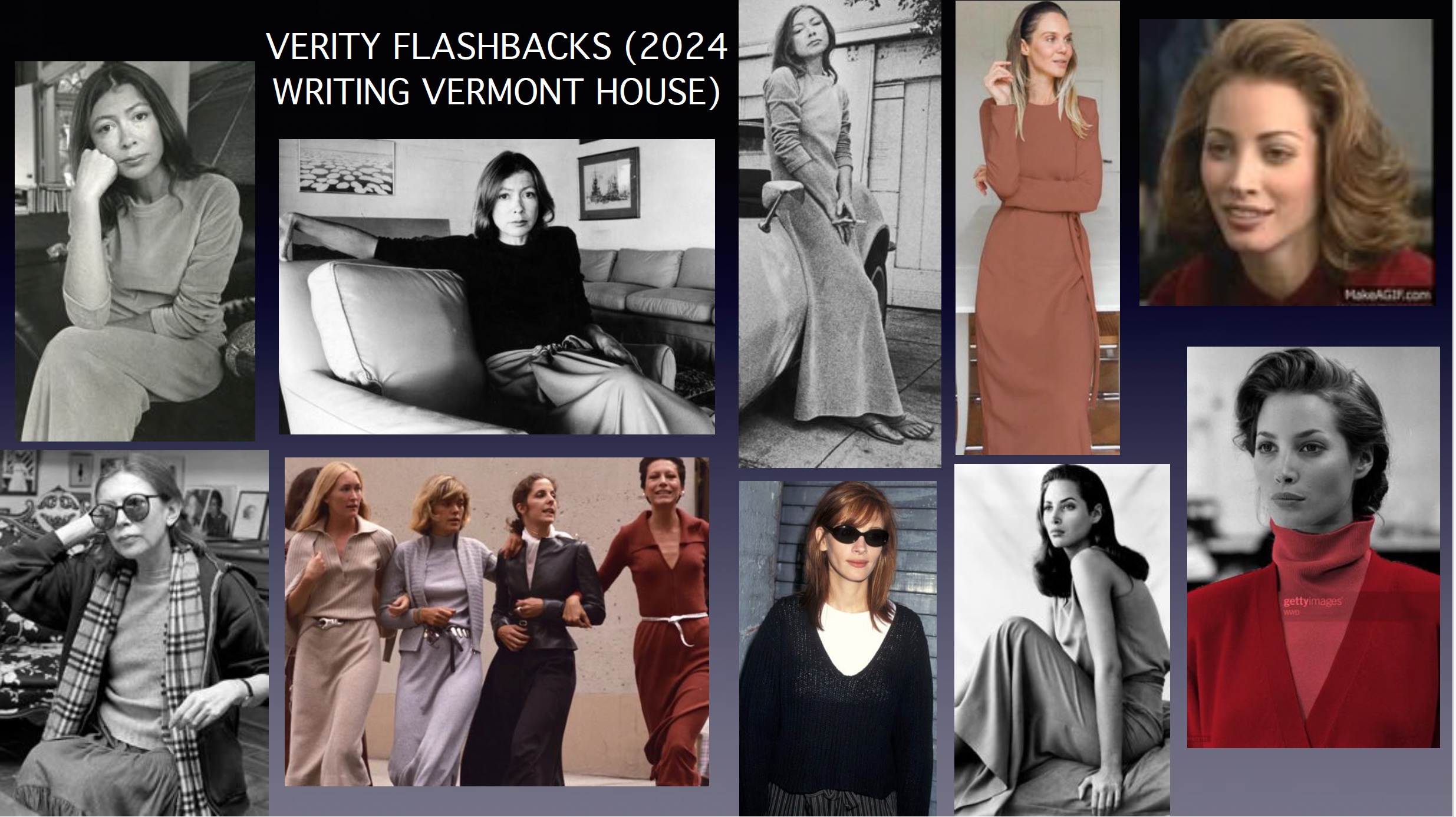
Costume moodboards for “Verity”. Courtesy of Jacqueline Demeterio.
When she does become successful, and she has the public version of herself in the world for interviews and guest appearances, I wanted that to be super chic, and to ooze luxury. It’s fabrication. It’s the estate jewelry pieces that I used. She is exceptionally coiffed. And then when she’s at home writing, Anne and I decided that Joan Didion was a good inspiration. It’s her home. She’s in her home office. Amy [the production designer] had started to show us what she was going to do for the office, and we decided to go into that Joan Didion world of knitwear, matching sets of tops and pants. She’s always in her red sweater.
I was looking at old runway shows from Missoni for inspiration. I wanted it to be interesting. I wanted it to have a certain color and texture, but I didn’t want it to be the shiny luxurious version of when you see her public persona out in the world. What is she writing in? It’s still these luxurious fabrics, but it’s more like knitwear and it’s a little bit more grounding.
Then, when she is bedridden, she is in her white nightgown. She has her oversized sweaters. We were using light gray tones and whites. We wanted her to be ghostly in those images.
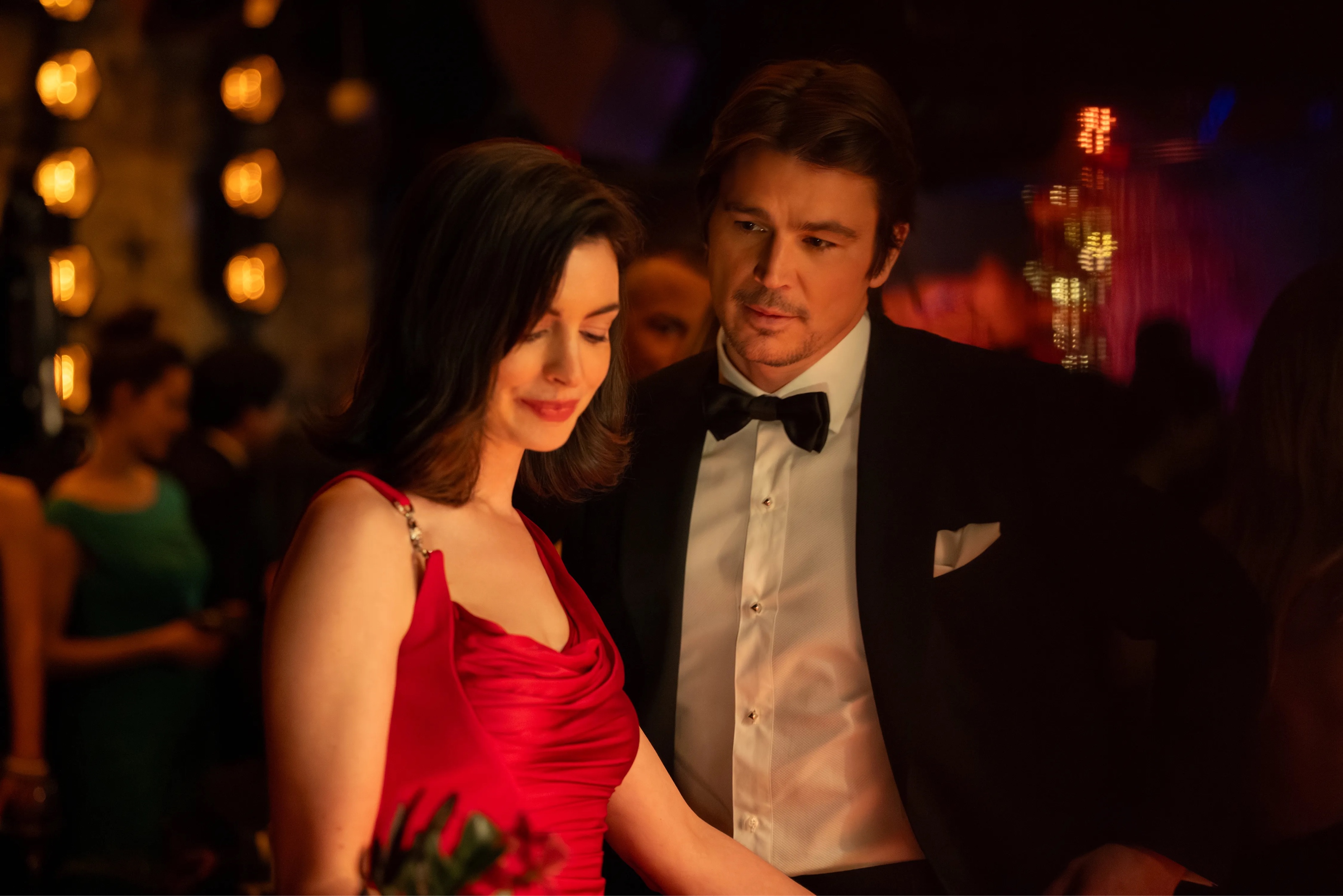
Costume design of “Verity” by Jacqueline Demeterio. Courtesy of Amazon MGM Studios.
Kirill: How many different shades of red did you try, and how many different cuts of the red dress did you go through until you found the one?
Jacqueline: Somewhere around 25 dresses. We started looking around, then we started to make a red dress, but we never truly loved it. And then we were two days away from shooting the scene with the red dress, and I ran around all over New York city, and I gathered up as many red dresses hat I liked. Anne and I tried them all, and we fell in love with three of them. Then, between Anne, myself and Michael, we all decided on the Versace red dress.
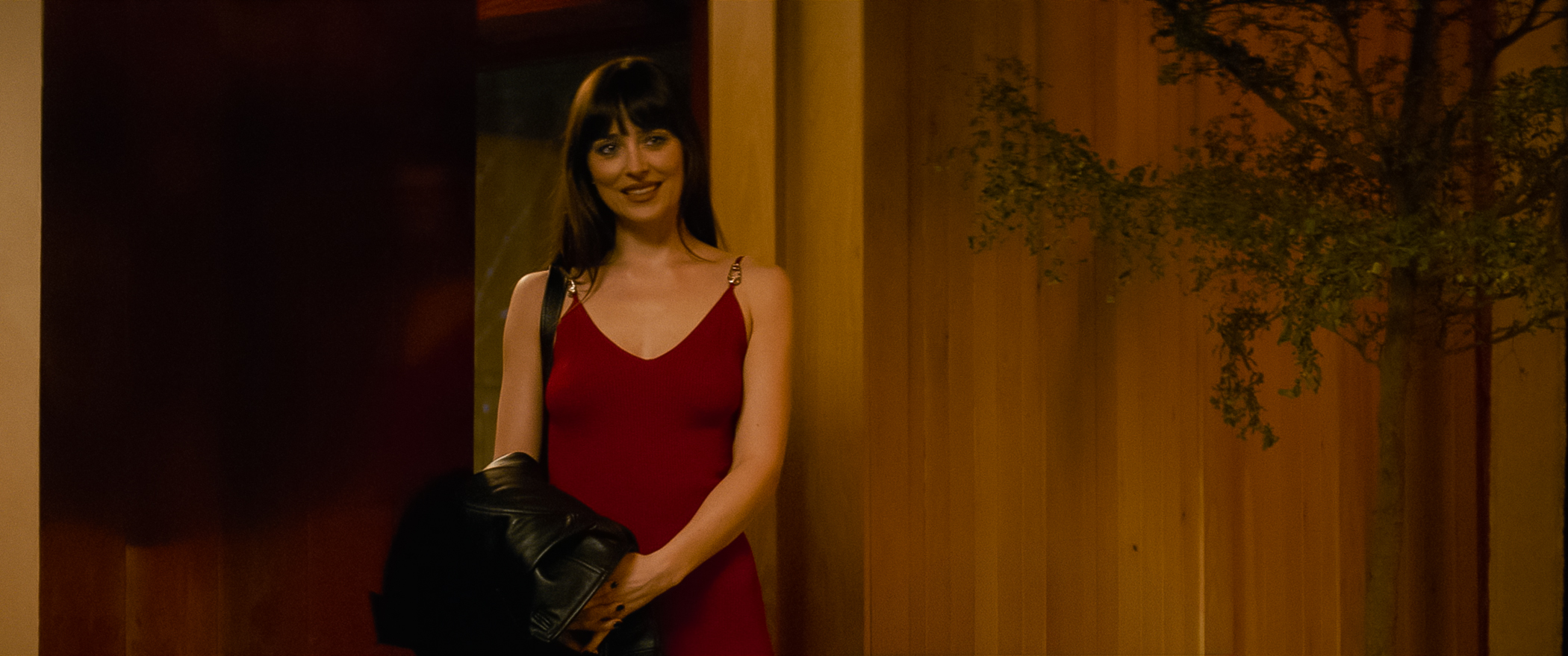
Costume design of “Verity” by Jacqueline Demeterio. Courtesy of Amazon MGM Studios.
Kirill: Would it be fair to say that the world of fashion has more depth and breadth around womenswear? Do you find that the world of men’s fashion is a bit more restricted, in a sense?
Jacqueline: There’s definitely some truth to that. There are interesting men’s pieces out there for sure, but you can have more play with women without there being some sort of a label on them in certain things with men. If you’re putting something a little bit more outlandish on this person, they become something else. It’s a delicate line.
Looking at Jeremy, he’s in his home in Vermont. What is he wearing? How crazy are you going to want to get? In this story he’s a father at home in Vermont. The weather is cold. But he has to have some appeal to him for Lowen to fall for him. He has to have this masculinity, which he naturally has. Josh didn’t want to be a sex symbol in the movie. He wanted to have a story behind him. He wanted to have a lot of thought in what he was wearing.
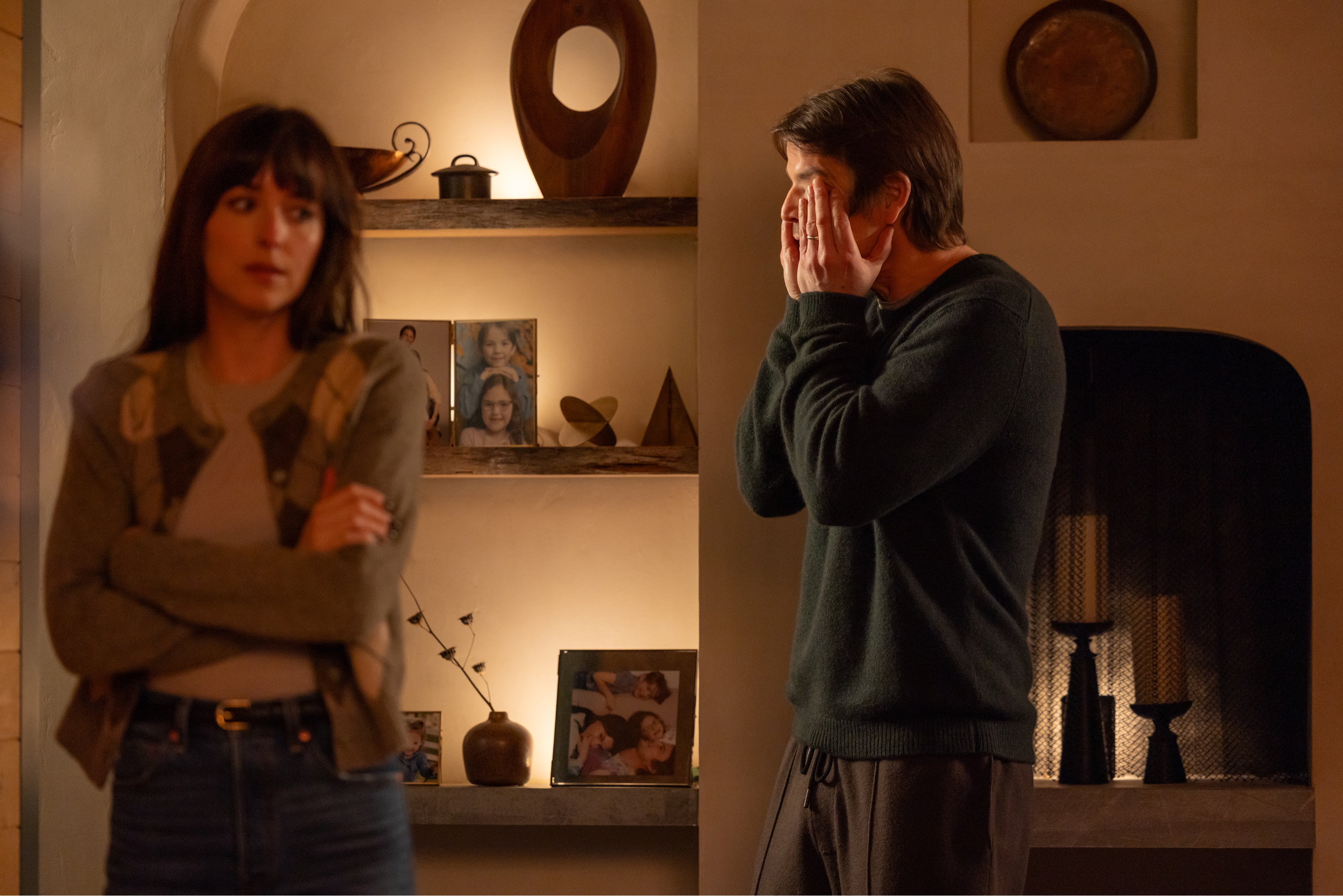
Costume design of “Verity” by Jacqueline Demeterio. Courtesy of Amazon MGM Studios.
When he and Lowen are walking in the woods, he has knitwear and an outwear jacket on. And there was that one that I did with plaid and jeans. It still has to make sense, but you want it to look good as well. But you’re right, there isn’t as much in the menswear. And if there is, it can quickly become overstyled or overdone. It can get hard – how many navy and gray sweaters are you going to look at? There’s not a lot, but it has become more over the years. Definitely menswear has grown.
Kirill: Without too many spoilers, how many sets of clothes did you make for Lowen when she first meets Jeremy at that city intersection?
Jacqueline: We had five or six ready to go, but I’m not sure how many we ended up using. We did a blood test on that, and we knew there was going to be a lot of it. We did have quite a few coats, a few sweaters that she had underneath, the pants, the whole look. And then she changes into his white shirt, and we had multiples of those in case she got blood on the shirt with her on her neck and everything.
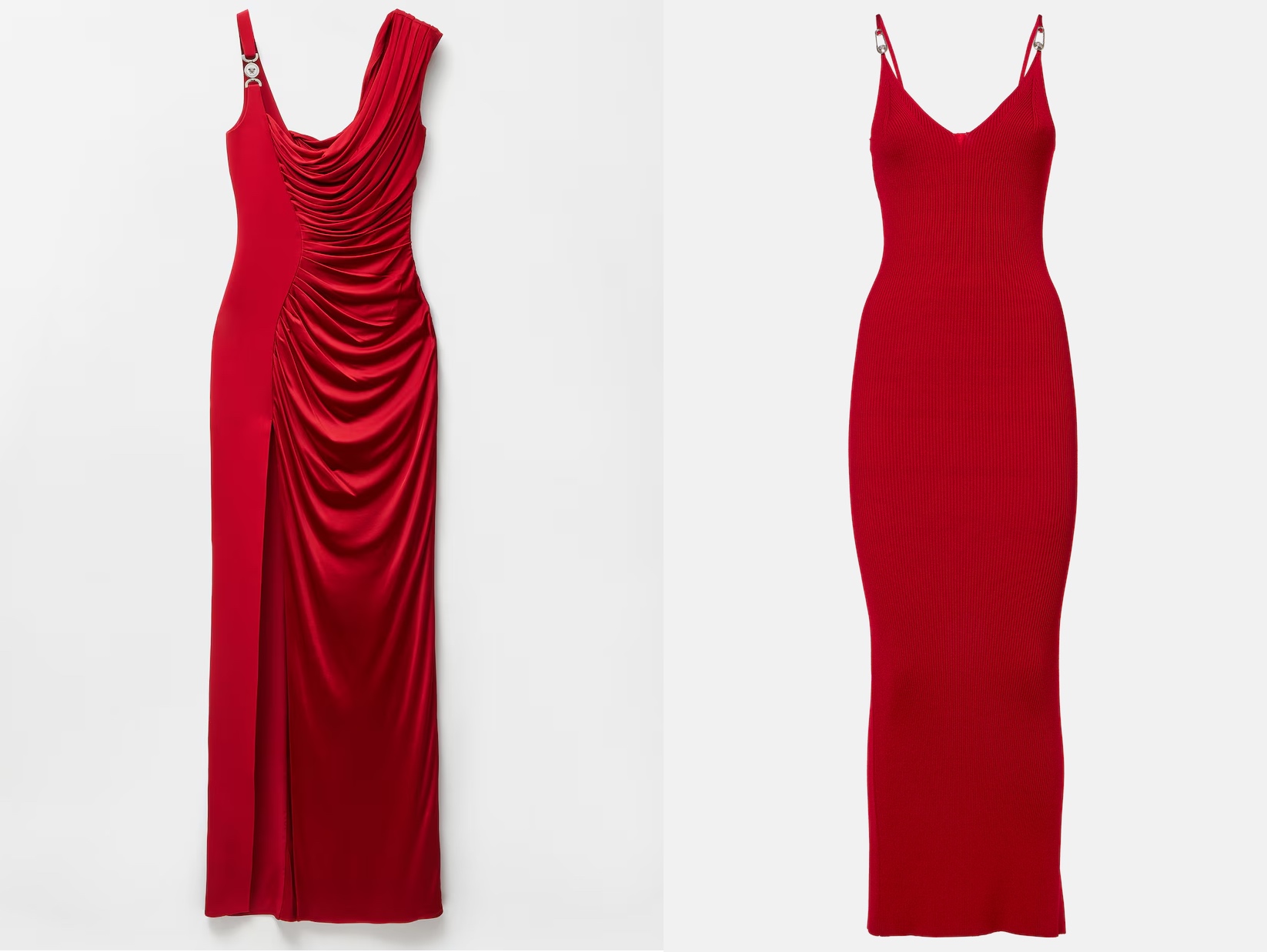
Versace dresses of “Verity” (left, right).
Kirill: Some people see generative AI as yet another tool to adopt, and some see it as an existential threat to human creativity. How do you see it today?
Jacqueline: I see it a little bit as both. I try not to use it very often. I try to use my own creativity. It can be useful to put in an image and ask it to turn this to another color – to quickly see what it would look like.
A lot of what I do is so personal. It’s hours and hours talking directly to the actors. I have to be there on set. A big part of their characters coming to life is because of the costumes. A lot of them find their characters in costume fittings, and I don’t think AI can do that. I’m hoping that the human touch and the human nature of it all is successful in all of that.
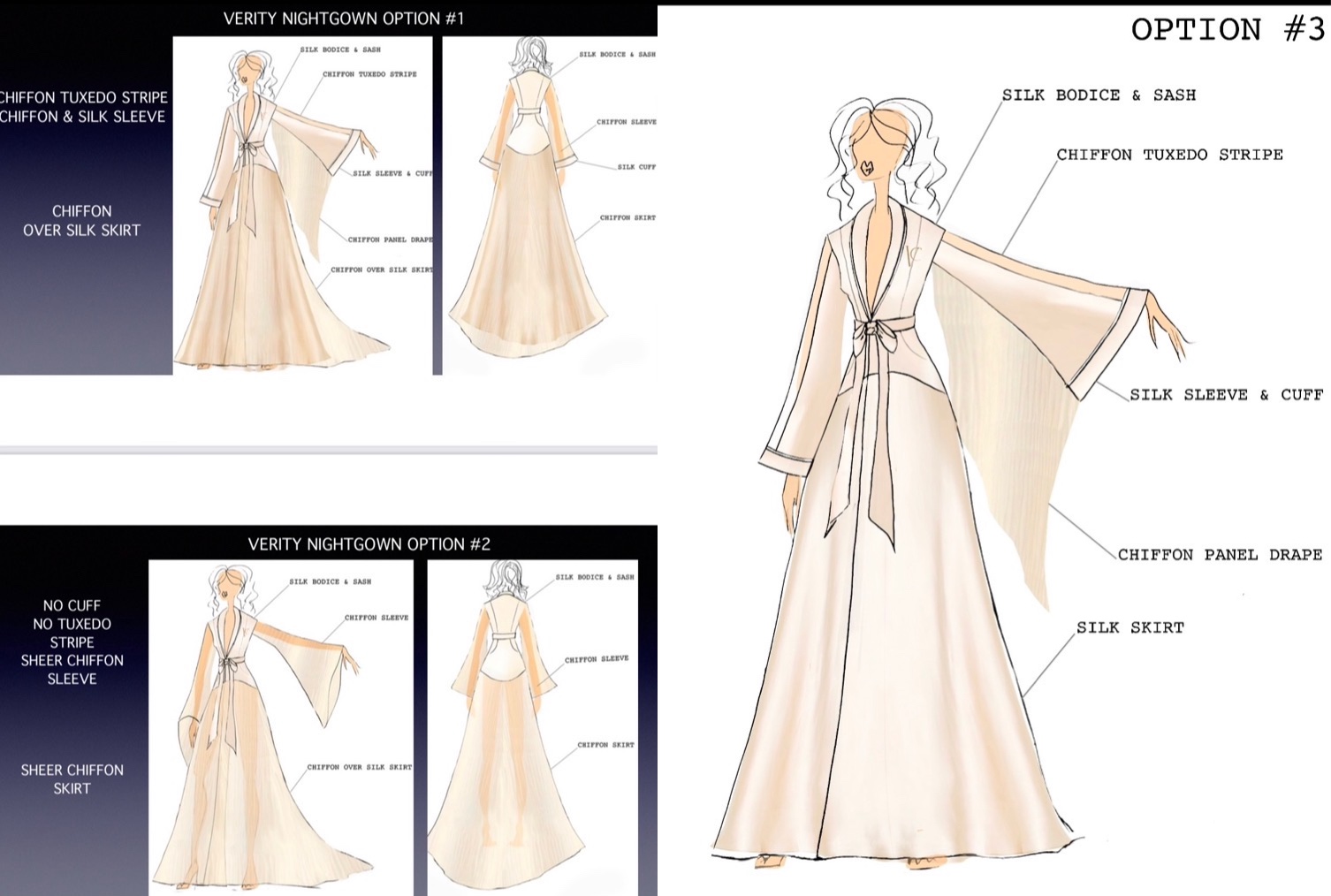
Nightgown costume sketches for “Verity” by Lyndsea Lamarr. Courtesy of Jacqueline Demeterio.
Kirill: What are the key ingredients to longevity in this industry?
Jacqueline: Patience would be the first one. And another one is being able to work with a lot of different personalities. My own personality is pretty even keel throughout everything. You can be in a lot of stressful situations. I feel that people do enjoy that I don’t get nervous about things or too stressed out. People see that things are going to be handled.
It can be challenging and tough. But when you have that confidence and ease about making everybody feel like it’s going to be OK and not to worry – they respect that. It’s important for everybody. Filmmaking can be crazy, and people don’t really know all the ins and outs of it. I always say that it’s always going to work out – because it does. It always works out [laughs].
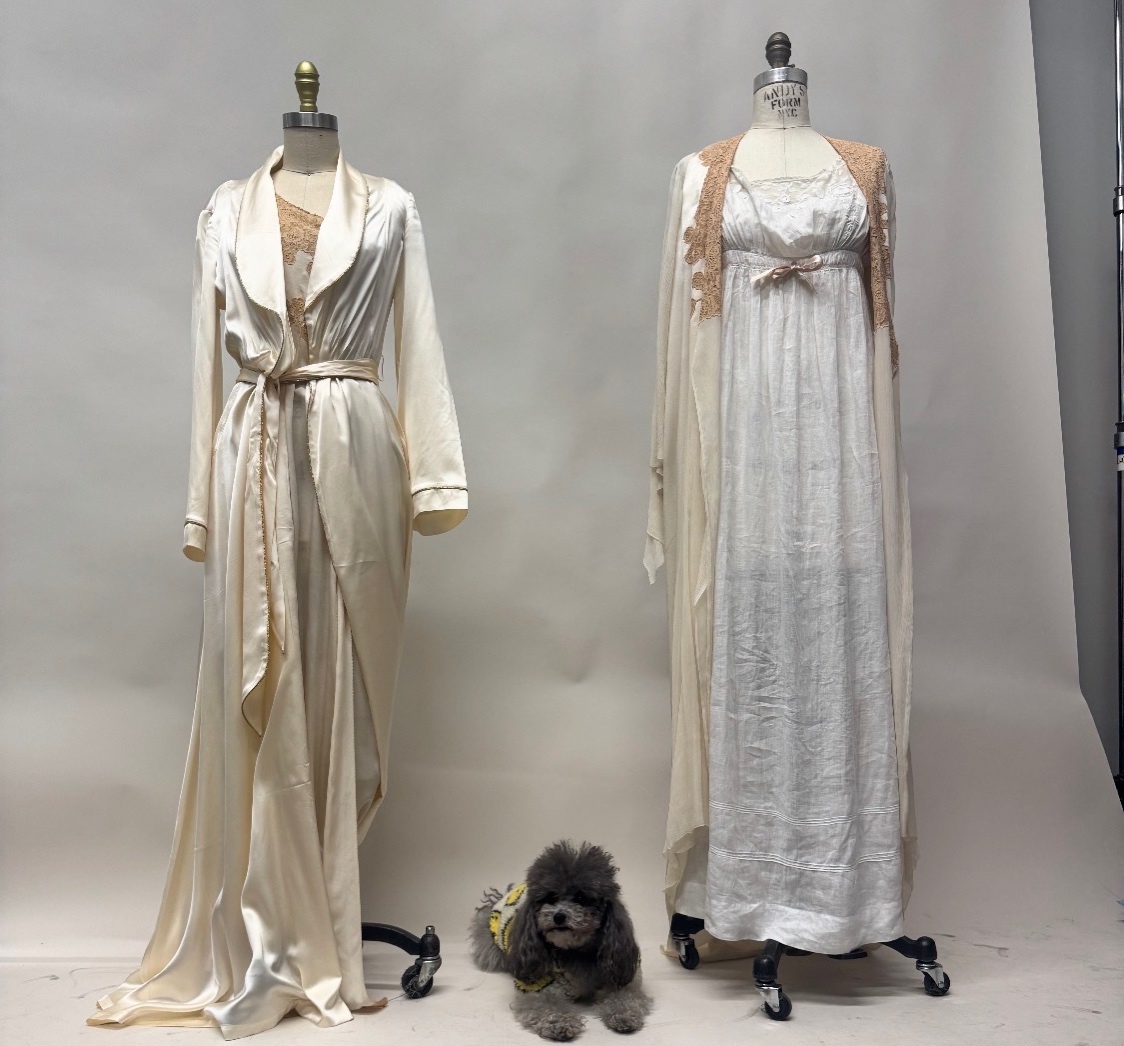
Finished nightgown costumes for “Verity”. Courtesy of Jacqueline Demeterio.
And here I want to thank Jacqueline Demeterio for sharing her time with me to talk about the art and craft of costume design, and for sharing the supporting materials. I also want to thank Alex Drapac and Maddie Hilf for making this interview happen. “Verity” is playing now in movie theaters. Finally, if you want to know more about how films and TV shows are made, click here for additional in-depth interviews in this series.
