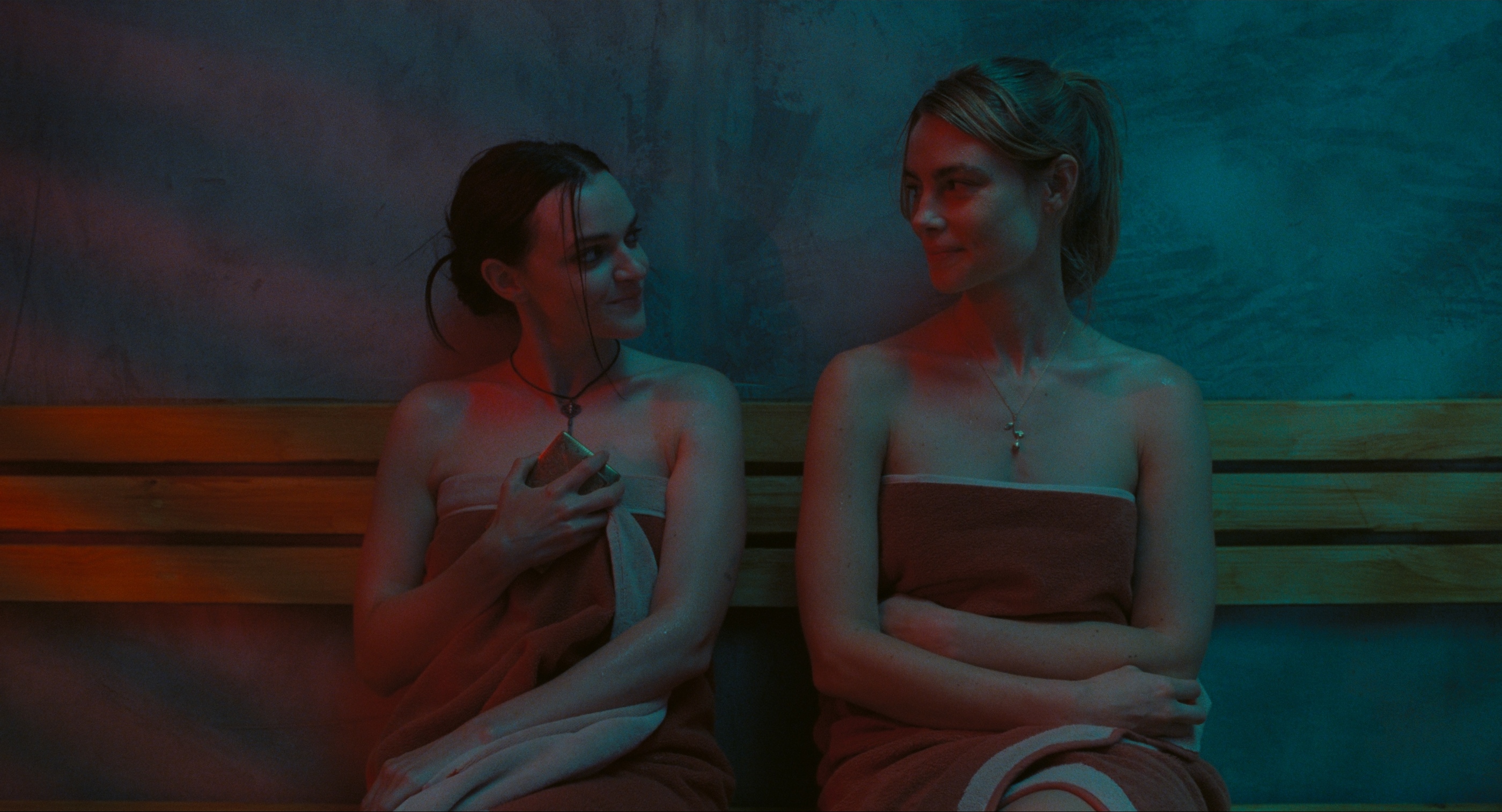
Cinematography of “I Live Here Now” – interview with Aron Meinhardt
Continuing the ongoing series of interviews with creative artists working on various aspects of movie and TV productions, it is my pleasure to welcome Aron Meinhardt. In this interview, he talks the role of cinematography, the transition of the industry from film to digital and his love for film as medium, advances in LED lights, and his thoughts on generative AI. Between all these and more, Aron takes a deep dive into his work on the recently released “I Live Here Now”.
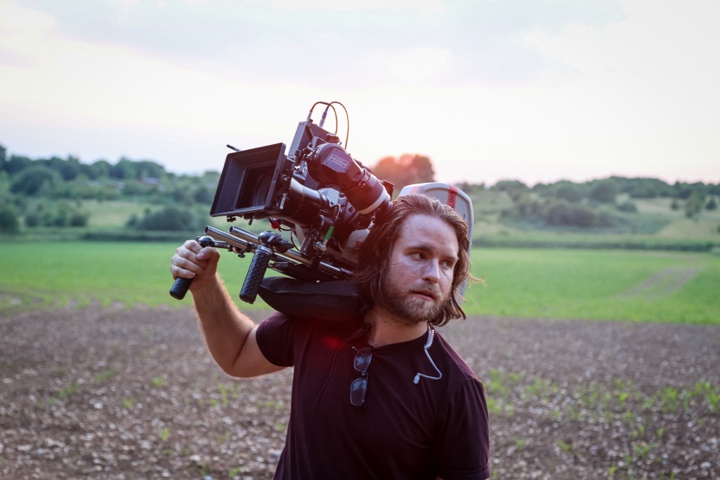
Aron Meinhardt during the production of “I Live Here Now”, photography by Robert MacCready.
Kirill: Please tell us about yourself and the path that took you to where you are today.
Aron: I came to film pretty late. I grew up in rural Vermont, and the idea of making movies on any professional level was definitely not on my radar. I would make films with friends, but honestly, they were more interested in it than I was. I’d help out with their movies, and make some of my own, and do little stop motion animations, and other fun stuff.
In high school I was interested in philosophy and comparative religions, and I thought that I would go to college for that and probably have an academic career – and suddenly I lost interest in all of that. As a teenager, I was looking for personal answers, and once I found those answers for myself, it wasn’t clear to me what I was going to do. During my last year at high school they offered a filmmaking elective, and I loved it.
I read Robert Rodriguez’s “Rebel Without a Crew” which made it all feel possible – compared to a lot of different directors that make it sound like they’re the only ones who can do this. His book talked about how anybody can do this, and made it so accessible. I took a year off and took some filmmaking and writing classes at the community college, and then I enrolled in a small film school in Vermont called Burlington College that doesn’t exist anymore. At that point I wasn’t sure if I wanted to write or direct or edit or what not. I knew it was creative, but I went hard learning to become technical because it’s such a technical industry. We didn’t have a lot of money when I was growing up, and I knew that I needed a bankable skill, and by being technical you can make sure people rely on you for the technical expertise.
I fell in love with camera. For me it’s the perfect marriage of creativity and technicality and art and science. I love the interaction between having these creative ideas and figuring out how to execute them in the physical world. I never looked back, and it’s camera for me.
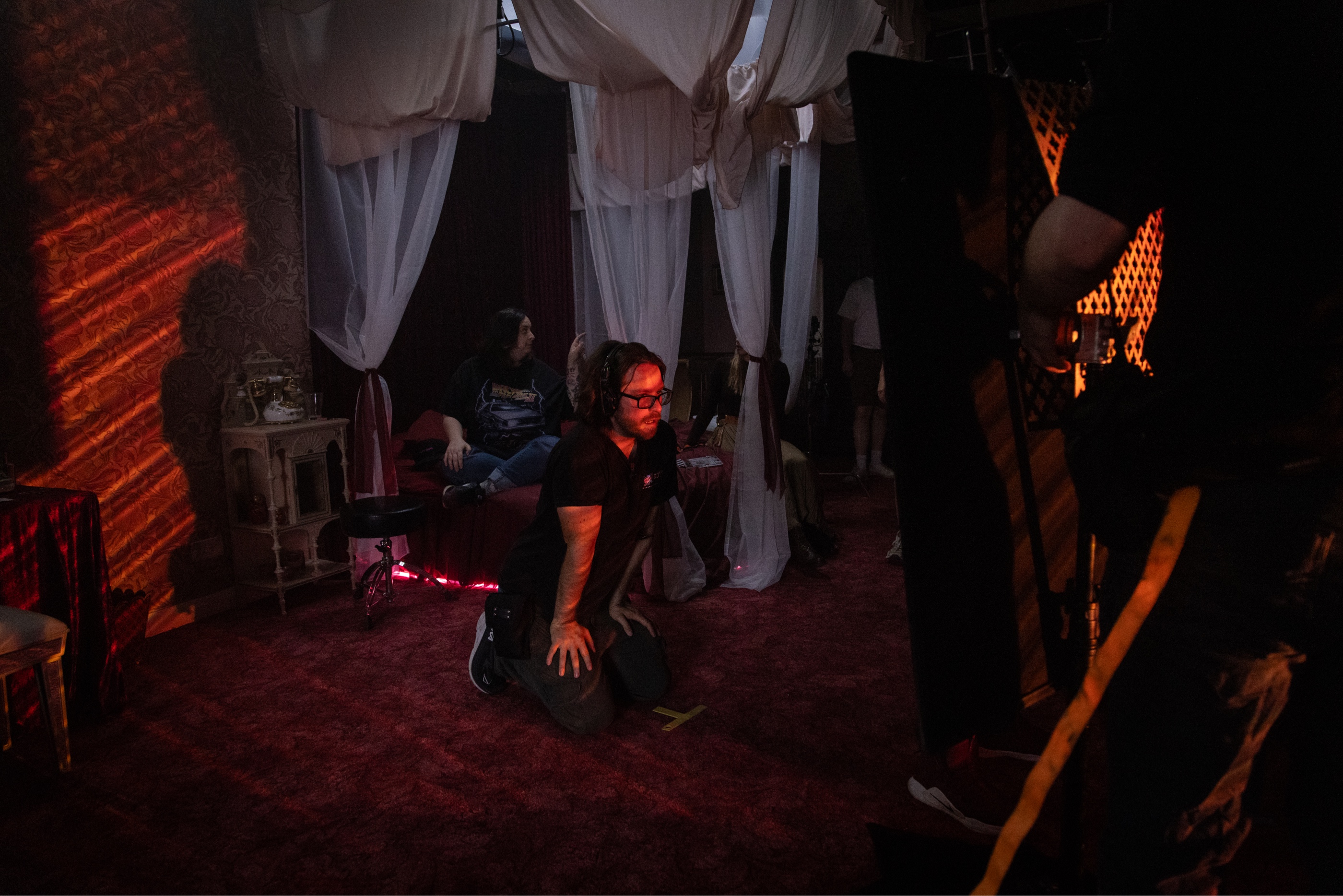
Behind the scenes of “I Live Here Now”, photography by Robert MacCready, courtesy of Aron Meinhardt
Kirill: Jumping a little bit forward into the movie, but also staying in the more general area of cinematography, would you say that your generation is digital natives? How hard is it to fight to make a film on film?
Aron: It’s interesting, because it’s having such a resurgence, particularly among my generation. I was probably one of the last groups of filmmakers that shot film in college. Film has been phased out of most film school departments, and people don’t get exposed to it as much.
I owe a lot to digital. I wouldn’t be here if I didn’t have access to digital cameras. Kodak and different labs are doing a lot to support filmmakers. Panavision have been incredible allies. The people who are passionate about film are excited to teach and share and collaborate. If you know what you’re doing, it’s not that expensive. Maybe for shorter projects the ratio becomes different.
What I love about film is its capacity to unite all the departments. We’re all trying to get it on take one. Some people use the first three takes as rehearsals when they know you’re doing 10-15 takes of every shot. So film enforces a discipline that makes sets more efficient, and therefore makes them cheaper.
There are people in my generation who are intimidated by it. I don’t think they should be. And I know plenty of cinematographers in their twenties who are buying broken Bolex cameras on eBay, figuring out how to fix them, and doing incredible work. I live in Los Angeles and we have ready access to laboratories. That’s a privilege, but you can mail it. Going to film school in Vermont, we had to ship it to a lab, and that lab closed, so we had to find a different lab. It would take a week or two for you to see the footage.
I remember these moments of group terror [laughs] where you’re all sitting and watching it back. Everybody would be seeing their footage for the first time. Sometimes it was all black. Sometimes it was all white. Sometimes it was all out of focus, or there was the registration issue and the images were all over the place. And sometimes it was incredibly breathtaking and magical. That’s a good terror to feel, as it keeps us honest and humble.
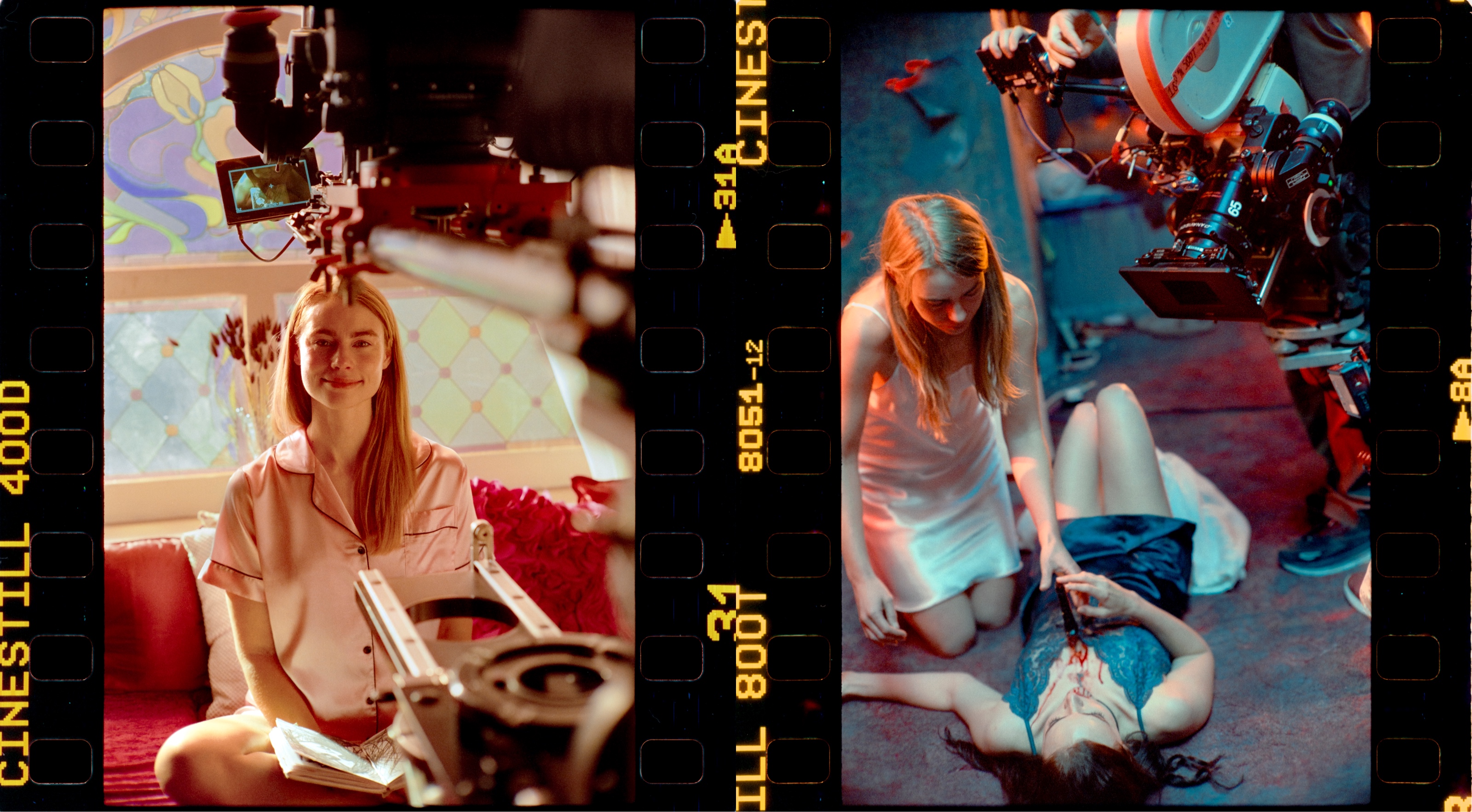
Behind the scenes of “I Live Here Now”, photography by Thaïs Castralli, courtesy of Aron Meinhardt
Kirill: What are the bigger misconceptions or misunderstandings of what you do?
Aron: It can be a misconception that a cinematographer is primarily a technical position, that you’re only metering and getting exposure and figuring out lighting. Sometimes people don’t understand the amount of storytelling that is happening, and the amount of collaboration you have with the other departments. That is the most exciting thing about what I do – figure out the arc, and understand that not every shot can be the most beautiful shot in the movie, and that these things have to exist for a certain emotional and dramatic purpose, and not just an aesthetic one.
Digital cameras are so light sensitive, and sometimes it feels like we don’t even need lighting when you can crank the ISO to 128,000 and denoise it later. But lighting is not a device for exposure. It’s a storytelling device. It’s a blend of art and science. People can either fall too far on the science part or too far on the art part.
Ultimately, a lot of my job is leadership, and personality management, and trying to figure out how to effectively communicate with teams. There’s a lot of management when you’re leading three departments each with their own department head. That has been my biggest learning curve in the last eight years. I know how a camera works. I know how I like to light. I know these creative components of it. However, I’m also responsible for people. How can I manage that in an effective and ethical way?
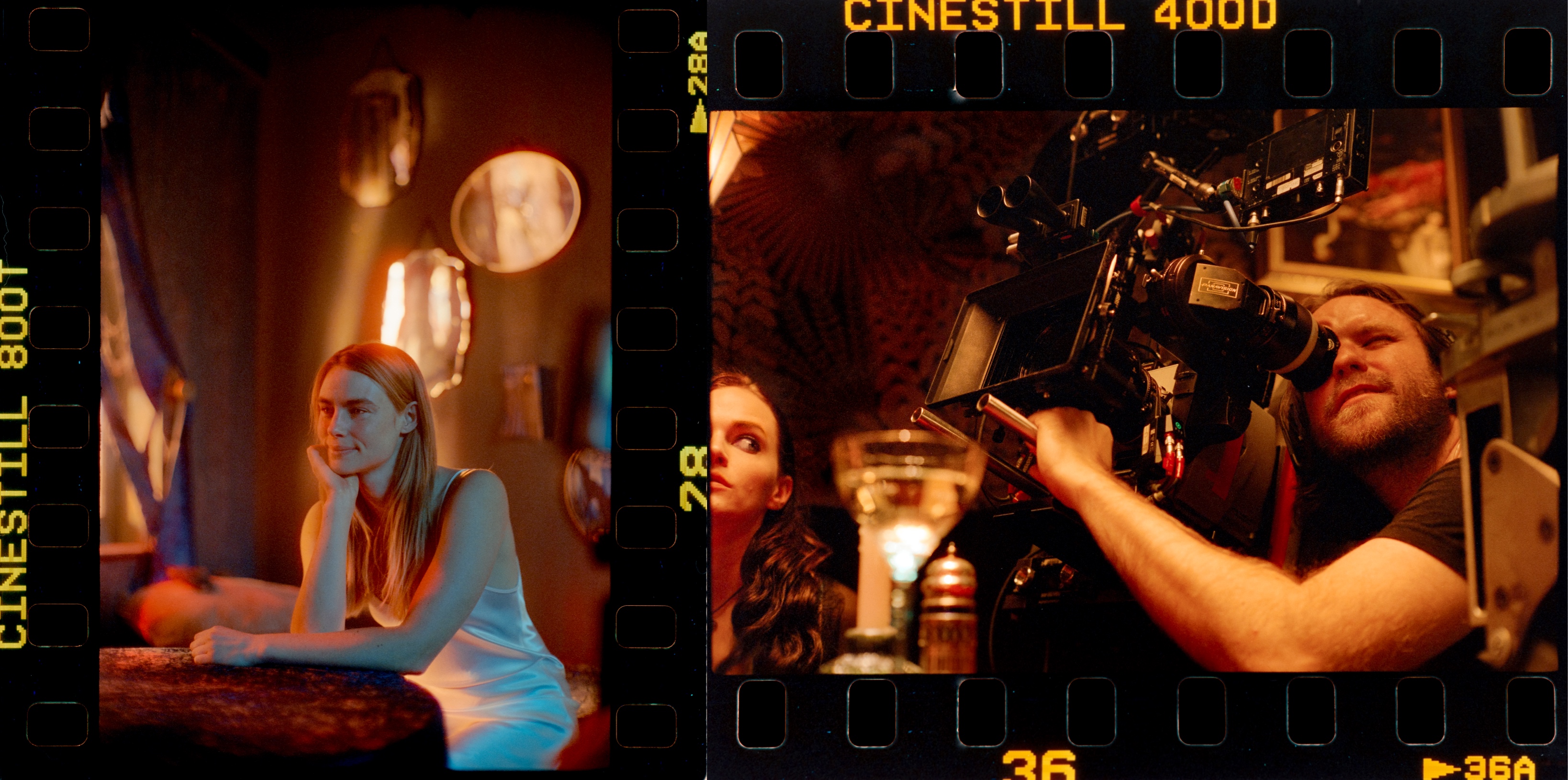
Behind the scenes of “I Live Here Now”, photography by Thaïs Castralli, courtesy of Aron Meinhardt
Kirill: Looking from the outside in, my impression in the last few years has been that there are a lot of advances in digital lighting, with dimmable and fully programmable LED lights. Is there anything on the technical side – with lights, sensors, lenses or camera bodies – that excited you recently?
Aron: It’s funny because I still love to light with tungsten when I can. It’s beautiful. I shoot on digital, but I also shoot a lot on film. Film and tungsten are a match made in heaven – or a laboratory somewhere [laughs]. They seem to work together beautifully, and there’s no replacing that.
I do love that LED sources have gotten bigger and more powerful, and can start to replace HMI units. I don’t have any love for HMIs. Tim Kang‘s work at Aputure with their color engine has been phenomenal. It’s been exciting to see LEDs get better at color and power. When LEDs were new on the scene, they leaned a lot on the digital sensors and their sensitivity. Even on “I Live Here Now” I was asking my gaffer to get LED units to go to 100 because I wasn’t getting enough out of the smaller LED fixtures to get to the stop and stock sensitivity that I wanted to get to.
When I have a great location or great production design, I don’t like to blur that all out by shooting at a shallow stop. Not only does shooting on film require more light, and it also looks better the more light you can put on it. You can overexpose a bunch of stops, and the image looks better and better the more you overexpose. So I definitely love to have a lot of light. That has been hard with fluorescent lights, and it can be hard with LEDs. I like seeing how all of those things are scaling.
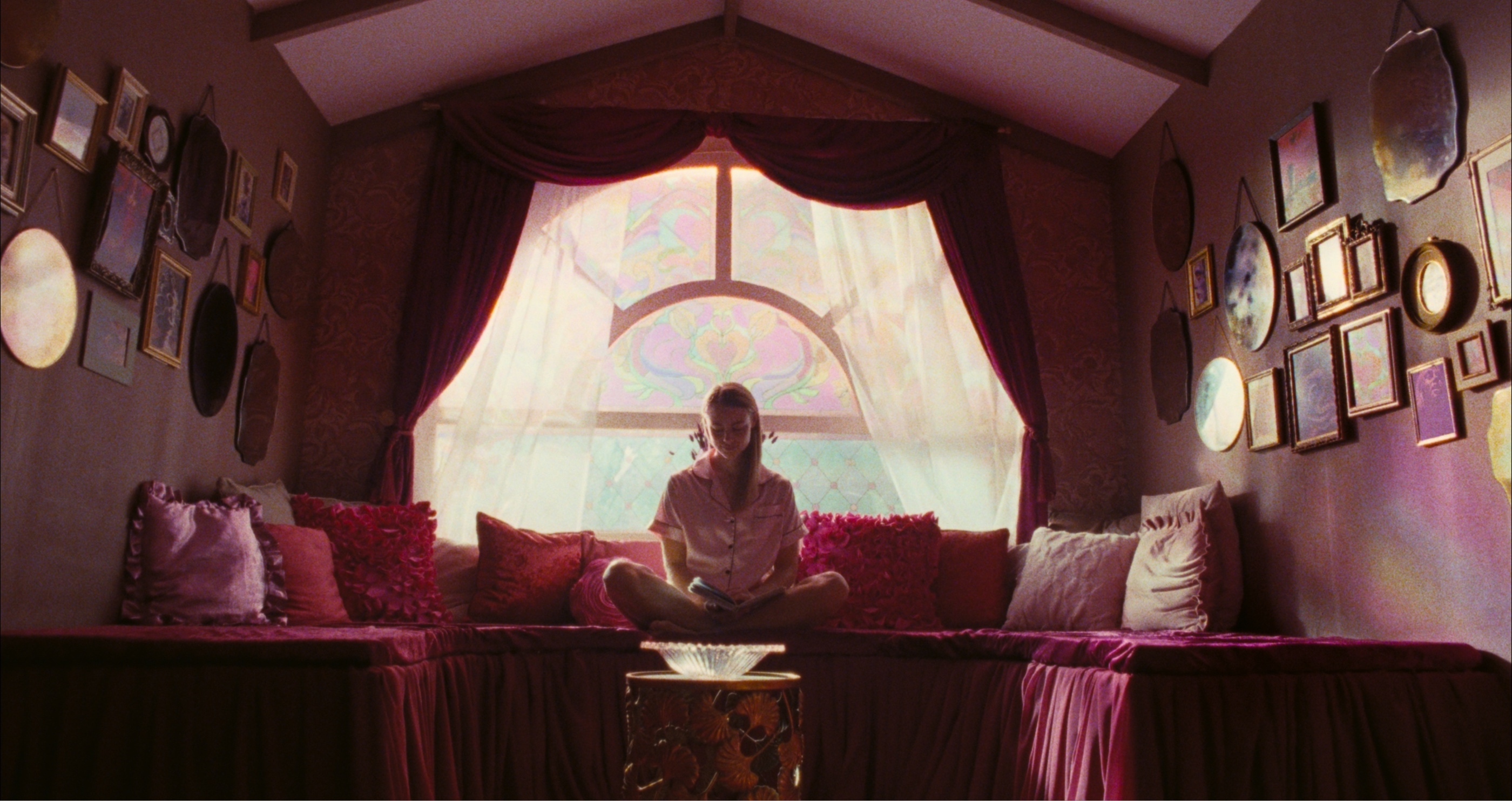
Kirill: Getting to “I Live Here Now”, I was looking at your website, and you mention that you are a part of the production company, and you are credited also as a producer on the movie. How did it all come to be? How does it feel to wear the hats of the cinematographer and the producer?
Aron: I’ve been working with Julie Pacino for a while now. We’ve shot around half a dozen shorts and music videos and other things together. I’ve been involved as a lighting designer on her photography as well.
“I Live Here Now” was a labor of love for all of us for years, because that’s how long it takes to make an independent film. It took about six years from it being a glimmer in Julie’s eye to being projected back on 35mm in Los Angeles for our friends and family. I’ve been a part of the team every step of the way with her and with this film – and that has a lot to do with that producer credit. I was involved in early drafts of the script. We’d share it around with the other creative partners and talk about everything that it could be or shouldn’t be.
I also find that, credited or not, a lot of directors of photography are essentially producers on films, especially independent films. I’m working in pre-production on another feature right now, and I’ve connected us with post-production and vendors. We found a production company that’s searching for locations and doing budgets, and I’m having early conversations about that. Anybody who is trying to make things happen in this industry – especially at the independent level – is a producer at some level, if they want any control over their career.
You can’t just sit around and wait for the phone to ring. You have to make things happen. And if you’re making things happen, you’re a producer.
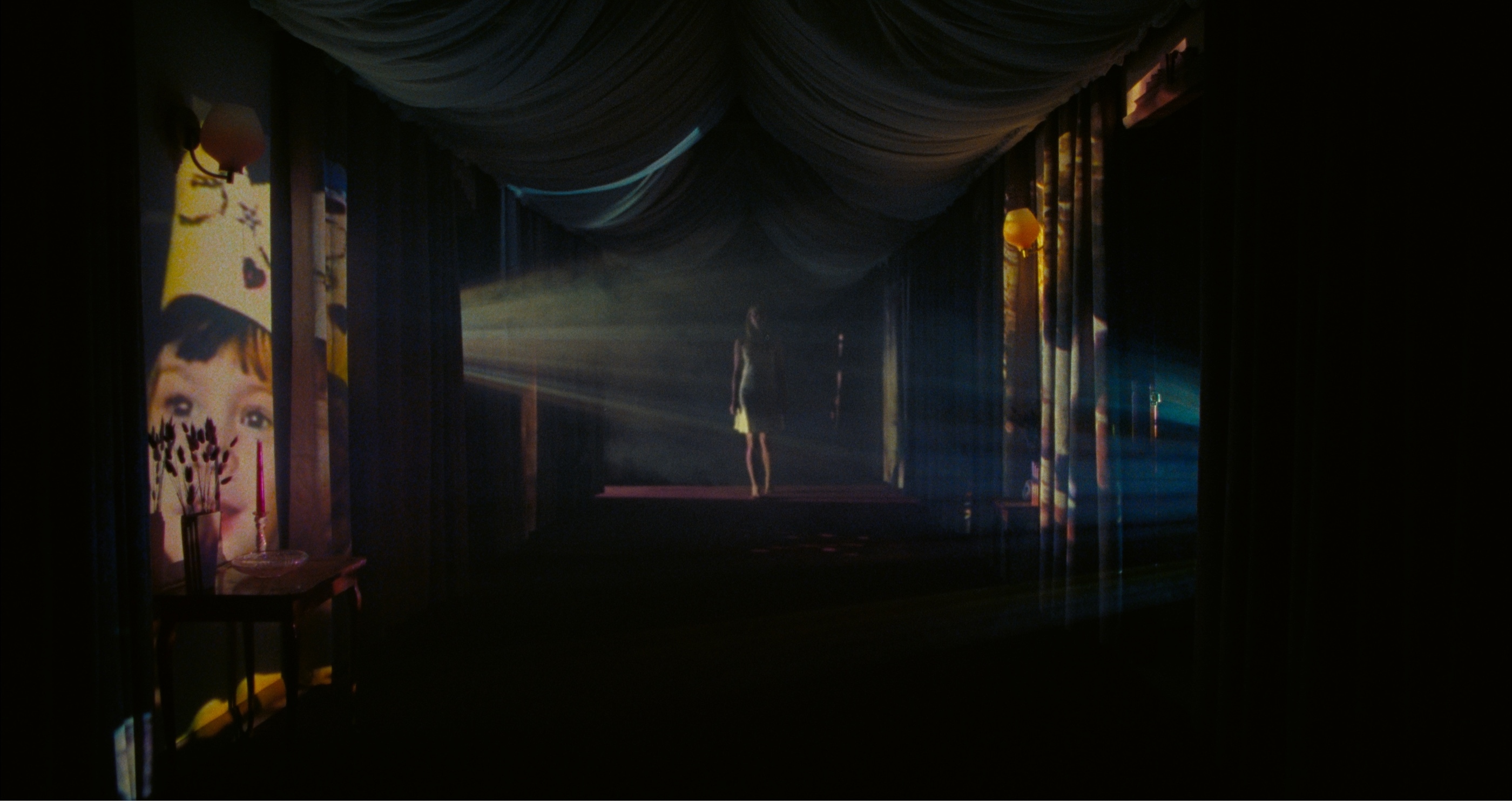
Kirill: Was it clear from the beginning that you would be doing it all on film?
Aron: Julie is a brilliant photographer, and most of her work there is on film. A lot of our early creative development was centered around these dramatic studies she was taking on film. It was always a part of the film’s DNA. A huge part of my job as a cinematographer was to let those photographs be our guiding light to approaching the visuals of “I Live Here Now”.
We were quite fortunate to have producing partners that didn’t laugh us out of the room. They were very supportive towards doing that, and they kept us on course when Julie and I would get cold feet. At the time she was a first time feature director and I was a first time feature DP. This was our first feature, together or alone. I’ve done features since then, some of which came out before this movie came out.
It was scary. We had a good team around us that encouraged us to trust ourselves. That’s what you have to do all the time, but especially with a first feature. You need to push down all of the imposter syndrome and trust that you know what you’re doing. You need to trust that your point of view is important, and commit to making strong decisions. If you make something average, you might not get a chance to make another one. I don’t think safe decisions are rewarded with indie filmmaking. We always wanted to pull no punches with this film, and make something that was as unapologetically us and unapologetically true to the script and the characters as we could.

Behind the scenes of “I Live Here Now”, photography by Robert MacCready, courtesy of Aron Meinhardt
Kirill: I love neon, probably all the way back to my childhood years growing up in the ’80s. Was there any color you wanted to stay away from? How do you know how much is too much and how little is too little – for the visual style of this film?
Aron: This is something that a lot of people don’t realize about making creative choices in film. A lot of it is about subtraction. It’s the color you don’t use. It’s the lens you don’t use. It’s the thing that falls into the shadows. My colorist, Rory Gordon had this incredible line when I was interviewing her – that for her, color is about the elegant loss of information. That approach applies to a lot of decisions in filmmaking.
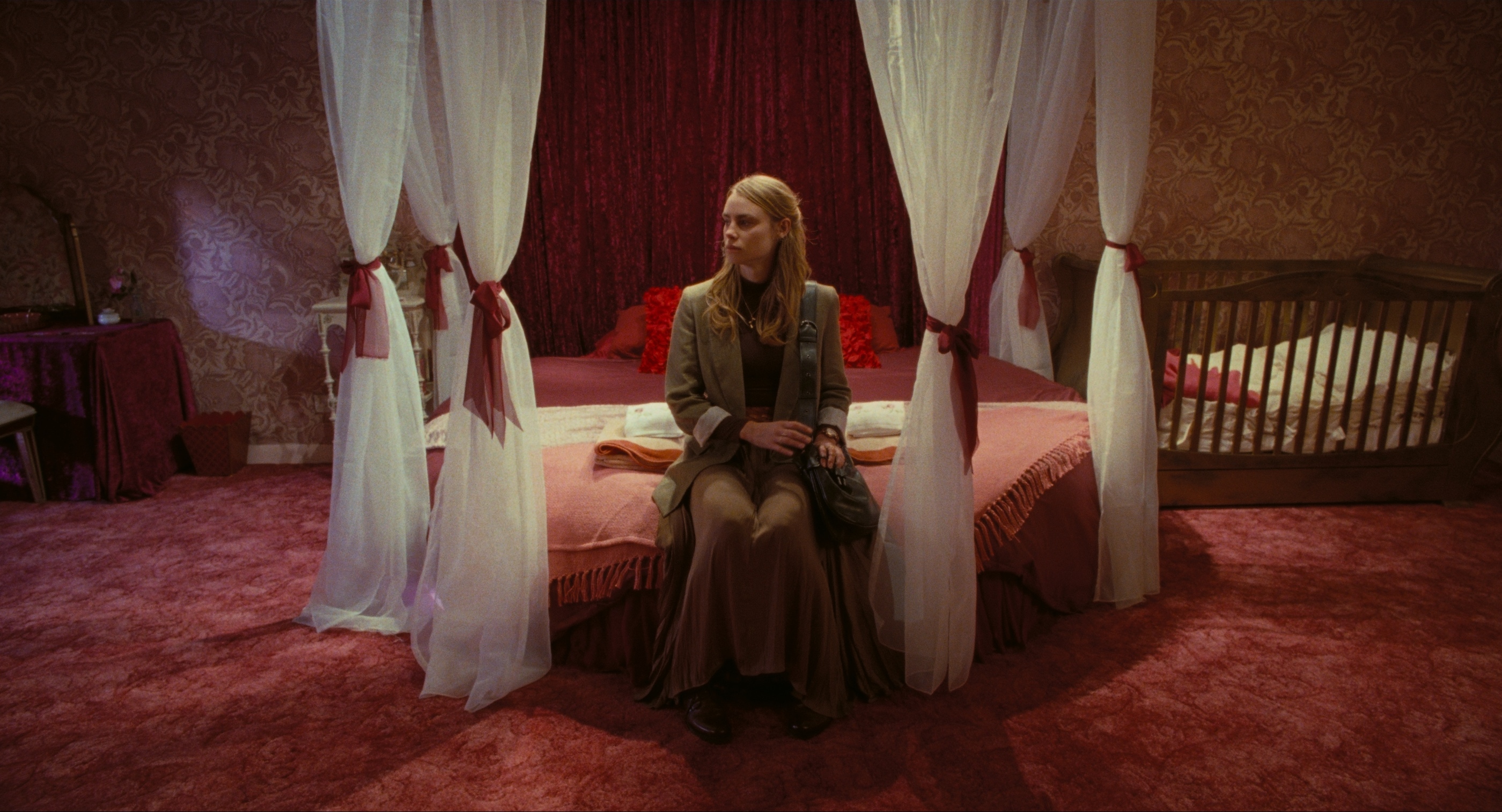
For the colors we avoided, there isn’t very much green in the film. Also technically, the only earth tones that exist are in Rose’s wardrobes. They are never in lighting and never in production design, which was a conversation between Julie, myself, our costume designer, Amit Gajwani, and our production designers, Lucie Brooks Butler and Hannah Rawson. We wanted to separate and alienate Rose from her surroundings, and to have that radical shift we have between the first act and the later acts.
Our first act shows a cold and monochromatic Los Angeles, and that was a deliberate choice. Los Angeles is often depicted as bright and sunny and warm. Julie and I had just moved to LA in the middle of the pandemic, and it was a lonely and alienating place. You felt gaslit by the sunshine and the palm trees. It’s supposed to make you feel happy, but I felt lonely and scared. And we wanted to build an environment where Los Angeles looked the way it felt to us.
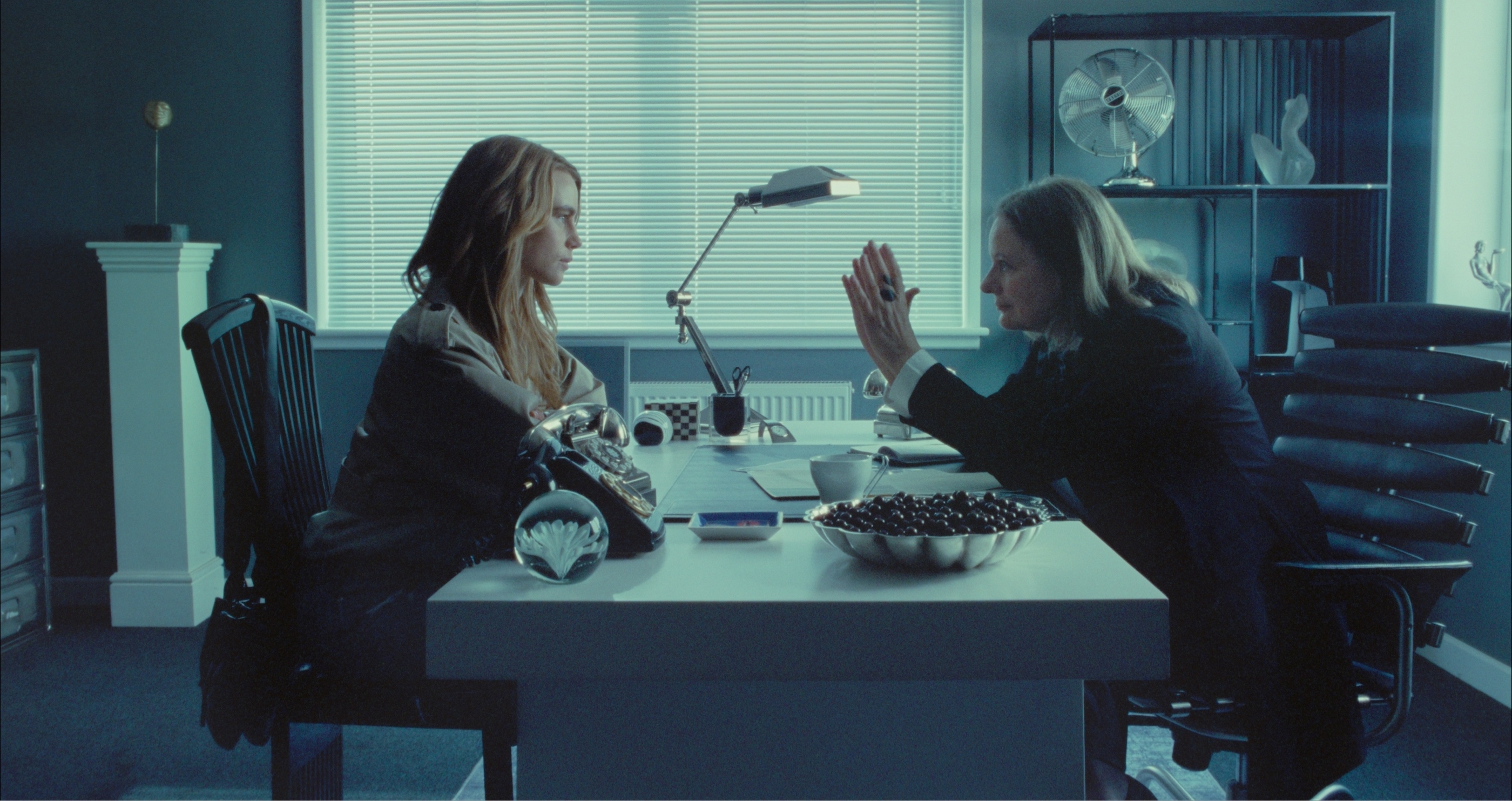
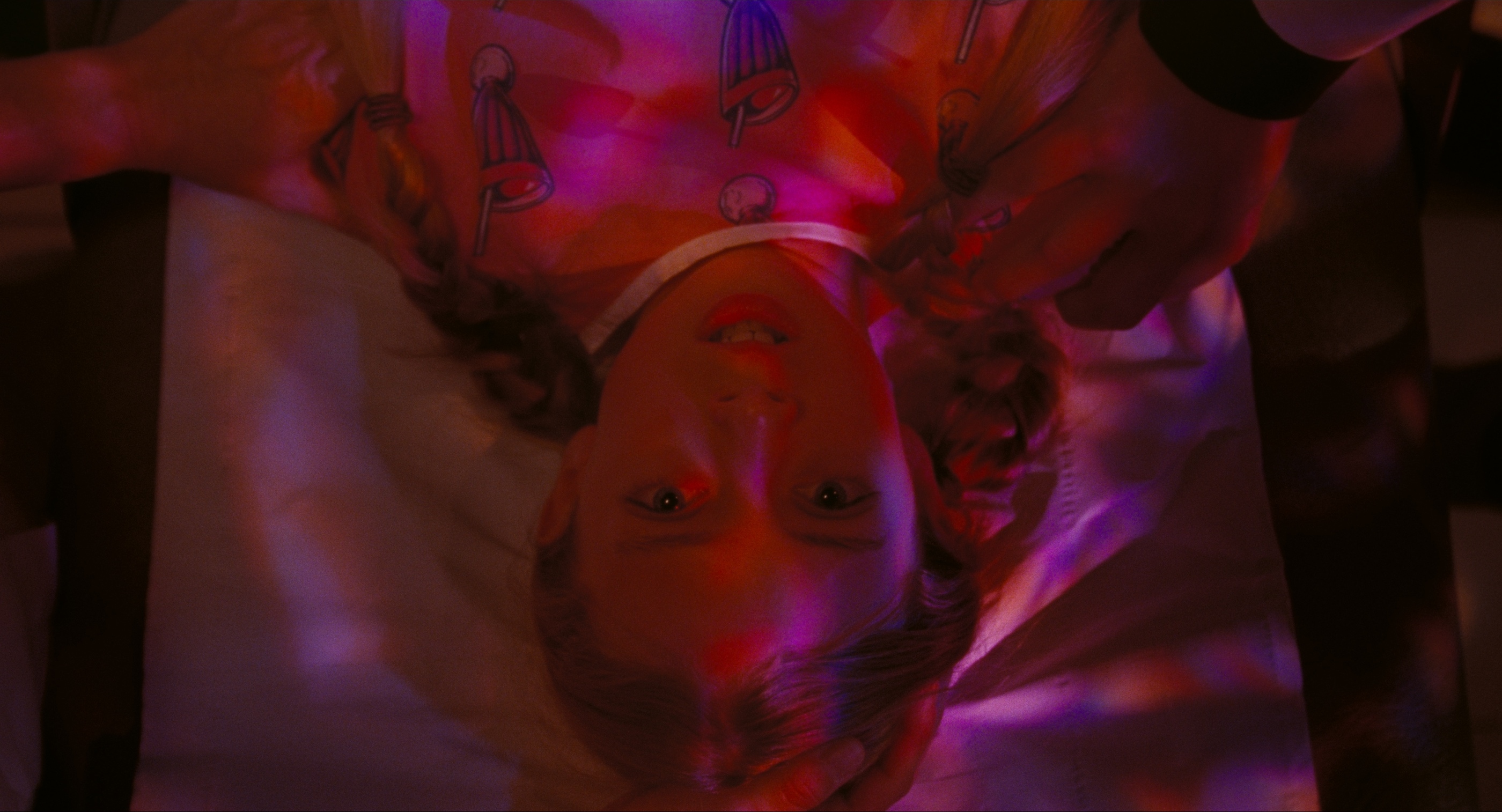
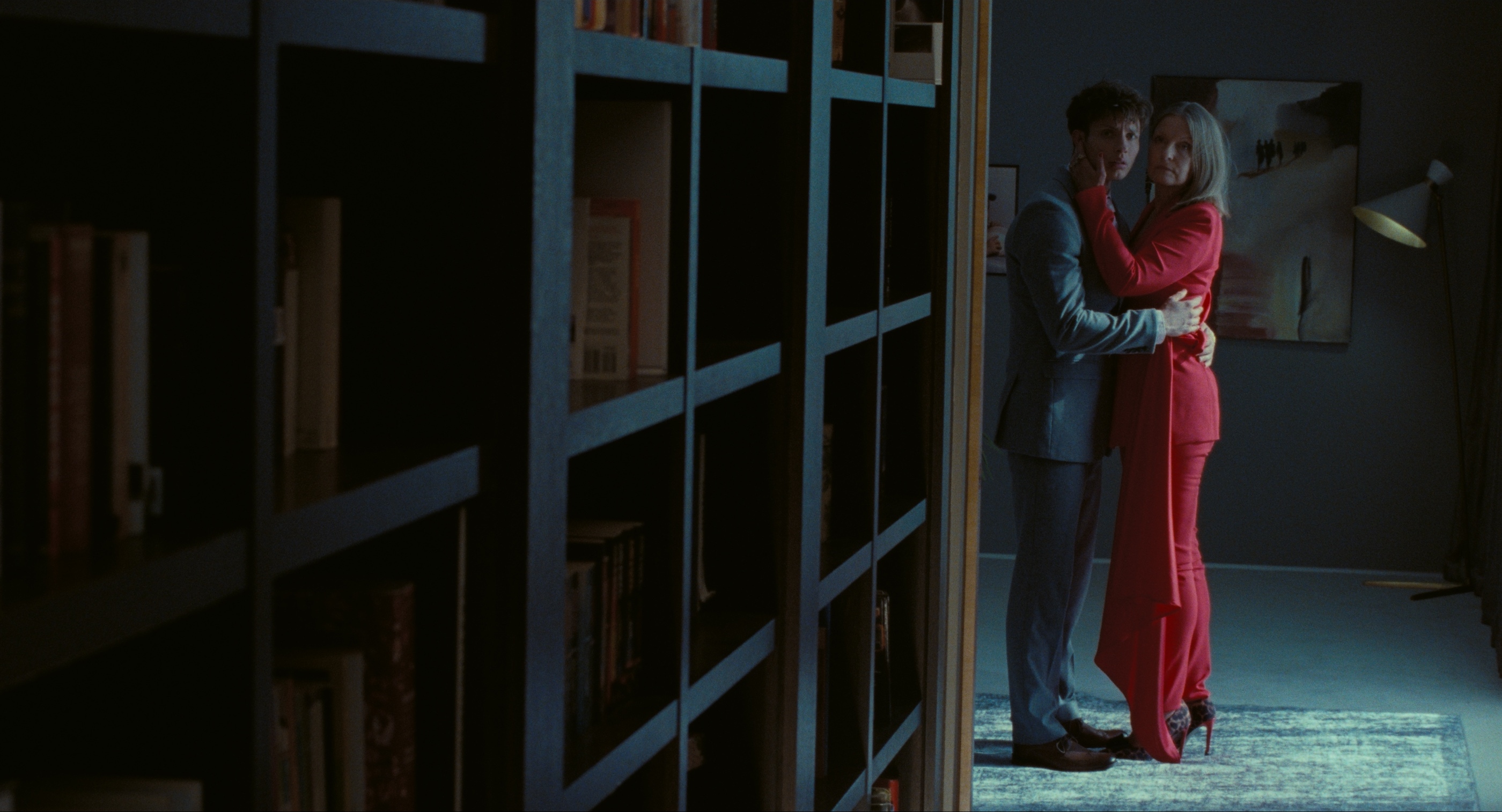
Then, moving into the next acts, we’re flipping that on its head and exploring all of these vibrant colors – but keeping them isolated. There is the blue room, there is the orange room, but you don’t see those colors very much outside of those places. Most of the cooler colors in the film are in Lillian’s (Madeline Brewer) lighting and wardrobe.
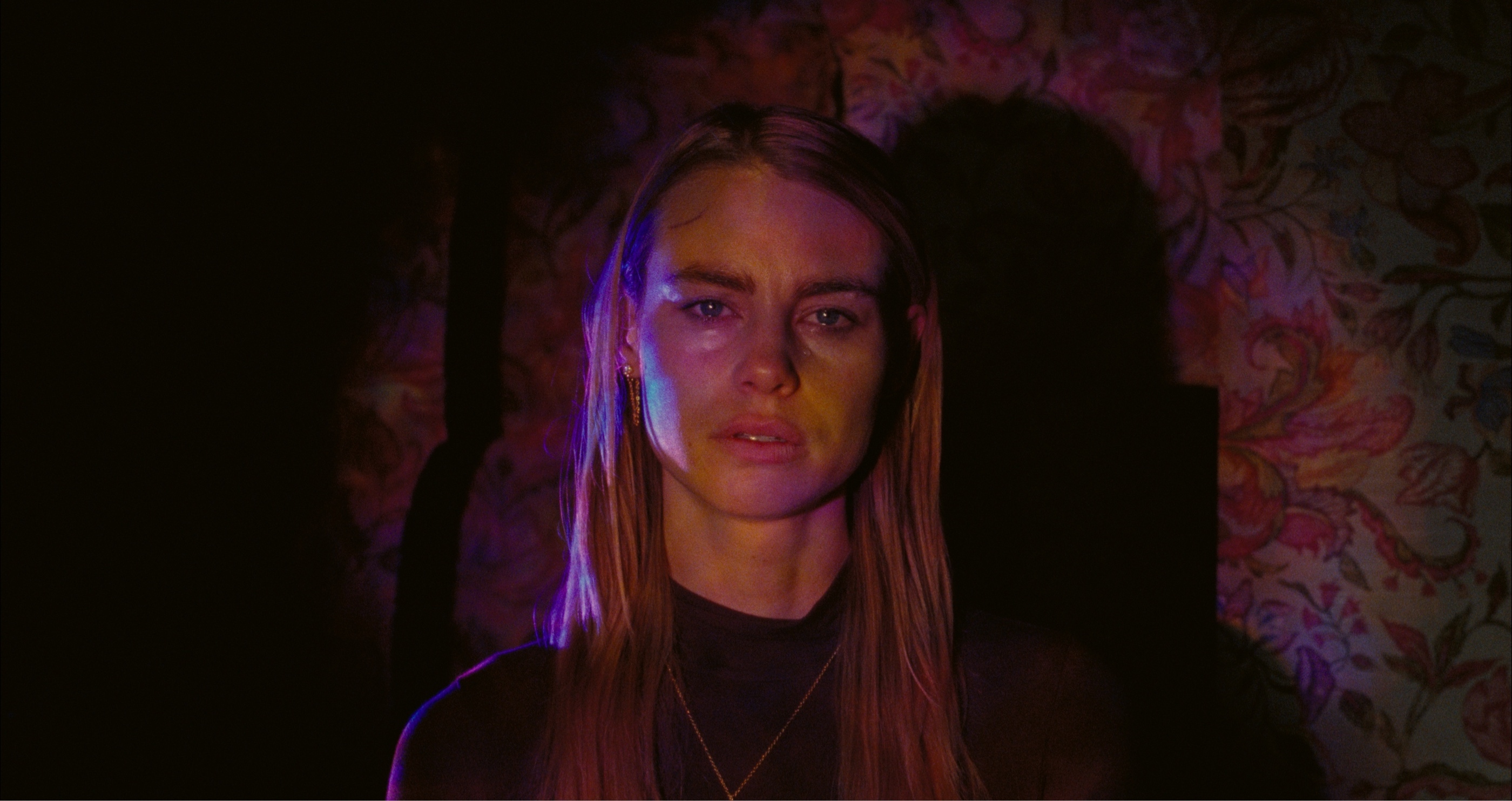
To your question about how much is too much or too little, “I Live Here Now” takes a lot of strong, creative swings – but on set it was always about restraint. You shoot out of order and you want to do the coolest thing possible. So you look at this cool thing you did yesterday, and you want to do something as cool today – but there’s a deliberate escalation of the visual language. It was all based on Lucy Fry’s performance and Julie’s direction. Production design and costume and camera and lighting – all wanted to be lockstep with this character.
Lucy is in almost every frame of this movie, and we wanted to be basing all of our decisions around where she was at, and what her character was feeling, and what she was performing. We only earn the ending by slowly ratcheting up all of those choices as we move along. So we wanted to escalate things to a fever pitch, where they’re as wild as possible, only while still being grounded in the story. The story gets pretty untethered, so we could afford to be pretty untethered – but we needed to earn it every step of the way.
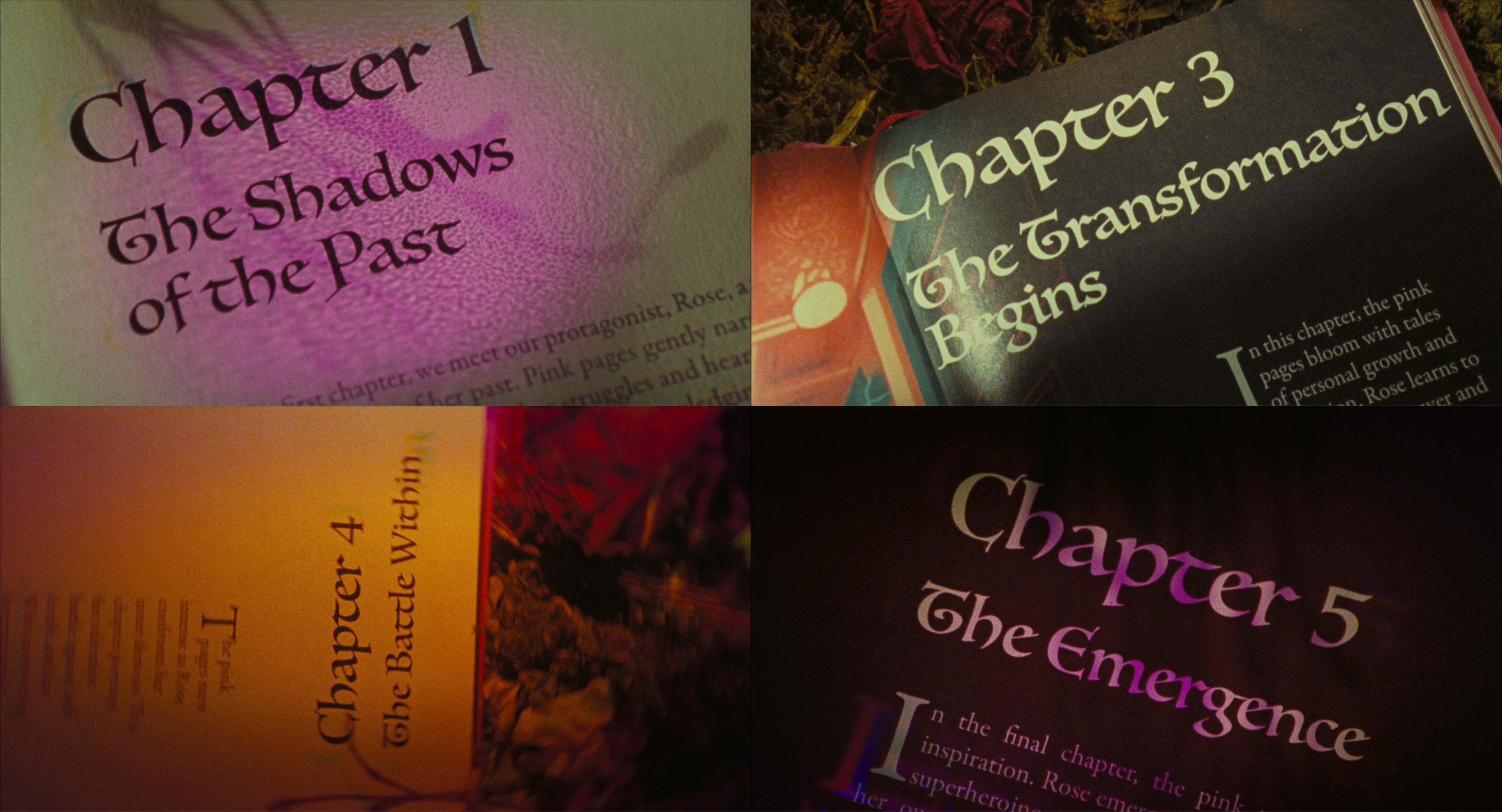
Chapter transitions of “I Live Here Now”
Kirill: One of my favorite moments is the transitions between the chapters. What went into making those transitions?
Aron: Those titles came somewhat later in the edit. We needed to find a way to ground and recenter the film, and that’s how we approached designing those chapter breaks. Of course, the prop of the book and the theme of the stories we tell ourselves and each other is a big part of the script and what we shot. So, it didn’t feel like a thing that we invented at the last minute.
I shot a lot of it in my garage with a friend of mine, a terrific DP Craig Boydston who was my key grip on the film. We shot every piece of that notebook and all of the art for about four days to give love to our production designers, and give cutting material to our editor. It was a living document for Lucy who was writing in it the whole time she was prepping the character, and using it as a prop throughout.
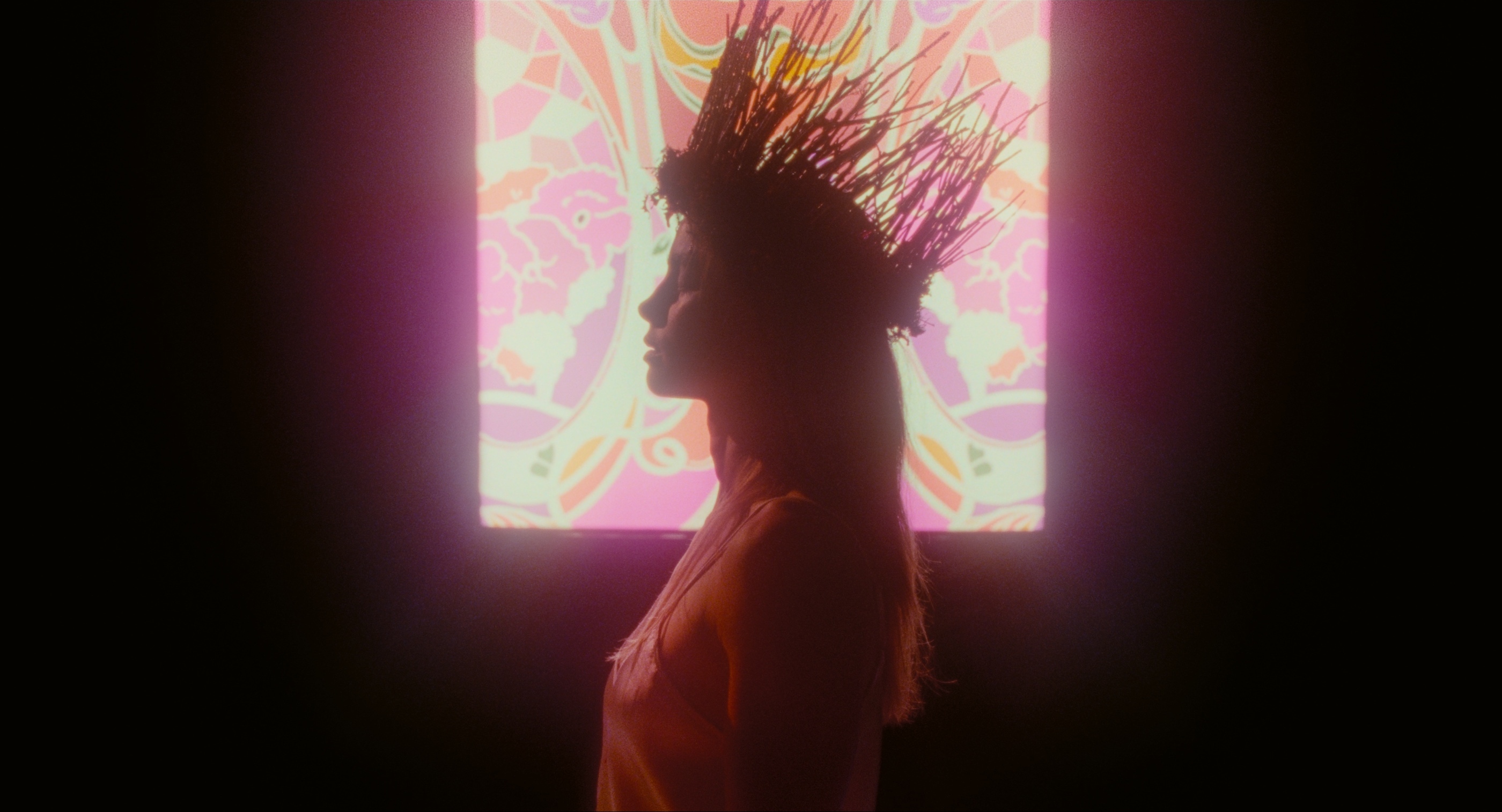
Julian House did our opening credits and the sequence that brings Rose into the inn. He’s a mad scientist. He’ll take photos of things, rescan them, and run his analog process to design and build these sequences. He does incredible work for opening title sequences. We wanted to work with him because it kept this analog/optical feeling to it, which was important to us. We did so much in camera, and we were sparing with VFX. We wanted VFX to be invisible, because if we had one shot that screams VFX, then the audience is going to assume all of the things that we actually did for real are also VFX.
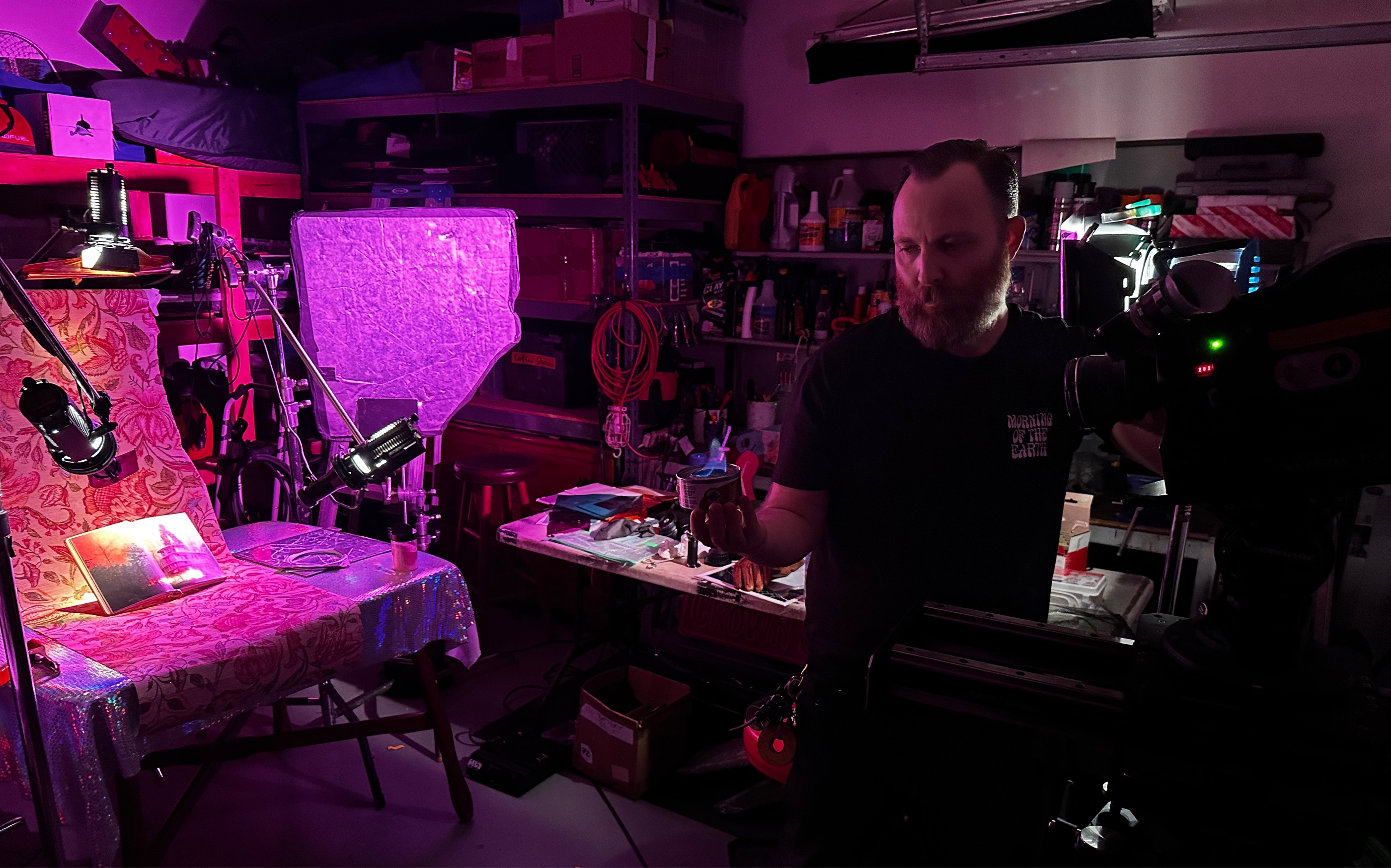
Shooting the chapter transitions of “I Live Here Now”, courtesy of Aron Meinhardt
The film is about bodies and identity, and it was important for everything to feel organic – the sets, the performances, and the image to be captured on this organic surface to connect us to all of the themes. It’s a collaboration that becomes a soup of everyone’s contributions. You have all of these people working together, but it feels like one voice. That’s one thing Julie does phenomenally well – she empowers us as department heads and as creatives to bring our own ideas and our own processes to the film – but we’re still making Julie’s film. You look back at some of these things, especially once some time has passed, and you see this “mess” of everybody’s contributions that all percolate, and mix, and blend, and become something that is unique to Julie and her vision. And that is from all of our contributions.
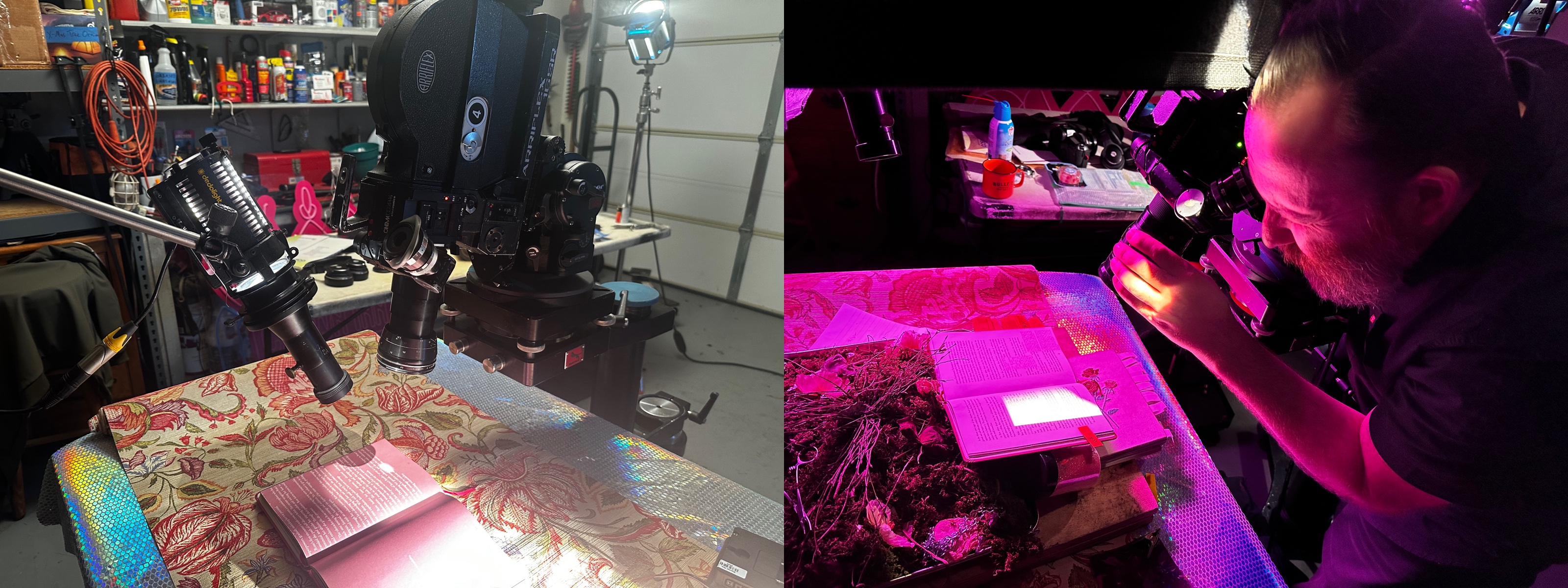
Shooting the chapter transitions of “I Live Here Now”, courtesy of Aron Meinhardt
Kirill: Another thing that I loved about the film, which perhaps goes back to me spending a couple of years watching only black-and-white movies on TCM some time ago, is sculpting light through patterned slits. Going back to advances in digital lights, is it easier to play with light compared to 10-15 years ago?
Aron: The light that’s doing a lot of the cues you’re describing is from the 1960s. It’s a 2000 watt tungsten unit with a bunch of weird rotating gels. We are rotating trays of various textured tempered glass, with a palette of gels that Julie and I selected with our gaffer, Tom Nowell. A lot of this is old technology.
Julie and I love to work with lighting cues, and you can never go from 1% to 0% on LED without feeling it click off. Tungsten dimming is still the only thing that can do that. It’s where you can actually go from 0% to 100% warmly. A lot of my lighting style and the visual language that Julie and I work with together is based on these old methods. LED has brought a lot of tools and controls that are very useful, and it makes life much easier. But sometimes it’s easier to do things the way we’ve always done them.
I love technology and I’m not stuck in the past at all. If something is easier to do in a modern way, I’m pleased to do it. But there’s a warmth and beauty to some of these old methods that in a lot of ways are lost. I did a neo-noir short with Julie called “Harmony in Gold”, and I learned a lot from our gaffer, Dwight Lay, on that film about how to light with hard light. Now one of the first questions I ask a gaffer I’m interviewing is how they feel about hard light.
A lot of gaffers my age and younger are frightened by hard light, because they’ve never had to work with it. There was a period of 10-15 years where everything was a panel light or a tube light. I think that people who came up in that era lost a foundation of lighting that people have been working with for decades or almost a century. They want soft sources – which can be beautiful, but I love that LEDs are getting back to hard sources.

Kirill: What went into that ventilation shaft or tunnel when she goes between the rooms – on the technical level and artistically?
Aron: That was such a funny day. We had so many conversations about that tunnel, and Julie had such a specific vision for it. She didn’t want it to be this “Die Hard”, cold industrial vent. It’s about the character going deeper into herself, so it needed to feel fantastic. Production and I would go back and forth on how big it needed to be to get a camera in there. It was a tug of war between me not knowing what I was shooting and them not knowing how to get me something.
They had so much work to do on an independent film, and they did not have enough money or enough time to do any of the things being asked of them. Of course they did it anyway, because they’re incredible. Huge shout out to Lucie and Hannah, our production designers.
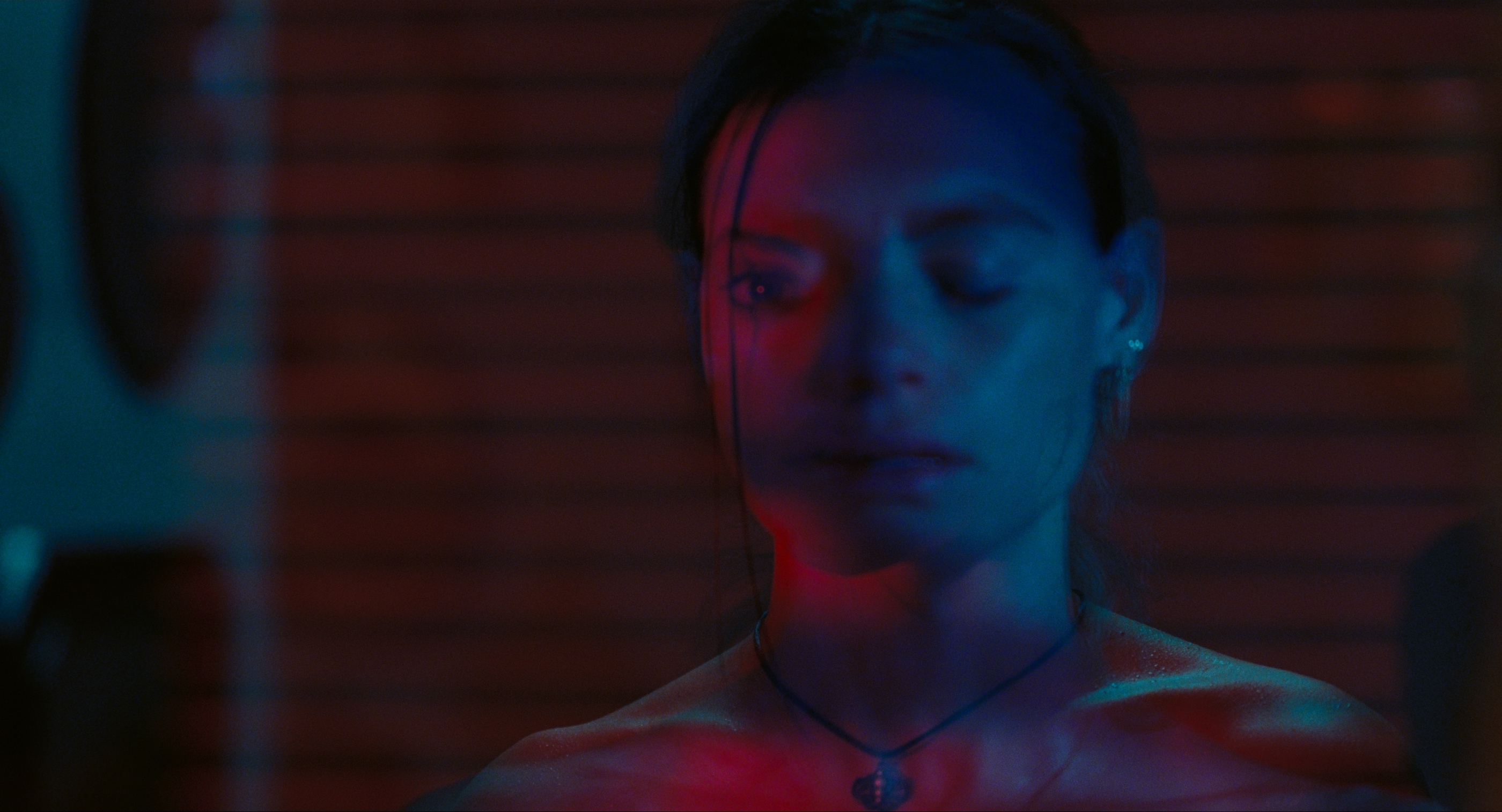
I finally saw it for the first time on the day we were meant to be shooting it, and we figured out a lot of things on the fly. It was all these reflective surfaces made out of holographic wallpaper, and we found that it was translucent enough that if we rolled it over the top, it didn’t need backing. That way we could shoot lights through it and it acted like a one-way mirror. So you could shoot light through it on one side, and it would be reflecting all of the light on the side that the camera was seeing. So we put a bunch of movers and colored gels, and blasted as much light as we could.
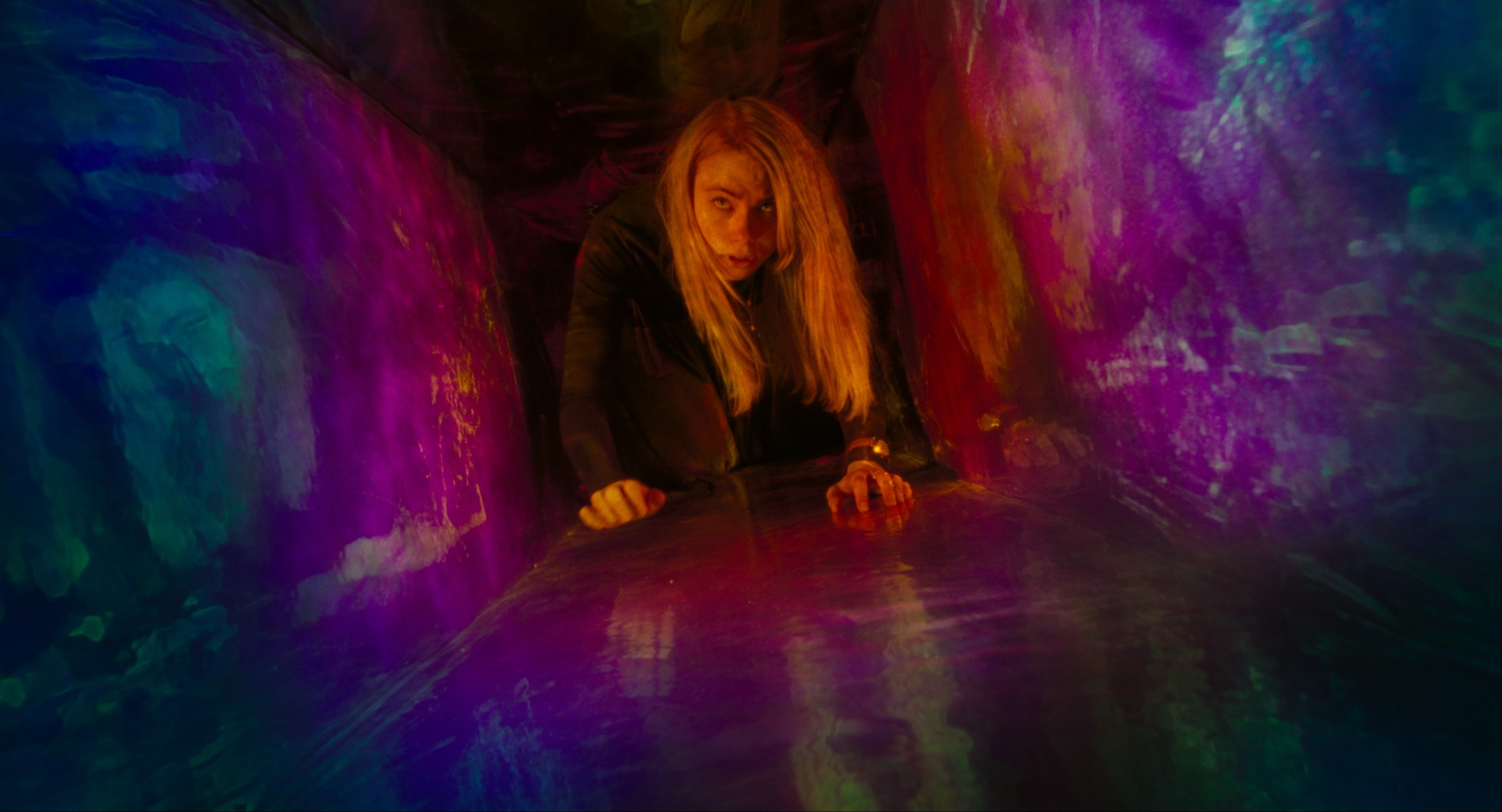
This is one place where I must give film a nod over digital. Without being able to test that, I think digital would have had a lot of problems with that scene with all the hard points of light, and areas of overexposure, and areas of over-saturation, and color clipping, and other things. It could have been a nightmare for a digital sensor. And I knew that on film it was going to look just as beautiful as what I’m seeing to my eye. I didn’t need to worry about all of the uncontrolled elements, because we were pointing a bunch of lights at a bunch of reflective surfaces and hoping for the best.
It didn’t have a fixed roof, and we were able to put a Steadicam in low mode and roll the roof back over the camera as we pulled back. And then our colorist had a great time with all of the saturation she had to work with, adding some chromatic aberration. It’s one of those scenes visually where we had full reign to see how far we could take it before we broke something – and I don’t think we broke anything [laughs]. I love that scene. We had projectors shooting images through the vent to foreshadow that last hallway scene with the projections. It could have been scary because it came together last minute, but it worked out. It was pretty late in the schedule, and at that point we all knew we could trust each other and trust the process to be certain that it would work out in the end.
Kirill: Generative AI is on everybody’s mind, and opinions vary from it being an existential threat to human creativity to seeing it as yet another tool to adopt and adapt to. Where do you find yourself these days on it?
Aron: I used to be shy about answering this question because I didn’t want to come off as naive. The way I see it today for filmmaking as a creative artist, I’m not afraid of it at all. I don’t believe it to be a threat because it can only do things that it’s seen before. Therefore, in terms of the end results, we will always have the upper hand because I’m always trying to do something new. I’m always trying to challenge myself. I’m always trying to do something that I haven’t seen before.
I do worry about the brain drain of people who over rely on it, not realizing what they’re missing. I was just doing a prelim shot list with the director. We sat for around 6-8 hours, and we got through the first 30 pages of the movie in our first meeting. We were considering every shot and what it means. If we do this, if we have a close up here, what does it mean that we had a similar close-up 15 minutes ago? We were being deliberate about the progression, and setting rules for ourselves, and figuring out when to break the rules.
When humans do a storyboard, we make all these small choices deliberately. But if you rely on AI to do a storyboard for you, it becomes arbitrary and derivative. You will not know what you’ve lost unless you’ve gone through the human process.
We are seeing audiences and people rejecting it. It feels cold. It feels sterile. It’s doing great things for film and shooting movies on film, because people want to know that real people stood in a field and got that shot. I love what Brady Corbet said about there being something magical about getting a shot that is physically challenging. When you take the path of greatest resistance, sometimes magical things happen. The audience feels that effort, and it feels more important for the simple fact that something was challenging.
It’s only a threat to people who are interested in doing the same thing over and over again. Maybe the ones with the most to lose are the superhero movies or other things where you are already copy pasting everything. A machine that is better at copy pasting might be a threat to those careers.
I’m for the ways that it can be used as a tool. If AI can take the weight off of the technical drudgery of filmmaking, and give people more room and more time to be creative and less time slaving away at some technical detail, that’s a good thing. But it’s not a threat to creativity. Guillermo del Toro talks about the creative process being essential to humanity. It is about the process and not the results. Giving us a result without process misunderstands the point of art entirely.
Kirill: What do you know now that you wish you knew when you were starting out? If you could jump back in time to give advice to your younger self, what would that be?
Aron: Care about what the elders say. I feel myself giving the same advice that I got at that age – and I just rolled my eyes [laughs]. I’m saying the same things that I did hear back then and I didn’t listen to. I have to figure out another way to say them that may be more interesting.
I would say be fearless. Go out and shoot. Create something.
When you’re growing up, you idolize the older generation of filmmakers that already have their people. You know that you’re not going to be Tarantino’s DP. You’re not going to be Paul Thomas Anderson’s DP. They have their people. But when you’re young, you have a vision that you’re going to become friends with your heroes and make stuff with them. But you’re going to find all of those people by yourself, and you’re all going to be broke, and you’re all going to talk about the things you want to do, and you’re not going to have any way to do them. And you’re going to create this new generation of filmmakers – but it’s all going to be people standing around you at the film festival, or at the mixer, or at the bar, or at film school.
Invest in the people around you. Invest your time and invest your trust. Find out who you shouldn’t invest time and trust in, because there will be plenty of those. No one is waiting for you. No one is going to discover you. No one is going to figure out how to do it for you. The only way to get better and the only way to find success is to focus on the work. The more you focus on the work, the more success finds you, the more opportunities find you, the more you learn – but you need to detach the process from the result. You need to focus on the process, because the result is going to happen regardless.
I had a professor in college say that you just make things, and if they work out, you made a film, and if they don’t, it was just an exercise. I think that’s a good approach. It’ll either be a film or an exercise, and all you can do is focus on the things that you can control. That is the quality of your work, and your relationships. Nurturing those things is the most important thing that you can be doing. Anybody who’s a freelancer in this industry spends most of their time being unemployed – don’t bemoan that. Take that time, read books, watch movies, and have weird ideas.
There’s so many things that I’ve put into movies that have been things that I talk about with friends. I ask “can we do this?” and somebody says “no, that won’t work”. And then you try it anyway. And then it doesn’t work the way that you thought it would work, but it does something else that’s cool. You learn different ways of doing things, you try things out, and you fail.
Fail gloriously. Fail spectacularly. Fail in ways that nobody’s ever failed before. Fear of failure is a huge impediment to the growth of anyone. You need to find a way to get over that to grow.
Kirill: When you flip through the TV channels, what is a movie or two that always make you stop flipping and start watching them whenever they are on?
Aron: I love Sidney Lumet’s “Network”. That script is impeccable, the performances are incredible, and it’s so relevant. “Pan’s Labyrinth” is one of my favorite films. It’s so beautiful and so well told. Anything from Vittorio Storaro, starting with “Apocalypse Now”. I love “The Conformist”.
I love watching old movies. The American Cinematheque just concluded their silent film festival and I watched 1926’s “Faust” on film. There are opticals and camera tricks in that movie that I still don’t know how they did it. It’s 100 years old, and film had only been around for 10-20 years when they made that movie. It’s incredible. Something might look like double exposure, but then a character interacts with it and I have no idea how they did it. I love new movies too. I can never get enough.
That’s one thing that probably led me down this path. Before I was ever interested in film or thought I could do it, I would go to the DVD rental place with my friends, we would fill our arms with movies, and just watch movies for 10-12 hours. I love all movies. I love mediocre movies. I love looking at what they did well and what they did badly. It’s a joy to watch, to analyze, and to deconstruct. It’s easier to deconstruct a mediocre movie than a masterpiece, because you get lost in the masterpiece.

Kirill: Which film festival has the best food, inside or outside of the venue?
Aron: This is a great question. That has to be a European film festival. We had a pretty great meal at “The Witchery” in Edinburgh. But I’ll probably give it to Locarno. I love Italian food, and that festival was great. Deauville would be close second. For the US, “Beyond Fest” in LA has Figaro Bistro which is right next door to the Los Feliz 3 venue. Figaro is one of my favorite spots in Los Angeles. It’s a special place.
And here I want to thank Aron Meinhardt for sharing his time with me to talk about the art and craft of cinematography, and for sharing the supporting materials. “I Live Here Now” is streaming on Apple, Fandango and Amazon. Finally, if you want to know more about how films and TV shows are made, click here for additional in-depth interviews in this series.
