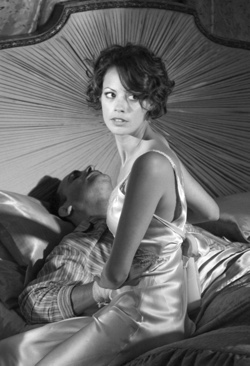
Distilling the art of film making to its purest form of visual storytelling, “The Artist” is a breathtaking masterpiece of cinematography. A story set in the glamorous days of early Hollywood, it effortlessly transports the viewer into the meticulously recreated world of silent black-and-white film. An authentic, warm and enchanting journey combined with a universal story of fame, pride, fortune and affection brings one of the most remarkable films in the recent history. The weeks leading to the Oscars awards ceremony are a very hectic time for Laurence Bennett, the production designer of the film, and it is a great honor to interview him about his work on “The Artist”.
Laurence Bennett.
Photography by Jamie Trueblood.
Kirill: Let’s start with your background. You worked outside the movie industry for about ten years, and then moved to work on TV and movie productions.
Laurence: I started working in design when I was quite young. Between the school and college I worked in a small design firm. I studied in Los Angeles and in Japan, and after finishing college I moved to Ireland for ten years. I worked in theater and taught in the National College of Art. I was a painter and working in theater was really my introduction to show business. In the mid-seventies I had friends from Los Angeles who were getting into film business, and one summer I came back and worked with them doing miniature models for a big television special. That was my introduction to Hollywood, and interestingly, the production office we had on a small side street for “The Artist” was right across the street from the place where I worked 35 years earlier.
Kirill: In the last few years you worked on action thrillers such as “In the Valley of Elah”, “One Missed Call”, “Traitor” and “The Next Three Days”. How did you get to work on “The Artist”?
Laurence: It was sheer luck. One of my agents called me and connected me with the line producer who was assembling crew for Michel Hazanavicius [director]. We met, talked and hit it off, and I went to Los Angeles to meet Michel. The next morning we were out scouting together working on the picture.
Kirill: Did you have any hesitations joining such an unusual production?
Laurence: I embraced it whole-heartedly. I was very excited.
Kirill: Were you particularly connected to the 1920-30s era before you’ve started working on this film?
Laurence: I’d always been a fan of the movies of the era. My knowledge wasn’t as deep or as broad as it is now, because of all those months I’ve spent living and working in the period with Michel, Guillaume [Schiffman, cinematographer] and all my friends. There’s real magic in the pictures that came out of Hollywood in those early days. They were inventing the language of the cinema, and at the same time inventing the business of Hollywood. They seemed to have had a great time doing it, so I encouraged my crew to take on the same spirit of fun in approaching this project.
Kirill: Can you describe what happened during the pre-production stage, as you were working with Michel and Guillaume on the overall story and look, and the particular scenes?
Laurence: Michel arrived with the entire story boarded. His vision for the project was so complete and so whole. He had very specific ideas for most of the shots. The trick for me was trying to build the world around these shots that the characters would live in. We spent a good two and a half months in pre-production. We watched dozens and dozens and dozens of movies together. Michel introduced me to the works of F.W. Murnau, King Vidor, Fritz Lang and Josef von Sternberg. Also in Los Angeles there’s always an opportunity to see restorations of older works. Mark Bridges the costumer and I went to see the new restoration of “The Four Horsemen of the Apocalypse” [1921] which was Rudolph Valentino‘s big breakthrough film. And when you see good cinematography and design from the period that’s well restored and printed, the photography is so remarkably beautiful. Really exceptional stuff.
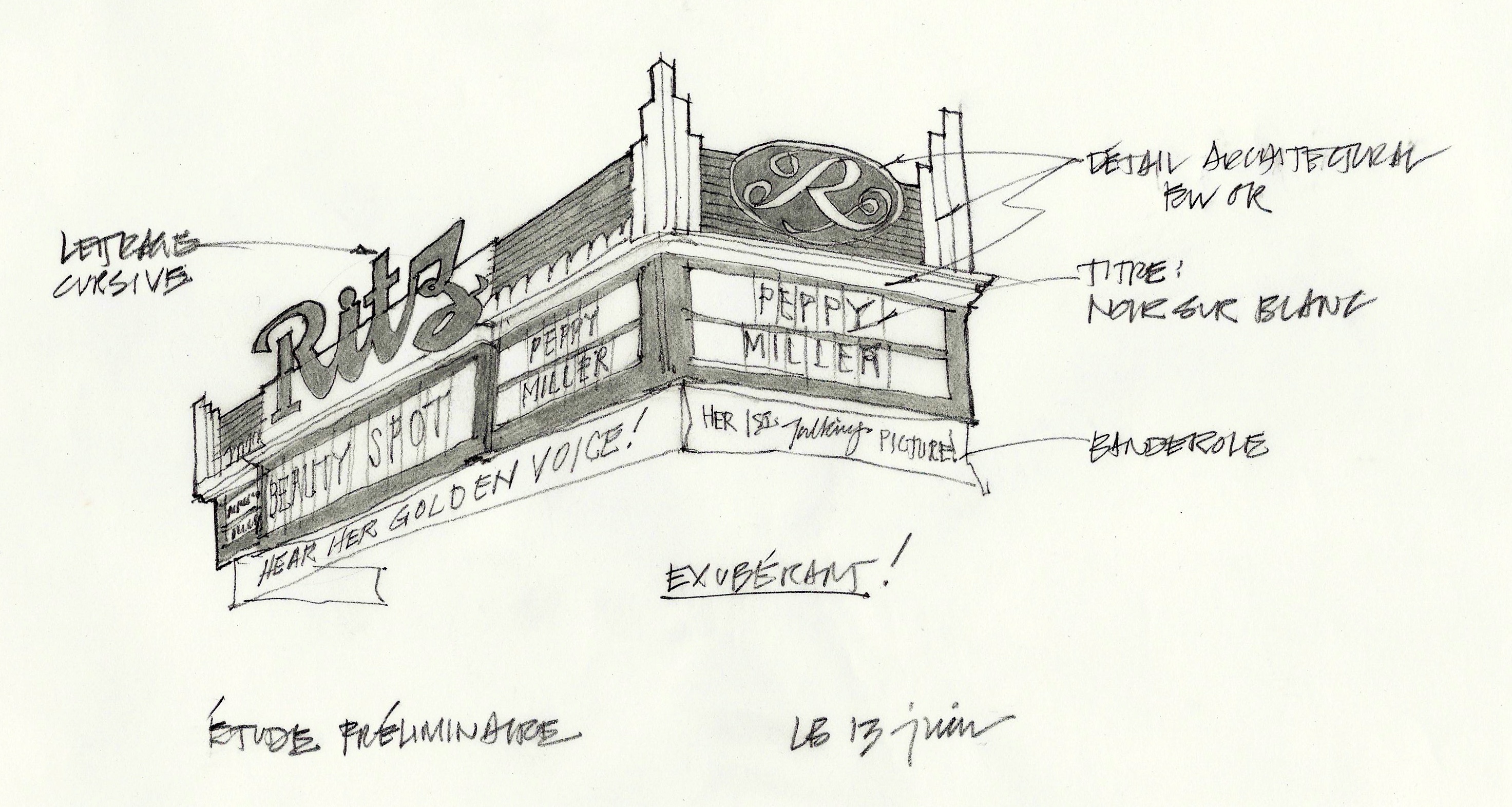
“Ritz” theatre marquee. Sketch by Laurence Bennett.
Kirill: Michel and Guillaume worked together before. How did you get into the rhythm of working with them?
Laurence: They are also very close friends. They were very welcoming to me into the process. It was great, the pre-production was absolutely delightful. It was time of shared exploration, kicking ideas around and finding things, seeing what would work.
Kirill: Were you aiming to limit your setups and techniques to what would be available to production designers and art directors of that time?
Laurence: Very much. There’s a directness and simplicity and real grace around the art direction of the time. I tried to mimic that. One thing was very important to us – the supremacy of the story. We were telling the story of George and Peppy and Jack the dog. Nothing was ever to upstage them, nothing was ever to get in the way, they were always center and clear in the story telling. I felt a real responsibility to make these living breathing environments that they operated in to never be a distraction, and to always support the believability of their situations.
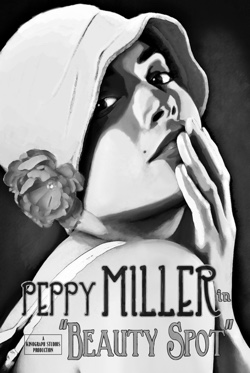
Artwork: Beauty Spot Poster.
Graphic designer – Martin Charles.
Kirill: Did you research the specific setup techniques of the era, along with the additional materials like fabrics?
Laurence: It’s all terribly important. Fortunately I had a team of very talented people, between my set decorator Bob Gould and the prop master Michelle Spears. They researched and put together many of these things to look at. Guillaume, Michel and I did extensive camera tests for materials, paint, pattern, make-up and costume. Testing in the various art departments went on right through the photography. Whenever we were putting together a palette of materials and textures and finishes for a particular set, we would test them in black-and-white.
Kirill: “The Artist” is your first production without color. Having such an important tool removed from your fingers, did you spend more time on contrast, textures and light to compensate for the lack of color?
Laurence: Certainly I focused a lot more on texture and pattern that I ever have before. Even the luster of finishes, the shine or the lack of shine. Without chroma cue for separating things within the frame you have to rely a lot more on rim light and contrast of light and shadow. I really found pattern and solids and different textures to be a great way to differentiate planes within a frame.
Kirill: Did you remove the color from the actual sets?
Laurence: I decided on an approach that was rather split. Because there’s so much film work within the film, with all the studio sets and the movies that we see in the movie, I decided to do all of those in black-and-white. The naturalistic sets within the story were rendered in naturalistic tones.
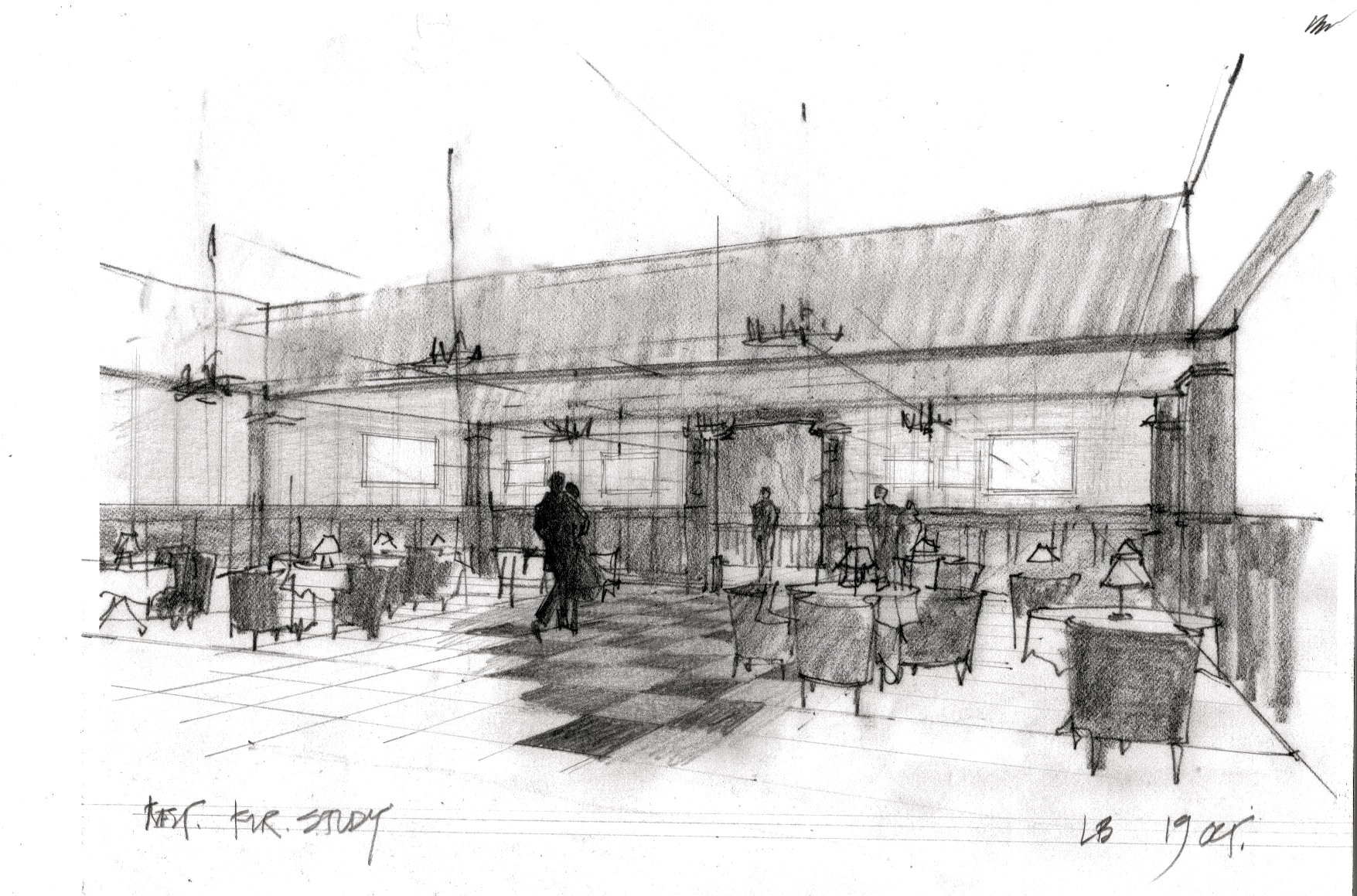
Restaurant set. Sketch by Laurence Bennett.
Kirill: And then you have another aspect of the era, shooting in the Academy ratio of 1.33:1, with much less horizontal space. How did that affect the preparation and setups when the audience sees less?
Laurence: You see different things. I’ve done 1.85:1, and most of my recent work has been 2.35:1. In 1.33:1 you see a lot of ceilings and floors, whereas you don’t in 2.35:1. So the composition would have a lot more above and below. It’s a different way of looking, a rather more awkward framing, and it’s difficult to adjust to. All of the location photographs, all of the sketches that I’ve prepared for Michel – everything was presented in 1.33:1 so that we would get used to that format.
I spent a lot more attention to the floors particularly. One of the things that was typical of the film sets of the time was that they seldom had ceilings. We had some ceiling pieces, elements and headers, but floors were a larger concern.
Kirill: Did you build your sets in the studio stages?
Laurence: It’s a big mixture. We had many many locations, all of the historic locations of the period – Peppy’s house, George’s mansion, the theaters. We did a lot of work on the back lots at Paramount – Los Angeles streets, the pawn shop, the tuxedo shop, George walking around, a little bit of the driving stuff, Peppy on the bus. Other driving stuff was done in an old Los Angeles neighborhood. The exteriors of the theaters were done at the Warner Bros back lot. And everything else was done on stage – George’s apartment after his fall, the screening room, the jungle, all of the little sets you see within the movies. We had a tremendous number of stage sets.
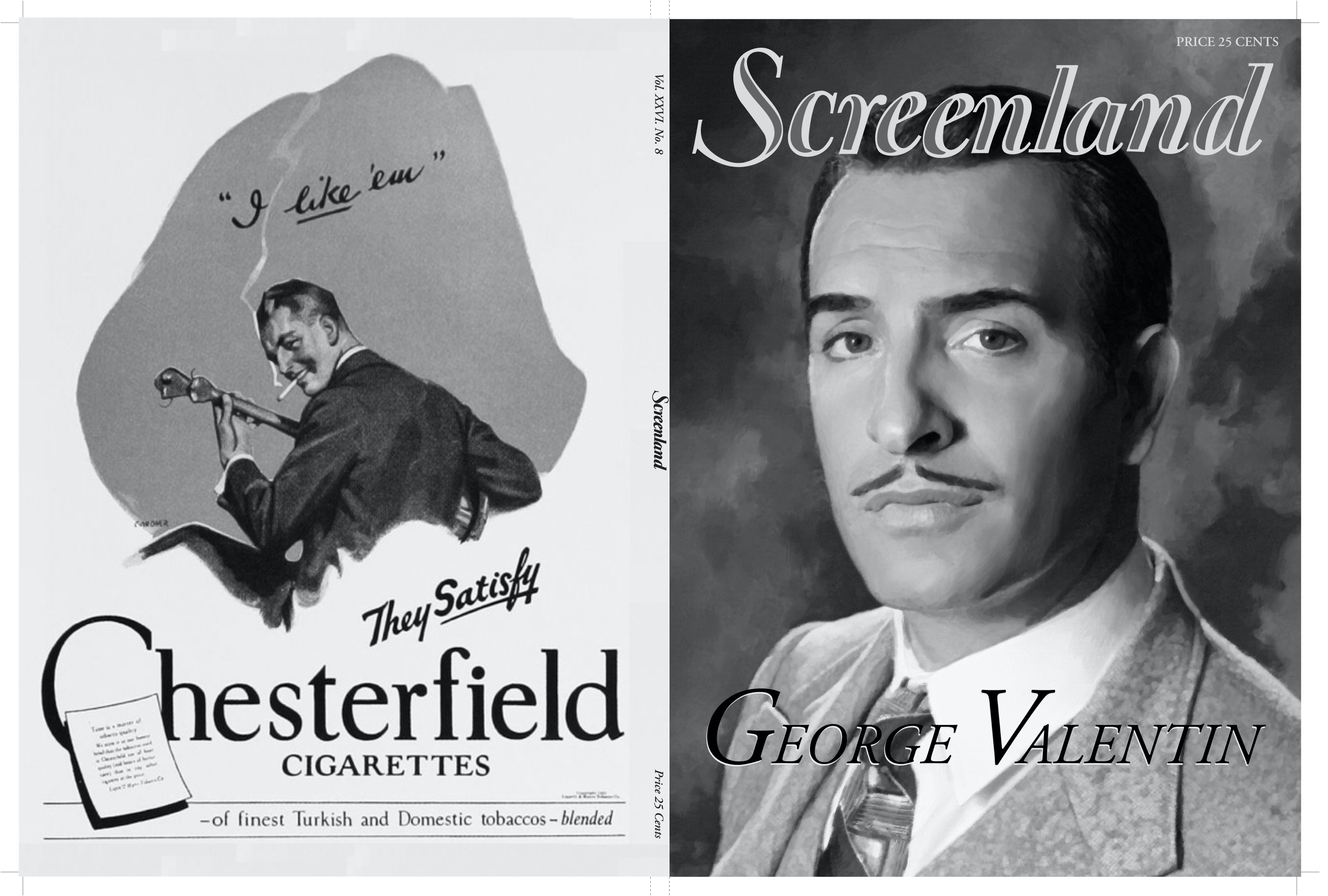
Magazine cover of “Screenland”. Graphic designer – Martin Charles.
Kirill: What happened to those sets? Are they gone, and was it hard to see them demolished?
Laurence: That’s what always happens. You hope that pieces would be recycled in other things. We used only painted backdrops outside the sets, and I tried whenever possible to use the oldest black-and-white ones. There are only very few still available, but there was one in particular that spoke to me. There’s a movie that Peppy does within the movie, “Guardian Angel”, and it has a North African, Moroccan feeling. The backing outside that set was from “Casablanca” [Humphrey Bogart, Ingrid Bergman, 1942]. And when I found that, it was a very rare and wonderful thing, like unrolling a holy relic. It was painted in black-and-white in the early 1940s. It was a real honor and thrill to be able to use it.
Kirill: You mentioned one of the historic location used for Peppy’s house. This is the old Mary Pickford residence. What is it used for these days?
Laurence: It’s a residence. A family owns it, and they recently did a major restoration. It’s in a beautiful shape. We looked at it and fell in love with it, and only then realized its provenance. When George wakes up from his convalescence in Peppy’s guest bedroom – that was Mary Pickford’s bedroom in the few years when she was seeing Douglas Fairbanks before they got married. It’s pretty remarkable.
Kirill: Was access to all the historic locations one of the main reasons to shoot in Los Angeles and not Europe?
Laurence: There was another reason. Michel and Thomas Langmann the producer had a very strong feeling about making the story in Hollywood because the story itself is about Hollywood – and I loved them for that.
Kirill: There was this odd piece floating around about a UK theater issuing refunds to people who didn’t know that it was supposed to be a silent film. On one hand, the story becomes more accessible when you remove the sound, but on the other hand, do you feel that the modern audience is ready to see such a movie?
Laurence: I think those stories are very exaggerated. It seems to have been one cinema in some place in the UK. I would hope that the picture opened up to a much broader audience the incredible strengths of a pure version of visual storytelling. Cinema is first and foremost a visual medium. I would hope that it’s exposed people to broaden their horizons a bit. The universality of the story by lack of dialog is quite incredible. I only realized it the other morning as I was doing a radio interview with a journalist in Bogota, Colombia, and there were journalists from Spanish-speaking world in four different countries asking questions. It was an incredibly emotional experience seeing people moved by the picture, hearing people’s questions and reactions from around the world.
Kirill: Even as the sets are in the background and the main focus is on the characters does not mean that you have less work to do.
Laurence: It’s a collaborative art form and I never worked on a production where both the cooperation and collaboration between various art departments was as strong and joyous as it was on this picture. Also, because of the uniqueness of the approach to storytelling I think it was much more essential that we worked in sync. This picture is nothing without what I think to be a good solid cinematography, design, costumes, make-up and hair. The casting is phenomenal, the extras casting – everything that was done by all the departments was so strong that it supported a very strong picture.
Kirill: The movie itself covers a roughly five year period, from 1927 to 1932, with the Great Depression striking right at the middle point. If you just watch the movies from the era, the glamour did not go away; in “The Artist” there’s a certain transition as George goes broke, with much less glamour surrounding him. How did you alter the visual language throughout the story?
Laurence: And then you notice as he’s pulled back to life by Peppy’s faith in him, the movie ends with a glorious, very high style finale, as he returns to a very glossy career. It was obviously by intent that the picture is taking a dark, slightly expressionist turn. His crisis was an opportunity to really darken the story and let the threat and his conflict be demonstrated visually in a different way.
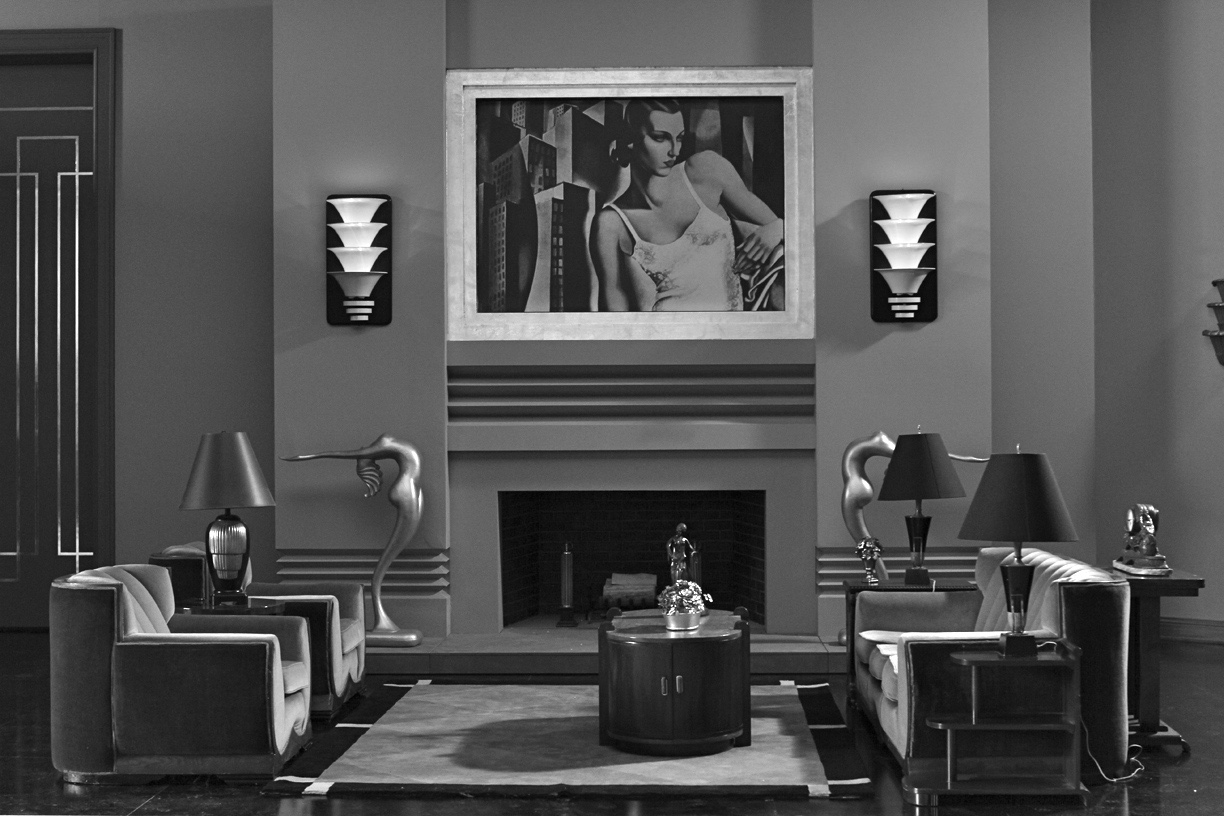
Still picture of one of Peppy’s 1931 movies. Photography by Peter Iovino.
Kirill: Do you notice any significant difference in the visual look of the movies from 1930s as they switched to sound?
Laurence: Last week I was actually watching a few pictures from the very early 1930s. Cedric Gibbons, the production designer who is best known from that period, was responsible for not only changing the look of the Hollywood product, but also influenced interior design and product design around the world. He was responsible, more than anyone I can think of, for popularizing deco. He had been to the exposition in Paris in 1925, and he returned to Hollywood with this incredible enthusiasm for the modernism, the modern hope that its flair personified to him, and he began putting that into the scenery.
There’s one set that’s very influenced by Gibbons in “The Artist”. The set where Peppy is filming when she receives news of George’s accident when she reads the newspaper – it’s derived very directly from a set that Gibbons used both in “Our Dancing Daughters” and “Our Modern Maidens”.
Kirill: You mentioned the scene where Peppy is riding on the bus. There’s a few dozen other cars in the movie. Can you talk about the logistics of getting access to all these vehicles?
Laurence: They are real vehicles, and it’s tremendously difficult. The picture vehicle people worked long and hard to secure those cars and trucks and buses. There’s an amount of very common ones available in Hollywood, but for very special ones you need to go to the collectors. The bus was particularly hard to come by. We used the vehicles as is with no modifications, but the search for a couple of them was particularly prolonged and difficult.
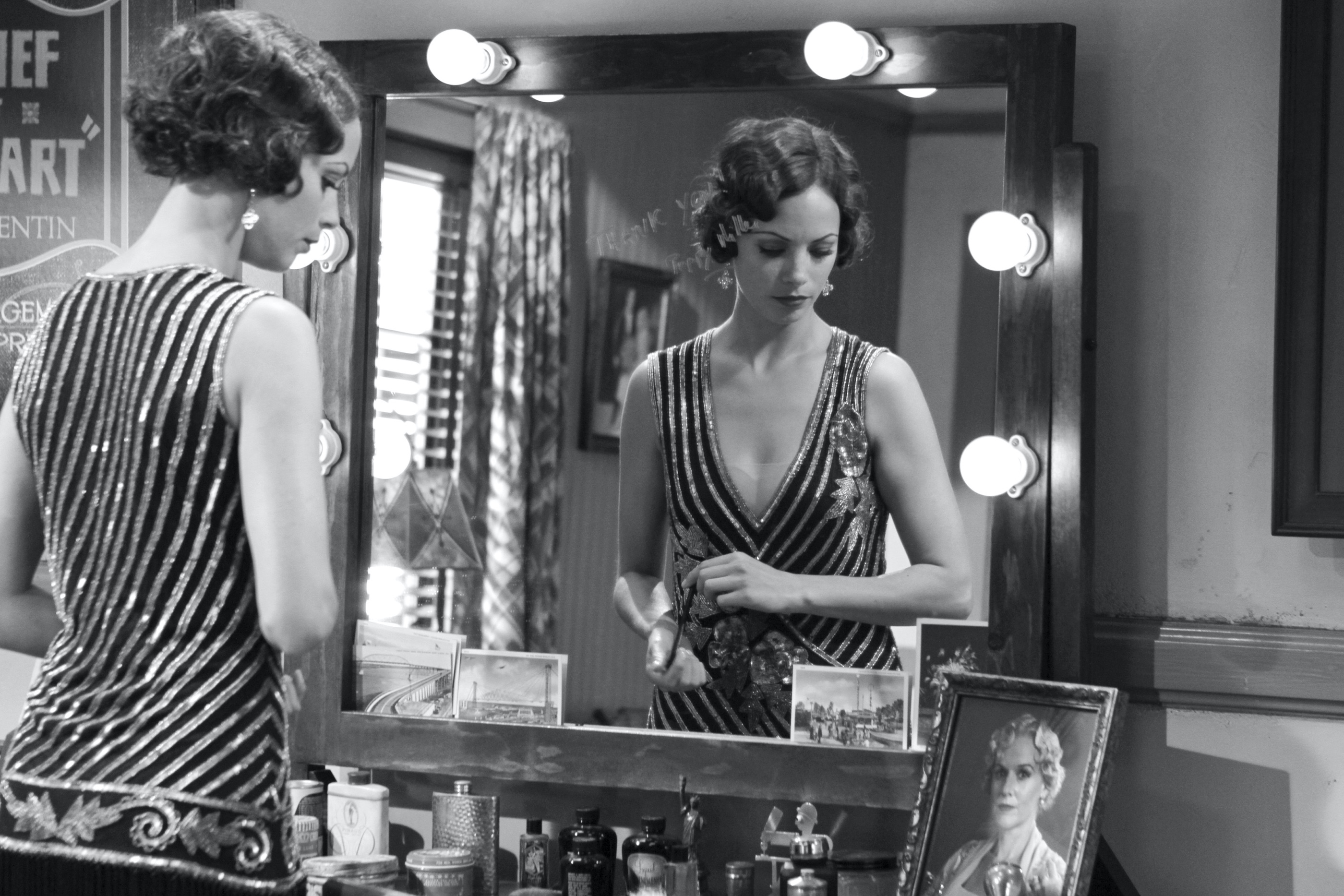
Kirill: Does that authenticity extend to the lower level of details of accessories such as microphones, hair brushes or light bulbs?
Laurence: We decided early on that we wanted to be true to the spirit of the period, rather than being slavish to detail. But certainly everything is quite authentic, requiring a little bit of looking and thinking. It also depends. The light bulbs, for example, are reproduction bulbs. But the sockets are from the period. We custom-made George’s table, but other items such as dressers and make-up tables were readily available.
Kirill: How much time and attention did you spend on the costume design? Was it a separate mini-production of its own?
Laurence: That was all Mark Bridges the costume designer who is a genius, and I think he has a lot of very deserved attention to this picture. There is a good bit of period wardrobes still available, but the problem is that it’s not in a very good condition. It falls apart as fabric deteriorates over time, so he built a lot of things. A lot of Peppy’s dresses, for example, were built from the styles of the time. He did a brilliant job saying a lot about the characters’ progressions through their arcs, but also helping bring them to the right amount of attention within the frame at any given time. Things like white colors on Peppy’s dresses and hats really bring attention to her face and focus her even in a crowd. Between lighting and costumes a lot was done that really highlights the characters.
Kirill: You’re recreating a very glamorous era in Hollywood’s history, but also an era that has the vast majority of its films well preserved (unlike the early movies that have been largely lost). Were you trying to avoid comparisons to any specific real-life actors, or was it a mixture of original storylines and homages?
Laurence: George Valentin begins as Douglas Fairbanks, morphs into John Gilbert and then becomes Fred Astaire. We were trying to be nimble in how we portrayed the characters and allowed them to grow a bit. There are obviously certain studios and stars and products from the time that were very much on our mind, but it was also important that we’re not too tied to any particular ones.
Kirill: Did you ever think about how the film would’ve been accepted had it been made back in the 1930s?
Laurence: I’d like to think that the story that Michel wrote is so strong, and Jean [Dujardin] and Berenice [Bejo] performances are so winning, that I think that it would charm audiences anywhere, anytime.
Kirill: There’s so much that has changed in the ways movies are made in the last 80 years. Without any specific reference to the current explorations of 3D shooting and projection, do you think there’s going to be a similar “nostalgic” movie made in 2100s about the modern movie making?
Laurence: We have no way of imagining. The technological changes and growth in the art and the crafts of cinema in the past 90 years – no one could have ever foreseen. There’s certainly some parallels in new technology now and what was going on with the conversion to sound, but who knows what sort of changes there’ll be. One thing I can say though is that good stories are always good stories. I am such a sucker for being told a story and being taken on a trip that when I watch a film form any country at any time and it’s good, the technology doesn’t really enter my appreciation of it.
Kirill: What was the role of visual effects in “The Artist”?
Laurence: There are several exterior scenes with an amount of CG augmentation and erasure. Philippe Aubry was the visual effects supervisor and he was with us through much of the shoot. He did a fantastic job in doing just the right amount and keeping the level of detail just perfect. He worked on a handful of very key scenes – the exteriors of the theaters, assembling the entire crowd within the cinemas for the big shots where we had around 200 people and needed 1200, the entrance to the studio. I built the gate and suggested to Philippe what we might put in the background, and he created it digitally.
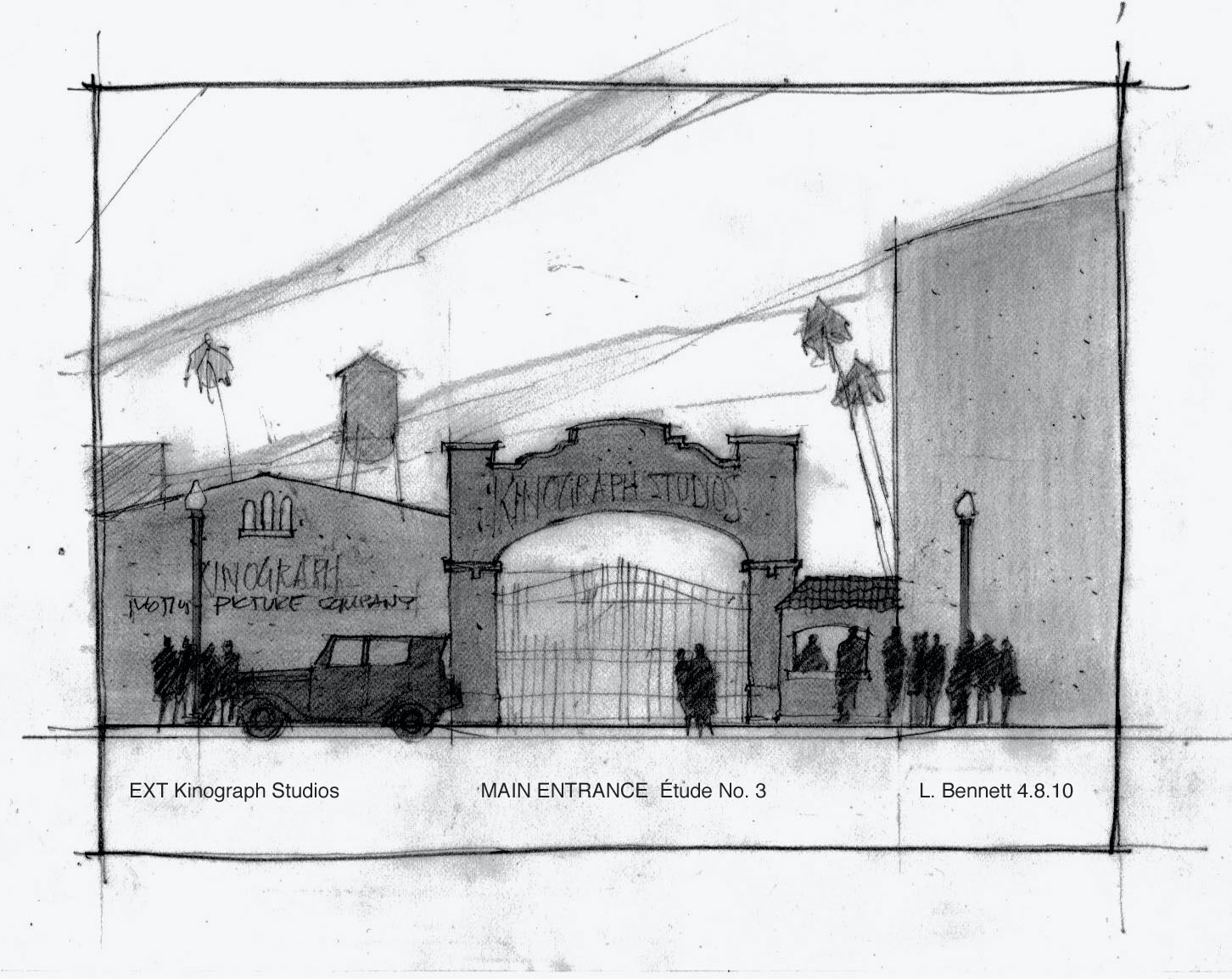
Exterior of Kinograph Studios, sketch by Laurence Bennett.
Kirill: What about the scene in the staircase as George and Peppy pass each other by as the studio moves to the sound productions?
Laurence: That’s a real beautiful historical building in downtown Los Angeles – the Bradbury Building, seen in many movies including “Blade Runner”.
Kirill: What’s next for you, besides the very hectic weeks leading to the Oscars? Do you think there’s a place for more productions of this type, or is it a one-off never to be repeated?
Laurence: I can’t really think much beyond that. Right now that’s keeping me pretty busy. I don’t think there’s going to be a big rush to make black-and-white silent movies [laughs]. What I hope is that there will be people willing to take chances to explore more off-mainstream approaches. I’ve been fortunate to have been involved in a couple of indies that really broke through, and when you’re working on something that could in fact be very special – but you’re not sure if anyone’s going to see it… Two pictures I’ve done – “Crash” and “The Artist” were different. When a small picture gets a chance to be seen so widely, and gets so much attention, it’s pretty remarkable the impact it can have.
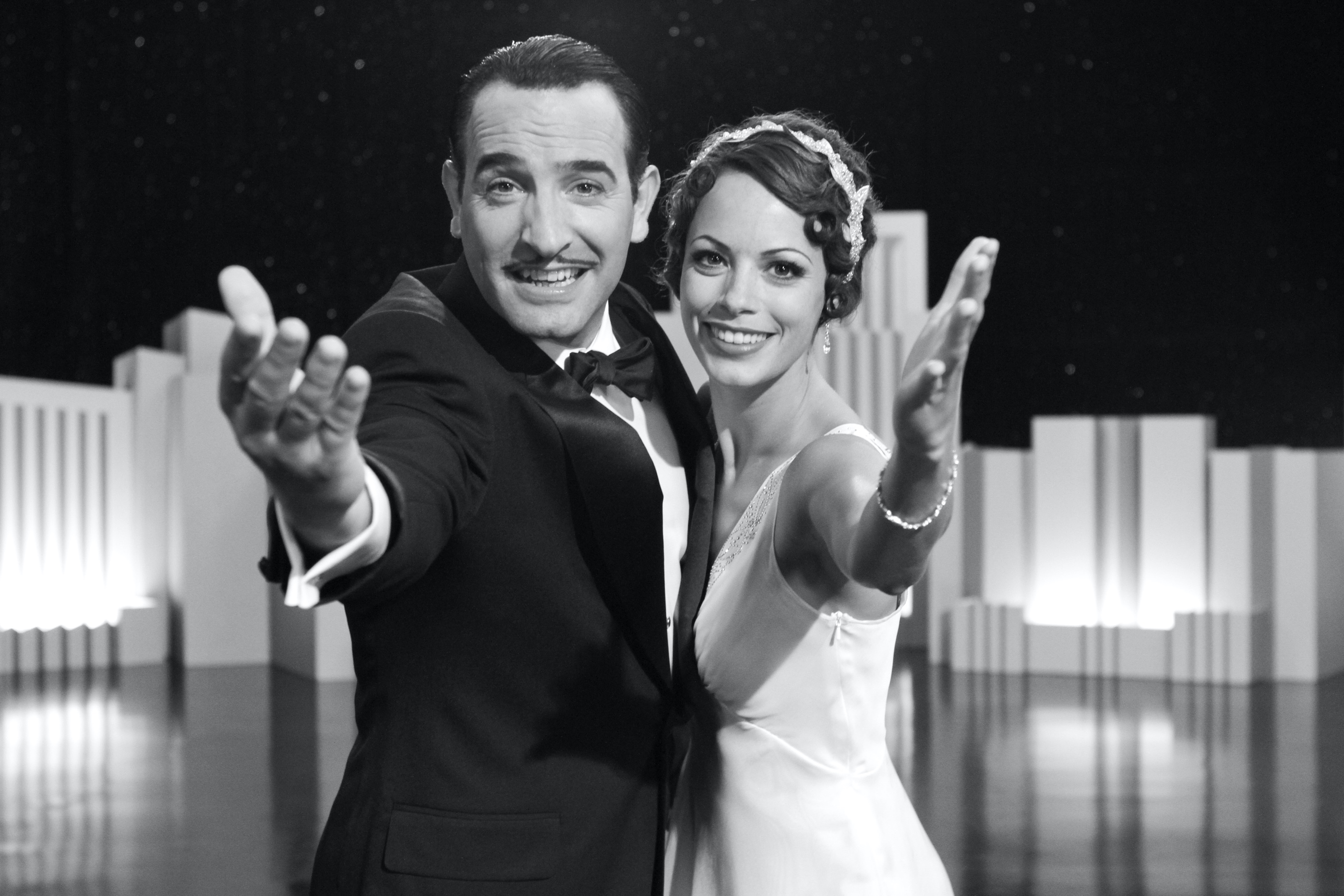
And here I’d like to thank Laurence Bennett once again for his work on this extraordinary film, for graciously agreeing to answer my questions and for sharing the materials used in this interview.
You may not see them on the screen, but their influence extends to every set and every scene in your favorite movies. In the last few years Katie Spencer took the role of set decorator on such wonderful productions as “Pride & Prejudice”, “Atonement”, “Miss Pettigrew Lives For A Day” and “Sherlock Holmes”. In this conversation she talks about the craft of set decoration, taking a closer look at the artistic and financial aspects of movie productions, supporting the main story while not drawing too much attention to the set objects and, in particular, her work on the movie “Hanna“.
Kirill: Tell us a little bit about yourself
Katie: I went to drama school in London in the early eighties to do the stage management and technical course. Then I worked in theatre for a few years, and while at The Royal Court Theatre I answered an advert in the UK “Stage” magazine for trainee buyers at the BBC. I trained as a freelancer at the BBC doing different buying jobs on a variety of programmes, and then transitioned from television into film, from buying into decorating as a natural progression.
Kirill: What is set decoration?
Katie: It is what you make of it. To me the most important thing always is the script, whether it came from a book, or an original screenplay the development of the characters within their environment is paramount. It’s all about the different characters. People may live in exactly the same time 2012 and be roughly of the same age, but they will never live in the exact same environment. To me, it’s making the written script come alive with the background, enhancing and not overshadowing. Set decoration is making the environment and the characterization work from t he script.
Kirill: Do you ever get scripts that go very deeply into describing the environment?
Katie: It’s very rarely that a film script would describe the environment in detail at all, unless it’s something very specific about a certain small prop that is essential to the narrative. Normally it would be along the lines of “He is a vicar, he lives in an 1880s vicarage, and needs to have a drawing room, a sitting room and a bedroom etc.” So there’s always a lot of freedom, which is lovely. Therefore you have to have an understanding of the character because there is little written in the way of stage directions of how this person would live. Unless it’s a big stunt sequence . Even careful storyboarding has little information about the background details.
Kirill: So within this freedom, how do you research the specific period?
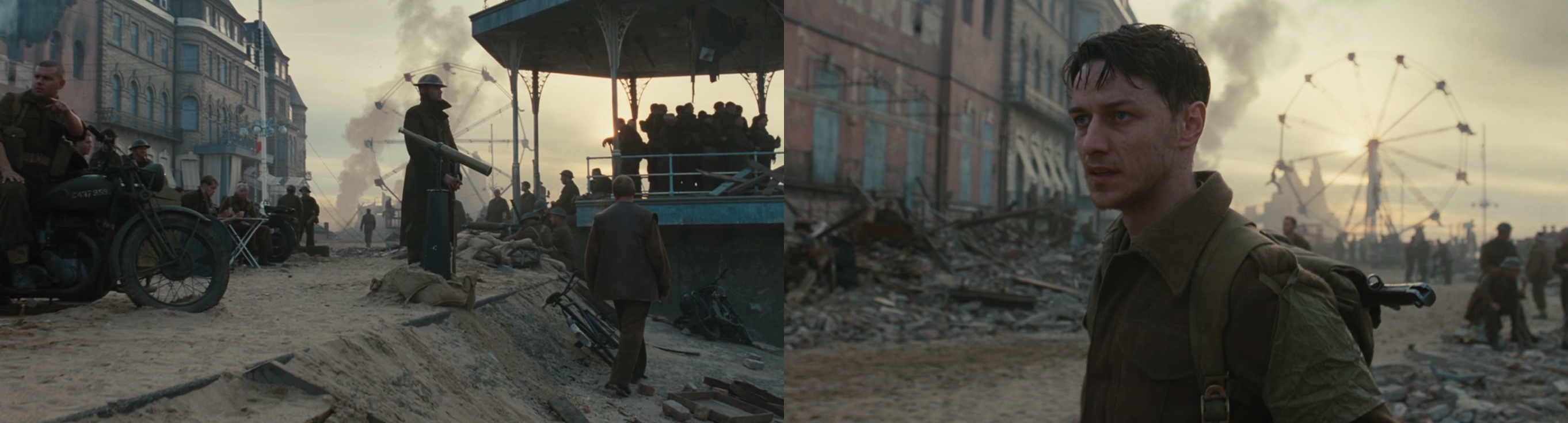
Katie: If it was something that absolutely happened, then you have a duty to be as accurate as possible. like the Dunkirk beach sequence in “Atonement”, myself and the production designer Sarah Greenwood went to Dunkirk to see the town and its history for ourselves. Back in the UK we spoke to the veterans, and researched the war museums – portraying a story that is very near history comes with the responsibility to be authentic. And if it is “Sherlock Holmes” which is pure fiction, or “Hanna” which is contemporary, but fiction as well, you would still go to museums etc and the process is the same, you read, you get as much as you can from anywhere. Picture references are invariably the best type of research.
Kirill: Most of your movies are period productions. Do we get to see the original artifacts, or mostly replicas?
Katie: It’s nice to use authentic furniture, dressing and small props as much as possible, because there is something very exact about them as they bring their own histories and stories. Also you’re going to see them – a pen or a wallet – on the big screen in the cinema at ten times its real size, and authenticity then is invaluable. However sometimes they just don’t exist or aren’t available anymore and that’s when they become expensive prop makes. Or you have to or would want to make the furniture and drapes anyway because you can’t get them in the color or fabric scheme that you need. It’s a mixture. However it is nice to use as many authentic pieces as possible, and then bring in what you have made to further enhance the visuals.
Kirill: Does the complexity of your job scale with the overall budget of the movie?
Katie: It does to a certain extent. Obviously the bigger the budget, the more opportunity and scope there is. But sometimes when you have a smaller budget, it can be more complex and difficult because you don’t have that money to buy your way out of trouble, the “get out of jail” money as we call it. It’s always better to have money than not, but it doesn’t mean to say that the complexity is more. It’s very dependent on the film you’re making and there is never enough money no matter how much you have. It’s always tricky, always a difficult balance of money and time.
Kirill: Does it happen that you buy an item that caught your eye for an off chance to use it in your next productions?
Katie: You do sometimes, especially if you know that something is coming up when you don’t have so much money. So you buy it thinking that you can use it, but usually at the end of a tough shoot even things you loved at the time you just don’t want to see it again. You close the door on that and leave it behind you. I don’t have a store for things that I use again and again, just a few favorite items.
Kirill: Do actors sometimes bring family memorabilia?
Katie: I’ve never know that, and I would never advise anybody to bring anything of a sentimental value to a film set. Occasionally things go missing and the chances are that it will be that precious item that will get lost.
Kirill: After working on period productions, what was different for “Hanna” in the way of research, where we don’t have any special expectations apart from it being roughly modern?
Katie: I look at all films as set in their period. We’re living in a period now, and I think that modern is quite hard to do, and to do it well. The audience has much more knowledge, and you have to make them believe in the environment. When you’re doing something from 1780, not a lot of people are going to say “I wouldn’t do that”, but if it’s something set in 1980 onwards then they would. But from my point of view as a set decorator, I don’t live in a house that is completely 2012. I have a mixture of contemporary and some period items. So again it comes back to the character. We did “Hanna” and we also did a film in the States called “The Soloist” which was contemporary and was set on Skid Row in Los Angeles. The visual can be wherever you want to take it, apart from so many more computers, mobile phones etc in contemporary. It becomes more technical, which is great if you love that.
Kirill: Do you feel that you sometimes shape the viewers’ perspective about the specific era?
Katie: I think that if the film is done well, like “Dr Zhivago”by David Lean – that’s the first film I remember visually and I always thought that Russia was going to be like that, like an iced datcha. I think a good film does settle in your consciousness, and often it’s the visuals of it. You think “Japan must be like that because I saw it in this brilliant film.”
Kirill: Does it happen that you’re requested to draw inspiration from another production that the film director particularly likes, essentially extending the visual influence of that film?
Katie: That does happen, and it happened more in the early television days, when you’ve strived to have something out of the little you had. But now because of the Internet and because research is so much easier now where you don’t need to travel half a day to the photographic library, I think that people are more independent rather than trying to recreate the look we saw in a film before. It’s easier to find the references and new ideas.
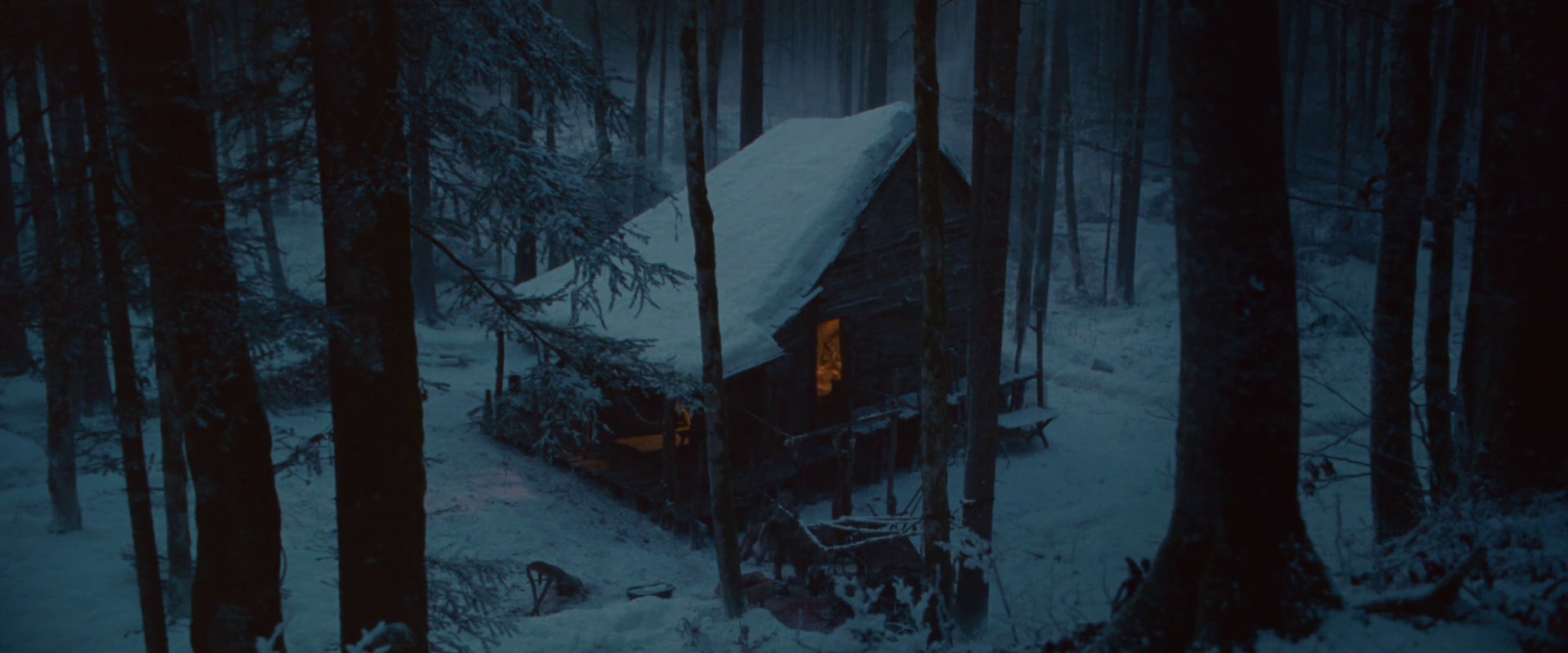
Kirill: Let’s talk about the specifics of “Hanna”. The opening sequence is the isolated environment, with vast spans of snowed forest in an abandoned winterland, going from the cold blue colors of the outside to warm golden amber yellows on the inside. How did you approach defining this look?
Katie: “Hanna” was a fascinating contemporary film to do because of her journey. There was a certain amount of rewriting in that script. To get to the starting base, you think about the whole arc and where she ends up. The cabin was the first thing we shot. And to get that cabin right, or as right as we could, to make her journey believable was quite tricky. First, we had to build it where we thought would be snow, and when there came time to shoot, there wasn’t enough snow. So we shot the opening sequence with the deer in Finland, as it was a very mild winter in Bavaria. There were many discussions about the look of the cabin, what it would be like, whether it would be more like an Inuit cabin or a teepee. And then we’ve realized that they had to have lived there for ten years at least, and you think how much they would have foraged from the outside. She couldn’t live in a sort of 20,000 BC world which is not modern at all, otherwise she couldn’t survive when she goes from it. So we decided that he [father] would forage and steal things from the local towns, and there is a mix of very simple and primitive, like cooking on a spit, sharpening stones and crossbows, but they also have a gun and books. Hanna had to have an understanding of the outside world. It was a fine line between being contemporary and really naive, but still believable to make it work for the action of the story.
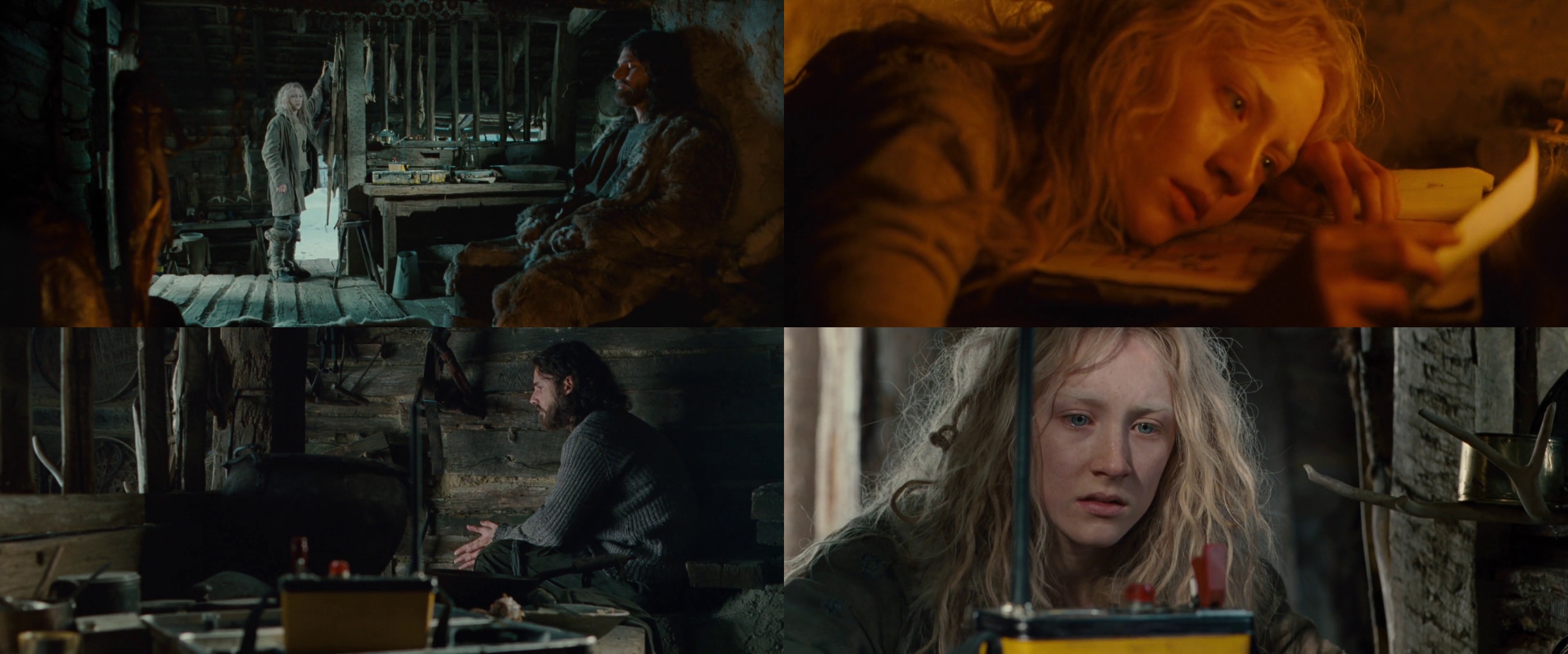
There was a lot of research into cabins from all over the world. Then we settled on a more traditional Northern European cabin and built it – as much as possible – in a naturalistic way. We made the candles to look like they came from the wax of the animals, made the characters reuse tin cans, construct their furniture from found objects and so on, it was really an interesting set to do. Quite tricky too, because you need the surprise of the modern era elements coming in, when Erik brings out the machine that alerts Marissa. Hopefully we’ve found that balance between her naive life, and not being too unknowing of the outside.
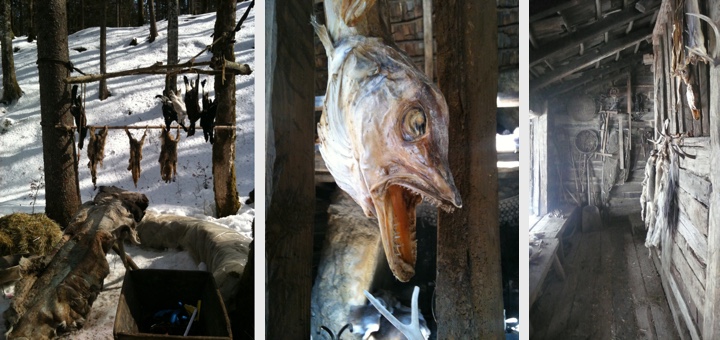
Exterior and interior set details. Courtesy of Katie Spencer.
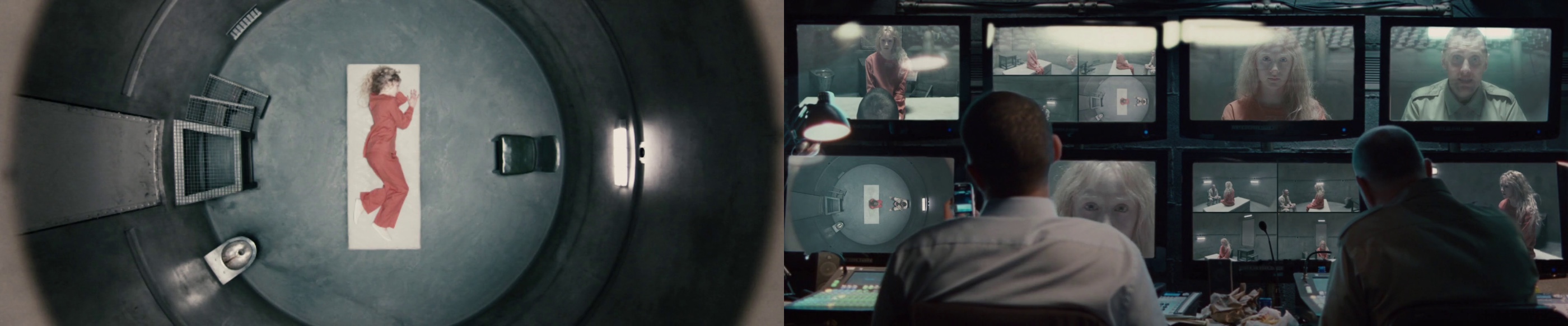
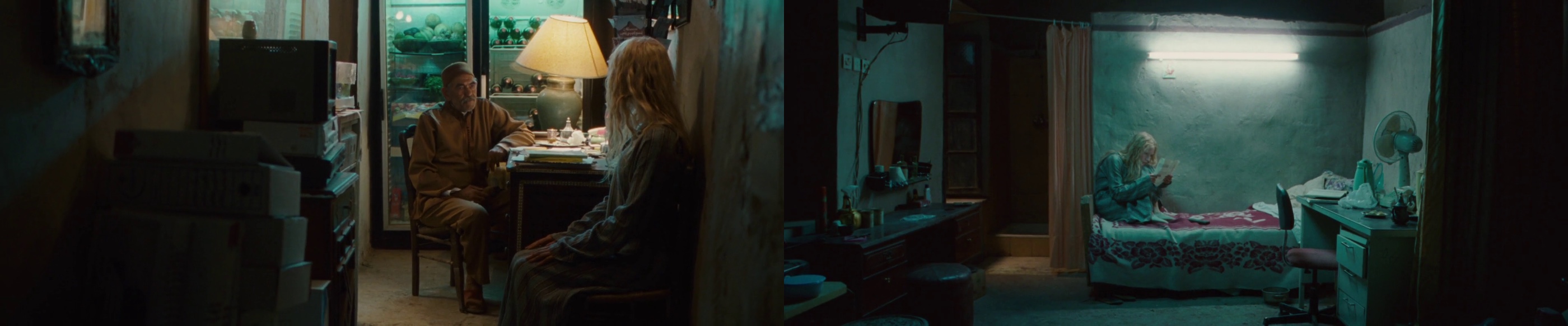
Kirill: As you said, you’re planning the sets to serve the overall story. After being held in a very high-tech detention facility with very little control over the environment, Hanna next goes to a very primitive Moroccan hotel room. This was one of my favorite sequences, being very much set-driven with the appliances behaving like actors, springing to life and practically confronting her. What was the process of planning and shooting this sequence.
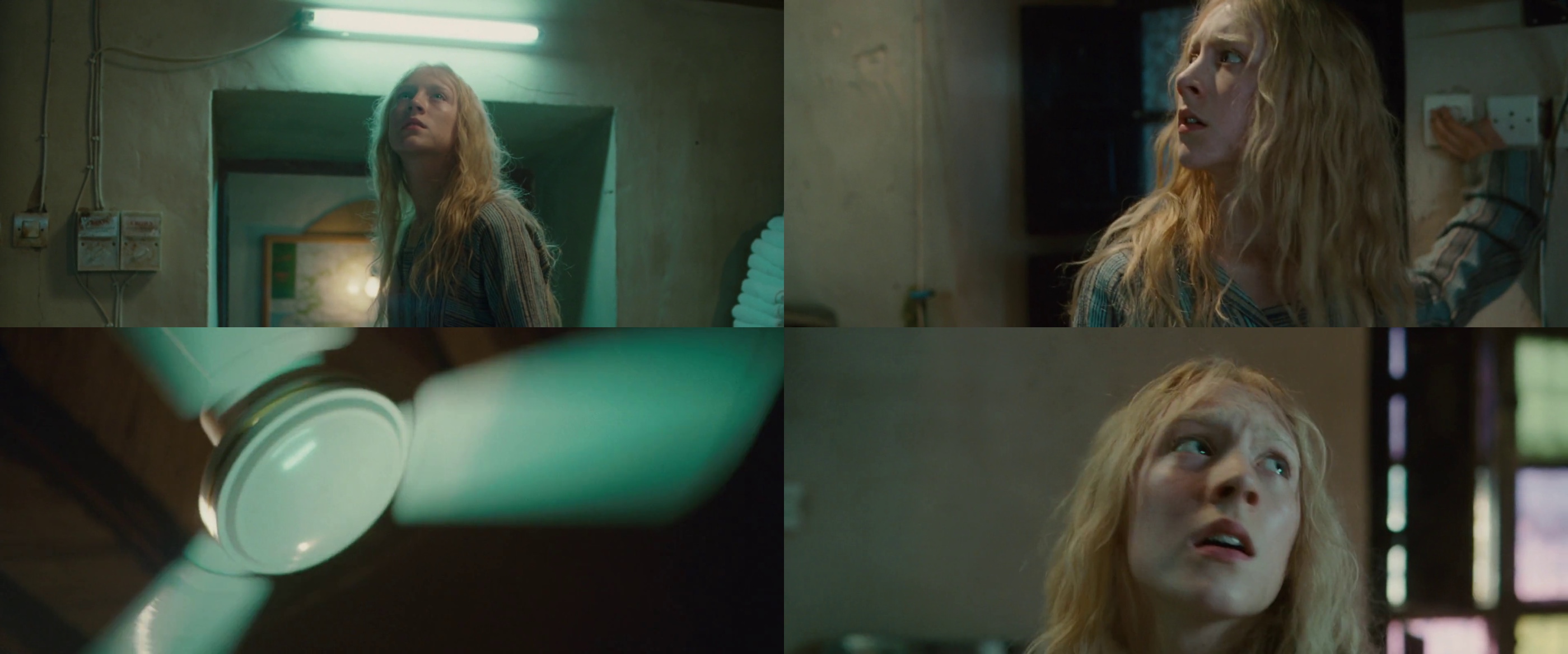
Katie: We actually did it in Morocco. It was adjacent to the hotel, a sort of an empty shed used to store old cars. The idea then became to keep it as a store room but have one of the spaces for people to sleep. It was written as hotel room, and that’s why it had a shower, a fan and a TV – coming on to frighten Hanna. Keeping these elements in but setting it in a store room made for difficulties. It worked and didn’t work. It worked for how the rest of the hotel played, but it was quite difficult to accomplish, to get all these objects in there and in there for a reason. Into this revised setting we had to create an environment for the caretaker and for Hanna, to make it a cross between the Arab world and the western world where everything comes alive to frighten Hanna. You don’t see so much of it in the movie, but part of the set was filled with product placement items that we got for free on a very tight budget. Orangina is this little bottle, it’s very African and it’s very European. And very orange and very odd, very Hanna.
So she had this little bed in the corner, and set decorating is very much about taking away and not only putting in, so sometimes you need to see very few things and that tells just as much of the story. Actually the wiring was so bad in Morocco, it was actually quite dangerous when the fan was turned on and the lights were going on and off. Saoirse Ronan is such a good actress and she can convey so much with her look, but it was very tense as it had its own inherent danger.
Kirill: Is the final movie close to the actual set? How much was changed in editing and post production?
Katie: We had very little time and money to do reshoots, so you see what is actually there. Paul Tothill is a great editor and Joe Wright is a very clever director. They have a gift of assembling it all brilliantly, as we didn’t have the leisure of extra time or extra money.
Kirill: How does your usual day go? Are you on the set as they shoot, making sure that things stay in place between the takes?
Katie: There are so many sets, quite often up to eighty. Therefore we’re often working ahead of the shooting crew. Say, at the first day on the Moroccan set we would see Joe [Wright] in, see the actors in, see the first take, make sure everybody’s happy. There is a standby art director on camera who is there all day every day with the shooting crew because we have to move on and do the next set. As nice, or as not nice to be with the shooting crew every day, we don’t have that luxury.
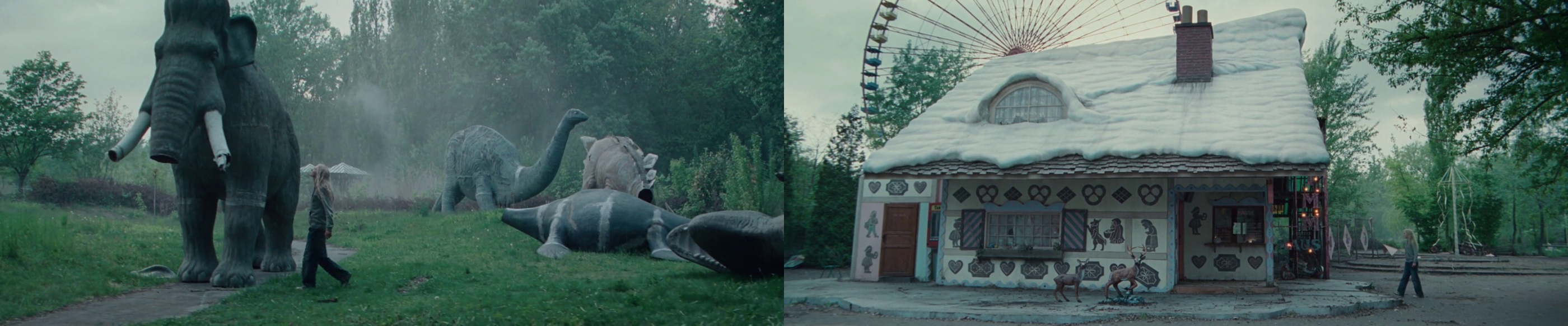
Kirill: Hanna goes through the different environments, from an isolated cabin to the high-tech detention facility to the Moroccan hotel to the “regular” apartment where her grandmother lived. And then suddenly she goes to an almost fantasy world of an abandoned amusement park, with the wonderfully designed Wilhelm Grimm house. Is this intentionally forcing her to the different facets of the outside world?
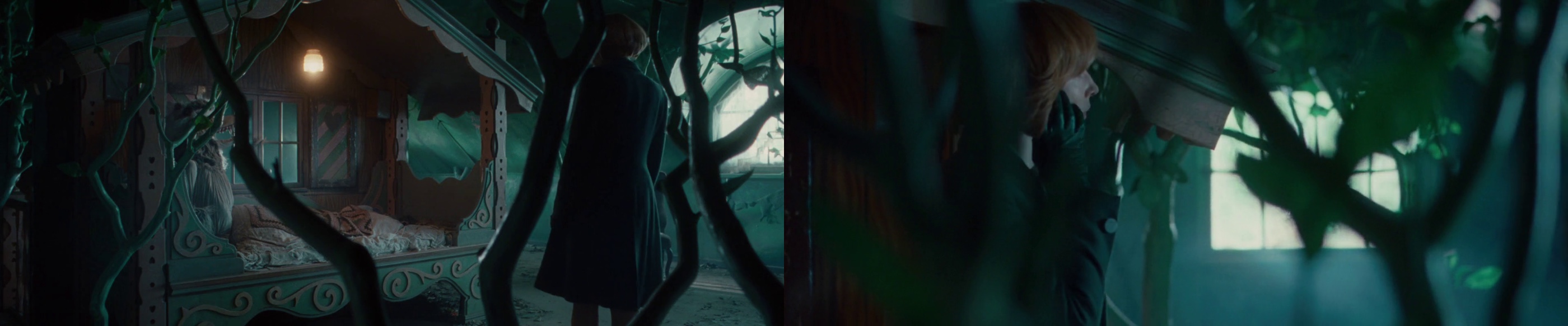
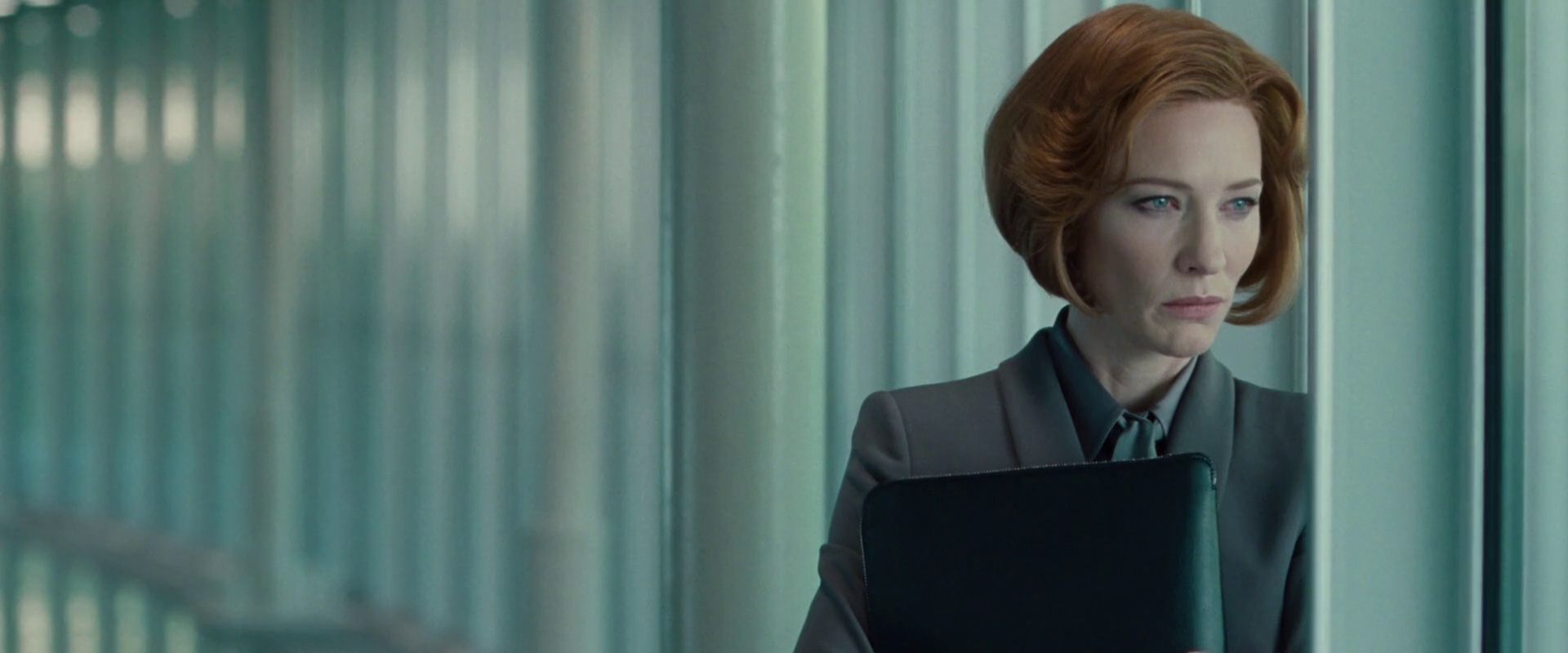
Katie: Sometimes you find a location that was not written in the script. We found this amusement park on the eastern side of Berlin, and it got rewritten into the script. We built a lot there, and it was the most phenomenally unusual place, last used around 1981. At the end “Hanna” was constantly being revised, mainly for budgetary reasons. There was a different ending at one point. There is this fairytale feel about it – to bring in this amusement park and the Wilhelm Grimm side of it. That was the case of a location leading the script. We built the Grimm house, we built certain things like the wolf’s mouth, and it just added to the whole fairytale element of Cate Blanchett being the wicked witch and Saoirse on her journey. It was great fun to do.
Kirill: Did you find this location before the shooting started?
Katie: It’s all before you start shooting. You have around 12-week prep where you’re researching. You have to have all the ideas before you start shooting. When you start shooting, the horse is out of the stable and you have to keep up just ahead of the shooting crew. Sarah [Greenwood] the production designer goes on provisional scouts with the location manager, and I would often go with her. After the provisional scouts the director would then join to be shown what locations have been found. We scouted different places, for all the different possibilities of the script that wasn’t quite finalized. And this is when we came upon this abandoned amusement park and it was just so visual that it was impossible not to use it.
Kirill: What happened to that Grimm house that you’ve built?
Katie: There was some debate about it. There was some legal problem with the amusement park about who owned it, and the history of bankruptcy. The person who owned it wanted to keep it, as it was good thing for him as ideally he would’ve liked to open the park again, but the reason why it failed to begin with was because it didn’t supply any car parking and there was no train station in the vicinity. Once the Berlin wall came down, it was a whole different ballgame anyway. He wanted to keep the house, but there health and safety issues – which are everywhere. We had built it as a film set. It wasn’t safe enough for an amusement. So I believe it was taken down, but there were still discussions as we were leaving Germany. But normally all the sets are taken down, and very few are kept.
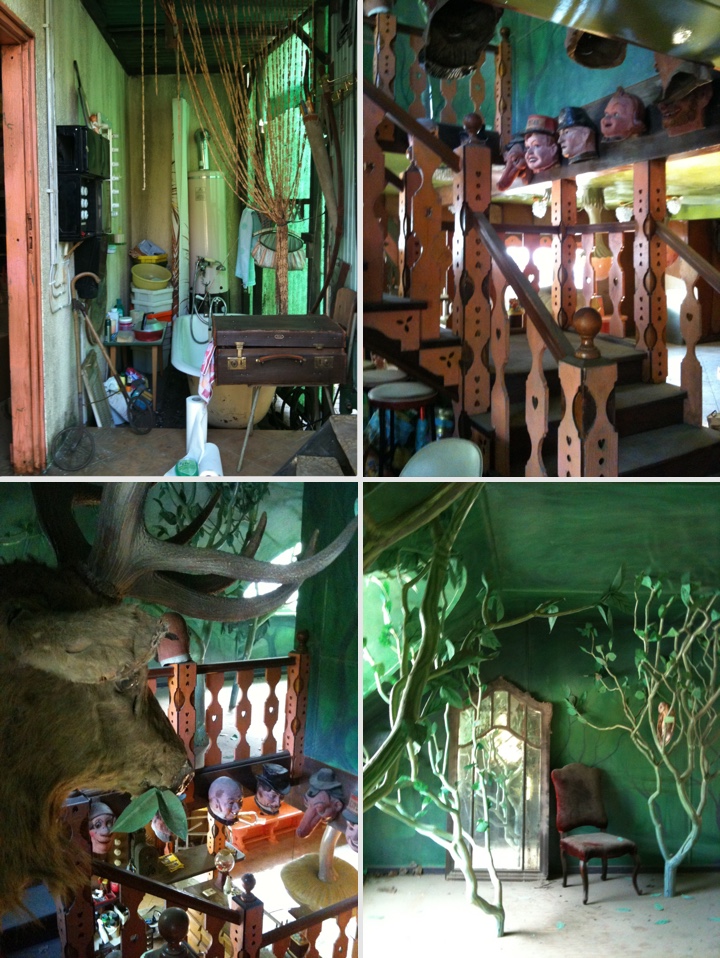
Various parts of the Wilhelm Grimm house set. Courtesy of Katie Spencer.
Kirill: Where did you spend the most time on this movie?
Katie: The cabin was tricky. Morocco was tricky, especially logistically. We did this camel market where Hanna walks through on her way to the hotel. We were in a dry riverbed, we had dressed the market, berber tents, stalls everything. Now we were waiting for the 200 camels garnered from 100s of miles around all of which had to be walked in, because there was no transport. Sometimes you feel very lucky to be doing what you’re doing. You travel, and it can be stressful, but I will always remember that early morning as I was thinking whether the camels were going to arrive, will we get only six of them, and they will be shooting in a couple of hours, and then suddenly over the hill came these scrawny animals – working camels, not tourist camels. It was one of the most remarkable experiences of my life as the sun came up and all these camels, two hundred camels coming over the hills our way. It was wonderful.
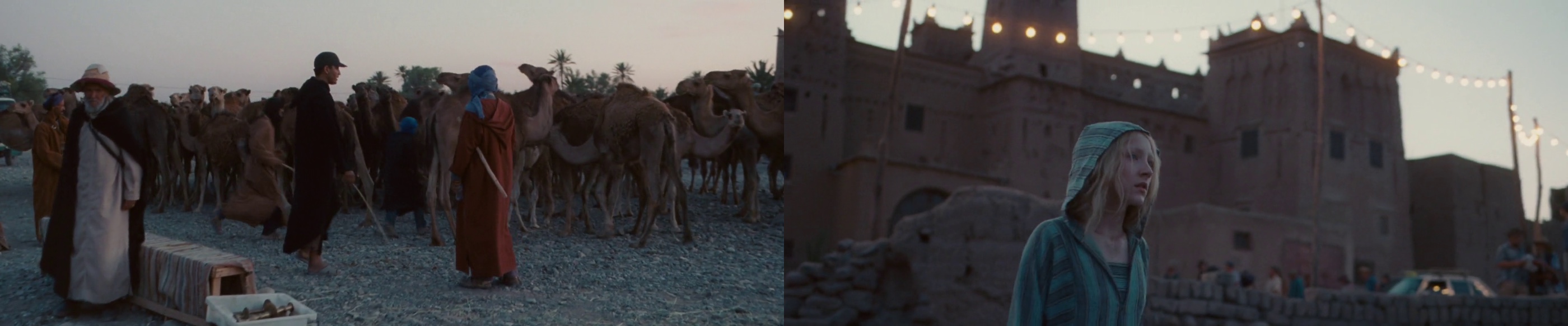
So logistically even when there are no walls on the set it is quite tricky. The Wilhelm Grimm house wasn’t that tricky. In a way you had a template there with the amusement park, so it wasn’t the hardest. Sometimes what seems to be the simplest sets are the hardest to do. Cate Blanchett’s apartment – because we couldn’t find the right location for Marissa (finding America in East Berlin) and we wanted to keep it as bleak and neutral as possible. Things that you don’t think will be simple end up being difficult, and things that people go “Wow” were actually quite fun to put together. You can never tell.
Kirill: After “Hanna” you worked on the second installment of “Sherlock Holmes” and now on “Anna Karenina”. As you said everything is a period production, but you are going back to earlier periods. Is there any special treatment to sequels where you want to maintain some visual continuity?
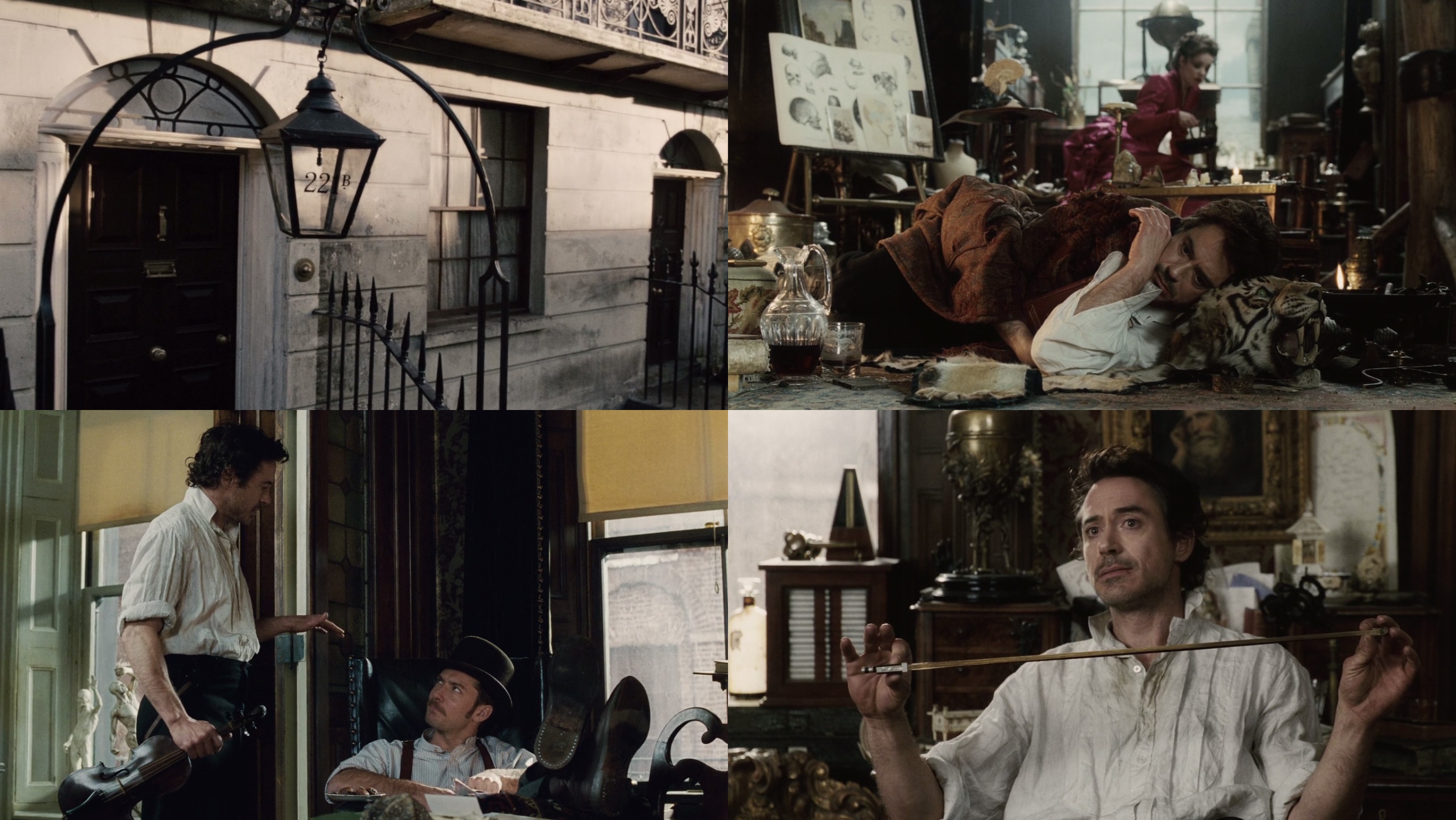
Katie: It again goes back to the script. With “Sherlock” he is still living in the same house, so of course we had to redo it. For the first movie we built the interior of Sherlock’s house on Baker street in New York, because Robert Downey Jnr needed to be in New York. Now we had to recreate it and build it here in the studios in London. You follow the script, and the script for “Sherlock Holmes” is always completely bonkers and is always being revised by Robert, Jude [Law] and Guy [Ritchie] with a lot of improvisation. In this script he turned the apartment into a jungle and you think “How is that going to work, what do you mean it’s a jungle in there?” That’s difficult to do, because you don’t want it to look like as a period house with a few rubber plants in. We also had many sets built that were meant to be in Paris or Germany, and a chase across Europe. Doing “Sherlock Holmes” is not like doing any other film because you get a very free hand which is lovely, but you are never quite sure what will come out of the rewrites. But it’s fun and entertaining.
Kirill: Do you tweak the production and visual aspects on the look of the specific actors, things like skin tone or physical frame?
Katie: It does. Skin tone affects the colors of the walls and similar things. Physical frame is an interesting thing. If you’re doing Gollum’s house, you design it around what Gollum is. And to another extreme of Father Christmas’s house, it would have the matching aspect. It does manifest how they carry themselves and what they look like. It’s really important to see who’s playing the parts. Quite often the supporting cast comes in after the major casting is done, and you need to know whether Marissa in “Hanna” is going to be Cate Blanchett or Judy Dench. It puts a whole different slant on how they would live and what they would wear. Costumes are very important, because what you wear is often reflected in how you live.
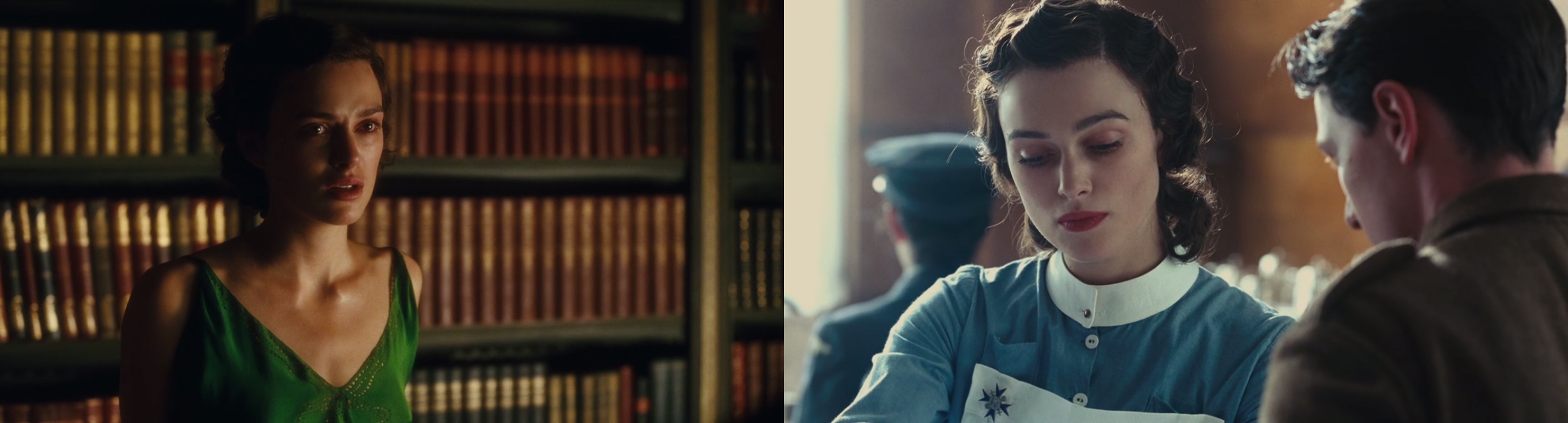
Kirill: Do you think that actors bring certain visual heritage from their previous movies? For example you worked with Keira Knightley on “Pride & Prejudice”, “Atonement” and now “Anna Karenina”, and she’s in a lot of period movies – do you expect the audience to expect her to look in a certain way?
Katie: Keira is quite a good point, because she does do a lot of period films. She’s been asked many times about this, and she’s said it’s because of better scripts. We’re not quite finished with “Anna Karenina” and we’re actually going to Russia at the end of the month to do more shooting, chasing the snow again. So you know you’re doing the beautiful Anna Karenina and then you talk to makeup to find out she’s going to be slightly different, also being older than Vronsky is another interesting aspect. Having worked with Keira you also know how she works within sets and that’s really helpful. Robert Downey Jnr is very interested in how his character lives, more than anybody else, I think. He’s very methody in that way, and he would take something from the Baker street set and use it as one of his continuity props. Knowing that made “Sherlock Holmes 2” a little easier since I knew how he works.
Kirill: Going back to Gollum, he is not a real physical character, but rather motion capture further enhanced and brought to life in an advanced computer-generated environment. Do you see virtual set creation and manipulation encroaching on your turf, being something that you adapt to and help shaping?
Katie: I think that if it continues that way, it will encroach on everybody’s turf. I think it will be the hardest for art directors as opposed to production designers because they will always have the overall view of the look and visual effects. It will still affect set decoration, but as the actors still have to interact with their immediate environment hopefully there will employment for us. There’s a place for it and it’s absolutely fabulous when it works well. When CGI and non-CGI melt together you get a brilliant effect, but it can also be overused. I think that teenagers especially get bored of CGI if it’s not done well. If you would’ve said this to me years ago, i would’ve thought that CGI would come further and there’d be more CGI films – like “Sky Captain and the World of Tomorrow”. Perhaps because we’re going through a period of recession it seems to be more nostalgic coming back to more traditional film making. If I was offered a completely CGI film to do, and a normal film, I would go for a normal film.
When it does work as a set extension, enhancing sets on a traditional film, it’s brilliant. But you shouldn’t be aware that there’s CGI anywhere. You shouldn’t know where one ends and another begins. You shouldn’t lose the magic of it actually being done in camera.
Kirill: Did you do any set augmentation in the second installment of “Sherlock Holmes”?
Katie: We did the exteriors of Baker street in London, we build a Paris cafe with the Eiffel Tower behind. This is where CGI is nowadays in period films – cityscapes. We had brilliant people doing CGI and it works well. It was the most CGI of any of my films, and it’s just the nature of this film really.
Kirill: Are there any particular productions that influenced or impressed you over the years?
Katie: If you see any Coen brothers film, you just know it’s going to be beautifully realized for the story, for the character, for whatever period it is set in. I also love Ang Lee films, and he takes real challenges going between one and the other in different genres. You can’t not look at the sets, and you recognize different things. And now we’re in the middle of the voting season [Oscars], and with all the DVDs you just forget and get mesmerized by something – that’s the best thing of all, really, when you’re just a viewer. I love all films, the 40s, the 30s, and some silent films. They’re visually stunning.
And here I’d like to thank Katie Spencer for finding time in her busy schedule shooting Anna Karenina to talk with me about her work. Her latest movie, “Sherlock Holmes: A Game Of Shadows” is playing in the theaters, and she’s in the middle of shooting “Anna Karenina” which continues her collaboration with actors Jude Law and Keira Knightley, production designer Sarah Greenwood, art director Nick Gottschalk and supervising art director Niall Moroney. Also, special thanks to Sarah Horton for putting me in touch with Katie.
I am very thrilled to have the honor of interviewing the cinematographer Roberto Schaefer ASC. Over the last decade he has been the director of photography on “Monster Ball”, “Stay”, “Stranger Than Fiction”, “The Kite Runner”, “Finding Neverland” and, most recently, the latest installment in the Bond series, “Quantum of Solace” featuring Daniel Craig, Olga Kurylenko, Judy Dench and Gemma Arterton. Roberto has been gracious to find time in his busy schedule to talk about his work on “Quantum of Solace” and the visual turn that the iconic series has taken since Daniel Craig has joined it.
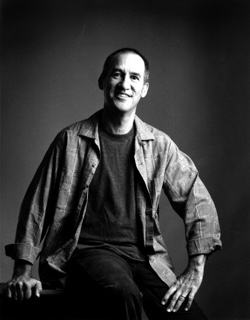 Roberto’s picture courtesy
of Douglas KirklandKirill: Tell us a little bit about yourself and your path to become a cinematographer
Roberto: I am a graduate of a fine arts college where I majored in Multi-Media which at the time was mostly conceptual, installation and every other art that didn’t fit into the classic categories. I minored in still photography. When I was growing up I, as so many others did, made films with my father’s 8mm camera and later on super 8mm, usually inspired by songs or sounds. I endeavored to become a fine artist but was somehow swayed into the path of commercial motion pictures by way of feature news, documentaries, music videos, and TV commercials.
Kirill: What is the essence of what you do, and what advice would you give to aspiring cinematographers?
Roberto: I attempt to find images in the words that I read on the page, and what is in between the lines. Look within yourself for inspiration and believe in your gut instincts.
Kirill: “Quantum of Solace” is 22nd movie in the Bond franchise. Did you spend time researching the previous installments to keep some of the visual elements?
Roberto: Along with the director and the production designer we watched most of the earlier films to look for the keys to the kingdom. In the end I think that we were most taken with the “Goldfinger” period and the 1960’s design aesthetic. I paid homage to that film in one of our iconic setups where the girl was covered in oil instead of gold. I did a match frame to the original shot but with out the cheeky chair.
Kirill: With Daniel Craig playing Bond in “Casino Royale”, the movies have transitioned to a more gritty, dusty, cutaway type of action. How does this affect your planning and execution?
Roberto: Following the lead set in Daniel’s first outing, “Casino Royale”, we needed to keep him more real, less enigmatic. We tried to allow his persona to show through his emotions and personal attachments while allowing him to be brutal and ruthless in his quest. In doing so we allowed him to guide us on his journey and kept it real. Action sequences and the like were kept more realistic than earlier Bond adventures. There was an attempt to achieve a more tactile, more visceral effect to the fights and chases. Marc Forster [director] and I worked very closely with 2nd unit to plot out the frames and action that they would shoot and we joined with them on several occasions to overlap 1st and 2nd units in order to try and keep a uniformity to the film.
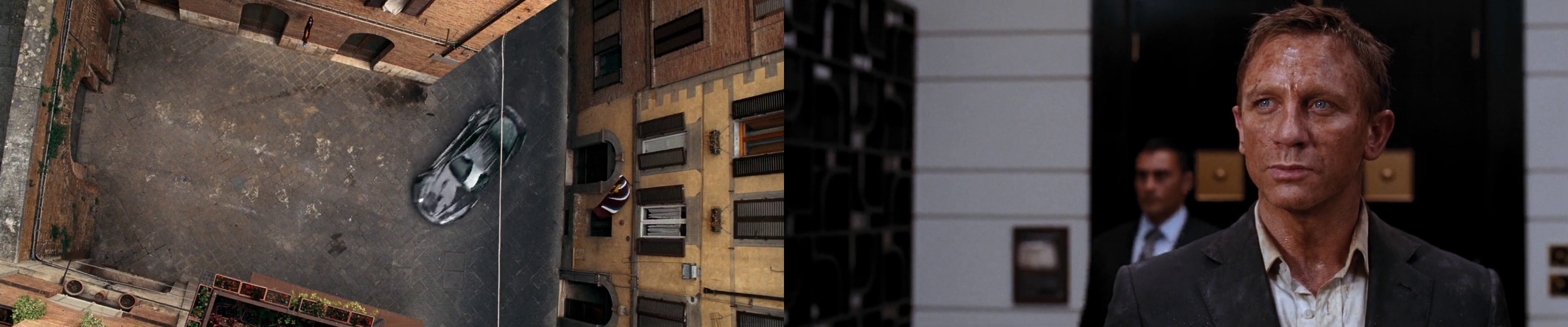
Kirill: What happens in the weeks before the shooting begins? Do you scout locations, discuss storyboards, try preliminary shoots?
Roberto: We were very fortunate on “Quantum” with the extreme support of the producers to have ample prep time to scout possible locations very early on. Then when the choices were made we went back to plot our scenes and later again for the tech scout. In the meantime Marc and I sat for weeks going through the entire script from cover to cover and back again to make shooting plots and lists for the entire film. That was to work off of like a blueprint for all departments to understand our vision. We didn’t do any storyboards but we did do the aerial diagrams that we’ve done for most of work together. I did some early testing on film and cards to find the look that I was hoping for. The only thing we couldn’t do was shoot anamorphic due to a very constrained post schedule with a release date already in place 4 1/2 months from picture wrap!
Kirill: Most of the scenes in “Quantum of Solace” were filmed in outside daylight. What difference does this have over your control of lighting?
Roberto: I don’t really think of it as mostly in outside daylight. If you consider 55 vs. 45% it may be possible but I’m not convinced. In any case as in any scenes shot day exterior you need to try and control scheduling so the relation of the sun to your location works at the various times of day. And there is often need for more large diffusion or negatives control as well as bigger lights to keep the light consistent throughout a scene which might take several days to shoot.
Kirill: The high-tech setting of MI6 office is washed in wide swaths of white light. What is the message and how do you convey it?
Roberto: I guess that I need to rewatch the film because I don’t recall that much wide bathing of white light. For sure in M’s office there is a large frosted window to give an opportunity to make a severe lighting change when the walls in her office shift to viewing screens. This was an effect we shot with motion control as the aide goes into her office but it was eventually cut from the film due to the length of the scene.
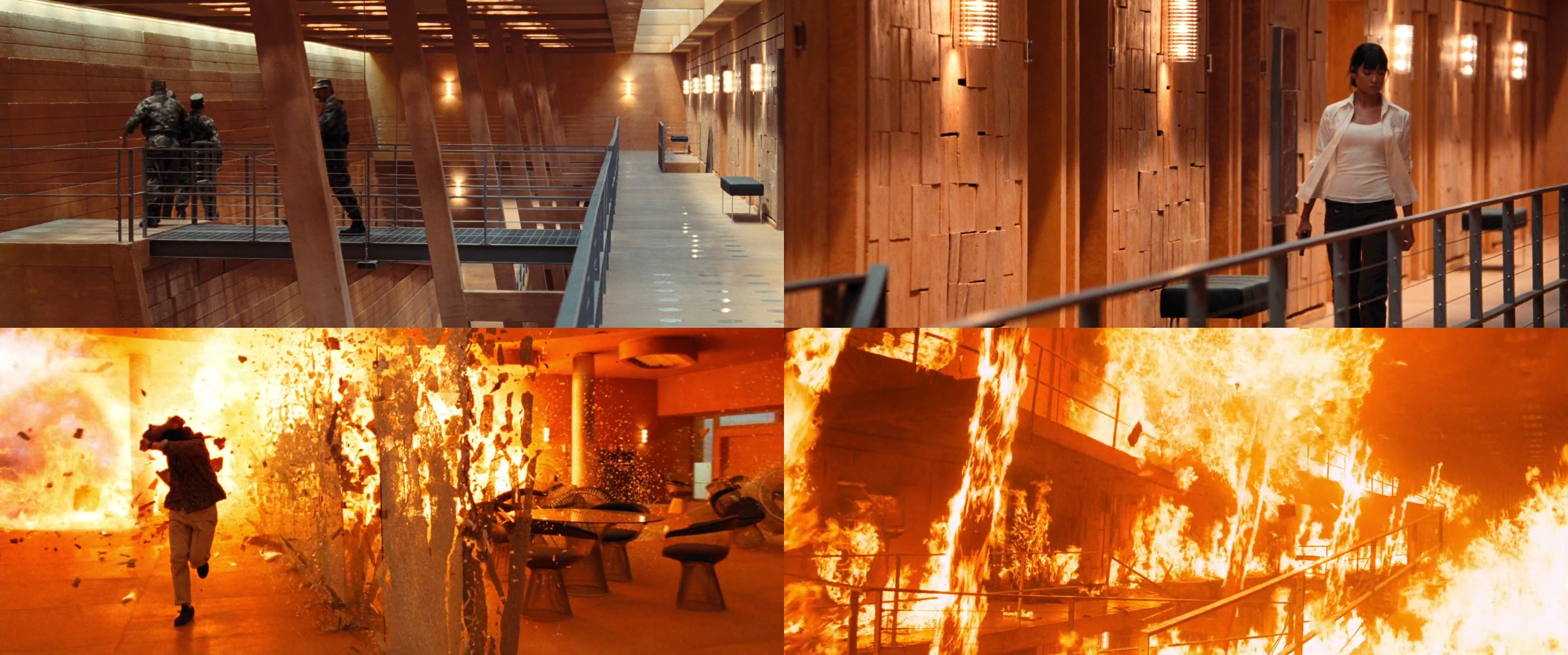
Kirill: The last scene in a secluded Bolivian facility is full of explosions and fire. How does this affect or limit your equipment and shot setup?
Roberto: That entire scene of the interiors was shot on the big 007 stage at Pinewood. The set was built full length which was about 2/3 the size of the real hotel in Chile where we shot the exteriors. The SFX team did real explosions, air canons, and fire on stage, most repeatable. It is always tricky working around real flames and burning set pieces but we took all safety precautions and put the cameras as close to the positions that I wanted as possible. We used a telescopic crane as well as dollys, tripods and hand held to get what we needed. The flames were mostly controllable so we never felt too at risk. The stuntmen and Daniel did have to be covered in fire retardant gel for some of the shots, especially those running through the burning hallway and into the final room. I worked very closely through months of prep with the SFX co-ordinator to ensure that we could get the best shots to tell the story. I showed him my ideas of coverage and he did his best to make it work as well as some great suggestions for the sequences.
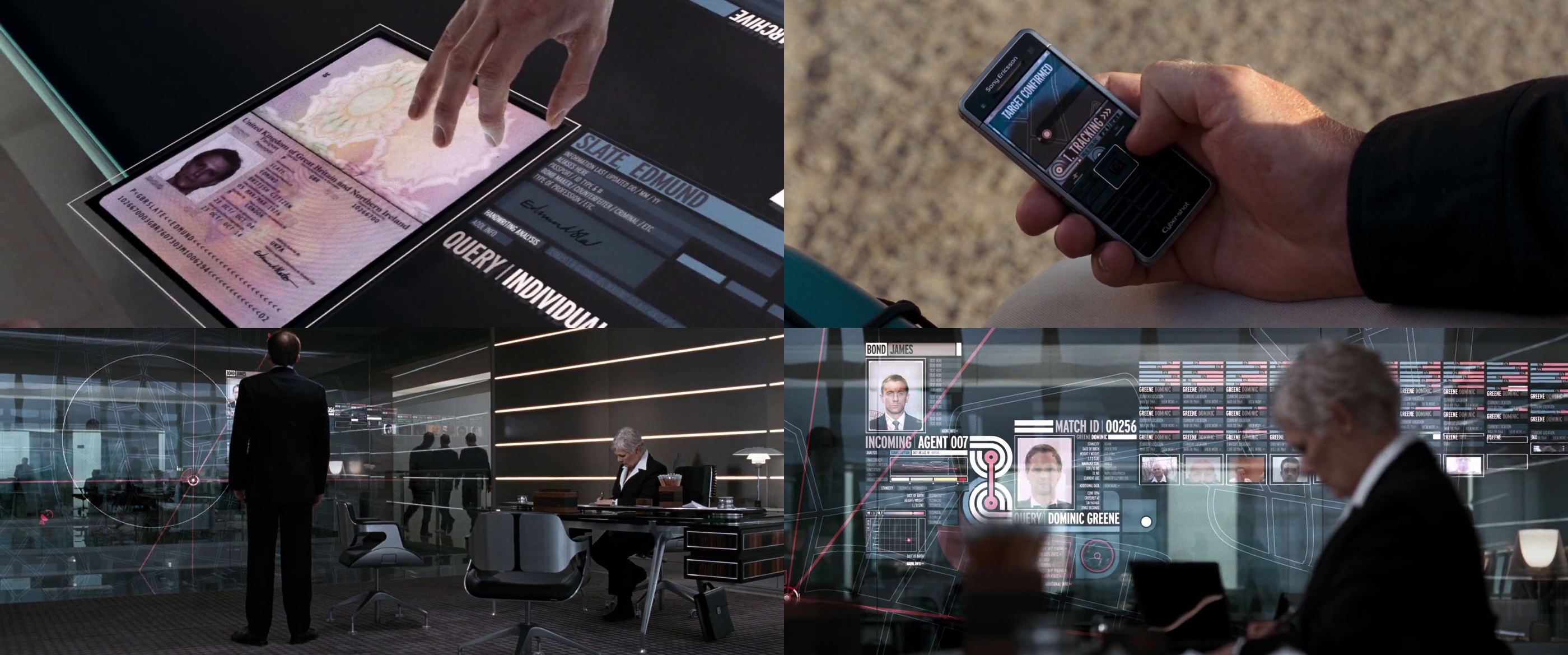
Kirill: What is the process of working with visual effects, particularly with the touch-based interfaces in MI6 office? Do you continue this through the post production stage?
Roberto: I had a very close working relationship with VFX throughout the entire prep and shoot and during the various stages of the DI [digital intermediate] too. I had worked with them on 4 previous films so we know each other pretty well. They had an extensive pre-vis group working full time at Pinewood for all the effects on the film and I spent a lot of time going in there and mapping out shots and sequences. Choosing lenses, moving camera positions, making moves, etc. As for the touch based computer table which was based on real DoD technology we just shot the table and actors to predetermined scripted moves using real placeholders on it which were then converted in post. I did shoot some tests for light levels and image “wrap” around the fingers to establish what would work best to enable us to use the correct illumination values on set that would remain consistent for the final VFX work.
Kirill: How much time did you spend on planning, shooting and editing the aerobatic battle in one of the first sequences (where Bond and M’s bodyguard hang on ropes, jump on crashing platforms and fall through sheets of glass)?
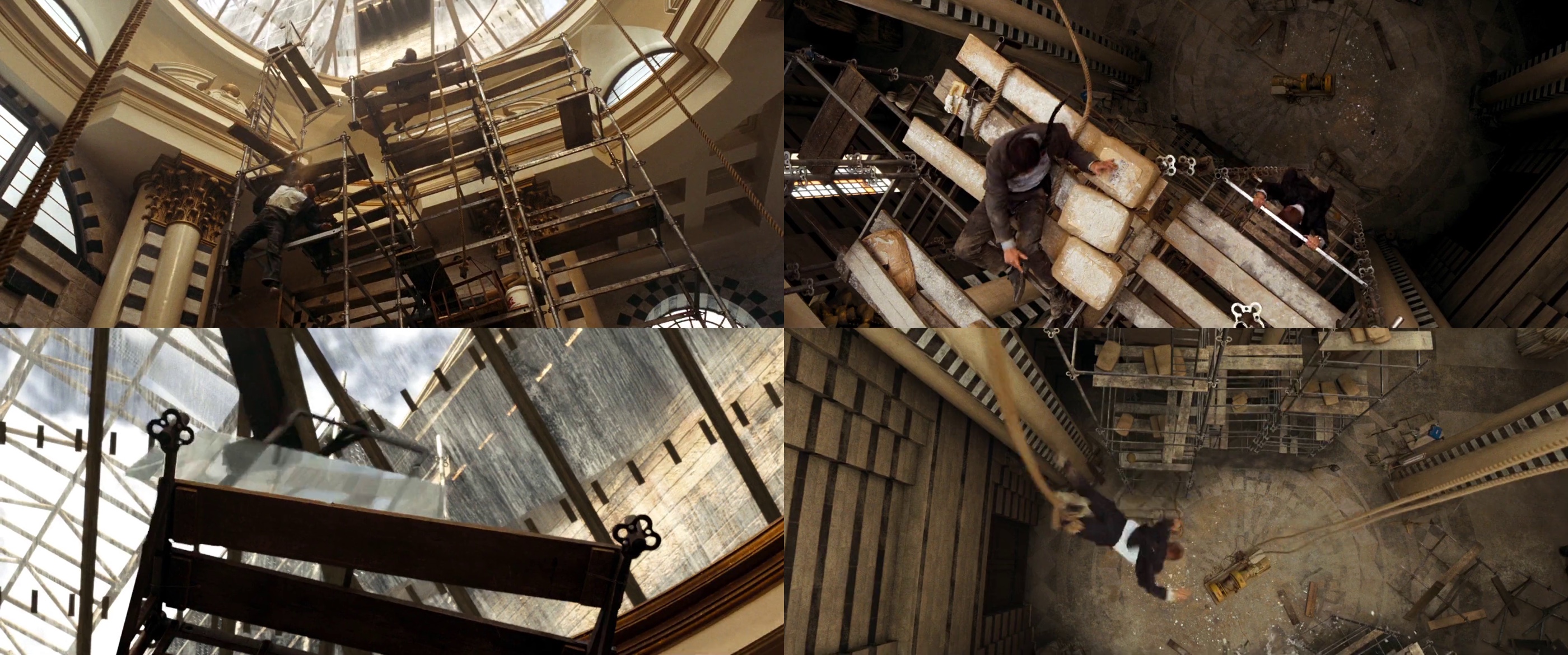
Roberto: That was one of my favorite sequences which I didn’t get to shoot in the end. It was eventually given over to 2nd unit to shoot on stage next to us. In the beginning I did map it out with Marc and the 2nd unit director Dan Bradley, who had a lot of great input on making the scene exciting. I did an initial lighting scheme for the stage to try and match the real Sienese locations. I worked very closely with Shawn O’Dell who DP’d most of the 2nd unit work. I did insist on one segment of the scene which was where 007 and the bad guy fight and fall over the edge of the bell tower and down through the glass dome into the art gallery. I insisted that the camera continue through the dome with the actors and into the fight inside the gallery without cuts. I had seen a scene in Bourne where he jumps off a rooftop in Morocco and through a window into an apartment. I was really wanting the camera to follow him all the way into the room but it cut before it got there. I requested that we do more and continue it in. With VFX and Dan we choreographed a series of 3 shots with CG enhancements to make it do just that. I was very excited by the results. All real actors and sets. From there Dan choreographed with the stunt co-ordinator the fight action spinning around the room on ropes. That was also pre-vised so I could see what it should look like at the end. Marc and I did visit them on the set when we could break away every now and then.
Kirill: What are your thoughts on shooting or post-converting to 3D?
Roberto: I have not shot 3D and not really cared much for it. I’ve seen some good work and some terrible. I think it works best in CG / animation like “Avatar” though “Pina” was really enchanting. As far as post-conversion goes I think it is a great idea if it can be done well. It frees up the camera and lighting to work smaller and more efficiently. That said, it must be agreed that the movie will be converted to 3D after production finishes and not decided upon only then. You would obviously set shots , choose lenses and moves dependent upon that understanding.
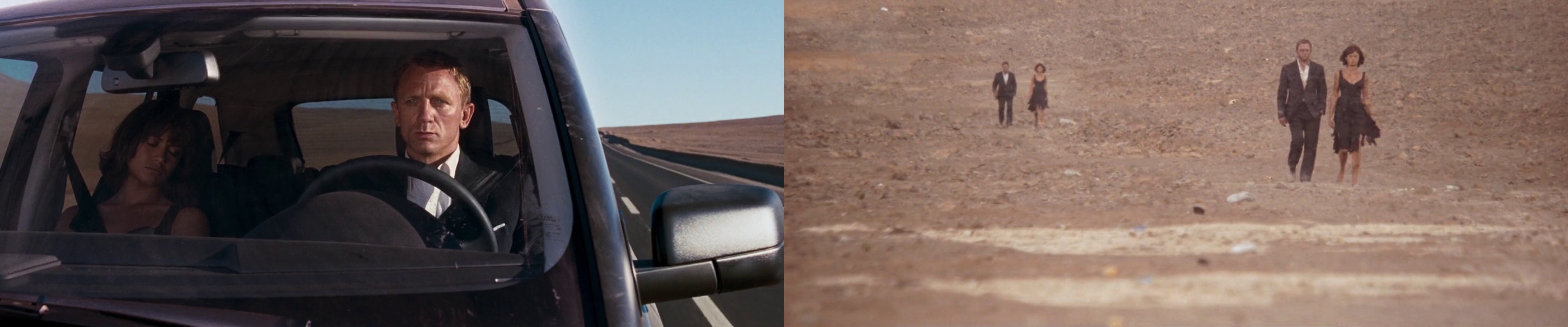
And here I’d like to thank Roberto Schaefer once again for this interview. I’m definitely looking forward to seeing more of his work in the future.
What happens to a movie after it is made? How do you preserve a piece of cinematographic history for decades to come? After talking to a variety of creative artists – cinematographers, production designers, art directors and others – it’s time to take a deeper look at the distribution, exhibition, projection and archival side of things. Kyle Westphal is the Chief Projectionist at the Dryden Theatre, George Eastman House and the co-founder and Vice President of the Northwest Chicago Film Society. Kyle has graciously agreed to share his thoughts on the history, present and the future if his craft. In this conversation he talks about the transition to digital projection, finer points of physical and digital archival, the long tail of streaming services and the effects it has on film restoration,and the tumultuous transformation happening in the movie industry in the last decade.
Kirill: Tell us about your background and what drew you into the profession.
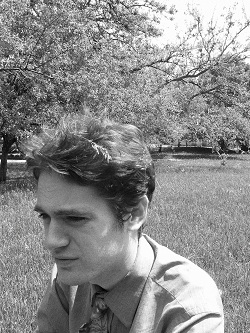 Kyle’s headshot courtesy of R.F. Hall
Kyle: I’d been interested in film since my early teenage years, and while at that point I wasn’t sure what the outlet would be–making films, being a critic or something else–my options were fairly limited. I lived in Sacramento, which had little industry presence and no cinematheques. My interest at that point, by necessity, was film as text, film as a conveyor of tone, plot, irony and style.
It was not until I was at the University of Chicago that I discovered other, essentially material, ways of relating to film. I became involved with the Documentary Film Group at the University, which has been around since 1941 and is the longest continuously-operating film society in the US. It’s a repertory house which also does second run new releases on the weekends, catering to a broad and diverse college audience. They showed eight movies a week, some of them multiple times, and there was the possibility of becoming an apprentice projectionist for an academic quarter. The projectionist showed us everything – inspecting, threading, running the machine.
After apprenticing for a year and becoming a projectionist, I took on other responsibilities at a few different places around the town. I was becoming interested in the idea that there is more to film than an abstract notion, that it exists as a physical thing, a 35mm motion picture print, and there are a lot of skills and craft involved on that side. The people who work in the depot that send you the print, the courier who ships the print, the curator who books the print for your venue, the inspector, the projectionist–it made me feel connected to film in a way that I didn’t know was possible.
When I decided that I wanted to do this professionally, I felt that I understood fairly well what happens when you get the print and it hits the screen. But the other part–how the print was made in the first place, how you take a negative and make the print from it, how you take disparate nitrate materials and restore fragments of a film to something that resembles the original–seemed the next logical step. And so I came to the George Eastman House and its L. Jeffrey Selznick School of Film Preservation, where you attend lectures on these topics and apprentice the various aspects of an archival institution–cataloging, curation, preservation, projection.
Kirill: You went well beyond taking a print and projecting it in the theater.
Kyle: To an extent, it is still technical. You have to understand what materials you’re working with, what is technically possible in terms of restoring and preserving them. If you’re dealing with analog material in the conventional photo-chemical route–sending a negative to the lab to do the fine grain, dupe negative and print–you have to understand what the lab specializes in, their equipment, and human talent. If you’re talking about digital material, then you’re asking how we can scan the material–a telecine or something higher resolution–and play with it digitally to correct color and density.
It’s also political and cultural. It’s not simply a matter of money falling from the sky, and archives being able to point at a can in their vaults and say, “This is what we’re going to preserve today.” You write grants, maintain a public presence, and make arguments for what is valuable about your collection. You have to have some sense about why these things are culturally important, make those arguments, and have both discretion and discrimination to make a bid for what’s important.
Kirill: What is the level of public interest in repertory theaters?
Kyle: I don’t know if you can talk of there ever being the golden age of repertory programming. In terms of sheer numbers of people having access to and seeing these films, you can say that the 1970s were the “golden age.” There were film societies on every college campus in America, and there were a lot of people showing second run and repertory movies in 16mm prints. It was a widely disseminated and readily available medium, well beyond the college campuses, actually–in churches, union halls, community centers.
On the other hand, you can say that they were dealing with a substandard format, and one that falls outside the modern definition of repertory cinema–brand-new 35mm prints on a big screen with professional equipment. And to play devil’s advocate again, the distribution and demand arising from film societies resulted in a wider circulation of 16mm material. There were things that you could get a 16mm in 1975, and you can’t get a 35mm print, DVD or Blu-ray today. Standards have never been higher, there’s never been more conciousness; studios have never supported 35mm and restoration to the extent they do today, but that does not translate directly into broad availability and range.
When you run a theater, you always wish that the attendance was higher. But if you’re asking whether there is still an enthusiastic audience for repertory, I would say yes. Actually, this whole matter of film and there being a physical thing in front of you–the film strip and light going through opaque emulsion, and the understanding that what you’re seeing is not a result of zeroes and ones, but rather light interacting with physical film–there’s a lot of potential for it to be an experience, a particularly appealing aesthetic, especially in the age when most media consumption is through some digital intermediary.
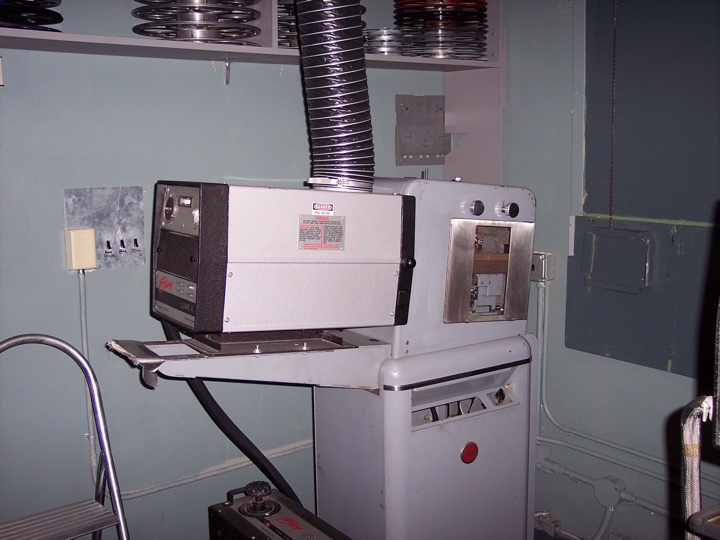
The Eastman 25–a robust, exhibition-grade 16mm projector.
Kirill: What are your thoughts about the transition to digital?
Kyle: It’s a different way of making images, and I don’t want to judge which is doing a better job. And all the talk about high-definition–2K cameras or Blu-ray with 1080 lines of resolution–it’s high definition in relation to standard broadcast and DVD. It’s certainly not higher definition than film.
Grain is not an artifact in film, grain is the film, grain is the image, grain is the way that we’re able to understand what it is we’re seeing. I wish everyone could have the experience of seeing a print made direct off a camera negative with no intermediaries, to see how film stocks of 80 years ago are incredibly luscious and detailed, and have a certain physicality that digital lacks.
This is not to say that digital doesn’t have a place. When you’re shooting in low light, or you’re going for a certain kind of realism or naturalism, without the intervention of so many lights, digital does something. You look at “Public Enemies” or any other recent Michael Mann film, and there’s an aesthetic that is not trying to imitate film, but rather trying to chart a new way that the characters move, a way that cuts make you feel, a way that landscapes have certain solidity – a way that is very distinct from film.
They are different systems with different advantages. I would hate for film to go away. When you look at the history of the 20th century, it’s the history of film, it’s the history of not only narrative films, but all the ways that people expressed themselves–whether it be home movies, industrial or sponsored films, newsreels, television footage shot on 16mm. There’s a beautiful idea that a century has a medium tied to it, but then there’s obsolescence in film as we’re in 21st century.
Film, of course, does have a role in the 21st century. If you’re talking about archival concerns, digital is not a proven thing. The idea that I can have a negative on modern polyester stock, put it in a can in a climate-controlled vault with minimal fluctuations in humidity and temperature, and I can reasonably expect that if I take this film out of a can in ten or twenty years, it’s going to be stable. But for anyone who has tried to recover information from an old hard drive or an old floppy disk, the very idea of archiving things digitally–even though it is inherently unstable and its features are often dictated by consumer demand rather than long-term storage concerns–is a troubling thing. There’s a place for film because we understand what it is and what it does well. There may be a time when digital is better, but at the moment you’re always looking at migration, compatibility and proprietary file formats–things that are obstacles to long-term access in a way that should not be taken lightly.
Kirill: So you’re talking about all aspects of film, shooting, projecting, and archiving?
Kyle: It’s a complicated question. There are certain reasons why a cinematographer would want to shoot digital, and I don’t begrudge them needing and liking those tools. I don’t take a line in the sand that I won’t see a film shot digitally, but I’ll be honest and say that they don’t move me as much. We sponsored a Home Movie Day last week, where people bring old super-8 or 16mm old movies that they shot, which is not the same as Hi-8 or VHS tapes. There’s a different quality to the image, a different physicality to the image being on film. I will admit that this has an emotional pull on me that video does not, or does not yet.
At the same time, who am I to say that people shouldn’t shoot on digital? Who am I to say that post-production technicians shouldn’t avail themselves of digital workflows or digital intermediates that are simply facts in the industry? In that sense, projectionists can’t stand in front of the tide of progress. But if you talk to cinematographers, most of them will also say that they want to have film as an option for a particular ‘film look’ that’s valuable, a look that is more valuable than what market forces might appear to make it.
In terms of projection, I am more staunchly in favor of film projection simply because digital projection is not very well understood. We’ve been going through a very chaotic transition over the few past years, especially since “Avatar.”
The studios have been pushing exhibitors to convert to digital projection, and there’s a level at which this is good, the level where previously digital projection had no standards. If you were running a film festival or a cinematheque, and you were dealing with independent filmmakers, this was a real problem. This has been a long saga and someone has always been on the short end. There was decades-long period of time where if you wanted your film to be seen and distributed, you had to make a 35mm print. You might have shot on 16mm, you might have shot on super-8 or on video, and the expense of going to a 35mm duplicate negative or internegative, and making a release print was a substantial barrier.
But the tide turning in the last decade placed the responsibility on exhibitors to meet the need of filmmakers. If you’re running a film festival, especially a regional one that is not industry-affiliated, truly dealing one-on-one with independent film makers, you’ll get requests to show it on DVD, on Blu-ray, on DVCAM, on BetaSP, on DigiBeta, on HDCam, from a hard drive, from a MacBook–I’ve dealt with all of these. And to some extent it was very chaotic and unsustainable: film was too expensive for filmmakers, but getting all the technical capabilities was too expensive for all but the wealthiest venues. There was this unproductive standstill.
There’s an extent to which DCP (Digital Cinema Package), which is what all the studios have signed on to and pushed, is good. You’re not dealing with different people who’re saying, “I have a tape,” “I have a disc,” “I have something I’ve burned on my computer, take it, it won’t skip” and that’s good. The problem is in how it was implemented as a closed system, and in a way that has not been talked about enough. If you ask the person on the street “What are you seeing when you go to a movie theater?,” most of them assume it’s already digital. Most would genuinely think that you go into the projection booth and you put a DVD on screen, using the same kind of consumer products that they are familiar with.
The fact of the matter is that film is great because it’s a very open standard. If your film is manufactured with non-standard perforation, you’re out of luck, but 35mm has been an international standard going back decades. I can send a print to China, someone in Argentina can send a print to me, it can go to Africa, to Europe, to all corners of the United States, and it’s standard. I can put it in a projector, and while there might be some quirks in the lab processing and there might be some sound system that is more prevalent in one country than another, by and large if you give me a 35mm print in good condition, I can project it. I can project it as many times as I want, and I can project it whenever I want. I can go into the projection booth at 4 am, and if it’s my inclination to thread up a print and watch it just for myself, I can.
This is not the case with digital. It’s not our technology, it’s something very closed. It doesn’t necessarily have to be, as you can make and distribute DCP in an unencrypted way that doesn’t need keys. Right now the studios send you a hard drive and it uploads to a local server in your multiplex theater, where you have a repository of files from different hard drives, and eventually they get wiped off and you send back the hard drive. The idea is later to do all this via a satellite network, eliminating the physical intermediary of a hard drive. And to play these files you need keys from the studio or distributor. A key can be as simple as accessing the file, or as extreme as telling you how many times you can show the file and when you can show it. It can say that your projector is going to shut down after a certain time code, it’s a kind of digital rights management (DRM) on steroids.
From the archival perspective this is not very good. We can acquire a print. We can put that print in a can on a shelf, we can pull it out ten years later and it was more or less the same way as we left it and we can thread it up. We can catalogue it and do all the things to maintain the collection. If you send me a hard drive and I put it on a shelf, but I don’t have the key to open it, or the key that I have only allows access until December 31, 2012, then it’s a bunch of chips after that and it doesn’t mean anything.
There have been horror stories at film festivals recently of server errors, files not being played back properly, files not being able to be accessed even though the studio gave you a key – well, there might be a problem with the key, or a server problem on their end. And all of a sudden instead of being able to take the film and have a very physical relationship with it, being able to wind through it and evaluate what’s wrong with it and what needs to be done to make it go through a projector safely, now you have to call up the IT division of the studio. And maybe you’re doing the screening on the weekend and there’s no one at the IT division, or you’re one out of two-hundred calls, or they’ve outsourced to a third-party company that doesn’t understand your relationship with this distributor and how important it is that you really need to get this key to open the file for your very important festival screening.
There’s a significant way in which transitioning to digital in terms of exhibition is a substantial reduction of freedom for the exhibitor as a whole, not just the projectionist.
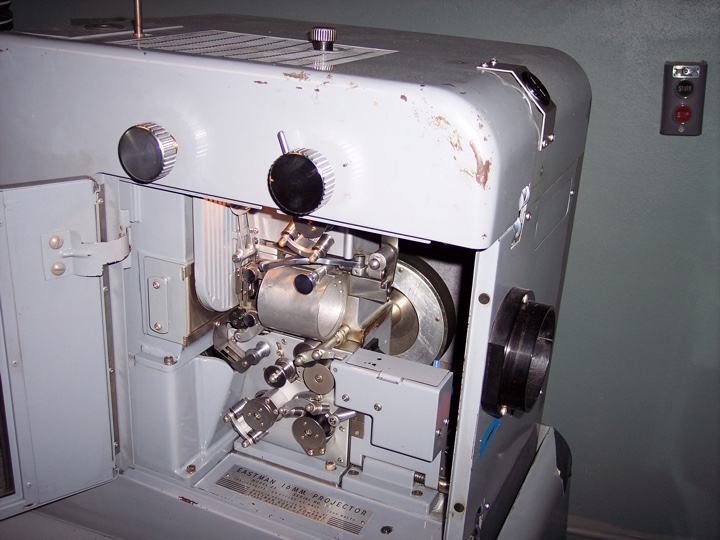
Another view of the Eastman 25 16mm projector.
Kirill: Does this also marginalize the craft of operating a film projector?
Kyle: There is a level of craft that is invisible and not appreciated. The old adage says that you never know about the projectionist until something goes wrong, you’re not conscious that there’s someone in the booth and that there’s labor going on, unless the film breaks. In the archival field, we say that film is human-eye readable. Let’s say in 200 years from now there’s no one alive who’s ever threaded up a projector. They can still open up a can and wind through a reel of film, and they can see that there’s data there. What if you dust off a hard drive 200 years from now and there’s some proprietary format–what can you do with that?
In a way, the problems aren’t localized. I’m winding through the film and I see a bad splice that needs to be corrected, or an area with a scratch, or a point with some adhesive on the film. When I’m projecting that film that I’ve wound through, I can look at the screen and see the manifestation of that thing that I noted earlier. A server error or a data blip doesn’t have that relationship. You can listen to a vinyl record, and you look at it and see a scratch, and later hear the artifact of that during the playback. This is not to say that all films and records should be scratched, or should have some mark that says that a human being touched it – it’s great to see a film in perfect condition.
But there’s a way to understand what is in front of us. I have a bad print, but it’s the only print in the United States of a title, and I’ve got it from a private collector, or our archive happens to have the only copy. It’s not the best copy, it’s faded, it’s splicey, but it’s all that there is. I can go up in front of the audience and say that there’s this physical artifact with extraordinary material history, and you’re going to see the reflection of that on the screen, some fading, points where the image jumps – because it was used. And the fact of the matter is that a digital file doesn’t have that kind of trail, and the problems that arise with digital are not human problems. They are human problems on the level that we need to build a better server and a better IT network. But on the level of, How did a person handle this, How did they treat it and to what extent is what we see now an accumulation of everyone that ever touched it, that is not the case.
Kirill: As more films are done completely in digital, and studios release the back catalogues in Blu-ray format, do you see archives transitioning to purely digital format in the future?
Kyle: It’s an interesting question, because even though movies are done digitally, studios are still doing film for protection. They’re still doing separation masters of a color film. Color negative, although it’s better than it used to be, still has fading characteristics that black-and-white negatives don’t have. And to protect these color assets–which is what they are to the studios–they do separations along the color spectrum. And that is still being done on film, as there is understanding that at some point there might be a robust, migration-proof, hard drive crash-proof way of archiving digitally, but for the moment film is not proprietary. Film does not require you to renew your license.
I don’t want to come off as saying that digital is all bad. There are so many ways in which digital is important, let’s be honest. If I want the work of this archive, or any archive, to be shared, if the studio wants its work to be disseminated, being able to show it as a 35mm print is very specialized thing now. If we’re spending all of this money to make a print, and it goes out, we don’t want to send it to a multiplex where it’s going to be all spliced together and put on a platter system and projected without there being anyone overseeing the machine. There’s a relative handful of venues that have the ability and that care enough to treat prints well.
If we don’t make films available digitally, the broad majority of people won’t be able to see them. They won’t be able to go to a brick-and-mortar store or an online store and purchase a DVD or Blu-ray version. Let’s face it–there are a lot of people who don’t live in a town that has a cinematheque, that don’t live in a place where someone finds out about a new print struck by the Library of Congress or the George Eastman House and says “I must show it.” If the only way a person can see something is through a digital copy, I don’t say that this person has to be a purist and see it on film. And at the same time, there’s a level on which the DVD and Blu-ray market opened up studio catalogues, spurring a great deal of preservation. There’s been more preservation in the last decade than in any decade before it. It happened because these assets became exploitable again, because we got into higher resolution formats.
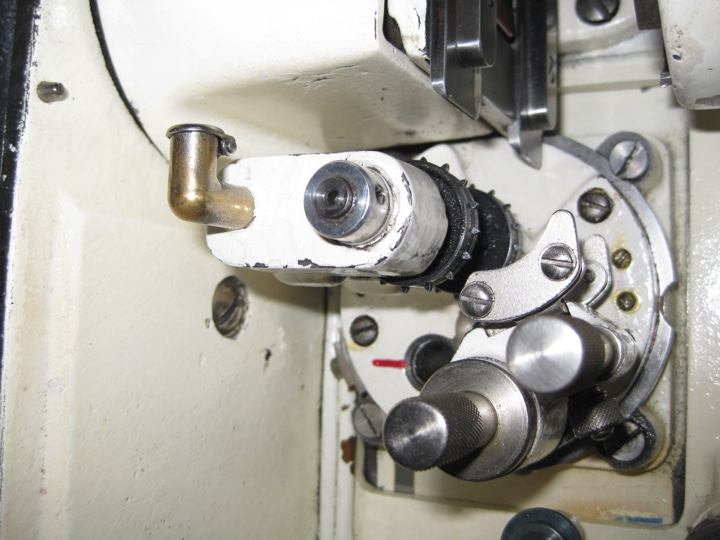
Intermittent sprocket on the Century C 35mm projector.
Kirill: Are you talking about taking existing material and providing it in digital format, or going all the way back to restore material that was not publicly available before?
Kyle: You might have a film without a surviving original camera negative. You might have a mediocre dupe negative. Or perhaps two dupe negatives where one is missing a scene, and you have to go to print to get a scene or talk to another archive to get material and recombine it. Or you might have a nitrate negative that is starting to decompose and you have to transfer that information to another film stock as polyester protection material so it will endure.
And in all cases the gold standard is film, the gold standard where you’re not losing data, where you’re not working with proprietary formats. It was the case that in 1980s as VHS was coming into its own that the studio could take any print that they had off the shelf, do a quick and dirty transfer, and put it on VHS. There was a clamoring for content on VHS, and the quality of the material you selected for transfer did not matter–a print, a negative or something else. And for the most part there wasn’t any critical thought towards, What is the ideal element, What is the best surviving material on this film.
As consumer formats matured, and you had more high-resolution format such as DVD and Blu-ray, just taking any old transfer off the shelf wasn’t standard operating procedure anymore. In many cases, ironically, the only way to get digital assets and put them on a disc in a box that you can buy at Target, Best Buy or Amazon–to do it efficiently and correctly, to yield the best image that is sufficient for those formats–is to go back to the film elements, to go back and do the full photo-chemical restoration job, to go back and set right the mistakes of the past.
Kirill: Because it has the full level of details?
Kyle: Exactly. Because by definition you cannot improve upon the camera negative. That’s literally the emulsion that was exposed when the film went through the camera gate. You can’t get anything better than that, and it’s often the case that preservation material from forty years ago– stuff that was film-to-film transfer, the only way to do preservation back then–might have used a lab with different set of lenses, or a less sophisticated printer. There are modern techniques that can yield better preservation material. So even though you may already have a preservation negative, it makes sense to go back to the earliest, most original element.
It makes sense to go back and say “Can we do a better job, can we make a better transfer” with the view that we’re going to have, on the one hand, better protection material on film, and on the other hand, a better-looking digital asset for consumption by a mass audience.
Kirill: Is the growing back catalogue a by-product of the ongoing restoration process?
Kyle: One is not really the by-product of another. They’re working together. The studios could not do film preservation to the extent they have if there wasn’t a bottom line reason to do it. They’re for-profit corporations, and ultimately if it makes sense to return to the camera negative of “The Wizard of Oz” because you have to put out a Blu-ray of it, and the existing transfer is good but you can improve it with modern technology, then you do that and you also create a film backup. But at the same time these things are incredibly intertwined.
You need the consumer formats to be able to fund these preservation efforts, but you also cannot have your lucrative consumer formats unless you’re really taking care of your assets and unless you’re doing the right thing by them, unless you’re constantly revisiting them and asking “Can we improve this?”
And luckily, it’s not as if the only things being restored are the things that you see on DVD. DVD has reached a point where it’s matured, where the back catalogue releases are not quite as steady as they once were because we’re dealing with films that are in many cases not A-list catalogue titles. I think a lot of them are better in terms of what they mean to me as a film goer, in terms of what I cherish about film history. There are still plenty of films–thousands of films–that are not available on DVD and Blu-ray, but in terms of the titles that are available and are revisited, that are the evergreens for the studios, where they can release a copy of “The Ten Commandments” or “Gone With the Wind” or “The Searchers” or “Star Wars” over and over again.
That is also able to fund more marginal titles, to fund the things that studio recognizes that they have an obligation to preserve. They’ve made this. As a cultural entity, and as a corporate entity, this is an asset that can wait in the vault for future exploitation. If they spend $20K now, they can exploit it for another 100 years even if they decide not to exploit it tomorrow.
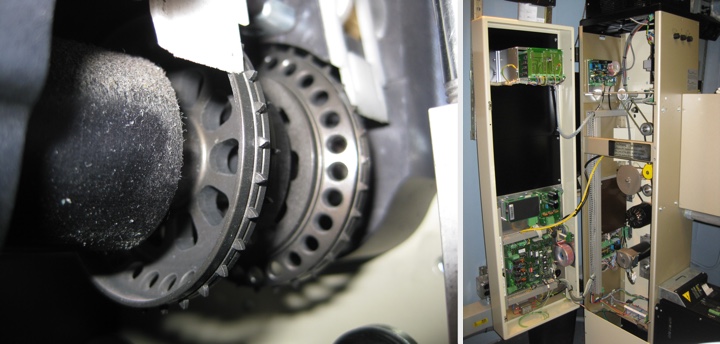
On left – intermittent sprocket on the Kinoton FP38E 35mm/16mm projector. On right – the electronically-regulated interior of the Kinoton FP38E 35mm/16mm projector.
Kirill: Does this long tail feed back into repertory theaters where people expect to discover and rediscover movies?
Kyle: Yes, and a lot of repertory programming is possible because of restoration efforts and these efforts are part of this long tail. At the same time, I will say that repertory tends to be the poor stepchild, not through the fault of anyone really, but simply because if you’re taking about doing a high quality scan of an original negative in 2K, 4K, 6K or 8K, you want to return to the most original element, to the original camera negative if possible, or the closest thing and to make a new preservation negative. Video transfers are done from camera negatives or interpositives, not prints.
In terms of actually making a print, a print has a very limited life. A studio can restore a title, or an archive can restore a title, and the ultimate goal is a new polyester protection negative. The new negative becomes the element used for all future needs, including scanning and transfer. If you’re following best practices, you make a print from your negative. That’s the best way to check your negative–see if it needs further correction, whether a decent print can be made from it at all. But actually making that print–what’s it worth? Its only real use is as an exhibition medium and there are only a handful of venues interested in exhibiting it. You’ve done your due diligence, you’ve made preservation material and a digital asset that can be used for future exploitation, and you’re going over budget at your studio and you’re saying, “Do we want to spend thousands of dollars to make a print that five people are going to show, that’s going to sit in the vault and never going to be seen?” In some ways, prints are the most neglected part.
You’re making a new print, and that’s great, but the only way you’re going to earn your investment back is by showing it or by renting it out over and over again. Frankly, you will most likely have a print that’s ruined and damaged before you can make your investment back. You’re not talking about a wide release, but something that’s going to art houses, something that’s not playing continuously but is just a one night stand at a venue in Chicago or St Louis. It passes through 40 different projection booths by the time you make your money back. You very well might not make your money back as it could be damaged the third time someone shows it.
Fortunately from the archival point of view, we’re not so bottomline-oriented. Politically, as an institution, we feel there’s a value in making these new prints. We’re not saying, “We’re not going to make a print or preservation because we expect that only five people will want to borrow the print”. We have a different mandate and different goals, and our funding stream is different, and so we’re lucky enough to do that.
Kirill: Do you see the studios experimenting in exposing the long tail of the content through Internet streaming services such as Netflix or Amazon, hoping to return their investment in 10-15 years?
Kyle: Certainly the studios are very interested in streaming and VOD (Video on Demand) right now, and certainly other institutions like archives are interested in streaming content that can be made available through these new platforms. Theatrical revenue is declining, home video is declining and there has to be a new way to make this equation work. There are things that unceremoniously went up on Netflix instant viewing that have never been available on home video, that are very difficult to obtain as a 35mm or 16mm print.
But the fact of the matter is that streaming has its limitations. Because of the bandwidth that most people are using, because of the quality of connection that most people have, streaming is right now at a point where the quality of your source is not so paramount, and whereas a studio will have to go back to the camera negative or the earliest surviving material to master a decent Blu-ray, it’s not at all uncommon to pull off the transfer from the shelf done twenty or thirty years ago to meet the streaming demands. Most likely the compression and the rest of artifacting that’s inherent in streaming right now due to the current IT network make it not so important. If the studio can just pull out a tape that was mastered twenty years ago, that isn’t especially helping preservation. It’s good for cinephiles who are rabid to see this film and don’t care about the quality, and in a way don’t care if what they’re doing is sustainable…
If the studio is getting revenue from streaming, that’s great, but that doesn’t send the same message as all the people coming in to see a print, deciding to take time out of their day to pay admission and to come into a theater, and this theater is telling us that they want to bring the print back and show it again. It doesn’t have the same ripple effect of positive action and encouragement right now, but it doesn’t mean that it won’t ever have that effect as streaming becomes more sophisticated.
As bandwidth becomes less of an issue and high-speed Internet becomes standardized in a way that it’s not now, and the standards for streaming go up, maybe it will be the case where people will say, “This copy is unacceptable,” and people will have to go back and do preservation and restoration so that they have a decent copy to stream. So long as the material is looked after in a way that allows the people who own it understand that there is value in it, that there is demand for it, that it is sensible to work on it, preserve it and conserve it, ultimately that’s good. I would prefer, of course, for it to be seen on film because that’s how it was seen, and if you’re watching the film on your laptop, it could be an HD copy of it, but it’s still your laptop, it’s still not the same as being somewhere and having this physical thing going in front of beam of light. It’s just fundamentally, aesthetically, materially different.
Kirill: My impression is that the rise of VHS in the 1980s marked the end of the movie theaters “owning” the experience of watching movies. The advent of DVD and Blu-ray is now combined with the push from TV manufacturers that try to lure the consumer back into his living room with widescreen, high definition and 3D experiences. Do you see the movie creators, exhibitiors, and projectionists “fighting back” to get the movie goers back into the theaters?
Kyle: There’s not one argument, there’s not one silver bullet – there are people who say, “Yes, i like seeing a film with an audience but at the same time i don’t like seeing it when the audience spilled their cola all over the floor and there’s a screaming child, and it’s a better experience when I’m watching it at home on my HDTV through my Blu-ray”.
Earlier I brought up the issue of vinyl and how that’s had something of a resurgence. The same thing is possible with film. I think there is a hunger, especially among my generation, for this physical media. It might not be all that apparent until it’s almost gone, which is to say that we might not appreciate it until everything is essentially just a file in the cloud. But as you can see, we’re living in the age of iTunes and concurrently there are people who are now fanatical about vinyl. If you told me ten years ago that there’s going to be a new record store, and it’s going to open up and it will mostly sell vinyl, and people will pay more for vinyl than they ever did for a CD, and there’ll be this real aficionado appreciation of “I’m getting something and it’s not just a file on my iPod, or a file in my cloud or a file in my Ultraviolet locker, but I have this thing in front of me.” I think that that appetite can certainly be there with film, but I also think that at the same time it’s not a one-pronged thing.
The audience thing is important, and I think that there is a longing for community that shouldn’t be discounted. Programmers and theater managers and projectionists who are, most probably, the most staunchly pro-film people in the country just by the basis of their job, have to interface with video every day. They have to preview films on a DVD copy, decide whether to show it. I’m not opposed to the home media–it’s convenient, it represents certain advantages over seeing something communally. But at the same time I think there is the sense that people do want to go see something, that they do want to experience it with other people in a communal space.
And there is something romantic about movies not just as celluloid and not just as an experience, but as a totality. This is to say that if the revenue was really in streaming, or the revenue was really in home video, and the studios were able to totally cut out the theatrical and just say that everything is going to go direct-to-video because we can control this more, or this is just a more profitable way of doing it, then this would happen. We’ve had home video for decades now, and how prestigious are direct-to-video releases? There’s still a media consciousness about something “opening in theaters next week,” and there’s a level at which it’s news, and it’s reviewed online and in newspapers and on television, and there’s a new movie opening and this is a cultural event in a way that is very difficult to imagine when you say, “We have assembled this great cast, and we have this great director and starting tomorrow you can stream it.” It’s not a cultural thing in the same way, and that’s important.
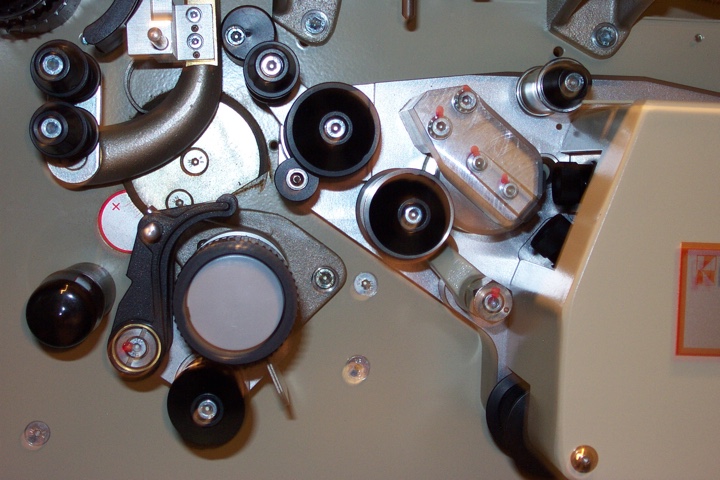
A modern reverse scan Dolby Digital sound head on the Kinoton FP38E 35mm/16mm projector.
Kirill: What are your thoughts on the avalanche of 3D productions that came after the enormous box office success of “Avatar”?
Kyle: As someone who is happy to spend a day watching silent black-and-white films that are definitely 2D and lack a lot of other things if you’re just going by that kind of metric, I don’t want to say that cinema was missing something before 3D. There’s an extraordinary film made by Peter Kubelka called “Arnulf Rainer” that is the purest film you can imagine. The only components of it are black frames and white frames, and the only sound is either the black of no sound or the white noise of the soundtrack, and the film is about the infinite variations of these, and how it can create rhythm and how it can be moving. And that’s an extraordinary film, and there are plenty of extraordinary films that are black-and-white, there are plenty of extraordinary films in color, there are plenty of ones that don’t have sound, and it’s a different kind of medium.
At the same time I’m reluctant to say that 3D adds nothing. Have I ever seen 3D that made me think, “My God, I can never go back to watching a 2D film” or “This experience is essential in 3D”? I haven’t, but that’s not to say that it won’t come along. But new technology doesn’t make old experiences obsolete or emotionally invalid.
In terms of the 3D craze, one thing that does need to be understood is the extent to which 3D is the major justification to the conversion to digital projection. From an exhibitor’s point of view, what are the advantages that you gain with digital? You don’t have to deal with prints, you don’t have to pay a projectionist – but frankly they make up such a minor portion of a theater’s balance sheet, that these savings in no way exceed the cost of going digital.
Kirill: I’ve heard the figure of one million dollars that the studios are saving on average by doing digital projection.
Kyle: This is what I’m getting at. It makes sense for the studios. If suddenly you don’t have to make 3,000 prints of something and just duplicate a hard drive – and eventually beam it from a huge server via satellite – this is a significant savings for the studios. But is there something in digital projection that makes sense for an exhibitor to spend $60-100K per screen? Is the audience going to increase that much, and is the expense going to be counterbalanced? The answer is frankly no, that a lot of people don’t really care whether your film is projected on film or digitally.
But then you start saying that this is only available in digital 3D. And look at all the money “Avatar” made in digital 3D. Just think: when you have the next “Avatar,” do you want to be the theater that converted to digital and has a full house, or do you want to be the one showing it in 2D on 35mm to an empty house? So in a lot of ways 3D has that function of legitimizing digital and also making it necessary for exhibitors.
Of course, who knows whether there will be another “Avatar,” who knows whether the next huge blockbuster will be 3D? The studios obviously would like it to be. The equipment manufacturers would like it to be in 3D. But is audience interest in 3D sustainable? I’m sure we both read figures about how the share of screens that make up the film gross in 3D is declining, which is to say people are still going to see the film, but are opting to spend less money and not wear the glasses. That’s a scenario that’s very bad for the 3D equipment manufacturers and the studios.
Kirill: Doesn’t that go against your point that exhibitors are not going to maintain multiple variants of the projection equipment?
Kyle: Let’s talk about this from a few points of view. Logistically speaking, the very worst scenario if you have to make prints is to have 1,500 play dates that are prints and 1,500 play dates that are digital. If all 3,000 were film or all 3,000 were digital, you can have an economy of scale. You still have an economy of scale at the level of the major production, but on the distribution side you have to keep two production lines up and running that aren’t really compatible.
And that’s not a good solution, if the equilibrium is 50% prints and 50% digital, then you have a system that is not efficient at all, and which is probably more expensive than what was there in the first place with 35mm. And to assure that there is full or reasonably full conversion, the studios have instituted the Virtual Print Fee where the studios grant you a credit that helps you upgrade and there’s a discount on future bookings. And often there’s a stipulation tied up that you discard your film equipment, that your 35mm projector that might have been in your theater for thirty or forty years is disassembled, is thrown in the dumpster and made inoperable.
So when your digital projector breaks, you can’t go back and say that it would be better from your point of view to just go back to film. Five years down the line no one wants to be dealing with film, no one wants the possibility that people will be able to say, “You know what, this is something that we shouldn’t have discarded”. There has to be a complete ideological and mechanical transformation for the conversion to make sense.
Kirill: How far along is the digital conversion across the large exhibitors, and how reliable has the new equipment proven out to be so far?
Kyle: The digital transition has sped up in the last two years largely because there was a period when standards were not in place, when equipment was not reliable and largely because financing was not worked out. The last decade was filled with proclamations that film will be dead next year, all theaters will be digital next year – I remember this going back to 2001 or so. And it never quite happened that quickly, because the exhibitors looked at it and said, “If we’re going to spend $100,000 per screen, what are we getting out of it, and is there any conceivable reason why we should do this, and where is our cashflow going to come from?”
It has been a long time coming, it’s been slow and the momentum is building. The conversion figures are changing every week, and I would say that right now it’s approximately 50%, and you’re never going to get a 100% compliance. There are some regional chains, some independent houses, some art houses that are simply not capitalized sufficiently to be able to convert. If the customer base for a print is so small, your costs are going to go up and it essentially becomes a niche, not cost-efficient product.
And there will be a day–no one knows when–when as a distributor you stand on a financially better footing by writing off exhibitors who aren’t able to afford to convert. Most likely if they can’t afford to convert to digital, they don’t have very many admissions, they’re in a very low population area, and ultimately your returns for “Fast Five” or “Captain America” don’t hinge on a theater in South Dakota shutting down or not–they’re a rounding error, more or less. And so necessarily there will be a point before 100% conversion where it’s simply decided that these film exhibitors are a drag on the economy of film distribution–and that will be a day of transition, to put it euphemistically.
In terms of the reliability of digital equipment, the problem from my point of view is that we’re really operating in uncharted waters. Up in the Dryden booth where I work, we have projectors that were built in 1937. They’ve been installed and running continuously since 1951, they’re Century Model Cs. There’s a level at which, for most of the cinema’s life, projection equipment was heavy industrial stuff with a very long lifespan, relatively simple maintenance regimes and a wide availability of spare parts. These machines kept on going and could be used for decades. A theater would close and its assets would be resold to another theater or another chain, refurbished, retrofitted, reused–for years and years and years.
And quite simply, digital technology has not proven to have that kind of longevity. How many laptops have you had in the last decade? How many times have you gotten a new drive? How many ways have you stored your files? And there’s a sense in which this equilibrium cannot exist because the economics of technology as we experience them now are about upgrading, getting more memory, getting a more robust operating system, over and over again. This is by design. You use your laptop for 3 years and then you’re embarrassed to even have it, you have to upgrade.
Kirill: Are you talking about home machines or the projection equipment at big houses?
Kyle: I’m saying that the whole paradigm has shifted, a convergence. Industry is using consumer equipment with minimal modification. If you take out home use of computer electronics and you just look at business use, your time span is a bit longer, but businesses are always upgrading their networks, they’re always getting new machines, they always have to get something else to be able to run new software and to be able to take advantage of it. And the idea that someone can make a digital projector that will still be working in 60 years, that will have a stable platform, stable file format, stable compatibility, and that we’re not going to say that we will find a new codec, a new way to compress the data more efficiently, a better colorspace…
Technology is going to go there, and quite simply 35mm was lucky to have all of the developments on the level of emulsions, film stocks, laboratory practice and auxiliary equipment. But ultimately you send a print to a theater, and I can take a nitrate print from 100 years ago, and assuming it’s in good shape, I can put it on our projector. I can take an acetate print from 50 years ago, and if it’s in good shape and I’ve repaired it, I can put it on the projector. I can take a modern print and put it on the projector. I can avail myself of these technological advancements using equipment that needs very few upgrades and a very limited maintenance regime. It is heavily backwards-compatible.
Our experience with computers and modern consumer electronics, whether we’re using them at home or business simply contradicts this idea that we can have this kind of industrial strength technology that lasts without a constant stream of upgrades.
Kirill: So effectively your doomsday scenario from the archival perspective is not being able to take a digital file in 50 years from now and be able to find a projection system to play it.
Kyle: Not even a projection system. If want to edit it, if you want to find a way to stream it through whatever system you’ve set up in 50 years from now–how are you going to be able to read that file, and do you know that you can read that file? Has the hard drive been corrupted, how many backup copies do you have, are you migrating the data? When a whole company’s identity and profit system is based on the idea that we’re developing a file format, and it’s going to work with our tapes or the software we have, and we’re going to have a proprietary format – what if that company goes under? What if you upgrade to a different operating system that is not compatible?
There’s an extent to which archivally we really cannot know whether these zeroes and ones are going to be read in the same way. We can take precautions, we can use open source, we can steer away from proprietary formats, we can try to be stable in what we do. But if you talk to people in post-production, you’re talking about bits and pieces taken from various software systems where you might edit sound using this program, we might do color correction using that program–and we might have digital data in all of these ways that are disparate and might not be compatible, or might make sense with the machine we have right now. But if we try to plug it in later, or try to take stuff off the hard drive, we might not be able to do this, and probably won’t be able to do this.
The real test of this is people thinking about their own relation to technology over the last decade. Can you look at those things that you’ve saved on a floppy disk or a zip disk? Can you look at those things that you’ve typed in Microsoft Works? Can you access these files, can you access your hard drive from three hard drives ago? And if the answer is no, that should give us pause.
Kirill: It’s interesting that you’re talking beyond the fleeting moment of the latest movie releases, and are thinking about how we’re going to watch “Avatar” a 100 years from now.
Kyle: If the most sensible way, economically, is to screen “Avatar” digitally, and if it really, truly makes sense for exhibitor, distributor, and the producer, if that’s where the industry is going, I’m not going to picket at AMC and say, “You must show film, you must not show digital.” Digital technology has a place today because that’s what people are interested in, that’s what the producers are excited about. The idea that you can do digital 3D stimulates James Cameron, stimulates a lot of film goers and stimulates a lot of studio executives.
I don’t object to that. But if we’re talking about the posterity of this, if we’re talking about being guardians of this culture and keeping it, we need to think longer term and we need to think, Will this great (or mediocre) technology today be a workable technology tomorrow? And we also have to be honest with ourselves to say that we don’t know all the time.
So in many ways the most sensible thing for digital media is to keep digital backup, to keep your data as data, but also have some kind of physical backup, to have it on film, to have it on tape, to have it on these proven analog mediums that we understand and that are relatively stable from the point of the view of access.
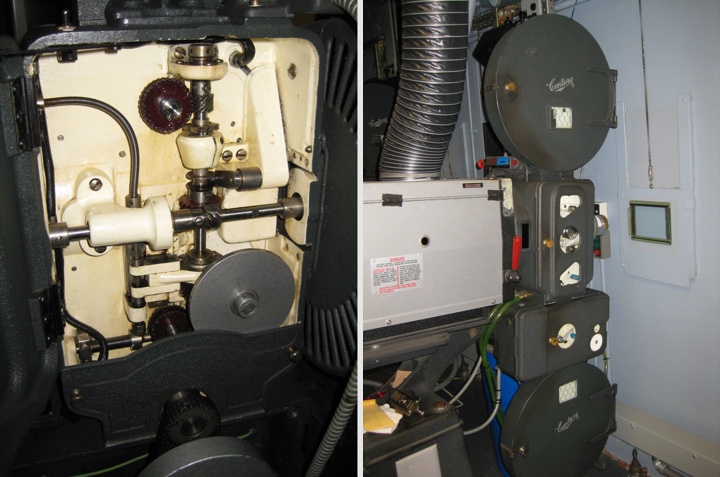
On left – the heavily mechanical (and greasy!) interior of a Century C 35mm projector. On right – flammable nitrate films can be projected on the Century C 35mm projector with proper enclosures.
And here I’d like to thank Rebecca Hall at Northwest Chicago Film Society for helping me get in touch with Kyle, and of course Kyle Westphal for the incredibly detailed look at the effects of digital conversion on cinema exhibition and projection. Kyle’s headshot is courtesy of R.F. Hall, and all the rest of the images were graciously provided by Kyle.