Continuing the ongoing series of interviews with creative artists working on various aspects of movie and TV productions, today I’m honored to welcome Michael Goldman. After starting his career in the commercials department at Industrial Light & Magic, Michael’s work has spanned a variety of TV and feature productions which, in the recent years, included Iron Man, The Amazing Spider-Man and Star Trek: Into Darkness. In this interview he talks about the shifting balance between physical and digital aspects of movie-making, from balancing budgets to building sets to shooting and augmenting individual scenes, as well as his thoughts on how the craft of art direction and production design should evolve and adapt in the world that shifts increasingly more work into the post-production stage.
 Michael Goldman.
Photography by Mark Redmond.Kirill: Please tell us about yourself and your path so far.
Michael: My name is Michael Goldman, and I work as a production designer and art director. I came to the industry in a roundabout way. I completed my master’s degree in architecture, and started working in architecture firms in New York and then Seattle, but it wasn’t the best fit for me so I tried the art world next, working for artists that did large scale public art projects. That’s where I got my art director skills, working on drawings and making presentations and then helping to build the final pieces. I drafted plans, worked in metal, wood and concrete bringing artist’s ideas to life. After about 5 years of that, I found my way into the film industry.
I was working in Seattle for the artist Buster Simpson, and “Sleepless in Seattle” was being shot there at that time. They were building a huge set for the top of the Empire State Building scene, and the production was hiring every carpenter they could find in Seattle to build it’s huge raised deck in a short period of time. I was looking for work, because Buster didn’t have any projects at the time, so I jumped at the opportunity. At the time, it was just a way to pay my bills until the next art project came along.
While working on that show, I visited the art department and started looking at the drawings of the sets that we were going to build, and I thought to myself, I can do this and this is what I was did during my architectural work. So I started exploring the possibility of drawing for films and began talking to people in the industry and trying to make some contacts.
After I had 3 or 4 names and numbers, I went to LA, sent out a lot of resumes, made follow up calls phone calls and slowly made my way into it. In the film industry if you are reliable and work hard, like any job, you will get rehired and work continuously. You can work your way up pretty fast. I was lucky that I met some helpful people and had some good opportunities. Suddenly it’s almost twenty years later and I don’t know where the time has gone.
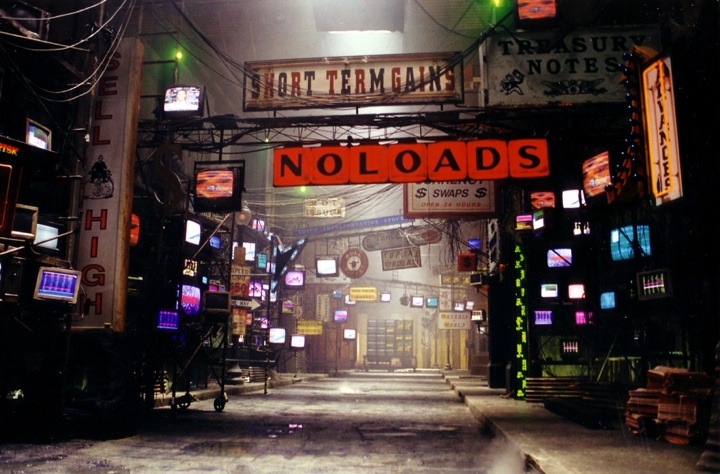
Final light set for First Union Bank commercial (done at Industrial Light & Magic). Courtesy of Michael Goldman.
Kirill: If there’s such a thing as a typical production, when does your involvement usually begin?
Michael: On a big feature production, on the scale of Iron Man or Star Trek, we start early. As an Art Director I will work on the project for between seven months to a year, and I usually start around five months before the principal photography begins. We set up the art department, start doing the illustrations and conceptual drawings and models, and all the while the script is changing. The first couple months of prep we deal with outlines and early scripts and towards the end we’re doing a lot of drafting up working drawings and set construction. Art directors mange all these steps.
Kirill: How much of this is overlapping with the main shooting phase?
Michael: We’re designing, building and striking sets throughout the whole production. A big production usually rents a bunch of stages at a studio, and we keep rotating through them, building on several stages weeks or months ahead of the shooting time and then we strike them after they finish shooting and build the next one. When possible, we bring the director and other key players in ahead of time to comment on the progress of the sets and make adjustments as we build. On the first day we shoot a new set we are always there to “open the set” and make sure the director, producers and have what they want. Then we head out and keep working on what’s coming up the following weeks. It’s kind of leap frogging between stages. Depending on the size of the movie we might end up filling every stage at a studio two or three times.
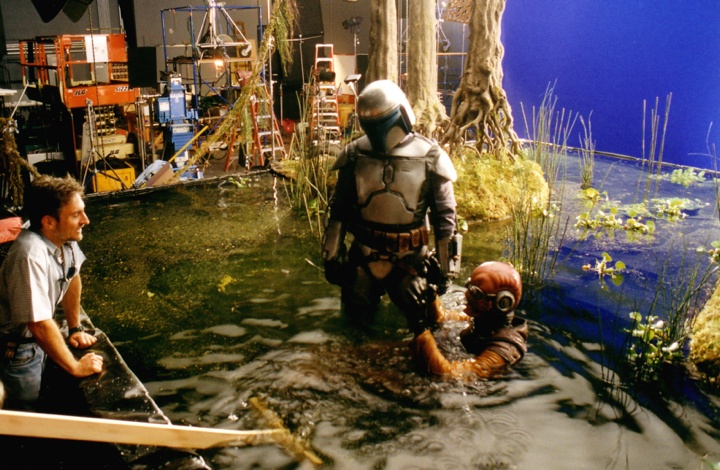
Star Wars 1 – video game commercial (done at Industrial Light & Magic). Courtesy of Michael Goldman.
Continue reading »
Continuing the ongoing series of interviews with creative artists working on various aspects of movie and TV productions, today I’m honored to welcome the cinematographer Polly Morgan. In this interview Polly talks about the evolving craft of cinematography as the technology is shifting the productions towards the purely digital end of the spectrum, the intimate collaboration process between the director and the cinematographer, the upsides of working on smaller independent productions, what happens on a movie during pre-production, shooting and post-production phases, her work on the recently released “The Truth About Emanuel“, and the future of film as a medium.
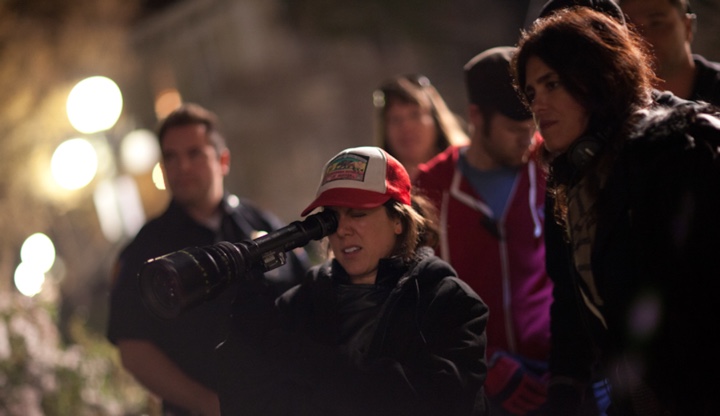
On the set of “The Truth About Emanuel” with the director Francesca Gregorini. Courtesy of Polly Morgan.
Kirill: Tell us about yourself and your path to become a cinematographer.
Polly: My name is Polly Morgan, and I am a cinematographer from UK. I spent many years working as a camera assistant, but I always knew that my ultimate goal was to shoot photography on movies. I tried to establish myself in the camera department and work my way up.
I was always captivated by film since I was a child. When I was younger I didn’t even know what a cinematographer was. It was a process. I studied art history, fell into photography and became aware of the world of a cinematographer when I was a teenager. I happened upon a movie set and I decided at that point that it was what I wanted to do.
Kirill: Jumping a little bit forward, if you look at the variety of digital cameras available on the market, do you think it’s easier for people to get into the field nowadays than it was for you back then?
Polly: Definitely. I feel there’s been a certain decentralization, an opening-up in the technology. When I started doing my own short films, I had to save up money to buy 16mm negatives and pay for processing. Everything that I wanted to shoot had to be carefully planned and organized in advance. It was such a big cost to do it on your own. At that point I wasn’t in a circle of young people who wanted to make film. I was a bit of an anomaly within my group of friends.
These days the ability to have a camera to shoot video, go out with your friends, edit it yourself, upload it yourself – it really means that you can just shoot and practice and develop and not have to worry about being constrained by money or availability of resources.
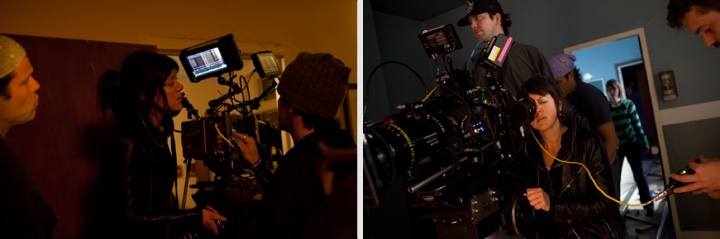
On the sets of “The Truth About Emanuel”. Courtesy of Polly Morgan.
Kirill: Do you think it’s good for your field to have a lower barrier of entry, to have much more material being shot but not always at the highest professional level necessarily?
Polly: I think it’s a great thing. At the end of the day a camera is just a tool for creating art and telling stories. It’s an exciting thing that you can be of any age and of any background if you want to express yourself and tell your story – and have the capacity to do so. But being a cinematographer is still a challenging craft to learn.
There’s still a lot of facets that are involved going beyond just getting your hands on a camera. It’s about the art of telling a story, not only how to use the camera, but how to paint emotion through lighting, to choose the right palette of cameras, lenses, movements, lighting, color. These are the things you use to tell a story, and just because it’s more accessible to shoot digital capture, it doesn’t necessarily mean that there’s more inspirational storytellers out there. It just means that just more people get to have the opportunity, to democratize the film-making process.
In the old days you almost had to be born into it, to be exposed to it, to work really hard for years to finally be given that opportunity to shoot film and get your hands on a 35mm camera. These days more people have the opportunity, and it’s exciting. It means there are fresh voices out there. It means independent movies can be made.
We’re all story tellers. We’re all sharing the experience of humanity that we’re involved with. The more stories there are, the better.
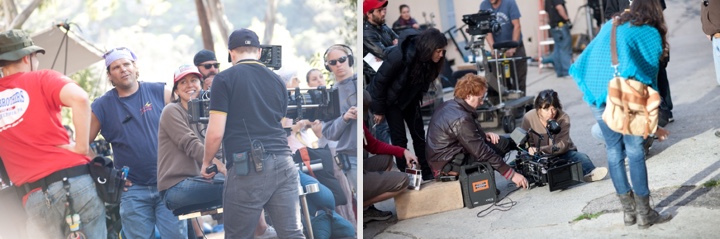
On the sets of “The Truth About Emanuel”. Courtesy of Polly Morgan.
Continue reading »
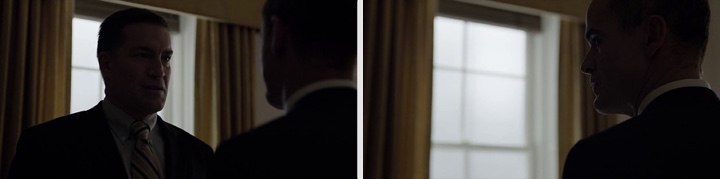
With two stellar seasons under its belt, “House of Cards” is one of the best things that happened to the world of episodic TV productions in the last few years. After speaking to the production designer of the show a few months ago, it’s time to turn the attention to the show’s cinematography. Igor Martinovic has joined the second season, collaborating with different directors and shooting all thirteen episodes. In this interview Igor talks about advances in accessible digital cameras and how it affects his field of work, intertwining technical and artistic aspects of cinematography, switching from the feature world to join an existing TV show and defining the visual approach for the second half of the original story arc, the pace of working on multi-episode production and the changes his craft is undergoing in the transition from film to digital.
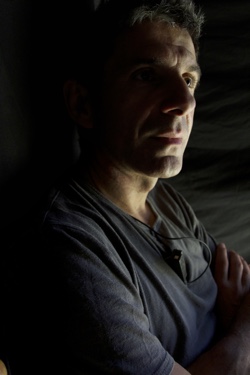 Kirill: Please tell us about yourself and your path so far.
Igor: I am originally from Croatia where I graduated from film school. During my college years the war broke out so I ended up shooting lots of documentaries during that time. In 1993 when the war ended I moved to New York and have been living here ever since.
Kirill: Were you interested in shooting movies growing up?
Igor: Not really. I started taking photographs when I was 9-10 yrs old. My brother had a black-and-white lab at our home, and I joined him in taking photos, developing them and making black and white prints. It was a nice little hobby of ours. I had no clue that I would end up working as a cameraman one day.
At the end of the sophomore year at high school we were supposed to decide a direction in which to continue our education. I ended up in a high school class specializing in TV and film production. We watched a lot of movies, and instead of chemistry we studied photochemistry as well as optics and other related things. It was an experimental class but it gave me a direction. I realized that this could be an interesting profession.
Kirill: What did you work on when you moved to US?
Igor: I started on documentaries back in Croatia, and continued working on those after I moved to the States. My desire was always to shoot narrative and fiction. I slowly started to shoot short films and features, and it all went from there.
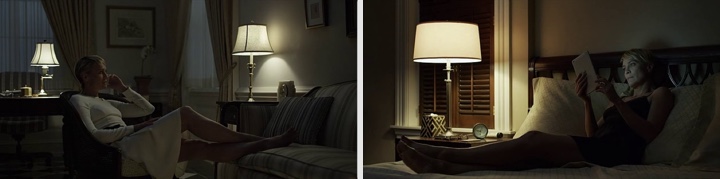
Kirill: In the last decade or so we’re witnessing a transition from shooting on film to shooting digital. Do you see that it’s opening doors to a wider group of people, providing a wider access to the shooting equipment and removing certain technical hurdles like buying film reels or doing lab processing?
Igor: I agree. There’s definitely democratization of the process happening right now. It is a progressive process because it brings so many new people into the field. It opens up possibilities for young and talented kids to come out and present their own vision, their own way of thinking. It is an infusion of a fresh energy.
It feeds on itself. The industry that is producing camera devices is broadening, and the base is broadening as well. They’re helping each other to develop the new visual language. In the last ten years we’ve seen an amazing change in the way people capture images. It’s been a small revolution.
It’s happening on both sides. It’s technical, but at the same time it’s a creative evolution as well. People are using these cameras in many different ways that were not even possible or technically achievable before. And it also opens up ways of seeing things, of presenting things in new perspectives.
Kirill: On the one hand some of the newcomers don’t go through the “official” academic channel of learning the history and the theory, but on the other hand they are not artificially, if you will, bound by those limitations.
Igor: There’s nothing wrong with learning your craft academically. I think that one would want to learn how things were done in the past – in the 20s, 30s, 70s… And the same applies to the theory of filmmaking – you can only benefit from it. But at the same time, if you’re talented, if you know what you want to do and how you want to do it, you absolutely should not limit yourself by having to go through those stages. If one is curious he or she can learn these things outside of the institutional framework.
There are few ways people can come to the point where they have a successful career. One is to work in the industry in supporting positions – camera assistants, gaffers – slowly developing and going up the ladder to become director of photography. The other is to finish a school and go straight to doing things as director of photography. Everyone has their own way to find themselves, their voice and their visual language that represents who they are, that shows how they see the world.
Continue reading »
Continuing the ongoing series of interviews with creative artists working on various aspects of movie and TV productions, today I’m pleased to welcome Fainche MacCarthy. In this interview Fainche talks about the art and craft of set decoration, approaching the script, researching the specific era and recreating its look, the shooting schedule, working with VFX department on digital set extensions, the evolving collaboration between physical and digital aspects of modern movie productions, and her work on the recently released movie “Snow White and the Huntsman“.
 Kirill: Please tell us about yourself and your journey so far.
Fainche: I was introduced to an art director at Warner Bros through a mutual friend while I was in school. Within one meeting with her, I knew that I wanted to work in movies. There was something about her, and the way movies were made, and how exciting they were. She was incredibly forthcoming with names and numbers of people and I persisted until someone hired me. My first job was as an art coordinator but I also did many of the plans, elevations and site plans as well as running out for paint, etc. I worked my way up, met a few people, started working on TV shows, and then went out on my own and started decorating. When you’re decorating, you have the final layer on the set. Once all the walls and floors are put down, you walk into this empty space which is so exciting. You start to bring life to the space. I was very drawn to that.
I started at the bottom, doing informercials, music videos, commercials and then films. The first proper film was “Alpha Dog”, and then I jumped from big-budget films, to small budget, to medium budgets. So for me it was a mix all size productions.
Kirill: When do you usually join the production?
Fainche: I’ve had good fortune to work with the same people for the past 15 years, and I’ve developed prior relationships with them. They usually bring me in quite early. The production designer will start with the director, maybe a couple of months before I will. They’ll start putting together the looks for the movie, and I’ll join and start budgeting and putting together my research. The research that I do is very detailed and extensive, and as I’m collecting all the information about the time period – “Snow White”, for example, was 12th century – I begin to put together a very real world for the film.
Kirill: How does the usual film script go? Does it delve deep into the details of each set, or is it on a much higher level?
Fainche: Scripts are usually around 100-110 pages, or maybe 120 for a longer movie. The writer can’t really go into heavy description, because that would take up too much space. They would give an impression – like walking into the king’s bedroom – and then you come up with your own research, facts and what actually existed in that time period. The look and the specific design of each room would come from the decorator. However, if there’s something pertinent to the film – he picks up his cup from the side table and takes a drink – you know that you need to supply that cup.
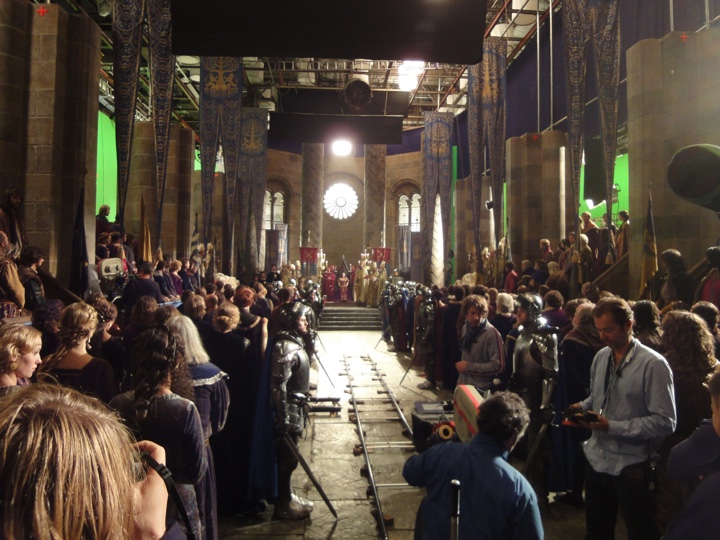
On the set of King Magnus / Ravenna wedding with green screen – built on stage at Pinewood. Courtesy of Fainche MacCarthy.
Kirill: And you want to stay true to the specific era, no matter how far back it goes.
Fainche: Definitely. We did “Super 8” which was set in June 1979. There wasn’t a single thing on the set going beyond that time. Everything we made was before June 1979 – magazines, artwork, paperwork, furniture, rugs, fabrics. It’s not necessarily that camera picks up on everything, but when the crew and the director walk into the set, you don’t want anyone to find any mistakes in your work. The research that we did for “Super 8” was so extensive, as everything was so different from what we have now – consumer products, the way that we looked, the information that we had.
Any time you can do research and really bring the director and the crew as they walk into the set back into that time period, it’s really exciting. And it’s exciting for the actors as well, as they walk in and can get into the character, with every detail around them. You give everyone an opportunity to tell the story and it feels real, it’s grounded in something physical.
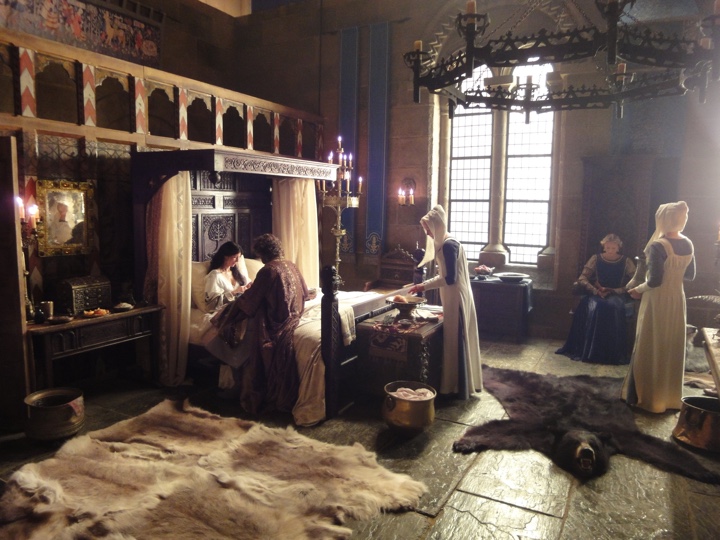
On the set of King Magnus bedroom – built on stage at Pinewood. Courtesy of Fainche MacCarthy.
Continue reading »
