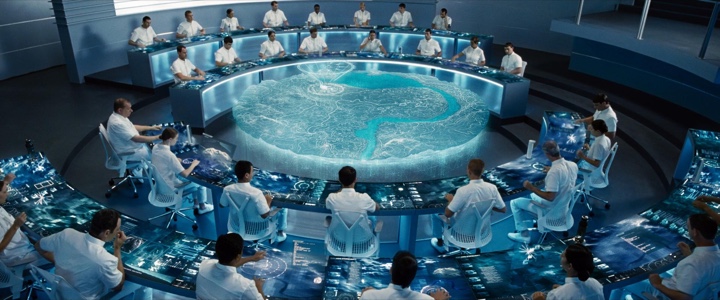
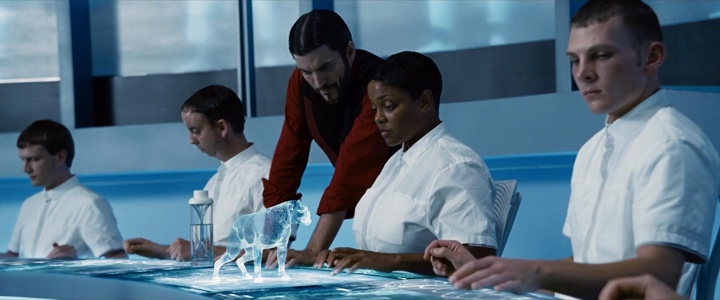
Continuing a series of interviews with designers and artists that bring user interfaces and graphics to the big screens, it’s my pleasure to host Paul Beaudry. You have seen his work on “Avatar”, “The Hunger Games” and “Ender’s Game”, and in this interview Paul talks about what goes into designing screen graphics, drawing inspiration from the latest explorations in real-world software and hardware, holographic and 3D displays as a possible evolution of human-computer interaction in the next few decades, challenges in using technologies such as Google Glass or Siri in film, the ongoing push to create more detailed and elaborate sequences, and his thoughts on working remotely with the current crop of collaboration tools.
 Kirill: Tell us about how you started in the field of motion graphics.
Paul: I started out wanting to be an AVID editor, editing documentaries and similar productions. As soon as I finished school and got into the industry, I found out that what I liked the most was coming up with graphics for documentaries and shows that I ended up working on. From there I started teaching myself motion graphics, moving into opening title sequences and getting some cool opportunities.
There are really good communities online for learning. At the time for me it was talking with other people at the great mograph.net site, talking about how to get into the industry, the challenges and technical issues. That’s how I got my start. The software itself is not crazy, and a lot of people learn how to use, for example, Photoshop even though they’re not professional graphic designers or photographers. They way I look at After Effects and other 3D tools that we use is that they are more complex than Photoshop, but not so much so that it’s not impossible to learn on your own. It was years going crazy, huddled over my computer, teaching myself in every bit of free time I had during late nights, not having much of an outside life for sure [laughs].
Kirill: That’s on the technical side of things. What about the design side?
Paul: I hope I’m still learning as I go. It was a lot of the same, learning design and technical stuff together hand-in-hand. I think it’s important, actually. A lot of the conversations we had online was about getting critiques of your work, moving forward in design and technical side at the same time.
Kirill: How did you start building out your portfolio?
Paul: A whole bunch of spec pieces. My interest at the start was not really in UI design for film. At the time not that many people even knew that could be a full-time job. I was more on the television side of things, doing commercials, title sequences, more traditional motion graphics. And it was also doing my own stuff, building up reputation to get real projects.
Kirill: What were those first real projects?
Paul: I was working with the company Frantic Films on a half-hour documentary show for the Discovery channel. I don’t think it ran in US; it was a Canadian thing. I got a chance to do the opening title sequence for them, expressing my interest in doing that, and they gave me my first shot. From there I started doing a lot more work for them, and some stuff for HBO and A&E a few years later, and as a freelancer I kind of branched from there.
Kirill: What’s the story of the iOS music app Anthm that you have in the portfolio section on your site?
Paul: Anthm came out in February 2012, and actually the name is now Jukio because we ran into a bit of a legal issue. That’s something I did with my friends in our free time. It’s me, Tyler Johnston who is a graphic designer, and Ben Myers who I worked with on Avatar. We were having drinks at a bar, and we were annoyed at the music they were playing. So we came up with an app for iOS that lets you request and vote on the music playing in your location from your phone, like a jukebox with millions of songs.
Kirill: Perhaps jumping a bit forward, your work for movie UIs is the tip of the iceberg above the surface, with playback loops or basic interactivity that mostly focuses on the presentation layer. And on the other hand, creating a real application that people run on their devices forces you into the full design and implementation cycle, complete with crashes, bug fixes, feature requests etc.
Paul: My first passion is to create fantasy user interfaces for film, but at a certain point you want to make something that’s real, something that a real user can use. Something that doesn’t only look like magic, but hopefully feels magical to use. Not that Jukio is earth-changing or anything, it’s simply a music app, but there are small UX choices there that feel magical to us and that’s not always something you can do in film. It’s definitely something that we’re really interested in – getting real feedback from people, making something real that can be used to solve real-world problems.
I should mention that none films I can talk about right now had real software in them, everything that’s been released was done in post, but the company I’m working with now, G Creative Productions, has the ability to create real software that’s used on set by the actors while they’re filming. It’s all done using live playback so it’s not a post-production thing at all – they create real software that the actors can tap, change on the fly and really interact with while they’re filming.
Continue reading »
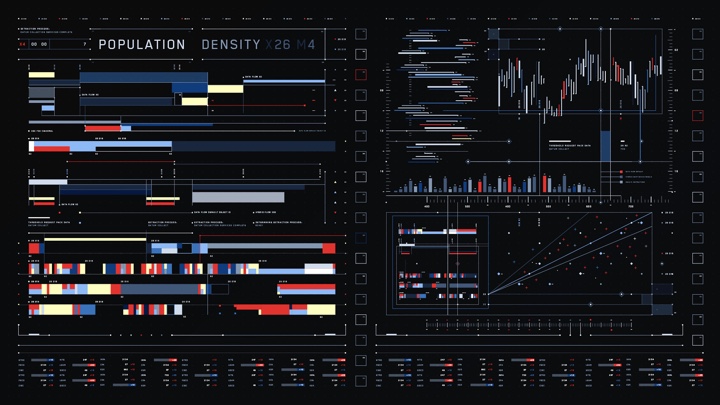
Continuing a series of interviews with designers and artists that bring user interfaces and graphics to the big screens, today I’m honored to host Joseph Chan. You have seen his work on “Tron: Legacy” and “Oblivion”, as well as one quite a few motion ad campaigns for companies such as Sony, Google, HP, Intel, Blackberry and others.
 Kirill: Please tell us about yourself and how you started in the field.
Joseph: I’m a motion graphic designer and I’ve been working in the industry since 2007. I graduated from Pasadena Art Center in 2006 with a degree in graphic design, specializing in motion graphics.
Before that I attended UC Irvine, I didn’t have a major and was deciding what I wanted to do as a career, and it was around the year 2000 when the .com boom was in full force. It was a great and inspiring time for me, people were designing amazing abstract graphics from 3D programs that I had never seen before. I learned Photoshop and put together a portfolio with personal projects that I did in my spare time. After I was accepted into Art Center, I transitioned from graphic design into motion design which had started to ramp up midway through my college years.
Kirill: What happened after you graduated?
Joseph: During school I took two internships. One was in an interactive design studio, creating graphics and content for websites. In my latter terms at Art Center, I took a class with Chris Do who owns and operates Blind which does motion graphics, and I interned under him and Tom Koh. From then on I decided to focus entirely on motion graphics.
Kirill: And here you’re not talking about Flash / VRML containers that were very popular at that time in the browser environment.
Joseph: I wasn’t into the technical side of Flash or into creating websites. I was mainly using it as a tool for simple layer and text animations, because that was what people used at the time. But the designers who were using Flash in amazing ways, creating beautiful websites full of motion really caught my eye and pushed me towards my career.
Kirill: So back to what you did after graduating…
Joseph: I graduated in mid December in 2007, took some time off for the holidays, and started freelancing at different motion graphics studios around LA and Santa Monica, and I’ve been doing it ever since. I’ve never been staff at a studio before, at this point in my career I feel freelancing is the way to go as I have a little bit more freedom in terms of studio and project choices.
Kirill: Are you also involved in art direction / concept design?
Joseph: Sometimes I am brought in to a project midway or near the tail-end, so therefore I won’t be as involved with the concept as someone who had been on the project since the beginning. So in that scenario I’d be helping out with animation and finishing. Other times I am brought in from the pitch phase, and that includes art direction, concepting, and designing. I do enjoy all parts of the process, designing and animating, and personally I like to find a balance between the two, trying not to do too much of one thing for long stretches of time.

Kirill: You’ve worked on projects with rather different styles. For example, the spot for the first launch of Google Chrome, the recent spot for Google Now and the one for the Gates foundation are semi-vintage illustration style, while Beats Envy and Sony spots have a very modern high-tech industrial feel. Do you like exploring radically different styles?
Joseph: Absolutely. I’m influenced by all kinds of different styles and I try not to limit myself to a particular one per se. I’d like to think that each project has a different and unique solution, so I keep my mind open to what the project asks for.
Kirill: How many people do you usually have collaborating on a single spot?
Joseph: It all depends on the project and what it entails. The spot for Google – compared to other big budget projects that I’ve worked on – was quite simple from the start and we knew that. We did everything from concept to delivery – illustrations, design, compositing and animations – with a team of four people. The spot for Beats Envy also had a small team, but it was a little bit more complicated due to the need for 3D modeling and animation. I worked on the UI designs, compositing of 2D and 3D elements, and the overall grade. The team was four or five people. And then of course we had producers and the creative directors.
Continue reading »
A concept artist. An illustrator. A designer. Meet Ash Thorp. In this conversation he talks about his concept work on “X-Men”, “Thor” and “Prometheus”, the user interface work he did for “Total Recall”, coming up with creative concepts and bringing his ideas to life, his thoughts on where the human-computer interaction is going and the evolving landscape of making indie sci-fi movies.
 Kirill: Tell us a little bit about yourself and your work so far.
Ash: My name’s Ash Thorp and I am a designer, an illustrator, art director, creative director. I do a lot of stuff for film, multimedia and video games. I’ve been freelancing from my home studio for almost a year now, and I’ve been in the film industry for about three years. I’ve been drawing since I was a little kid. I picked design in college and got two degrees, and after that I immersed myself into the furthering my education via the internet, which lead to me discovering my own voice.
Kirill: Was it your intended goal to get to work on movies?
Ash: I grew up on a really healthy dose of Saturday morning cartoons and anime and film, and I feel that film is a great medium of storytelling. It was always a big goal of mine to do something in film on way or another. It was always in the back of my head that I wanted to do it, and even though I didn’t know how I would do it, I figured out I’d make it happen.
I was working at a design firm down in San Diego doing graphics for action sports. It was fun, but I felt that I wanted to do something greater for myself, on a higher level, for more mass appeal if you will. I decided I wanted to design for film, and I had to figure out the niche I wanted to be in. I started following a few companies doing motion graphics. I suppose I was OK at design at the time – nowhere near where I am now, and there’s always place to grow anyways – and I saw that it was the niche for me. So I gave myself a time limit of three months to build a portfolio. Every time my wife and my daughter would go to bed around 11PM, I’d work until about 4AM on just building the portfolio, making a bunch of projects, which lead to creating the web site with much material.
I put this portfolio together, and I sent it out to around 50 studios. I got contacted back by only one of them directly, and it was Prologue, I was extremely surprised because they were my favorite company. I went there to interview, and they offered me the position of a junior designer. There was a little bit of negotiating, and a lot of talking with my wife. We live in San Diego and Prologue’s office is in Marina Del Rey up in LA. It’s about 2.5-hour drive, so I had to figure out a system to make it work, commuting every day for a whole year, building my skills and getting better at it. It was pretty crazy, commuting six to seven hours every day to work.
Prologue works on tons of films, and there was a lot of opportunity to grow. The artists and creatives there are just amazing, and it was really great to understand what it takes to do design at that level. It was like bootcamp. It was the hardest thing I ever had to do in my life – the endurance of the whole year, not being able to see my family and friends that much, being completely exhausted and drained, working really hard. Prologue is a very intense environment, great for building yourself but really taxing, with extremely rigid timelines. You gotta do a lot of productions and a lot of work. It was good, and that’s how it all worked out. I left after a year, helped out a friend for about six months, and then started working on my own things from my home as a freelance artist for hire.
Kirill: Were you surprised during that first year, working on real-life productions across multiple departments?
Ash: I learned something new every day, a new surprise every day. You know, when you learn a magic trick, it takes the magic out of it, but it’s still really interesting. I feel that the deeper I go into film and understand it, the further I go from the original thing that I loved about it – which is the innocence of being a fan, now that I understand how the things are made.
Kirill: What were the specific productions you worked on at Prologue, and what was your role?
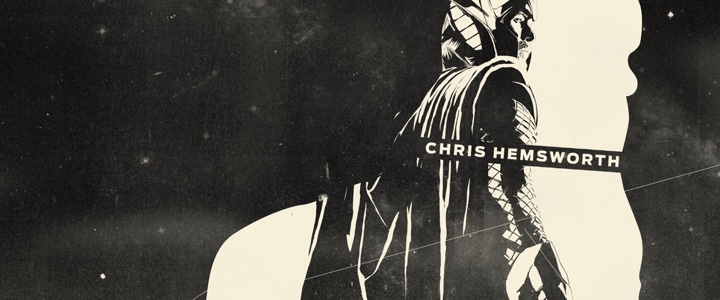
Ash: Some of the movie projects I worked on there were X-Men First class, Thor, then Walking Dead which became concept pitches to the director. Design houses like Prologue compete in this over saturated market where the client requests to see the design vision for a certain production – usually for free, which is pretty crazy. Those were my original concepts and ideas for things that I worked on with a group of people. Each project would change or shift depending on the notes and feedback from the clients and things would move along from then on taking on a life of its own.
Continue reading »
When we are surrounded by glowing screens wherever we go, what does it take to create believable and yet attractive computer interfaces for big-budget movie productions? In this conversation Shaun Yue talks about realism in representing the human-computer interaction in “Skyfall” and “Prometheus”, what does it take to place hundreds of live monitors on the set, his work on game cinematics for “Crysis” and “Call of Duty”, and how we may be interacting with information in the next few decades.
 Kirill: Tell us a little bit about yourself.
Shaun: I’m originally from Melbourne, Australia. I studied Multimedia Design at Swinburne University; it was a mix of web, animation, video and graphic design. During that time I worked as a web designer, and this web agency shared office space with a film production company, Exit Films, who made commercials and music videos. I was really interested in the work they were doing, so during the time I was working at this web company – I helped them do motion graphics, and also worked as a director’s assistant. I tried to get on set and see the whole process of what it takes to make a film.
In hindsight I was so lucky with the filmmakers I worked with – people like Garth Davis, Glendyn Ivin, Greig Fraser, they’ve subsequently gone on to achieve so much. It was an experience where I knew I had so much to learn; and was lucky to be in the right place at the right time.
After that I kept working mainly in animated commercials, and was then employed by the Australian Centre for the Moving Image which is a cultural institution which exhibits moving image in all forms, from film to games and contemporary art. I did all of their motion graphics promotional work. It was an interesting break from commercial clients, and great to explore a wide breadth of the moving image cultures.
In 2006 I was lucky enough to win a grant with the British Council to come to London and meet with some British designers who I admired. Through that I met Toby Glover who designed “Batman Begins” and a whole host of other screen graphics for films. We got along quite well, and worked together on some projects, and a year later he said “The Dark Knight” was going to be made, and asked if I would be interested, and I said “Of course!”
Kirill: Were you always interested in working in movies, or did it come together like that?
Shaun: I always loved watching movies and loved sci-fi. Whenever I saw a computer on film, I always felt strange. It was one of those things where I felt that maybe I could do that better.

Kirill: Jumping a little bit forward as you talk about making things “better”. The “Alien” franchise started in 1979, and you joined it working on “Prometheus”. How do you define “better”? Is it in terms of raw processing power that you have at your fingertips and how intricate you can get? Is it about improving the interaction design, the visual design, or something else?
Shaun: It wasn’t specifically a technical software solution to making it look more sophisticated, for example I think the computers in Alien are great, they have a very functional aesthetic. But so often screen interaction in film appears very naive, unbelievable as a computer user. And now that I’ve worked on a couple of movies, I can understand why it is a little bit fictitious or a little bit over-dramatized. But back then when I was watching movies, I was thinking that that’s not how computers work, and if I did it, I’d do it properly.
Kirill: And by “everyone” you mean people who are actually into computers…
Shaun: Right, the biggest thing about film is that they have a very broad audience. There’s often dramatic storytelling reasons to present something as it finally appears, rather than being authentic to technology. Balancing design authenticity with narrative concerns is probably the greatest challenge of the job.
Kirill: Is it a back-and-forth process on the set, defining how “realistic” the interactions with computers are? Do you ever get feedback that what happens on the computer screens is too boring?
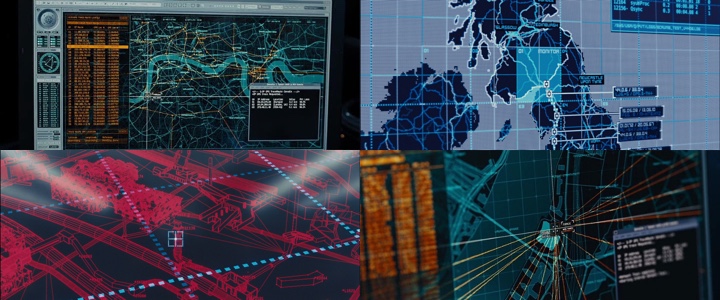
Shaun: It depends on the movie. For example, in “Dark Knight” all the screen designs – which were designed with Toby Glover and Andrew Booth – are all DOS-based, engineering-based, very realistic, often sparse. It was about believability, and in that case the director never said that it’s too boring and let’s jazz it up. On the other side, “Prometheus” and “Skyfall” are very much about how can we show something that is beyond what a normal person is used to. “Prometheus” is set in the future, and it has to be more than what viewers are used to now, similarly with “Skyfall”, an element of a higher level of computers that the public doesn’t usually see. Obviously it’s a little bit of fantasy, but it was an important aspect of how the directors wanted to present computers in those films.
Continue reading »
