 Costume design of "Beef" by Olga Mill. Courtesy of Netflix.
Costume design of “Beef” – interview with Olga Mill
Continuing the ongoing series of interviews with creative artists working on various aspects of movie and episodic productions, it is my pleasure to welcome Olga Mill. In this interview, she talks about her journey into the world of costume design, key ingredients to longevity in the industry, and her thoughts on generative AI. Between all these and more, Olga dives deep into her Emmy-nominated work on the second season of “Beef”.

Olga Mill on the sets of “Beef”.
Kirill: Please tell us about yourself and the path that took you to where you are today.
Olga: I knew I wanted to do what I do today pretty early on. My family moved to New York from the Ukraine when I was five. They would take us to the theater all the time, and I also went into community theater acting programs. Later on I went to a performing arts high school in New York. The acting part of it didn’t resonate with me, but I did like the parts about making your own sets and costumes.
I remember walking home from school one day and thinking that I could be a costume designer. The more I thought about it, the more it looked like it would let me out of some of the acting stuff that didn’t resonate, and also that it appealed to a nerdier research part of myself. It also felt more practical in a way. That’s when my path started, back in high school.
It took a long time to feel confident enough to want to be in the designer role. In the film industry, if your family’s not in it, it can feel so out of reach. So at first I was thinking that I would be happy if I could just work in a costume shop. And then I wanted to be an assistant. And only when I went to graduate school at NYU that I felt ready to go for the head of department role.

Costume design of “Beef” by Olga Mill. Courtesy of Netflix.
Kirill: What are the misconceptions or misunderstandings about what costume design is?
Olga: The first one is that a lot of people assume that I know how to sew. It’s really important to understand the construction and design because I’m talking to tailors. But left to my own devices, it’s a skill that I don’t have. I respect it a lot, but I certainly wouldn’t be able to do it myself.
The second misconception is putting costume design in with fashion. Fashion is its own lane that I have so much respect for, but that’s not where the meat of my knowledge is. As a costume designer, you are driven by the script and the characters and not the aesthetics of fashion. I don’t mean to downplay fashion, but these are two independent avenues that often get intertwined. They are different skill sets.
Kirill: Getting to “Beef”, how did you find your way to it, or perhaps how did it find its way to you?
Olga: I feel that we met each other halfway. I was a big fan of season one, and I had worked with the production designer Grace Yun several times in the past. I got the script for the second season through my agent, and I don’t know if it was through Grace or through my past work with A24.
I met Sonny [Lee Sun Jin, the creator of the show] for a coffee, and he laid out his thoughts for season two. It’s an anthology series, and it was interesting for me because you can start from scratch with new characters. I put together some visuals and sent him, and then we went from there.
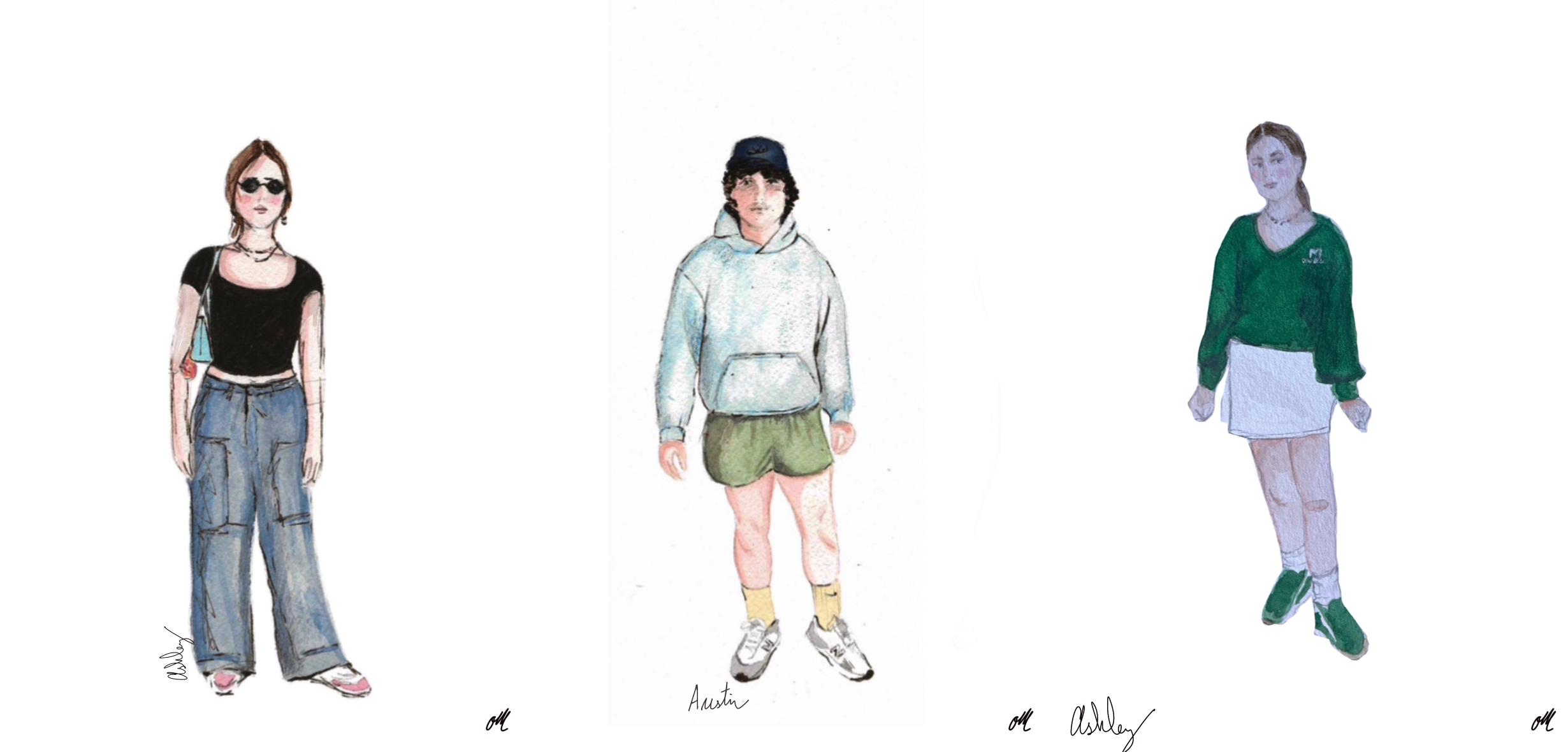
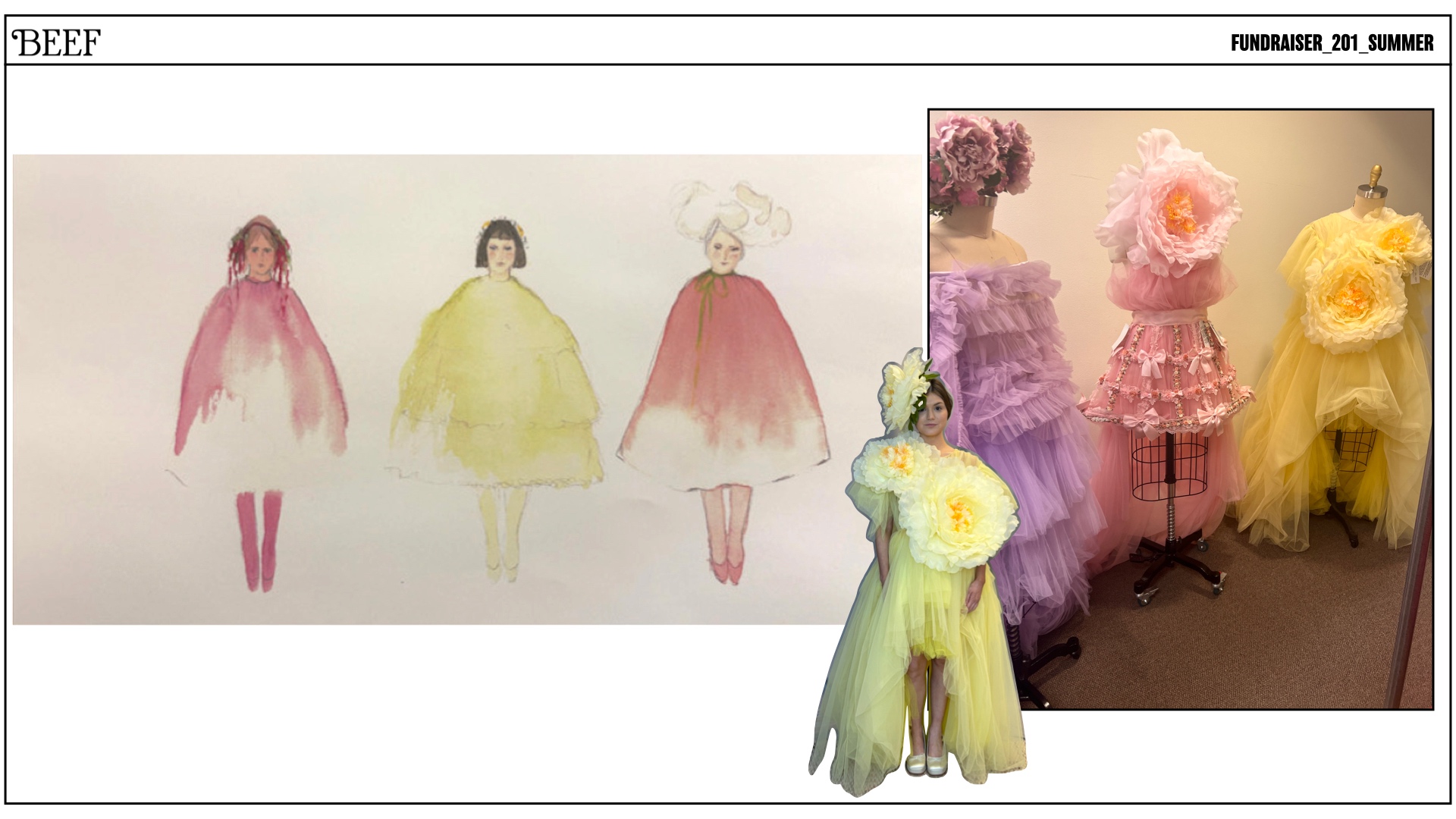
Costume sketches for “Beef”, courtesy of Olga Mill and Netflix. Left to right – Ashley, Austin, Ashley.
Kirill: What is the most interesting part of this season for you?
Olga: I’m 41 years old, and I’m a part of the millennial generation. It feels that my generation is culturally at the part of the curve where enough time has passed from your twenties and certain trends when you can look back and start to see the things that were popular in a more objective way. You need a little bit of distance, maybe 10-15 years [laughs] to be able to reflect on it.
The show deals so much with how generations are interacting with each other, and it was the chance to look at millennial culture in an anthropological way for the first time. I didn’t do that before, and it was quite humbling at times.
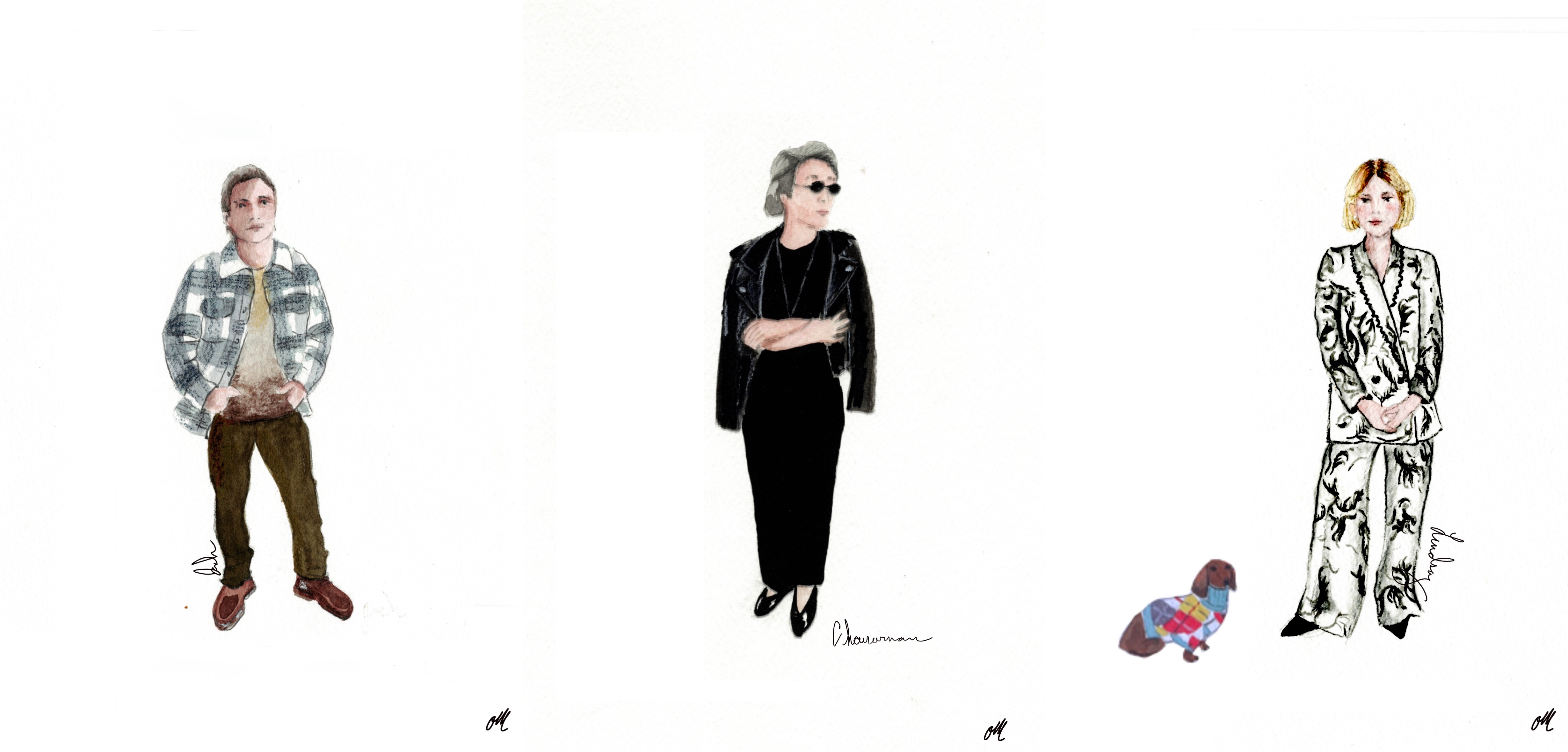
Costume sketches for “Beef”, courtesy of Olga Mill and Netflix. Left to right – Joshua, Chairwoman Park, Lindsay.
Kirill: There’s generational divide, cultural divide, class divide and others in the show. How did you approach this? How wide of a canvas did it give you to explore in your department?
Olga: Even though it takes place in the modern day, I do modern day projects the same way as if I’m doing a period film. It’s a different part of society for me. I didn’t grow up going to country clubs, so that was new.
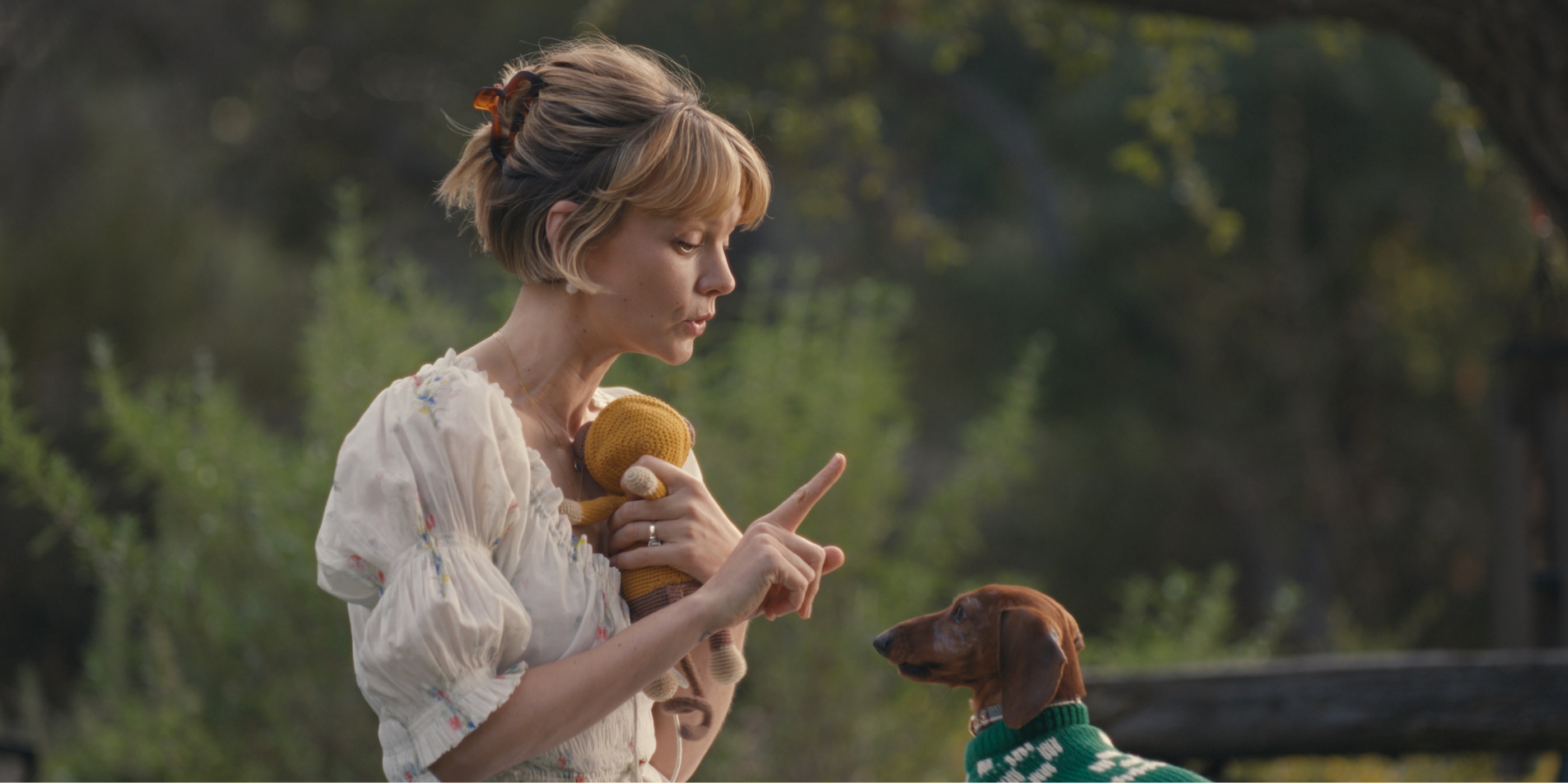
We spent a lot of time at the Montecito Country Club. We spent time in Ojai. Bailey Gardner who was the assistant costume designer and I, together with Grace and Kellie Jo Tinney the set decorator would go to both those towns, have lunch and look around. The other place where I do a lot of research is Instagram. It’s amazing. You think about the characters of Josh and Lindsay and Ashley and Austin – they would be posting stuff online. So I spent a lot of time trying to find real accounts that I thought had elements that spoke to the characters. Sonny, Grace, James Laxton the cinematographer and I would send them back and forth to each other.
It was trying to find real people who lived in Ojai or who were in Montecito. It’s a costume designer’s dream. They post their outfit of the day. They post the brands where they shop. I’m researching it like I’m researching the 1500s in England., to get a sense of where these people shop, and what’s important to them.

Costume design of “Beef” by Olga Mill. Courtesy of Netflix.
Kirill: How did you approach the differences in culture, traditions and environment for the South Korean characters?
Olga: Our window into Korea is very specifically through the lens of Chairwoman Park, who is not just Korean, but super ultra-wealthy Korea. There’s the scene where she comes in and looks at the room that Lindsay designed at the country club. Grace did such a beautiful job with that room. It’s not garish, but it’s not quite a room that amazes you. It doesn’t make you want to be in that space.
Everything about the Korean aesthetic that we were trying to represent was in opposition of what the style of that room is. It is more modern. It is more sleek. The term “quiet luxury” is overplayed, but it is there. Lindsay’s design is stuff on stuff on stuff. And the Korean aesthetic here is simpler and more refined.
Originally we looked at examples of real Korean ultra-wealthy women in that age group, and it’s a cashmere world. We did veer from that with Chairwoman Park, giving her the leather jacket. She represents modernity, but there’s elements that are unexpected to her as well. I wouldn’t say that she is the typical Korean woman of that age. There is a certain worldliness to her. But overall, just in opposition to Lindsay’s aesthetic, that was a good guiding light.
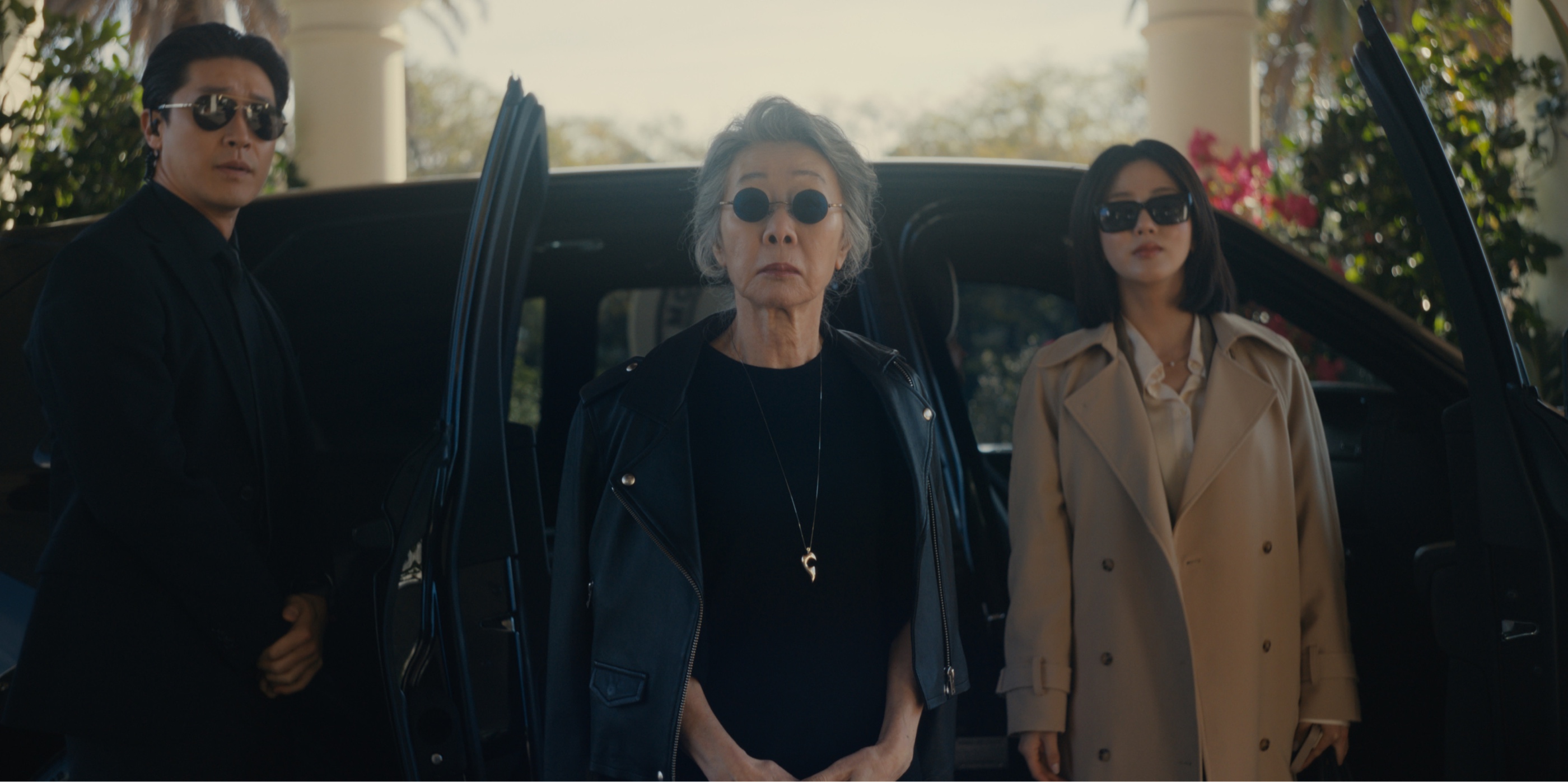
Costume design of “Beef” by Olga Mill. Courtesy of Netflix.
Kirill: One of the parts of the storyline that I liked was how the four main characters try to blend in in an environment that is a completely different tax bracket, an environment that has a completely different set of financial means. Joshua and Lindsay want to be seen as almost equals, but they’re not quite there with the money. And the young couple has their own aspirations, especially Ashley.
Olga: The term “hyper assimiliation” came up quite frequently. It is almost like an immigrant experience, but through class instead of countries. Take Josh for example. The way I thought of him and talked to Oscar Isaac about him is how he walks through the club. He’s clocking how people are dressed. He has to be really aware of it, and then constantly trying to mimic it – again for his own ego – to feel like he’s an equal at the club.
But I also think it’s in service to the members too. This is what I noticed in the spaces of these country clubs. Part of what the members are paying for is to feel like they’re not interacting with employees. There’s something about interacting with somebody who you know is paid to be there that doesn’t feel as good. What feels really good is when you’re interacting with somebody who you don’t feel that class divide. They know your name. They know what you like to drink. Ultimately, it’s because you don’t want to feel guilty for having more than somebody else. So it’s important for Josh to look like the club members because it feels better for everybody.
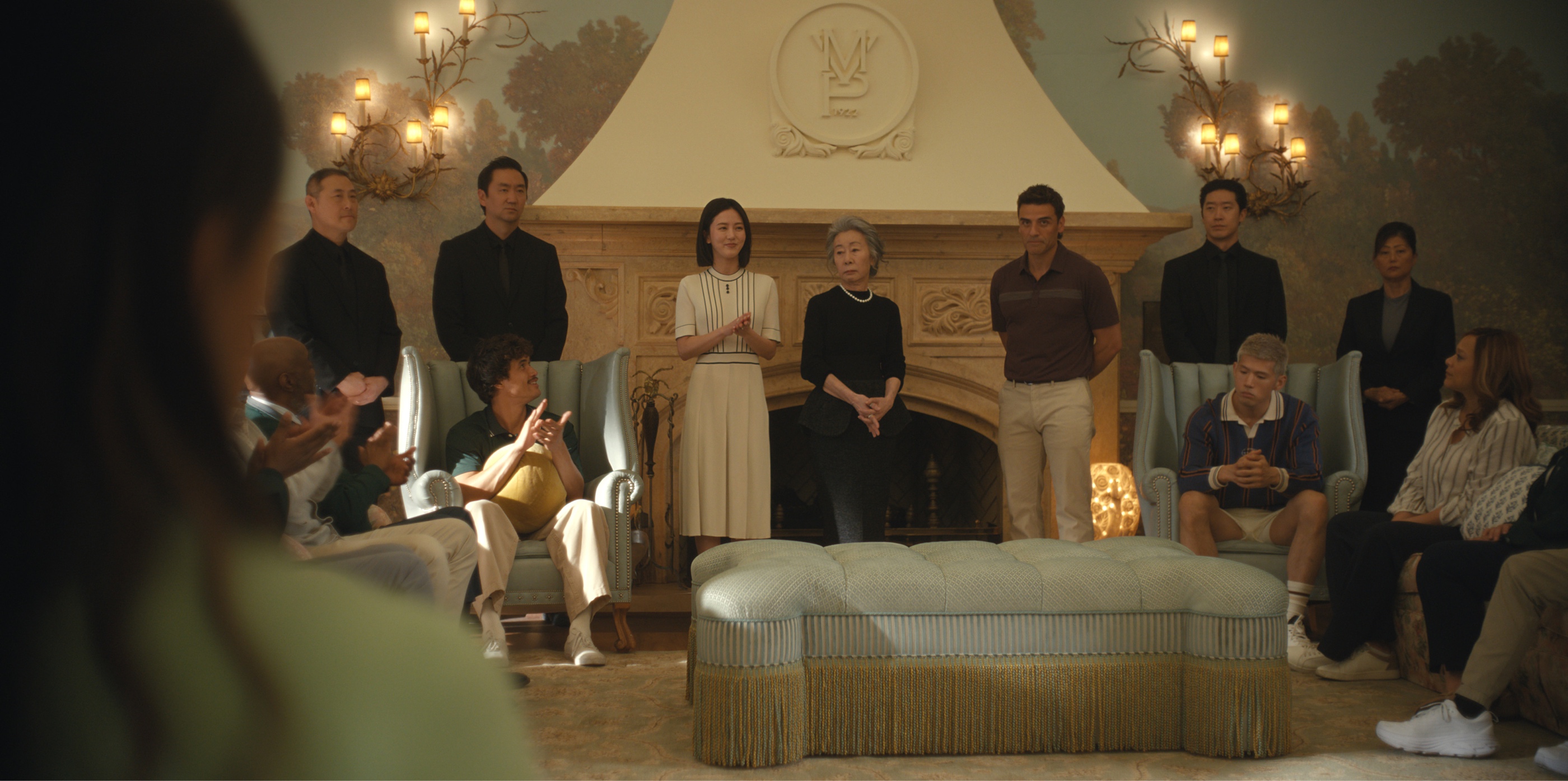
Costume design of “Beef” by Olga Mill. Courtesy of Netflix.
Kirill: As these main characters move up and down the class hierarchy, if you will, throughout the show’s storyline, what changes did you want to make in their costumes?
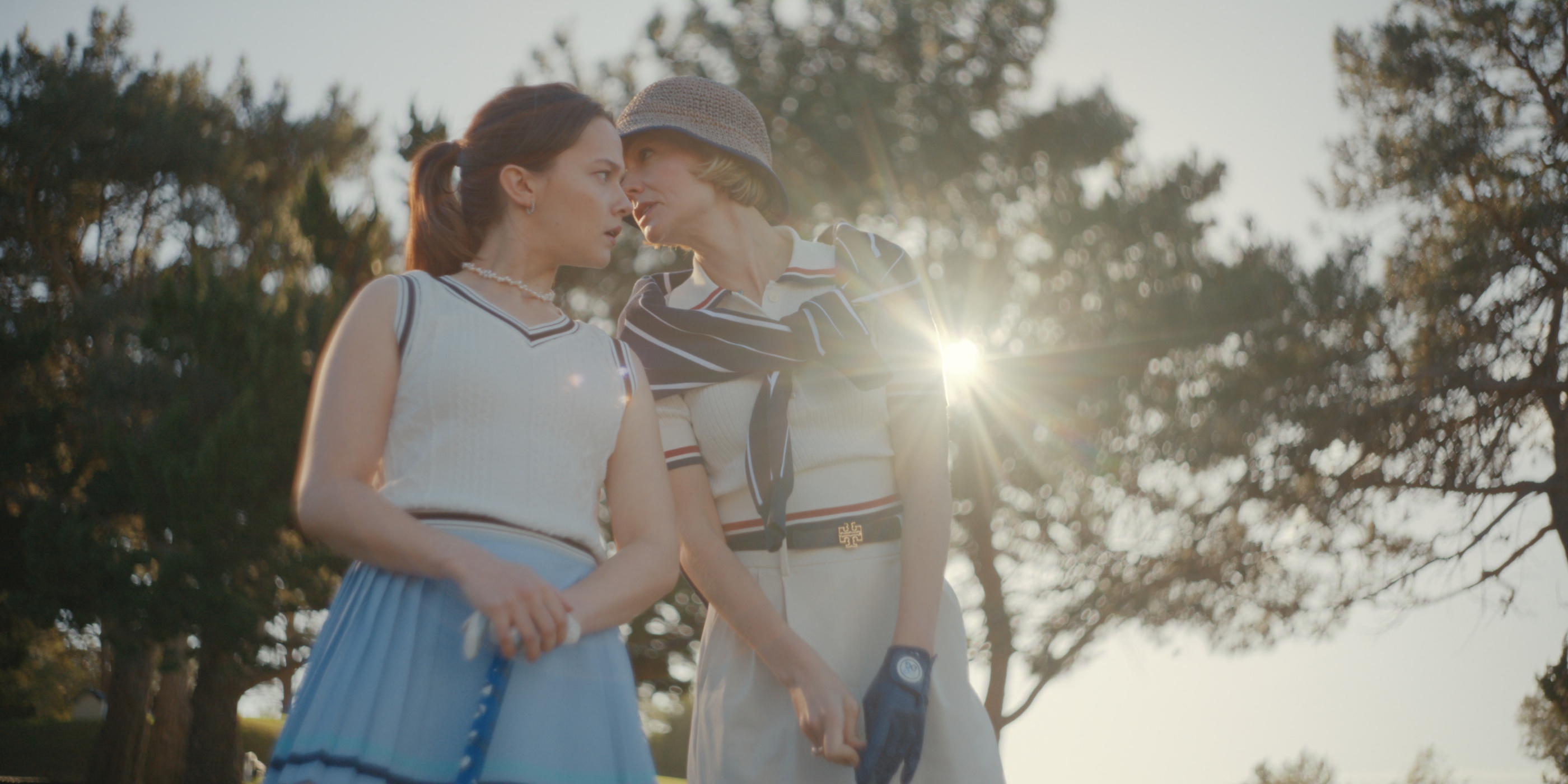
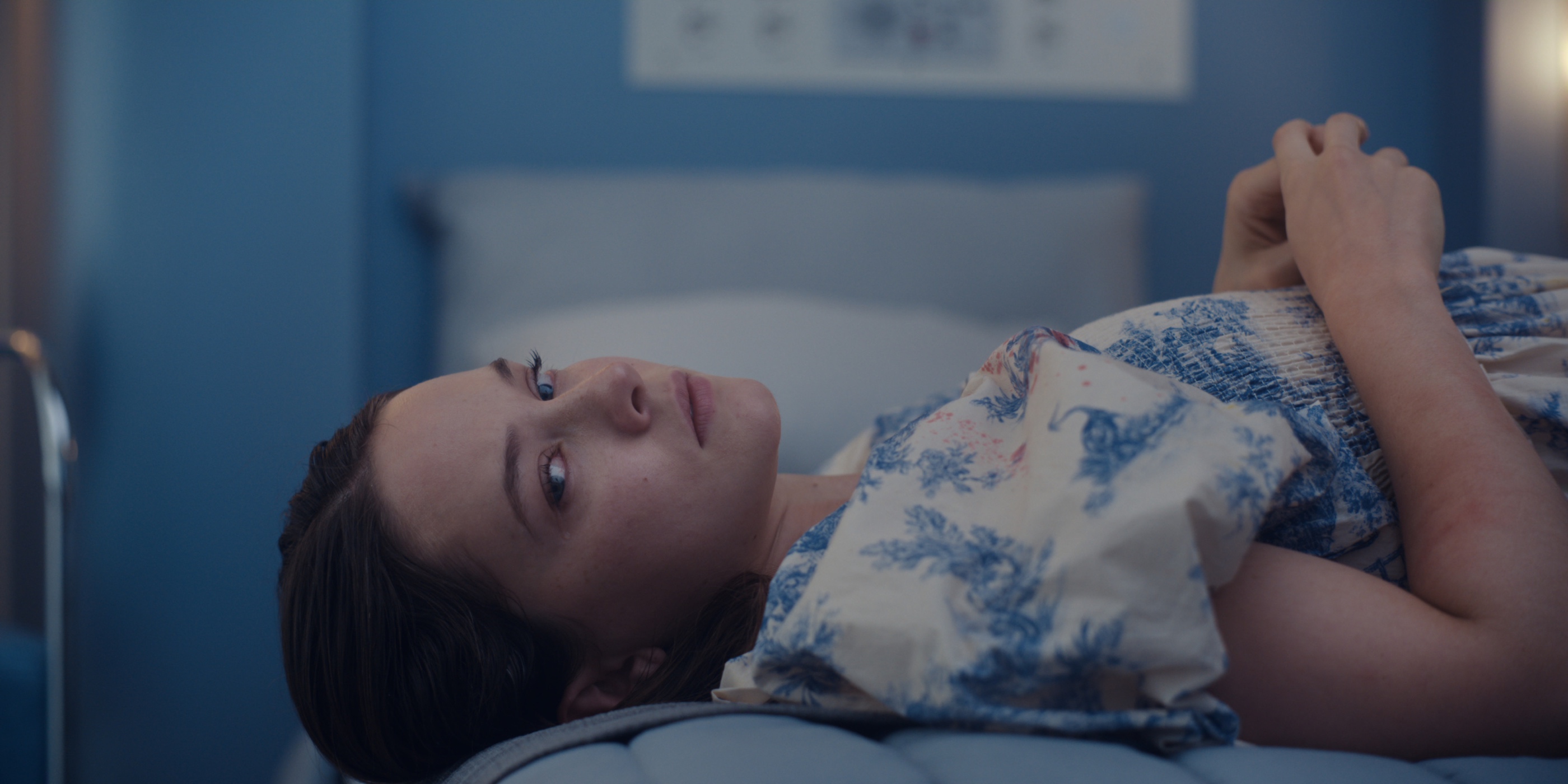
Olga: I thought about it more like mirroring each other. When Ashley becomes jealous of Eunice, she starts to dress like her. Her shirts become a little bit more silky. She starts to mimic her professional style. Then when they go to Korea and she’s with Lindsay, she’s in that dress that they’re in at the clinic which is trying to mimic this Montecito prairie aesthetic. And then at the very end when she takes over Josh’s position, she’s in a green suit the way that Josh started the show in. The way I was thinking about it was who are you trying to reflect – or whose skin do you want to put on – and not up and down.
When we first meet Austin, he’s a trainer, but we intentionally made him not wear any athletic fabrics. Everything is cotton, sun washed, and casual. And then, as he starts moving up in the club, he starts wearing moisture wicking official workout fabric.
At any given moment in the season, it was about who you are reflecting and whose life you want.
Costume design of “Beef” by Olga Mill. Courtesy of Netflix.
Kirill: Is there such a thing as your favorite character in this season to work with?
Olga: On a TV show the picture is so much bigger, and you have so much more space with these characters. So they all come in and out of favor, so to speak.
I thought Chairwoman Park was a very interesting character to design. Sometimes characters surprise me. You think this is what they’re going to look like. You do the research, you talk about it with the director, you make the boards, you show the pictures. And it’s not until you’re in a room with somebody until you realize that it’s something different. Her character was the one that I found the most surprising where we landed. In retrospect, it has a softer place in my heart because the process was the most unexpected.
Costume sketches for “Beef”, courtesy of Olga Mill and Netflix.
Kirill: Was there a color that you wanted to particularly emphasize, and was there a color that you didn’t want to use at all?
Olga: Not for the whole show. We did have an intentional map or color theory between Grace, James and I, which was thinking about each couple as a different season.
Color-wise, Lindsay and Josh are very autumnal. It’s purples, oranges, greens, brown, thinking of their relationship is like autumn. Things are drying up and kind of dying. In contrast, Ashley and Austin are spring. It’s all pastels and a spring palette. And then Chairwoman Park is winter. It’s icy grays and light blues. And then the club was an endless summer. That’s where the greens and yellows come in. That was a really helpful way to work to have this color plan that you’re all standing under. Then when you’re making tiny decisions – like what sock should Ashley be in – it comes to which sock feels the most like spring. You give yourself a little map for when you get lost.
Costume design of “Beef” by Olga Mill. Courtesy of Netflix.
Kirill: How do you see AI generative AI today?
Olga: If I’m being really honest, I feel that I don’t know enough about it to have a dogmatic point of view on it. Like with most things in history and in life, it’s not so much what the tool is – it’s what the intention behind it is. Anything can be used productively and anything can be used destructively. I hope it makes most of people’s lives more comfortable, but I don’t know if that’s the case.
It’s easier for me to understand how it makes me personally feel. It is the first time that I feel a sense of aging. You feel that it’s almost a glacier that’s moving and turning – in a zoomed out way of time and technology. I do remember the time before we had the Internet, but I was also young enough that it felt like second nature for it to be around. It wasn’t a concept I had to wrap my mind around. And this feels like the first innovation that makes me feel old, because it feels like something that’s moving. It’s something that I’m not standing on, you know?

Costume design of “Beef” by Olga Mill. Courtesy of Netflix.
Kirill: What are the key ingredients to longevity in this field?
Olga: It’s being a person that people want to be in a room and have a conversation with, whether that’s the director, the actors, or the producer who’s talking to you about the budget. It’s being somebody who people want to figure out problems with. Nothing is going to go as planned on any project you’re going to make. There’s going to be problems. It’s like a marriage. Who do you want to sit across the table with and figure out a problem with?
Another part of it is a real privilege, which is having the financial flexibility to be able to pick and choose which projects you want to do. It’s a recurring theme for people that are able to do it for a long time. If you can keep your overhead life expenses smaller so that you don’t have to take every project that comes up, that you can be intentional about which projects you want to take, that is super valuable as a designer.
Kirill: What was your favorite dish that you had while working on the show in South Korea?
Olga: There was this little dumpling shop right next to our office in Seoul, run by an older Korean lady making dumpling soup. It only had a few things on the menu, nothing fancy. Our first day at the office our translator took me there, and that was my favorite spot. It was delicious.
Costume design of “Beef” by Olga Mill. Courtesy of Netflix.
And here I want to thank Olga Mill for sharing her time with me to talk about the art and craft of costume design, and for sharing the supporting materials. I also want to thank Marilyn Lintel for making this interview happen. “Beef” is streaming on Netflix. Finally, if you want to know more about how films and TV shows are made, click here for additional in-depth interviews in this series.
