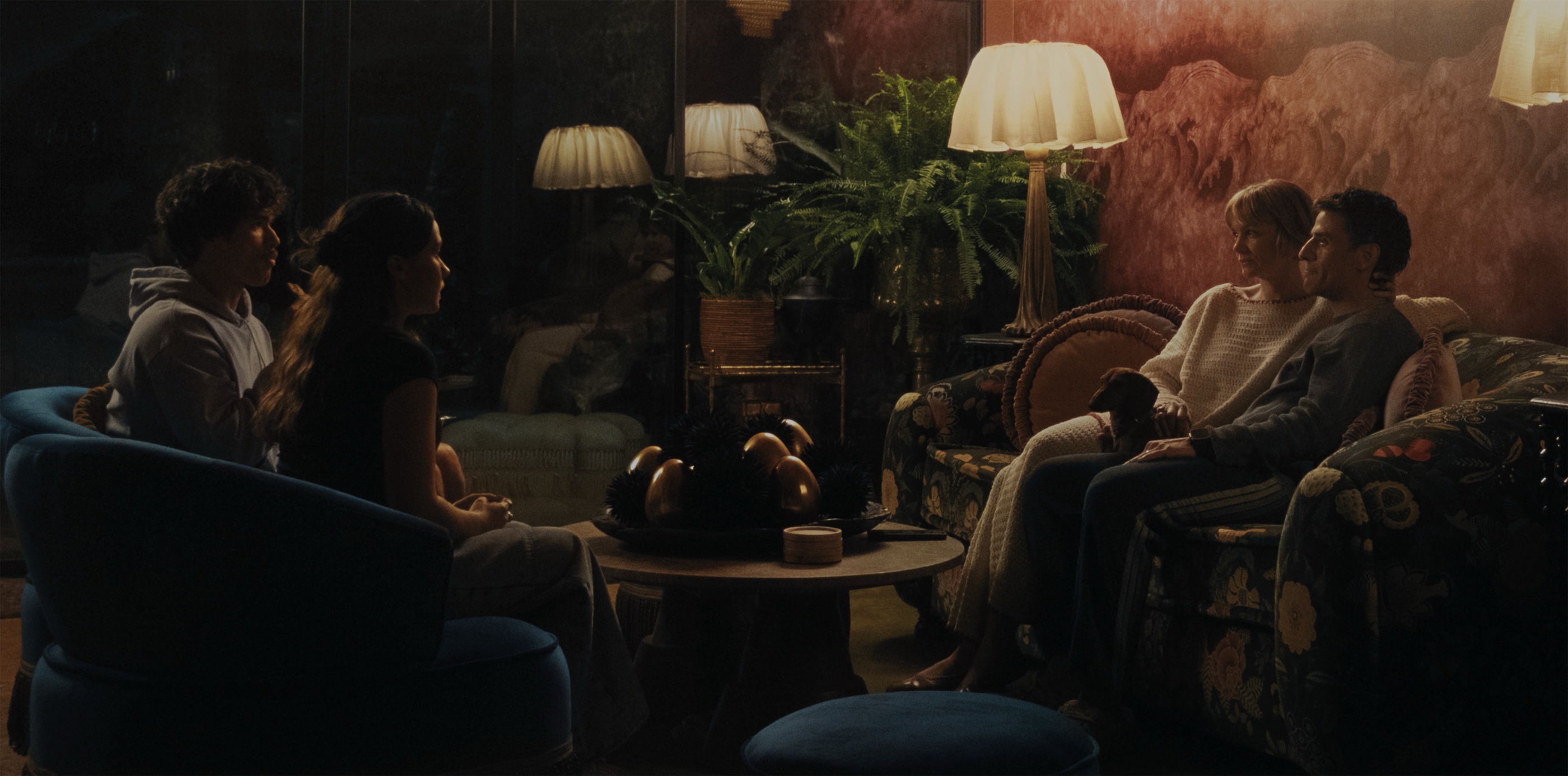
 Charles Melton as Austin Davis, Cailee Spaeny as Ashley Miller, Carey Mulligan as Lindsay Crane-Martin, Oscar Isaac as Josh Martin in episode 202 of "Beef". Courtesy of Netflix.
Cinematography of “Beef” – interview with James Laxton
Continuing the ongoing series of interviews with creative artists working on various aspects of movie and episodic productions, it is my pleasure to welcome James Laxton. In this interview, he talks about the changes in the industry in the last 15 years, the role of the cinematographer, and his thoughts on generative AI. Between all these and more, James takes a deep dive into his work on the second season of “Beef”.
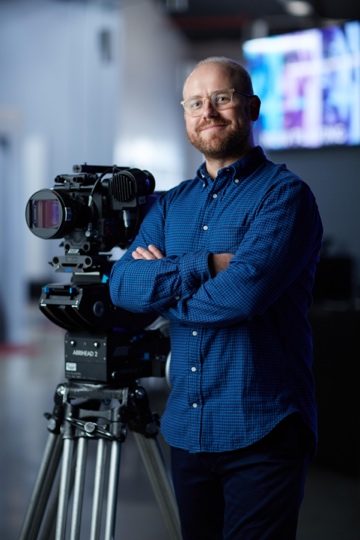 Kirill: Please tell us about yourself and the path that took you to where you are today.
James: The easy part of that question is that I do have a family member that’s in this industry, and I was introduced not just to movie making and story telling, but also to what goes on under the surface of how these things are made at a quite early age.
My mother is a costume designer of motion picture films, and my childhood was spent oftentimes going to visit her on school holidays. I would fly out to see her wherever she was working in the world, and wander on to a film set, sit there and watch everything – as much as my patience of that age could bear. By no means did I think I wanted to join the industry at that young age, but it was an exposure to a world that not a lot of people knew about.
Then cut to teenage James, around my high school years I started playing with video cameras, making skateboard videos with my teenage friends, and just messing about. It was the advent of videography coming to be more accessible to people, and for me that coupled with an understanding of the larger scope of motion pictures and how they’re made. A few things synergized to me finding interest in filmmaking during my late teens and early twenties.
I went to a film school, and that’s where I got even more narrowed into cinematography in that period of my early twenties. I assisted in live loading film for a long time. I was a second AC for a long time. And during those years I would find weekends or a few weeks at a time to be a cinematographer in my own right. One of those projects did well enough to go to some film festivals. It started to get some attention from other filmmakers of similar ilk, and I started to run with it. It was a longer process than maybe I’m describing, because there’s many years of it not working before it worked – and that’s par for the course for a lot of people in this industry. There’s no fast and easy access point for most people, even for someone who had a parent in the industry. It took ten years or so before it felt like it made sense by any means.
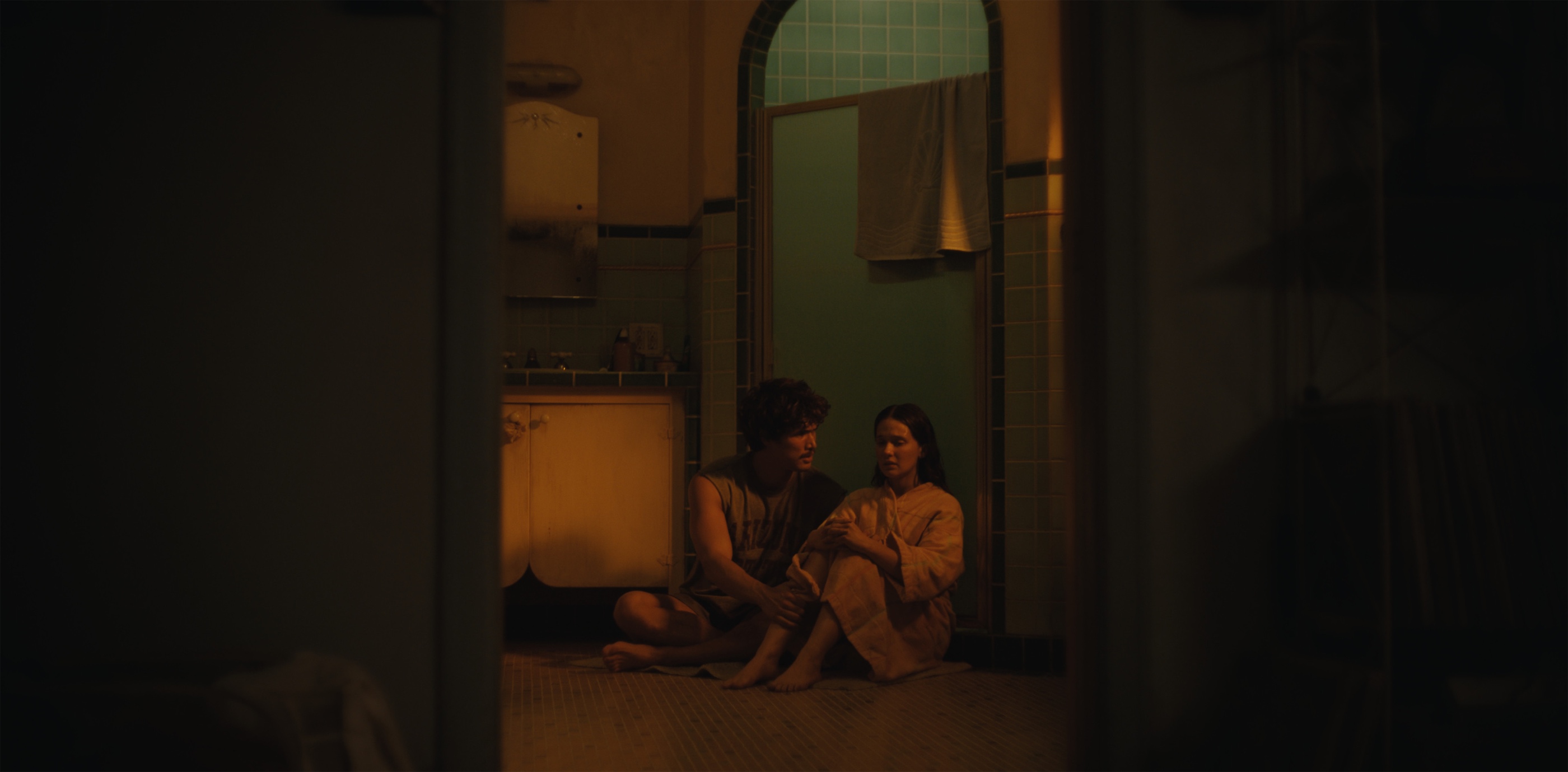
Charles Melton as Austin Davis, Cailee Spaeny as Ashley Miller in episode 201 of “Beef”. Courtesy of Netflix.
Kirill: What are the misconceptions or misunderstandings about cinematography that you see from people in your life?
James: The average moviegoer probably might not know anything about the job [laughs]. We all know actors, and we all know writers, and we all know directors – and the general viewing audience probably has an overall sense of what those jobs are. After that, when you look at the credits list, there’s probably a lot of confusion as to what these roles do.
It’s a great job. In many ways, people largely think it has to do with the photography of a project, as the name of the job implies – and that’s not untrue. Of course I’m dealing with the cameras and dealing with lighting on the technical side of things.
Another part of the job that people either don’t know or don’t think about has to do with a lot of creative choices behind those technical choices. That part of the job probably isn’t even taught in film school all that much, to be perfectly honest. There’s a lot of conceptualization and long creative discussions, particularly with the director, but also with the filmmaking group in general. That can get into deep artistic conceptual conversations that have very little to do with what lenses you’re using.
It’s a discipline. At a certain point you need to be able to speak about art history. You need to know some version of film history. You need to be able to understand different cultures and how they communicate. It’s a job that can span a wide spectrum of interests.
The beauty of cinematography is we’re all unique as individuals, and we all come at this from a different perspective. My experience is not someone else’s experience, and therefore I make different creative choices as to where to put the camera, what lighting I might suggest for a certain scene, what colors those lighting choices might emphasize. It’s a great job. I get a lot out of it, and I continue to enjoy it.
Kirill: What would you say are the bigger changes in your part of the world in the last 15-20 years?
James: Like so many industries at this point in 2026, we’re seeing the advent and the impact of AI, and how it can help create ideas and make story-driven choices. Rewind a few years back, and you have the conversations about visual effects around ‘2000s. Between then and now, there’s the advent of digital photography and digital cinematography. The cameras that are coming out are pretty impressive. Rewind further back, and it was different film stocks that were coming out and changing the ability to photograph under different lighting scenarios. These would probably round the top five of the bigger ones.
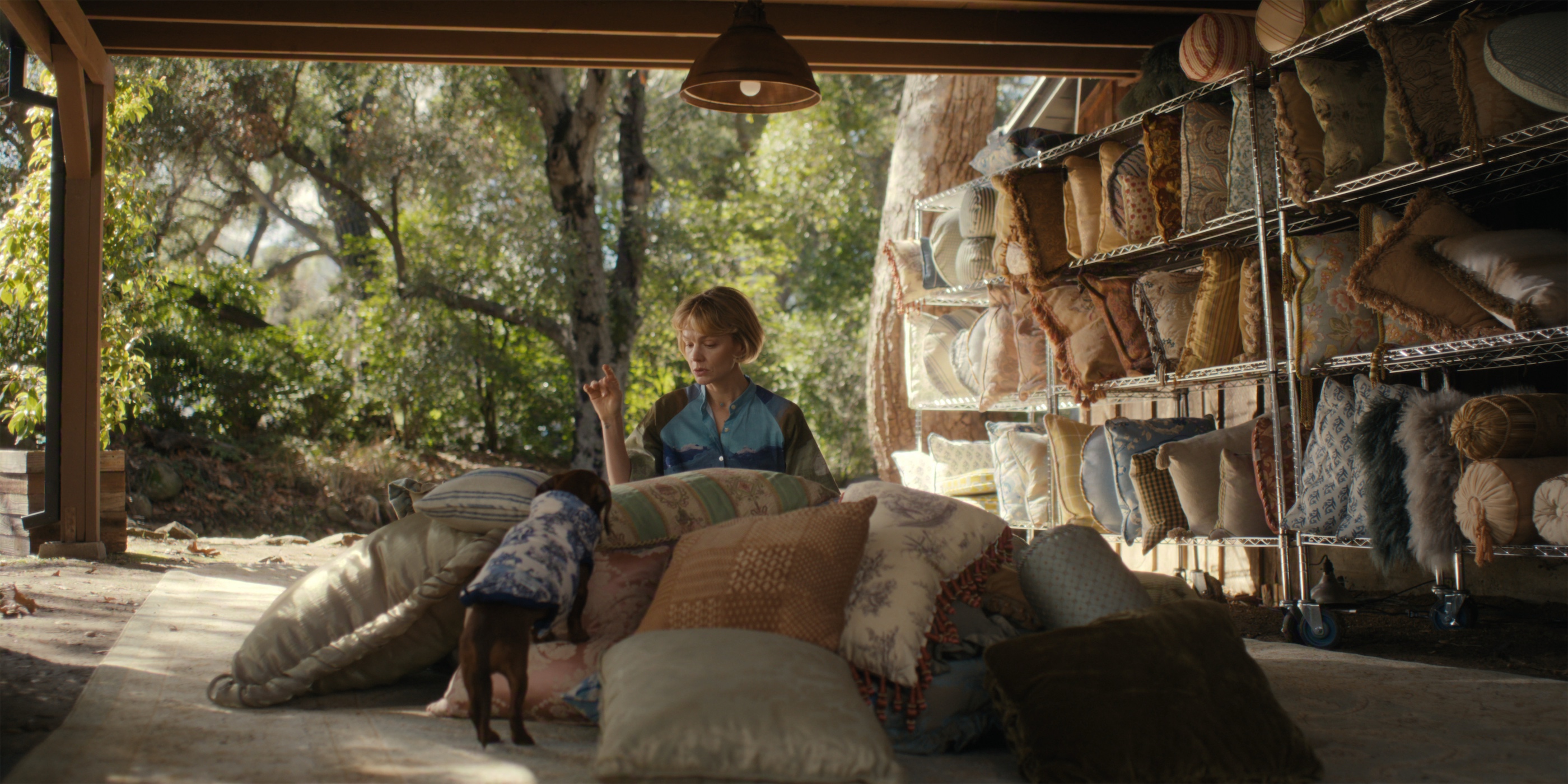
Carey Mulligan as Lindsay Crane-Martin in episode 201 of “Beef”. Courtesy of Netflix.
Kirill: Getting to the show, how did you find your way to it, or perhaps how did it find its way to you?
James: I was a big fan of Season 1 of the show. It was a great season of television, and like so many others, I enjoyed watching it as a general audience member. When I heard that Season 2 was coming up, I put my name in the hat. I didn’t have any insight or access to the people that were involved with making the first season. I didn’t know any of them. I wasn’t friends with them. It was me raising my hand and asking if anybody would be interested in having a conversation with me about it [laughs]. I was lucky that they were.
I had a general meeting with Lee Sung Jin, and from my perspective, within the first 10-15 minutes I felt that there was a real kinship between his perspective of what he was looking for and what I was hoping to give to the project as well. In those conversations I felt that what he was looking for in the cinematographer was something that I was looking for to give.
Kirill: What is the most interesting part of this season for you?
James: I love telling stories about interpersonal, intimate, loving relationships, and that’s what the show is in a very deep way. I love the writing of the show. From the very beginning, I felt it was speaking to so many parts of what the Western human existence is, including the relationships that millennials and Gen Z’s have.
And to speak selfishly about it in terms of the cinematography for a moment, it felt interesting to see that the writing wanted someone who was able to shift between genres within a certain scene. There are moments of laughter, there are moments of tension, there’s some awkwardness, there’s some love, and they all happen at the same moment in many ways. Within the same scene you can effortlessly travel from one tonality to another. It was a challenge that I was interested in accepting. It’s a palette and a canvas that I felt engaged in. It’s a kind of filmmaking that I felt inspired by as a cinematographer.
Kirill: How much time did you spend on the show during all the phases combined?
James: It was about eight months combined on pre-production and production. It’s a bit harder to define for post-production, only because there’s many weeks and months where I’m not involved in it at all, which is the edit process. I do come back at the end when I’m involved in the DI [Digital Intermediate], and that took a few months to get through. We weren’t on it every day, but maybe a couple days a week, chipping away slowly through episodes as they were being turned over by the editing.
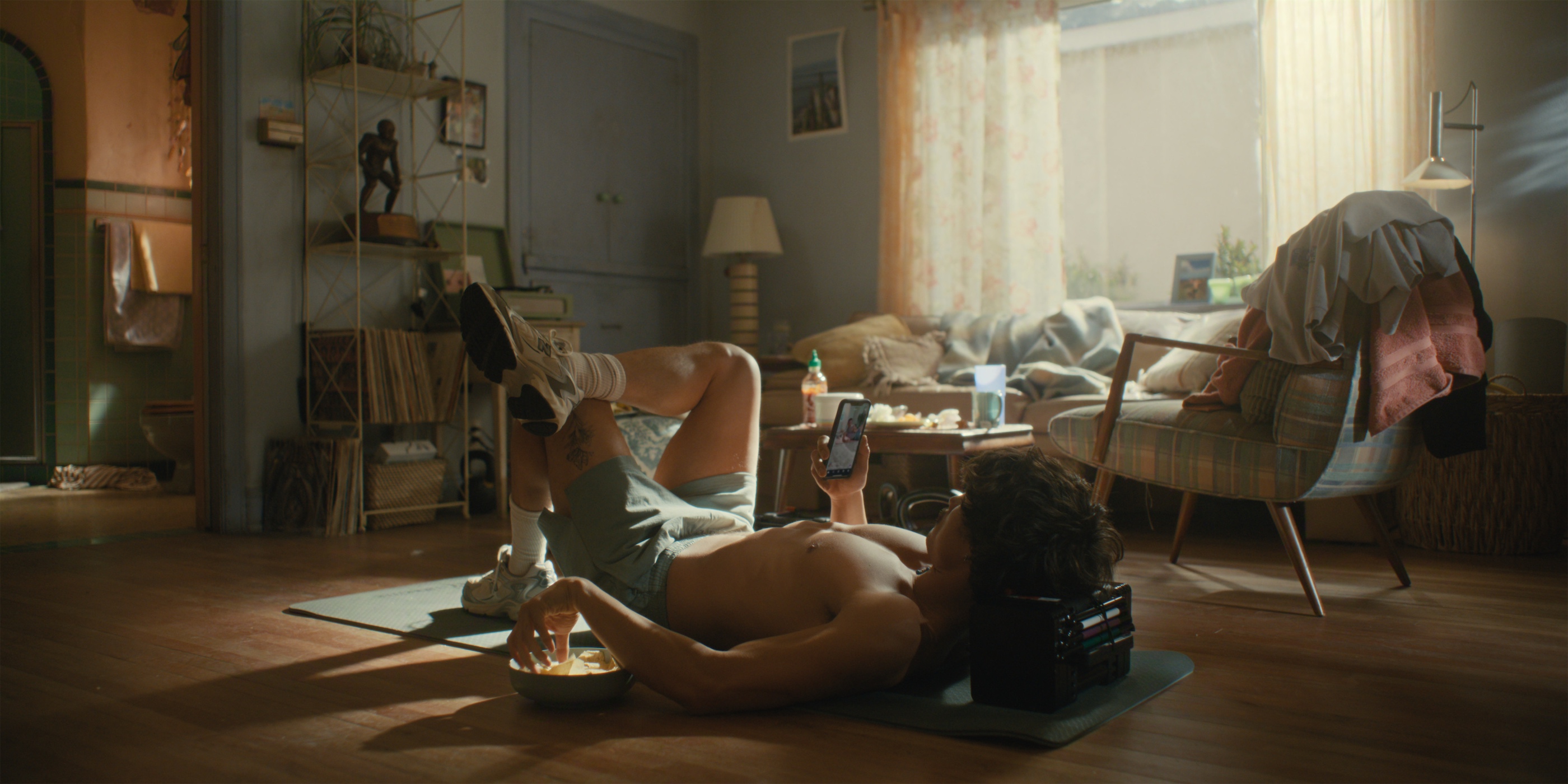
Charles Melton as Austin Davis in episode 202 of “Beef”. Courtesy of Netflix.
Kirill: One of my favorite parts of the show is the California sunlight. Was the weather cooperating?
James: The weather cooperated very well. It provided us with some classic Southern California sunlight that gave the club those tonalities that we were looking for in terms of our storytelling wants and interests. On the flip side, we had some great gray days as well with stormy clouds. I’m not sure what the assistant director who scheduled the show did to deserve it, but he worked those weather patterns in perfectly. They landed on scenes where we were photographing the Chairwoman Park scenes out of Malibu, and we were hoping for the lack of sun that was in there. I guess you could say we got very lucky in that way.
All the exteriors are naturally lit with sunlight. For continuity reasons, if we lost the sun in terms of our shooting or our scene, and needed to maintain that level of sunlight for a backlight or frontlight, we would bring in our lights to keep that going. If you’re referencing the interiors of the show, and particularly the ones in Joshua’s office and the larger rooms in the club, those are all lit artificially on a soundstage in Los Angeles.
Kirill: Your other major location is Seoul. Did you want to be more corporate there, with those steel blue grays?
James: That’s not untrue. By the time we get to that part of the storytelling in Seoul, we’re looking for a different palette than what we started with in California. Seoul as a city generally, of course, is going to look different than Southern California – and then we wanted to emphasize some different colors that weren’t present in the first few episodes. We were referencing those steel blues and the wintry palette colors for the Chairwoman Park and exteriors in Malibu, and that was aesthetically applied to what we were hoping for in Seoul as well.
Seoul is such a beautiful city, and its palette is so beautiful. It was great to film there. The only thing we did with that footage later in the DI was to emphasize certain things and not to reinvent much else, because it’s such a great place as it was for us.
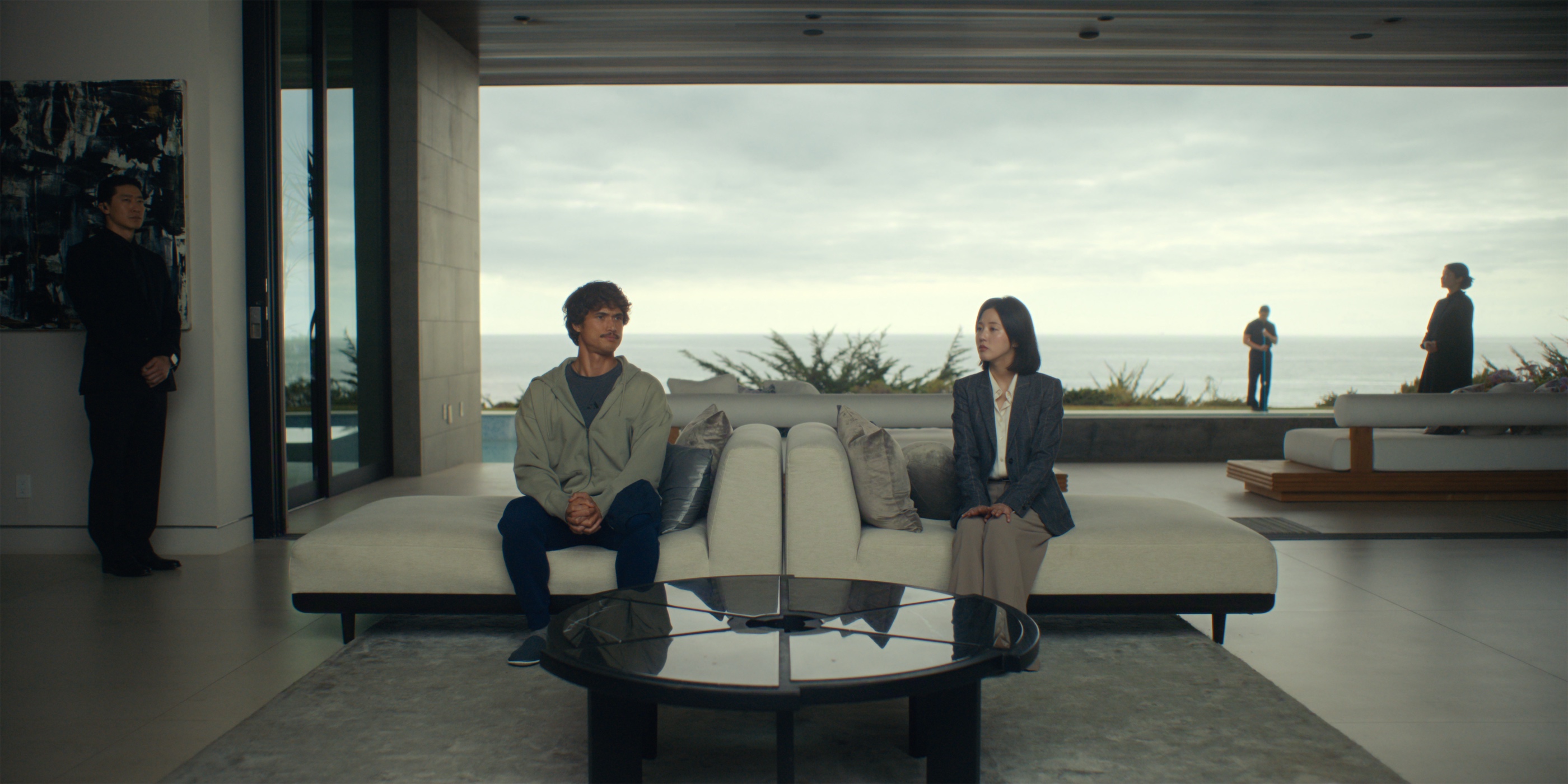
Charles Melton as Austin Davis, Seoyeon Jang as Eunice in episode 202 of “Beef”. Courtesy of Netflix.
Kirill: One of the more memorable sequences for me was the fight sequence in the last episode in the clinic. How much preparation went into that?
James: It’s one of my favorite scenes as well. For those that have seen the show, it’s a fight sequence that is shot as what we call a oner – which is one shot with no edits. As you might imagine, it’s a pretty complicated process to curate. There’s a lot at stake in terms of everyone being in the right place, the choreography of the cast, but then also the choreography of the camera and working with all those positions.
It started in Los Angeles, as he rehearsed and laid out a set on the floor of a soundstage where the cast got a general sense of the kind of space that we’re going to be traveling through would look like. They started working with the stunt team in LA for a few days prior to even flying out to start the process of filming in Seoul. Then when we got there, there was another one or two days of rehearsing the fight sequence at a facility outside of Seoul.
So you have multiple days of that process prior to the shoot day where you rehearse, go through the movements, get more precise, and fine tune some of these choices that were made more broadly otherwise.
It’s a sequence I’m really proud of. It’s quite special. It’s not a random chaotic camera moving through space. We took great pains to make sure that we were going to be in the right moment to see the right reaction from Carey, and spin around to see Charles, or spin around to see Cailee. It might feel random or natural – hopefully – but we were quite painstakingly making sure that what was working for the cast was also going to work for the camera.
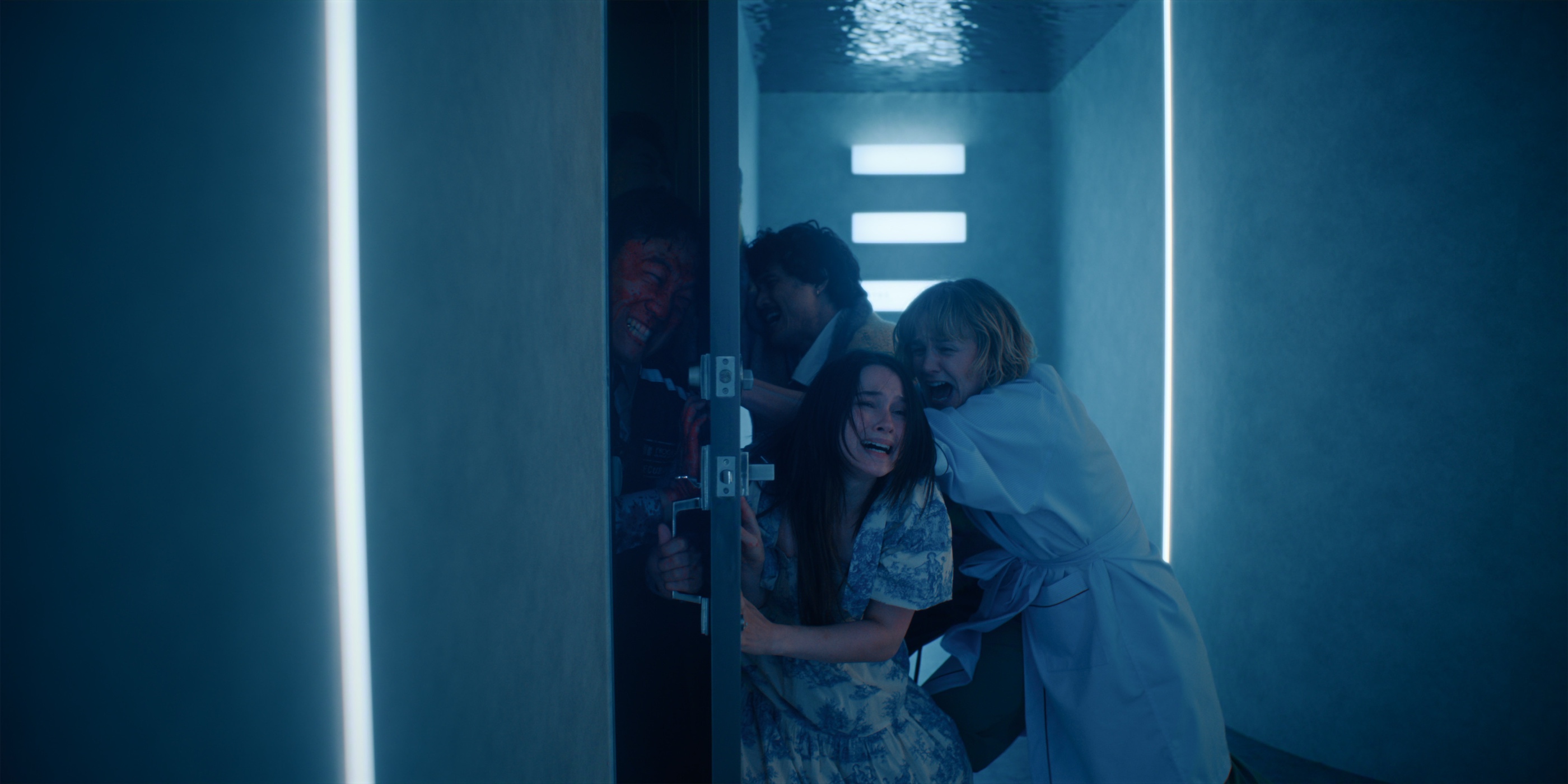
Charles Melton as Austin Davis, Cailee Spaeny as Ashley Miller, Carey Mulligan as Lindsay Crane-Martin in episode 208 of “Beef”. Courtesy of Netflix.
Kirill: What was the most challenging day, or the most challenging sequence, or the most challenging set to work on – or maybe you already answered with this fight sequence?
James: There’s lots of challenging days, as you might imagine with the television schedule. You’re doing a lot in a condensed amount of time. A lot of our days were hard in terms of how much we needed to make sure we were capturing on any given day. That’s true for our show, much like a lot of other television shows are made in that way as well, of course.
What stands out in particular are the sequences in the clinic in Korea where the couple are separated in different cells by these partitions that are creating silhouettes between them. They can’t see one another, but they’re trying to communicate.
You have one couple who is quite fractured in their relationship at the moment. They are struggling to connect with each other at the time. And each one of them can only see the other through the silhouettes of each other, and there is no bond between them happening. And then you have the other couple where there’s this profile angle of both Oscar and Carey, and those were purposely built to where we could take a window out and photograph them live speaking to one another within the same frame. That was because we wanted to make sure these characters did connect with each other again in a visual way, and not just in terms of the story being told.
We were working with the production design team to make sure these sets were going to be built in a certain way that some of these things were possible for us. We were working with the production design team to make sure the texture of the glass was going to make the silhouette effect happen precisely the way we wanted to do it. Then of course, we’re talking to the cast to make sure that their blocking was going to work with those silhouettes. A lot of different people communicated with each other to make sure each thing was going to work for each discipline, and that took a lot of conversations, planning and effort from everybody.
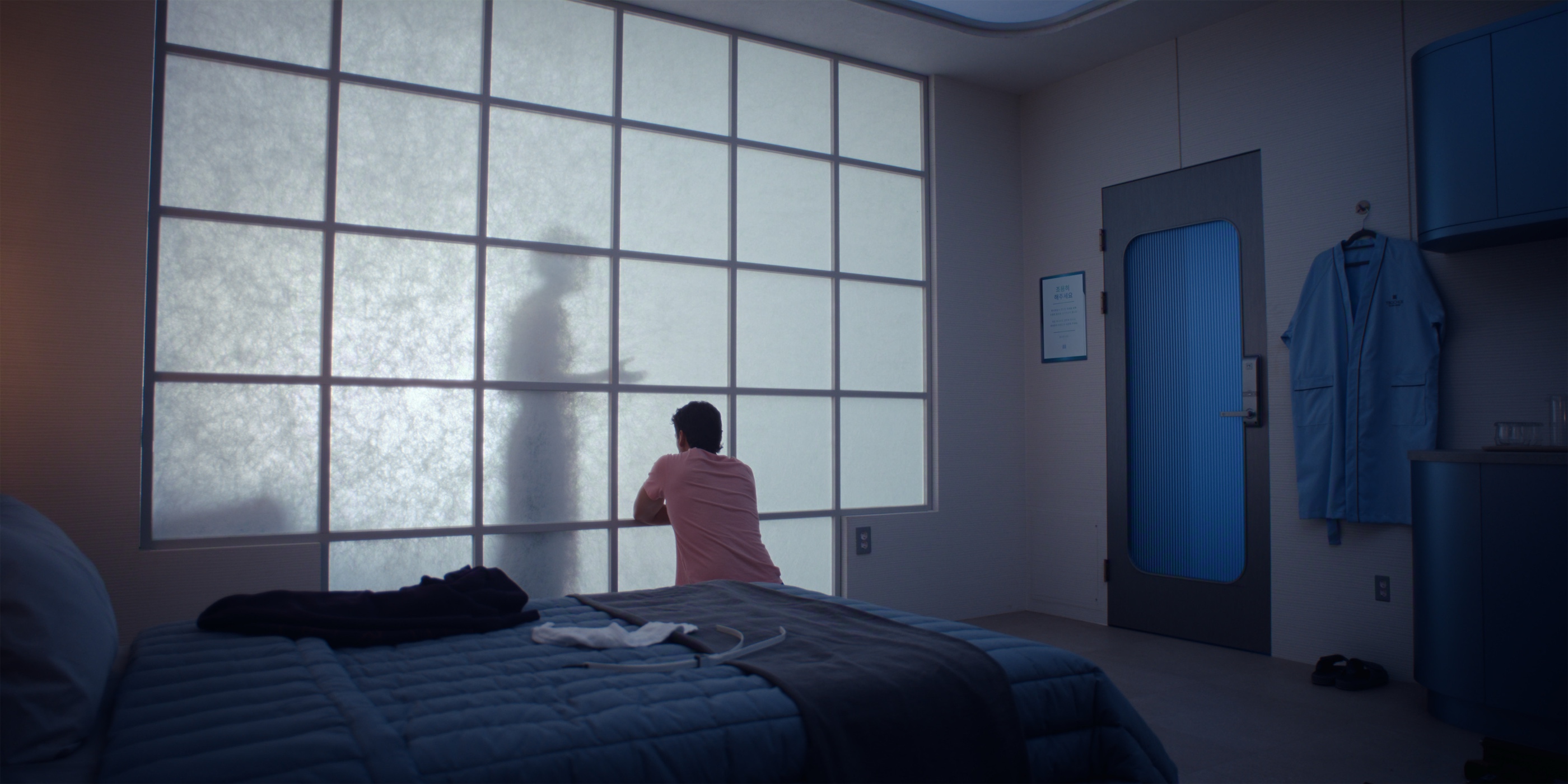
Oscar Isaac as Josh Martin in episode 208 of “Beef”. Courtesy of Netflix.
Kirill: You mentioned earlier that one of the big recent changes, not just in this industry but everywhere, is generative AI. Without asking you to predict how it’s going to look like in the future, what are your thoughts on it today?
James: I’m sure everyone struggles with answering this question because it’s a spectrum. You have people who are fully deep diving into AI image making in a way that, perhaps, reflects their feeling that is the way images will be made forever and ever. And on the other side of the spectrum there are people who are refusing to even touch it. And then there’s everywhere in between.
Today, probably much like any advent of new technology, there are people who embrace it and there are people who are not embracing it. And I think that’s healthy. It’s hard to define what it is today. I hope it’s a time where it gives the storytellers more image-making options than they’d otherwise have. I’m not particularly afraid of it. We should be, of course, turning very lightly and we should be entering this world of AI image-making sure-footedly and not haphazardly, embracing something that might not always be giving us the best results.
I’ve seen a lot of impressive things. I don’t think people should be surprised that someone in my position would say that I’ve yet to be convinced by it. Some of the images I’ve seen from generative AI are quite beautiful, but they’re not something that I would necessarily connect to emotionally in terms of performances and texture. My world exists largely in faces. My job is largely to light spaces, light actors, and capture performances – and the images that I’ve seen so far have yet to give me the sense that it’s something that can deliver emotionally integral storytelling devices in the same way we do today.
Our version of storytelling is, of course, staged. But today, whether it’s film or digital, it’s with people and with light and with sets – whether they’re built on a soundstage or they exist in real life. Those things still evoke an emotion that I feel like I’ve yet to see with generative AI.
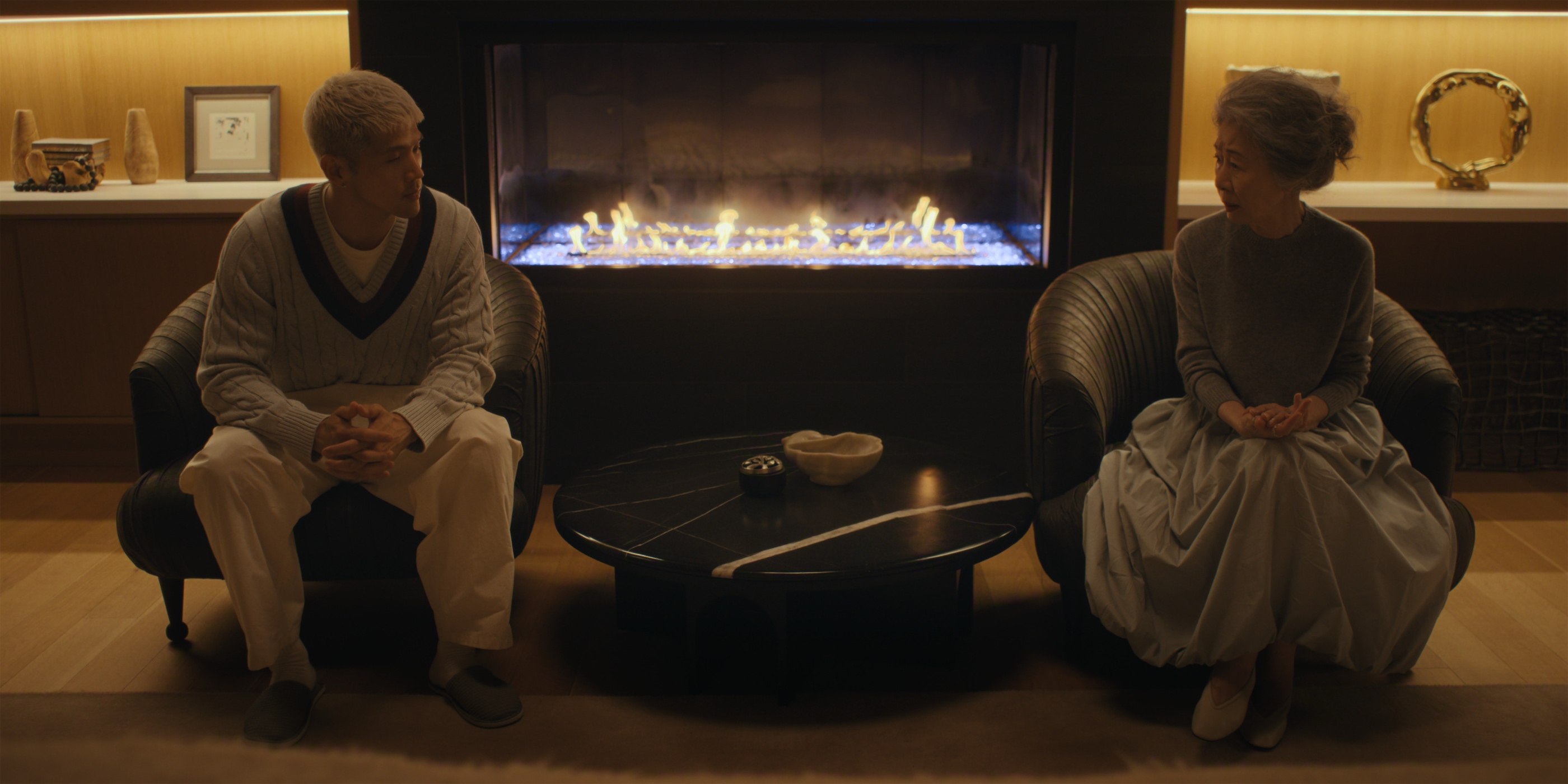
Matthew Kim as Woosh, Youn Yuh-jung as Chairwoman Park in episode 206 of “Beef”. Courtesy of Netflix.
Kirill: You’ve been in the industry for a while now. What do you feel is the secret or maybe the key ingredients to longevity in this field?
James: The answer to your question is probably already in the question. By definition, it’s perseverance in so many ways.
If you love something, and you enjoy your time, and you feel engaged with filmmaking – or any discipline for that matter – you’re going to keep doing it over and over again until someone tells you that it’s not possible anymore [laughs]. If you care about something that deeply, which I think you need to do if you’re going to enter this industry, it needs to be something that you’re fully engaged with.
If you have the perseverance and you’re going to continue no matter what, at some point it’ll be all right. That can be as short as a few years, or as long as decades if you’re willing to go about doing it. People sometimes break into their careers deep into their middle age, and that’s OK. What’s possible for some people is different for others. If you want it enough and if you keep going, it’ll work out – depends on how you define working out.
Kirill: Two last questions on your favorite things. In a hypothetical scenario where you are on a deserted island, and you can take three movies with you, what would they be?
James: Probably I need to pick some films that I can watch over and over again and not get bored of them, to still have a good time doing it and hopefully keep my spirits up. I don’t want to become a depressive maniac alone on a desert island, so it should be something uplifting.
So the most obvious answers would be some simple ones from my childhood. “Indiana Jones and the Last Crusade”. The first “Jurassic Park”. “E.T. the Extra-Terrestrial” was a great one for me. “Close Encounters of the Third Kind” is another one, and now it’s more than three [laughs] but I can keep on going. Those nostalgic classics would probably be how I would make that choice.
Kirill: What was your favorite dish that you had while you were shooting in Seoul?
James: Of course, you’re going to reference Korean barbecue, which is delicious. For me though, my favorite dish was Dak Juk – rice porridge with chicken, nothing fancy about it. It was so warming and comforting, and it took me back to that childhood comfort food in a way.
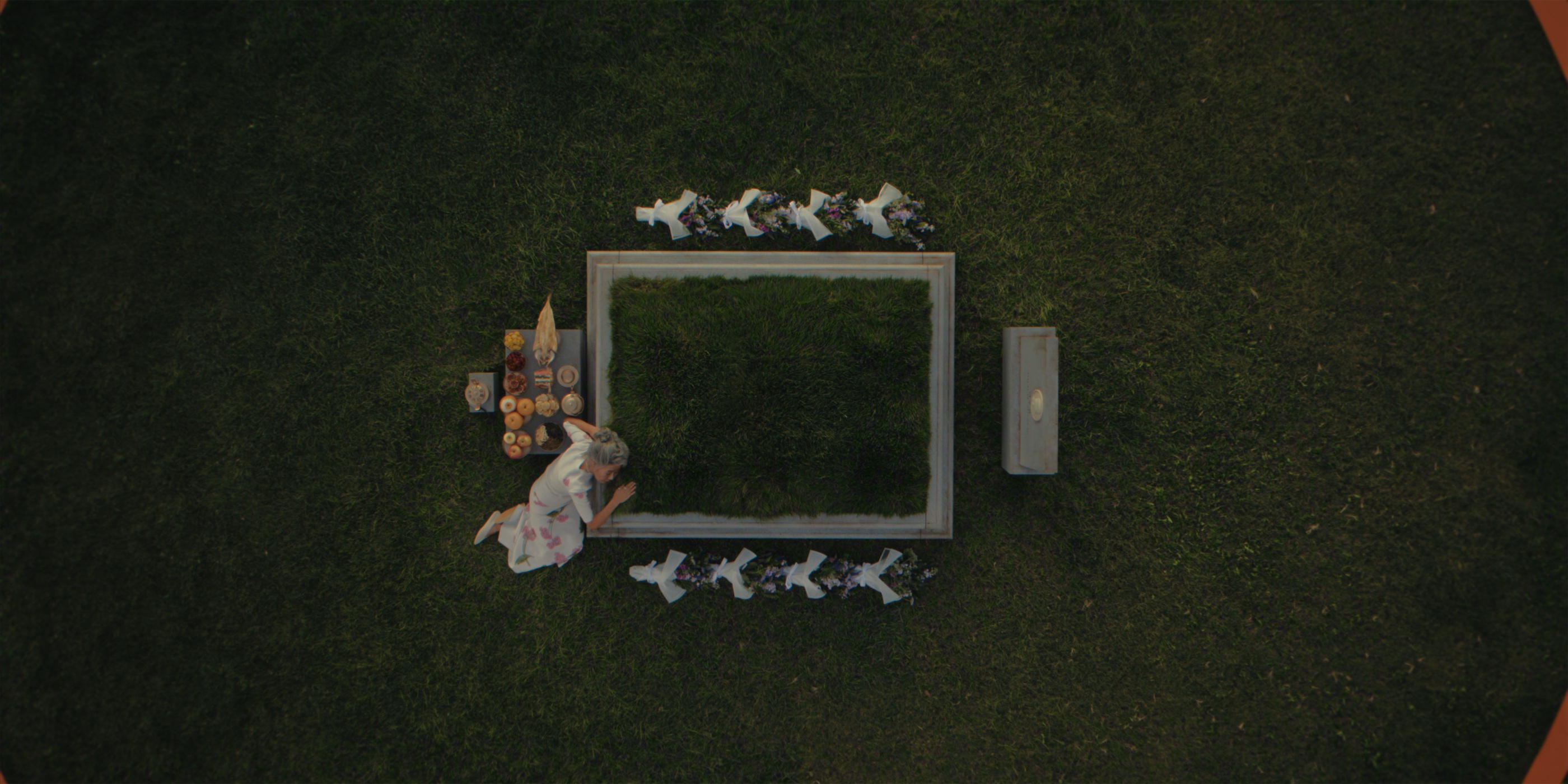
Youn Yuh-jung as Chairwoman Park in episode 208 of “Beef”. Courtesy of Netflix.
And here I want to thank James Laxton for taking the time to talk with me about the art and craft of cinematography. I also want to thank Kristy Chan for making this interview happen. The first two seasons of “Beef” are streaming now on Netflix. Finally, if you want to know more about how films and TV shows are made, click here for additional in-depth interviews in this series.
