
It’s been a busy year for my desktop-focused projects, and things are look bright going into 2023. Here’s the rough outline of what I’m planning to work on.
The first big chunk of work that will probably take at least another two or three months to complete is going to be bringing the full ribbon component to Aurora. This has started a few weeks ago, and I’m done with the first pass of prototyping the ribbon APIs. Those are not final yet, and they will get tweaked as I get to the implementation details of the many moving pieces underlying this component.
The second big chunk is going to be around defining and using colors. Code-named Chroma, this effort aims to bring more clarity and control over working with colors in core and custom skins, inspired by the ongoing evolution of design systems such as Material and others. Falling under the overall umbrella of the Ephemeral design system, the plan is to introduce it to both Aurora and Radiance, and replace the existing color scheme and their mappings.
And last but most definitely not the least, are the plans to explore the third twin to Radiance and Aurora, and bring the full breadth of Ephemeral, including its theming layer and all the components, to the world of Flutter. Much as Aurora, this is going to be a multi-year project.
Happy New Year and stay tuned for more details!
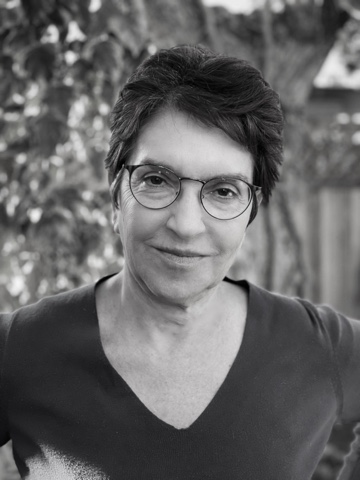
Continuing the ongoing series of interviews with creative artists working on various aspects of movie and TV productions, it is my pleasure to welcome Victoria Paul. In this interview, she talks about changes in the way stories are made in movies and television over the last few decades, the ever-raising quality and expectations bar from the viewers, the impact of Covid on the industry, and the advice she would give to people just starting out in it. In between all these and more, Victoria dives deep into her work on “A League of Their Own”.
 Kirill: Please tell us about yourself and the path that took you to where you are today.
Victoria: I started designing for theater, working as an assistant for some terrific designers on Broadway and designing myself off Broadway. I lived in New York, and I thought that was my path. It’s a rich collaborative experience, and in a way it’s more temporal than working on a movie because it’s immediate, it happens every night. It’s a genuine family that gets formed there.
As an assistant designer, the equivalent to an art director in the film world, I was dealing with a lot of the technical and logistical parts, mounting the show and making that train run on time. At some point I was contacted by a friend who told me that a film was coming into New York which needed a draft person / assistant art director. That was “The World According to Garp”, and the production designer was Henry Bumstead, who’s a legend in American film design. Doing that film was a transfomative experience. It was a big learning curve, not technically because those skills translate, but about what the world of film was.
Kirill: How has that experience changed for you over time. If you go back to early ’80s and then jump straight into 2022, would it be a big shock, or is it based on the same building blocks and just the technology is different?
Victoria: The way we make movies and television has changed in a couple of fundamental ways. I don’t think you can say it’s just the technology that’s different, because the technology is fundamental to what we do. We’re artists, but we’re also craftsmen, so our toolkit is how we function.
The process now is much faster. We used to have many weeks of prep, and that’s all been shortened. And it’s been shortened because we can turn visuals out quicker, because of how we draw now, because of how we pre-vis. We can get decisions quicker because we can turn out pre-vis and 3D models, and show directors what they’re going to get sooner. The technology helped speed up the train, but what was lost is maybe some of the time we would spend ruminating and talking and thinking. Back then it was a harder to visualize as quickly. I think what the technology has done is let us communicate better.
I can take a ground plan or a 3D model of something and show it to a cinematographer, and we can have a chat about where windows are, or where doors are, or where lighting sources are, and get that sorted out quickly.

Concept art and set photo of Beyer Field outfield on “A League of Their Own”, courtesy of Victoria Paul.
Kirill: When I talk with cinematographers, there’s the big topic of the industry transitioning from film to digital, and a lot of people miss the physicality of film as medium. Is there such a big thing that in your part of this industry that would be perhaps equivalent of that?
Victoria: Maybe younger set designers and assistant art directors may not miss it, but when I started, all drawing was hand drawing – and it was beautiful. The drawings themselves were wonderful objects. And the great thing about the drawings was that you could always tell who did them. They had the mark of the maker.
Although the information is the same and the layout is the same, you could tell by the style of drawing, the style of lettering, the size of lettering, the kind of font they use. You could immediately tell who drew each piece.
And now we’re in a digital art department where one set designer can start on something, build a ground plan and some elevations for me, and then I can give it to someone else to do some modifications or a quick director’s plan, and they exchange it, and when we look at it, it’s not clear whose iteration was the last one. In some way, it has lost personality. But it’s a small quibble, and certainly not as quite as big a discussion as the look of film versus the look of digital.
Kirill: What used to be special effects is now done digitally with VFX, you have new technologies available in different departments, and the world of visual storytelling itself is shifting with the advent of streaming platforms. Do you find that the boundaries of what it is that you’re responsible for are shifting?
Victoria: I don’t see a lot of difference between film and episodic in terms of how we approach the work these days. The big difference is in how many weeks of prep you have, and how much money you have – which translates into what you can build, and also into how big your art department can be. It’s not so much about film and TV, but rather about where’s your overall budget.
In terms of what the art department and myself as a production designer are responsible for, I don’t think that has changed very much. What has happened is that we have more tools at our disposal. There has always been a big conversation with special effects. If something is getting blown up, or a vehicle is going to crash into my building, I have to know what special effects needs from us to make it work. We still need to design and build it. That has not changed. I just wrapped a show called “Twisted Metal” and it’s all about vehicular mayhem. We were in constant discussions with the effects people on how to achieve things. But no matter where the effects take over, we’re still designing it.
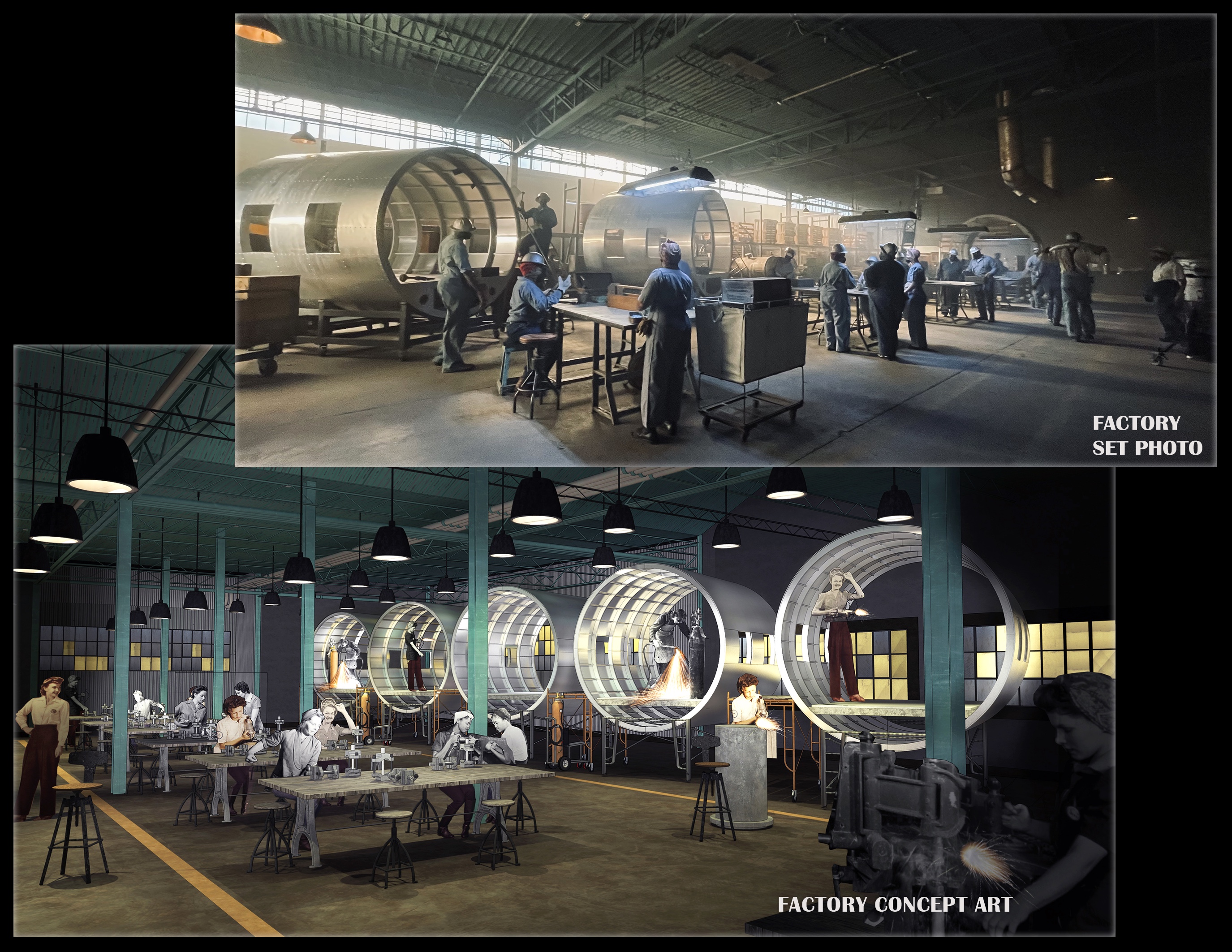
Concept art and set photo of the factory floor on “A League of Their Own”, courtesy of Victoria Paul.
Continue reading »
It gives me great pleasure to announce the next major release of Radiance. Let’s get to what’s been fixed, and what’s been added. First, I’m going to use emojis to mark different parts of it like this:
💔 marks an incompatible API / binary change
🎁 marks new features
🔧 marks bug fixes and general improvements
Component
- 🎁 Add tri-state checkbox component
- 🎁 Add switch component
- 🎁 Migrate previously internal circular progress component to public API
- 🎁💔 Revisit layout configuration of command button panels. Support fixed-column and adaptive layout spec for row fill and column fill panels.
- 🎁 Support configurable content padding in command buttons and command button panels
- 🎁 Add more presentation model options for command button panels
- 🎁 Add presentation model for rich tooltips
- 🔧 Fix crash on displaying rich tooltips under Java 17+
- 🔧 Fix text wrap logic in command buttons under big presentation state
- 🔧 Fix vertical positioning of command button content under tile presentation state
- 🔧 Fix issues with command popup menus not closing in certain scenarios
Theming
- 🎁💔 Revisit configuration of popup content. Full documentation here.
- 🎁💔 Unify fill and highlight painters.
- 🎁💔 Revisit how specular fill painter is configured.
- 🔧 Fix crash in specular fill painter
- 🔧 Fix crash in table UI delegate
- 🔧 Fix crash in opening the window title pane menu
- 🔧 Fix crash in update font of a tree component
- 🔧 Fix incorrect offset of vertical scrollbars during scrolling
Kotlin extensions
- 🎁 Add indexed access operator overload for
ResourceBundle.getString
I’ve wanted to get this release out a bit earlier than anticipated to cover the functionality gaps between Radiance and Aurora, and to address some crasher bugs that snuck into the last major rewrite of Radiance’s rendering pipeline. With this release out of the door, the roadmap for 2023 remains as planned:
- Add the ribbon / command bar component to Aurora
- Revisit the way colors are defined and used in both Radiance and Aurora
There’s still a long road ahead to continue exploring the ever-fascinating depths of what it takes to write elegant and high-performing desktop applications in Swing. If you’re in the business of writing just such apps, I’d love for you to take this Radiance release for a spin. Click here to get the instructions on how to add Radiance to your builds. And don’t forget that all of the modules require Java 9 to build and run.
It gives me great pleasure to announce the fourth release of Aurora. Let’s get to what’s been fixed, and what’s been added. First, I’m going to use emojis to mark different parts of it like this:
💔 marks an incompatible API / binary change
🎁 marks new features
🔧 marks bug fixes and general improvements
Release notes
There’s still a long road ahead to expand Aurora’s capabilities in 2023 and beyond, with the ribbon / command bar planned as the next big addition. If you’re in the business of writing desktop Compose apps, I’d love for you to take Aurora for a spin. Stay frosty for more features coming in 2023!
