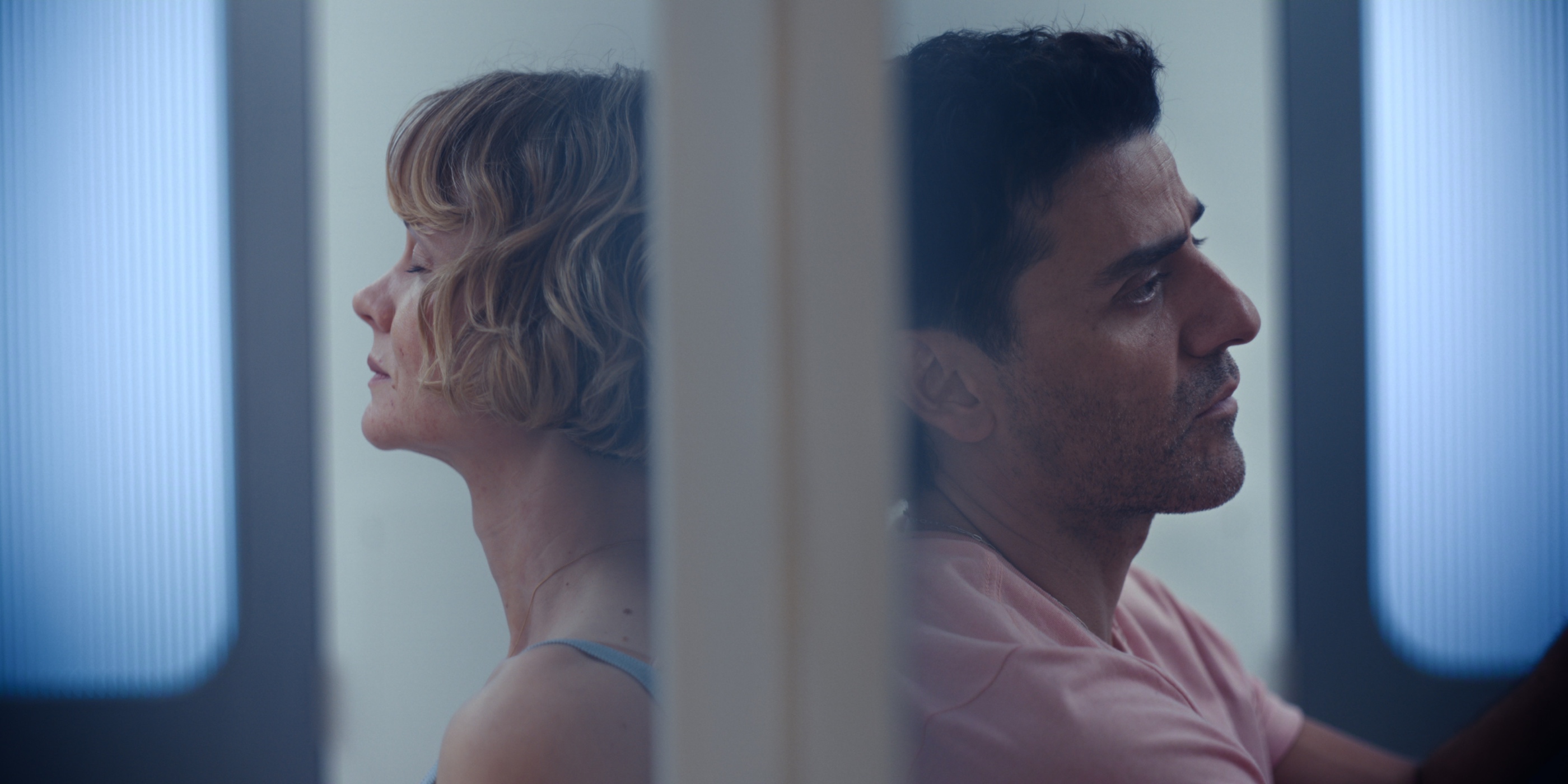
 (L to R) Carey Mulligan as Lindsay Crane-Martin, Oscar Isaac as Josh Martin in episode 208 of Beef. Courtesy of Netflix
Casting of “Beef” – interview with Jeanie Bacharach
Continuing the ongoing series of interviews with creative artists working on various aspects of movie and episodic productions, it is my pleasure to welcome Jeanie Bacharach. Jeanie is a triple Emmy Award winner for her work on “The Marvelous Mrs. Maisel” and “The Bear”, and among her many other credits are “Ally McBeal”, “The Dropout”, “Black Mirror”, “Lucky”, “Brothers & Sisters” and “Nashville”. In this interview, Julie takes a deep dive into her Emmy-nominated work on the second season of “Beef”.
Kirill: Please tell us about yourself and the path that took you to where you are today.
Jeanie: I started out as an actress, very briefly, in New York. Then I was a reader for auditions, and it opened me up to the other side of the industry and casting. I found that quite fascinating, and still creative to this day. That was my start in casting in New York where I worked primarily in theater. Later on my husband and I moved out here to Los Angeles, and made my way mostly in television. That’s been the main focus of my casting career.
Kirill: What are the bigger misunderstandings or misconceptions about the role of the casting director, and what goes into it?
Jeanie: People don’t quite understand what we’re doing behind the scenes. So much of it is about personal taste, and what you respond to in an actor and in their work. The wonderful thing about it is it’s subjective. What I might respond to in an actor, someone else might not, and vice versa. I try to tell young actors to always keep that in mind. Whatever feedback you’re getting is coming from one person’s experience or perception.
Taste is a key point. People don’t realize that there’s a collaborative aspect of it. We are there at the very beginning, often before maybe even a director is on. We’re trying to take the writer’s vision and bring it to life. But part of our job is to try to expand whatever that idea may be. When they were writing it, they may have thought a specific way. But what’s so fun and maybe not as understood about what we do is that we then try to take that and stretch it as much as we can while still serving the piece and the character. You can’t become arbitrary and have it at the detriment of the story you’re telling.
Then, you’re working behind the scenes to set actors up to succeed as best possible. Sometimes that means finding a piece of film on them that other people may not have seen that can help a director or writer to see their work in a different light.
It’s so collaborative, and you’re there from the beginning. One way to see it is that you give birth to the project, and then it’s up to the rest of the creative team to go from there.
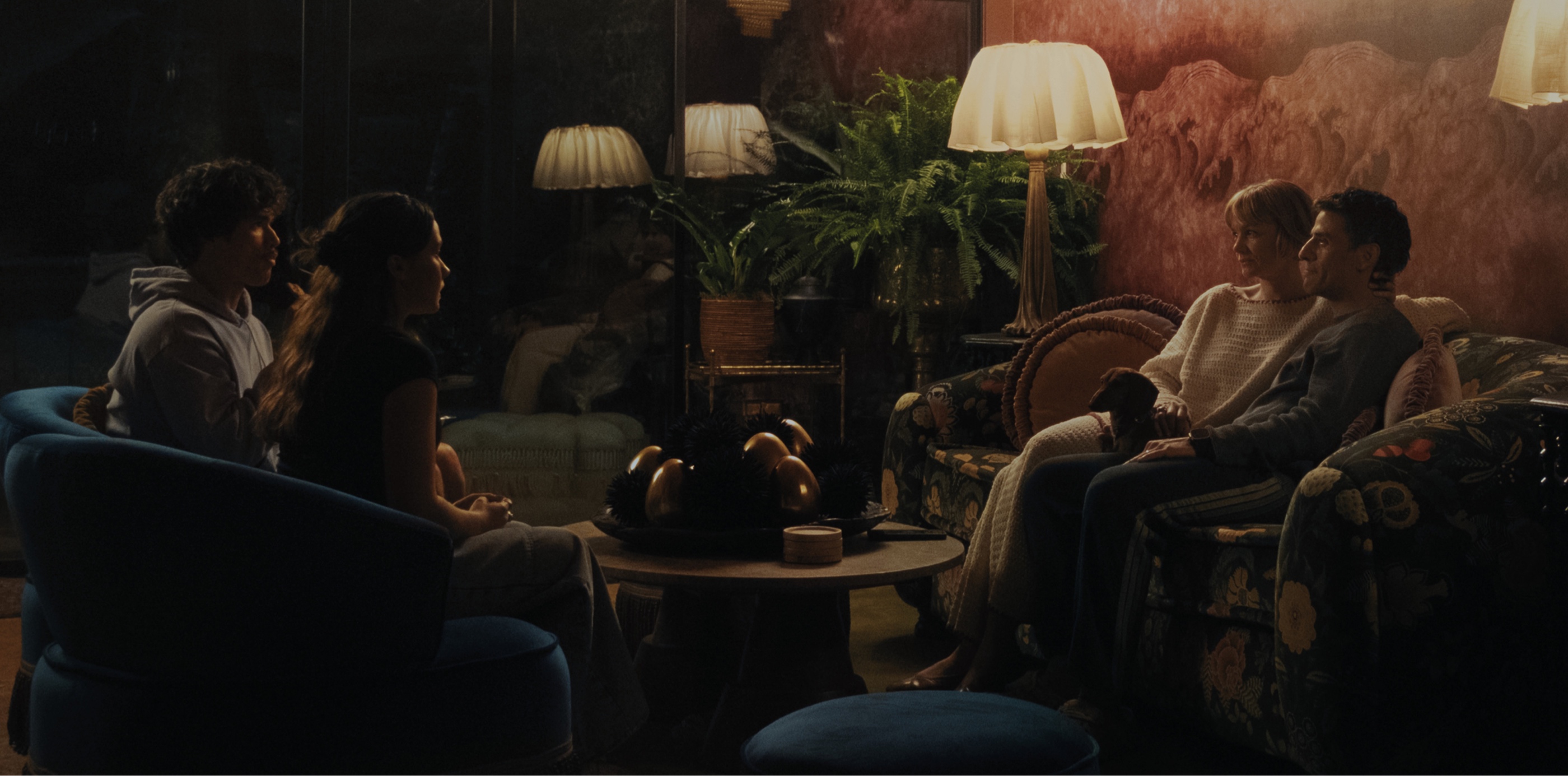
(L to R) Charles Melton as Austin Davis, Cailee Spaeny as Ashley Miller, Carey Mulligan as Lindsay Crane-Martin, Oscar Isaac as Josh Martin in episode 202 of Beef. Courtesy of Netflix.
Kirill: Did it feel that the recognition of your craft at the Oscars was overdue?
Jeanie: Certainly, as every other part of the creative process has been recognized up to this point. It was way overdue and very exciting. I don’t quite understand what took so long, but I’m so glad we’re there.
Kirill: What are the bigger differences between the feature film world and the episodic productions, and why do you mostly stay in the episodic world?
Jeanie: When I first started in television, there wasn’t as much streaming and cable. It was pretty much all network TV. As streaming and cable came into being. and there started to be the crossover of feature people – directors and writers and actors – into television and back and forth, the differences starting getting smaller.
The biggest difference is we have to work much faster in television than in feature films, because the schedule is so different. Once you get into casting a series, you have anywhere from eight to ten days to cast an episode, whereas in feature films you generally have months of preparation.
Another thing about casting in television is that since you don’t have that much time, you need to know that actors are going to be able to deliver in the moment. And yet another one is that no matter if you’re casting for a long term series or for a limited one, it can be eight or ten or twelve hours of screen time. You need to find actors that people are going to invest in and want to watch over a period of time. On a feature film you’re holding a much bigger screen, but for a relatively shorter period of time.
You’re looking at a longer period of time when you are casting for a series. You have a deeper development of the character in a series. A feature film may cover a large period of time or a shorter period of time, but in television, more often than not, where your character starts and where it ends can be very different. You need to know that the actor can carry all of those beats and story points over multiple episodes and/or seasons.
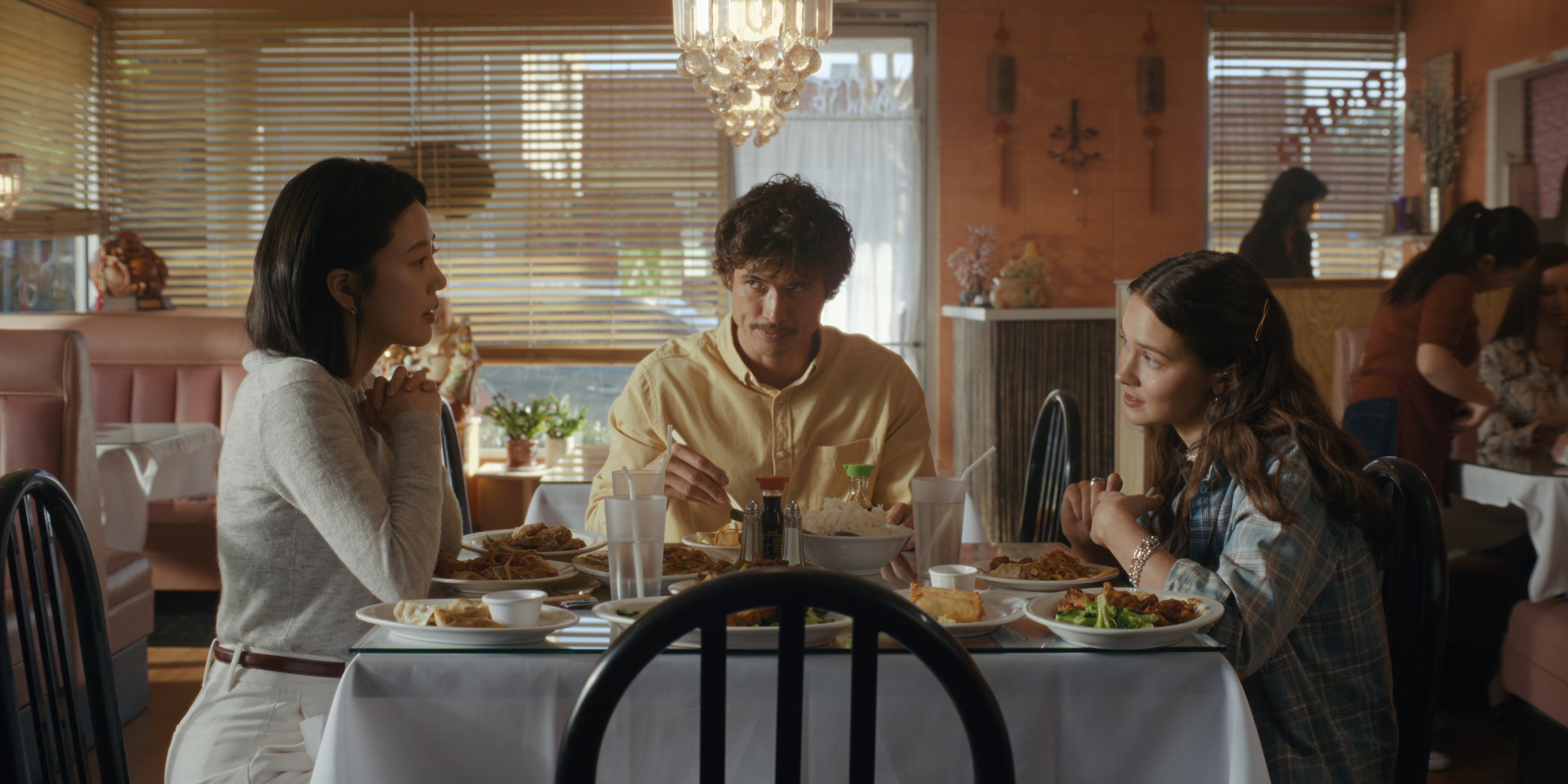
(L to R) Seoyeon Jang as Eunice, Charles Melton as Austin Davis, Cailee Spaeny as Ashley Miller in episode 203 of Beef. Courtesy of Netflix.
Kirill: Getting to “Beef”, how did it start for you?
Jeanie: Sonny [Lee Sun Jin, the creator of the show] reached out to me and wanted to know if I would be interested in talking about Season Two – to which I said “Yes, of course, I’m there. Just tell me where to show up” [laughs]. We had an initial meeting and hit it off from the beginning. We started talking about his ideas for the story for Season Two in that meeting.
Kirill: What drew you in the most on this show?
Jeanie: The tone on the show is so interesting. You have these heightened situations while still remaining grounded, real, and relatable. The challenge of walking that line for me is so interesting. He had also talked about the emotional depth that the characters were going to need to do this Season Two, and that was interesting to me as well.
Kirill: How much time did you spend on the show?
Jeanie: Several months between before they started filming through to when they finished filming.
Kirill: Who were your primary collaborators on it?
Jeanie: Sonny for sure was who I worked with most closely. I also worked with my partners over at A24 and Netflix, but in terms of exploration of the characters and the day-to-day collaboration, it was with Sonny.
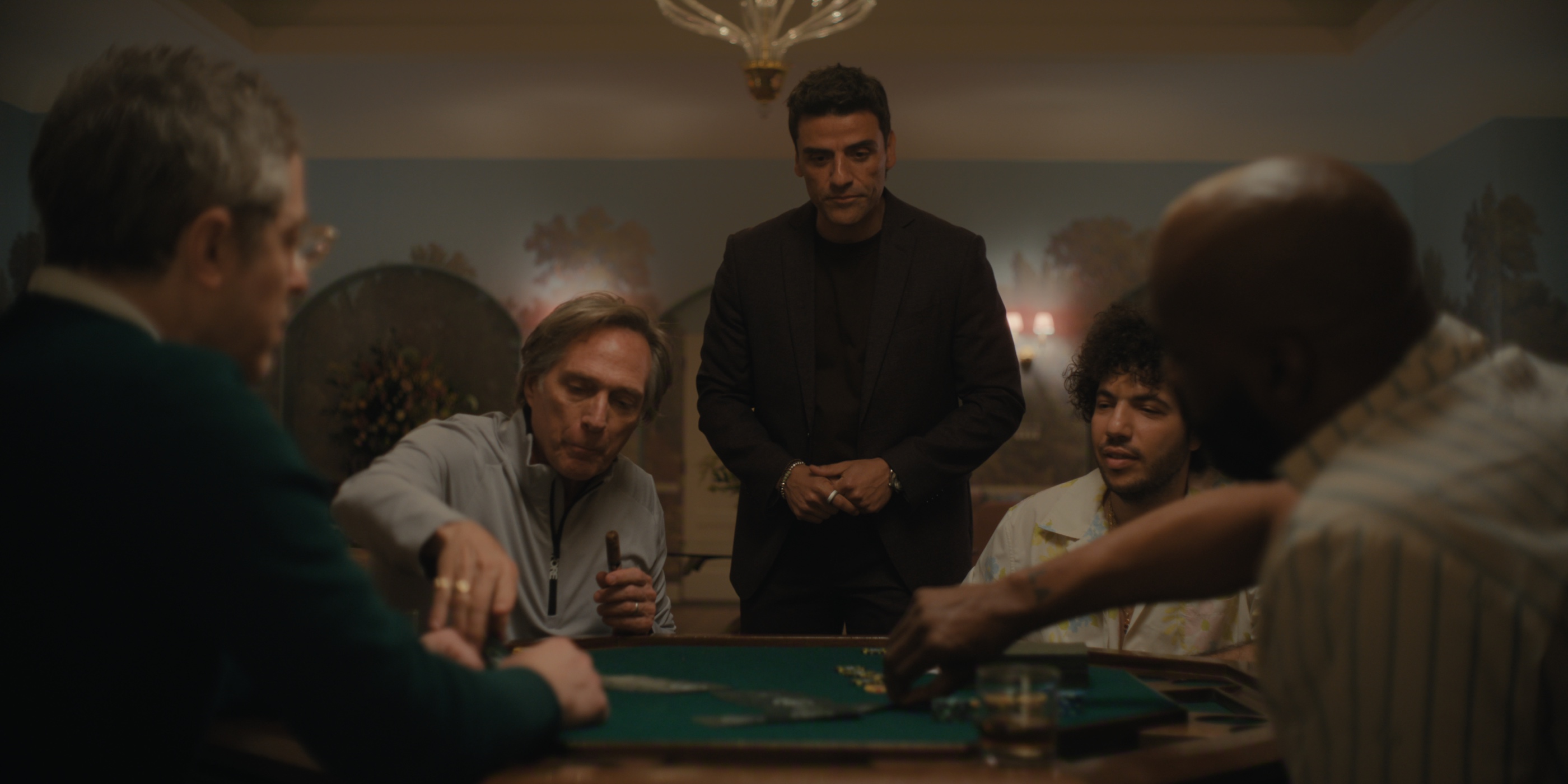
(L to R) William Fichtner as Troy, Oscar Isaac as Josh Martin, Benny Blanco as self, Baron Davis as self in episode 202 of Beef. Courtesy of Netflix.
Kirill: How do you usually start this? Do you start with the primary characters and then go for the supporting cast?
Jeanie: In this case, yes. We started with our regulars, and then built out from there with the larger roles.
When I started on it, we didn’t have all the scripts. A lot of it was conversations with Sonny as he was thinking about these characters and where they might go. That’s where the collaboration is also so wonderful. He has maybe an idea of a character, and then as I’m suggesting actors or as we talk about it, it may move in a slightly different direction. Or an actor may make him think of the character in a different way than he had originally thought. Or I may suggest an actor to him, and he will say that while it works for this particular part of the story, this is where I’m thinking about going with it, and I’m not sure that that actor serves that purpose. There’s so much give and take. It’s a trust that starts to build between us where both of us can push each other to think a little more outside the box.
Kirill: What are your thoughts on typecasting? How difficult is it for everybody involved to not fall into that trap?
Jeanie: It goes back again to the trust element. When you have people you’re working with that you trust and they trust you, that allows you to think outside the box and turn an expectation of a role on its head. You can cast somebody who comes with a certain preconceived idea, and you then take the audience in that direction with that actor cast in a stereotypical way – and then you turn it in a way that the audience doesn’t expect.
Sometimes casting to type that way can be good if you want to set people up on an expectation and then pull the rug out from underneath them. And sometimes you may see the actor in this stereotypical way, but you’ve also seen them do other things. I started in theater, and that’s a big part of it for me. I saw actors do so many different things. I came up watching people who trained and studied their craft. They know how to play drama, they know how to play comedy, they can do heightened, they can do naturalistic. From that basis, I try to look at actors as a whole and not as a stereotype of what they may be best known for.
It’s so hard for actors. If you’re lucky enough to land on a TV series that runs for a long time, you become known as that character. It’s great because you’ve made a living, but then you have to spend the rest of your career convincing people that you can do other things. We’re moving so quickly, and I have to remind myself that it’s too easy to say that a certain actor is not right because you think of them a certain way. Part of your job as a casting director is to try to know people’s body of work as broadly as possible, and not just the way most people know them. Part of our job is to go the extra mile and look at actors’ work that may not be as well known.
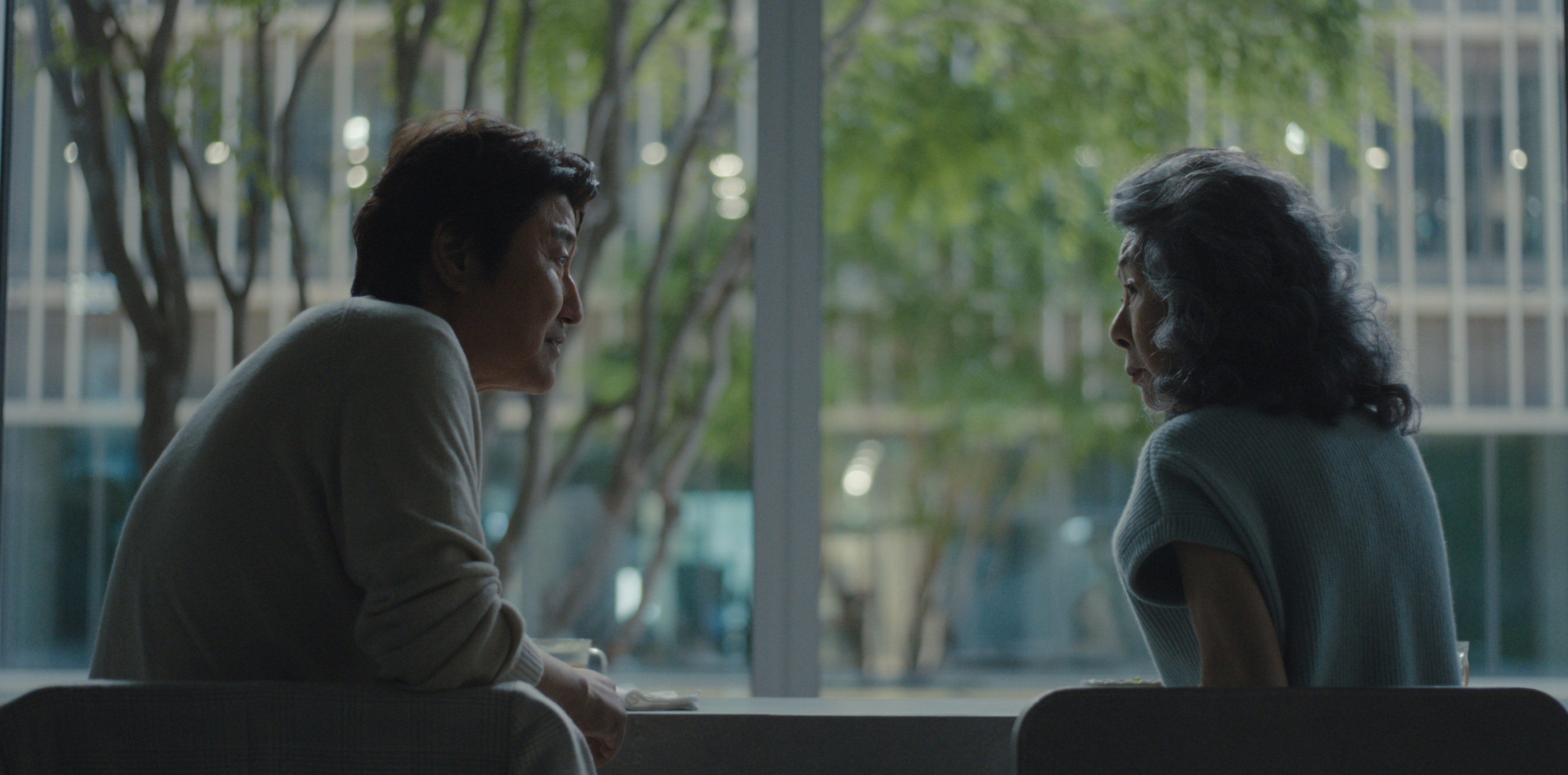
(L to R) Song Kang-ho as Dr. Kim, Youn Yuh-jung as Chairwoman Park in episode 203 of Beef. Courtesy of Netflix.
Kirill: Going back to the show and the South Korean part of it, is it becoming easier in this global world to keep track of the international talent and find the right people?
Jeanie: For sure. You can get on a Zoom call with an actor in another part of the world. Or you can have them make a tape and have it arrive in your email box 10 minutes later. It’s completely changed it. It’s opened up the world immensely. There’s also a tremendous amount of international television and films now available, and that has completely changed the game as well.
Kirill: You worked on “Ally McBeal” in the late ’90s, and that was absolutely my favorite show back then. Do you feel that it’s easier, if you will, to get the big name actors to do episodic productions these days compared to how it was back then?
Jeanie: Absolutely, and that is also tied to the writers and the directors who have been attracted to television. Actors are looking for good stories and good characters to play.
Going back to what I said before, if you’re a feature actor, the idea of being able to explore a character over ten hours of episodic versus two hours of a film can be exciting. If you’re working with cable or streaming, and you’re doing 10-12 episodes, you then have the whole other half of your year to do a film. When it was back in the network TV broadcast world, you were doing 22 episodes a season, and it didn’t leave much time to do anything else.
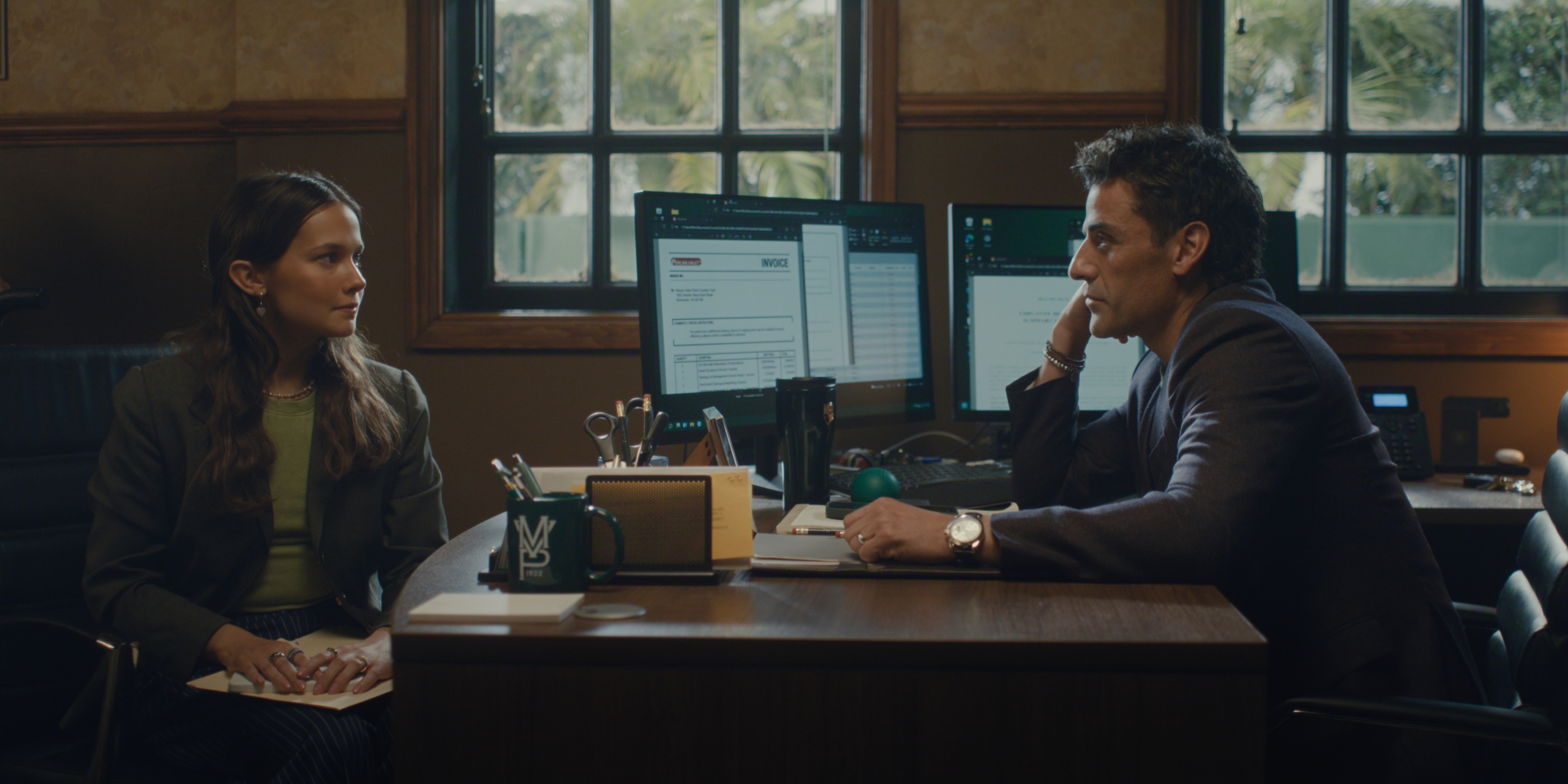
(L to R) Cailee Spaeny as Ashley Miller, Oscar Isaac as Josh Martin in episode 202 of Beef. Courtesy of Netflix.
Kirill: Do you want to have exceptional actors as individuals or an exceptional cast?
Jeanie: To me it’s the whole which is so important. I understand a studio and a network’s desire to have recognized names in significant roles. There’s so much product out there and you’re trying to get eyeballs to your show. So there is that desire to have somebody who can get on a talk show or somebody who has a following already.
But to me, if they don’t fit in the world and they don’t work together with the rest of the cast, it doesn’t matter how famous they may be. It has to work. People have to come back to the show. They might come to the show initially because of some name recognition of a famous actor in it. But you need them to come back, and keep watching. That’s why to me, it’s about the ensemble as a whole and not just that particular actor.
Kirill: Maybe, and correct me if I’m wrong, there’s also less appetite from the studios to bet on a completely unknown cast and give that new show a couple of years to find its legs. Maybe now it’s more about hitting it straight out the gate.
Jeanie: It depends on how big the show is. If it’s an extremely expensive show to make, there’s more pressure to have known entities in it. But there’s so many successful shows that did not have known actors before they were in the show. It really depends upon the project itself and the platform. There are places that are willing to take more chances than perhaps some others. I do think it mostly depends on the size of the show. And I actually think there is more openness than there used to be.
Kirill: Going back to “Beef” for my last question on the show. You start working on it so early in its development, and then it goes to shooting, and then to editing, and then the network decides when to air it. And then you sit down and watch it. How does it feel to go back to that story after all these long months that you’ve been away from it, so to speak?
Jeanie: It’s great. I have to watch it a couple times. The first time I might be looking at the actors that we took a chance on and I’m a little anxious as to how they did. Then the second time, I’m really in it.
Sometimes there’s a role that took a long time to cast, and you read the same scene over and over and over during the auditions, and then you finally see it, and it’s a little bit triggering. I remember the process the first time I’m watching [laughs]. It’s always exciting to see it all come together. I’m there from the very beginning. Then you have production design, costume design, makeup, props and editing bringing the rest of the piece together.
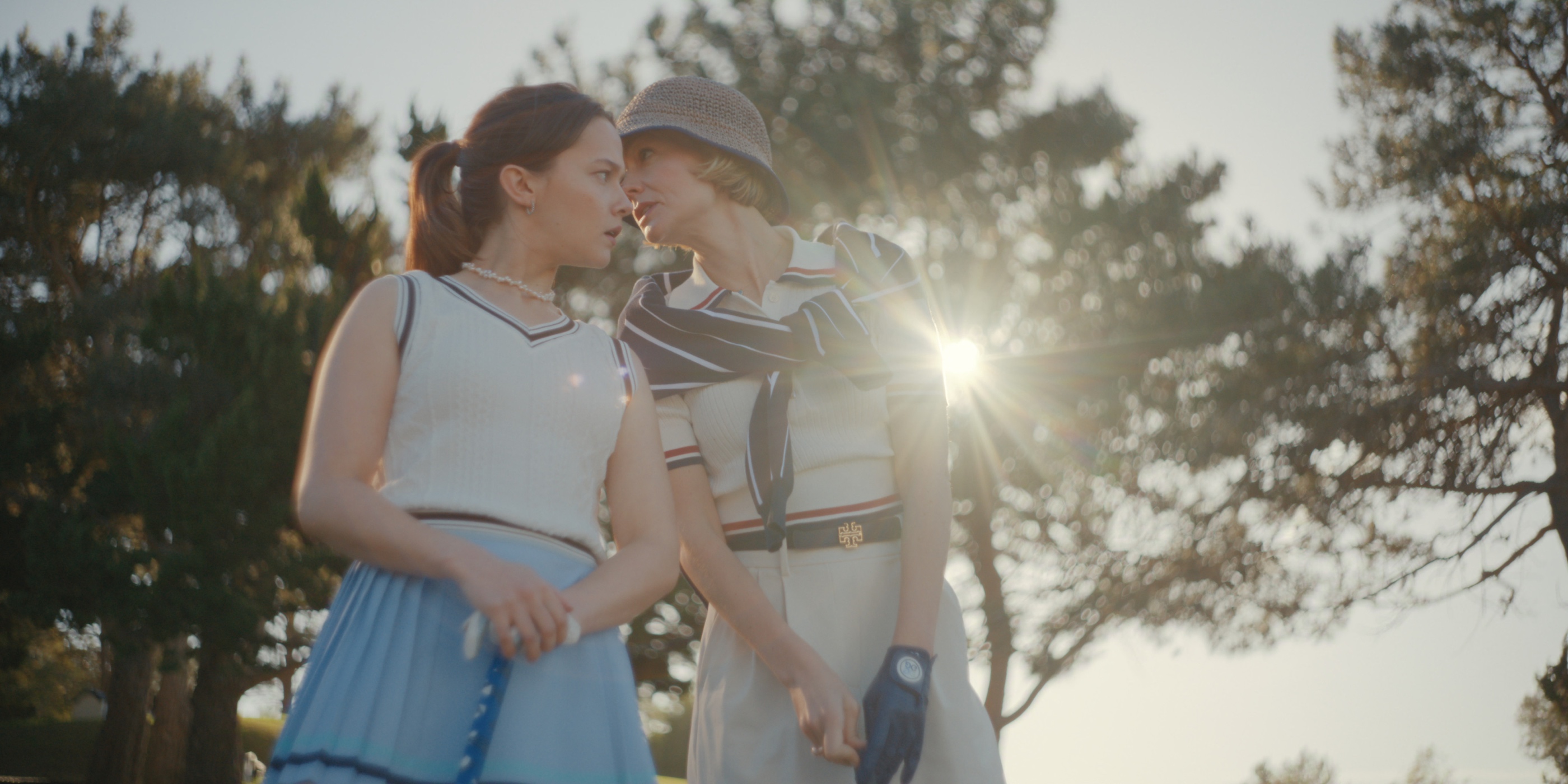
(L to R) Cailee Spaeny as Ashley Miller, Carey Mulligan as Lindsay Crane-Martin in episode 206 of Beef. Courtesy of Netflix.
Kirill: Some people see generative AI as an existential threat to creativity, and some see it as yet another tool to adopt and adapt and to add to their arsenal. Where do you find yourself these days?
Jeanie: I would say the former. Going back to what I was saying earlier about what casting is. It’s about personal taste. It’s about being able to see something in an actor’s audition performance. It might not be exactly right, but you see something there, and you work with it.
If we lose our humanity, especially in casting, we’re really lost. So much of it is about being able to work with an actor and to see something in there, even if they didn’t fully land it, and helping them to find it. There’s so much vulnerability that is required from an actor. The further removed we come to be from that process, the more we’re going to lose in the storytelling and our ability as an audience to connect and to see ourselves in those characters and in those performances.
Kirill: What are the key ingredients to longevity in your industry?
Jeanie: From an acting perspective, it’s about training and understanding that it’s a craft, and not just about being discovered on TikTok or having a certain look.
You need adaptability, humanity, and compassion for the people you’re working with. You need respect for the people you’re working with. You need a collaborative spirit. And you need just the right amount of ego to fight for what you feel strongly about. And you also need to understand that you’re part of a whole, and that sometimes maybe you’re not seeing the whole picture. Sometimes you’re digging in your heels for your own ego or whatever it might be – and not hearing what the director or the writer is saying isn’t working from your perspective.
You need to work well with others, and walk the right line of personal investment and passion without letting it be absolutely everything in your life. You need to have a balance in your life.
Kirill: Is there a piece of advice you would want to give to your younger self if you could jump back in time to the late ’90s?
Jeanie: Trust the process. Trust the journey. Stay true to your beliefs, and what’s important to you and your creative soul. Trust that eventually you’ll find the people who understand that and see that. And enjoy the ride.
Kirill: Out of all the travels you had for work over your career so far, what was the place that had the best food?
Jeanie: I had some amazing meals in Chicago working on “The Bear”. There were a couple different restaurants there that I only would have known about from working on the show and introductions that were made from people working on the show. That made the meals all the more special.
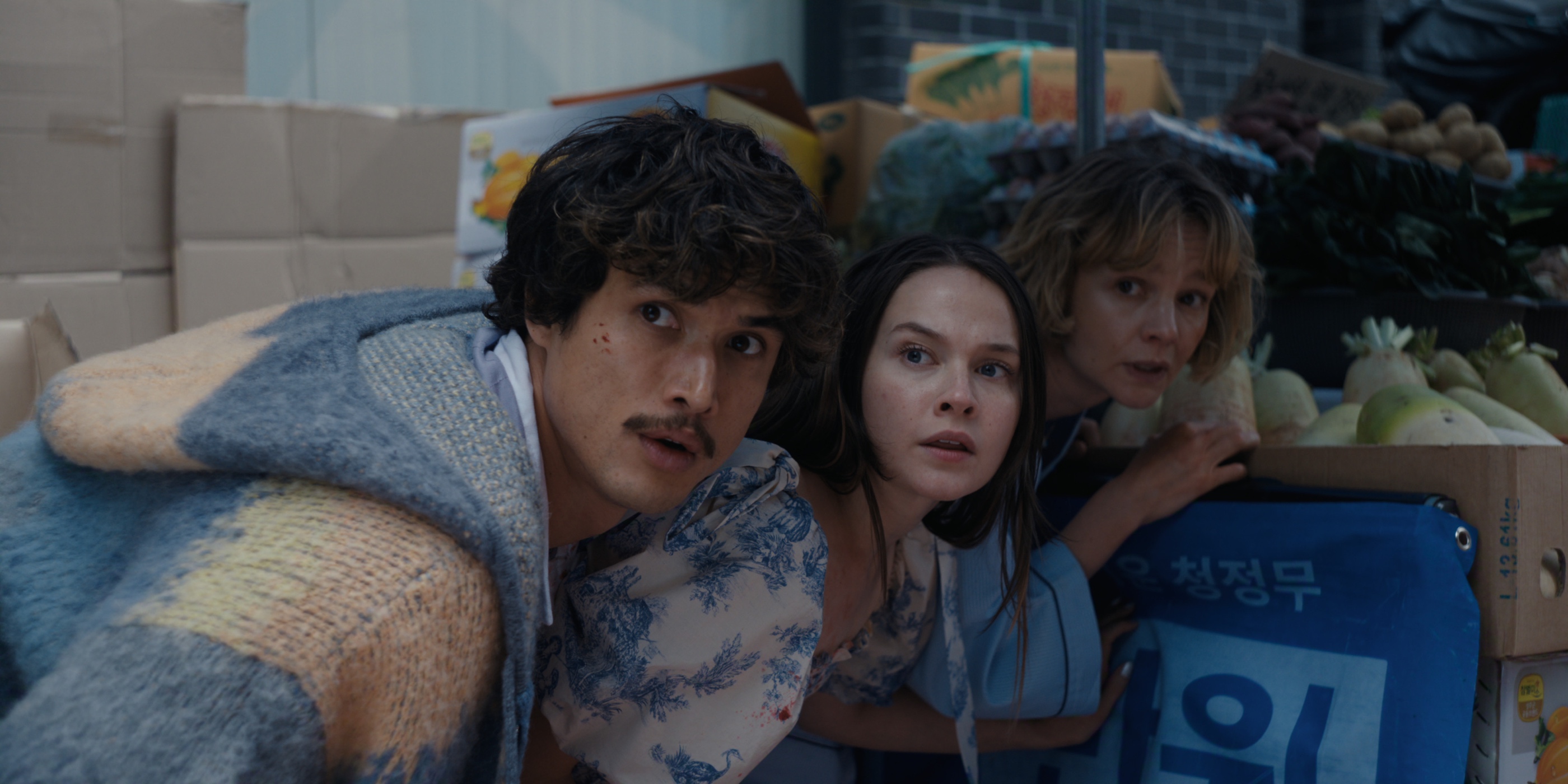
(L to R) Charles Melton as Austin Davis, Cailee Spaeny as Ashley Miller, Carey Mulligan as Lindsay Crane-Martin in episode 208 of Beef. Cr. Courtesy of Netflix.
And here I want to thank Jeanie Bacharach for sharing her time with me to talk about the art and craft of casting. I also want to thank Kristy Chan for making this interview happen. “Beef” is streaming on Netflix. Finally, if you want to know more about how films and TV shows are made, click here for additional in-depth interviews in this series.
