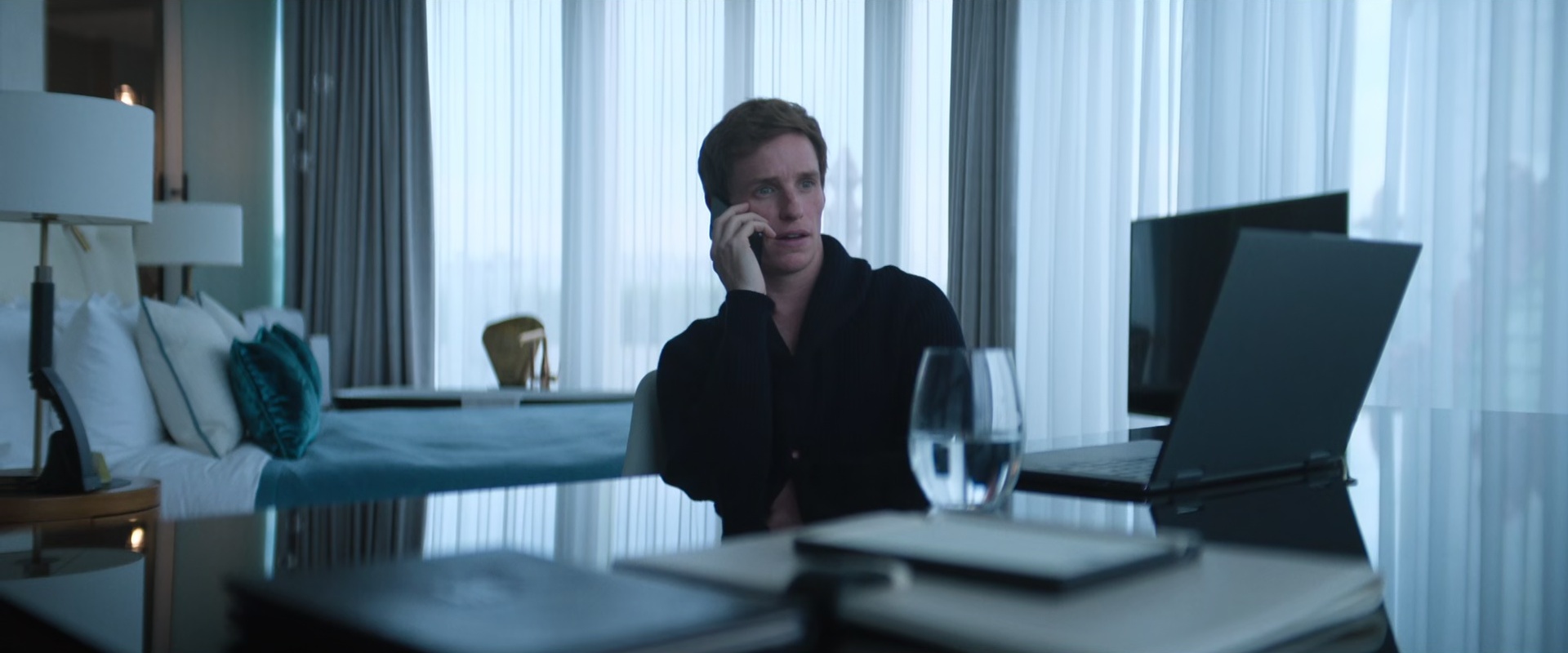
 Production design of "The Day of the Jackal" by Richard Bullock.
Production design of “The Day of the Jackal” – interview with Richard Bullock
Continuing the ongoing series of interviews with creative artists working on various aspects of movie and episodic productions, it is my delight to welcome Richard Bullock. In this interview, he talks about the changes in the art department in the last few decades, what makes a great artist, the popularity of the spy genre in British storytelling, productions that he considers to be the golden standard of production design, and his thoughts on generative AI. Between all these and more, Richard dives deep into his work on the upcoming “The Day of the Jackal”, a contemporary reimagining of the classic ’70s story.
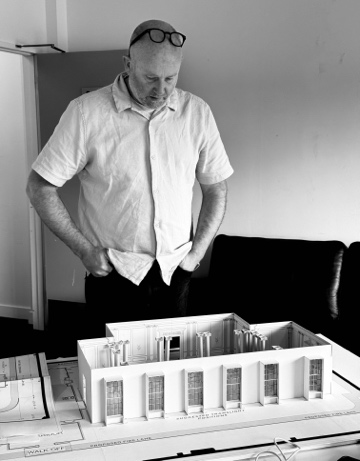 Kirill: Please tell us about yourself and the path that took you to where you are today.
Richard: My path into the art department and production designing is quite an unusual one. I studied art up to A level, and then at university I studied English literature and history of ideas. I’d always loved films and TV, and the English literature side of things took me towards cinema studies. Looking at films academically made me start to think about them as not just something on a screen, but something that gets made – how they get written, how they get directed, etc. I never really thought seriously about the process of filmmaking before that point.
Then I realized that there was a film industry in the UK, and it was something that you could possibly get involved with. I started off doing short films with a couple of friends, and then we decided to make a little science fiction movie. I went back to my limited art background. I’d kept on drawing and painting, and I designed some sets for it. I loved the experience and found it exciting. That’s when I started to realize that maybe that was my thing, combining the narrative disciplines that I had learned about in literature studies with my love of film and the visual side of storytelling.
Production design combines those things in an exciting way that I hadn’t realized existed. The average viewer doesn’t really think about production design, and that’s probably a good thing. Production design succeeds if the audience is unaware of it. But when you scratch the surface, you realize it’s a whole discipline and art form with history. That was quite exciting to me.
That was in mid ’90s, and I started assisting a production designer who was making high-end commercials and advertising films being made in the UK. That was a massive eye-opener. You realize the degree to which an environment could be manufactured and the amount of effects that could be involved. On commercials you had quite a high turnover of projects, and so it was very good training. One day you work on a Pirelli tire commercial that involves someone running down a mountain and across a dam and through a tunnel. And then you work on a beer commercial that is set in a stately home.
I started by making coffee, taking location photos, researching reference and other stuff as an assistant, then moved to doing small technical drawings and making models. It was a roots up learning process that went over a number of years in the art department. I did some films, and it was exciting to suddenly be working on long form narrative productions as a standby art director. Then I got the opportunity to start designing commercials and music videos myself, and I did that for a while. As I was making them, I realized that while the commercials are interesting, they were not what I set out to do. So I made the decision to step away from them, and do more films and television as an art director. Eventually I got the opportunity to start designing lower budget films, and it kept on going.
I love that all the different crafts and disciplines combine in the art department. You have special effects, vehicles, set decoration and other elements that create the physical world of the film that goes in front of the camera. You speak to costume, make-up and other departments, and of course the director and the cinematographer. You have all the different things that come into making a film. All these disparate elements of the production come together to create something, and if it’s successful, it feels as if it has one voice. That is so exciting.
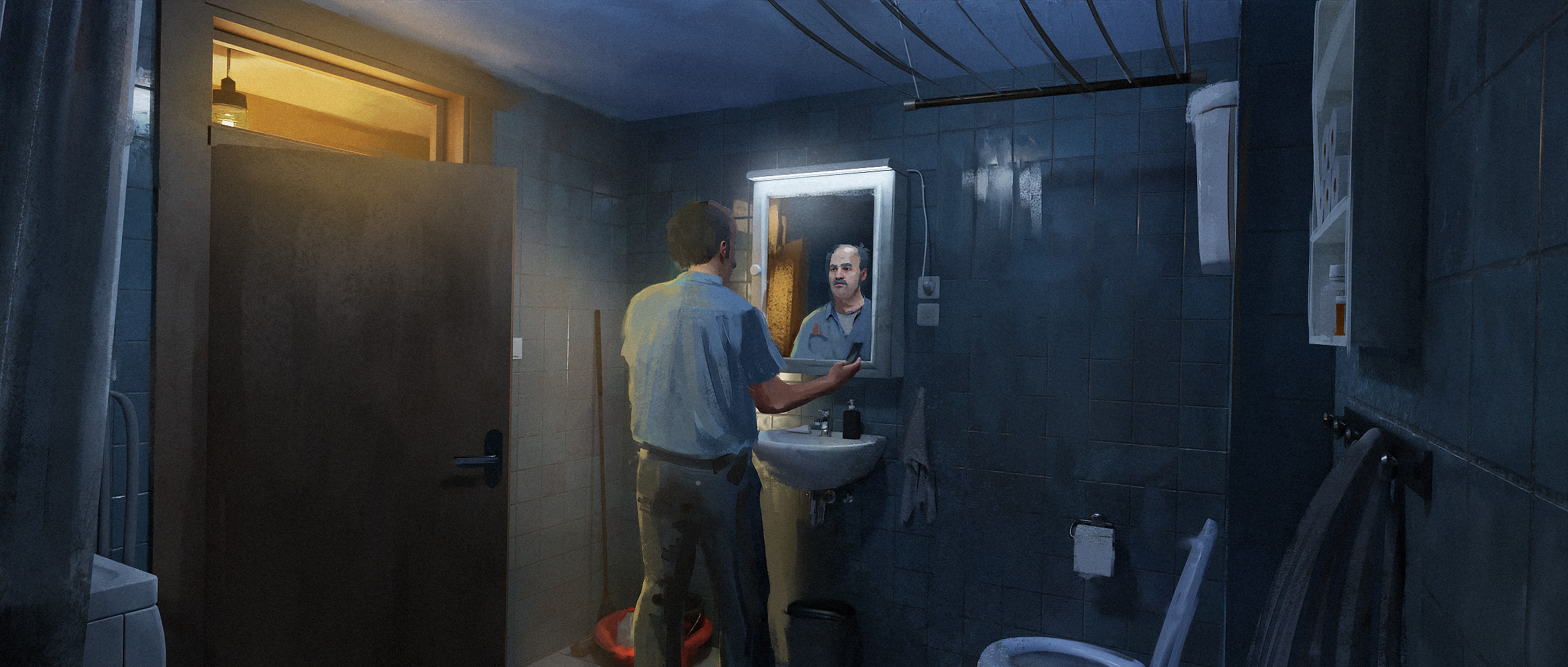
Design render for “The Day of the Jackal”, courtesy of Richard Bullock.
Kirill: What do you feel are the biggest misconceptions about the art department and about your role?
Richard: Audiences often imagine that the action takes place in an environment that is simply found. People probably don’t appreciate the amount of forethought that goes into it. Even if it is simply a found environment, which environment is found – as opposed to all the other options? I suspect that a lot of the time people aren’t quite aware that they’re looking at a set. I’ve done things where we filmed an exterior up a mountain in France, and then the interior on a soundstage in Wales – and people have been astonished when I’ve said that.
If you know the tricks of the industry, that would have been fairly obvious. When you’re in it, it’s sometimes easy to lose sight of what is quite magical about what we do. And for sure, that’s part of the pleasure of it. We’re making illusions, and when an illusion works, it’s really satisfying.
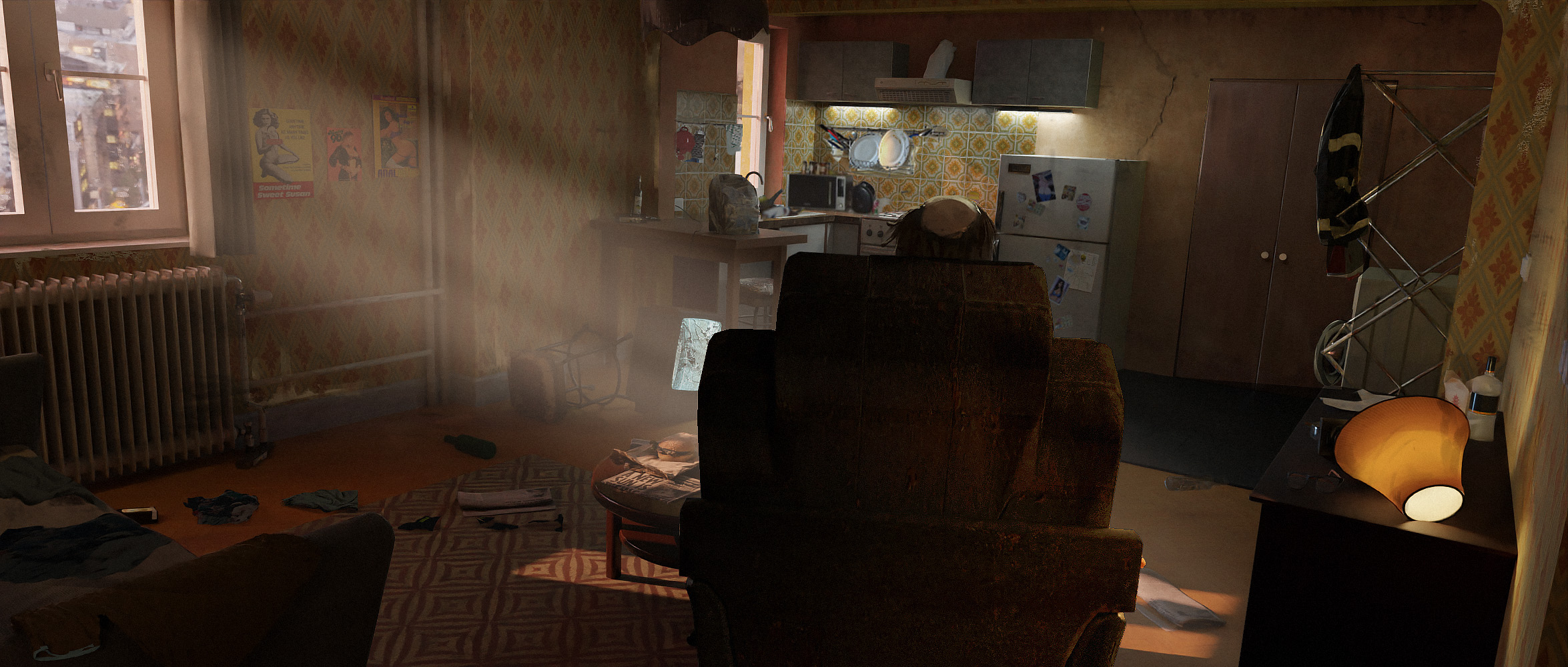
Design render for “The Day of the Jackal”, courtesy of Richard Bullock.
Kirill: If you look back at these 30 years, what would you say are the bigger changes in the art department since when you started?
Richard: One of the bigger changes is that we’re not shooting on film anymore. We’re shooting digitally, and that has a number of implications. The camera picks up an awful lot more detail. The textures and the amount of layering that goes into what we put in front of the camera needs to be more than what there was before. Film was quite forgiving.
But most significantly, and it’s also linked to digital filmmaking, is the rise of visual effects. Over time we’ve seen the growth in the scale of what you can show and how much you can alter things that are going in front of the camera. You can delete a skyscraper out of the back of a shot that’s supposed to be Victorian. You can add cityscapes. You can add digital matte paintings. The scope of the world that you can build has been massively expanded by visual effects.
The other significant change, which is not directly an art department thing, is camera technique. What the camera does now is much more dynamic than when I started 30 years back. You’re looking at a bigger, more complex world that goes on the screen – which has its implications for the art department too. It’s been an amazing period of time to be working in film.
Another massive change is in the size of the British film industry. When I started in the ’90s, it was pretty small compared to what it is now. There were a few, mostly smaller British films being made. In the last decade or so, coinciding with the rise of the streamers we’ve had a massive expansion of the resources that we’re working with. It’s exciting to be part of that, and to be working on TV shows that were probably beyond imagining when I started off. It’s been an interesting time, and things have changed significantly.
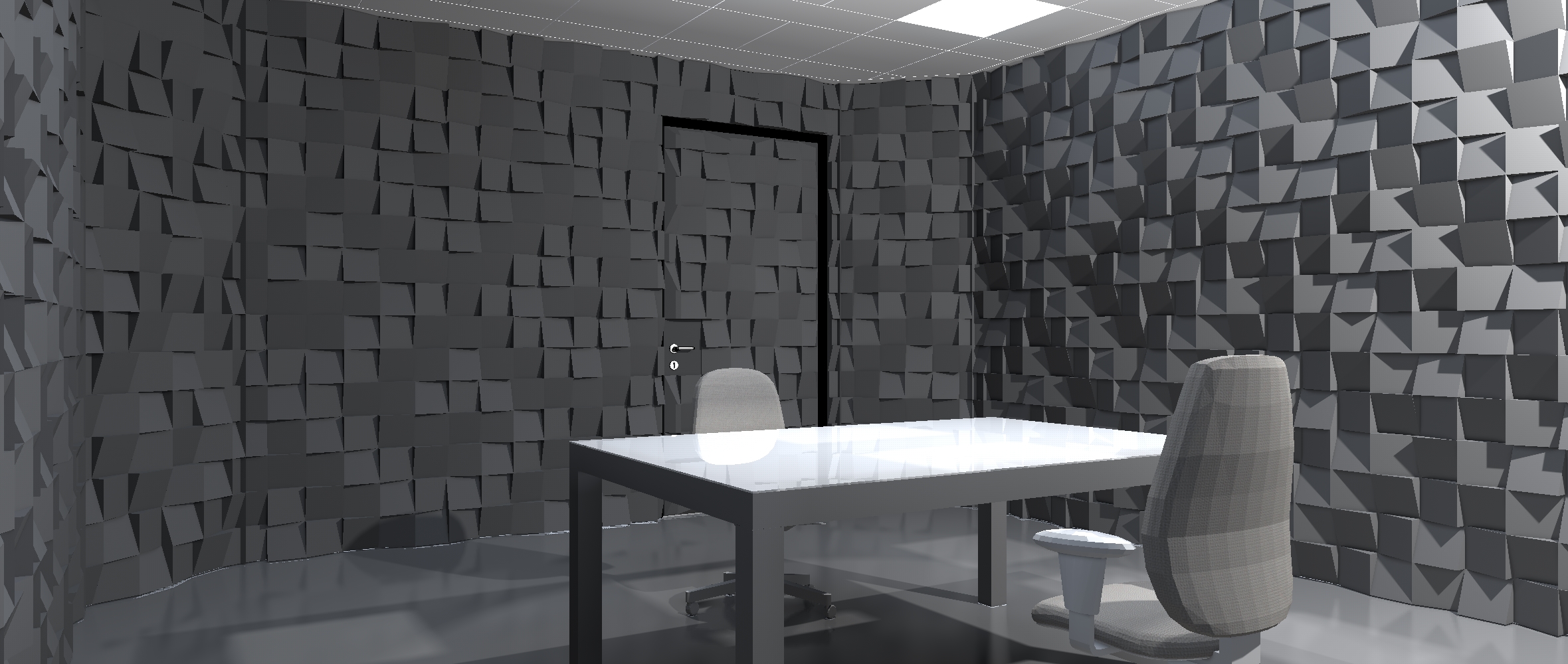
Design render for “The Day of the Jackal”, courtesy of Richard Bullock.
Kirill: There used to be a much clearer separation, if you will, between the world of feature films and the world of TV shows. And that line has been blurred so much that it might not even be there any more. There are so many great stories that are told in a longer format that just “happens” to be chunked into the more traditional episodes, but they feel like long movies that you watch with no breaks in between the episodes.
Richard: I’ve done a lot of TV shows in the last few years, and I’m just starting on a feature film. In some ways, it’s quite a relief to be working on something that is a bit shorter. These big TV series tend to be about a year of your life. This film is an opportunity to do something a little bit different. There’s a sense that this is more like a piece of poetry, rather than a novel. I love doing the big TV series when you have a massive canvas, but it’s also nice to have a change and do something a little more concise every now and then.
To your question, the line has absolutely blurred. The amount of resources, skill, and ambition that goes into some of the TV series now is absolutely equal to major feature films – which is exciting. In my view, the level of TV productions now is in some ways more interesting than some of the film stuff that’s going on, because of the opportunities for storytelling that are there. I’ve just done an adaptation of “Pride and Prejudice”, and it was great to have modern TV series making sensibility applied to a classic novel like that. It’s where it should be.
That’s been a remarkable change. Sometimes, the most exciting things are happening on the TV side of things rather than film.
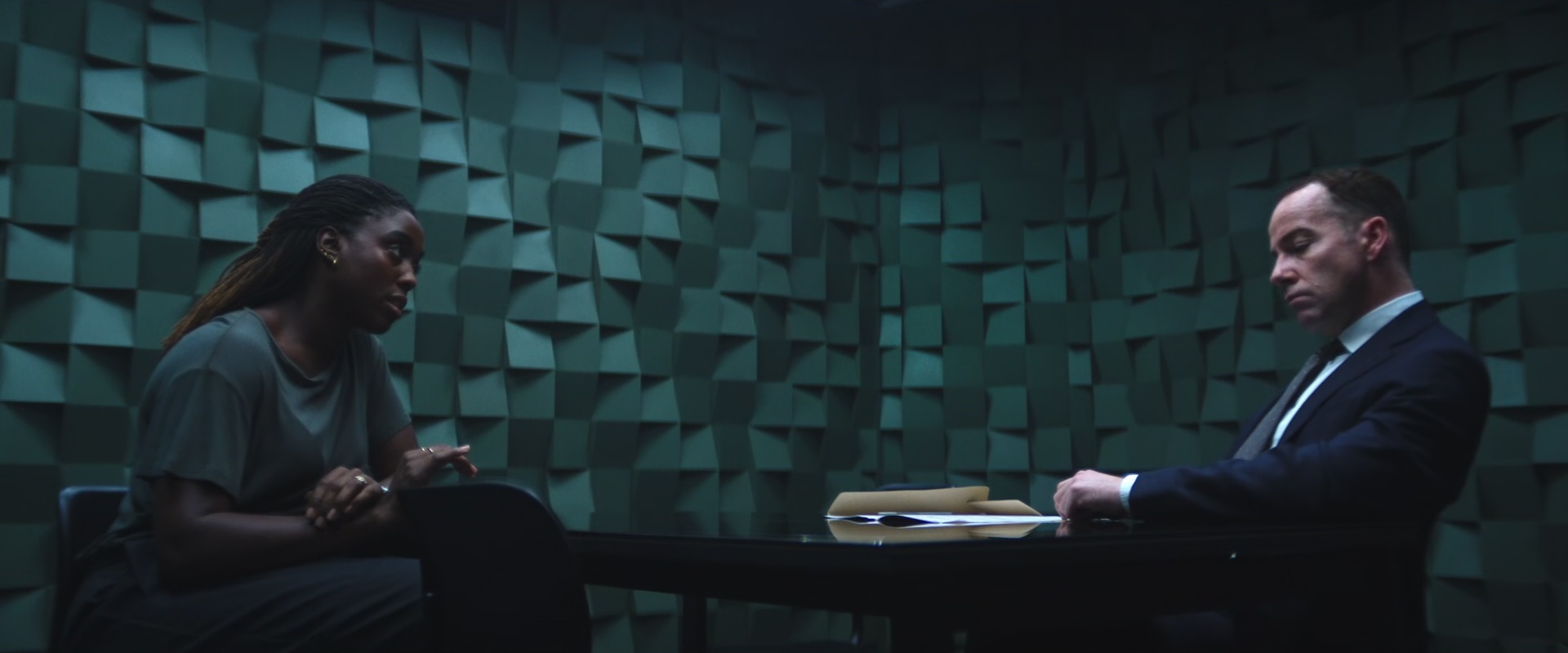
Production design of “The Day of the Jackal” by Richard Bullock.
Kirill: When I ask what is art and who can be an artist, the usual answer is that art is anything you want it to be, and that anybody can do art. How does one become great at it? What separates great artists from mere mortals, so to speak?
Richard: It’s true that anybody can be an artist, and these days anybody can make a film. Everybody has a camera on their mobile phones.
To your question, some people seem to have the ability to create art that many people connect to in a personal way, something that has a transcendent quality to it. It chimes with something in our humanity or in our sensibility that feels right. It has an appeal to something universal, deep within us. That’s what a great artist does.
Kirill: Do you feel that you need to have this almost divine spark to be a great artist, or can anybody be nurtured or trained to be – maybe not amazing – but good at art?
Richard: It’s something that some people have an aptitude for, but it’s definitely something that needs to be nurtured and encouraged. It needs to be allowed to come forward.
Some people definitely seem to have a natural talent for creating something memorable. Some people have a great eye. Some people have a great ear. Some people have a great mind for narrative. Some people are great performers. There is an element of that that is probably innate to the individual, but there’s no substitute for training and practice to bring it to fruition. Many of the great artists have a certain amount of innate talent, but the thing that makes them really stand out is the fact that they have worked so hard to make it what it is.
I’m thinking of someone like David Hockney whose work ethic is off the scale. There are artists who are no more talented than a lot of other people but who have worked and worked and worked, and that is as critical as having that innate ability. If there is a divine spark then that is only the beginning, it needs hard work and focus to encourage it to burn.
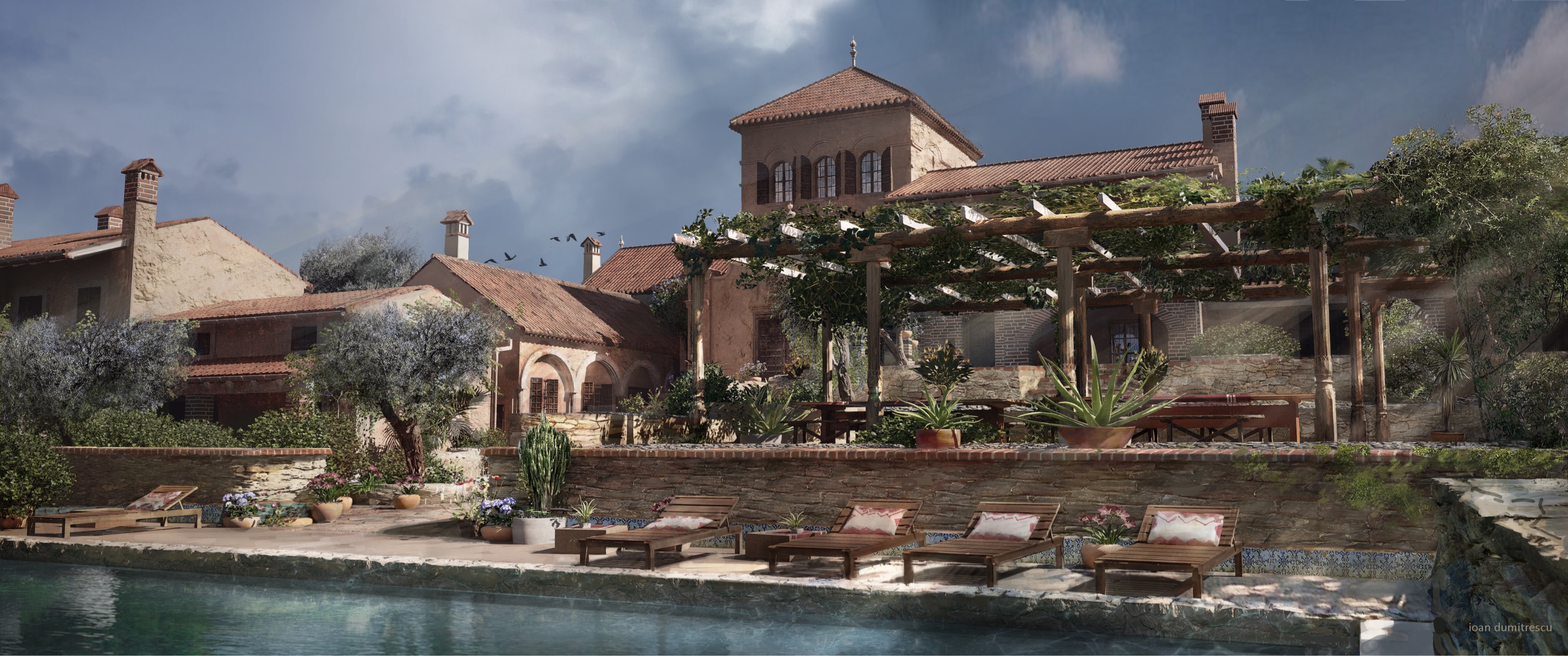
Design render for “The Day of the Jackal”, courtesy of Richard Bullock.
Kirill: Getting closer to “The Day of the Jackal”, I was thinking about the whole spy genre. It feels that the British culture is fascinated with MI5 and MI6, and the spy culture that probably goes back to the days of the Cold War and the days of the British Empire influence. Why do you see so many stories in this genre coming specifically out of the UK?
Richard: It hadn’t occurred to me that it is a British genre. We were inspired by the American conspiracy thrillers, like “Parallax of View”, “All the President’s Men”, and “Three Days of the Condor”. But you are right, we have James Bond, that overshadows the entire genre, and the works of John le Carré.
Why are the British so interested in that stuff? Perhaps it resonates with the sense of the inner workings of the state, and the excitement of seeing behind the curtain and how things work behind the scenes. The spies tend to be normal people who are in extraordinary situations. It’s a way of identifying yourself with someone who is going into a world that is unknown to us, but we can identify with the character who’s in there. We’ve got the monarchy, the aristocracy, and the nobility that is not a world that we can identify with so easily as a normal person – but maybe a world of spies is something that you can identify with a bit more.
Bond and Le Carré present two very different conceptions of the British spy world. Bond is glamorous, aspirational and action-packed. Le Carré feels authentic and clever, more cerebral. In a way Day of the Jackal combines these two archetypes. The Jackal is more like Bond, he’s cool, handsome, sophisticated and violent. Bianca is more from the Le Carré school. She is an outsider within the establishment, she’s clever and analytical. She is a ‘normal’ person who has a ‘normal’ family life, but when she goes to work, she goes to work at MI6.
You have the idea that these are people from a relatively normal background who’ve somehow gone into the dark workings of the state.
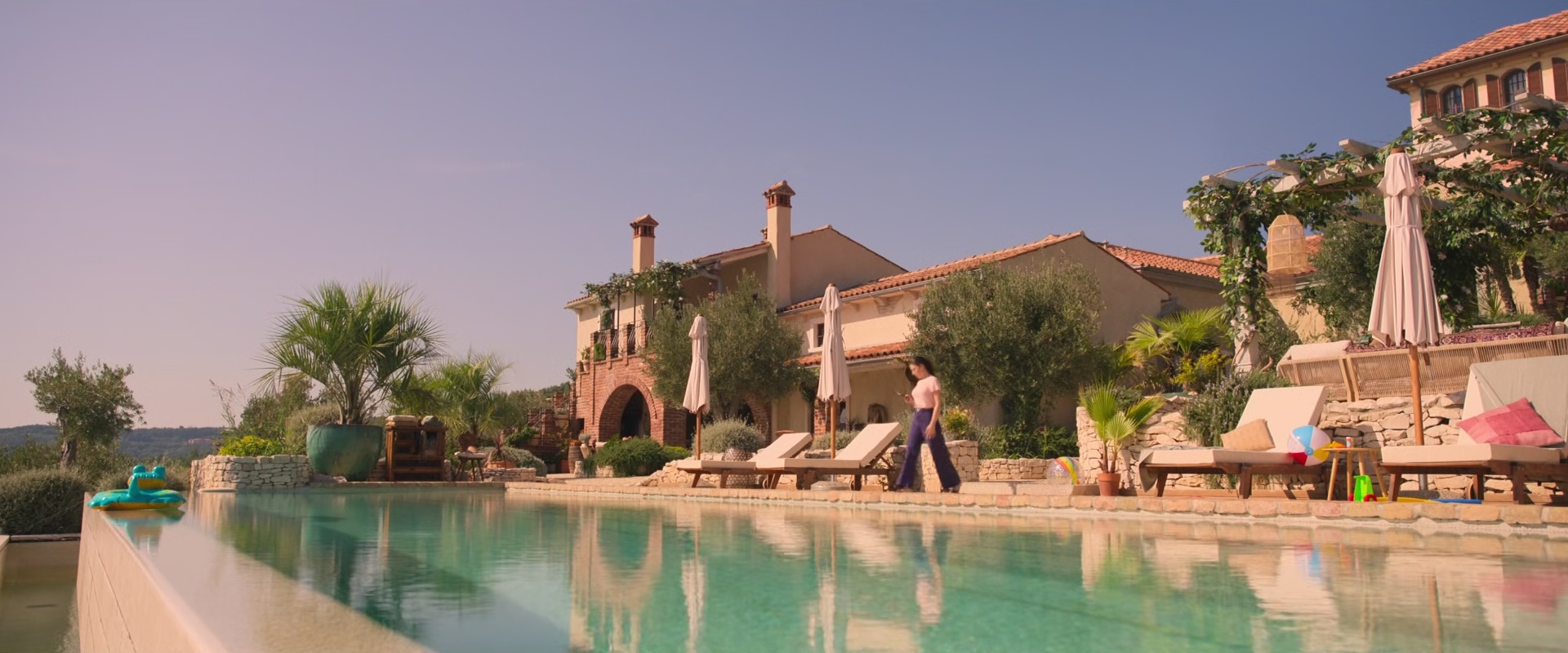
Production design of “The Day of the Jackal” by Richard Bullock.
Kirill: How did you approach taking a cornerstone cultural event – the book and the original movie – and reinterpreting it for the world of 2024?
Richard: It started off with the scripts from Ronan Bennett. I was sent the first three scripts, and they were exceptionally good. I’d seen the movie when I was a kid. I was born in 1972, and my dad was reading “The Day of the Jackal” in the hospital waiting room while I was getting born, so it’s in my DNA [laughs]. It was a rare British action movie back in the ’70s that wasn’t a World War II film.
When this came up, the first thing I did was to watch the Fred Zinnemann film again. It’s so good, and it was a great inspiration to us in terms of its tone. What we did was quite different, but just tonally it was great. Ronan’s script has similar coldness of the original novel, which is difficult to distill. The genius of the novel is that you’ve got a killer that you want to survive. You’re interested in following his story. In a way, he’s the hero. But you also know that he doesn’t succeed. In the book, you know that he doesn’t kill Charles de Gaulle, but you’re still at the edge of your seat. That’s the difference between the book and the series.
In the original film there’s the almost documentary sense of realness, and that was something we aspired to. We were heavily influenced by those conspiracy thrillers from the ’70s in terms of the visuals. It’s curated reality, but hopefully you don’t feel like you’re seeing a manufactured world. It was imagined in a detailed way. We set out to balance each scene against the other, and create a coherent look and style. A lot of that comes from Chris Ross the cinematographer and Brian Kirk the director. We had great concept art from Ioan Dumitrescu who, time and time again, comes up with key images that we keep on referring back to.
That’s how we started – references to art and photography, listening to music, and then starting to look at the locations that were available. We were based in Budapest, and that drove the decisions on what locations we could use and dress, and what sets we would need to build.
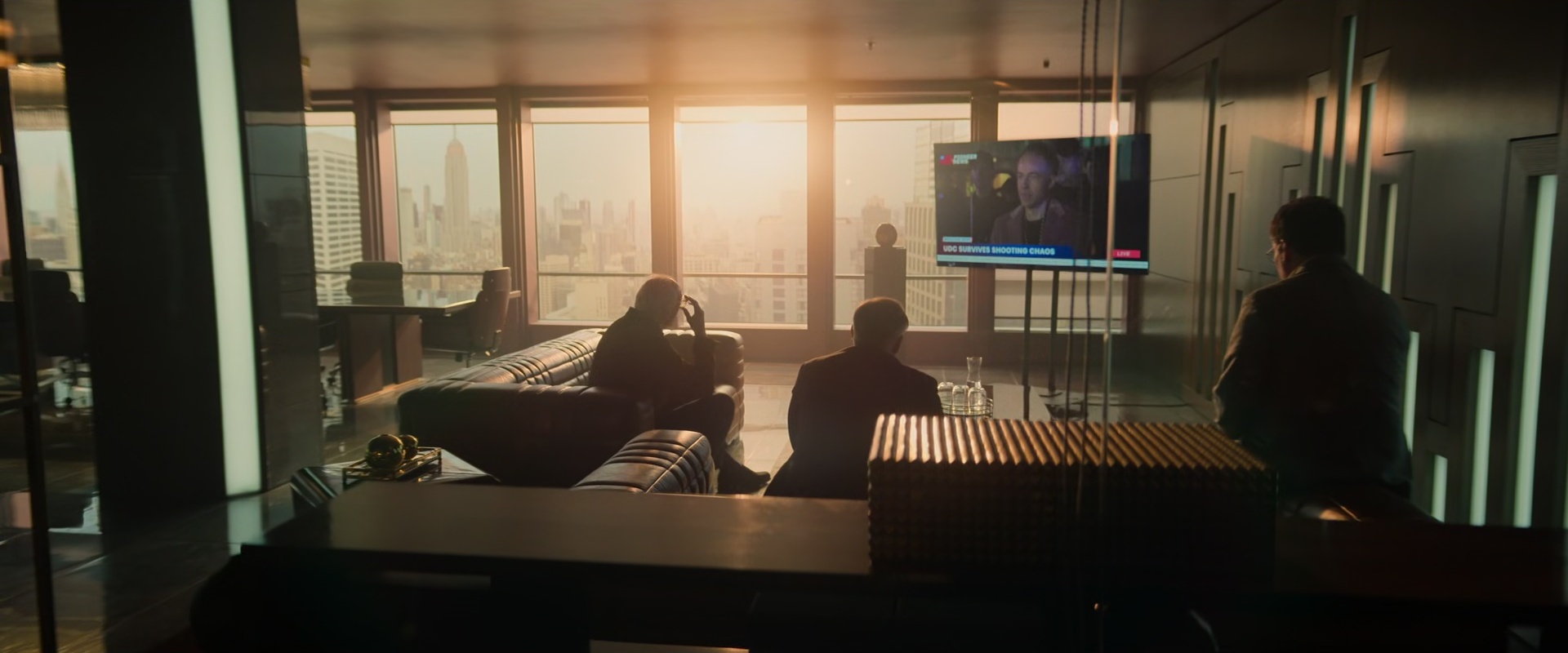
Production design of “The Day of the Jackal” by Richard Bullock.
Kirill: How much time went into building those sets for MI6?
Richard: Construction and dressing took about 12 weeks, and another 5-6 weeks of design before that. It’s quite a long process.
Kirill: What about Jackal’s villa in Cadiz? Did you go to Spain for it?
Richard: We didn’t go to Spain. We looked extensively for locations to start off with around Budapest and Hungary, but we weren’t finding it. So we went to Croatia, which is a drive from Budapest – a long drive. We looked at various locations, and the place we eventually chose was mainly because of its view out to sea and this beautiful swimming pool. The existing structures at the location were quite basic. Two separate holiday houses that had been built by a local guy. Nothing remarkable except for its extraordinary setting. We built a connecting structure that joined those two buildings together. We brought in a lot of plants and greenery to landscape the grounds. We used one entrance to the kitchen on site to get in and out, but all of the other interiors were back in Budapest on a stage.
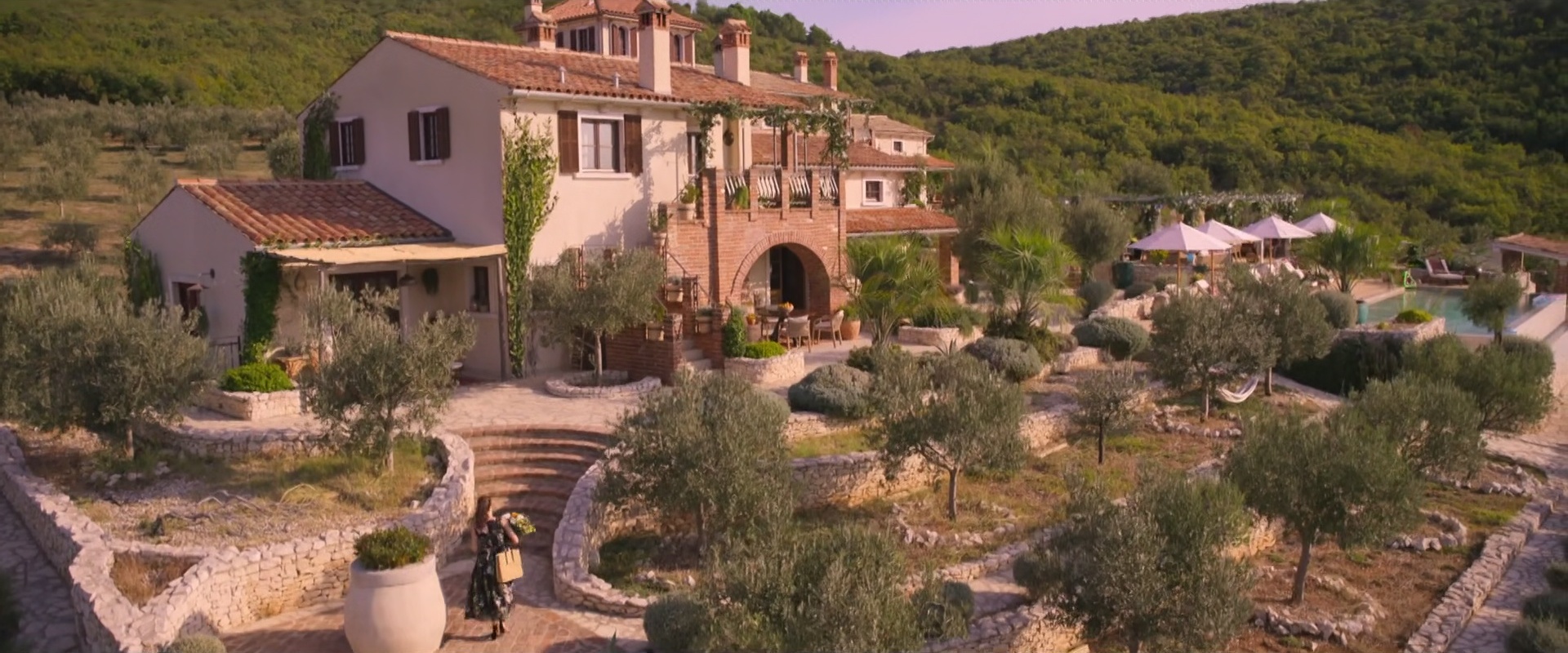
Production design of “The Day of the Jackal” by Richard Bullock.
Kirill: Where was the island of the main target?
Richard: The exteriors were in Croatia, and the interior was a location in Budapest.
Kirill: Did you go to Estonia for that concert venue?
Richard: We had our second unit that went to Estonia, Spain, Munich and other places for establishing shots. The Estonia exteriors were filmed mainly in Budapest, and some in Croatia. The concert venue was in Budapest, and we built the lighting rig from which the Jackal observes the concert.
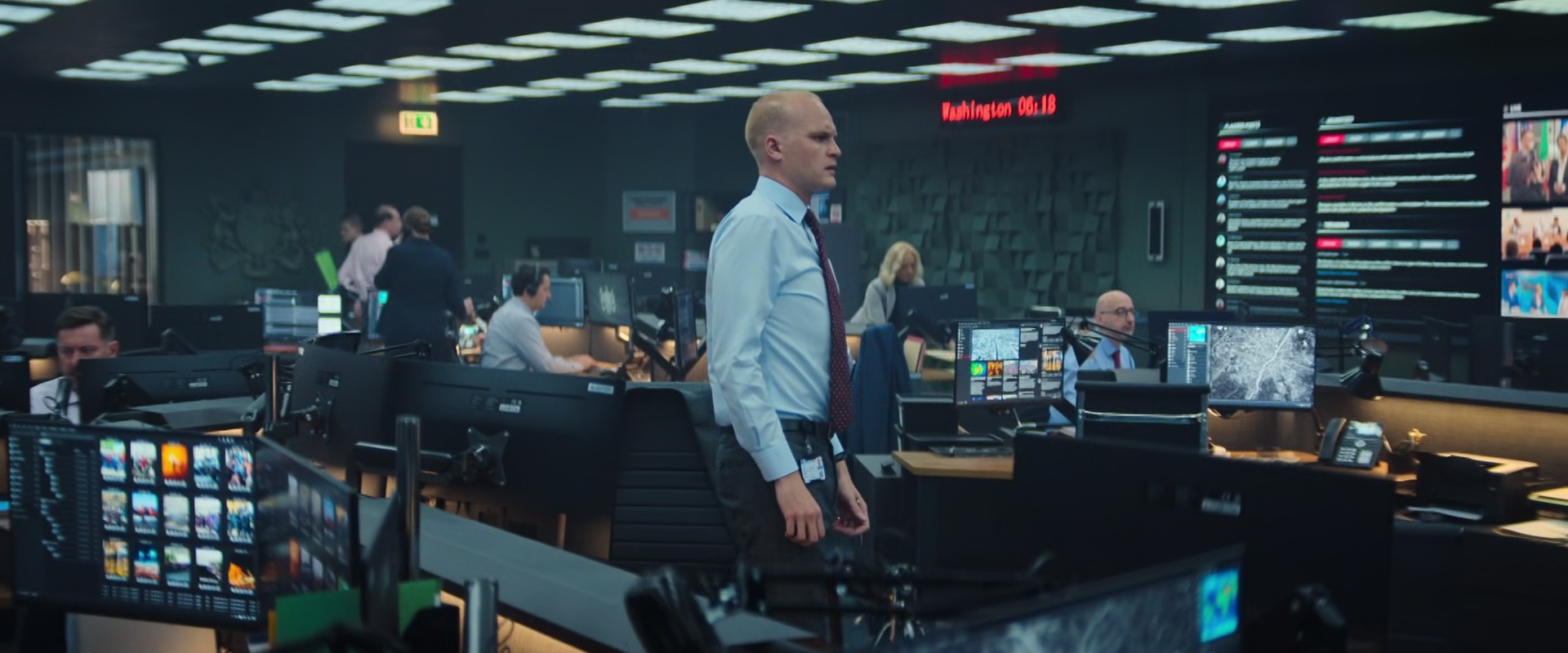
Production design of “The Day of the Jackal” by Richard Bullock.
Kirill: What’s on your mind as you want the viewer to believe that you are in Spain while you’re in Hungary or Croatia? Is it the vegetation, the quality of the sunlight, anything else?
Richard: All of the above. I have friends in Spain, and I was sending them photos and asking if things felt right. Plus I know the area around Cadiz which we were replicating, and it felt like a good match. You also have to consider how any one specific location balances with all the other locations and sets in the production. Croatia is a remarkable place. I’ve filmed there before for France, Russia, Tel Aviv, Moscow and other places, and now Spain and Afghanistan. We filmed all the Afghan sequences on a Croatian island called Pag. It’s an incredibly adaptable place, but you need to be disciplined about how you carve it up, so you don’t overlap between your looks. You have to be specific about your Spain style, your Afghanistan style, etc.
Budapest is a bit the same, but a city. It can double for a lot of different places, and again you need to be disciplined. For Estonia we use the old town which is on the Buda side of the Danube. It has a specific architectural style that you don’t see much in the rest of Budapest. Our graphic designer Mary Wainwright went to Estonia to photograph signs and collect newspapers, as graphics and signage do a lot of the storytelling. We also recreated Istanbul, Paris and Munich in Budapest.
Kirill: Do you sometimes get cautious about collecting all this stuff, so you are not seen as a spy yourself?
Richard: We rebuilt the entrance to the MI6 building in Budapest. We wanted to show Bianca coming out of the underground at Vauxhall in London, walking across the street, a wide shot of the building, then a cut to a top shot of her going into the building through the gates. The gate is a build in a back-lot in Budapest, and we had to photograph the real location as extensively as we could to replicate it. That was quite interesting. We got a few funny looks from the security people at MI6.
There was a time when taking photographs was regarded much more suspiciously than it is now. Now you can get away with photographing a lot more. Before digital photography became so common and in the period after 9/11 it was really difficult to take photographs in the city of London. You had to be a little bit cautious.
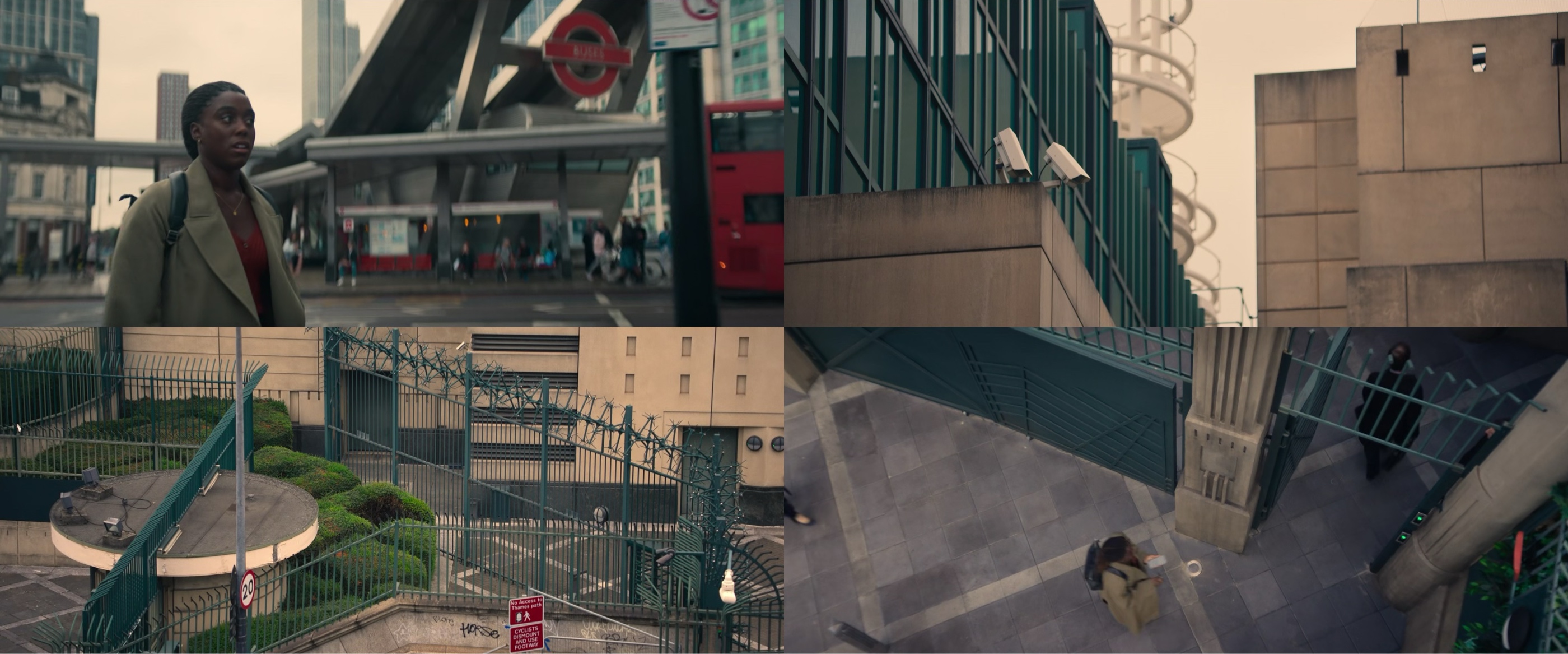
Production design of “The Day of the Jackal” by Richard Bullock.
Kirill: What was the most challenging day for you on this production, and what was the most challenging set to work on?
Richard: There were quite a few challenging days. We had times when we were shooting in multiple locations, which is always tricky. You’re splitting your team to make sure everything is properly covered.
We were building two sets together in the same studio space, and we had an explosion in one. It’s the apartment where the Jackal takes his shot at the beginning when he kills the German politician. That was a built set on stage, and in the end it blows up. And the other set was the office building where we first see him tracking the son of that politician. That was on the same stage, and we were absolutely assured by the special effects guys that the explosion wouldn’t do any damage to any of the other sets – but it did do a little damage. That was an interesting day [laughs].
You always get delays. We were laying a very specific kind of resin floor for the MI6 headquarters, and that didn’t work properly, so we had to do it again. And by that time they were filming on the stage next door, and that was causing issues with fumes. You had to let it settle for 24 hours and then we had to dress it, so that was stressful. You’ve got a schedule to keep to, so getting everything ready for the shoot was challenging.
The most challenging set was the studio build of MI6 headquarters because there were so many different elements to it. You have lots of lights, lots of screens with lots of information on each desk, meeting rooms, and long corridors. We based that on “All the President’s Men”, with the low ceiling and specific ceiling lights for Chris Ross the cinematographer. There were hold-ups getting the cables and the right components. There was some huge figure of the number of kilometers of cabling that was up there. You have the graphics on the video screens, the lighting overhead, the lighting on the desks, the floor drying and getting the right amount of shine. That was a difficult set because of all the different factors involved.
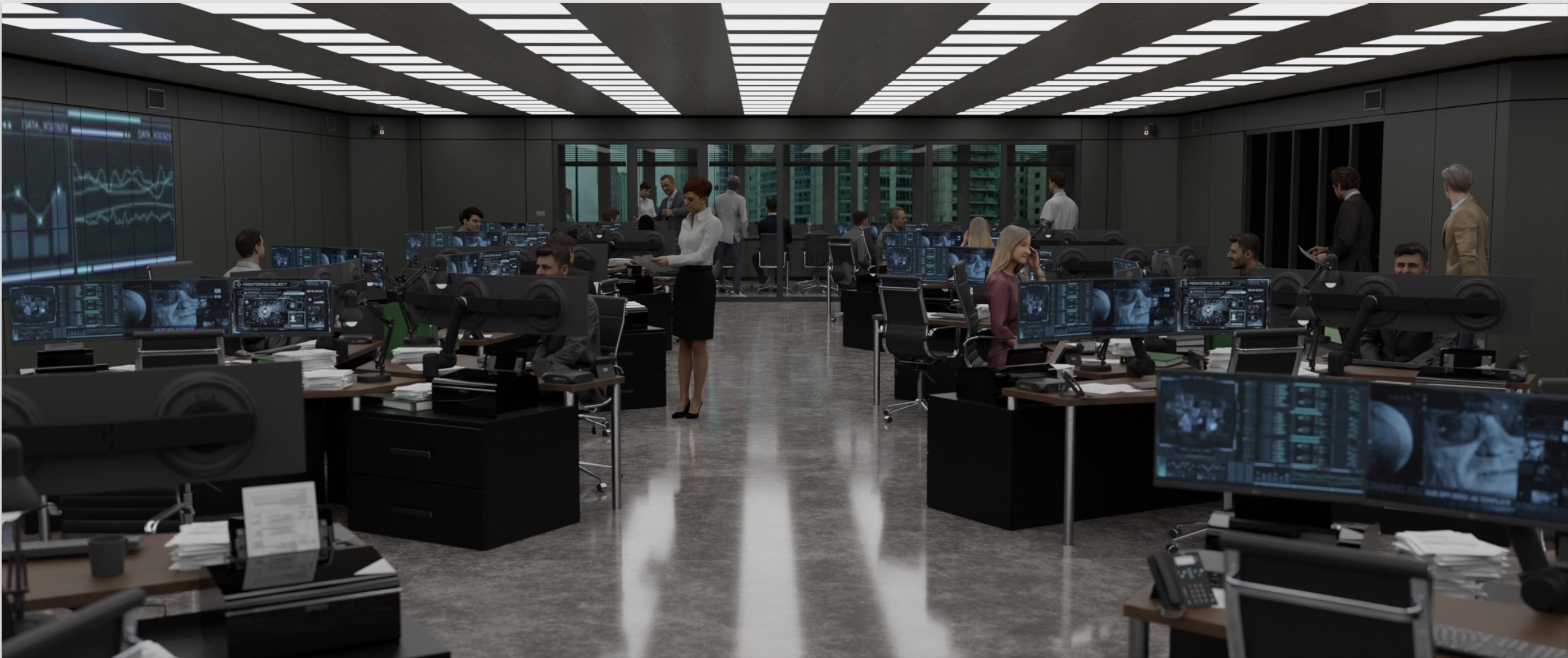
Design render for “The Day of the Jackal”, courtesy of Richard Bullock.
Kirill: Now that you’ve been in the industry for a while, have you made your peace with seeing your sets being torn down at the end of the production, or is it still a bit painful?
Richard: Before a set is struck, I always have a moment where I think that this is the last time I’ll see this in this state, but I get over it quite quickly. It’s a thing, because you do love them. A successful set has its own life and its own energy. But that’s their nature – they are quite fleeting.
You love a good one, of course. A lot of effort goes into it, from so many people. And then hopefully it endures, if the production is successful. If it all comes together, it will endure in people’s imaginations. Going back to what we were talking about at the beginning, a successful production can engage the audience’s imagination in a significant way and become part of their imaginative landscape.
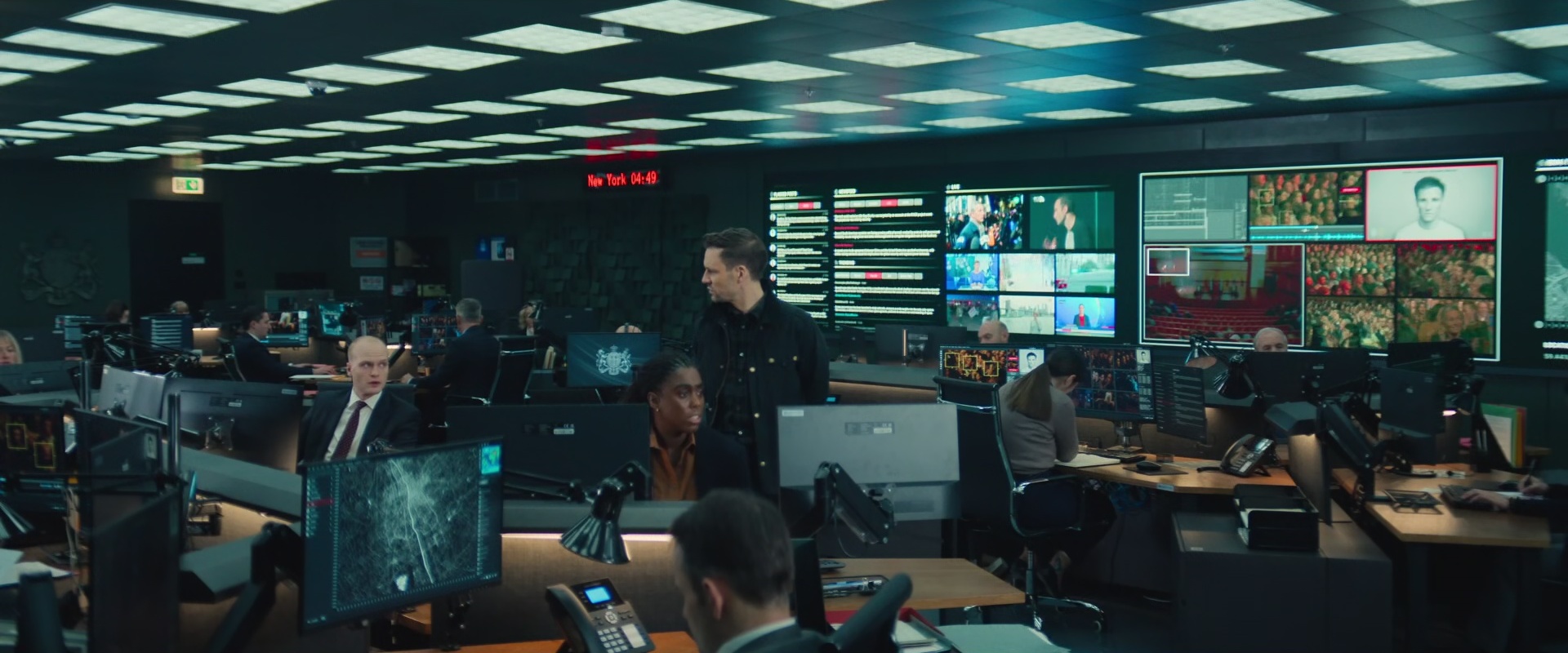
Production design of “The Day of the Jackal” by Richard Bullock.
Kirill: How do you think of success? Do you look at the reception from the viewers and the critics? How did your peers receive it? At the commercial box office numbers?
Richard: It’s all of those things, but also your personal judgment of how it looks. If everybody likes it, then that’s great and that’s a huge bonus. But it’s really your own sense of whether it has worked or not which is the most important. Then that ties in with whether your closest collaborators agree. Does the director love it? Does the cinematographer love it? Does the cast identify with it? Does it help with their performance, and does it help tell the story?
For that MI6 set, Lashana Lynch who played Bianca took me aside and thanked me. That meant a lot. It wasn’t an easy set to do, and it was great to know that it helped her feel at home in it. I remember quite a few people walking onto that set and being excited to be there, because it felt like you were in a full world. It didn’t feel like you were in a set. If you feel like the illusion has worked, that’s really exciting.
Kirill: Generative AI is on everybody’s mind recently. How do you see it today? What do you feel most excites you about it, and what do you feel is your biggest concern about it?
Richard: It’s hard to say. Funnily enough, I’ve got my first meeting tomorrow morning about designing for something which is going to be heavily using AI for environment building.
That’s probably the most exciting thing to me – that it offers a great chance to build environments. We were talking earlier about what VFX has allowed us to do, and it feels like it’s more of that. If you want to show a street in 1970s London, 20 years ago you would have been shutting down the street, filling it with period cars and signage, etc. And now, and this is going to be that conversation tomorrow, you could probably show AI a few photographs and give references, and it goes off and builds it.
One way or another, it looks like the world that we can show on screen is getting bigger – again. That is exciting.
The scary side of it is that it might render large parts of what we do redundant. Maybe we won’t be building great big sets anymore. Maybe it’ll all become something that’s done on the computer – but I somehow doubt that. I’ll be very interested to see how things develop. I am pretty sure there will always be a place for the more traditional types of filmmaking alongside the AI stuff.
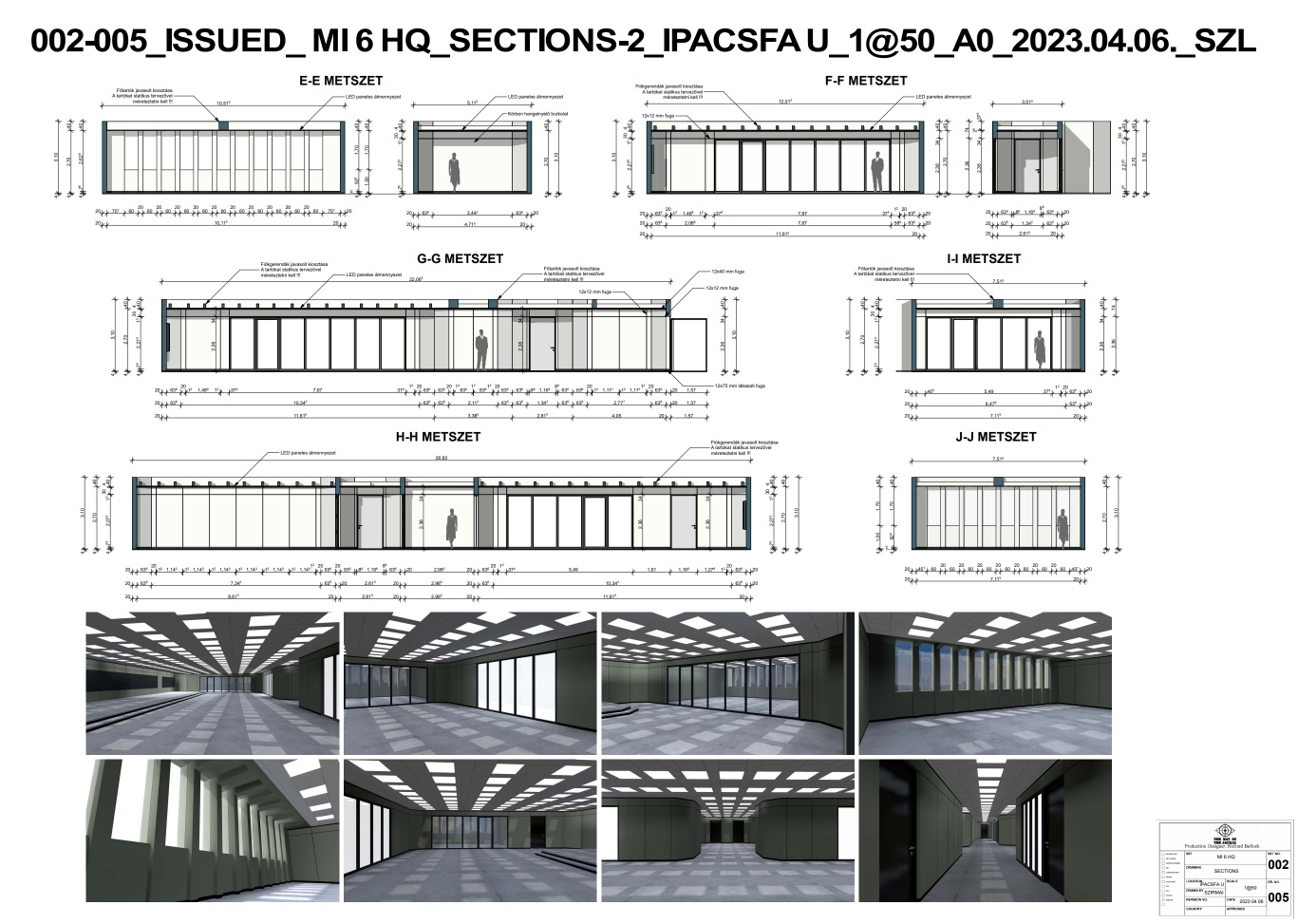
Construction plan for “The Day of the Jackal”, courtesy of Richard Bullock.
Kirill: What do you know now that you wish you knew when you were starting out? What advice would you want to give to your younger self?
Richard: One piece of advice would be immediately ignored by most young people [laughs] which is to have patience with people, to remember that everybody has things they have to deal with, that everybody has their issues. Be patient and persevere. Keep going. Keep an open mind and stay interested. Remember that what we’re doing is incredibly exciting. It’s sometimes easy to forget that we’re quite privileged to be working in this industry. Stay excited about it.
Recently I have been very impressed by some of the new generation coming into the industry. I believe in evolution! They seem very smart, talented, mature, and importantly, considerate to others. In the end, the people are the most important thing.
Kirill: What keeps you going in the industry?
Richard: I still love what I’ve always loved about it. I’m working in my favorite medium which is film. I’m working in this specific area that combines narrative with art: visual storytelling. I’m always meeting interesting new people. Some things are always different. You always get a new challenge.
Sometimes it is difficult balancing it with family life, but you have to make that work. Sometimes you have to sacrifice doing a job that you might like to do, because it doesn’t work for your family. That’s part of it. Sometimes you do horrible jobs. Sometimes you do jobs which are rough and stressful. And then sometimes those are the projects that you’re most proud of when you finish and you look back at it.
It’s not just one thing that keeps me going. It’s all of those things. It’s an extraordinary way to work and it’s still keeping me interested.
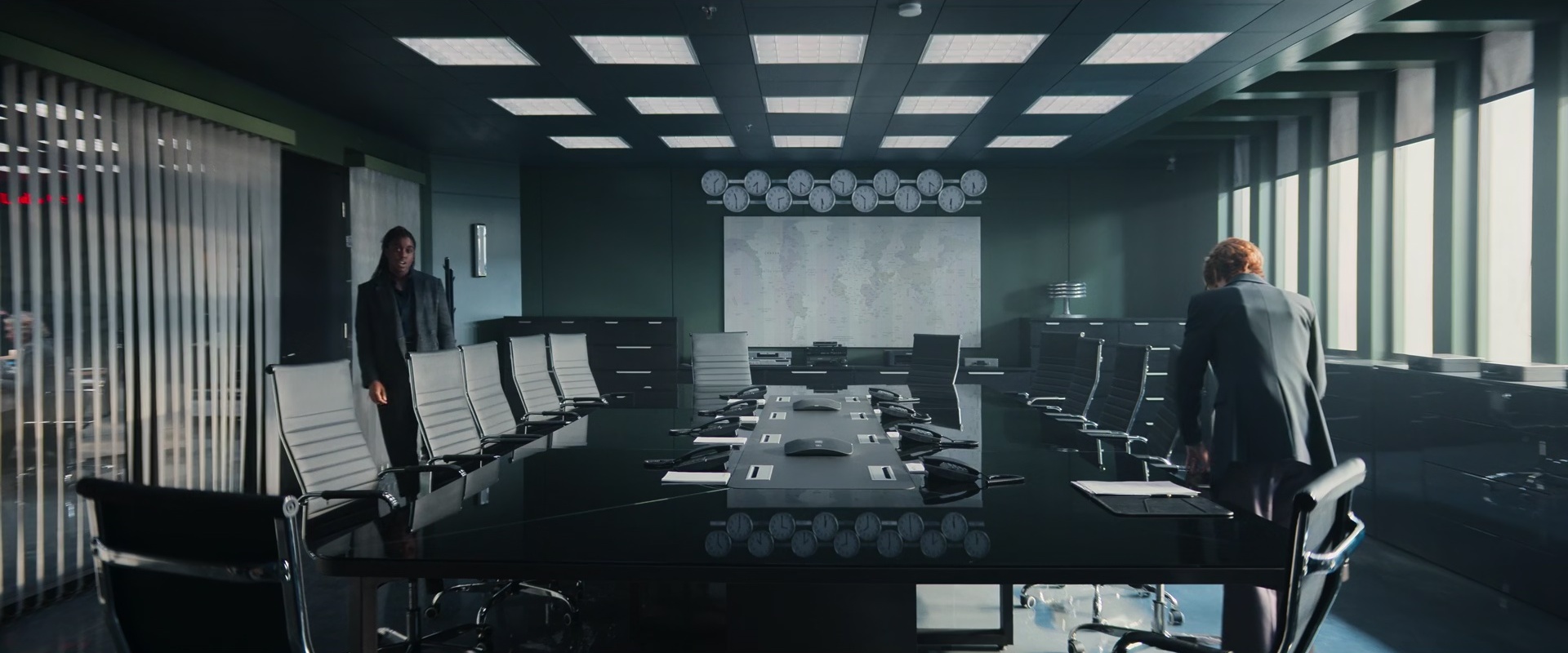
Production design of “The Day of the Jackal” by Richard Bullock.
Kirill: My last two questions are about your favorite things. What would you consider to be the golden standard of production design? What productions did you look up to, what productions shaped your own taste, what would you consider to be the classics?
Richard: One of the first films that got me very excited about the portrayal of a totally new kind of world was Terry Gilliam’s film “Brazil”. It still stands out. His work is fantastic. I saw “Bladerunner” at around the same time, which also felt like a window into a new realm of the imagination. Ridley Scott’s work is hugely inspiring. These are two auteur directors who both came from an art and design background.
As a kid I remember seeing “The Empire Strikes Back”, and when I left the cinema I felt like it had actually happened, like I had experienced something real. I remember the moment I saw a magazine with the storyboards from “Raiders of the Lost Ark” and I got my first inkling of what goes into making a film. So Lucas and Spielberg. Both films designed Norman Reynolds.
The work of Dean Tavoularis, including “Apocalypse Now”, “The Godfather” films, and “One From the Heart” is production design at its best.
I love “A Matter of Life and Death” by Powell and Pressburger, designed by Alfred Junge, where you have a self-conscious kind of production design. You know it’s theatrical, and that was revelatory.
Richard Sylbert could possibly be my all time gold standard if I had to choose one. “Catch 22” is an exceptional piece of production design. “Chinatown”. “Rosemary’s Baby”. Jack Fisk could be another – “Days of Heaven”, “There Will be Blood”, “The Revenant”. Then there are David Lean’s films designed by John Box. The films of Stanley Kubrick who worked with exceptional production designers including the visionary John Barry; Ken Adam, a master at the pinnacle of the craft; Anton Furst, another visionary; and Anthony Masters whose technical excellence on 2001, I would argue, had a significant cultural influence globally.
I also have to mention the early films of Werner Herzog as a massive influence. And perhaps counter-intuitively the films of the Dogme movement including Festen and Pusher.
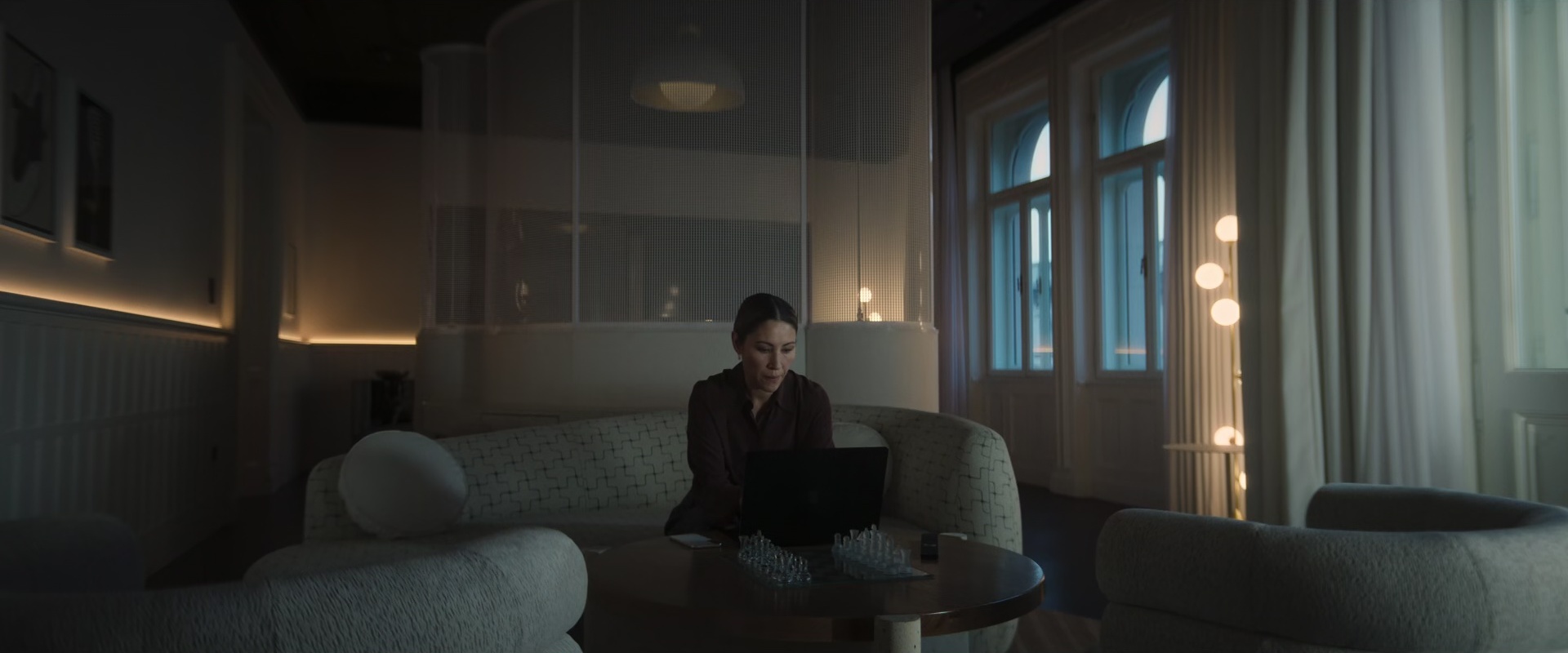
Production design of “The Day of the Jackal” by Richard Bullock.
Kirill: Of all the places this particular production took you to, what was your favorite place to eat at?
Richard: There’s a town called Opatija in the Istria region of Croatia. You can walk along a coast path north and come to a small village called Volosko. There, beside a small harbour, you will find Plavi Podrum, my favorite restaurant. I first went there when I was working on “McMafia”, and then we went back there for Day of the Jackal. It’s an absolute standout, you can’t beat it. They have absolutely fantastic seafood, and very good Croatian wine.
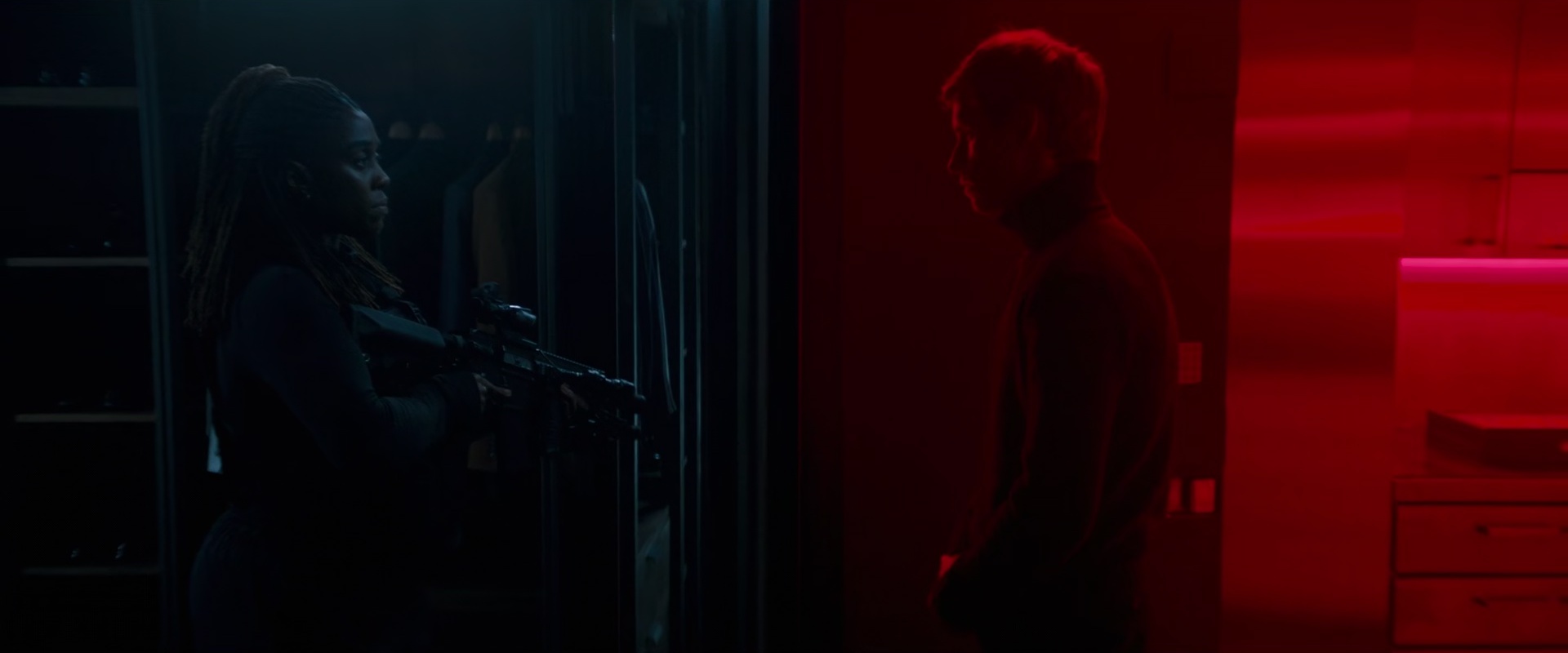
Production design of “The Day of the Jackal” by Richard Bullock.
And here I’d like to thank Richard Bullock for taking the time to talk with me about the art and craft of production design, and for sharing supporting materials. “The Day of the Jackal” is available for streaming on Peacock. Finally, if you want to know more about how films and TV shows are made, click here for additional in-depth interviews in this series.
