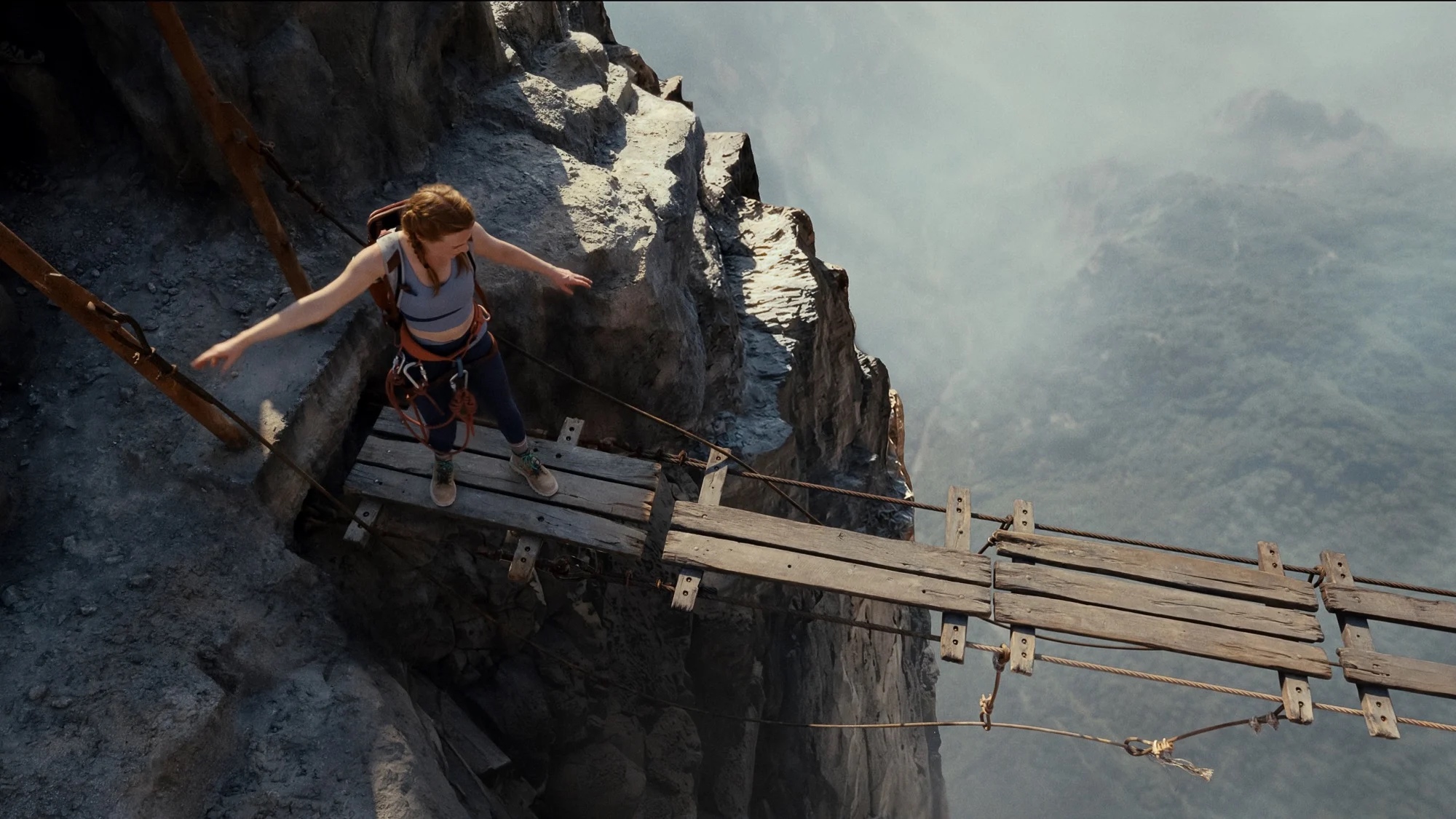
 Harriet Slater as Jax Hunter in "Fall 2: Deadpoint", courtesy of Lionsgate
Production design of “Fall 2: Deadpoint” – interview with Jacinta Leong
Continuing the ongoing series of interviews with creative artists working on various aspects of movie and TV productions, it is my pleasure to welcome Jacinta Leong. In this interview, she talks the role of production design and the bigger changes in the art department in the last few decades, key ingredients to longevity in the industry, and experiencing stories on the big screen. Between all these and more, Jacinta takes a deeper look into her work on “Fall 2: Deadpoint”.
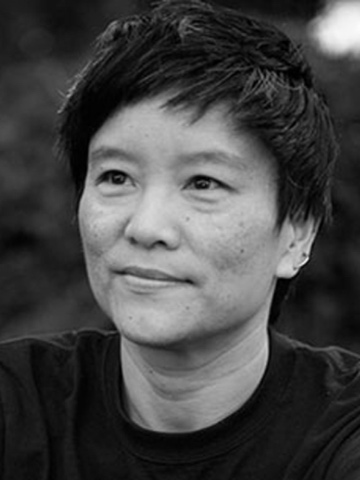 Kirill: Please tell us about yourself and what drew you into the world of art department and production design.
Jacinta: I am a film production designer. The production designer is responsible for everything that is on the screen that you see during a film, except for costumes and the actors.
I was drawn into this world step by step. When I was twelve, I wanted to be a performer on stage, whether it be with music or acting. Together with my sisters I went to audition for a stage play called “The King and I”. The set designer, Lindy Whistler, was a qualified architect. I was always interested in drawing buildings, and I thought that if I want to turn up to auditions, I could also study architecture to become a set designer and have a couple of options.
When I turned seventeen, I went to the Queensland University of Technology. In my final year there, I found myself being drawn more to film than theatre. My final year thesis was on set design for film and television, because there is such a crossover between architecture and set design. Many of the principles are the same. Most of the set designers for theatre were architects, because often the backdrops were of a city or a street. That’s how I got drawn into it.
After I finished the course, I started sending my CV out to production designers, art directors and studios. Then I was lucky enough to land a job at the movie studios in Queensland. I also wrote to the production designer Henry Bumstead in the ’90s, asking if I could do some work for him. I joined his art department in the States to work as an intern on a film called “The Stars Fell on Henrietta”, and I was totally hooked by then. That was in the early ’90s, and I haven’t stopped since.
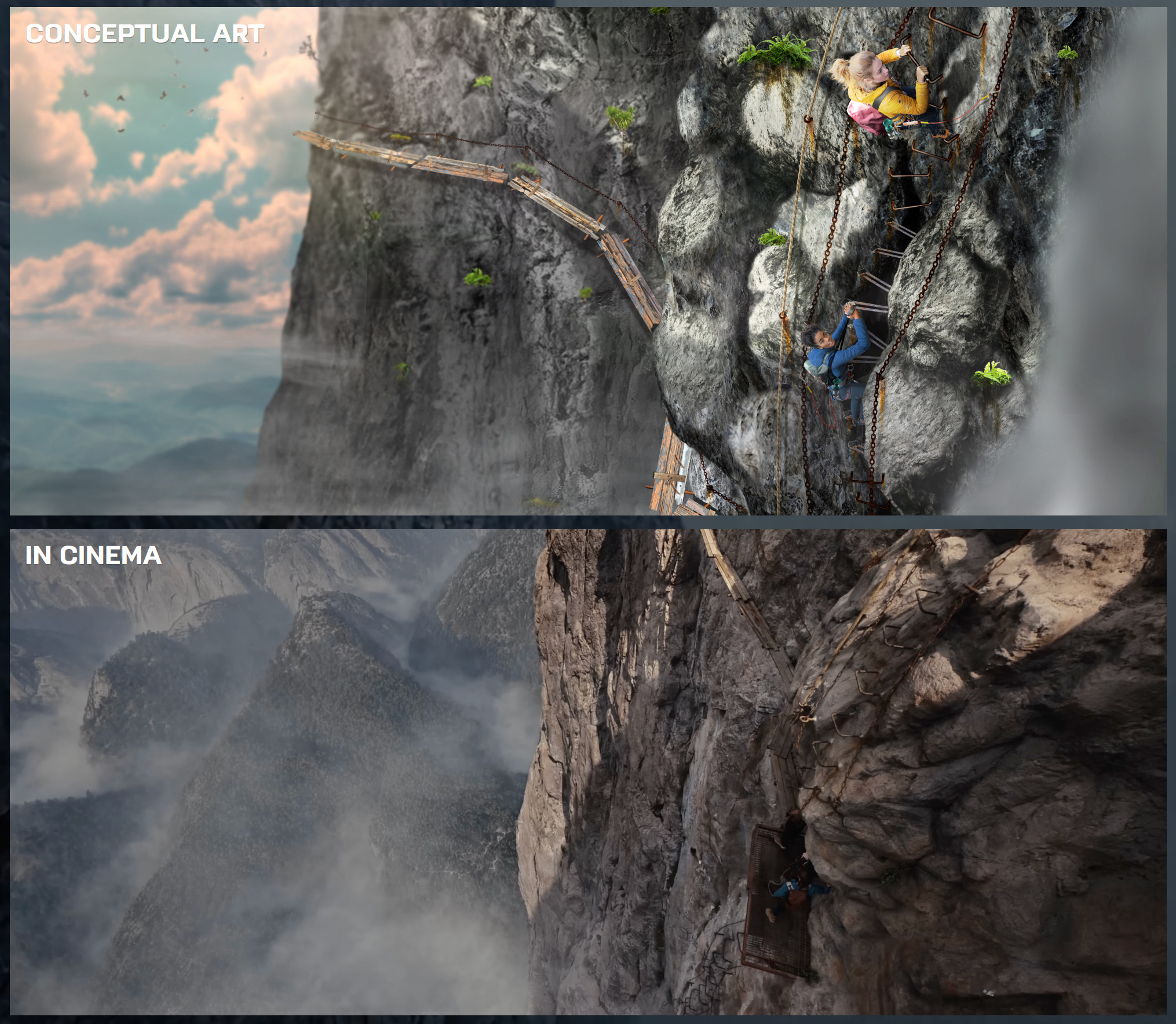
Conceptual art (top) and final still (bottom) of ladders and platform on “Fall 2: Deadpoint”, courtesy of Jacinta Leong.
Kirill: Looking at these 30 years in the industry, what are the bigger changes in how these stories are made from the perspective of the art department?
Jacinta: From the perspective of production design, the principles of designing have not changed. It’s more about the process of creating artwork and drawings to be built, and the way of conveying that to everyone who needs to know what it’s going to look like – be it the director, the cinematographer, or anybody else.
Back in high school I had a subject called geometrical drawing and perspective. We used T-squares, set squares, lead pencils, and erasers. Then, when I was studying for my university degree, I started working in an architectural firm, and they were using AutoCAD. My experience using AutoCAD has been enjoyable, but I’m very glad to have had the lead pencil background.
Going back to film production design, sets were drawn and drafted using pencil and T-square. When I was on “The Stars Fell on Henrietta”, Mr. Bumstead was there with his T-square lead pencils and drawing board. So that’s one change – going from lead pencil drawings to computer drawing, and the 3D aspect of it as well.
The second one is how research has changed with the digital age of the Internet. When I was starting, a production designer would turn up with tubs full of books to bring into the art department. I still do that now. I’ve got some books, and I’ll put post-it notes on and tag pages and add that to the reference packages. But most people do research online.
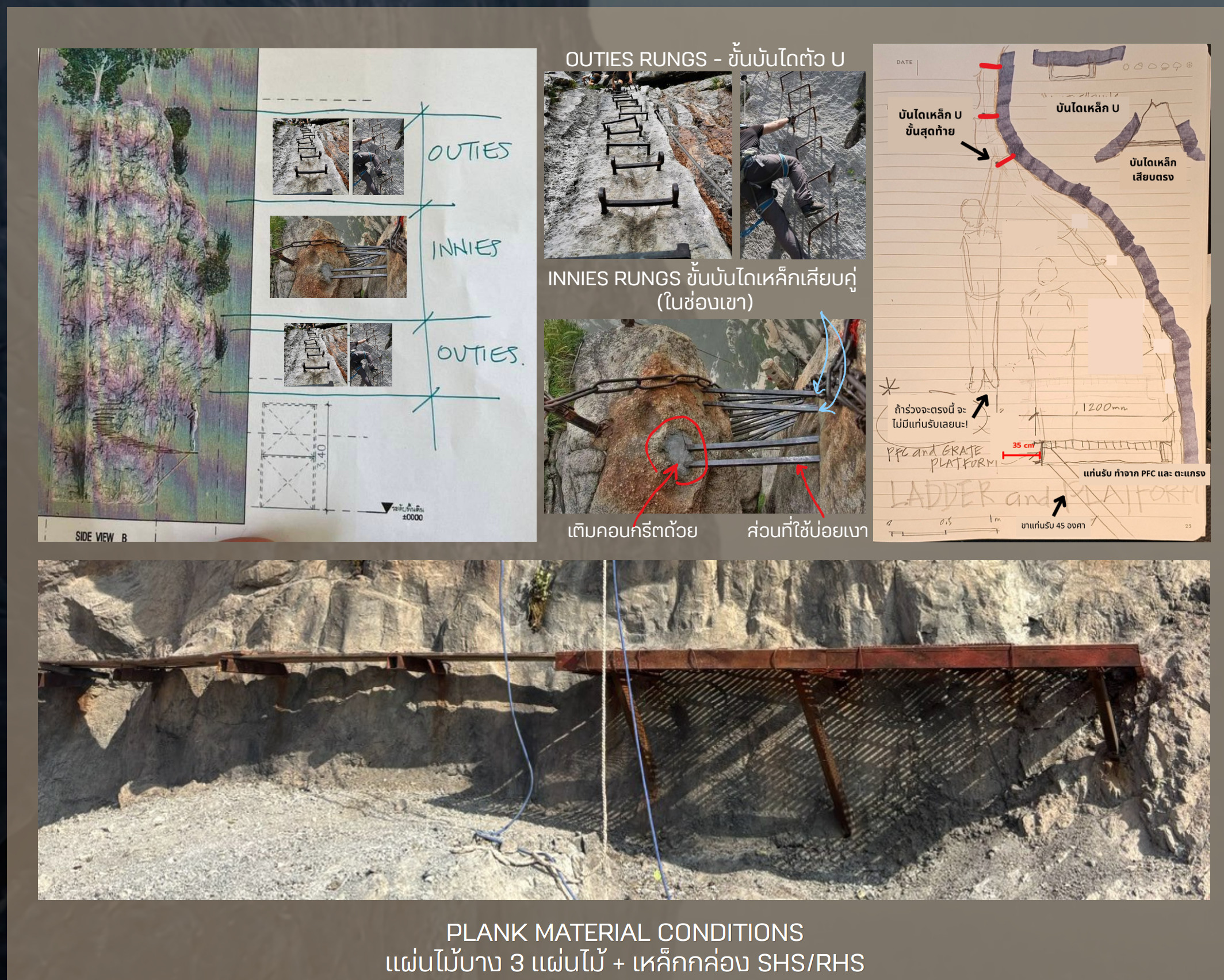
Design schematics and construction details of ladders and platform on “Fall 2: Deadpoint”, courtesy of Jacinta Leong.
Kirill: Getting to “Fall 2: Deadpoint”, how did it start for you? How did it find its way to you, or maybe how did you find your way to it?
Jacinta: In 2023 I was introduced to the directors, Peter and Michael Spierig. I worked with them on a project which didn’t end up being made. But because we had met on that one, the following year they contacted me to work on “Fall 2: Deadpoint”. It came up quite quickly, and I was only too happy to have the opportunity to work with them on a film that went ahead. I like to travel, so going to Thailand was a great adventure.
Kirill: Starting with the very first set that we see in the movie, which is the house where Shiloh’s sister Jax lives. How did you approach creating that environment?
Jacinta: For economical reasons, if you find a location, that is a good start because it’s already existing. In Thailand, there was a movie house which had been used for another series. It was a two-story interior and exterior, and I would say that the actors did most of the work there to make you believe it’s happening in the USA. You believe they were in the USA because of who they are. We dressed it with pizza boxes, some furniture pieces, and some artwork on the wall. It was quite dimly lit in the background, and that created a morning atmosphere. We didn’t see that much of it. There were scripted items like the table in the kitchen where they’re sitting at, and the lounge room as well.
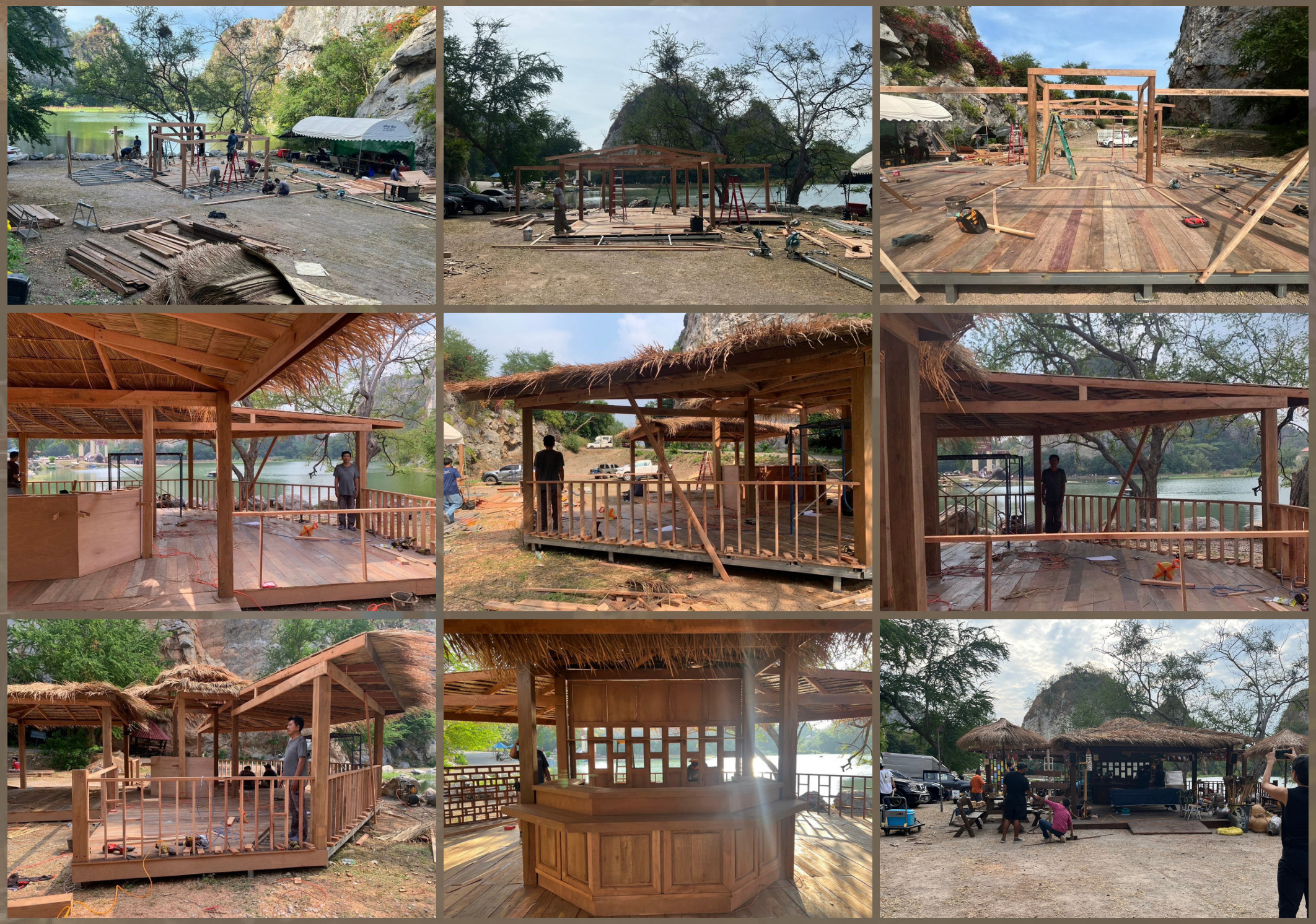
Building the High Spirits tourist bar on “Fall 2: Deadpoint”, courtesy of Jacinta Leong.
Kirill: Then they move to the tourist camp when they get to Thailand. Was that something that existed or was that something that you built?
Jacinta: We built that from scratch. Jax and Luce appear when they walk through some jungle-ish environment, and they hear music, and then they see this bar for tourists who want to climb Mount Kwan. It didn’t exist. We built that from scratch on a plot of land near a lake within a national park. It was the perfect setting.
One of the design elements was to make use of that lake and have 360-degree views around. Then you have a locker space for them to get their harnesses. And then you have the lodge that you see them in, and we built that in another area of the park. I’m sure the locations team were looking for an isolated bar, but you wouldn’t find something that would be suitable for these backpackers and tourists with the flexibility to shoot it in day and night with a film crew. That’s how we ended up building the set to get the shots that we wanted.
Kirill: When they get to the set of the fictitious Mount Kwan, where was that shot, what existed there, and what did you add?
Jacinta: Peter and Michael wanted the height for the planks because we wanted to look up to them in their perilous positions. You can only go so high before it becomes quite time-consuming to shoot. So we set planks at a maximum of about six meters off the ground, because the camera cranes could only reach so far. That was the best way to achieve those shots.
What existed in the first place was a quarry about 2.5 hours drive from Bangkok. We had a rock climbing expert assess the quarry walls for safety and strength. Originally we thought that we may have to put planks up not into the wall, but actually support them from the ground with scaffolding – and then we’d have to have VFX erase those supports digitally. But thankfully, after the testing it was found that we would drill into those rock faces safely and place the planks on the brackets that we put in.
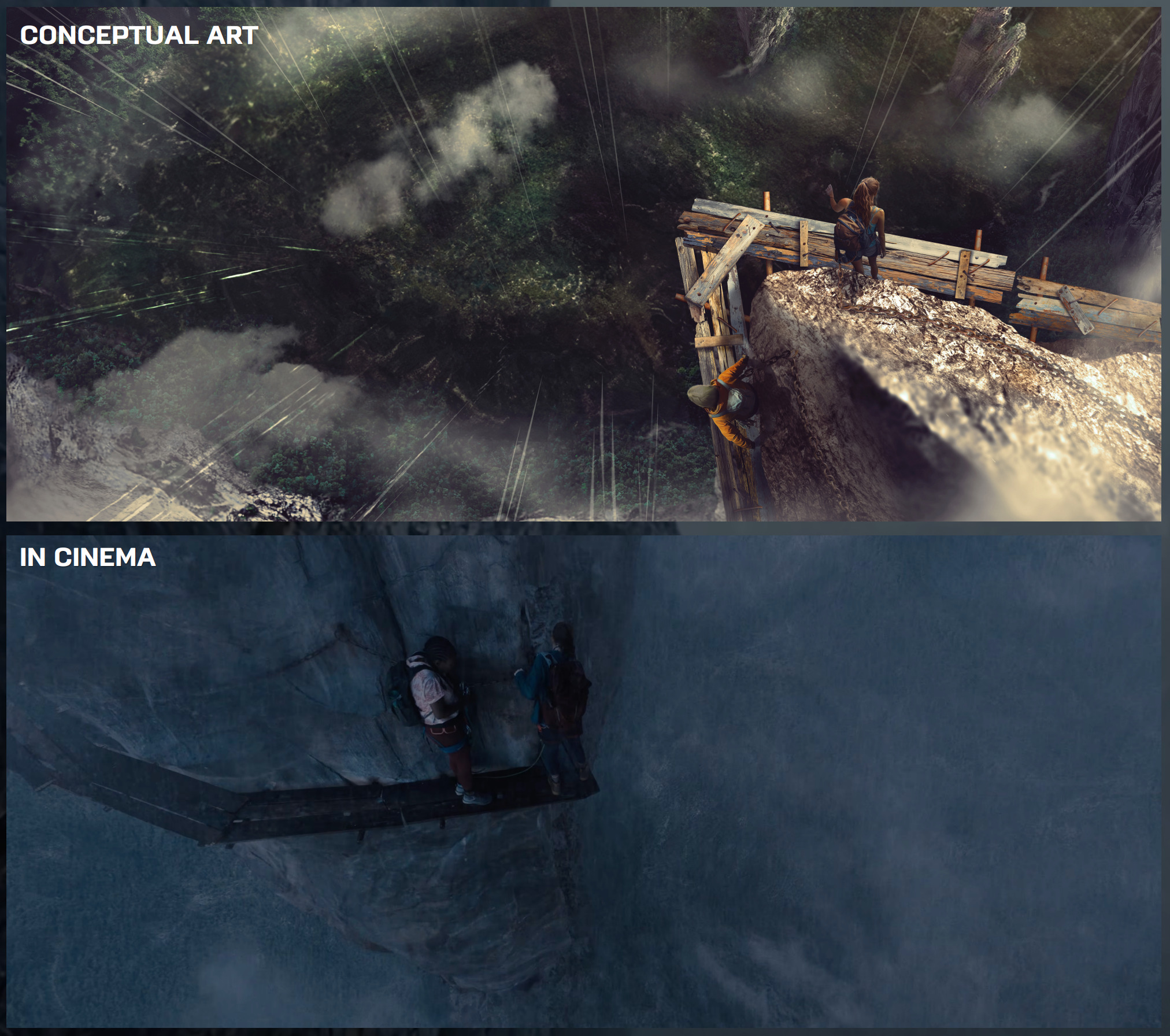
Conceptual art (top) and final still (bottom) of Devil’s Elbow on “Fall 2: Deadpoint”, courtesy of Jacinta Leong.
Kirill: Without too many spoilers beyond the movie trailer, the story spends a lot of time in the Devil’s Elbow. What was the setup you envisioned for building the structure there and how much work went into it?
Jacinta: The vision was to have the two climbers stranded at an extreme height. And we wanted the camera to shoot it in a way that places the audiences directly into that experience through immersive filmmaking.
The script called for it to have a huge, breathtaking view the first time they see it. We needed to have them at that height and at that sharp angle, and that feature didn’t exist at the quarry. That’s why we built it. There’s so much other action there that demanded a set build as well. You see it in the trailers when they’re hanging with their arms from those rungs, or they’re stepping and standing on them.
It was built using scaffolding and polystyrene in that initial sharp arrowhead shape. It was built in a workshop in a flat area of ground where they had room, and then it was transported to site and assembled using a crane.
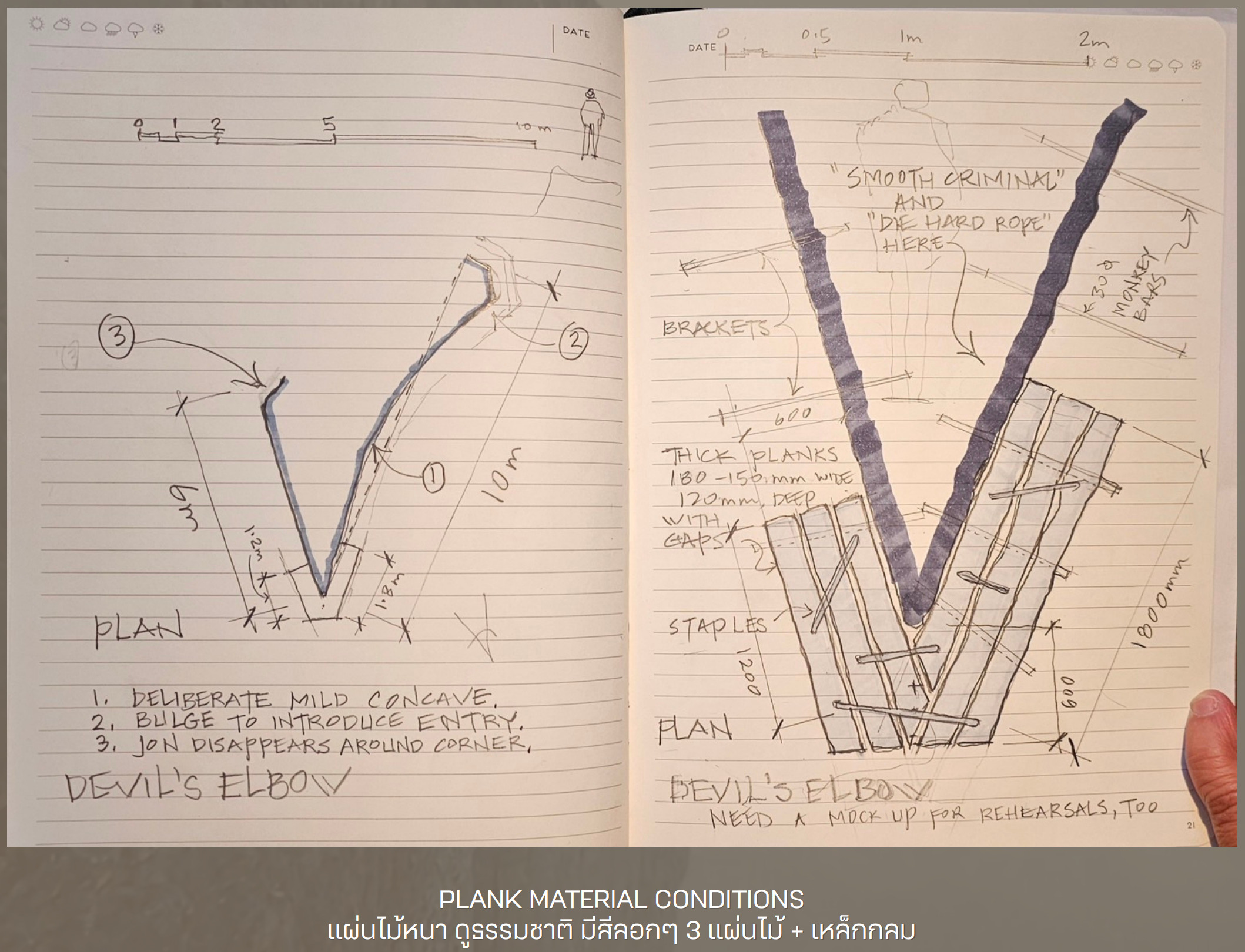
Design schematics of Devil’s Elbow on “Fall 2: Deadpoint”, courtesy of Jacinta Leong.
Kirill: The last big piece is the sky bridge closer to the end of the movie. How much of it is real, and how much is the visual effects or set extensions?
Jacinta: The length of the bridge, the rock face that they start in to get to that bridge, and the platform at the end – they were all real. As Michael and Peter were determined to use the natural light and landscape of that area in Thailand, it was built at that same quarry with the sun setting on that side. It was engineered as well. It had to be safe for three actors to walk across – plus camera crew, makeup, stunts – all on that platform.
We had several versions of that bridge. At one point it was a rigid timber bridge to be in keeping with the planks. We were looking at so many bridges that are high up around the world. And then one of the things Michael said was that it could be a tight rope. I looked at steel wire cables together with planks to have it consistent with that world. That was a different kind of plank. It was one that would move and sway. It was broken down and dilapidated. And, again, we were pushing that fear and making it feel that you wouldn’t step on it.
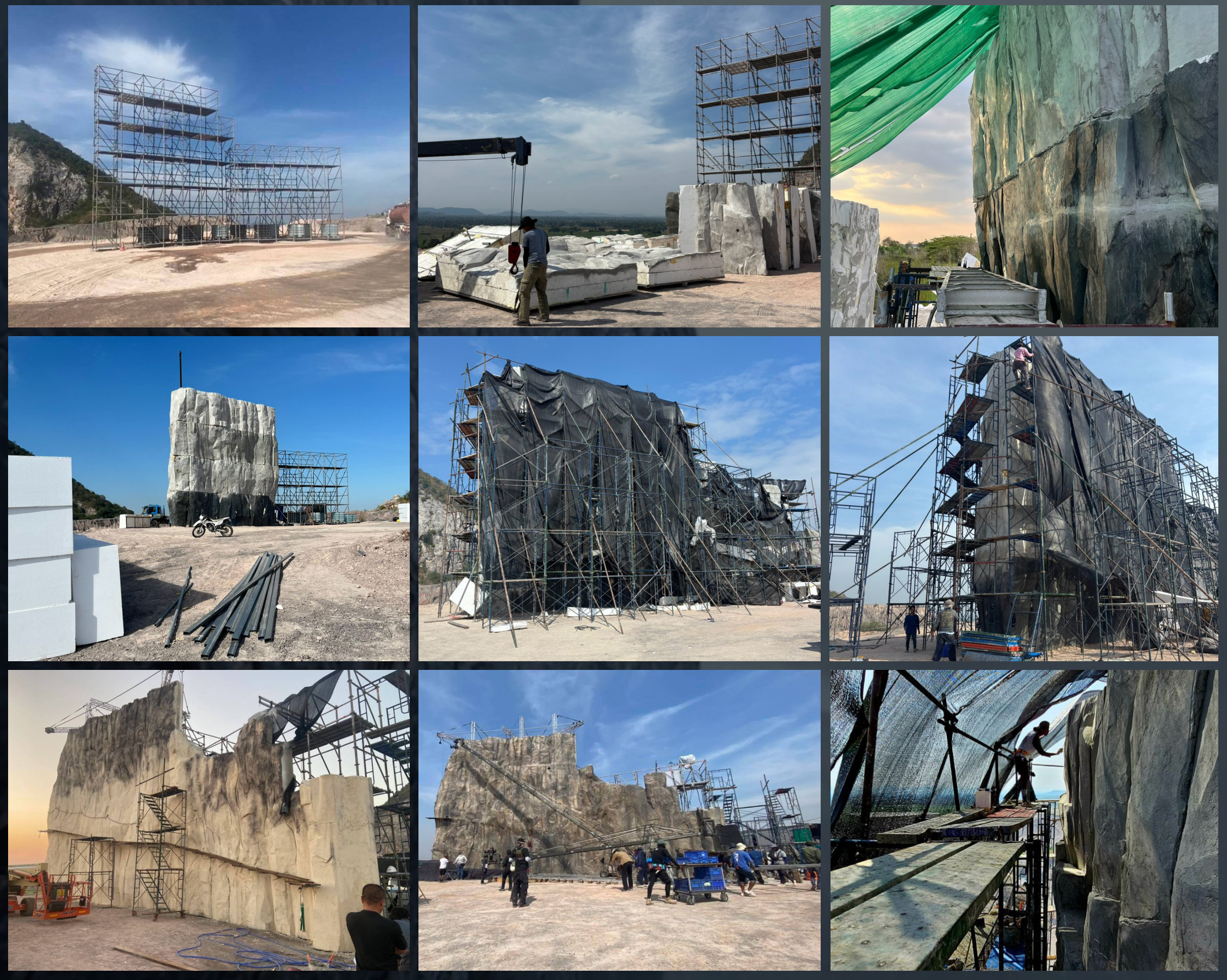
Building process of Devil’s Elbow on “Fall 2: Deadpoint”, courtesy of Jacinta Leong.
Kirill: Do you want people to go and see it on the biggest screen possible? Do you want people to go and see it in the movie theater?
Jacinta: I would love the audience to go and see “Fall 2: Deadpoint” in the movie theater. The experience is worlds apart from watching it on TV at home. It’ll be a more immersive experience, and the sound will really place you there as well. The scenery in Thailand deserves the big screen. I hope the audience enjoys having their buttons pushed.
Kirill: What are the key ingredients to longevity in your field?
Jacinta: The key to longevity in this field is that you have to really enjoy it. I don’t know if it’s talent, skill, or a willingness to be involved. But you really must want to be working on films to have that longevity.
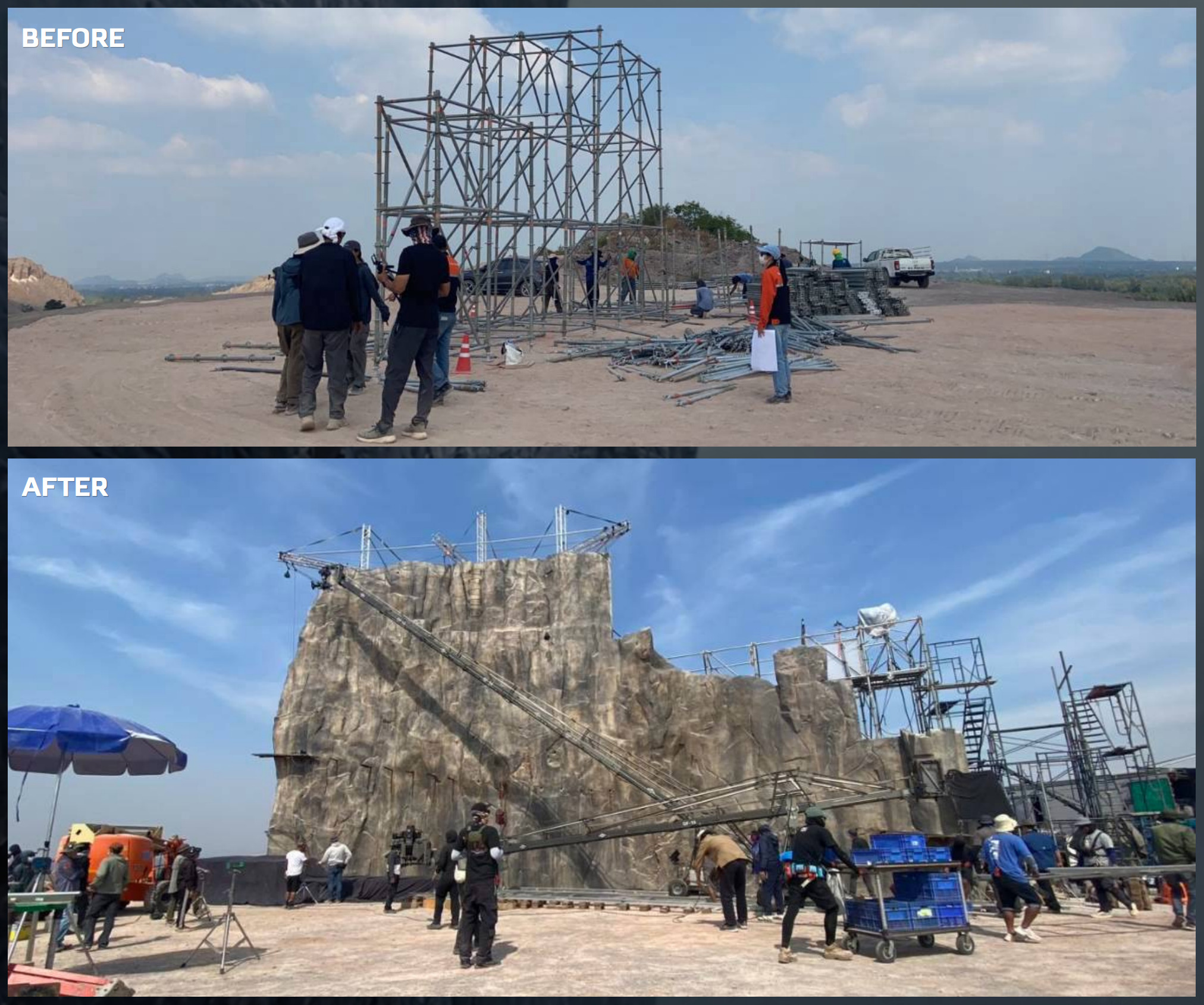
Before and after the completed construction of Devil’s Elbow on “Fall 2: Deadpoint”, courtesy of Jacinta Leong.
Kirill: What was your favorite dish or food that you had in Thailand while you were working on this movie?
Jacinta: I’m from Australia, and Thai cuisine has a lot of spicy food. There were a couple of occasions I would line up to the food that they had, and then the person in control of the food would say “Oh, put this spicy dish away, have that plain rice over there” [laughs]. I’m going to say it was vegetarian Thai fried rice.
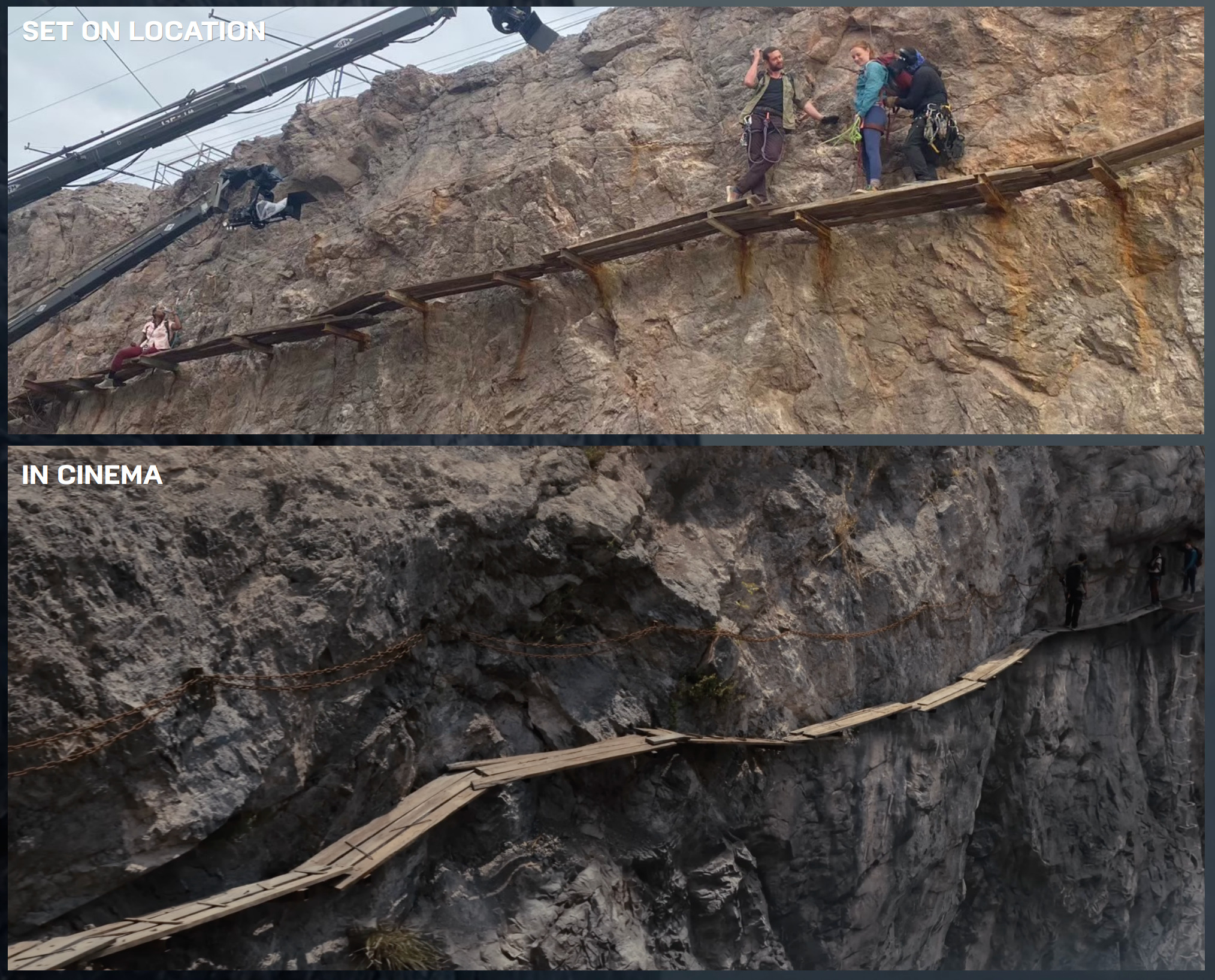
Constructed set (top) and final still (bottom) of walking planks on “Fall 2: Deadpoint”, courtesy of Jacinta Leong.
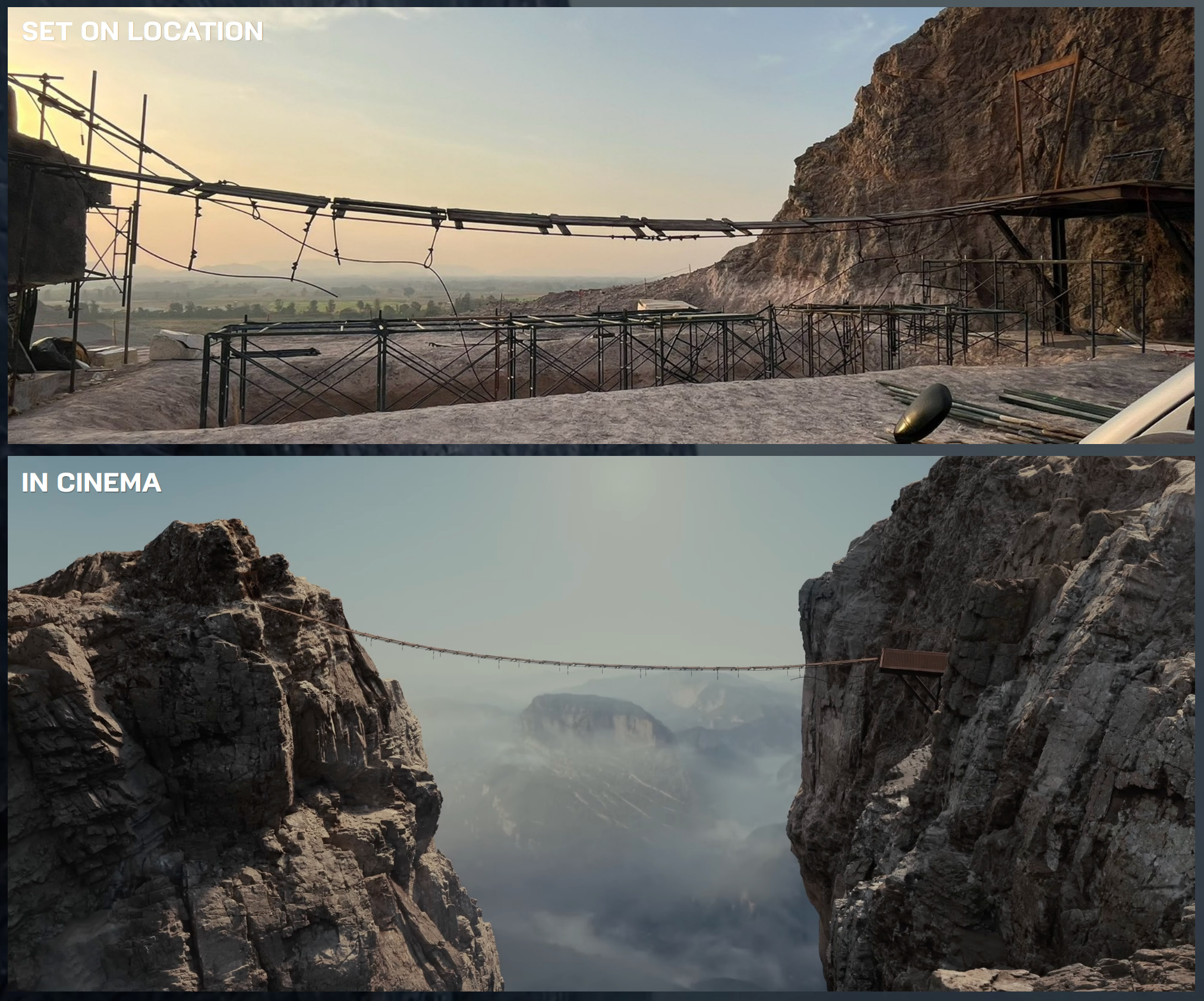
Constructed set (top) and final still (bottom) of the bridge to peak of Mount Kwan on “Fall 2: Deadpoint”, courtesy of Jacinta Leong.
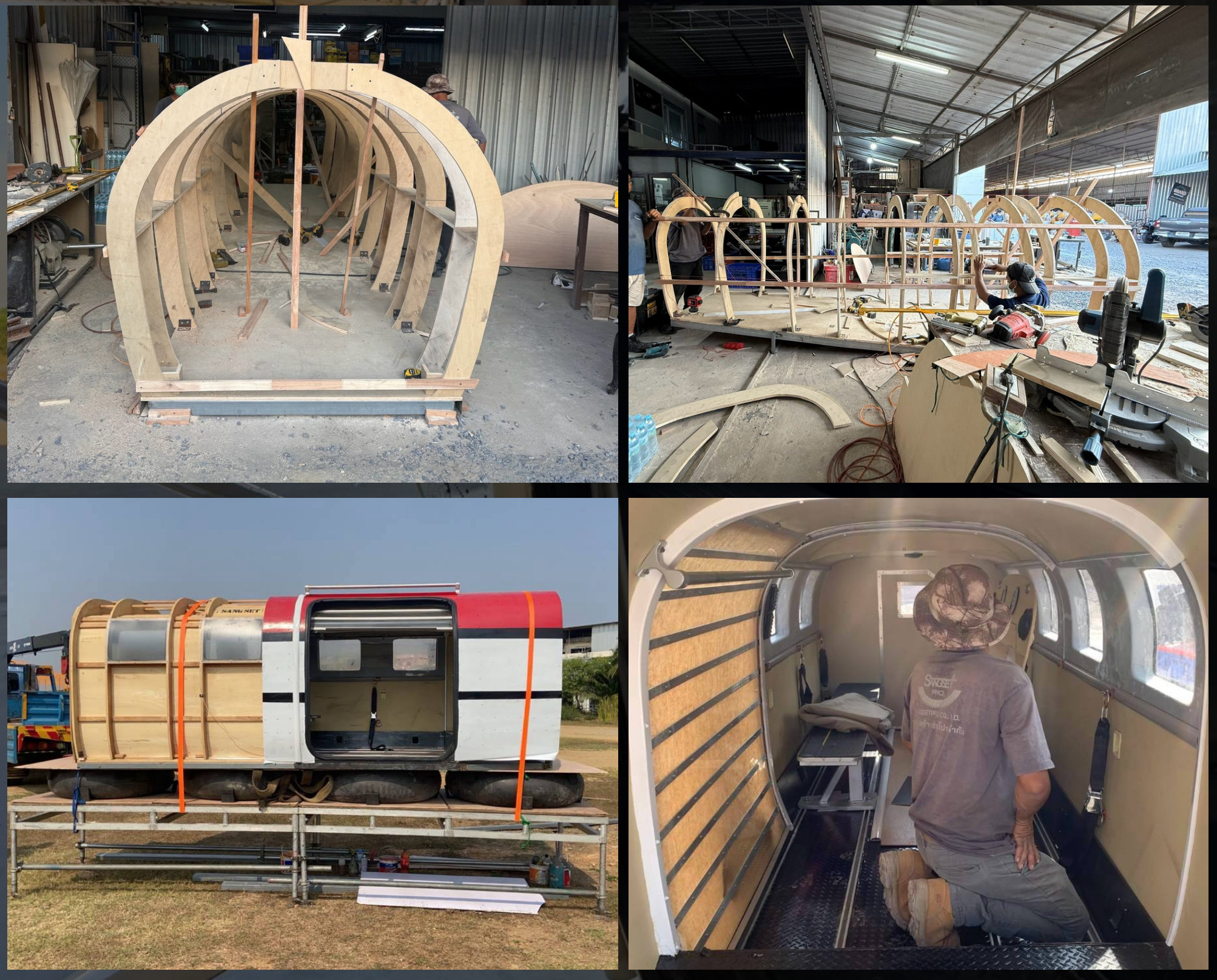
Building process of the aircraft cabin on “Fall 2: Deadpoint”, courtesy of Jacinta Leong.
And here I’d to thank Jacinta Leong for sharing her time with me to talk about the art and craft of production design, and for sharing the supporting materials. I also want to thank Jackson Vickery for making this interview happen. “Fall 2: Deadpoint” is playing in theaters now. Finally, if you want to know more about how films and TV shows are made, click here for additional in-depth interviews in this series.
