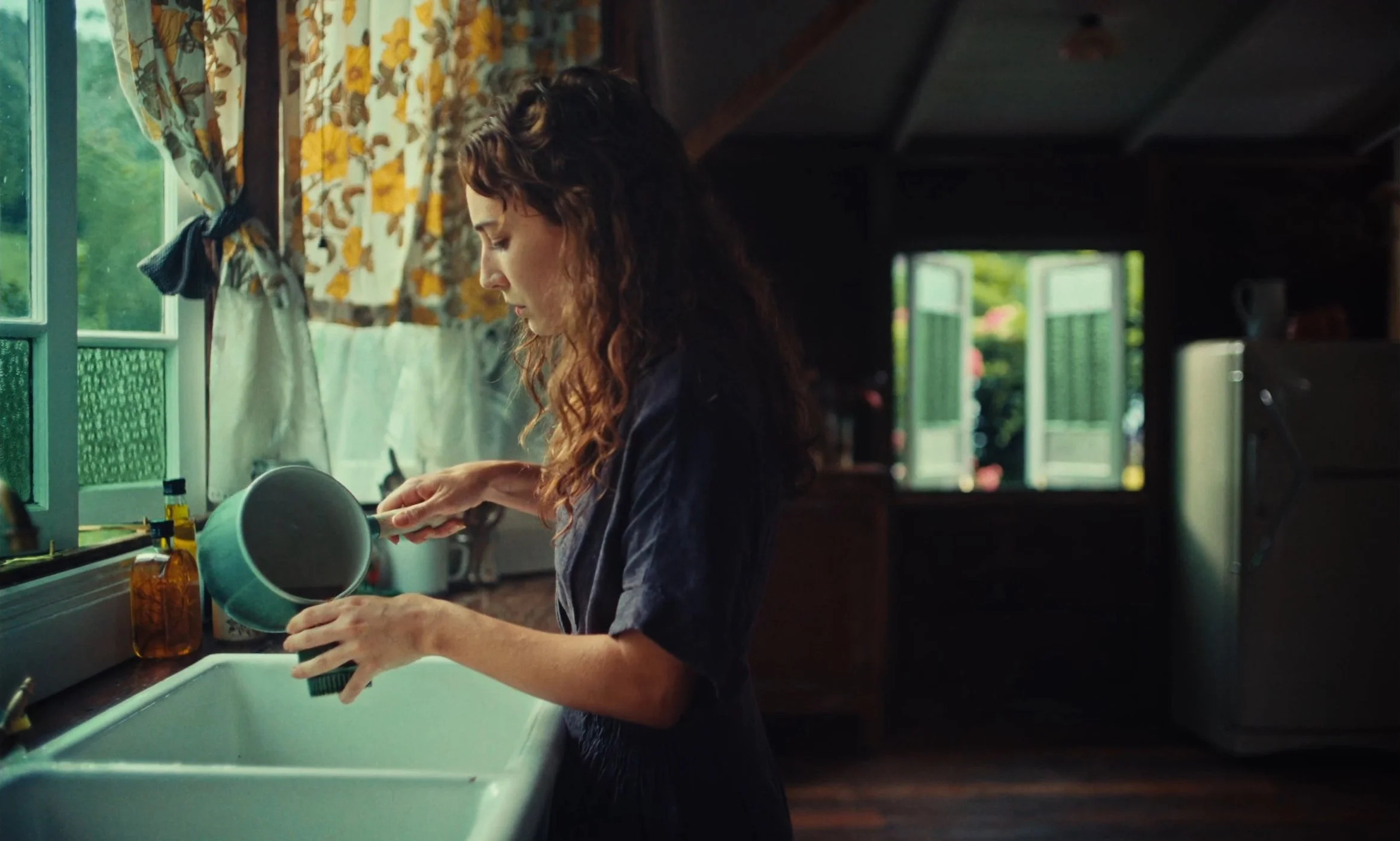
 Cinematography of "Cruel Hands" by Charlie Cole.
Cinematography of “Cruel Hands” – interview with Charlie Cole
Continuing the ongoing series of interviews with creative artists working on various aspects of movie and episodic productions, it is my pleasure to welcome Charlie Cole. In this interview, he talks about the transition of the industry from film to digital, the evolution of tools at his disposal, importance of communication, and his thoughts on generative AI. Between all these and more, Charlie takes a deep dive into his work on the just released “Cruel Hands”.

Charlie Cole on the set of “Cruel Hands”.
Kirill: Please tell us about yourself and the path that took you to where you are today.
Charlie: My name is Charlie Cole, and I’m a cinematographer. I started out as a fine artist, I was in love with charcoal drawing, and went to undergrad in Brooklyn at Pratt Institute. And then I realized that to be a fine artist, at least what worked for me, you’re isolating yourself in the world so much. I started falling in love with the idea of working with collaborators and being inspired by other people’s art forms, which led me to picking up a camera and seeing how that fit – and I just fell in love with that.
I did freelance director / cinematographer work for a couple years, experimental poetic narrative type things, and then I applied to this grad school in LA called American Film Institute for cinematography. That’s when I started taking it more seriously as far as a craft and a career. Before it was much more of a passion and something that I felt very in tune to – but now it’s full throttle, making my job, making my life fully cinematography.
Kirill: Would you call yourself a digital native? Did you catch the tail end of the film as the medium?
Charlie: I love that term digital native, that’s really fun. I was at the transitional period where film was still very much alive, but not being taught so much. I got my hands on it a little bit, but only enough to see how beautiful it was. It was never directly accessible to me easily.
Even today, if I ever want to shoot with film, it’s quite a challenge with production to get film going. I get maybe a year to shoot a project on film. Usually it’s a short or a commercial. I love film, but I’m a digital native for sure. I definitely grew up with it, and feel very comfortable with it.
Now everything is so good that you can cheat it so easily between the two. I did a music video years ago with the director of “Cruel Hands”, and we worked with Andre Chlebak, the colorist who did “Mandy”. I could have sworn that “Mandy” was on film. I would have bet an arm and leg on it. My first question was what film stock was used, and sure enough it was digital. And if you’ve ever seen Steve Yedlin videos, he shows you how you can make anything look like anything else with the right approach of digital control or manipulation.

Cinematography of “Cruel Hands” by Charlie Cole.
Kirill: What are the misunderstandings or misconceptions about cinematography?
Charlie: I’m half French and half American. When I tell my French side of the family what a cinematographer is, they’ve never heard of it. I think in Europe there’s a lot more of the idea that the author-artist is in charge of the story and the vision, including the camera work, especially in French cinema.
Our role as cinematographer changes culture to culture and depends on each collaboration with each director. I’ve seen collaborations where the cinematographer is more of a camera technician who is helping the director’s vision come alive, and those can work beautifully. I’ve seen collaborations where the cinematographer and the director are figuring it out together. I’ve seen and been in situations where directors come from more of a theater background or they have a wonderful idea with little film experience, and they’re using you to help finesse the story through filmmaking and how to show a story through a film. It can mean so many different things.
The term that I’ve come to love is that the cinematographer is shooting what the actors cannot say. Your job is to shoot the subtext of every performance and shoot the subtext of the story. Years ago I saw “Shawshank Redemption” on a plane, and I had no headphones, so I watched it on mute. But the whole time it was clear what was happening, what the characters were going through, and what the story was going towards. That’s the job of the cinematographer – that the images say everything that can’t be said otherwise.

Cinematography of “Cruel Hands” by Charlie Cole.
Kirill: What is the most exciting recent development technology-wise, or maybe the most exciting technical thing that is on the horizon in your area?
Charlie: AI is obviously an exciting conversation – or very scary, depending on how you look at it.
The most exciting thing for me these days is that every camera is pretty excellent. I’m an Amira owner, and it’s quite large. I often find myself wanting to have a smaller camera for a trick shot or whatever, and almost anything you use looks gorgeous. It opens up a lot of doors, both financially and aesthetically. You can put the camera anywhere, and you can pretty much do anything.
I grew up in a world where I was idolizing the big chunky cameras that I would see on film sets, and I wanted to get my hands on those. And now that’s fizzling apart. Now it’s about finding a way to get the perfect image any way we can.
Kirill: Getting to “Cruel Hands”, how did you find your way to it, or maybe how did it find its way to you?
Charlie: Al Kalyk, the director of “Cruel Hands”, is one of my best friends. We went to grad school at the American Film Institute together. It’s his first feature, and we’ve been talking about it for maybe a year and a half before the funding started coming in. There were many parts of it, and then it ended up being a wonderful thing that we had been collaborating for so long.
It was a fully Australian production, and I was the only American there. He had to fight for me to be able to be a part of it, because there was pressure to have full Australian crew, tax incentives being involved and all. He really stuck his neck out to bring me on, and I couldn’t have done it with a better person. He’s been one of my best friends for a long time, and a collaborator too. We’ve done a lot of music videos and shorts together.
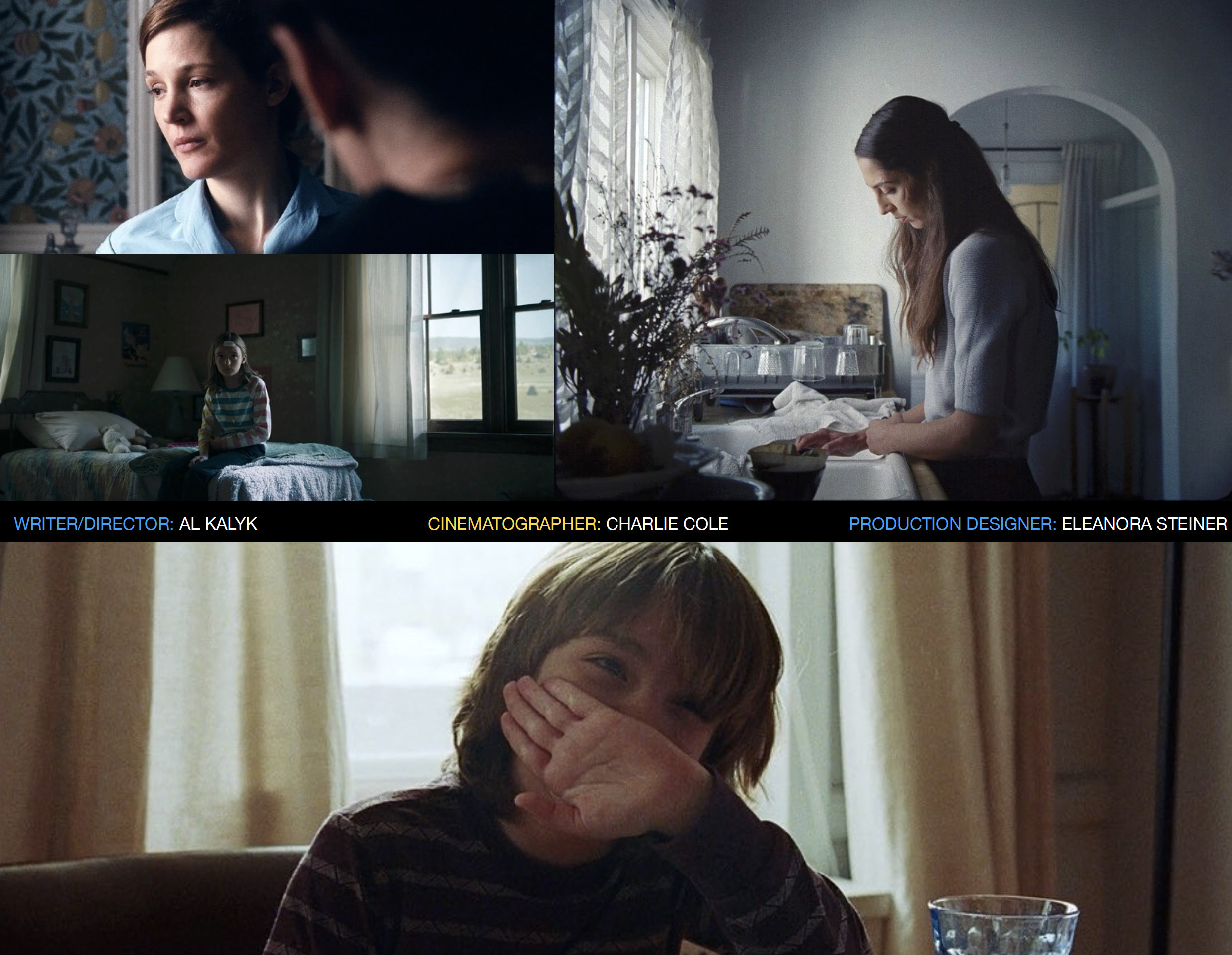
From the lookbook of “Cruel Hands”, courtesy of Charlie Cole.
Kirill: What discussions did you have about the visual style of this story?
Charlie: The discussions led a lot around blending early Cohen brothers and 70s western films and the boldness of that camera work with a much a more delicate look to the film. Our look – the coloring and the way the lenses were showing the world – came from a place closer to “Phantom Thread”. Our story is a balance between a mother and son who are trying to get through a tough situation , and then this husband who is chasing them down. There’s this contradiction between a western thriller and a coming of age quieter film, so the film had to find a way to mix in between the two visually.
We had a ton of references between the two of us. When he first sent me the script, I sent him this big lookbook that was what you would expect from a film like this on script. It’s independent, it’s low contrast, it’s a very wide open lens kind of aesthetic. And then Al came back to me and said that it was all wrong and that we have to start from scratch. He wanted the bold western in there, which you don’t get often these days. I loved that.
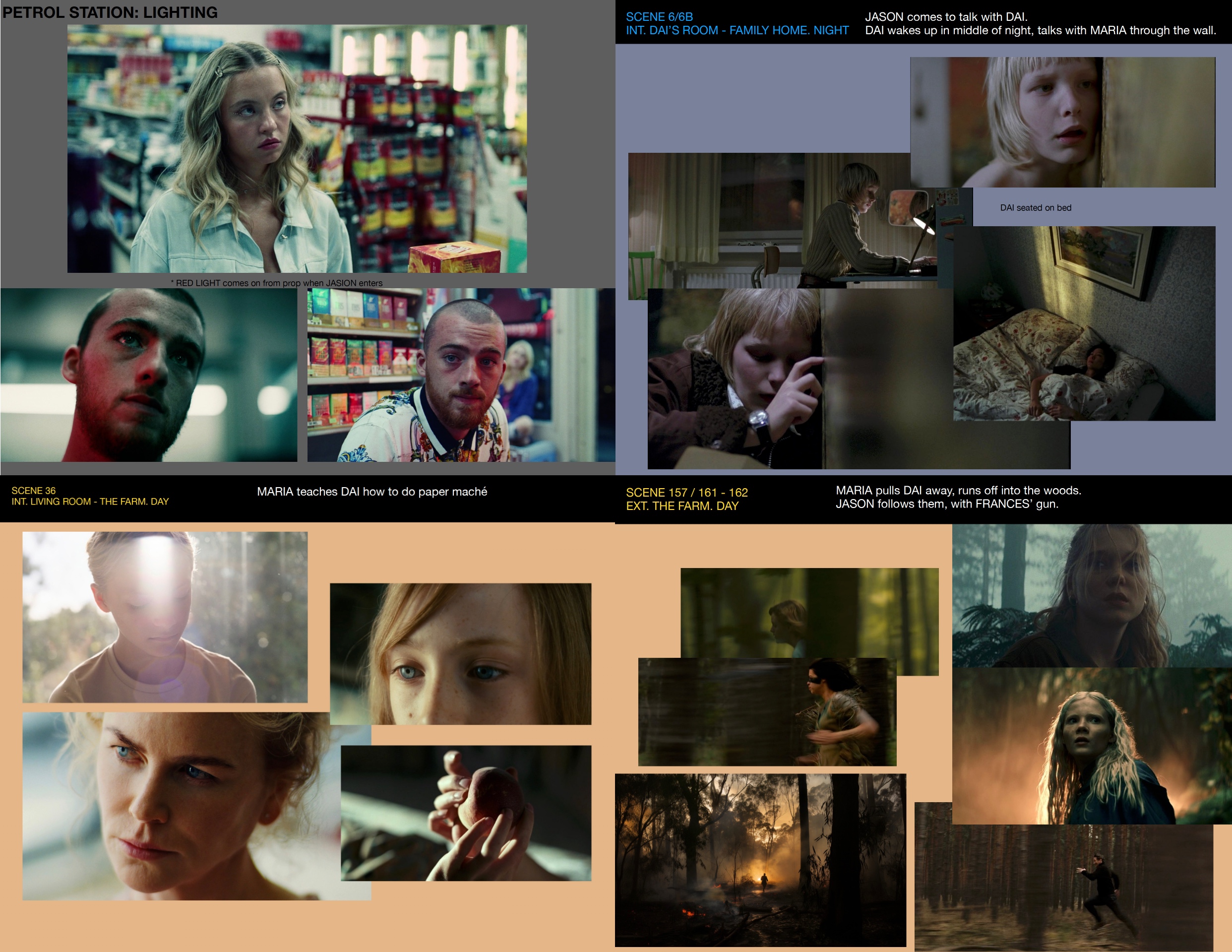
From the lookbook of “Cruel Hands”, courtesy of Charlie Cole.
Kirill: How did you approach separating the flashbacks from the main storyline?
Charlie: That’s something that got discovered in post. We didn’t shoot chronologically, but that was intended to be the earlier part of the film. Al directed the film, and he was also the editor. In the editing table he discovered that it was a lot more interesting as a back and forth jumping between the narratives.
In this film we had an approach where the first act uses only wide angle lenses, so it was shot on Leica-Rs 14-22mm. Act two was 25-50mm, and act three was 50-110mm. This turns the film into a pressure cooker where the image is getting more and more compressed as the film goes on. And then now that we have the flashbacks, you feel the world encroaching upon you, and then all of a sudden you get this escape into a wide-lenses flashback. It does a good job at releasing tension when it needs to be.
Kirill: Was there any color that you wanted to stay away from?
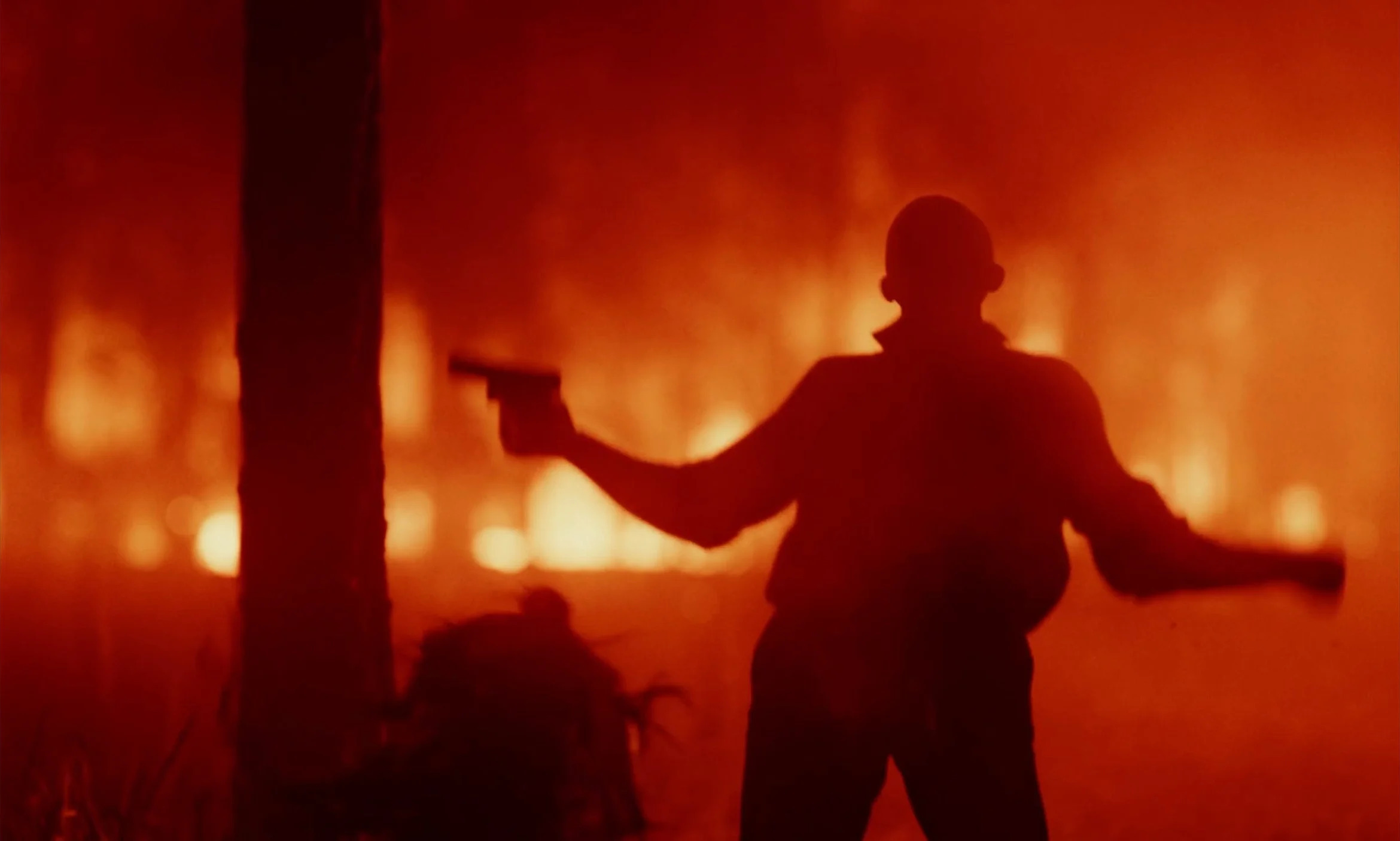
Charlie: For whatever reason, it didn’t feel like there was any room for purples. Our world is blue and green by nature, because it was so much in the woods. Then there was a lot of yellow and a lot of red. The father character was always represented by red. He is this encroaching threat, so the only red we ever wanted to feel in the whole film was only what was associated with him. We only feel red when we’re in the flashbacks at the house which he has a large part of, and then we feel more as he gets close – towards the end of the film when we’re more and more surrounded by the wildfires. The sky turns red and so the whole third act of the film is entirely dosed in red – which hopefully feels like a foreboding of him coming and taking over.
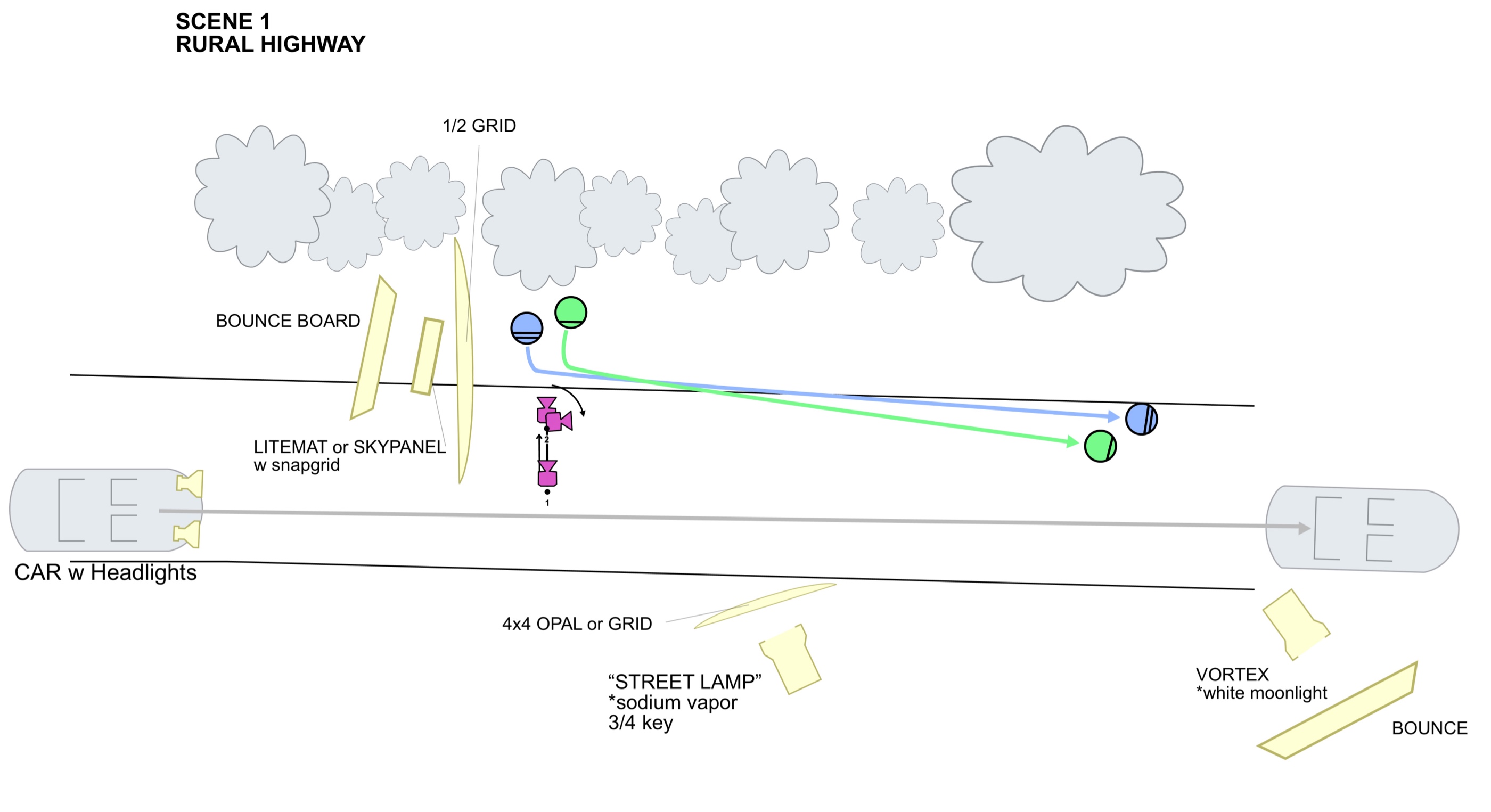
Lighting diagram for “Cruel Hands”, courtesy of Charlie Cole.
Kirill: Was the house a single thing, or was it split between location and set builds?
Charlie: The house was one beautiful location. But the entire floorboard scene where we find this big cavity under the house where the mother and son end up hiding underneath during the film – that was entirely built on the same property as the house. We had to have scenes where they’re crawling into it from the interior location, so we ended up building a six inch platform that covered the whole floor of additional wood that they could then break and go into. It was pretty intensive.
We were shooting with the Alexa Mini LF, which is not too big and not too small. Luckily, because that scene was a separate build, we’re in a barn at that point, so the camera was just right aligned with them. We were about five feet off the ground to give them the proper staging that they needed to climb up into it. Luckily we didn’t have to sneak a camera into a little cavity.
Kirill: What was your lighting setup? How are the lights treating you these days?
Charlie: We had a great gaffer named Dan Michaud and a great key grip named Sean Aston. It was a pretty small team all things considered. Our budget wasn’t too big on this, and the lighting was a lot of hustle. It was all LED, a lot of sky panels, a lot of little kino tubes here and there for little beats.
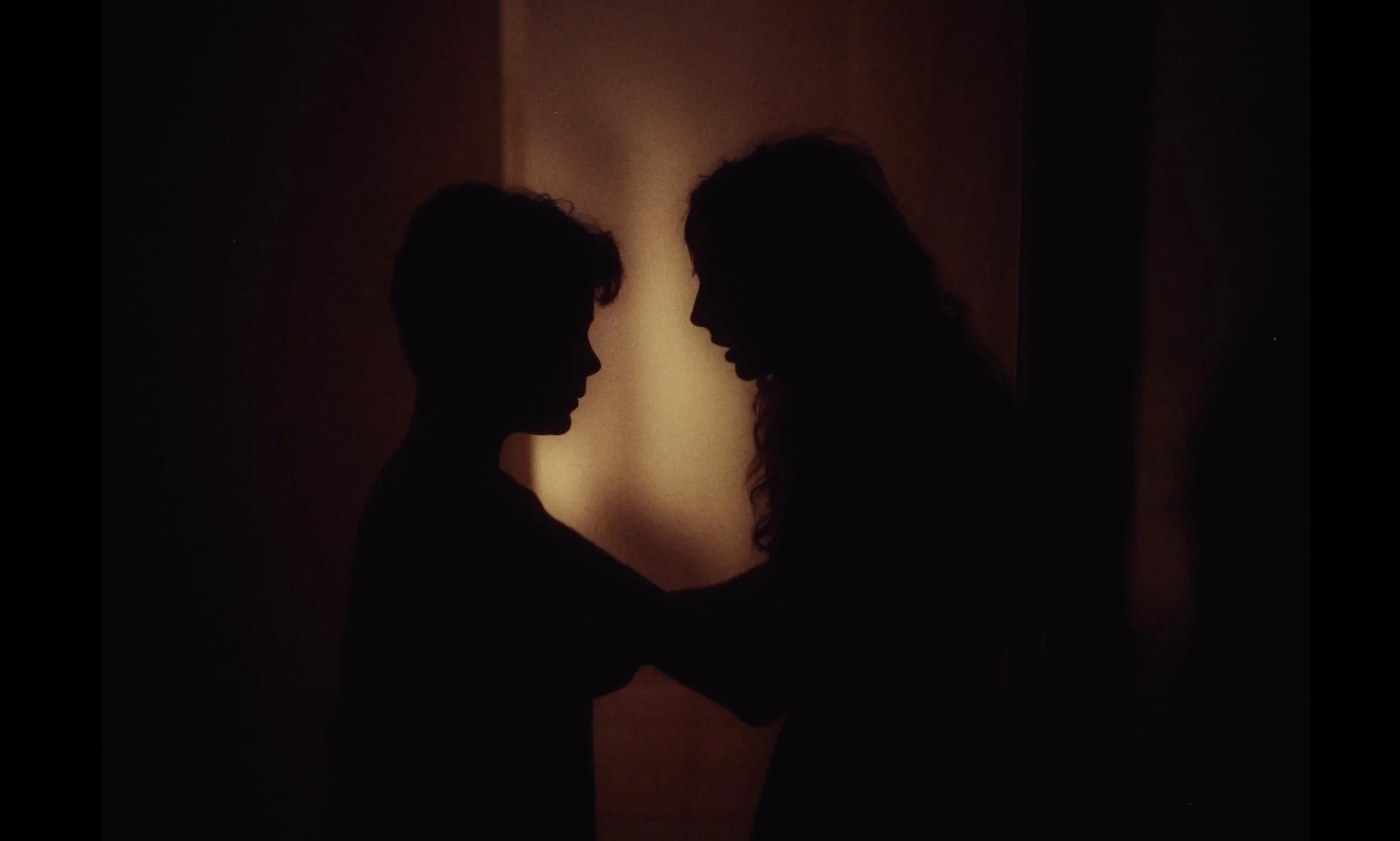
We were trying to primarily light from outside the windows as much as possible, because the space wasn’t very big. We had a lot of 360 situations going on in there, but we were fortunate that our location had this big cavity above us, like an A-frame. So Dan was able to sneak in a ton of little spotlights above, which helped us get this more western cinematic feeling. If the light were through the windows, it would have been so naturalistic and beautiful in its own right, but to really get that punchy high contrast effect we had to have all these little spotlights all over the place. That way you have these little moments that characters would step into.
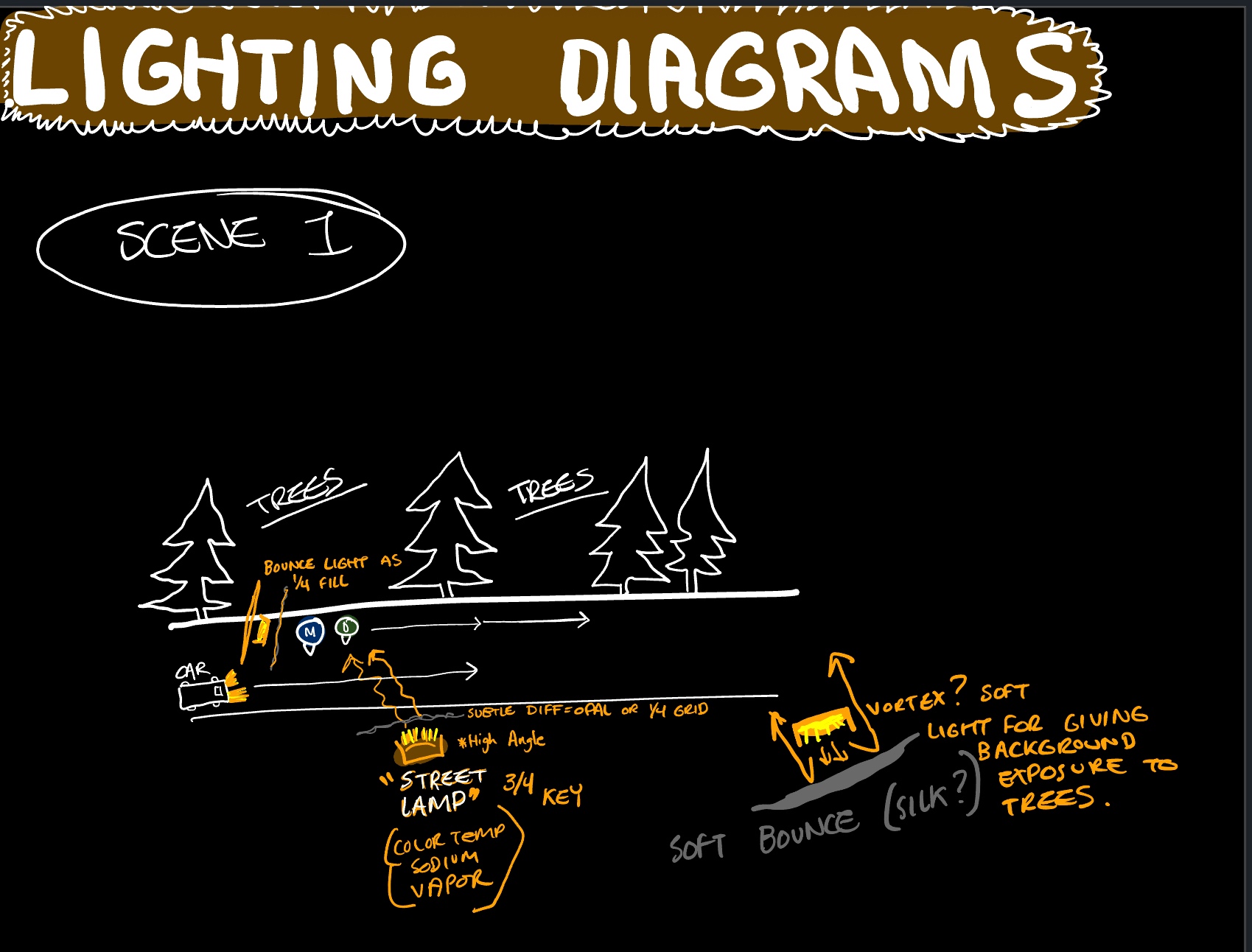
Lighting diagram for “Cruel Hands”, courtesy of Charlie Cole.
Kirill: You said that the cameras are pretty great these days. What about the lights? Is there room for improvement there?
Charlie: Lights are so great these days. About 5-6 years ago when I was starting to do more serious work and play with a wider range of LEDs, there was a lot of difficulty with CRI [color rendition index] and the fidelity. If something says it’s red, is it actually red? All these different lights would be all the different flavors of red. Now everything is pretty wonderful. You can get battery packed lights and throw them all over the place, and it allows you to do so much.
My last feature film is called “Corpus”, and it just premiered at Fantasia last week. That film is a ’90s period film and we only used tungsten and HMI lights to keep it period-relevant. It was a challenge, or rather a burden of love. It gave us a lot of interesting images. What I noticed most with tungsten lights is that compared to LEDs they tend to punch stronger. If you’re looking at a skin tone, it seems a little bit richer and a little bit denser. It’s almost like it pierces the first layer of skin and hits a little harder. You can’t beat a nice tungsten for that beautiful close-up, but the practicality of it is a thing.
Kirill: Is it a little bit painful to not have full control over how people see it? We have so many screens in our lives after the movie is out of theaters – laptops, tablets, phones, and those tiny plane screens that you mentioned earlier.
Charlie: If I tried to fix that, I would lose my mind [laughs]. It’s impossible. The only thing I could ever do is if I’m showing it to a friend, I get to their house 10 minutes early and mess up all their TV settings. For me, the most color correct home theater setup is when I check it on a MacBook, as they are so good.
It is difficult. It is heartbreaking. But at the end of the day, there’s only so much you can do. You color it for the theater. You color one more time for a MacBook. And then beyond that you have to let the world be what the world is. Hopefully, if somebody’s watching on whatever TV they have in their house, they’re watching everything that way. That’s how they watch “Dune” and every other movie. Their level is already standardized and hopefully they’re not comparing theatrical “Dune” to your movie at home.
Cinematography of “Cruel Hands” by Charlie Cole.
Kirill: What went into the fire sequence at the end?
Charlie: Around 90% of the smoke is all practical in the film. We had a bunch of PAs who were slogging large tubes full of haze all over the fields. Then we had them stay around the area so that if the wind ever changed direction on us, we could compensate by having haze come from another way. They rocked.
We had very little fire, either one or two flame bars that we use as references. Other than that, if we had a close-up of somebody during a fire scene, we’d put the flame bar right under the camera. That way you get the heat effect, and also feel it in their eyes. That’s something that is harder to fake with VFX. Other than that it was a really great job from the VFX team. We’d put a flame bar somewhere, and they would use it as a reference to throw it all over the scene. When I look at it now, I know there was no fire there, and it just looks amazing. They did such a great job.
Cinematography of “Cruel Hands” by Charlie Cole.
Kirill: Is there such a thing as the most challenging day or sequence that you had on this production?
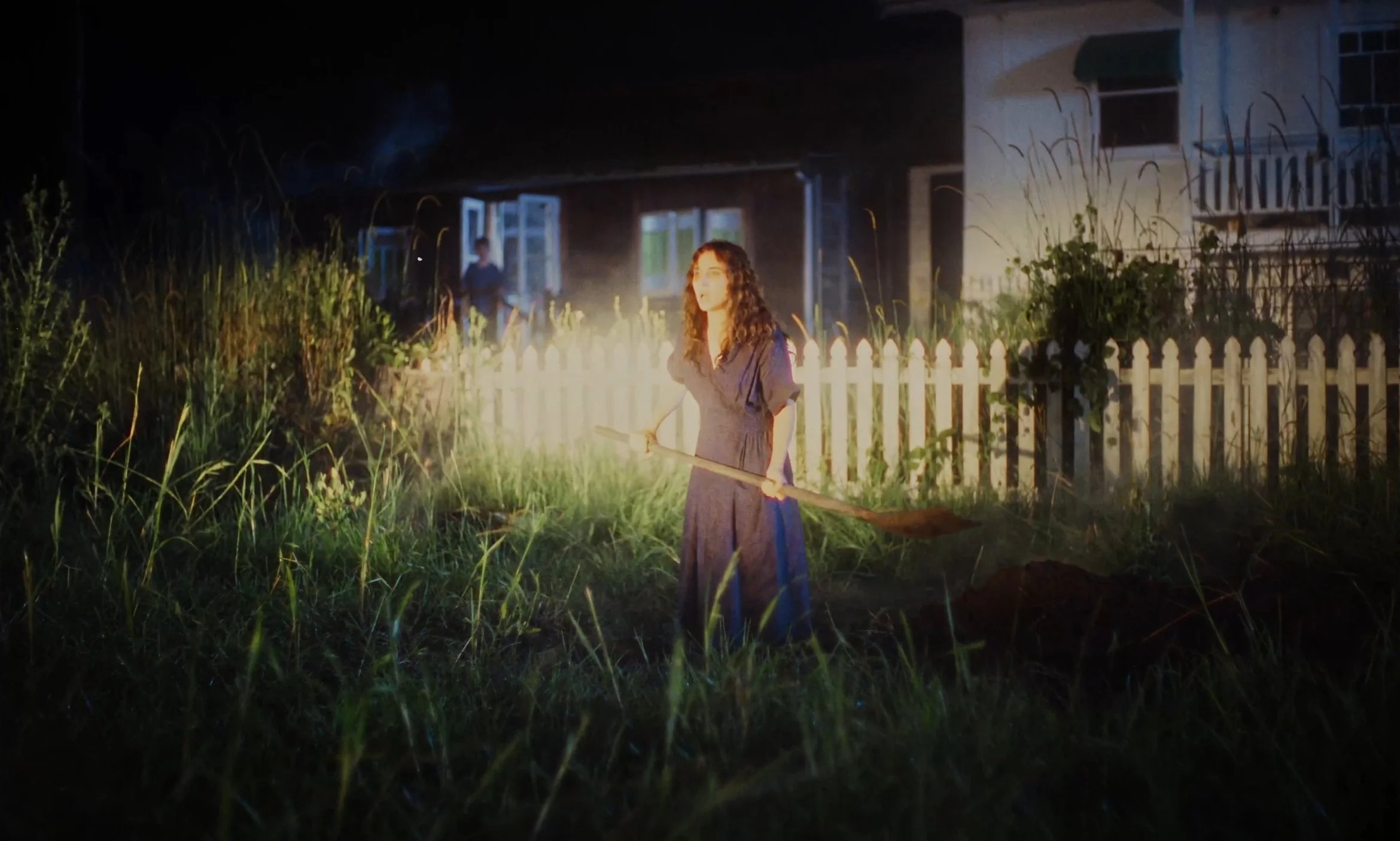
Charlie: We had a lot of obstacles. The story of the film turns into being surrounded by wildfires, and we had to have the feeling that the air is always full of smoke. That meant that we could never have any direct sunlight once the fires have started. So in order to get the sky light correct at our location in Australia, we could only shoot at dusk or dawn, or when it was extremely cloudy, or when the sun went behind a mountain. We were shooting in this big valley, so that limited us extremely in terms of when we could shoot any outdoor scenes during the third act of the film.
We were in Australia, so we had monsoons, we had snakes, we had venomous spiders. One day it was night shoot with Diesel La Torraca who was about 12 years old at the time, and our key grip discovered a brown snake, which is the second most venomous snake in Australia. If you get bit, you die in 30 minutes, and the nearest hospital is 30 minutes away [laughs]. So we had to have a snake wrangler come in and check the whole property. He found a whole nest of them. It’s a crazy place.
There was a scene where we’re shooting them running in the woods. We had a two camera setup. I was on one camera and Al the director was on the other camera. They have these 1.5 inch long bull ants, and if they bite you, it’s extremely painful. Al was sitting on this apple box, and one of our grips was swiping ants off of his back because they were crawling up [laughs]. It was stuff like that every day.
We also got rained into location several times. One time we were there for about four hours because we literally couldn’t leave. We were flooded in. It was a wild shoot. I’ve never experienced anything like that. But it adds to the energy of the film. You really have to fight for it. And the craziest thing is that the rest of our otherwise fully Australian crew was just used to it. I have this video of myself in the car with a camera, and I look to the right, and there’s a huge python right outside the car just going across the street. And everybody else was just taking a minute until it was gone [laughs]. It’s a special but wild place.
Cinematography of “Cruel Hands” by Charlie Cole.
Kirill: Why should people go to see this movie on the big screen in the movie theater?
Charlie: We shot the film on the Mini LF, so the film is in large format. You really get a sense of space the way we shot this film. Space is so important for this project. You feel the claustrophobia of the cabin that they’re in, and then you have the vastness of the fire that surrounds them later. It’s a cinematic film. We had this incredible composer Libby Hsieh who goes by their artist name Alvidrez, and the sound design of this film is amazing. There’s breath work and crackling of fire and haunting instrumental crackling. It’s a special soundscape.
Kirill: Where do you find yourself these days on the raging debates around generative AI?
Charlie: I’ve been going back and forth with all of it. On one hand, any tool is a wonderful thing to have at your disposal. On the other hand, it is unfortunate that this tool is frankly based off of a lot of other people’s work – and that it’s gotten so good that you can replace work.
Career wise, it is a huge disappointment that it is replacing a lot of smaller jobs. If you’re shooting a shoe commercial or a food commercial, those things are easily replaceable now with AI. And those are the bread and butter of how people stay working so we can do fun projects like this – and also how you learn new tools and how you learn your craft. That’s where you finesse your abilities, and that is going out the window.
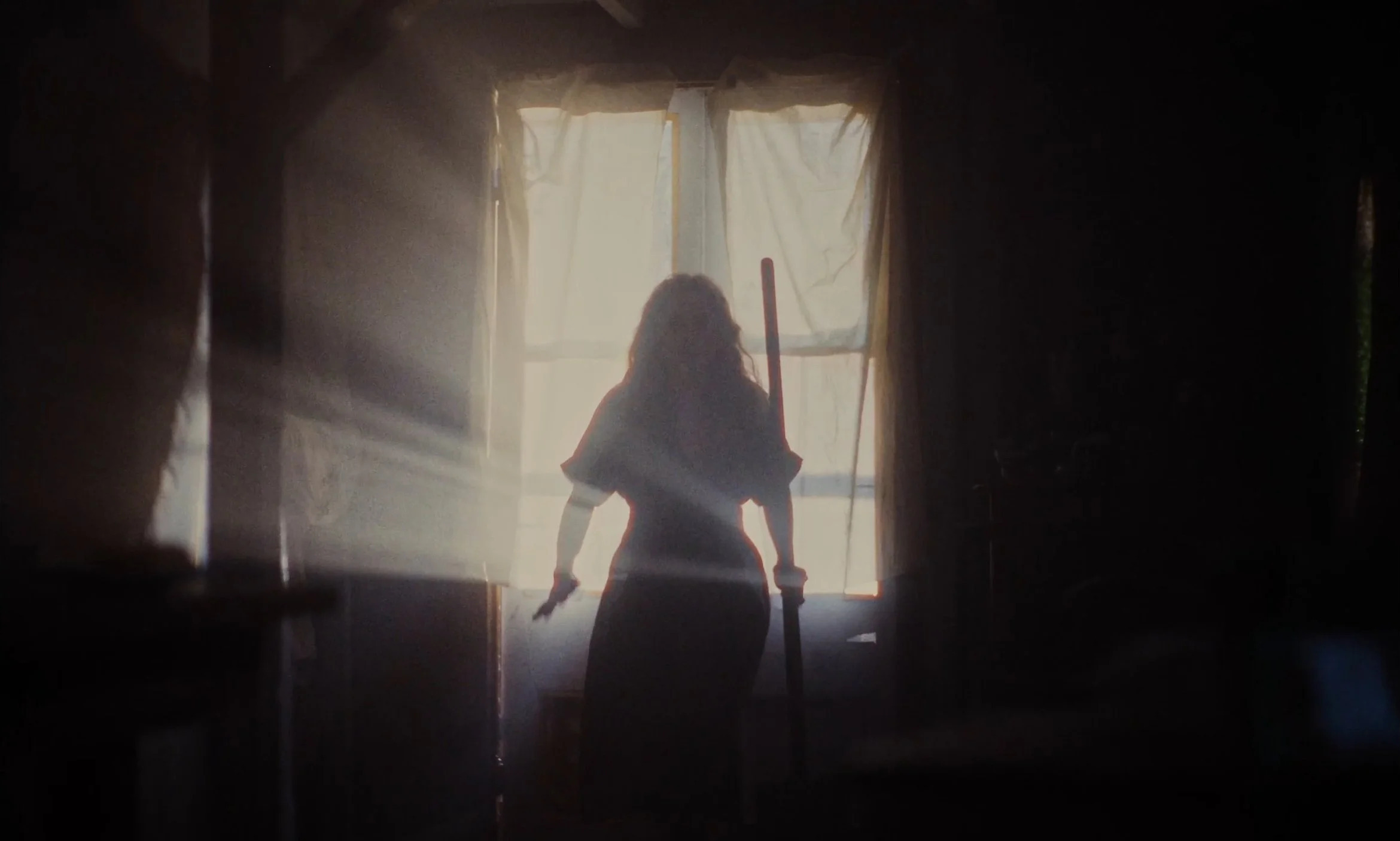
Cinematography of “Cruel Hands” by Charlie Cole.
Kirill: What are the ingredients for longevity in this industry?
Charlie: I can only speak to what’s worked for me. Something that I’ve found to be helpful for my approach as a cinematographer is that I come from fine arts. Teachers would always say that everybody in the room can draw, and then ask “Why are you drawing?”
I see the same issue or the same thought process with a camera. Anybody knows how to expose. What makes you holding the camera or lighting the scene different from other people’s abilities to do the same thing? That goes in terms of your personal flavor, and how emotionally involved you are into the work you do, and your collaboration with your director and the actors and crewmates.
The short answer is that the key to longevity is in who you are as a person. If you’re kind, if you’re generous, and if you’re genuine, you will go far. You have to lend your heart and your eyes to everything you do.
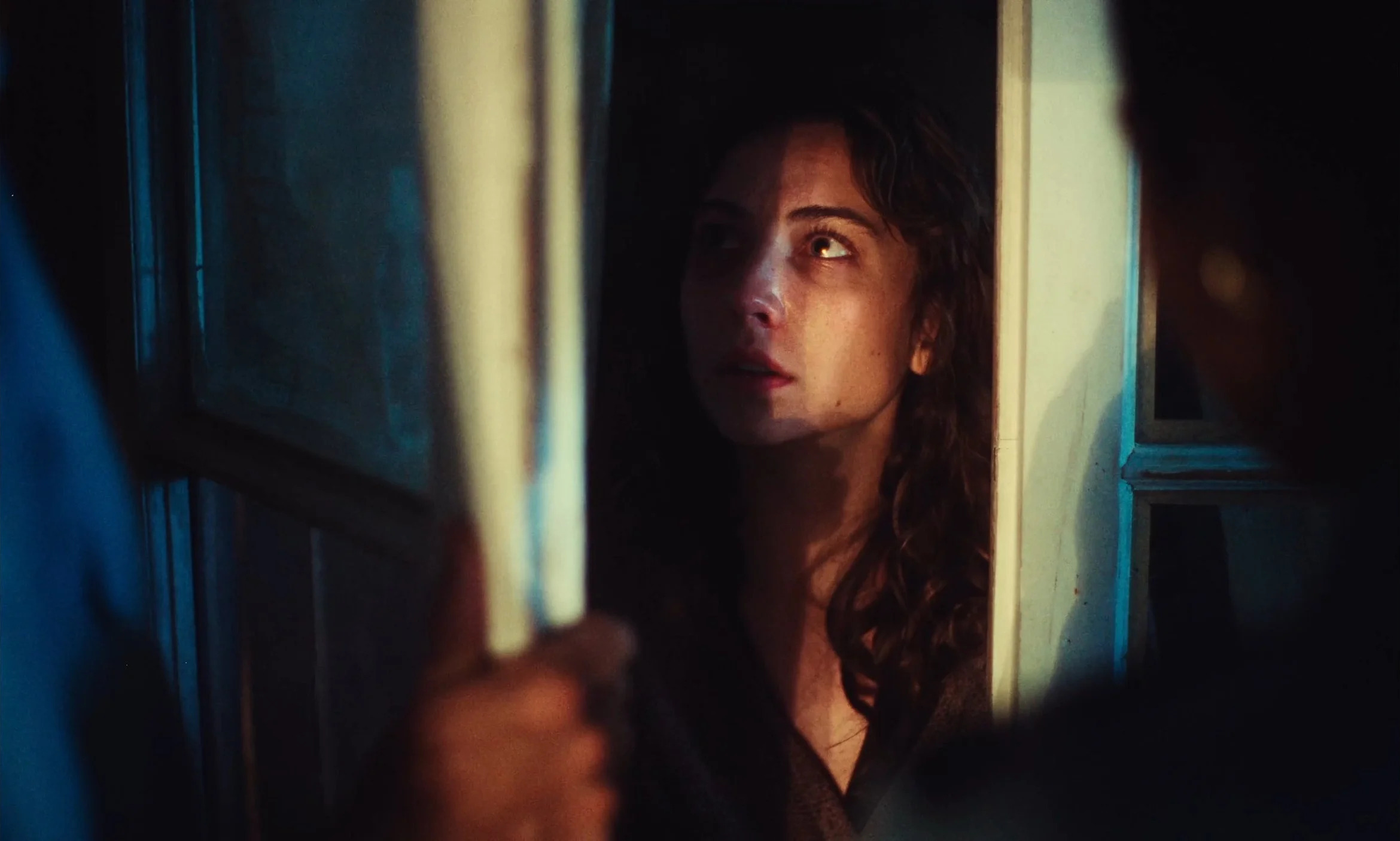
Cinematography of “Cruel Hands” by Charlie Cole.
Kirill: Is there a piece of advice you’d want to give to your younger self?
Charlie: I’ve had a lot of good fortune with working with people that I really love and that are quite different from me. So my advice would be to make sure I continue to do that – work with as many different people who care as adamantly as you do. There’s nothing better than people who come from different backgrounds and different experiences and different desires of what the film is and could be – as long as we all put all of our heart into it every chance we get. Then we’re all going to make something special.
The other advice would be to communicate, communicate, communicate. That’s a lesson I learned over time. People speak different languages in terms of what images are. I worked with this director who I went to AFI with, and she came from a theater background, while my parents are architects. When we started working together, we started talking about wide shots and we talked for weeks about those wide shots. Then we got on to set, and in my mind the wide shot is the person defined by space, defined by the architecture. And in her mind, a wide shot was a head-to-toe shot of a person, because she works with actors.
I realized that we have been speaking in completely different languages for two or three months now [laughs], but we never thought to compare it with specific images. That’s a lesson that I’ve learned the hard way – make sure you’re on the same page before you get to set. Even though it feels like it, you never know. It’s as simple as referencing images. When I say wide, I mean this. Yes, we’re on the same page. When I say close up, I mean this. Yes, we’re on the same page. When I say cool, I mean cobalt blue and not light blue. When I say red, I mean fiery angry red and not calm red. People have so many different tastes, so locking in on that is extremely important.
As far as prep goes, one of my favorite things ever on any film set is that moment where you and the director are so in sync, that if, God forbid, one of you is in an accident or is sick and has to miss a day, the director would trust that you would run every shot and every setup the exact way that you guys had talked about. That’s where you want to be when you hop onto a film set.
Kirill: When you turn on the TV, what would be a movie that you would watch again and again, no questions asked, whenever it comes on?
Charlie: “Lord of The Rings” no doubt. I’m such a fantasy guy. I watch so many movies. I love to be entertained. I love to watch movies that transcend me.
Films that I admire are different from films that I watch. If I see a film that pushes me artistically or inspires me artistically, I try not to watch it again. So much depends on who you were when you saw it, and how you were feeling that day when you saw it. If it really affected you, watching it again would potentially ruin it or take away the magic of what you experienced. It lives in your soul and I don’t want to analyze it. Those are films by Lynne Ramsay, Lars von Trier, Gaspar Noe. They stick with me artistically, and I try not to watch them anymore.
For the films that I would watch again and again, pretty much anything science fiction or fantasy. You have to probably pull me away if it was on the TV. I watched all of the “Pirates of the Caribbean” yesterday. It was a great day [laughs].

Cinematography of “Cruel Hands” by Charlie Cole.
Kirill: Is it difficult for you to enjoy the story and not overanalyze it from the cinematography perspective?
Charlie: The better the cinematography and the better the filmmaking is, the less distracted I get from it. For sure, any of us who work in this industry are analyzing things and picking up on things all the time. If they are masters of the craft, you just forget. How impressive is it to trick people who are there to analyze into forgetting any of that? It takes a really great film for me to completely forget that I’m watching a film, and they’re few and far in between. I love those.
That being said, I still love seeing how the sausage is made. I get a big kick out of that. Maybe it means that the film is lacking in something, and then I get inspired by something else. Usually I’m noticing the good stuff.
Kirill: What was your favorite dish in Australia that you had while working on “Cruel Hands”?
Charlie: All of the food in Australia was impeccable. There was this meat pie that I loved. I was living in Los Angeles at the time, and I’d have avocado toast constantly. There was this place in Australia that I would go to almost every weekend that I could to have avocado toast, because the food there was so fresh and prepared with so much care. They also sell the Maxibon brand of ice cream, and I probably had 500 of them during the three months I was there [laughs]. It was a whole thing. They sell them at gas stations everywhere, and it was the best thing I had there. I got really obsessed with those.
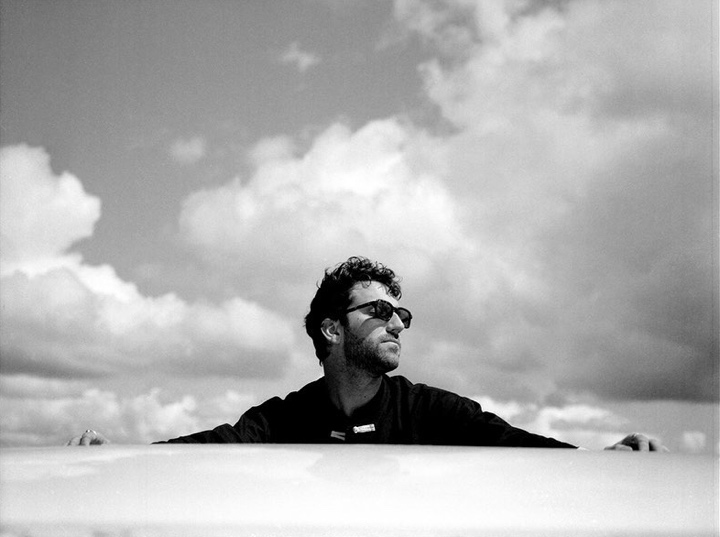
And here I want to thank Charlie Cole for sharing his time with me to talk about the art and craft of cinematography, and for sharing the supporting materials. I also want to thank Jordan von Netzer for making this interview happen. “Cruel Hands” is out now streaming on Apple, YouTube and Amazon. Finally, if you want to know more about how films and TV shows are made, click here for additional in-depth interviews in this series.
