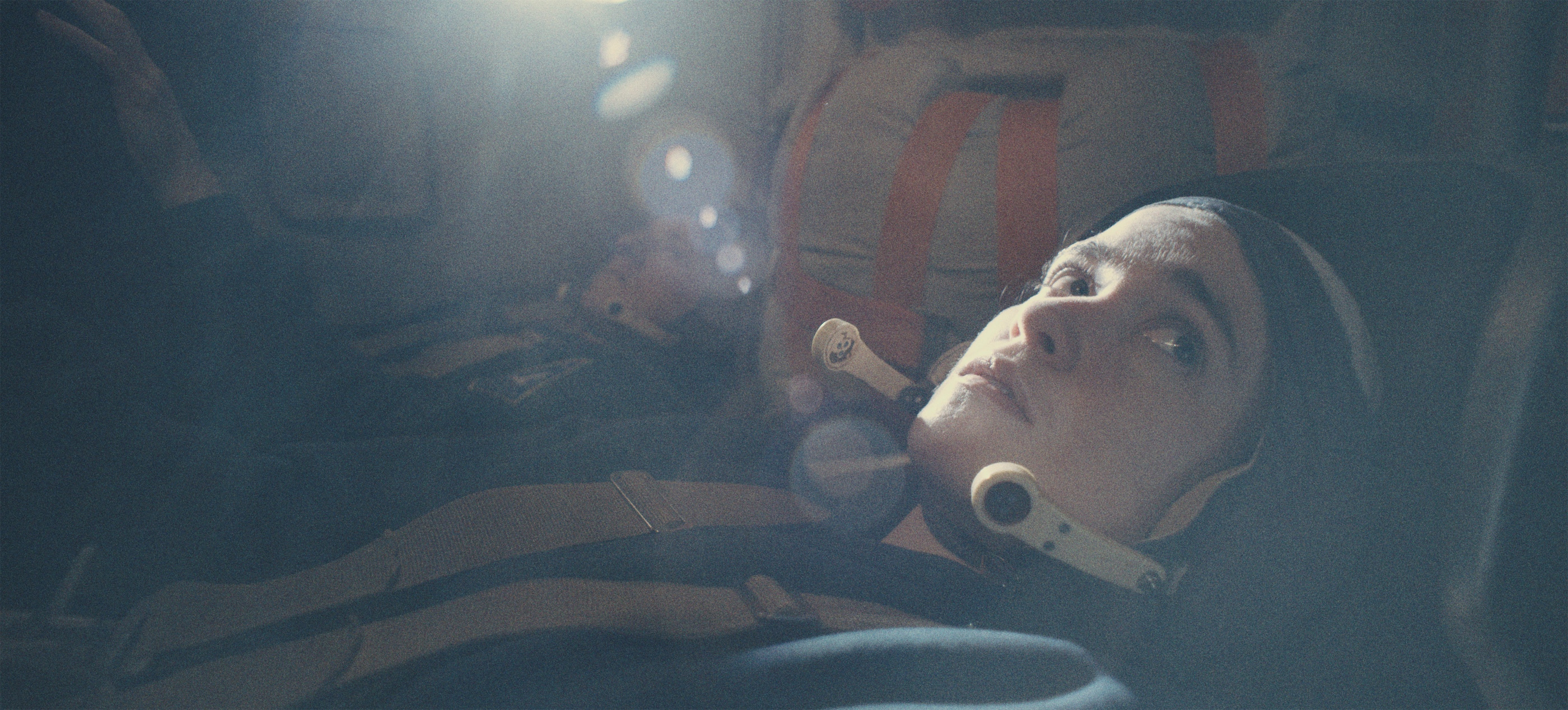
 Cinematography of "Star City" by Brendan Uegama, courtesy of Apple TV
Cinematography of “Star City” – interview with Brendan Uegama
Continuing the ongoing series of interviews with creative artists working on various aspects of movie and episodic productions, it is my pleasure to welcome Brendan Uegama. In this interview, he talks about the changes in the industry in the last 15 years, the role of the cinematographer, the evolution of tools at his disposal, and his thoughts on generative AI. Between all these and more, Brendan takes a deep dive into his work on the first season of “Star City”.

Kirill: Please tell us about yourself and the path that took you to where you are today.
Brendan: The path that took me here is not a straightforward one, and I think that’s probably true for most people. Going back to high school, I always knew I wanted to make films but I didn’t necessarily think it was possible for quite some time.
At that time my understanding of filmmaking was limited. I didn’t know how many people it took to make a show, what they all did etc. I only really knew about directors and actors. What I did know was that I was always drawn to visual storytelling. I was constantly taking photographs, drawing, and exploring other types of art.
Eventually, I went to film school and studied cinematography full time for a year. I became completely hooked and fell in love with cinema and kept pushing to build my career.
From there, I decided I only wanted to shoot and not work my way through the camera department on set. It was a decision that was right for me however it did mean it took many more years trying to get onto a bigger film set. But like everything you keep pushing and building steps by step. And with some lucky opportunities every now and then I was able to start shooting shows that helped me get to where I am today.
Kirill: Looking at these first 15 or so years in the industry, what are the bigger changes you’ve seen so far?
Brendan: Oh between today and 15 years ago there’s a big shift in filmmaking and in many different areas of the industry. I think the most obvious is the rise of streaming over that time. They are just dominating now. But before them y really had big features, network television and of course independent films. Starting out I was doing independents. It was little projects either on 16mm or on digital, and of course another thing that has drastically changed over that time is digital technology. You can shoot fantastic images on digital cameras now, and we’ve seen huge changes in lighting. You have consoles and LED lights that are fully programmable and that has changed the way that I work more than anything else I think.
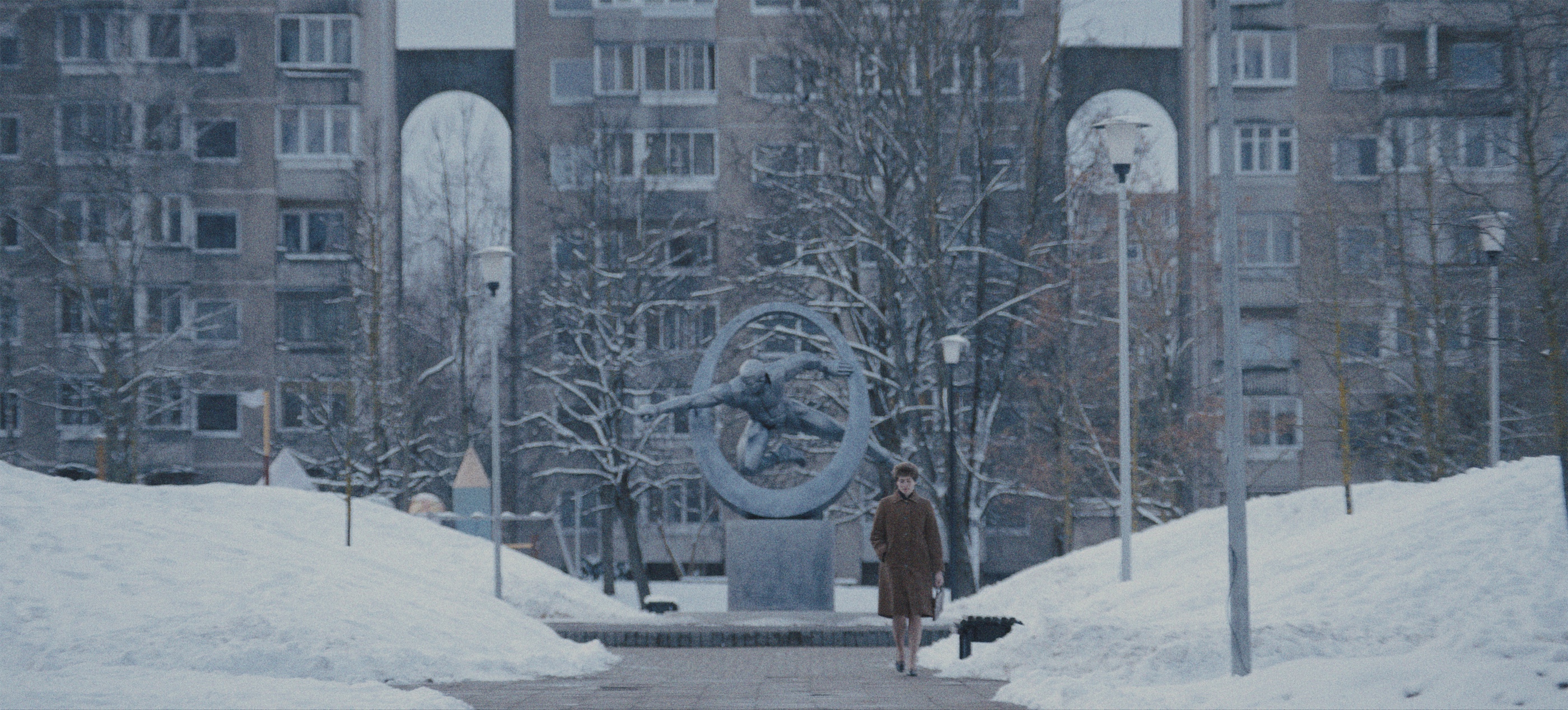
Cinematography of “Star City” by Brendan Uegama, courtesy of Apple TV.
Kirill: Would you want to turn back the clock and go back to the old film world?
Brendan: Many parts of me would love that but there’s a lot of good things about both film and digital filmmaking. I do love the process of film, trusting your instincts like that, the workflow on set. But digital allows so much other creativity and freedom. There are pros and cons of both.
It’s pretty unbelievable to look at what we have access to today when it comes to digital cameras. Your main camera can do high speed, be extremely sensitive in low light and small enough to put in configurations that you couldn’t before. And you can get quality images out of cameras the size of smartphones. That kind of flexibility is fantastic.
Kirill: What do you feel are the bigger misunderstandings or misconceptions about the role of the cinematographer?
Brendan: I think one of the biggest misconceptions about the role of the cinematographer is that it’s simply about making things look beautiful. Yes we care a lot about images but the job is really about storytelling and emotion.
A cinematographer is constantly trying to understand what the audience should feel in a moment and then using all the tools we have to support that. Sometimes that means creating something beautiful, and sometimes it means doing the opposite. The most important thing is that the image serves the story.
For me it also means being very involved in as many aspects of production. I want to understand the entire world we are creating so that I can contribute to the storytelling as much as possible. The more I understand the more I can offer the director.
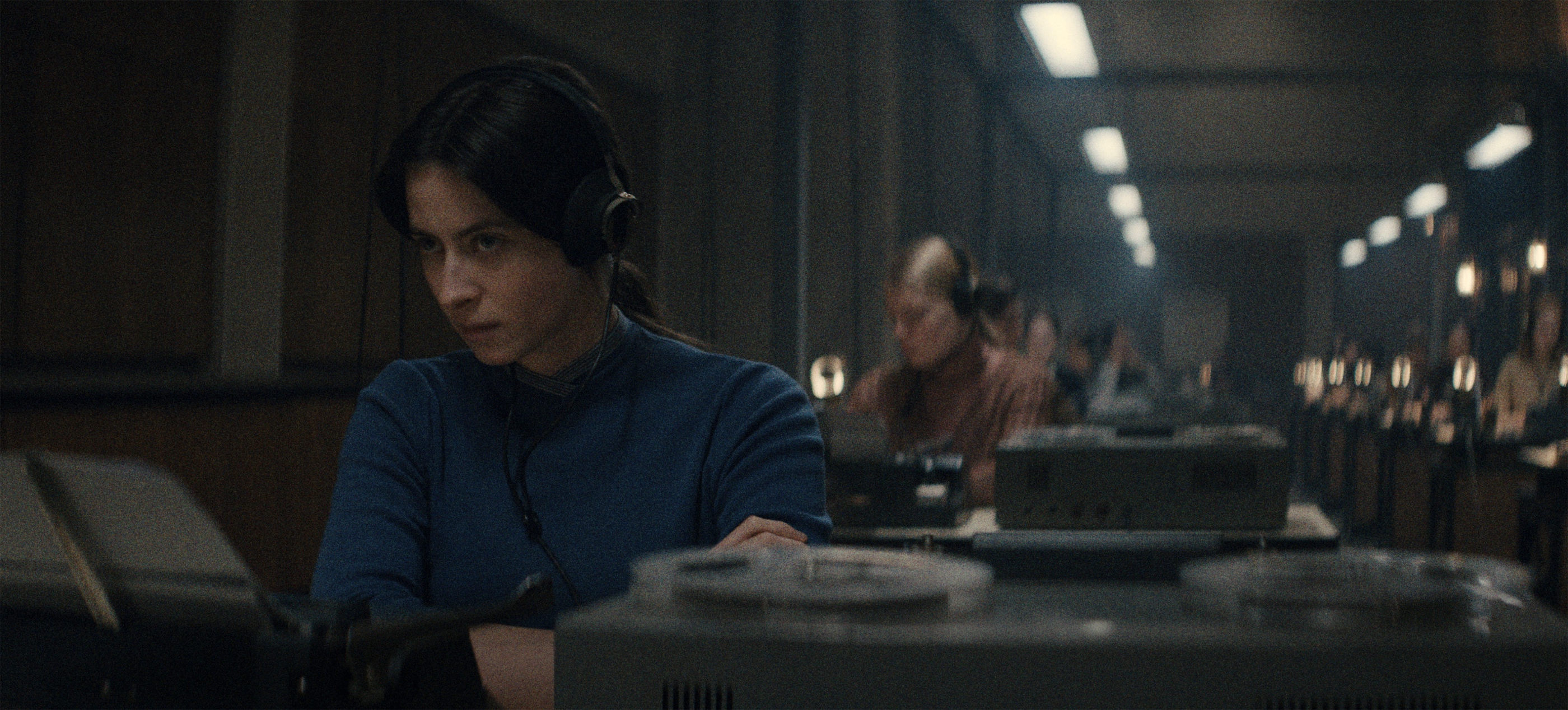
Cinematography of “Star City” by Brendan Uegama, courtesy of Apple TV.
Kirill: Getting to “Star City”, how did it start for you?
Brendan: I was working on a different show with the director Nick Murphy, and one day he came to me on set and told me about his next project, Star City. He said he thought I would be great for it and that he was going to put me forward for it if I was interested.
I read the pilot and I loved it right away as it just hit on so many levels for me. Yes I loved the space exploration element but what really did it was everything beyond that. The espionage, the politics, and most importantly the human side of the story. These were characters living under the immense pressure of an oppressive system, yet they’re still driven by ambition and a belief in something bigger than themselves. They were trying to achieve things they had dreamed about and that they believed could change the world. That universal human struggle was what really resonated with me.
I saw it as much more than a story about space and cosmonauts. It was about people, their sacrifices, their hopes, and what they were willing to endure to achieve something extraordinary.
When I met with the showrunners Matt Wolpert and Ben Nedivi, I was already deeply excited about the project and knew I wanted to be part of it. The lovely thing about this show was that we all came together with a shared passion for the story, the characters, the period, and the desire to tell it in a way that felt truthful and grounded. That made this project incredibly special.
Kirill: How do you maintain consistent visuals with multiple directors and another cinematographer on the same season?
Brendan: So I shot the pilot block and block 3 while Cort Fey shot block 2 and 4. Initially figuring out this show’s approach took months in prep exploring ideas with the whole creative team. There is so much that goes into defining a show’s visual language and everyone involved had the same goal which was to make the best show possible. That commitment goes to anyone who joined the team later.
So to maintain consistency between all directors becomes easy when we are all after the same vision. I just shared as much as I could and explained our ideas for how we came to terms with our visual language.
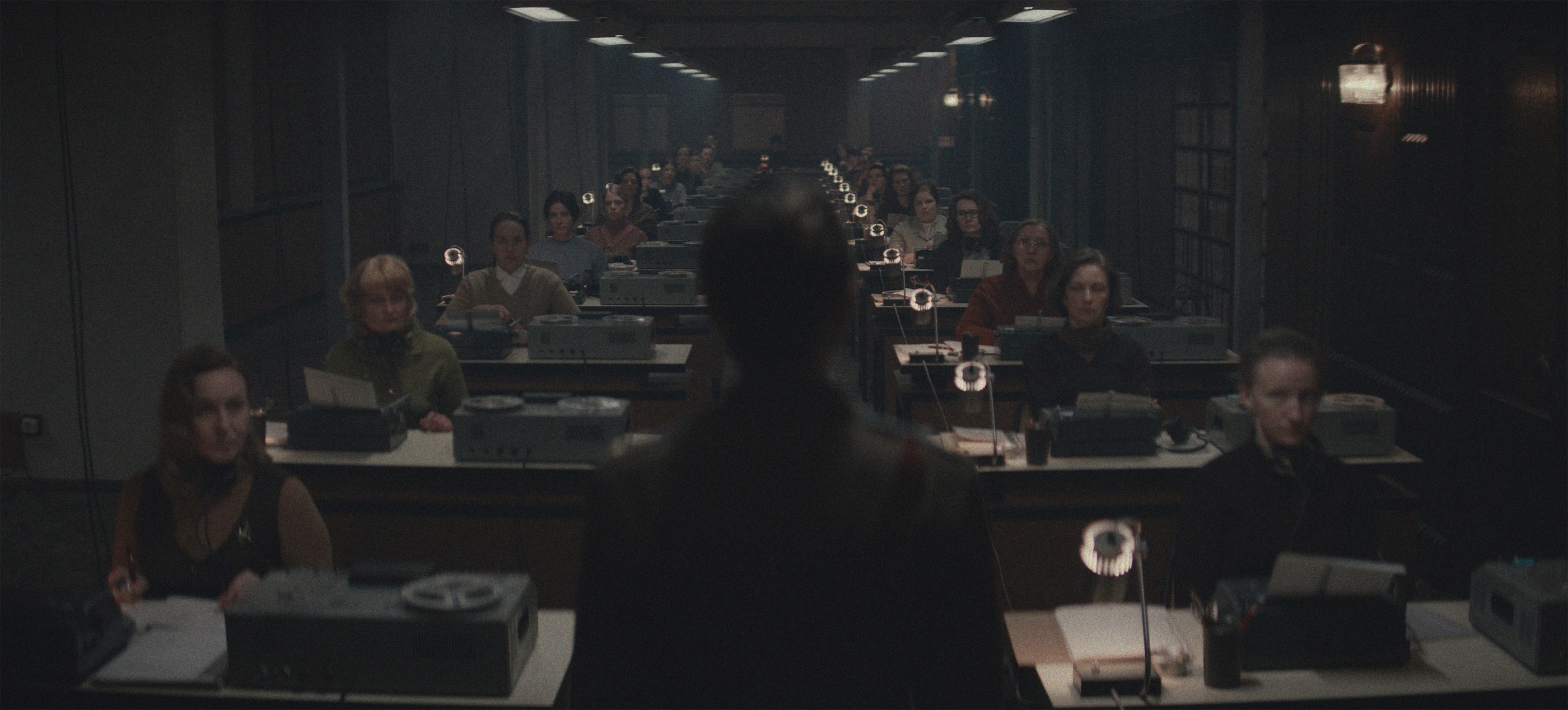
Cinematography of “Star City” by Brendan Uegama, courtesy of Apple TV.
Kirill: Did you have any particular visual references or inspirations around the discussions on the look of the show?
Brendan: We shot the show in Lithuania starting in February 2025. I found out I was going to be part of the project around September or October 2024, so I’d been thinking about this for a while before starting official prep. During that time I was doing as much research as I could to try and understand that world. Naturally everything started to come together as we started to scout locations.
I did watch some past Soviet films, but my research went more into still photography of the time, around the late 60’s and 70’s. I leaned into photographs that showed me daily life of regular people in the Soviet Union. What people looked like, how they lived, dressed, what the world felt like, what textures I could grab out of there, what the light looked like. When it came time to go to camera there was one thing that we wanted to make sure to do, which was to not have our show feel overly constructed by us filmmakers and more like the scenes were found. We wanted it to feel like we walked into a real space with real people in it, mid conversation and the light was coming from the sources you can see. A lot of this idea was inspired by a lot of this photography.
And of course we built the sets that we wanted and I lit it the way I wanted so that the light felt natural to the space we were in. That’s why my primary inspiration was the photographs of that time rather than the films. Some of the soviet movies that I had watched from that time are so beautifully made but in a different direction than we wanted to go.
I found this photographer named Martin Manhoff who was an American diplomat in Moscow around that time, and he documented a lot with still cameras and movie cameras. His stills and footage opened up a world that I hadn’t seen and it gave me a lot of inspiration for this show.
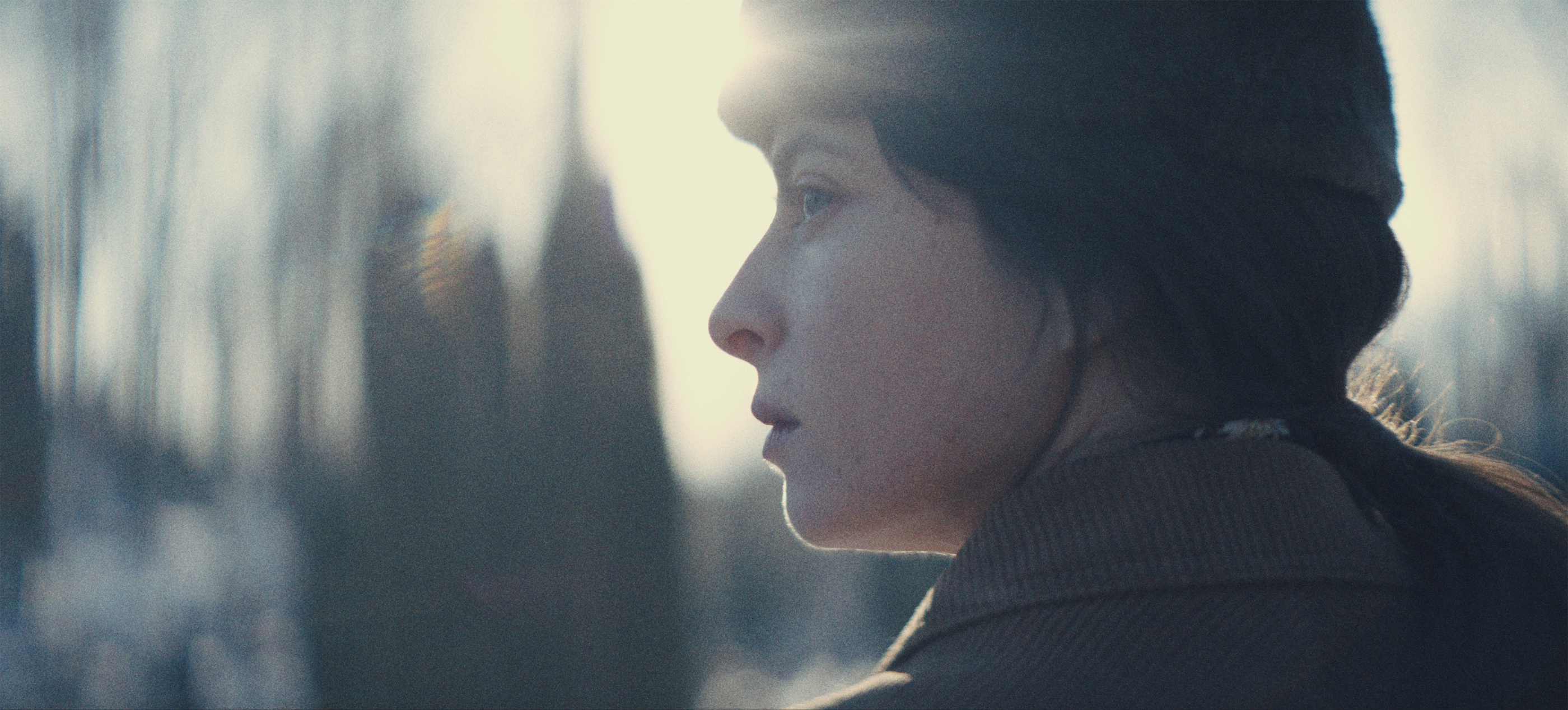
Cinematography of “Star City” by Brendan Uegama, courtesy of Apple TV.
Kirill: What were your considerations around the colors of the show?
Brendan: I wanted the color of the lighting to be realistic. Whenever possible, I didn’t use LED lights unless needed. Instead, we went for the old incandescent lights and a lot of fluorescents. They both gave either the warmth that felt truthful to the environment and the ugly spiky cast from the fluros that just felt right. For daylight I pushed for cooler tones. The story takes place in winter time, and it was cold in Lithuania, and those winters in Moscow would have been extremely cold as well. I didn’t want to feel any extra warmth in there, so I leaned into that coldness .
For the night exteriors, I lit almost entirely with practical sources. Our art department would provide a bunch of street lights for us and I’d use both sodium and blue-green mercury vapor lights. I loved the mixed color temperatures instead of correcting them which allows them to feel harsher and dirtier and less polished. That visual imperfection became an important part of the show’s atmosphere.
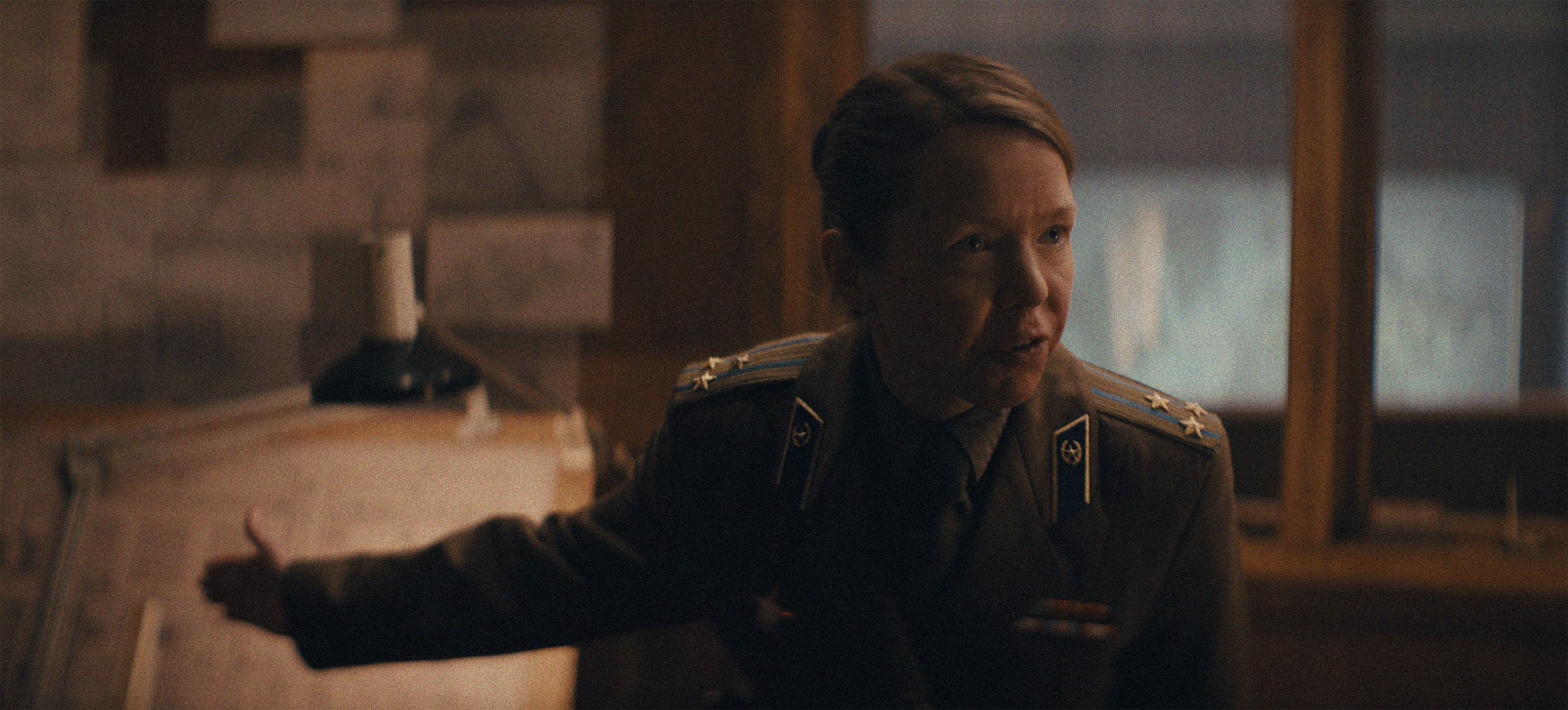
Cinematography of “Star City” by Brendan Uegama, courtesy of Apple TV.
Kirill: You mentioned the oppressing hand of the government that is present throughout the story. What was your thinking around translating that oppression into what we see on screen?
Brendan: Lyudmilla sits at the center of the story, and in many ways she embodies the oppressive nature of the Soviet state. The authoritarian way is felt strongly by most characters living in Star City. We needed to visually express that without calling attention to itself.
We looked for specific moments where the camera could quietly suggest that someone was always watching or that there was an unseen presence just beyond the frame. Whether it was a figure in the background or a subtle point of view, we wanted the audience to feel that surveillance was constant. Because of that we would sometimes let the camera observe from a distance more, allowing the feeling of being watched to become part of the visual language.
So sometimes you’ll see part of a scene happen from more of a distance, or looking at characters through crowds or behind foreground elements, or framing scenes as though we were catching something we weren’t meant to see. Those choices created the sense that an unseen presence could be there or not.
Kirill: What is the split between VFX and in-camera shots?
Brendan: Well my preference is always capturing as much as possible in camera. Star City is a period piece set in a different country, and of course with a fair amount of space work. So yes we had a good amount of VFX.
We would always try to build the shots or sets to look right and complete from the start, and we were lucky to have an amazing production design team that could help us with so much of what was needed to be seen in camera. Whenever we felt we couldn’t go any further with what we could build and photograph, then we would rely on our great VFX team for it.
There is the obvious .. for example the space walk and the surface of the moon that had visual effects. And each shot had to be planned specifically to work seamlessly. But also there are many that don’t seem or look like visual shots that are.
For example, the Security Division building where Lyudmilla and Irina work. The location we used for the lobby area is in Vilnius city, and out the front glass doors you see a busy street with store fronts on the other side. But for us it was supposed to be in the middle of the complex of Star City, which is a secretive area in the middle of the forest. So we put up a large green screen outside the glass doors. We then went to Vingis park and shot some plate shots to comp in as the view.
But like everything it starts from the script. You then start scouting and finding the right locations to tell that story and if they don’t all marry together you sometimes need to cheat them together.
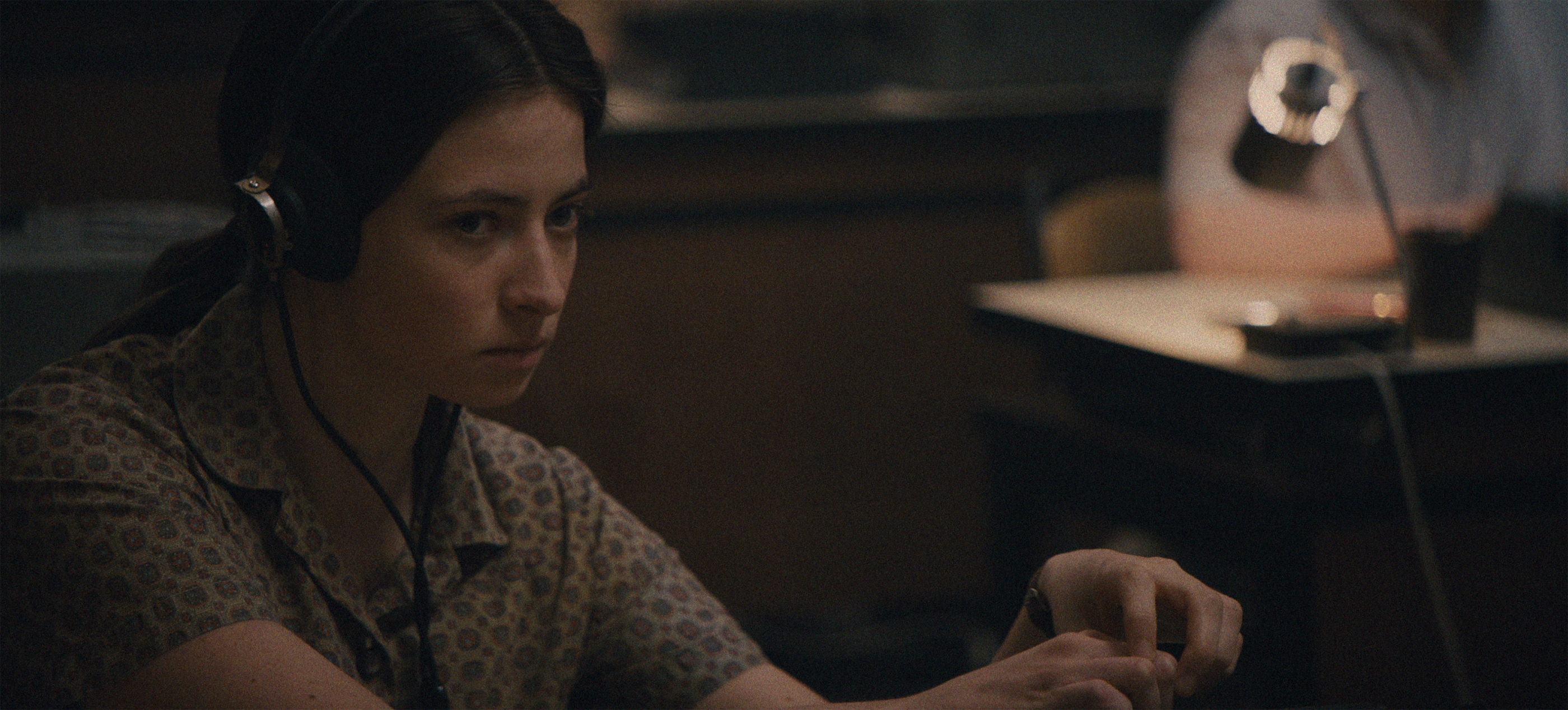
Cinematography of “Star City” by Brendan Uegama, courtesy of Apple TV.
Kirill: What went into the decision to go with anamorphic lenses with soft edges around the image?
Brendan: Lensing is always one of my most essential creative decisions in prep because it informs much more than just the glass. Once I find the right lenses it not only helps me understand how I’m going to photograph the show but also starts defining my visual process for everything.
We prepped out of ARRI Berlin, and I worked closely with Christoph Hoffsten who is a lens guru. I made several trips down there because I knew finding the right lenses was going to define the visual language of the show, so it was very important to test test test. We always knew we wanted to shoot anamorphic. Director Nick Murphy and I are both big fans of the format and we knew we didn’t want a polished overly clean image.
I soon enough figured out I didn’t want one consistent set of lenses. I didn’t want the glass to feel like one unified set. I wanted it to feel like it was pieced together with mixed matched glass that was imperfect in all ways.
So early on I had an idea that I would build a large set out of multiple primes from different manufacturers. I found around eight to ten different manufacturers to make up our lens set, and I gravitated towards lenses that felt like they fell apart in certain areas where the edges were blurrier or they breathed a lot.
Those imperfect qualities that traditionally wouldn’t be considered good quality by today’s lens standards were actually the things I was most drawn to. I wanted those characteristics to become part of the storytelling. They helped create this imperfect, “ugly beautiful” world we were trying to build, and they influenced the emotional feeling of every frame.
Every time I went down to Arri and worked with Christoph, we would spend the day testing numerous lenses. We’d put them on the camera, live with them for a bit, and ask ourselves how they made us feel. The ones that didn’t have the right character went into one pile. The ones that surprised us or had something unique went into another. Over the course of about a month, we slowly assembled this completely hand-picked set of lenses that felt unlike anything you could pull off a shelf.
The lenses themselves informed so much. How we framed scenes, how we photographed faces, how the world felt emotionally. They became a huge part of creating this “ugly beautiful” aesthetic that defined the series.

Cinematography of “Star City” by Brendan Uegama, courtesy of Apple TV.
Kirill: Was there anything particularly complicated or challenging around filming for zero gravity?
Brendan: Zero gravity has a lot of challenges. And it’s a very time consuming thing to do. We came out of it realizing it takes on average a couple hours from rehearsal of a shot to “moving on” to do a proper shot of someone floating through space in any significant way. We have multiple ways of dealing with zero gravity. You have actors on cables suspended from above, you have teeter-totter versions, and then you have your actors faking it a little bit if we’re tight enough.
Every shot had different requirements depending on the relationship between the camera, the actors, and the ship itself. We would storyboard it to know what the shot was, then had to figure out what the best orientation of the ship is best in. Is it upright or on its side or completely upside down? What wall, ceiling or floor panel needed to come out to get the crane in? And if the camera needed to travel from what appears to be the ceiling down to the floor, we might have to flip the entire set so we could achieve that move more naturally.
Every decision affected the physical configuration of the set, the camera, and how the actors would move. Within a single sequence, we might use several different orientations of the ship. That meant we’d often shoot part of the scene one day, then return days later after the construction team had changed the set for us to work better for the next shot.
And of course, making sure the actors knew the shot, felt comfortable with the rig they were in was essential. They needed to feel secure enough that they could hopefully forget about the mechanics of it. So we would first rehearse the action with a stunt performer in the rig so we could work out the movement, timing, and camera approach and the actors could see how it was going to work before they went on the wires. Then we would set up while the actors were being harnessed.
That was the process and every shot required a lot of coordination between performance, safety, camera, lighting, and stunts. It’s what made the work great but also why these sequences were so time consuming.
Kirill: Perhaps you just answered my next question, but I’ll ask it to make sure. What was the most challenging day or sequence or set that you’ve had on this show?
Brendan: Oh that’s a hard one to answer. This isn’t quite the right answer for your question but here’s something that comes to mind. So we had coined this term “ugly beautiful” for us, which really meant embracing imperfections as part of the beauty. The flaws within those imperfections were what made the images feel honest to us.
We built this idea into the photography from the very beginning. Sometimes during the process of shooting, we would find ourselves setting something up and realize that even though the image was nice looking, it wasn’t necessarily right for this world. Those were the moments where we had to challenge ourselves and step away from it, even if what we had created was technically a great image and we would lose time, we would sometimes start over completely because the goal was never just to make something beautiful. It was about making something that felt authentic to this world and stripping away today’s idea of perfect imagery.
Having said that, on a technical level all the space work was the most challenging I think. Perhaps the greatest challenge was the spacewalk that Anastasia does in the first episode along the outside the ship.
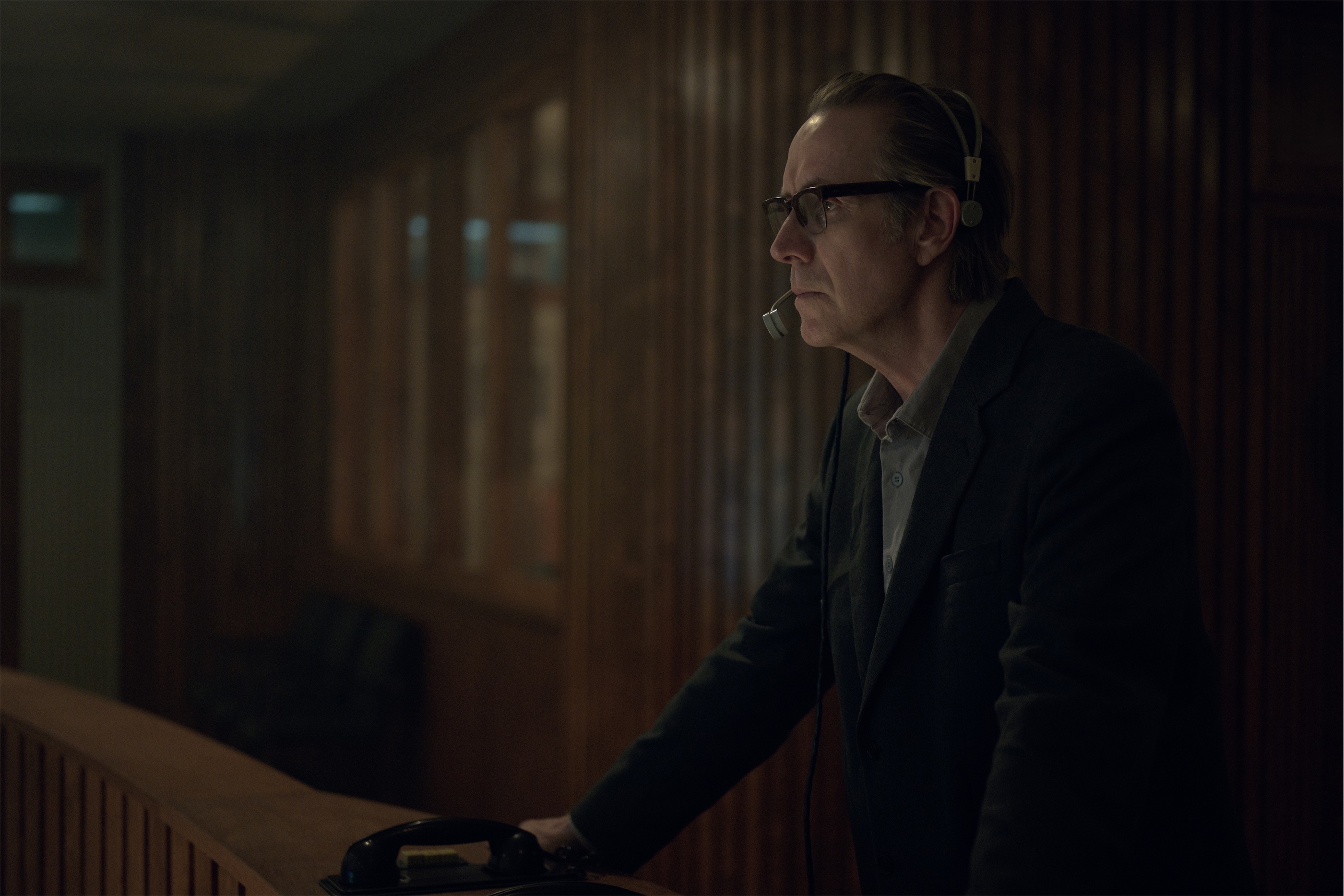
Cinematography of “Star City” by Brendan Uegama, courtesy of Apple TV.
Kirill: How do you see the generative AI tools today?
Brendan: It’s a hard question to answer. I’m not an advocate for AI at all. But it’s obviously here to stay and it will impact all aspects of our industry and every industry in the world. For filmmakers, the biggest threat right now is towards VFX artists and performers’ voices I think. But who knows what the future holds for cinematography.
I’m optimistic that audiences are always going to want to watch a project that is made by people with human mistakes in them. Maybe there’s a bump by the camera operator. Maybe the pan over is a beat too late or skies are burnt out, etc. Sometimes those mistakes are what gives a scene that special something. If everything is too perfect, then it’s boring. A lot of shows that are made today are falling into this “perfect” look. But I feel the imperfections are interesting, and we should always look for them and embrace them when they work.
We’ll see what happens in the future with AI, but right now I’m trying to be as optimistic as possible with it, and not think about it too much as being a big destructor for what I do. It hasn’t affected my job yet too much that I can tell [laughs].
At a more general level, if you’re a creative person of any kind, the more that you rely on AI, the worse it’s going to be in the long run. I hope that people try to keep their brain fired all the time and don’t rely on the quick answer that AI always can give you without any thought. Spend a little extra time brainstorming and driving yourself mad trying to figure it out!
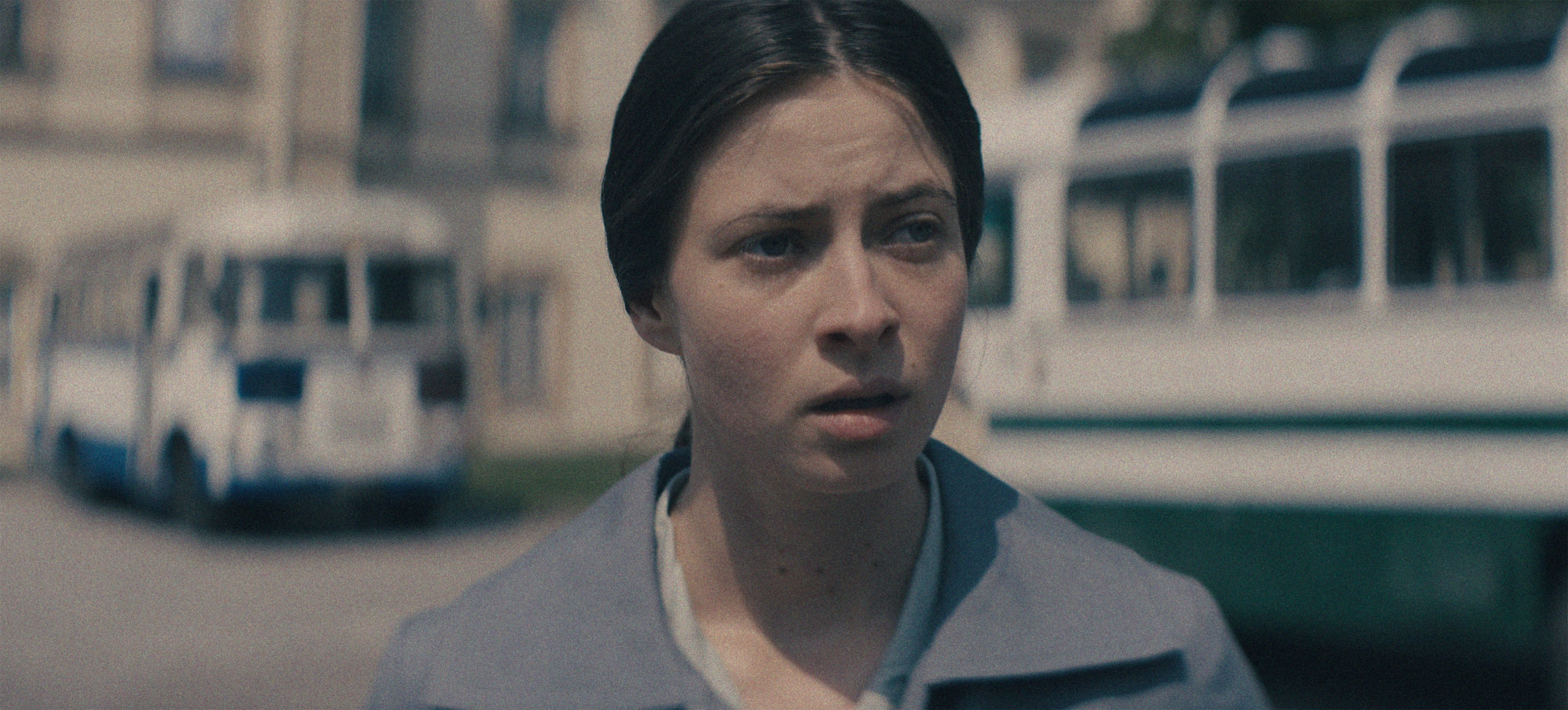
Cinematography of “Star City” by Brendan Uegama, courtesy of Apple TV.
Kirill: What piece of advice would you give to your younger self if you could go back in time to around 2010 when you were starting out in the industry?
Brendan: I think the biggest thing is I would tell myself to always trust my gut. Try not to compare my path to others. Don’t listen to the nonsense. Stay inspired. Travel the world. See new cultures, new places and experience new things. Because all of those experiences become part of who you are as a person and therefore as a cinematographer.
Kirill: What would be the three movies that you’d take to a deserted island?
Brendan: If I was on a deserted island I should probably have more uplifting films. But I’d start with these 3 that are anything but that. First would be “Apocalypse Now”. The second is “The Banishment”. And then Kurosawa’s “Ran”.
Kirill: My last question is about your favorite food you had while you were working on this show in Lithuania.
Brendan: There were so many amazing restaurants in Vilnius. I loved the culinary scene. My favorite restaurant by far was an Italian restaurant called Le Travi. A very small menu that changed weekly, a great environment and right near my apartment. I ate there often. But also a standout for me would be a small place that served chebureki, which is not a Lithuanian dish per se – meat seasoned with oregano and other spices, folded with cheese in puff pastry with air inside of it. It was just a simple restaurant but the flavors in this dish were phenomenal.
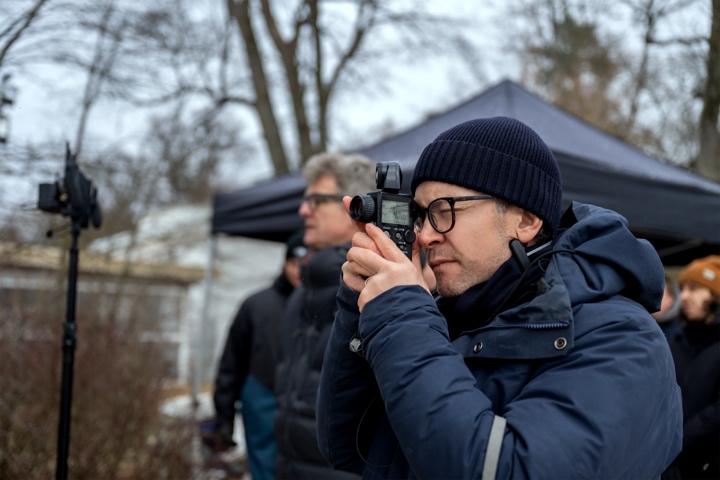
And here I want to thank Brendan Uegama for taking the time to talk with me about the art and craft of cinematography. I also want to thank Lauren Fein Goldberg for making this interview happen. The first season of “Star City” is streaming now on Apple TV. Finally, if you want to know more about how films and TV shows are made, click here for additional in-depth interviews in this series.
