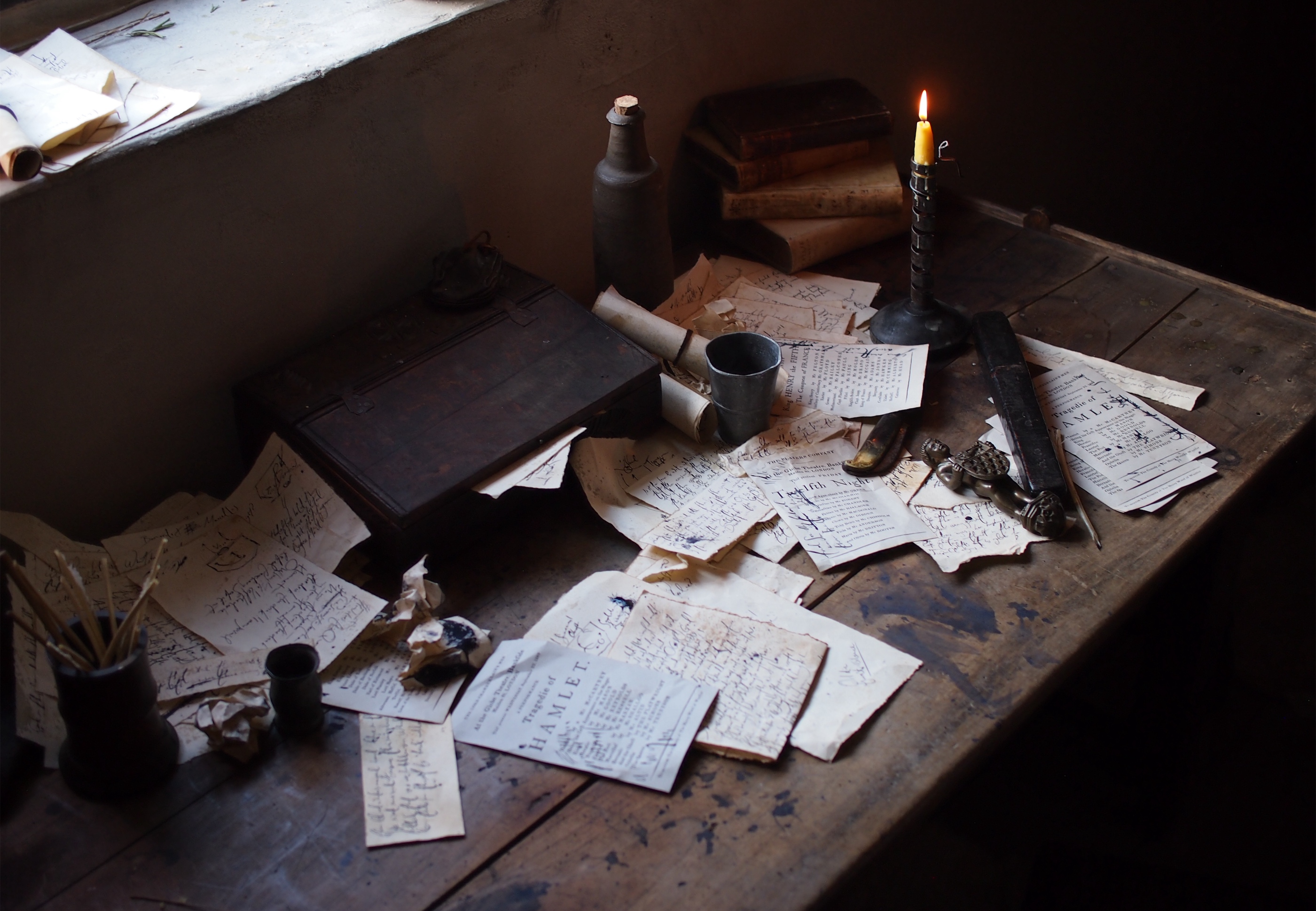
 Will's London apartment in "Hamnet", courtesy of Fiona Crombie and Focus Features.
Production design of “Hamnet” – interview with Fiona Crombie
Continuing the ongoing series of interviews with creative artists working on various aspects of movie and TV productions, it is my delight to welcome Fiona Crombie. In this interview, she talks the art department and the changes it’s seen in the last fifteen years, finding balance between historical accuracy and emotional authenticity, the rise of generative AI, and what advice she’d give to her younger self. Between all these and more, Fiona takes a deep dive into her Oscar-nominated work on the recently released “Hamnet”.
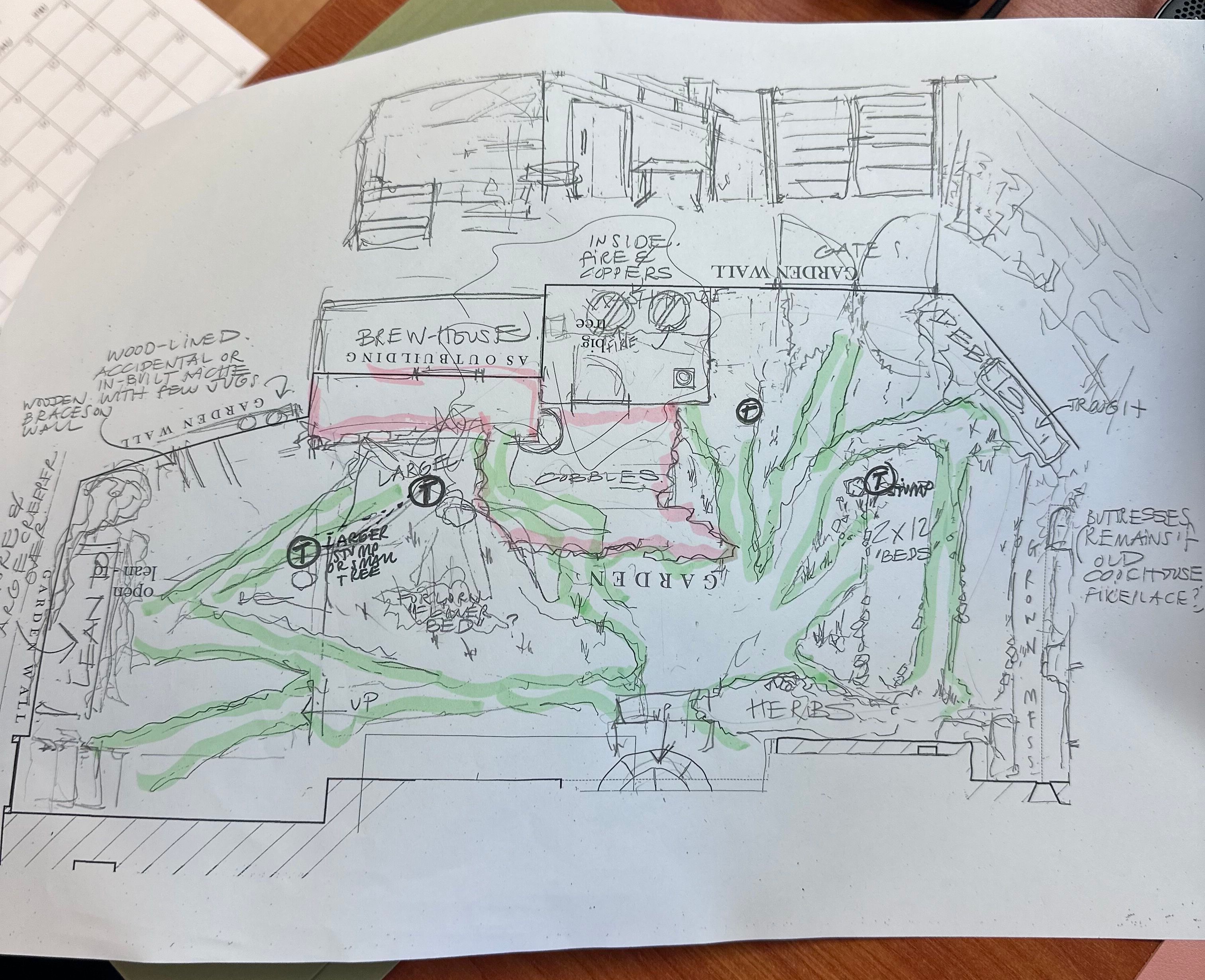
The initial sketch of the Henley Street house, courtesy of Fiona Crombie and Focus Features.
Kirill: Please tell us about yourself and the path that took you to where you are today.
Fiona: I’m second generation film industry. My father was a film director in Australia. When I was little, I didn’t really understand it, but I was fascinated by his passion, his happiness, and the fact that I could see that he was engaged in something that he loved. My mother was a film executive, and as a couple they were always engaged and excited to talk about what was happening. Back in the ’80s and the ’90s my father would go off and he would disappear for months and months making films and television mini series. The way I remember it is that he was having adventures.
I definitely visited his sets. I was always drawn to looking at the production design without knowing it was production design. I thought of it as playhouses, and actors dressing up. When I was 15, I did a work experience on one of his TV mini series in the art department. I thought that I can’t ever do this, because the hours were unbelievable. I was leaving with my father at the end of a shoot day, and everybody was staying in the office. People were saying to me “Don’t do this, you’ll have no personal life”.
So I thought to myself that I won’t, and I started studying arts law, but that was terrible. I didn’t fit in at all, and I wound up in theater school. I feel that I’ve always wanted to be a storyteller, and it felt natural to be telling stories through visuals.
I was a theater designer for about 10 years, and in that time I was dipping my toe into short films and music promos, and working with some friends. One of those friends got his first feature film in 2010 and that was the first film that I made called “Snowtown”. I did production design and costume design, and that was the beginning. Since then, I haven’t stopped, other than to have children [laughs].
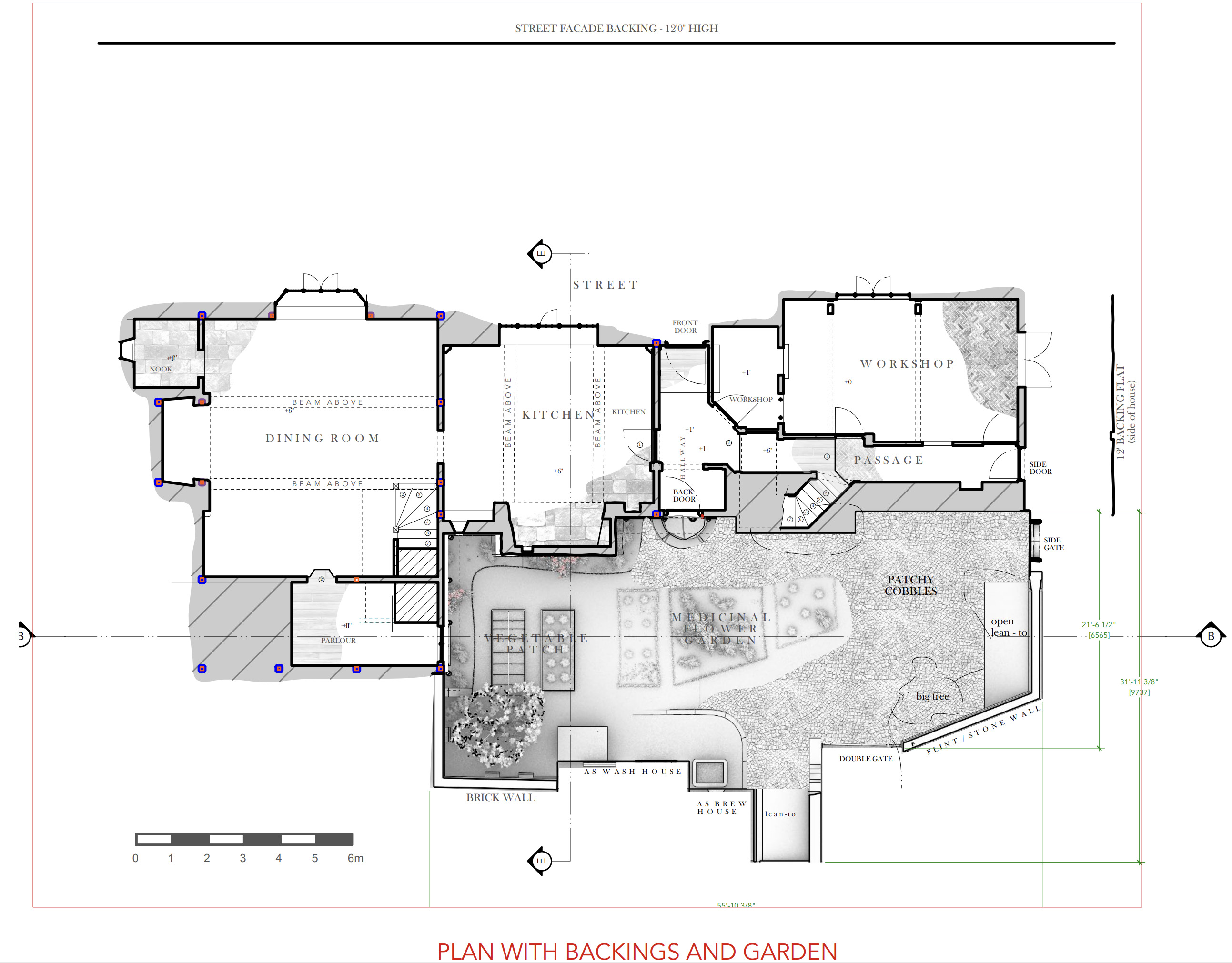
Construction plans of the Henley Street house, courtesy of Fiona Crombie and Focus Features.
Kirill: When you look at these 15 years doing production design, what are the bigger changes in the art department?
Fiona: One of the things is time – trying to make films quickly and trying to compress that pre-production process. The whole thing with filmmaking is about tension – and not tension necessarily in a bad way. It’s trying to jam things into short windows, and trying to do things as economically as possible. Sometimes that makes it quite hard, where once upon a time there might be more people, they’re trying to do it with less people.
There’s the whole question of AI and its involvement. Will that mean that we don’t have the time for thinking and contemplation, because productions will realize that you can generate quickly. That’s something that is starting to creep into my working mind. Today we’re sitting at a table, mulling over something and coming up with five or six things. Is there an expectation that we’ll make a hundred things instead with AI?
3D printing is an absolute game changer. It’s been amazing for prop making, for set construction, and for model making. It’s been great for us.
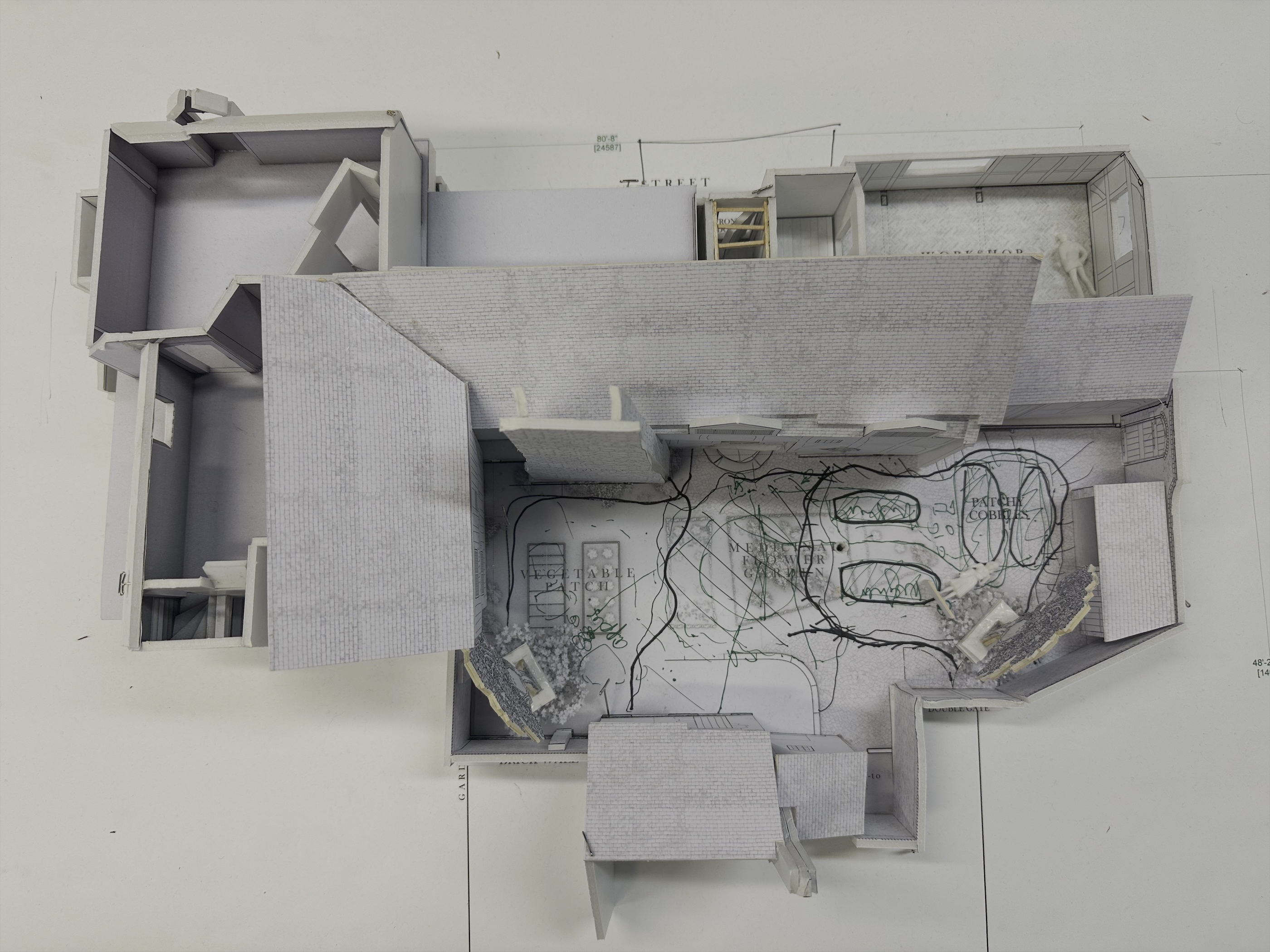
White cardboard model of the Henley Street house, courtesy of Fiona Crombie and Focus Features.
Kirill: When you talk to people inside and outside of the industry, what do you feel are the bigger misconceptions about what production design is and what the art department does?
Fiona: No one knows what it is. The name is not even helpful [laughs]. In some ways that’s a good description, because it is designing for the production. It’s not a set design. It’s broader. You’re looking at the whole look of the film. I think that most people have no idea. It took my children years to work out what I did. They used to always get the name wrong. They’d hesitate before saying what I did.
A big thing with us in the art department is that even within the film industry there is a degree of invisibility. So much of our work happens before anyone else has arrived. We will be in a room, we will be building sets, we will be doing all this work and thinking and creating. Then, when a shoot crew shows up, it’s done.
This happened on “Hamnet”. There was so much love, care and dedication that went into building the sets for the main house, but we were pressed for time. We only had 9 weeks for it. So many people threw themselves into that project, but when the crew arrived on the first day, all those painters and carpenters and others have disappeared. They’ve moved on to the next set. Our key art director Katie Money stepped away into the background, and no one knew that she was responsible. We prepare everything ahead and then we disappear. I think it leads to people not understanding the epic undertaking that it is to make the sets and the level of care that goes into it.
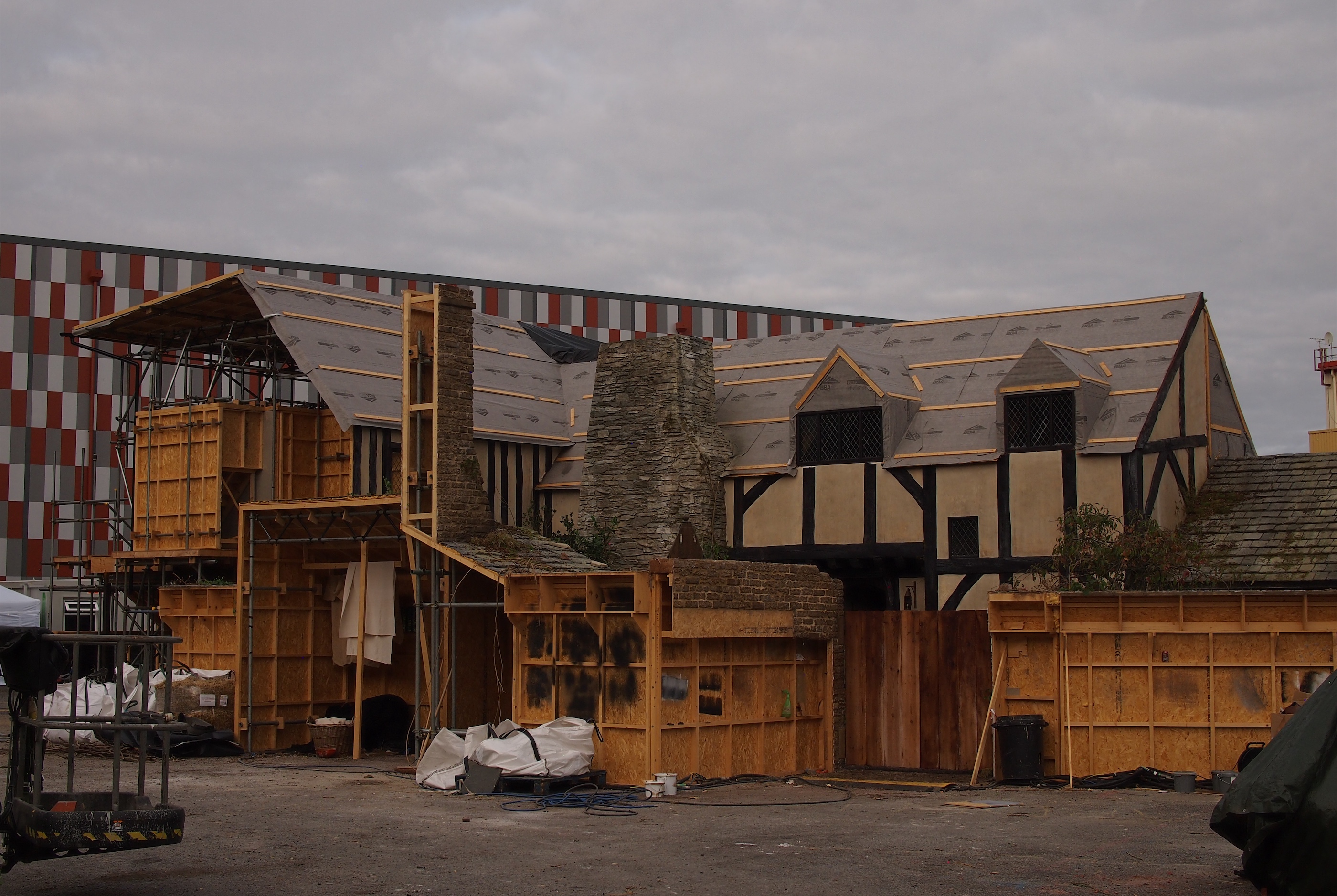
Set under construction of the Henley Street house, courtesy of Fiona Crombie and Focus Features.
Kirill: Can anyone be an artist?
Fiona: Anyone can be an artist. Art is about articulating something true to you without overthinking, something that’s completely individual to you. There is no such thing as right or wrong when it comes to creating art. It’s only when something is overthought or it might have an objective behind it. If it’s just purely for the act of expression, it’s art.
Kirill: What separates great artists from mere mortals, so to speak?
Fiona: It depends. There are artists that have extraordinary technique. Great art can be about a singular idea. Does it move you? Are you engaging with it as an audience?
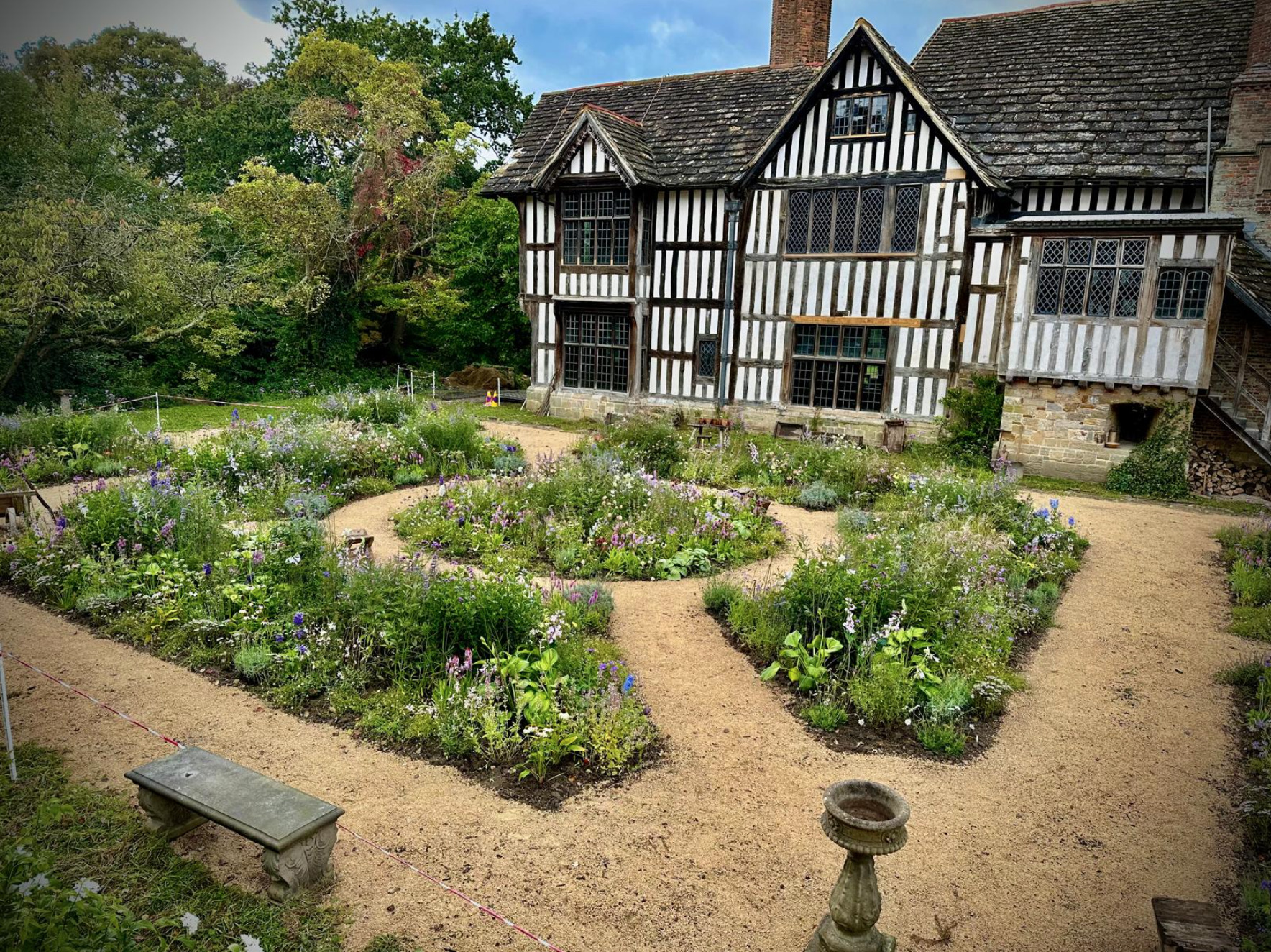
The final set of the Henley Street house with the garden, courtesy of Fiona Crombie and Focus Features.
Kirill: Getting to “Hamnet”, how did you find your way into it, or maybe how did it find its way into your life?
Fiona: It came to me in a conventional way through my agent. I was sent the script. I devoured the script. It was such a fantastic read. It all happened quickly in a matter of days. I was shooting a commercial in Brazil and so I was a little bit pressed for time. I remember thinking about pushing the meeting with the director for a week or so, and they came back to say that it had to be in the next couple of days. So I gathered myself together, met Chloe, and within the next day I was offered the job.
The minute that I got back in the UK, I was looking at the real Shakespeare house and starting to understand the project. We moved really quickly from there.
Kirill: How do you do your research these days? How do you bridge the gap between physical archives and the digital world?
Fiona: Over the last 10 years I’ve been working closely with a researcher called Phil Clark. He helps me gather the more academic dry research for me to understand the period, and he also helps me with creative impulses. We exchange ideas back and forth, while I’m also in tandem gathering my things.
My initial response to the work is almost driven by impulse. I’m not necessarily looking at anything that is accurate or historically appropriate. I’m looking at articulating the way this script makes me feel, and what I think I want to show audiences – and then I will get into what is historically accurate after that. By the time I bring it all together, I’m usually working with art directors and the set decorating team, and they are doing their own research. So cumulatively we will all have a body of research. We will adhere to some of it, and other things will be left behind.
In my opinion, we’re having an emotional response to a text. I’m trying to interpret environments and put them into cinema, and not worry too much about it being a documentary. In fact, it’s the opposite. My job is to avoid taking people out of the film. I want it to feel completely authentic. Certainly in the case of “Hamnet” that authenticity was paramount to the film. It’s so important to understand what would have been and how things would have happened. The book was so brilliant. It was an incredible resource from day one to refer back to.
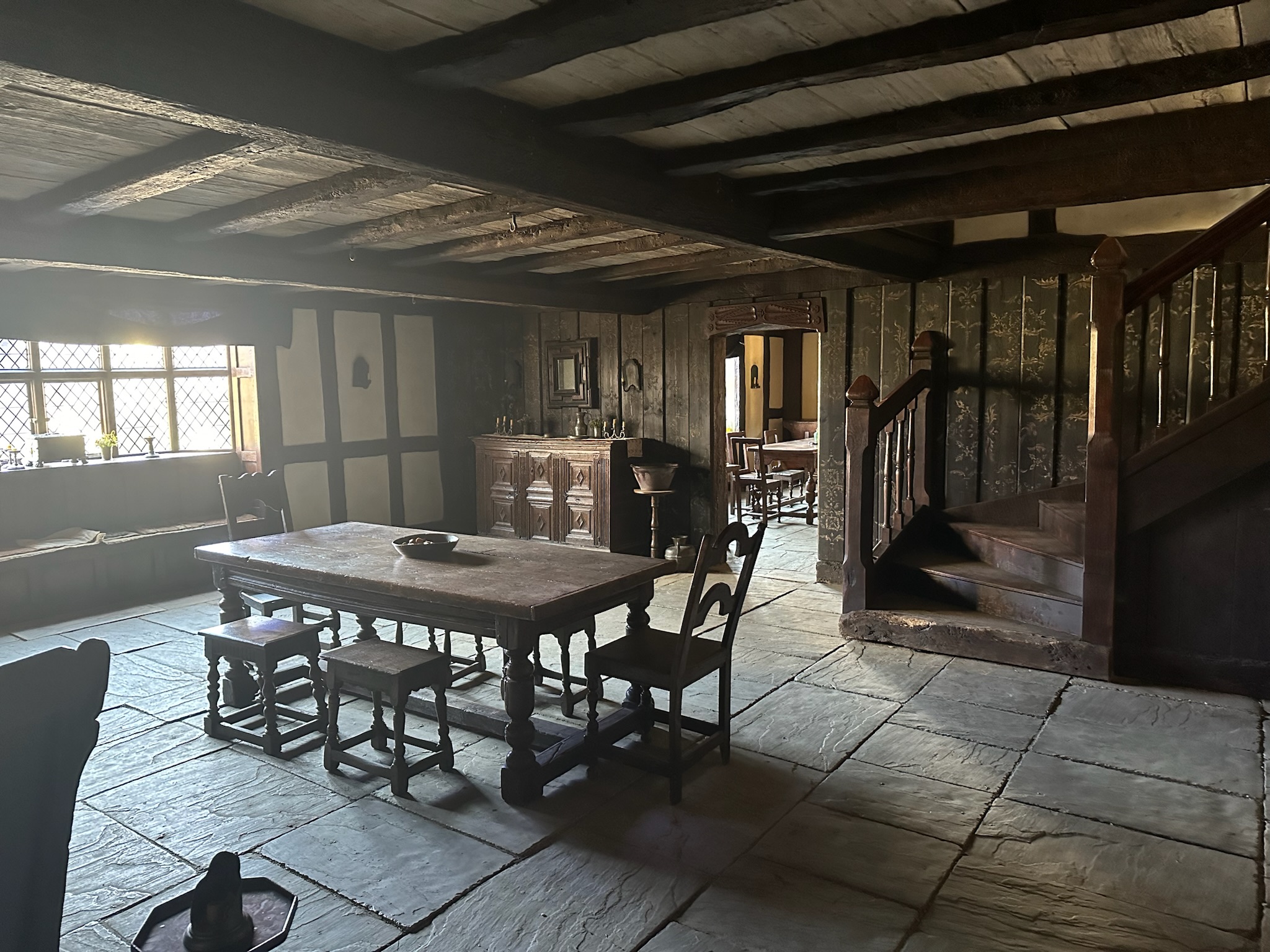
The interior of the Henley Street house, courtesy of Fiona Crombie and Focus Features.
Kirill: On an imaginary scale between historical accuracy and, perhaps, visual elevation of some of the emotional parts of it, where do you find “Hamnet”?
Fiona: I honestly think it sits somewhere in between. I believe that audiences are connecting with the film because it has an original take. We’ve created an intimate world where you are brought really close to the characters. You understand how they live. It’s messy, and it’s lively, and it’s not something that feels like a museum piece. We worked hard at trying to make it feel immersive, to make the audience feel that you can be amongst the way that these people live. That was absolutely the objective.
I’ve heard people saying that they are not speaking historically accurate language. Somebody was saying to me that Paul Mescal was doing freestyle in the water, but that wasn’t invented yet. But it’s about the way he’s unleashing himself in the water. As an audience member, it’s more important to see the emotional side of it, what that means for somebody to swim like that.
That’s true with the decoration. The house design is historically accurate, as houses would have been. The Globe feels like the Globe, but we changed some things. We changed the way that plays were put on. We changed the side of the stage. We’re collecting from markets, finding objects that feel right for our film that are not of the period. They cannot be. By now a lot of them would be dust. They’re pieces of furniture or objects that approximate the thing that feels right for that home.
You’re creating a set of rules for yourself about what is appropriate and what is not. We do that internally as a group. Once you do that, it frees you to create environments that feel right for the characters.
Kirill: How long did it take you to find that tree, and how much work needed to be put in around the tree?
Fiona: My memory might be warped, but I’m pretty sure that it was on our second trip to Lydney that we found the tree. The tree, for good reason, presented itself like it had to be part of the film. I have a brilliant greens team in the UK. We added in the roots around the tree, sculpting the place at the base of the tree where she gives birth. We planted all the ferns and the growth around it. When she’s running through, all that was planted.
It’s a protected site and it was sensitive working there. It’s a private estate. You can’t just walk there, so it felt really untraveled and wild. We elevated it and created the areas that we needed for the story.
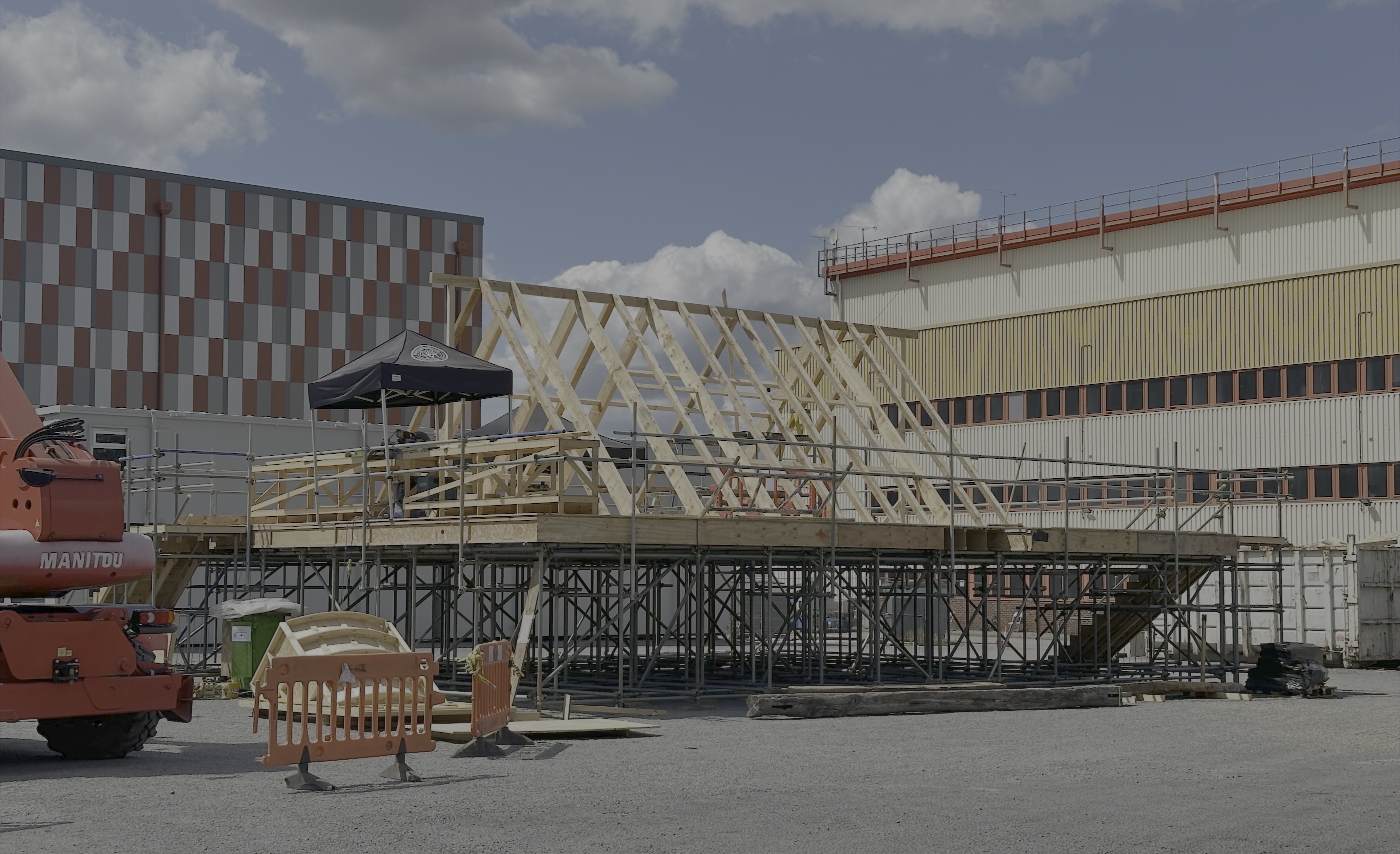
Building the attic part of the Henley Street house, courtesy of Fiona Crombie and Focus Features.
Kirill: How do you approach designing and building for natural light that feels authentic to that era?
Fiona: We thought about it in a practical way, and how people would gravitate towards windows. Chloe had wanted to shoot in location only, but we ended up not being able to do that. However, because we went to so many locations, we paid close attention to the way that the houses were structured, to windows and little seats near the windows.
Chloe and Lukasz Zal the cinematographer were not interested in candles, as they found them quite distracting. So we did have a lot of time spent near windows and open fires, looking for ways to illuminate the scenes in natural and authentic ways. The truth of the matter is that they would have only ever had one candle burning, and they would have moved the candle. They wouldn’t have tons of candles everywhere. In fact, Lukasz was blowing out candles all the time. We would have candles for him and he would get rid of them. It’s that element of research of understanding how people lived, and then you can make decisions to honor that or step away from it.
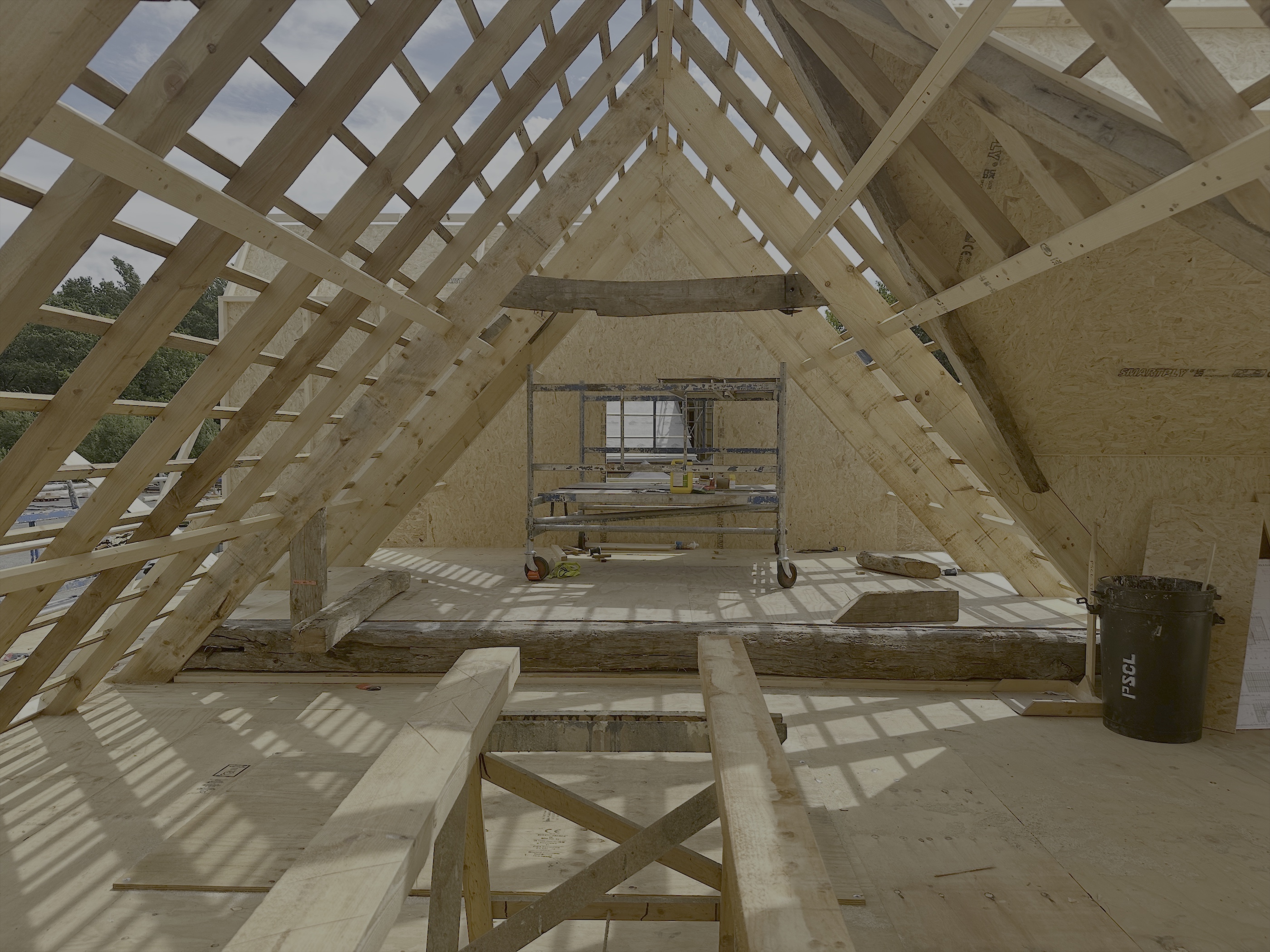
Building the attic part of the Henley Street house, courtesy of Fiona Crombie and Focus Features.
Kirill: Talking about the main family house, how do you approach envisioning the history behind it, and its evolution over the period of time that the story covers?
Fiona: I remember reading that the house was around a hundred years old by the time of our story. That was a relief, as I didn’t want to build a new house [laughs]. We did various things that helped us give texture and history to the house. We used reclaimed timber through all of the set builds. We gathered reclaimed timber, and that sat alongside new timber that we aged to look like it was reclaimed. We had some pieces that were beautiful and old oak, and then we had pieces that we brought to look like that. Those pieces of oak came with scars, damage and history – and that aged the house immediately.
We did the same thing with objects. We did build pieces of furniture, and we had a collection of vintage textiles. We brought in pieces that already felt like they had a story and a history and had been collected over time.
The thing about that house is it bears witness to lives and generations. The house changes through how noisy it is. It changes through how busy it is. Furniture moves. There’s birth. There’s death. And the house essentially bears witness to it all. That was one of the loveliest things. You see the impact of what happens when there’s two beds and then there’s one. These things are both gentle and seismic in their meaning. We changed the bed drapes on the marital bed from red to blue after Hamnet’s death. It’s a tiny gesture but it registers. You’re plotting the movement of the house. We also plotted the garden and how that changes. It was one of the pleasures of the job.
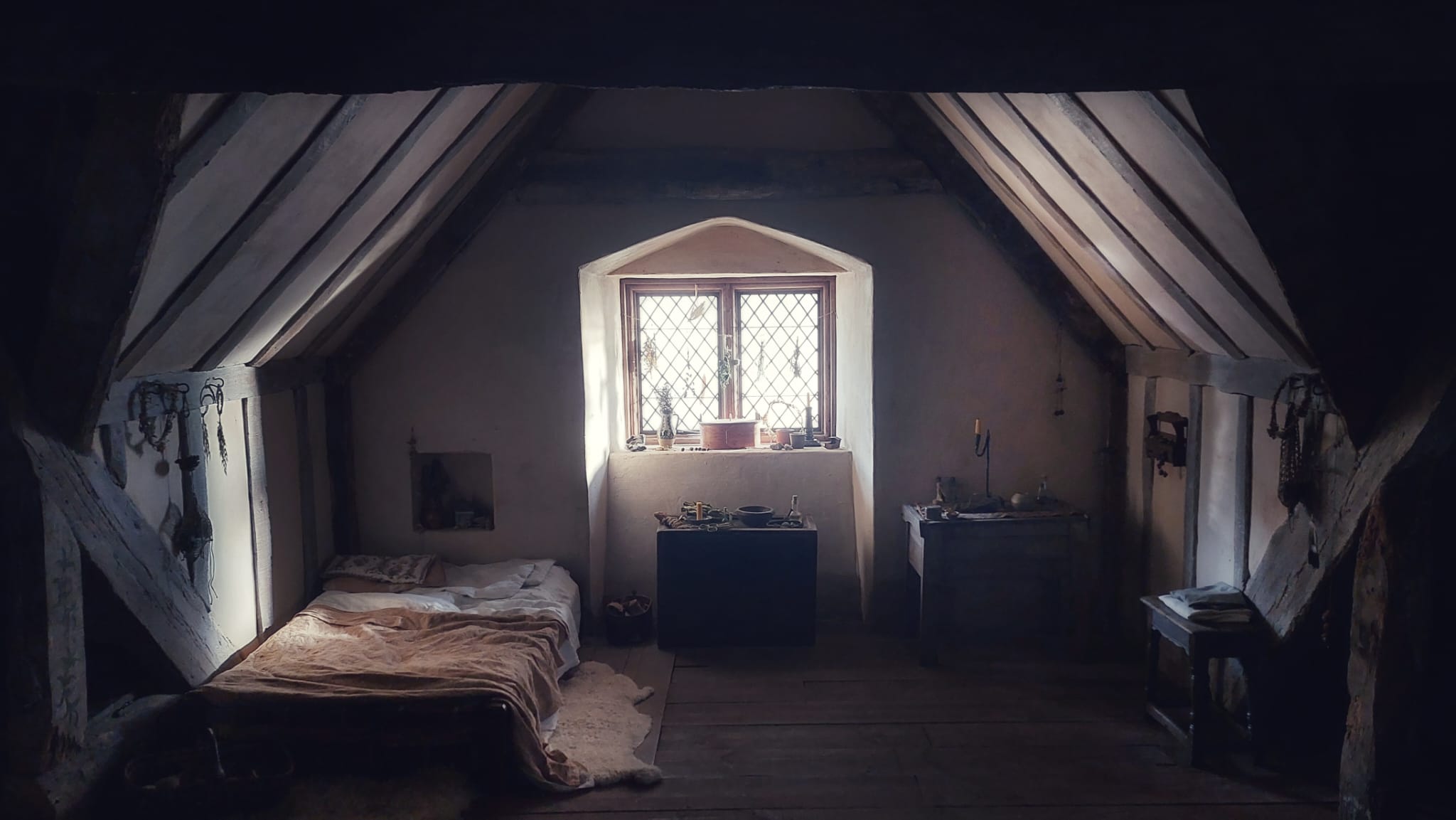
The final attic set of the Henley Street house, courtesy of Fiona Crombie and Focus Features.
Kirill: Was it built as a single multi-level set, or was the attic built separately?
Fiona: Narratively yes, actually no [laughs]. We built the ground floor of the house with the garden and everything in the back, and a bit of the street. The street that you see in the film is partially built there. Then the attic was built separately on a platform, just off to the side. And we got a bit clever with it, building Will’s London attic in that same space as the main house attic. Going back to your earlier question, the whole thing was positioned for light. We orientated the house so that it got the most and the best light. The garden was facing out to the back lot and the trees. There’s almost no post-production in there, as you’re looking at real trees that were there.
Kirill: What went into decorating the kitchen? Where the utensils made from scratch, or found in local shops and markets?
Fiona: It was a combination. Everybody goes out and there’s a collection of things brought in. We also made lots of pieces. We made shelving. We did all our ironmongery for the fireplaces and hinges.
The build of that Henley Street house was so short and the detailing was so heavy. You’re trying to get all the textures right. We were dressing and finishing the set at the same time. We were bringing pieces in and taking them out, making sure that everything was fitting the way that we wanted it to fit. I remember it being an organized chaos [laughs]. Everybody knew what they were doing, but the place was absolutely crawling with people. There were painters finishing and detailing and layering, and then greens people in the backyard, and the set decoration team finishing. It was all happening exactly at the same time. Then we handed it over and walked away.
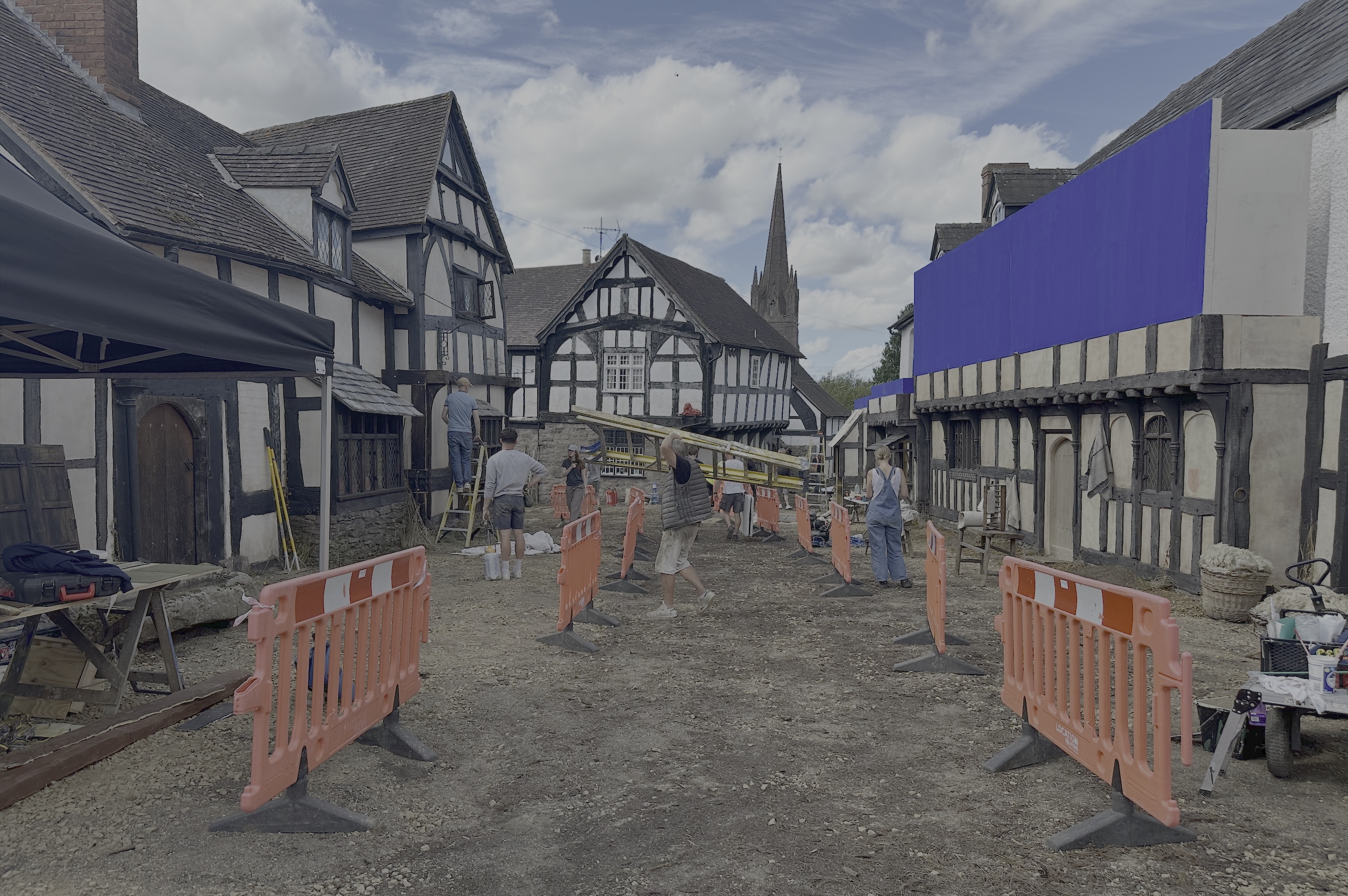
The larger exterior of the Henley Street set, courtesy of Fiona Crombie and Focus Features.
Kirill: When the camera looks down Henley Street and there are four or five other houses, are those just skeletons, or fully built buildings?
Fiona: We added facades to existing buildings. We found a street corner in Weobley with a handful of buildings, and we also built facades on the opposite side from our main house. They were sitting in front of a hairdresser. They were sitting in front of people’s homes. We did the texturing of the road and other things, but it’s mostly anchored in two or three Tudor buildings. That corner was a good perspective to have. If my memory serves me right, we had to hide this gas pump that was in the area [laughs].
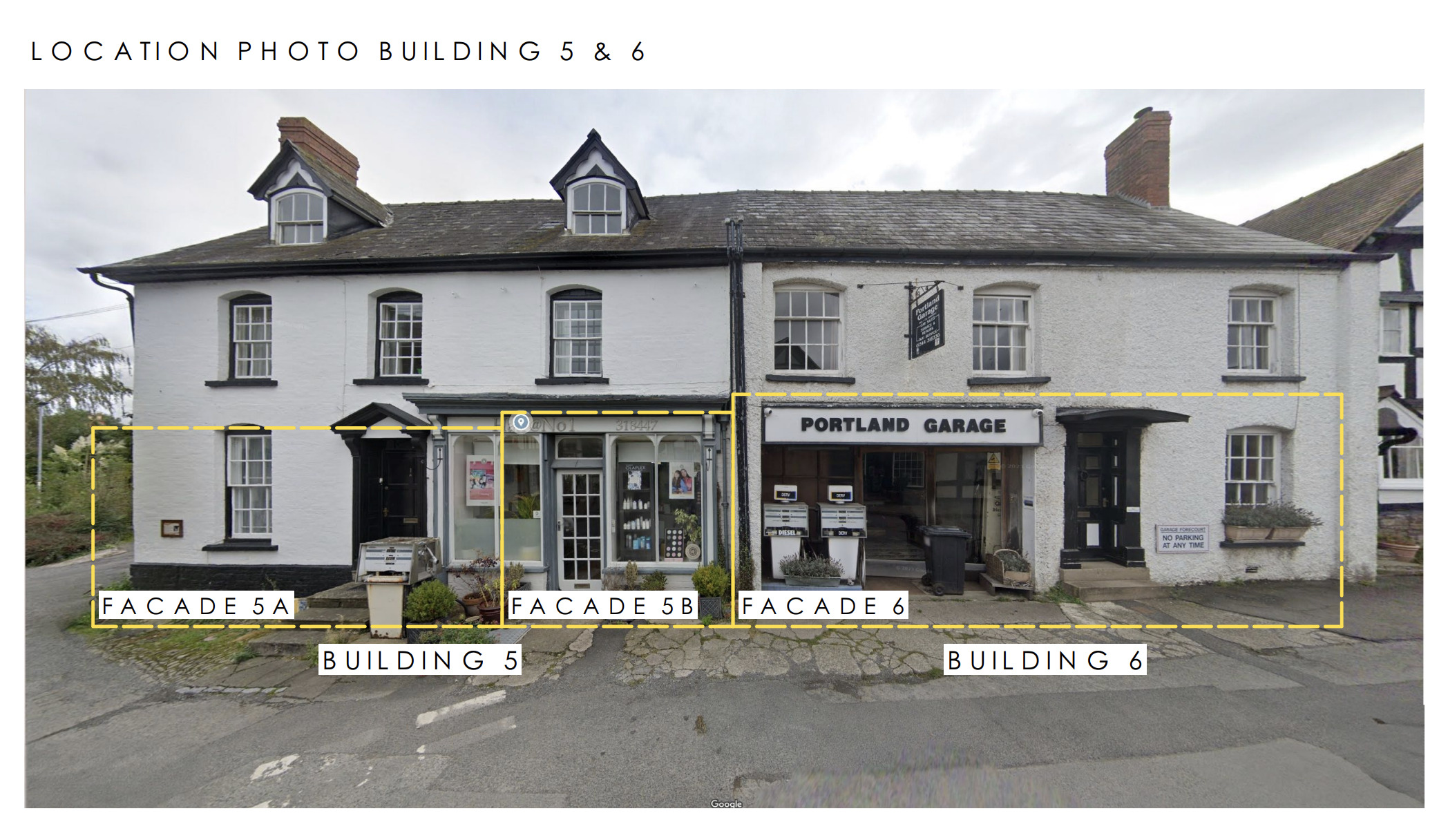
Mapping out the facades for the Henley Street buildings, see the gas pumps in the garage, courtesy of Fiona Crombie and Focus Features.
Kirill: Moving to London, did you build the docks, or was it a place that you found?
Fiona: That was a real dock on the Thames that we dressed on top of. We built the hut at the end and we did some surfacing. The whole schedule was based around shooting that low tide. Will goes for a walk on the banks of the river, and it’s low tide that happens quite rarely.
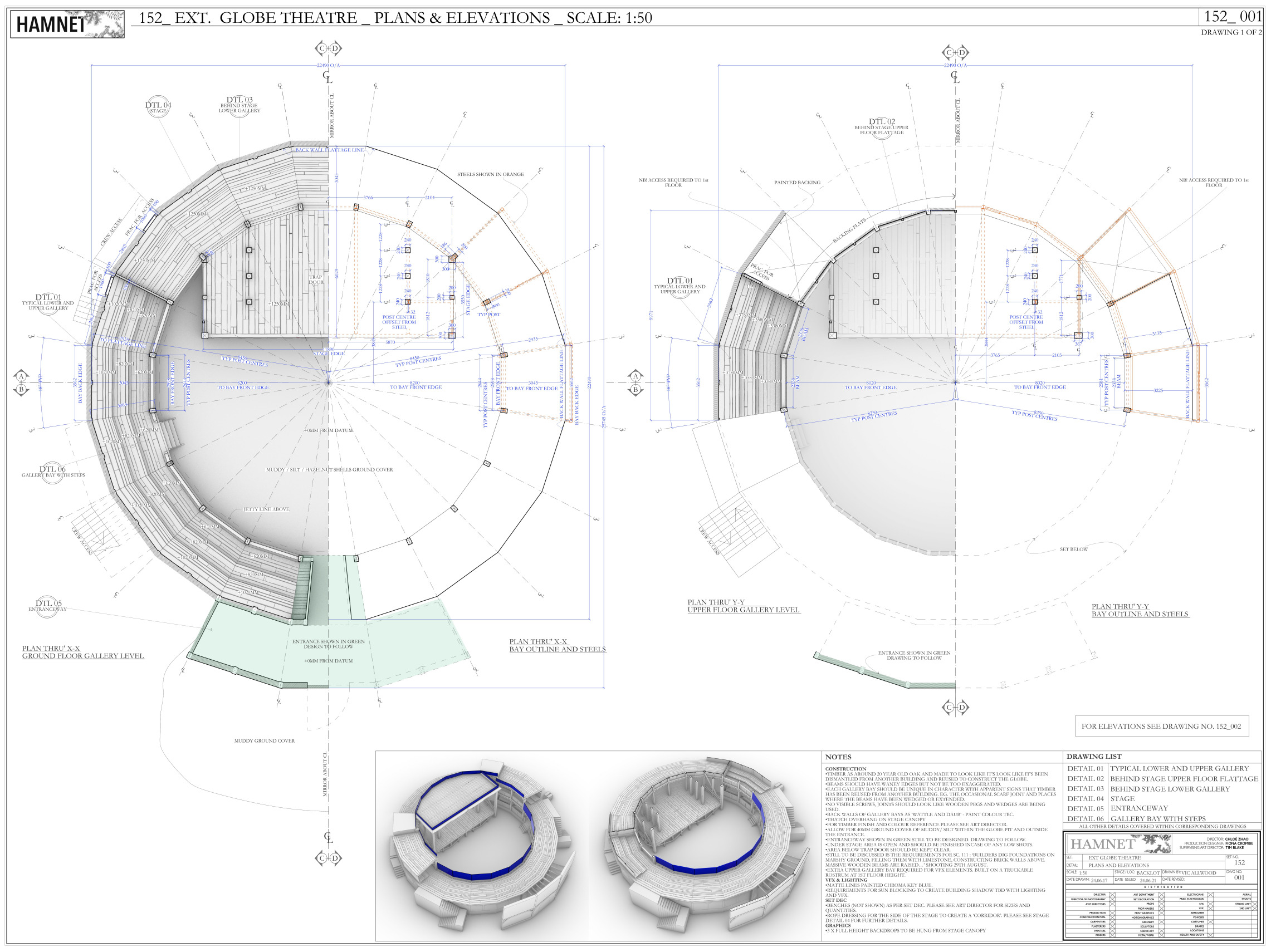
Floor plans for the Globe theater, courtesy of Fiona Crombie and Focus Features.
Kirill: Getting to the Globe, what went into making it, and what did you want to achieve for that long final part of the story?
Fiona: The Globe that exists in London today is not the same original one, so I felt that there was a bit of creative freedom for us to interpret our interior. When I was visiting the real Globe, it did feel a few steps away from our story. It’s got marble columns and it’s ornate in a way that did not feel that it related to the aesthetic of our film. I was relieved to know that there was another Globe for us to build [laughs].
It felt to me like it could feel more rustic and have more honesty to it before it becomes the big shrine to theater that it is today. It was very much a place that Will creates as a home for his plays.
We read that the first Globe was built with reclaimed and stolen timber, and that gave us license to use great oaks and timbers. When we all visited the Globe, Chloe had said to me that it should feel like the inside of the tree. It was important to keep this big set piece within the language of our film. It was absolutely beautiful building it. There’s a lot of attention to joinery and other elements. It has an integrity and a simplicity about it. We only used a few materials. There’s nothing over the top about it.
The most important thing is what is on that stage. That’s the jewel. That’s the thing that catches her eye the minute she walks in – and that was quite deliberate. It’s a part of the concise palette of the film. You have the Henley Street house which has a particular palette that sits alongside the vivid green of the forest. And I’m doing exactly the same thing in that theater. You have the earthy tones of the wood and the plaster sitting alongside the vivid green of the backdrop. These rhymes became important to the natural progression through the film that arrives at that theater.
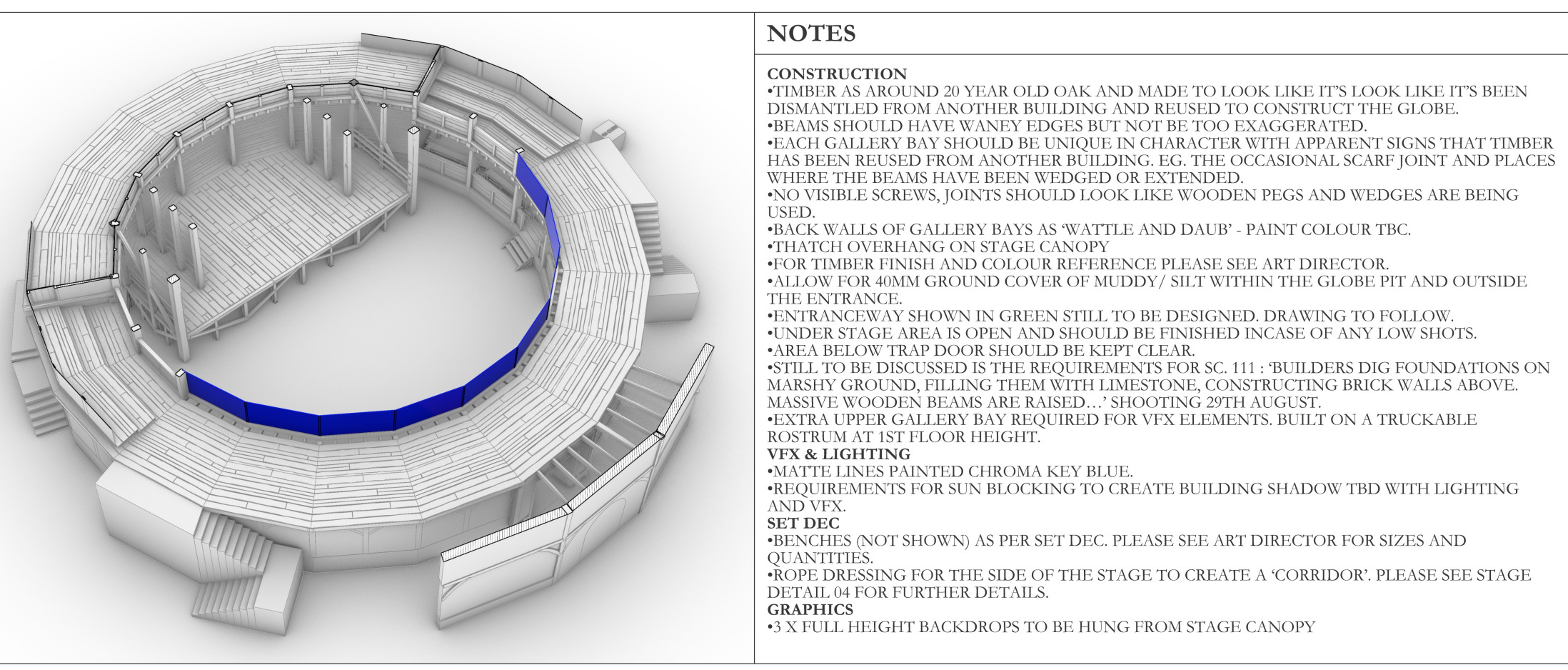
Floor plans for the Globe theater, courtesy of Fiona Crombie and Focus Features.
Kirill: Are you used by now to see these beautiful creations getting destroyed when the shooting stops, or does it still hurt a little bit?
Fiona: I always love my sets. You have to love your sets because it can be hard work. You want to keep showing up and you want to get them right. But quite often I’m happy to say goodbye.
On “Hamnet” it was a different story. I did not want to say goodbye to any of the sets that we made. I felt so connected to them. There was something different about those sets. The sad part for me are the gardens because they were alive. We created not only the gardens that you see in the film, but on the way from my office to the set we had our own little garden that was for decoration. When I was on my way to the sets, I would go in there and forage, along with my entire set decoration team. We’d pluck things to put into the sets, or we’d find something that was in bloom. I would love to think that the studios have kept our little garden.
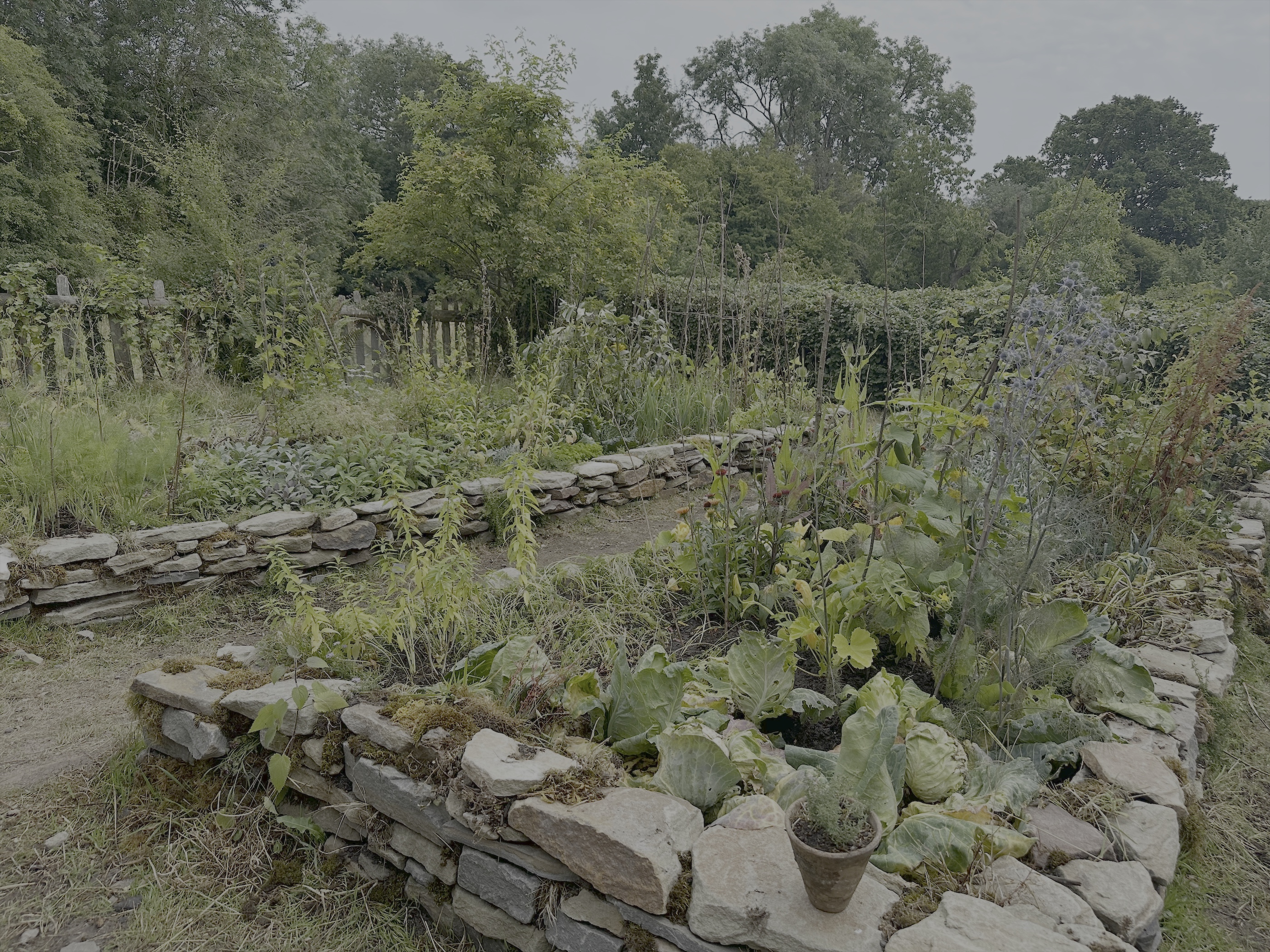
The garden of the Hewlands farm, courtesy of Fiona Crombie and Focus Features.
Kirill: Is there such a thing as your favorite set in “Hamnet”, or are they all your handsome babies?
Fiona: It’s a hard one. I was very much in love with the house. It was a passion project pushing that to feel like it was a place that had heart. It wasn’t just a set to be admired. It was somewhere for people to live and for this to hold the story. And to do that so quickly was very taxing. It was so beautiful to be in. We would all stay there. When it was lunchtime, everybody would gather around. Everybody wanted to be there.
Kirill: What was the most challenging day on this production?
Fiona: It was probably not a challenging day, but rather a challenging couple of weeks. We were shooting in the countryside, 3-4 hours out of London. We were building the house, and I was driving and splitting my week between London and Herefordshire. It was hours and hours of driving, trying to keep a handle on everything, and trying to be across everything. I’m not a fan of driving [laughs].
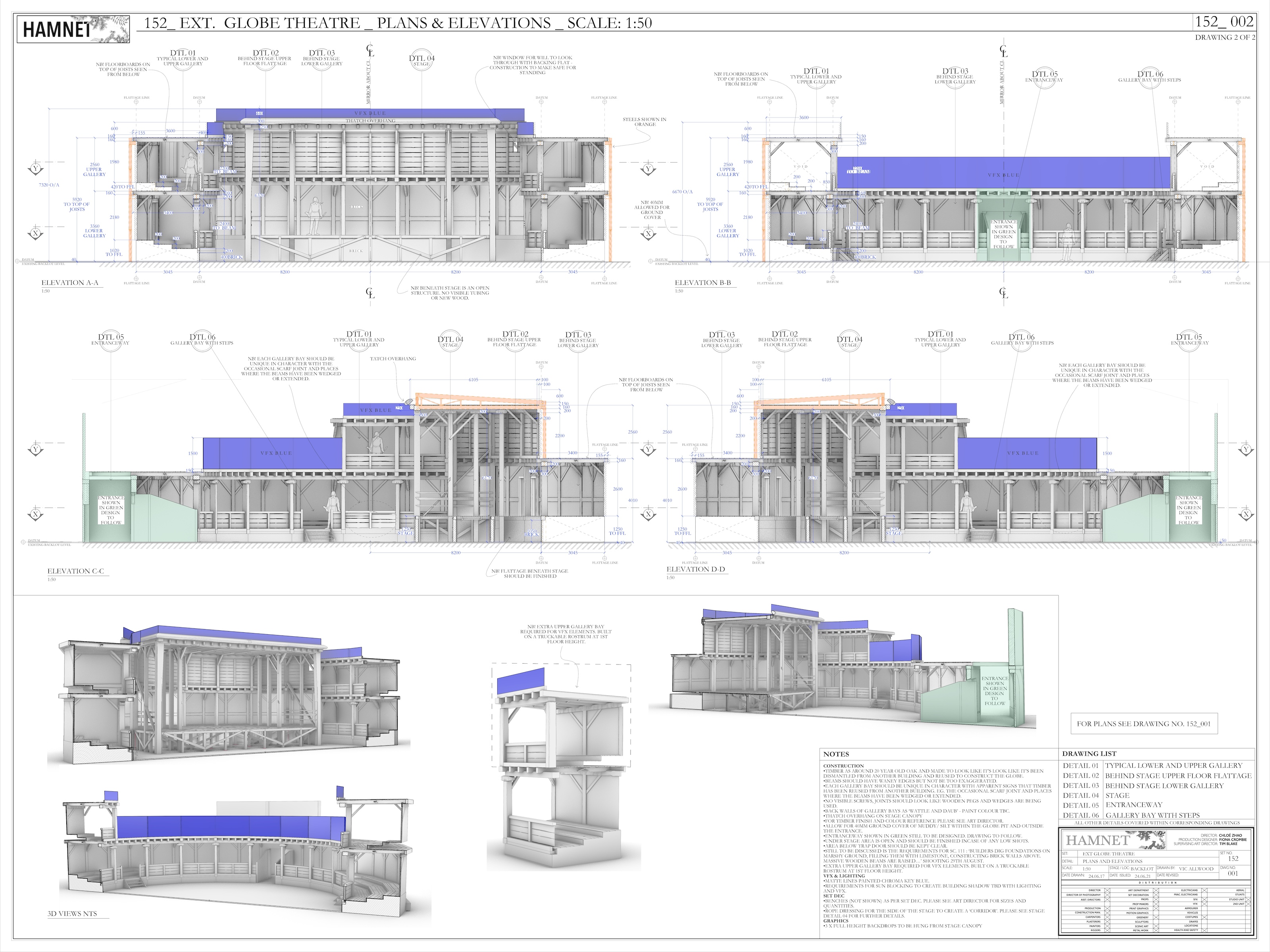
Construction plans for the Globe theater, courtesy of Fiona Crombie and Focus Features.
Kirill: The movie is still playing in the movie theaters and it’s on streaming now. Do you want the viewers to experience this story on the biggest screen possible?
Fiona: I absolutely think this is a film to see in the cinema. It’s a beautiful film, but it’s more because it’s about shared experience. The final moments where we’re in a theater, there’s the theater sequence and you have an audience experiencing emotion in watching a play, and then as the cinema audience you are collectively experiencing something together. It’s something I haven’t experienced before.
One of the strange things for me about making a movie is sometimes you know what you’re doing, but it becomes more crystal clear in your viewing experience. This has happened to me with “Hamnet”. There are so many things that I knew we were doing, and we facilitated and understood – and then watching it I had that aha moment when I really understood it because I was experiencing it. Being in an audience and watching the audience was an absolutely profound experience that I’ve never had before. This is one for the cinema, for sure. You should sit next to people when you’re watching it.
I’ve been told more than once by different people that people sit and watch the entire credit sequence. They’re not moving. They’re sitting with the film, watching all the names and taking the time at the end of a film instead of rushing out.
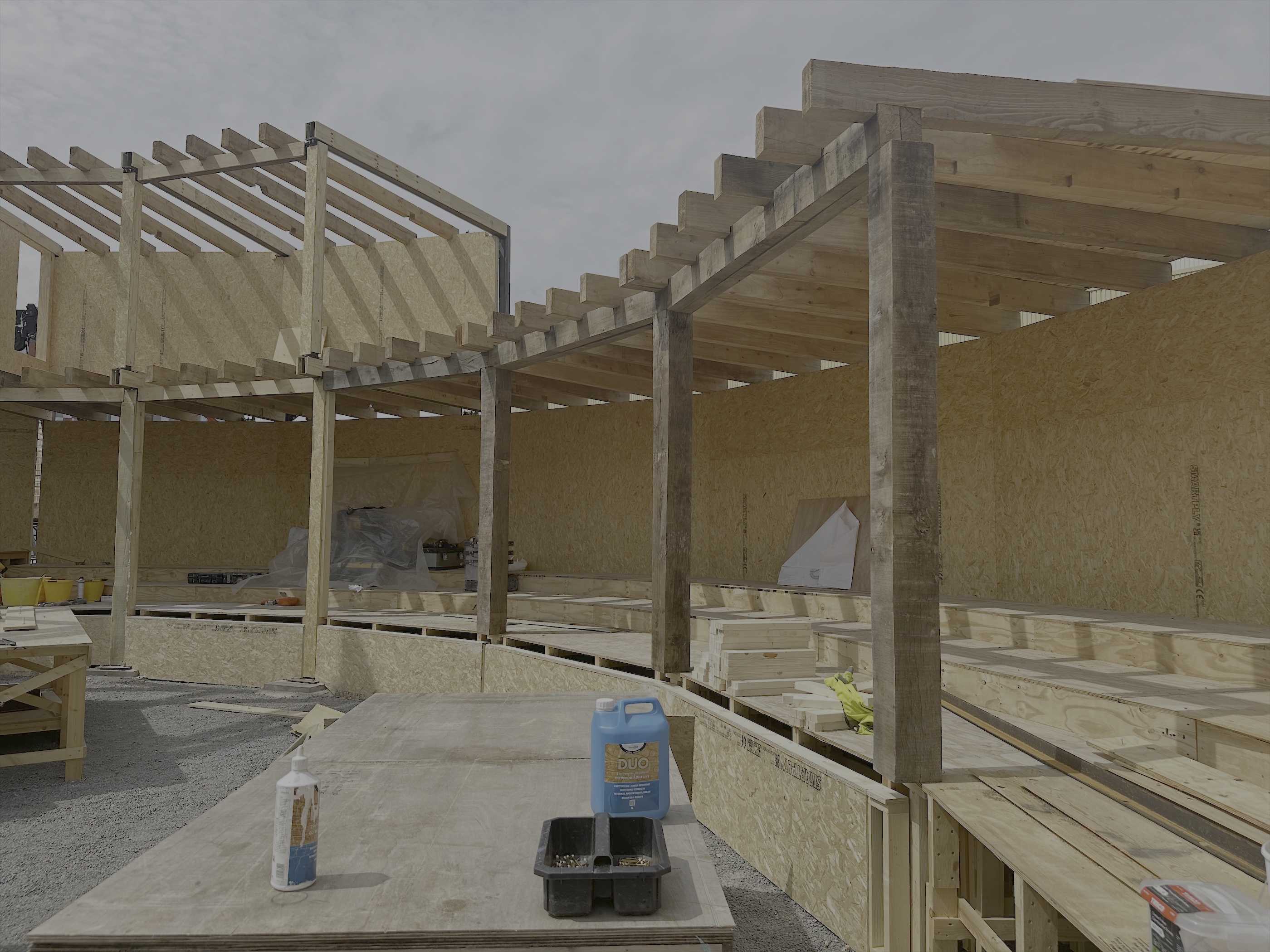
Building the Globe theater, courtesy of Fiona Crombie and Focus Features.
Kirill: You mentioned generative AI earlier. Some people say it’s an amazing tool, and some people say it’s an existential threat to creativity. How do you see it today?
Fiona: I can see its benefits, but I’m not convinced by it. There is magic that happens between humans, in the process of conversation and thinking and just standing somewhere. You also have an individual’s interpretation of your experiences. We are the sum total of so many parts – where we come from and what’s happened. Therefore, what is the color blue to one person is not the color blue to another person. We all have an individuality, and I’m not convinced that a computer can take that and mimic it.
It’s not necessarily that I have fear and trepidation, even as there’s a restructuring of the world that’s obviously taking place. I have experienced that magic of when an idea dawns on you through process, through standing there and thinking and working through it. It’s absolute elation when it lands. I feel sad that people may not have that elation in their lives, because the answers will come too quickly. There’s something wonderful about teasing that out through thought and time and dreaming.
Kirill: What do you know now that you wish you knew 15-20 years ago? What piece of advice would you give to your younger self?
Fiona: I probably would say to believe that it can happen, and also that I am good enough. I always questioned that for a very long time. I suffered terribly from imposter syndrome, and what a waste of time I now know that was, but at the time I had to work through all of that.
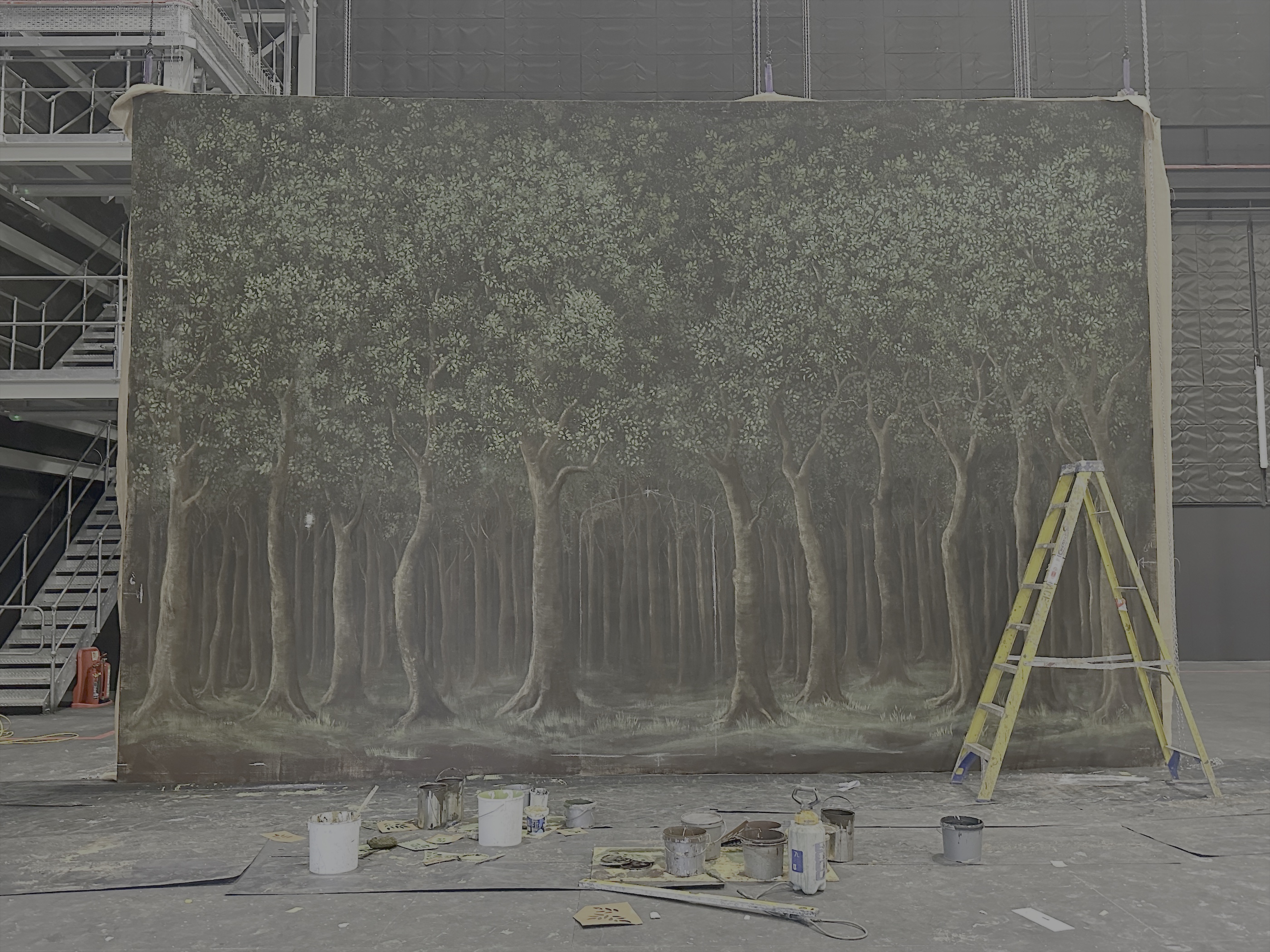
The stage backdrop for the Globe theater, courtesy of Fiona Crombie and Focus Features.
Kirill: You’ve been in this field for about 15 years now, with all those long hours and time pressure from the production side. What kind of separates people that stay in the industry and those that leave it after a couple of rounds? What’s the key to staying in this industry for these long stretches of time?
Fiona: It has to be passion. You have to really love it. It does take a lot, but it also gives back a lot. You have community and satisfaction and creative opportunity and travel. You never know what is happening. I don’t know what I’m doing this time next year. There’s a lot of positives, but you have to have the passion and the tenacity. And you also have to be pretty fearless. We are all freelancers and we don’t know what is around the corner. You have to have a fearless quality that you can’t imagine living another way.
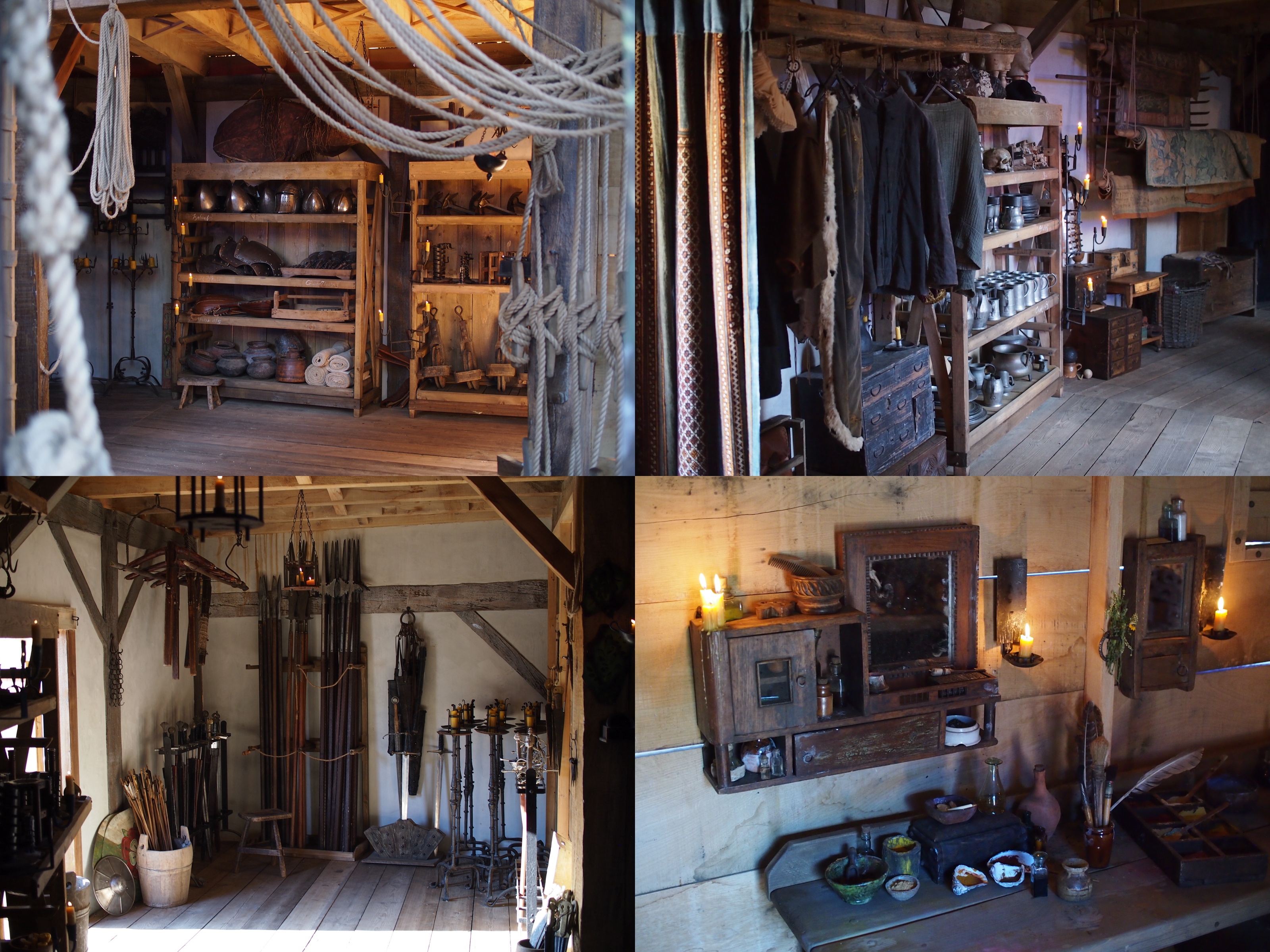
Backstage on the set for the Globe theater, courtesy of Fiona Crombie and Focus Features.
Kirill: The last two questions are about your favorite things. The first is what would you consider to be the golden standard of production design of all time?
Fiona: There’s so many. I absolutely loved “The Master”. I love films that have a real attention to detail where the production design is singing in the background, where it’s not crowding anything too much. I love “Cabaret”. When I think of great production design, I think of films that feel like they have a real sense of place.
Kirill: What was your favorite food or dish that you had while you were traveling for “Hamnet”?
Fiona: There was a place in Weobley where we shot that corner called “The Green Bean”. It’s a small deli shop with sandwiches and other things. They had a cheddar and chutney sandwich that was so good. I think I had it every second day. And I loved their scones with jam and cream.
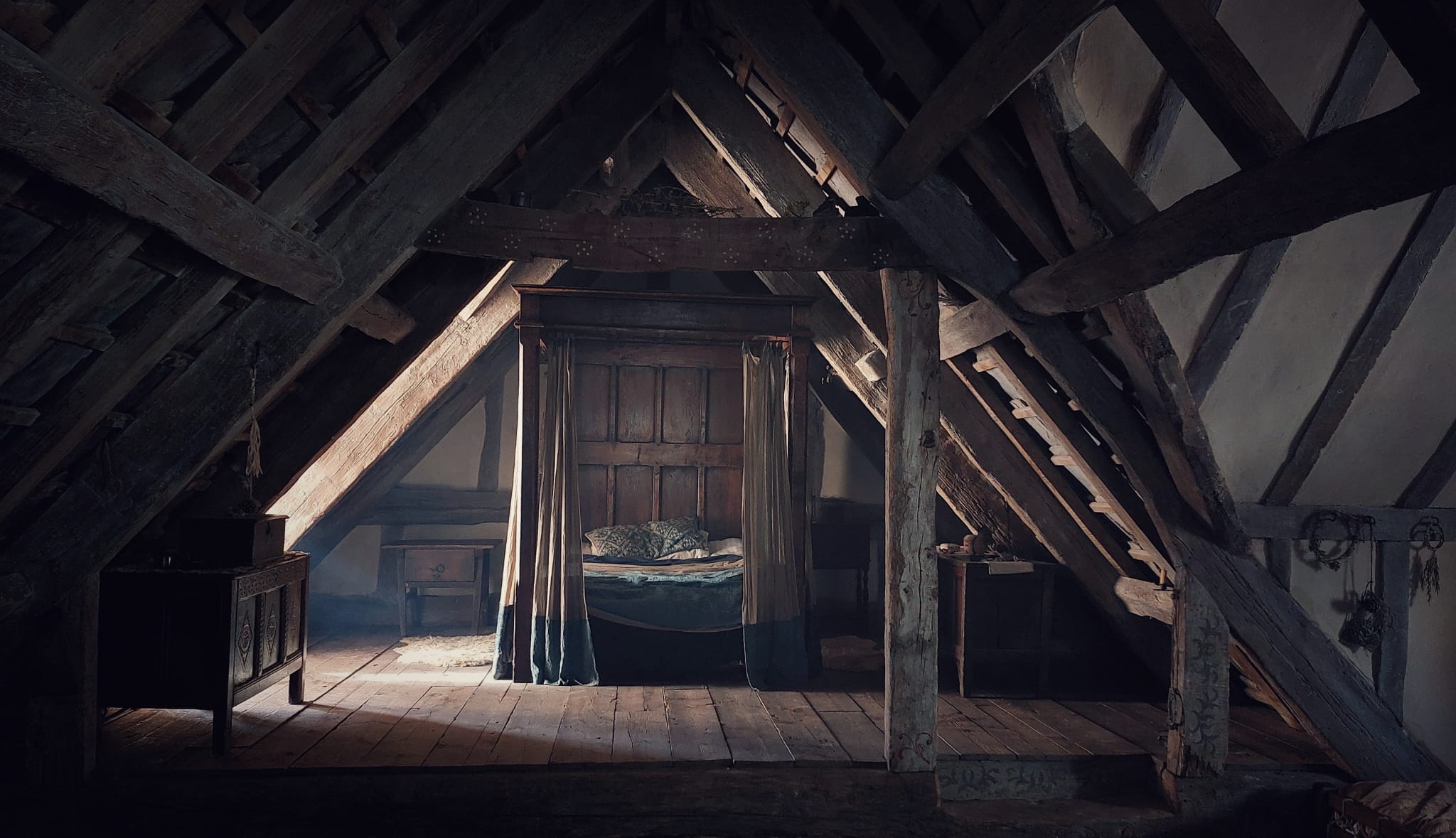
The final attic set of the Henley Street house, courtesy of Fiona Crombie and Focus Features.
And here I want to thank Fiona Crombie for taking the time to talk with me about the art and craft of production design. I also want to thank Rachel Aberly and Robin Finn for making this interview happen. “Hamnet” is playing in theaters and is also streaming on Apple, YouTube and Amazon. Finally, if you want to know more about how films and TV shows are made, click here for additional in-depth interviews in this series.
