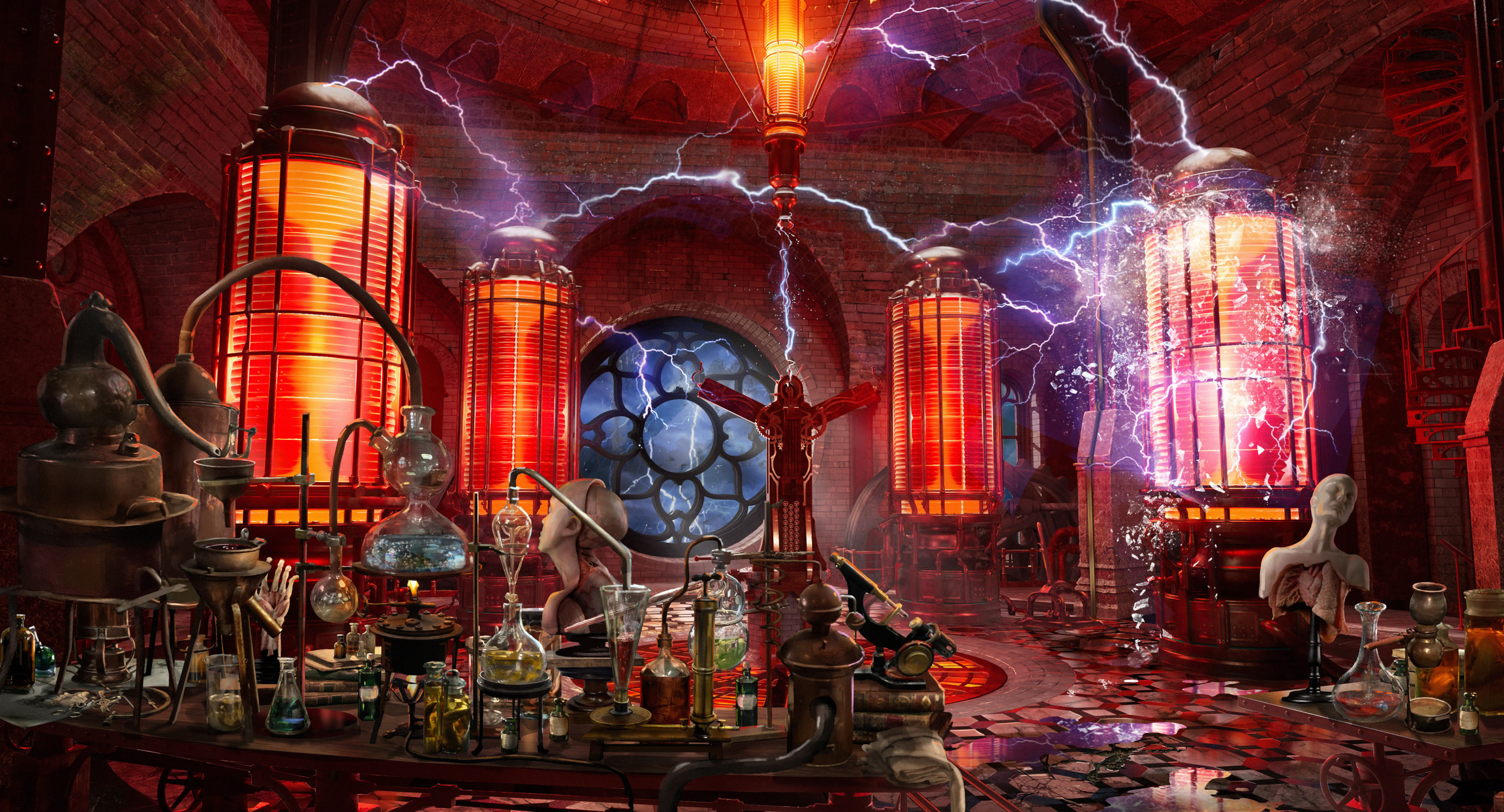
 Sketch of the moment the lightning strikes the lab, production design by Tamara Deverell, courtesy of Netflix.
Production design of “Frankenstein” – interview with Tamara Deverell
Continuing the ongoing series of interviews with creative artists working on various aspects of movie and TV productions, it is my delight to welcome back Tamara Deverell. In this interview, she talks about making stories for big screens, what makes a great artist, pushing for physical builds, and the rise of generative AI. Between all these and more, Tamara goes back to her work on “Priscilla” and takes a deep dive into the recently released “Frankenstein”.
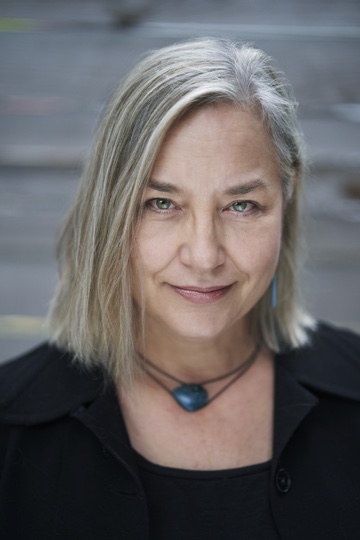 Kirill: We spoke about your work on “Nightmare Alley” in mid 2022. How have these last three years been for you, professionally and personally?
Tamara: I’ve moved from Toronto, which was our home base for many years, while working in the film industry. We built a house in the woods in Cape Breton by the ocean, and we’re living here now, which is really nice. It’s been a big year of change, finishing “Frankenstein” just over a year ago and landing here in Cape Breton.
I’ve taken this year off. I’m at an age now where I’m going to be picky and choosy about what I’m going to work on. I’m trying to do stuff that is a little bit more appealing to me emotionally and politically – not that “Frankenstein” wasn’t – but that’s also a little more accommodating to a change of lifestyle. “Frankenstein” was a very long project for me. I worked on it for almost two years and then took the year off. And now I’ve been doing a lot of publicity and interviews about it. It’s come back at me in a big way, which is wonderful because the movie is doing well.
It was a passion project for Guillermo and me. One of the things that we intended for the film was to make it very handmade, particularly in this age of the increasing use of AI. Guillermo is a big supporter of not letting AI replace human creativity. It’s not something we should be relying on to create our own artwork, masterpieces, and cinematic journeys. Ones and zeros don’t have human emotions. I’ve been thinking a lot about that. I’ve been trying to do my own artwork, which is actually hard [laughs]. It’s much easier to work on a film that I’ve been doing for almost 40 years. But I’ve been trying. I’ve been trying to do a graphic novel as well.
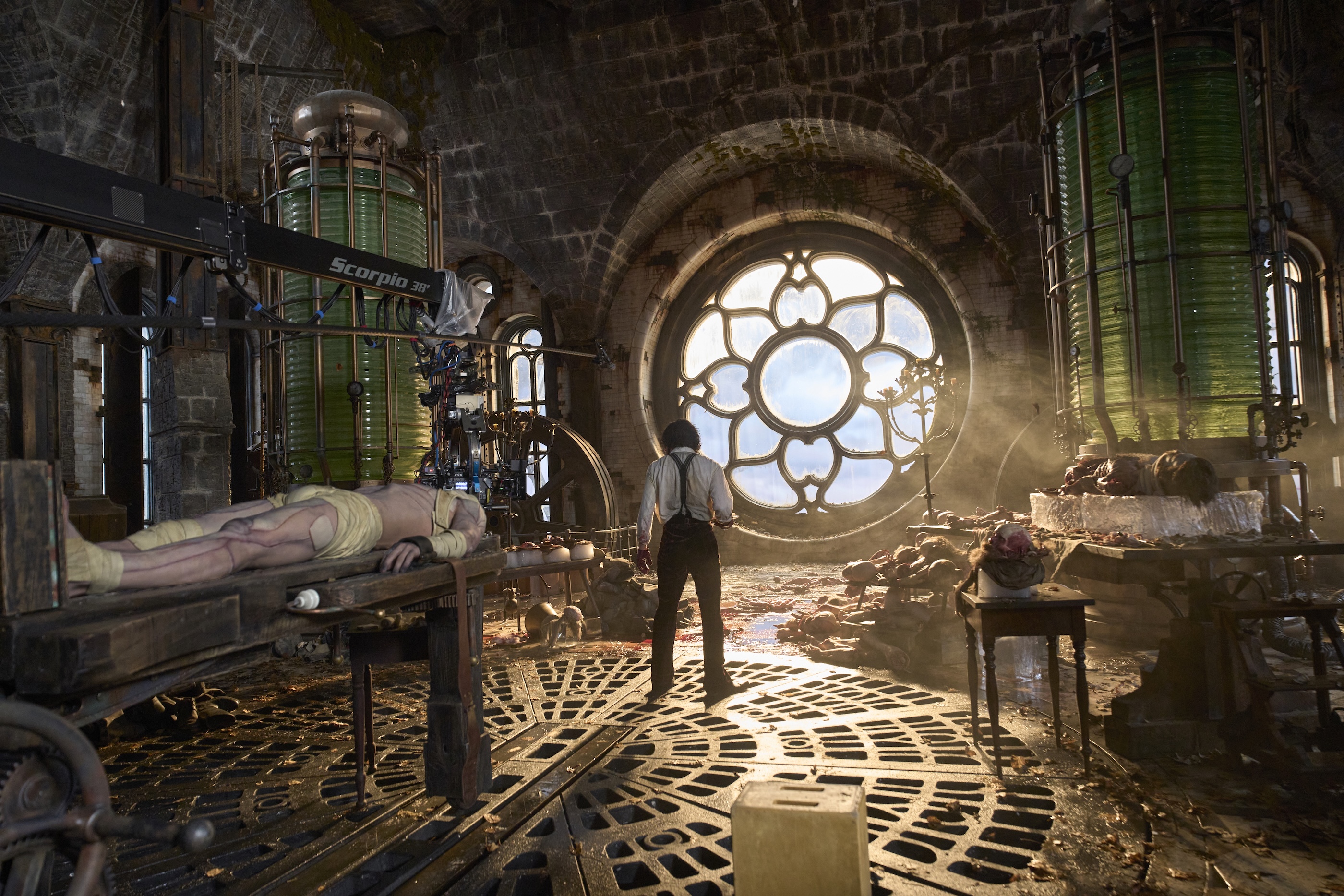
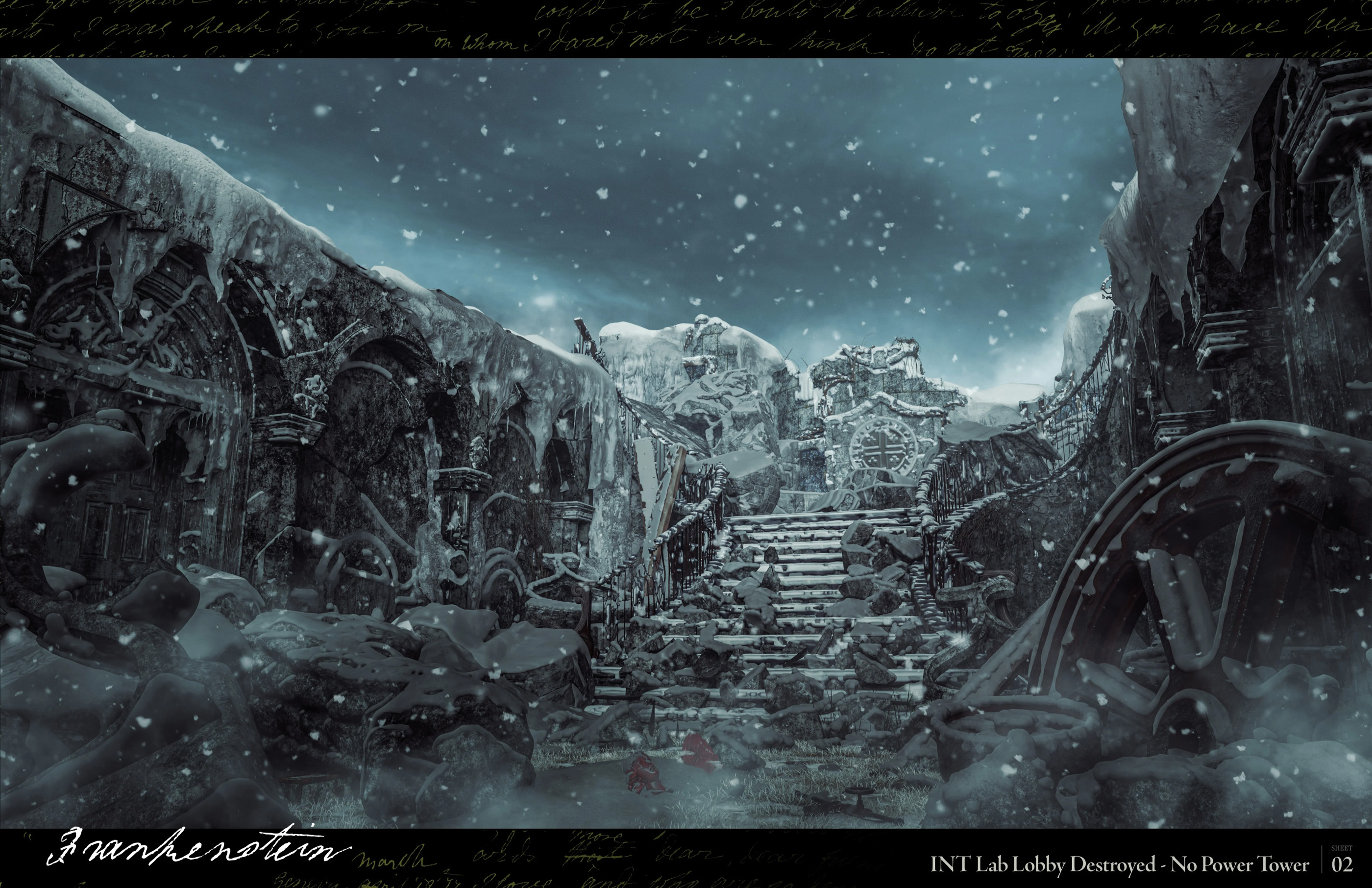
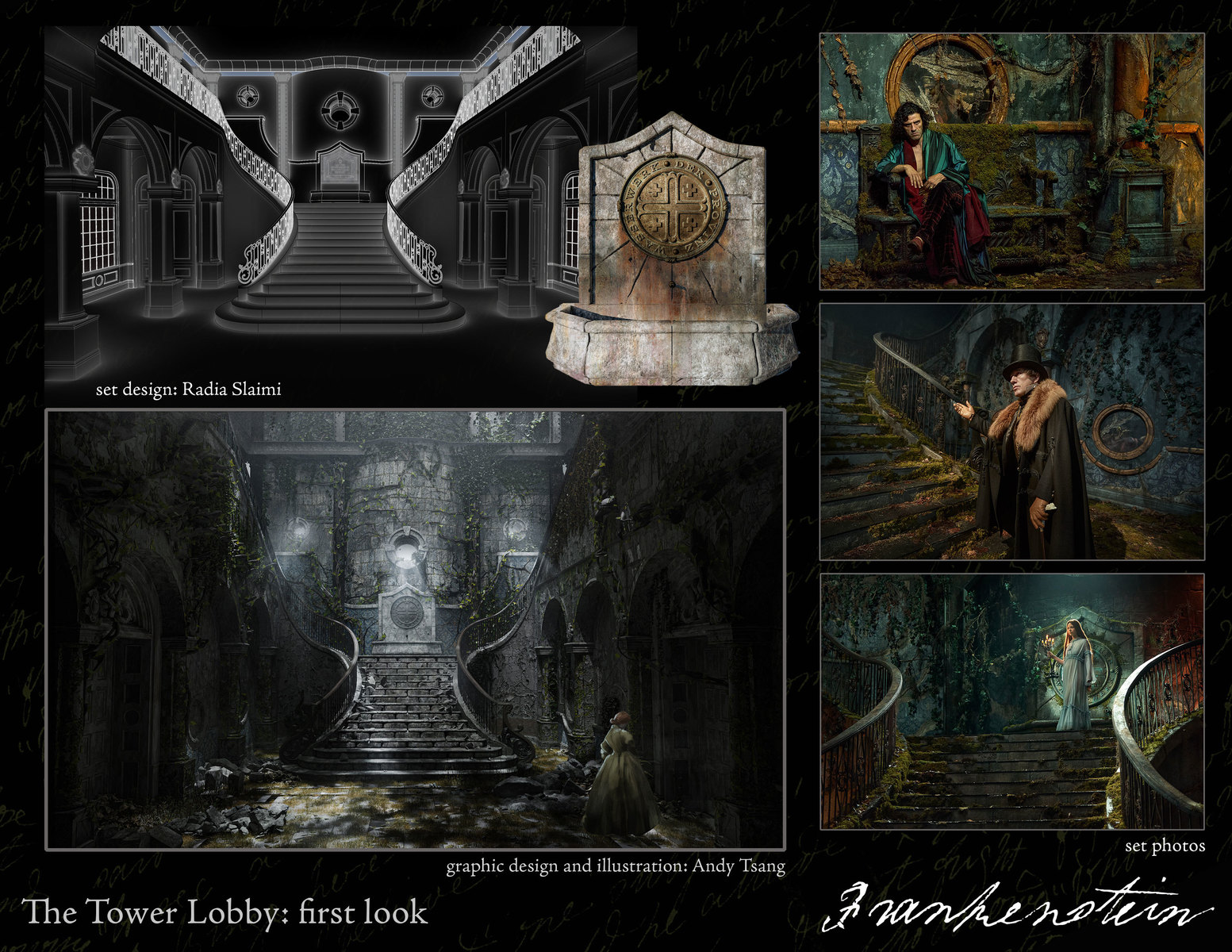
I was so involved in living and breathing while I was doing “Frankenstein” every moment of my day, 24/7. I was dreaming about what I was going to do for sets, there were so many sets and layers within sets, it took over my psyche. We had approximately 110 sets and locations, and 20 or more studio sets. The lab in the water tower was comprised of eight different separate set builds, both in studio and on location, exterior and interior. It had several different looks. It started as an abandoned water tower, and then there’s a scene where it’s renovated. Following this, there’s a scene where it’s the operational lab during the moment of creation. Finally, there’s the destruction scene and the aftermath. The same goes for the tower lobby. When you come in, it’s run down but intact. And then later on, it is post explosion, and it’s winter when the creature goes back and finds out his true story of creation and how he came to be.
All of the “Frankenstein” sets had to be carefully orchestrated and planned out to tell those stories. We ended up shooting it in order, because we were making changes that we couldn’t go back on. It was also helpful to be in story order as much as we could for the actors and for Guillermo while directing.
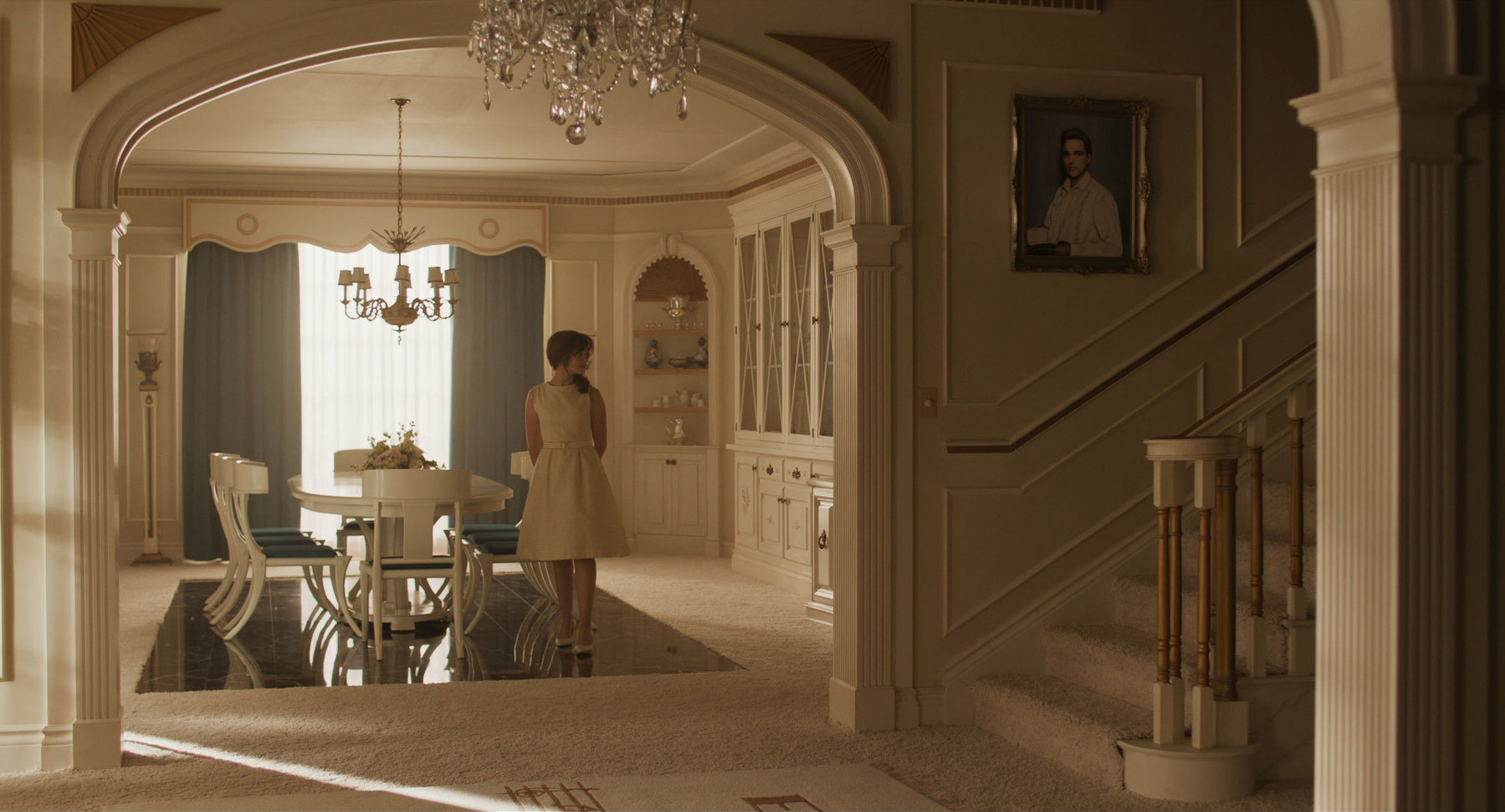
Production design of “Priscilla” by Tamara Deverell.
Kirill: How was “Priscilla” for you?
Tamara: It was great, it was a breath of fresh air. It was really nice working with Sophia. It was like working on a memory poem, in a way. People ask me how I replicated Graceland, and I both did and did not. I did what I considered to be Priscilla’s actual memory of Graceland when she first arrived. Then we evolved it with two distinct looks for different time periods.
When Priscilla lived at Graceland, it was not the Graceland of today. So when people ask if I visited Graceland, I say that I didn’t as it wouldn’t have served a purpose; it’s so different in our movie. We wanted to be this poetic memory. Memories are strange things. When Priscilla first arrived there, Sophia wanted this feeling of a white, creamy wedding cake. That’s what I wanted to evoke in the space.
We did want to make it feel like Graceland. Elvis had this crazy 15-foot-long couch, and we custom-built it. I purposely made it very tall because Jacob Elordi is such a tall man. I did have the blueprints from the original Graceland, and I extended the ceiling height to accommodate Jacob. So we heightened that couch a bit for him, and when Cailee Spaeny, who played Priscilla, sits on it, her feet are dangling. We thought carefully about a lot of things that we could control in that movie, because we didn’t have a big budget for that. It was certainly no “Frankenstein”.
We cobbled it together. It’s amazing the things you can do. You don’t have to have all the money in the world – just some clever and creative choices and a thoughtful colour palette. We had a wonderful cinematographer, Philippe Le Sourd, he had worked with Sophia many times in the past. Sophia is not used to shooting in studio sets, but we had to shoot in the studio because you’re making Graceland. You’re not going to find that anywhere. And she found the whole thing quite magical to see this set come out of nowhere. It was a beautiful film, and I was very proud of it.
We built Priscilla’s little teenage bedroom and the family home that would have been part of the U.S. Army base in Germany. We built onto the front of an existing Southern plantation style building for the exterior of Graceland, which I had used many years ago on “The Feast of All Saints”. I remembered the mansion, which is how we found it again. We built a facade onto the existing exterior of the house to make it look similar to the real Graceland. Again, poetic notions and poetic license freed us up to give the essence of Graceland without actually being there.
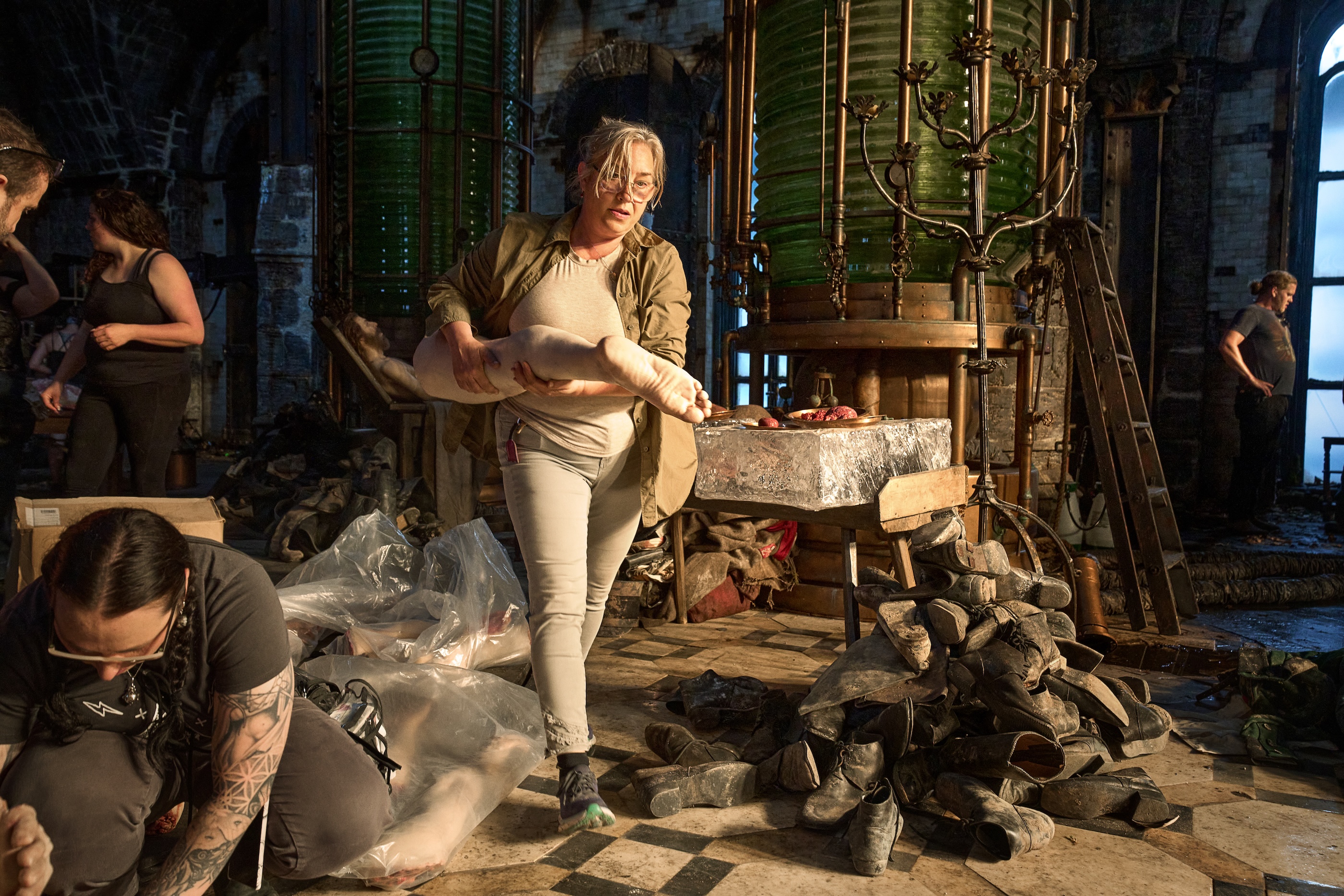
Tamara Deverell on the water tower lab set in “Frankenstein”, courtesy of Netflix.
Kirill: Do you feel that people look at these stories differently when it’s something from within their lifetime, perhaps an expectation that it needs to be more true to the form?
Tamara: It looked enough like Graceland to get the idea across, and I think people understand that this is a different time period in Graceland. It’s not the Graceland the way it was when Elvis left.
We built Elvis’s bedroom, and there are not many pre-existing photographs of it. I had a sense of where it was in the house, and I replicated that. I went on a little bit of research and thought about my feelings about Elvis. I knew that in the later period, he had leather upholstered doors for soundproofing, and we replicated those, for example. Elvis is king, and we had royal blues and golds and blacks in there – but masculine and dark. You find some things about Elvis while making the movie – that he had blackout blinds because he used to sleep till two in the afternoon. Back then, the remote-controlled blackout blinds were not common, but Elvis had them, of course. We played up with some of those facts that were there.
Kirill: Last time we spoke, you talked about people wanting access to entertainment in their own homes, and how the pandemic accelerated that trend. Do you want the viewers to watch these big stories on the big screen, or should the industry meet the viewer where they are, so to speak?
Tamara: Movies should still be seen in a theatre. It’s a very special place to be because you’re sharing the experience with people. It’s really one of the few places where you are told to turn off your phones. When you’re watching TV in your house, your phone is right next to you. People are so addicted to their phones. Going out to a movie is still a date night thing. It’s still a place to go.
There’s nothing like seeing a big movie on a big screen. You can have the biggest TV in your house, and it’s still not going to be the same experience. The sound is better. The darkness puts you in the mood, and you are sharing this experience with other audience members. That being said, I live in the country, and there is no movie theatre here [laughs], so I’m quite reliant on my TV now.
It’s becoming more and more difficult to see movies, as movies are struggling to be made. Guillermo was doing a Q&A session recently, and somebody asked him why he got Netflix to produce it. And he answered that it’s not like the directors are sitting there with people feeding them grapes, and studios and networks trying to lure them to come and work with them. You’re struggling to find somebody who will support you, and Netflix actually supported “Pinocchio” and “Frankenstein”, and let him do what he wanted. That kind of support is the reason why he went to Netflix. They were gracious. They didn’t interfere with our process. I didn’t have to respond to any notes from them. Guillermo wasn’t told what to do. They said, “Here you go, make your movie, and we’ll support you”.
On the water tower lab set in “Frankenstein”, courtesy of Netflix.
Kirill: What separates great artists from mere mortals, so to speak?
Tamara: Artists are mere mortals [laughs]. As for what makes a great artist, it is honesty and the human touch. Whether you’re doing something out of fibre art or making a movie or writing a book, the question is: is it coming from your heart?… your memory and your humanness? That’s what art is about. We’re about being humans.
This is the core of the ongoing AI debate. I use AI all the time in small ways in Photoshop. It’s there, but I’m in command. I’m not using it to tell my stories. Artists are storytellers in whatever form they take. That is the only thing that we can do as humans.
Kirill: Do you feel that some people cannot break through because they cannot expose themselves fully with their vulnerabilities and insecurities and honesty?
Tamara: It’s a struggle, not just for artists, but for everybody, to expose your vulnerabilities. Are artists exclusively expected to be able to expose themselves? In a way, yes. You’re putting yourself out there, but there are many ways of doing that. You can do that as a business person. You can put yourself out there and say, well, this is my business, and I want to run it this way because I believe in the environmental causes, so that’s how I’m going to run my business.
It’s hard to put yourself out there, especially as an artist, because you’re exposing your vulnerability. Maybe that’s why I struggle with it, because I don’t want to be vulnerable, and I need to to do my own artwork [laughs]. That’s why I think it’s easier for me to work for other people, creating their artwork. When I work with Guillermo, I’m doing his movie, not mine. I’ve been learning this over the last year, it’s really difficult to put yourself out there, to be honest and do something that is going to satisfy you, but also something that is going to speak to people. It’s not a popularity contest. Some artists try to be popular, but really what you’re doing is trying to be honest and bare your soul.
Sketch of the after-fire math of the lobby stairs in the water tower in “Frankenstein”, courtesy of Tamara Deverell and Netflix.
Kirill: Getting to “Frankenstein”, what do you feel is the secret behind the longevity of the character and the story? Why does it have such a powerful grip on our imaginations?
Tamara: It’s really a story about men playing gods, and a parenting story about a father and a son. For Guillermo, that was very much a personal journey that he went on, first reflecting on his relationship with his father and then examining himself as a father.
For me, it’s a great tragedy, and the story speaks to me as a woman, as it’s about men who play gods. You see that time and time again. It’s the wars that we have… It’s the conflicts that we have. Victor Frankenstein creates this creature as an act of his own ego, not as an act of pure creation. He’s made a child, and then he doesn’t know what to do with it. He’s the worst father ever [laughs]. And the fact that the creature forgives him at the end is amazing.
It’s a haunting story of father and son, a story of creation, and of playing God. It has all kinds of religious signifiers. I’m not a religious person, so that doesn’t really speak to me, but I connect to the human emotion of creation and then destruction, of trying to find a connection and forgiveness, which is what happens at the end of the movie, a sense of moving on.
Sketches of the lobby stairs in the water tower in “Frankenstein”, courtesy of Tamara Deverell and Netflix.
Kirill: Do you feel the story wouldn’t have the same impact either without the second part or having the parts switched?
Tamara: The whole movie is told from Victor’s point of view, similar to Mary Shelley’s book, which is told from the captain’s point of view in a series of letters. In the movie, even the creature’s story is told from Victor’s point of view, and then from the creature’s point of view. It’s a strangely layered story, but it’s Victor Frankenstein’s story.
The compassion of telling the creature’s tale is his resolve, as he’s dying, that the creature was “goodness” and was worthy of being created. Victor recognizes that he just missed the boat in terms of his respect for what he created.
Kirill: I can see how you can say that he’s the worst father, because right before he lights everything on fire, he tells the creature to say one different word to change his mind, and even as the creature says Elizabeth’s name, Victor goes on to burn the whole place to the ground.
Tamara: But he does have a moment of reconsidering. He runs back. He has a moment of doubt. But it’s just a moment [laughs]. It’s too late for him.
Floor plans of the Frankenstein villa library in “Frankenstein”, courtesy of Tamara Deverell and Netflix.
Kirill: You said this movie took two years to make. Can we start with where you went to scout the locations and what you settled on?
Tamara: Guillermo was still writing the script during my first 2-3 months. I reread Mary Shelley’s book. I reread the partial script that Guillermo had. And I started looking at locations. We had scouts all over. We were looking in South Africa. We were looking at Croatia, Switzerland, Germany, Hungary, the Czech Republic, England, Scotland, and Ireland for locations.
That was a lot of work. I honed them down, and then I would show Guillermo, and it seemed like our best bet was to focus on the UK, because we did want to be in Edinburgh and Glasgow, as that’s where part of the story takes place. And some things ended up as builds, like the Frankenstein Villa that was comprised of five different locations, including a studio set. It wasn’t easy getting exactly what Guillermo wanted in one place.
The other big thing I was doing during those first months was heavy research. We couldn’t find a ship that worked for our story, so I had to build a ship – so I had to learn about shipbuilding and the types of Arctic exploration ships. Some of the research was online, some was at museums, and some was going to look at real boats. I went to a maritime museum in Halifax. I went to the Cutty Sark in London. I went to the Glendell in Glasgow.
Then you have the technology of the Victorian and the industrial revolution of the time that you see in the steam pumps that we used in the lab. The story is at the edge of reality and fantasy. Guillermo pushes the fantastic, and I push the historical – and somewhere in there, we get what we want, which is a great union of minds. It’s a great way to work for both of us.
After the location scouting, we decided to stick with the UK. There were possibilities everywhere, but the UK seemed the most sensible. That’s when I began the second part of my journey, spending time with Guillermo as we scouted, along with our concept artist Guy Davis. We saw the Wallace tower in Scotland and other similar towers that inspired us. Guy and I would be sketching at night and coming up with ideas for the abandoned water tower that became the lab. Guillermo and I would look at certain stones on certain floors of all these different places.
You find certain tile patterns and certain colour tones, you get a feel of the tone of the cobblestones in Edinburgh, and you bring it to the sets. I went to Preston Mill in Scotland to see a real mill house, but we ended up building the mill house for the blind man based on a medieval building I saw in the Czech Republic. It was a bit of a different journey than your regular film.
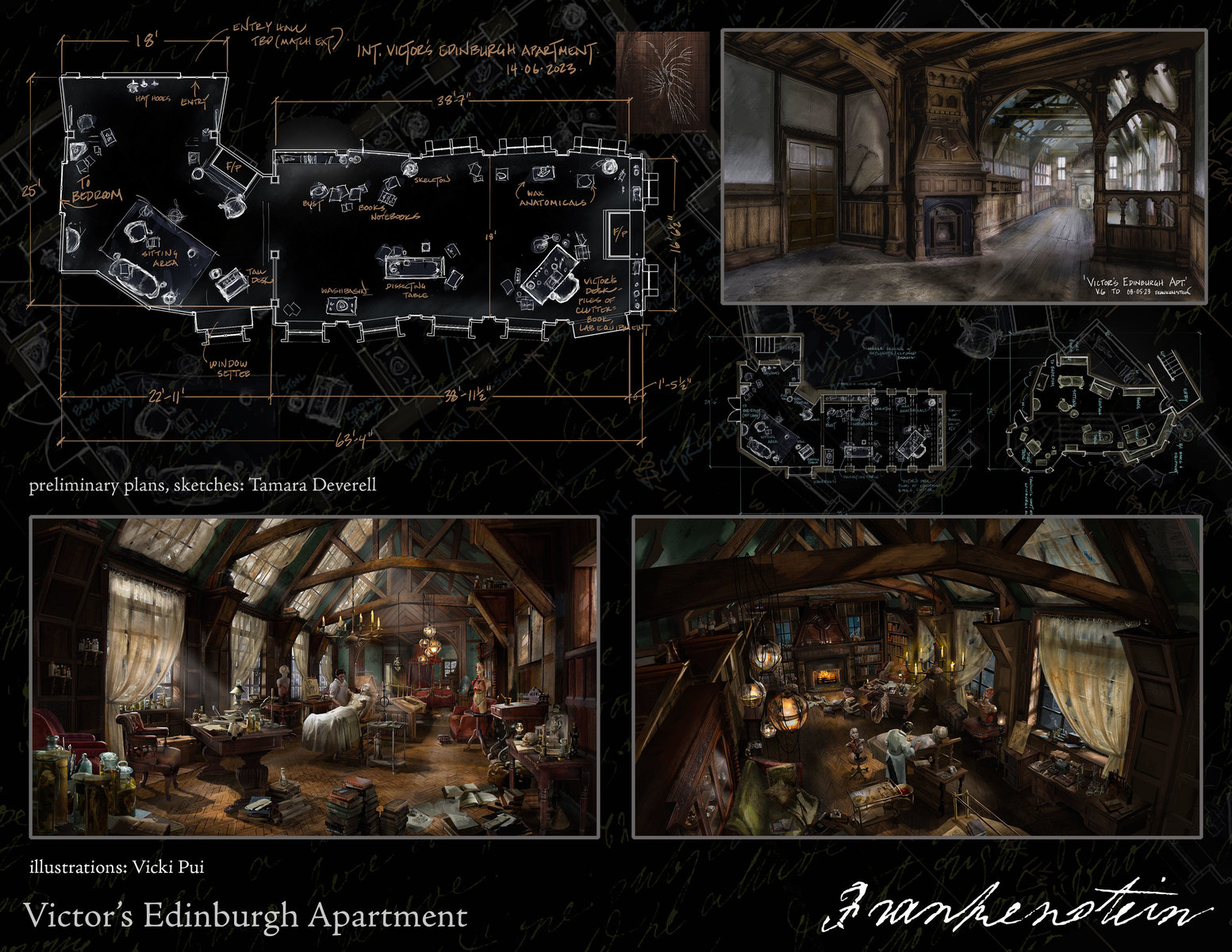
Floor plans of the Frankenstein’s Edinburgh apartment in “Frankenstein”, courtesy of Tamara Deverell and Netflix.
Then I started getting my crew together, and we started drawing the lab and the ship, which were our two biggest sets. There are a lot of complexities in the lab build. We had the top pinnacle where he climbs with the lightning rod, which was one set. The level below where Harlander falls through the chute that runs through the whole water tower was a separate set. I was scared that somebody was going to fall into the hole. It wasn’t as deep as we have it in the film, as visual effects were added to elevate the visuals, but I was always worried that some carpenter or painter would hurt themselves.
The tower design followed to suit the story. Guillermo needed the beat of him going up. He needed the beat of them falling, and he needed the chute to go all the way through to the creature’s cell, which would have been below the ground. We were doing schematics to figure out what the relationship of all the spaces were in the tower, including Victor’s quarters to the side. Maybe the audience doesn’t need to build the whole map in their head, but I felt that it was helping us to know where we are in each scene.
Kirill: Going back to Frankenstein’s villa, you mentioned that it was five different builds. How much went into Victor’s bedroom?
Tamara: That was actually his father’s bedroom, and we called it Leopold. There was a scene that was cut out of the film with Leopold and younger Victor in that bedroom, and maybe someday Guillermo will do a cut and put that back in. I designed it as Leopold’s bedroom. We had a big stunt sequence in it, and that’s why it was a studio set.
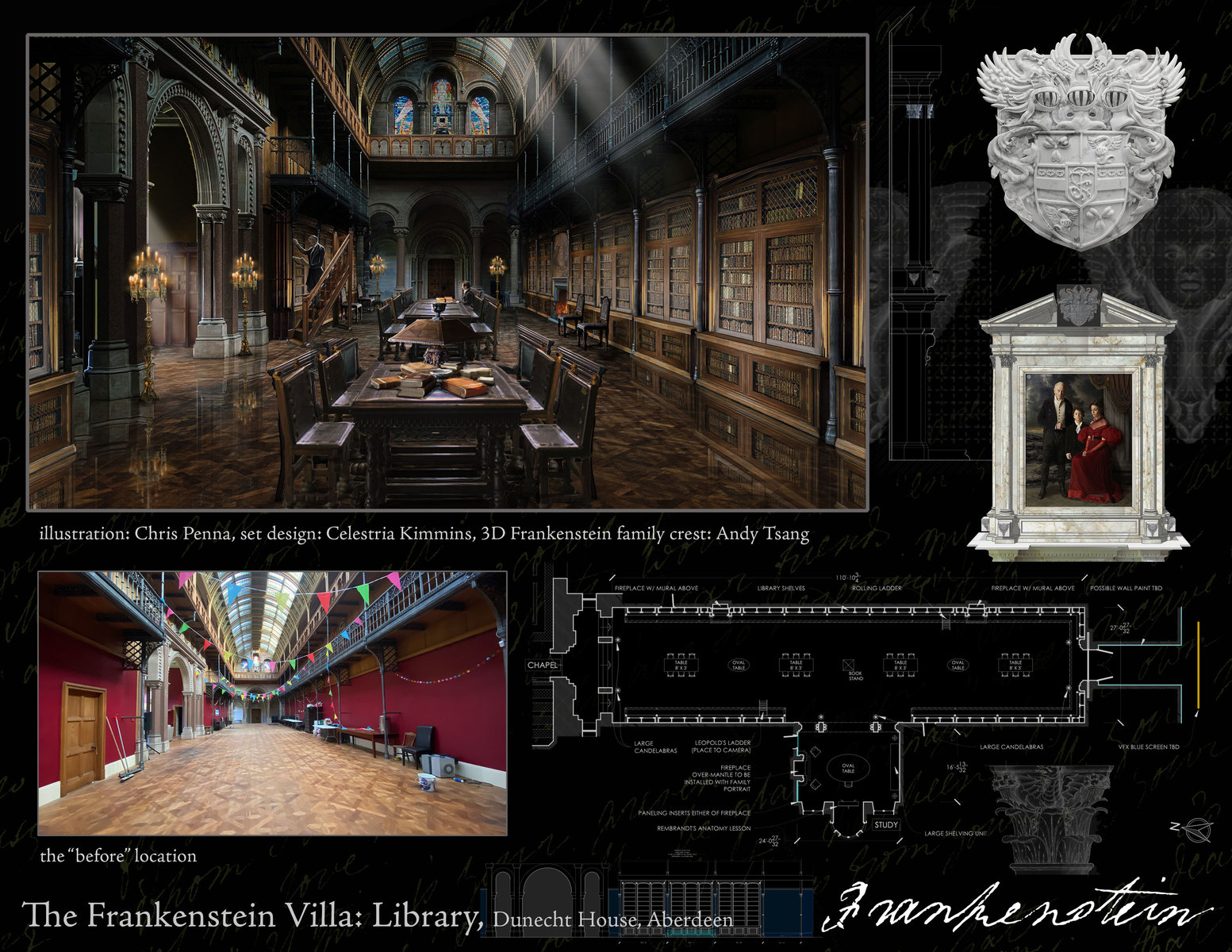
My challenge was to bring all the elements of these different locations together. Going back to five locations, the bedroom studio set was the first one. The second one was Gosford house for the main exterior and the main foyer. Then we had Wilton House for the grounds. Guillermo loved that house, and he was excited to shoot at the grounds and the family cemetery with the big gravestone that we built. Then we shot Burghley house for the mother’s bedroom and the bow room with its beautiful murals. Wilton and Burghley are both outside of London, but 2-3 hours in different directions. And the last one is Dunecht house in Aberdeen, which is a private family residence that had never been filmed before. We shot the father’s big library there, and that scale and length were exactly the cinematic language Guillermo wanted.
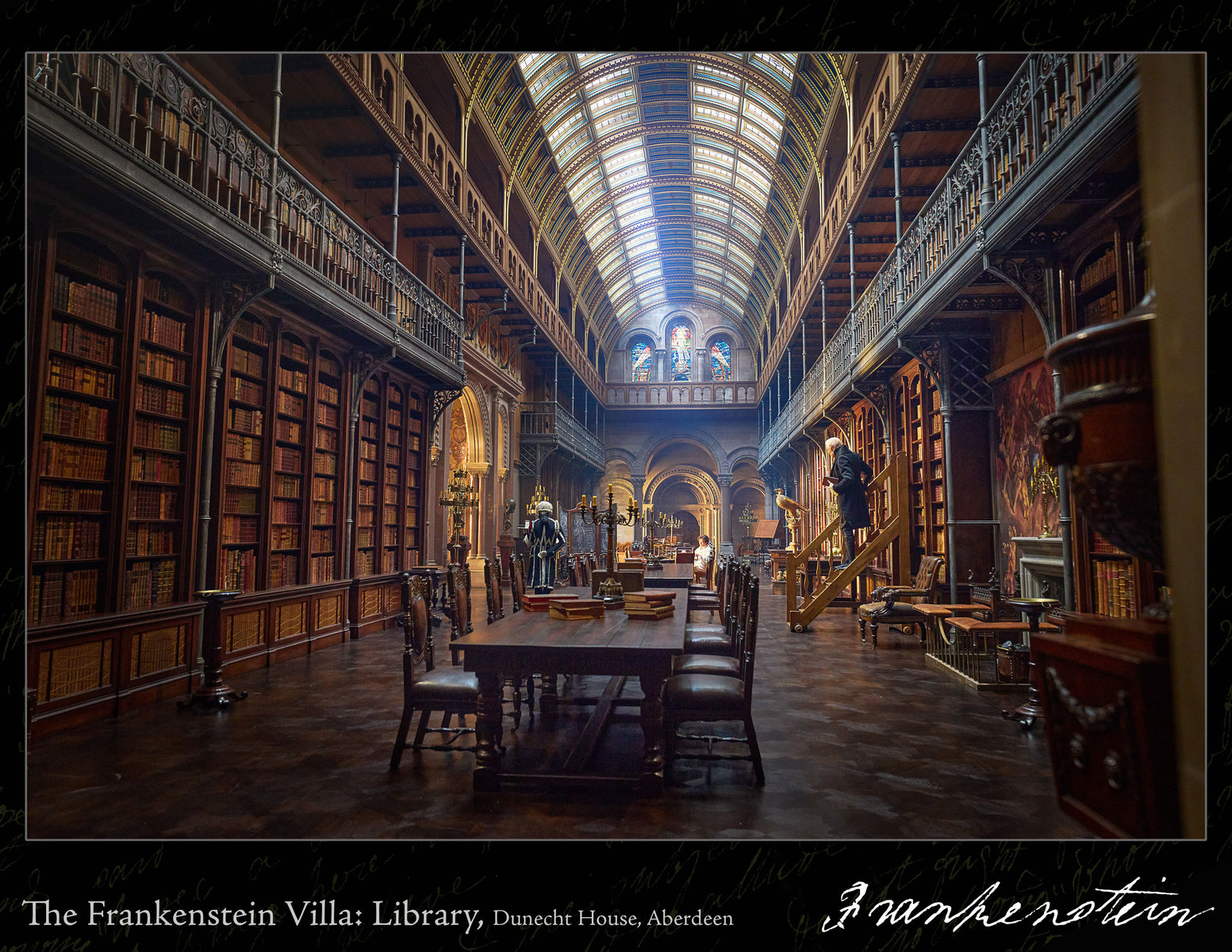
Sketch of the Frankenstein villa library in “Frankenstein”, courtesy of Tamara Deverell and Netflix.
When I was doing the bedroom, I was trying to take elements from all of these different locations to bring them into the world. These locations work together, as there is a certain similitude between them. I would take the wood floors from one, the marble from another, the murals from the third one. The pink marble was from the foyer of Gosford. I photographed the murals from Burghley and Wilton, and used them in the ceiling. It brought it all together.
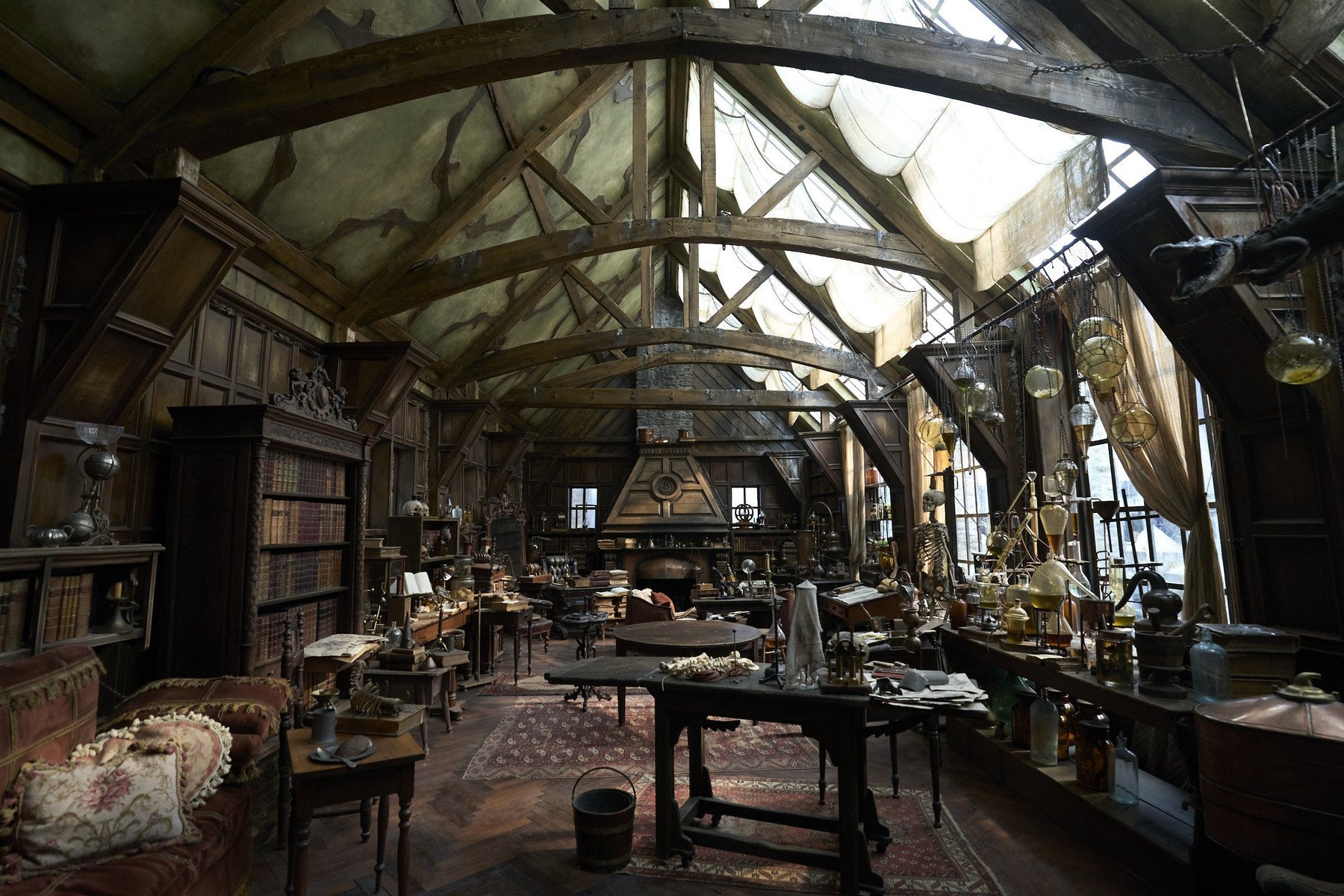
On the set of Frankenstein’s Edinburgh apartment in “Frankenstein”, courtesy of Netflix.
Kirill: What about Victor’s lab in the city?
Tamara: I called it his Edinburgh apartment because that’s where he lives at the time. He does the medical lecturing in that round hall, which was a studio set. Then we go through the streets of Edinburgh and Harlander meets up with him, and then they go up to the apartment, which is another studio set. That apartment was one of the first ones we’ve built. It was crooked, it had big skylights which were a challenge and an opportunity for our cinematographer Dan Laustsen.
I did my research, and I had a photo collage of different buildings and different elements that I liked. I showed them to Guillermo, and then started doing floor plans and elevations. He loves the length. We had the same thing with Lilith’s office on “Nightmare Alley”, which is just long. He’s constantly getting me to push the length, because it frames so beautifully. Victor’s apartment is a long set.
We were looking at Bernie Wrightson’s work, who’s sadly no longer with us, and his widow came and visited us on the sets. In a way, we considered him posthumously one of our illustrators. He did a fabulous series of Frankenstein drawings – some of which Guillermo owns – with all these details of the lab bottles, the hanging balls, the equipment and just this melee of stuff in front of the windows. We were paying homage to Bernie’s work in that apartment, and it set the tone for Oscar Isaac playing his character.
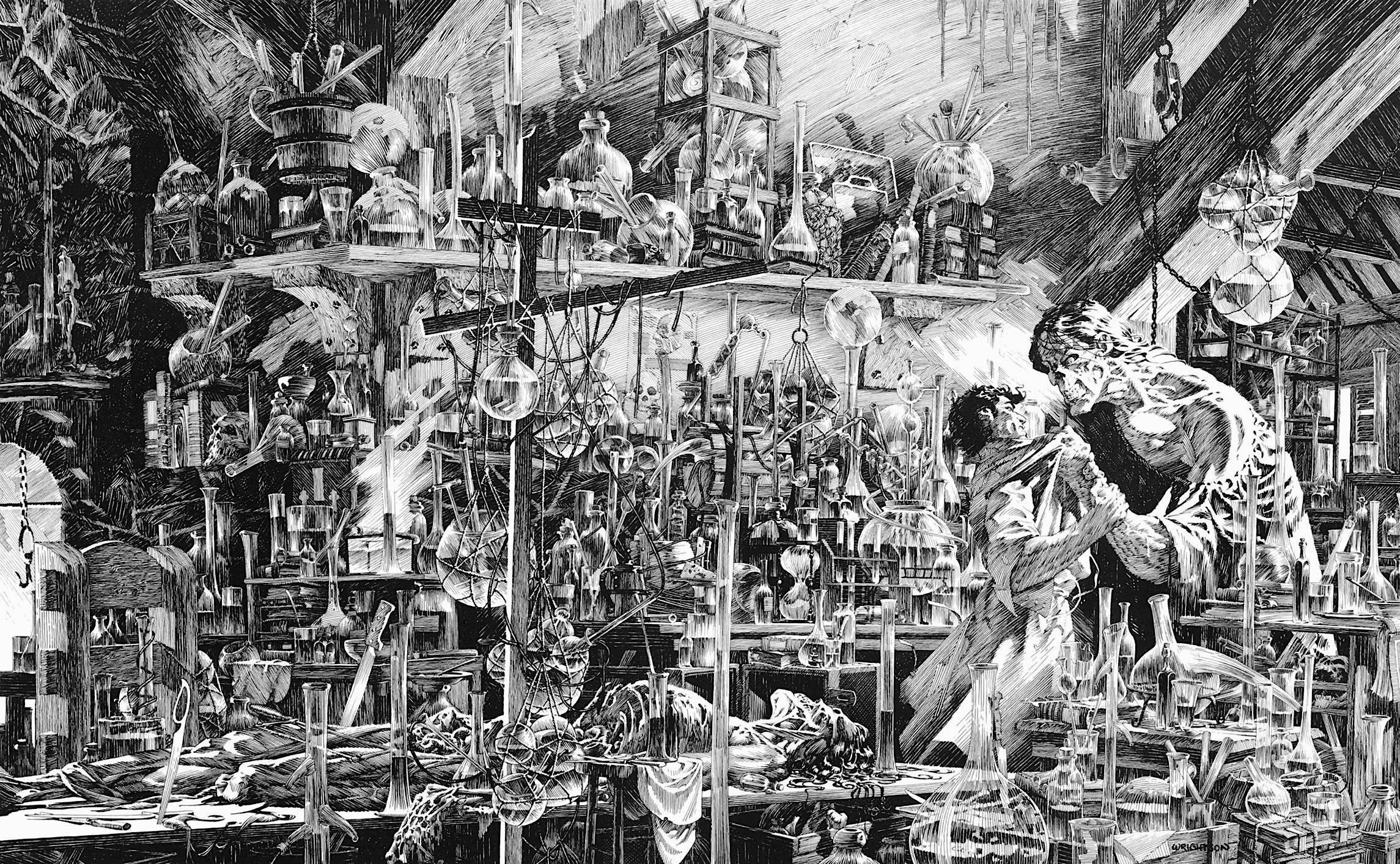
Bernie Wrightson’s illustration of Victor Frankenstein’s lab.
Kirill: After a few productions with Guillermo, are you used to the amount of cadavers and other things that are supposed to look at least somewhat repulsive?
Tamara: It’s not really my thing, but it doesn’t bother me. When I was art directing, I worked with David Cronenberg who does a lot of body horror, and that is much more disturbing in a way.
There’s a picture of me on the set of that water tower lab romping around with a leg when we were setting up the creation scene. But it’s just body parts, and it’s not really about that for the story. For Guillermo, the creature was a work of art. When Victor Frankenstein was making the creature, he wasn’t making a Volkswagen [laughs]. He was making a Porsche. He was making a beautiful art piece. He wanted it to be perfect, which mirrors a point that he brought up earlier in that lecture hall. Mike Hill who did the prosthetics worked on that aspect of the creature. He’s beautiful. He gets beat up, but he’s not gory.
Kirill: How much of the water facility exterior is built, and how much is extended in VFX?
Tamara: We built the base of it with those big scrolling feet, which I called the Sphinx feet, up to about the crown above that beautiful hand-carved door. Then VFX continued to build the tower all the way up. It was a massive build, about 130 by 130 feet at base, and about 30-40 feet high.
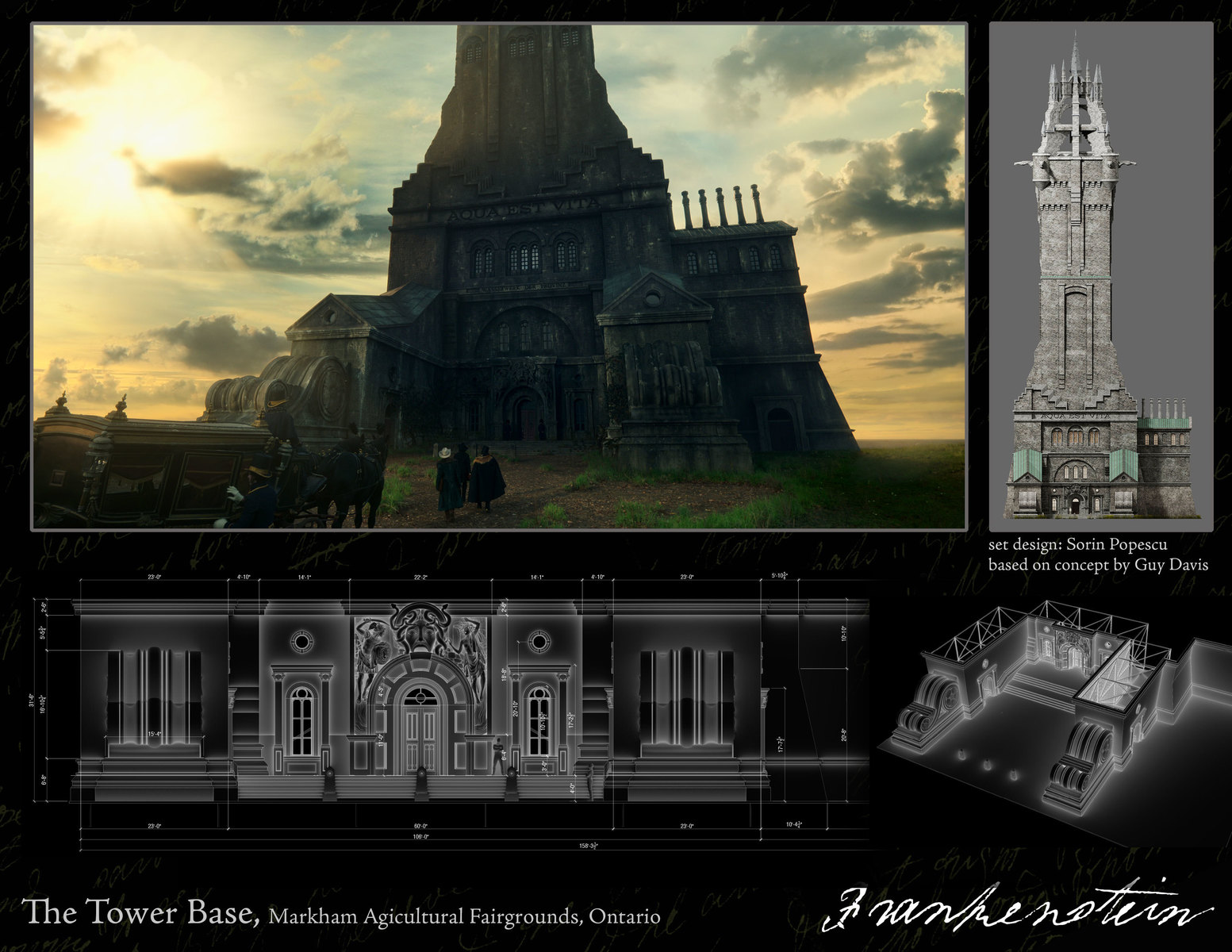
Sketches of the water tower base in “Frankenstein”, courtesy of Tamara Deverell and Netflix.
Kirill: What about the lower level where the creature is held? Did you build the whole thing?
Tamara: Yes, we built the entire thing. When he’s escaping and he goes down a chute, we built the chute. And then when you see his body come out and tumble down, that it was a miniature.
Guillermo insisted on building miniatures instead of doing VFX. We had four miniatures built altogether for that by José Granell’s Magic Camera Company. As we were building the base of the tower and the interiors, he came with his scenic artists to replicate and match what we were doing for those miniatures. When the body comes out at the end of the chute, there are two gargoyles there that we were considering to build, but it made more sense to build them as miniature. And then of course, VFX has a hand in bringing it all together with atmospheric effects and other elements.
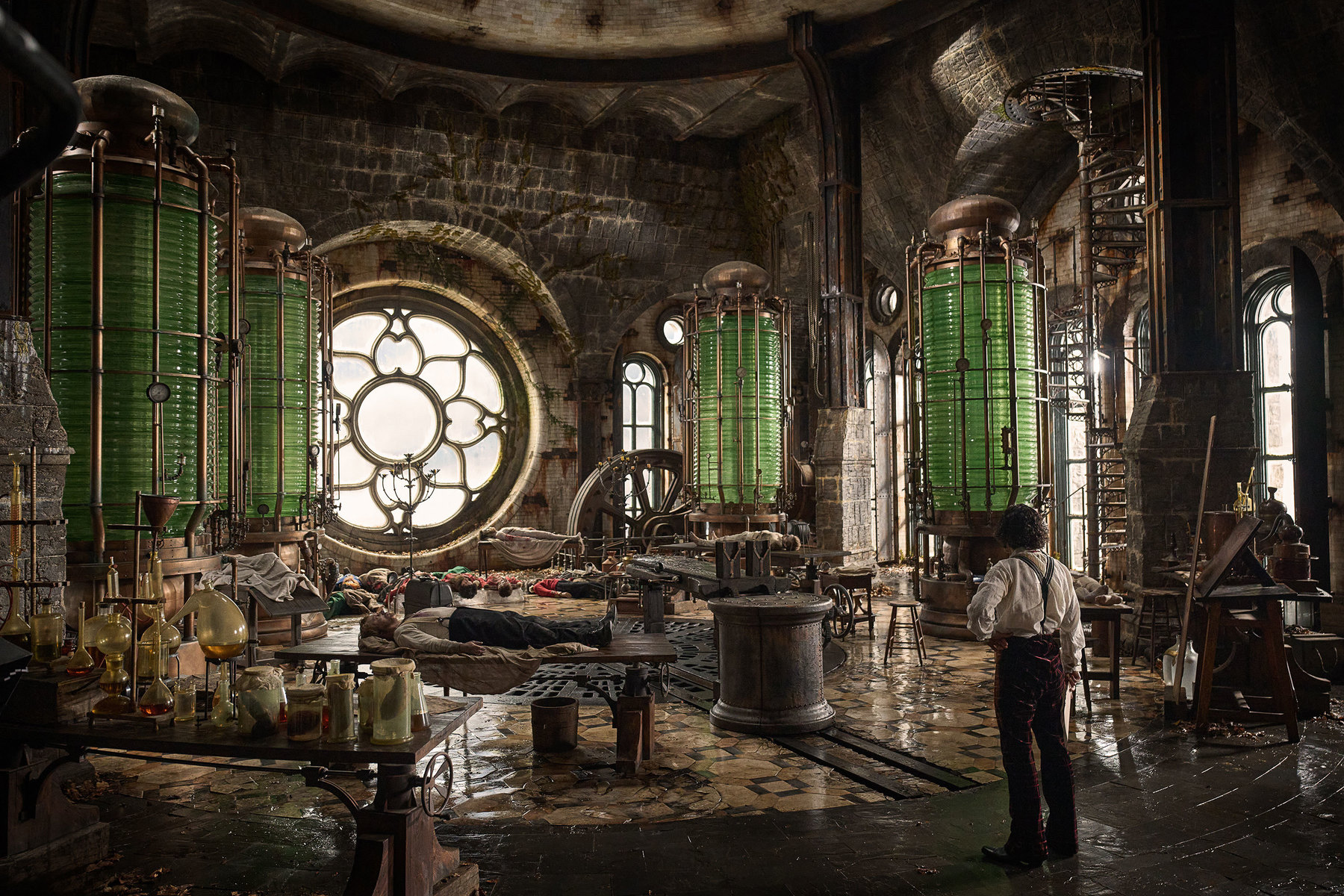
On the set of the water tower lab in “Frankenstein”, courtesy of Netflix.
Kirill: What about those big batteries? It’s an interesting mix that you mentioned between the fantasy and the historical accuracy, and his benefactor probably has access to the latest and greatest technology available at that time.
Tamara: We built them. They’re about 15 feet tall and on wheels, because they had to move them around the floor to get out of the way of the camera. Guillermo likes to shoot a lot on a crane, so there’s always a crane moving through. Everything I build has to move. That whole Medusa in the lab moved out. She was on wheels and moved out, so they could get the crane in.
Guy did some original concepts for those, and then we started modeling them in 3D. It’s one of the most complicated sets in the movie. That Y-shaped crucifix table that the creature is on was incredibly complicated.
Those battery towers had to have smoke and steam and pipes and valves, and it all had to work for when Victor is in the moment of creation. They had to be lit, going from green to red. The battery shells are supposed to be glass, but we ended up using plastic, and we put that green color in the plastic. But we did want it to feel like thick old glass, so we did multiple tests with different materials to get that thickness. Then it had to glow red, so lighting had to be involved with lights in the inner core, which would have been filled with battery acid. We didn’t fill it with liquid, but it had to feel like we did.
There’s an interesting part about the battery that falls into the creature’s cell. They were just too big to fit inside that hole, so we cheated just a little bit by using a slightly smaller one to collapse in. That was a physical sequence. We had it dropped from the ceiling of the studio through that hole and crash. They were maybe 10-15% smaller than the real ones, and now you know my dirty little secrets [laughs].
We went through a number of prototypes as we were building them to get the copper tone right. We were building out of wood and painting them to look like coppers. My references were big brewery copper vats and things that existed in the period, because I wanted that historical accuracy part of it. I wanted it to feel like this could exist. It’s fantastical, but it could have existed at that time. I was obsessed with that.
As we were drawing each part, I would ask myself if they could have done this. Could they have done those surrounding rings of glass? Could these batteries be operated by some sort of a steam engine? And then at some point I had to let it go, because it just got too much. But I did try and base it in some kind of mechanical reality.
And then the icing on the cake was our set dressers doing all the pipes and the vales. Those guys worked hard, and made each one look slightly different, and it really brought it all together.
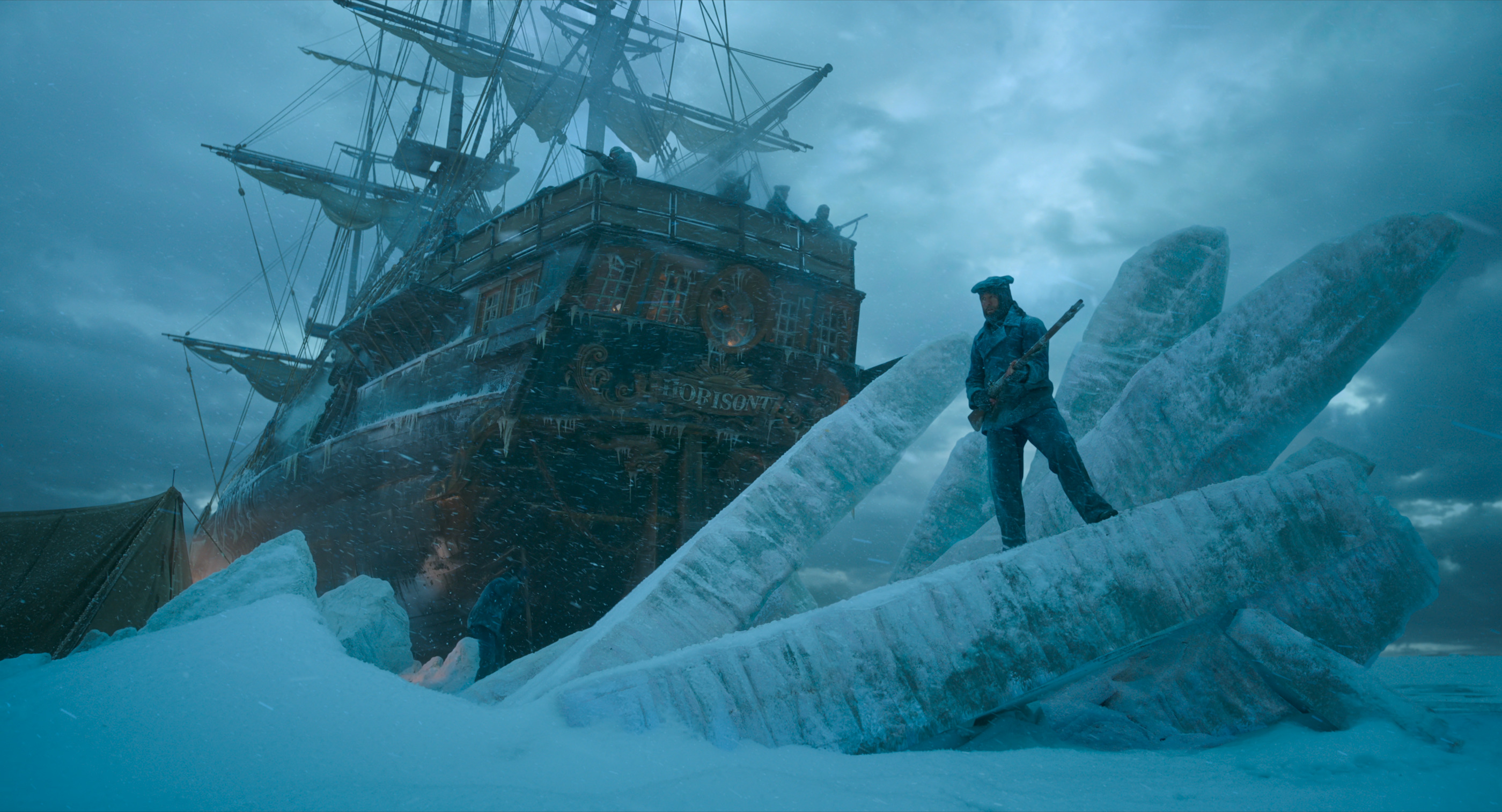
The ship exterior in “Frankenstein”, courtesy of Netflix.
Kirill: The last big thing that you’ve built was the ship. Was there an interest in finding an existing one, or was it clear from the beginning that you would build it?
Tamara: I looked at real ships, and none of them were the right period. There’s a movie ship in South Africa that you can rent, but it wasn’t the right era. It was slightly earlier. We could have changed it, but by the time you send the whole crew there, you may as well build your own ship.
We had the freedom to decide on what we wanted on our ship. It has iron plating, which echoes the creature. These iron plates are sort of Frankenstein’d onto the ship, which was specific to an Arctic exploration ship. The whole thing was built on a giant gimbal. When the creature rocks it, it’s actually turning the ship and everybody’s tumbling around to a specific degree that we had to decide by doing animatics with Guillermo. Stunts were heavily involved because we had people flying off.
We built the masts to a certain height, and we had a truss system to allow for all the rigging for stunts, for the lighting, for the grips to do blacks, to do green screen, blue screen. Then the VFX carried the masts up to their full extent. We built the entire ice field around the ship in a massive takeover of our studio parking lot. We looked at doing it where we had built the carnival on “Nightmare Alley” which was this parking lot field of an agricultural fair – and that’s where we ended up building our water tower. We looked around at building the ship inside, but there was nothing big enough to allow the space to do the ice field and to get the shots Guillermo wanted. Then we looked outside the city, and eventually it felt like the most convenient place was right in front of the studio. We built it there, and we lost our crew parking, and we had to bus people in as they were parking down the street.
It was a technically challenging build, but a convenient one logistically. If the weather was not in our favor, we could go in the studio and shoot in the captain’s quarters that were built inside. We doubled up that entrance hall into the captain’s quarters. One was on the stage and one was on the actual ship.
For the ice field, we started with a metal base structure, and continued with outer layers of Styrofoam and silicone to create those bigger pieces. And the last layer is real ice and snow.
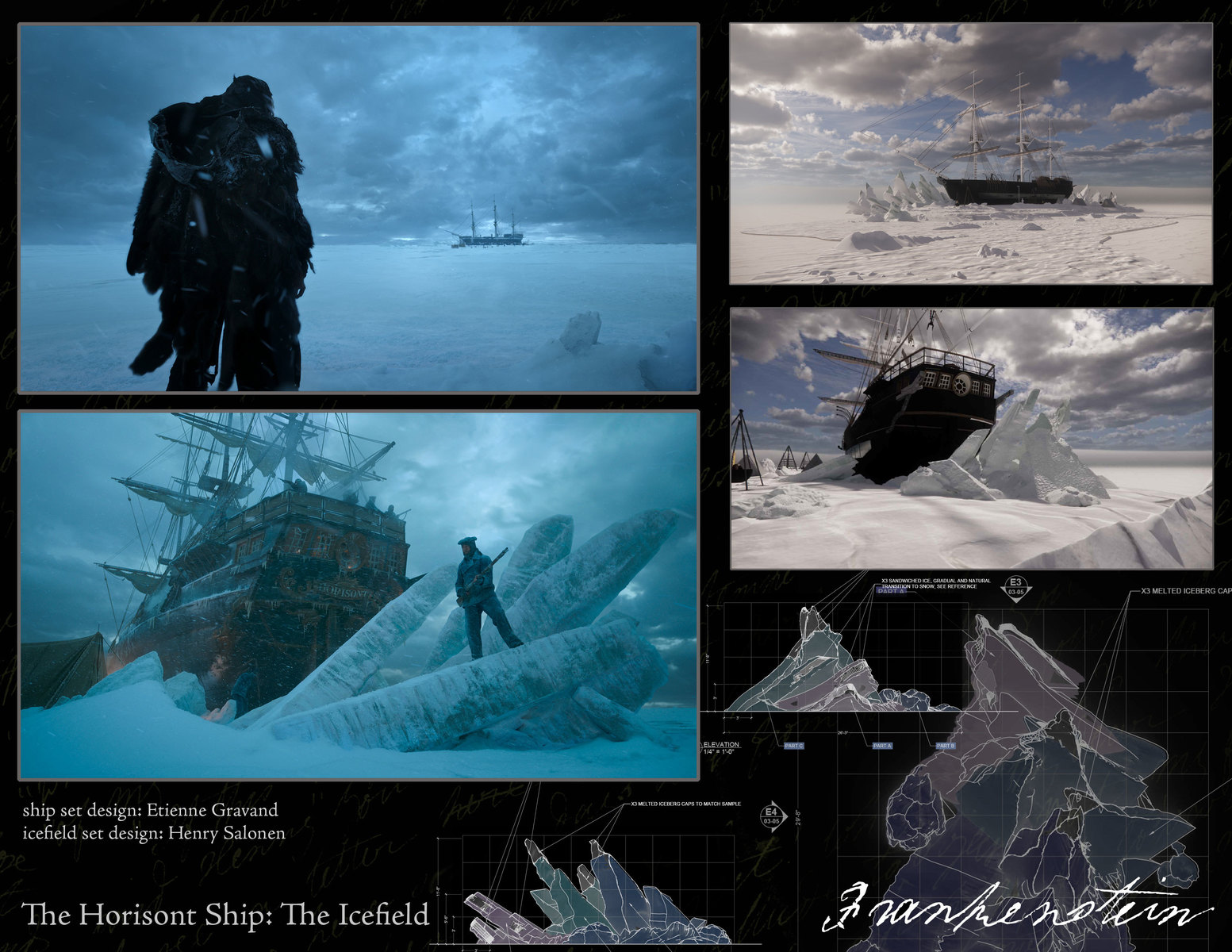
Sketches of the ship in “Frankenstein”, courtesy of Tamara Deverell and Netflix.
Kirill: How much time does it take to build a ship these days?
Tamara: It was about 4-5 months altogether. We started drawing it around April and building it in August. You start building as you’re still drawing, and pretty much everybody in the art department ended up having to draw some aspect of that ship because we got into a time crunch. Once we got the bulk of it there, we had a lot of little things – the steering wheel, the skylights that they get crashed into, etc. There were a lot of little details.
We were connected with Jim Dines who’s an actual sailor and shipwright, and he does ships for movies. He came over with a team of people to do all the rigging on the ships – all the stuff that really makes it look like a ship in my mind. He advised us on where the binnacle would go, and where the steering wheel would make the most sense, and the same for all these different elements. And once the assistant directors heard that we had this sailor doing work for us, they asked him to do a boot camp for all the extras who played the Danish sailors and show them what to do on a ship. When our extras are in the background, they are actually doing things that they should be doing on a ship. Our guys knew how to wind a rope, how to fix the sail, and how to do the rigging [laughs].
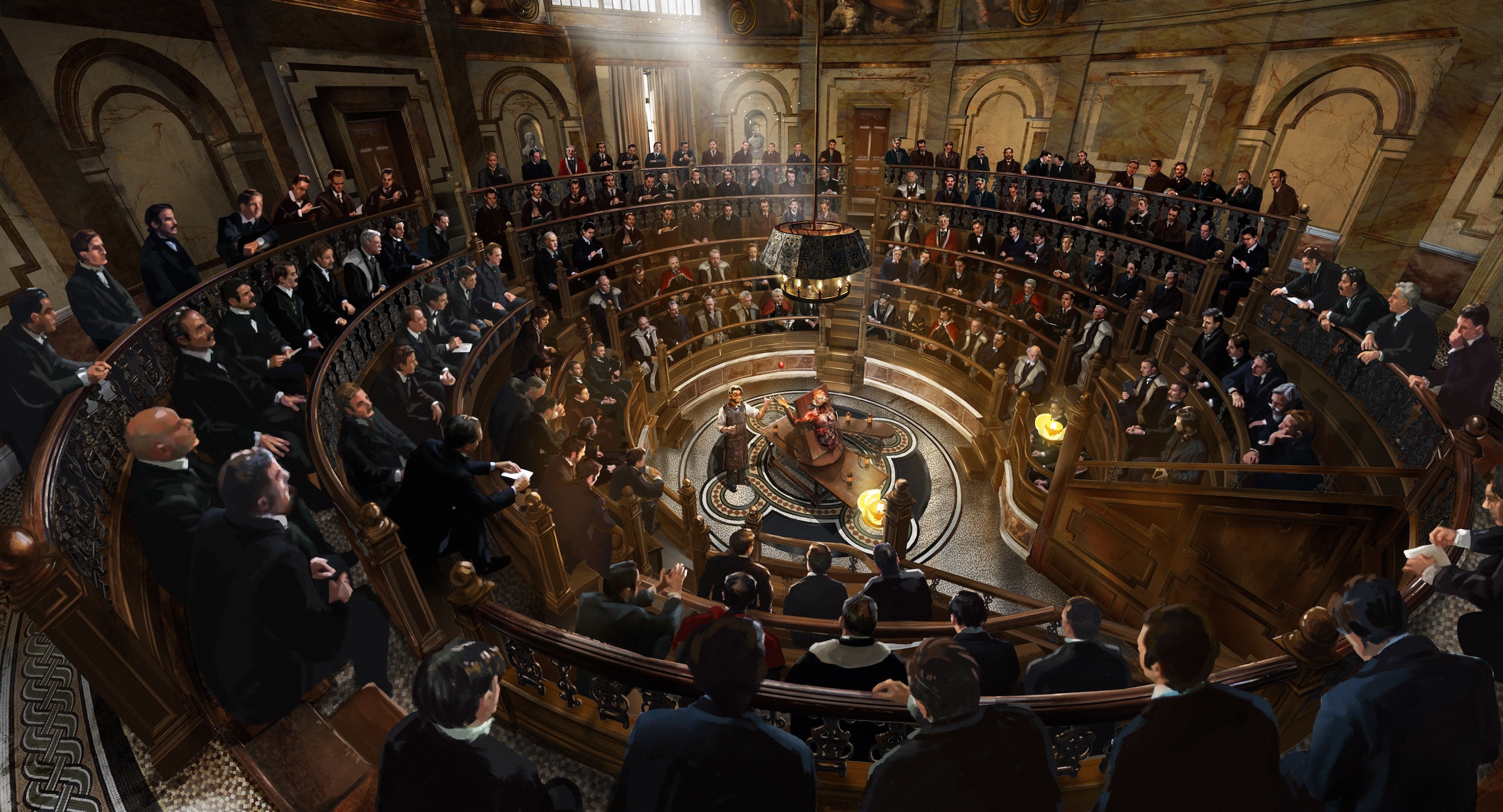
Sketch of the medical theatre in “Frankenstein”, courtesy of Tamara Deverell and Netflix.
Kirill: And you mentioned that the lecture hall for Victor’s hearing was a set build as well.
Tamara: Yes, that was in a studio. We did look around, and there is a tiny Victorian-era medical lecturing place in London, but it’s so tiny. You couldn’t swing a cat in it [laughs].
We did have a scene that didn’t make it into the final cut where Victor meets Harlander in the hall, and they start walking through the halls. We were going to shoot that in Glasgow City Hall, which had all the same mosaic tile that you see in the lecture hall, all the same woodwork, the banister, the railing pieces, all those details. All those details are taken from the Glasgow City Hall to match throughout the scene, and then it was cut [laughs]. But the fact that we had some beautiful pieces of inspiration to go from made that a special set.
Guillermo loves circles. When you work with him, the geometric circle motif is automatic. You have the big circle window in the lab, the Medusa across from it, the circle of the vortex, the circle of the medical lecturing theatre all together, the circle in the ship – it’s a repeated form that, for him, is so important and evocative of the circle of life. The beginning is the ending, it’s the Ouroboros, it’s the thing that goes around and around, it’s Victor becomes the creature, the creature becomes Victor. That’s what I ask myself when I work with Guillermo – where can I put a circle?
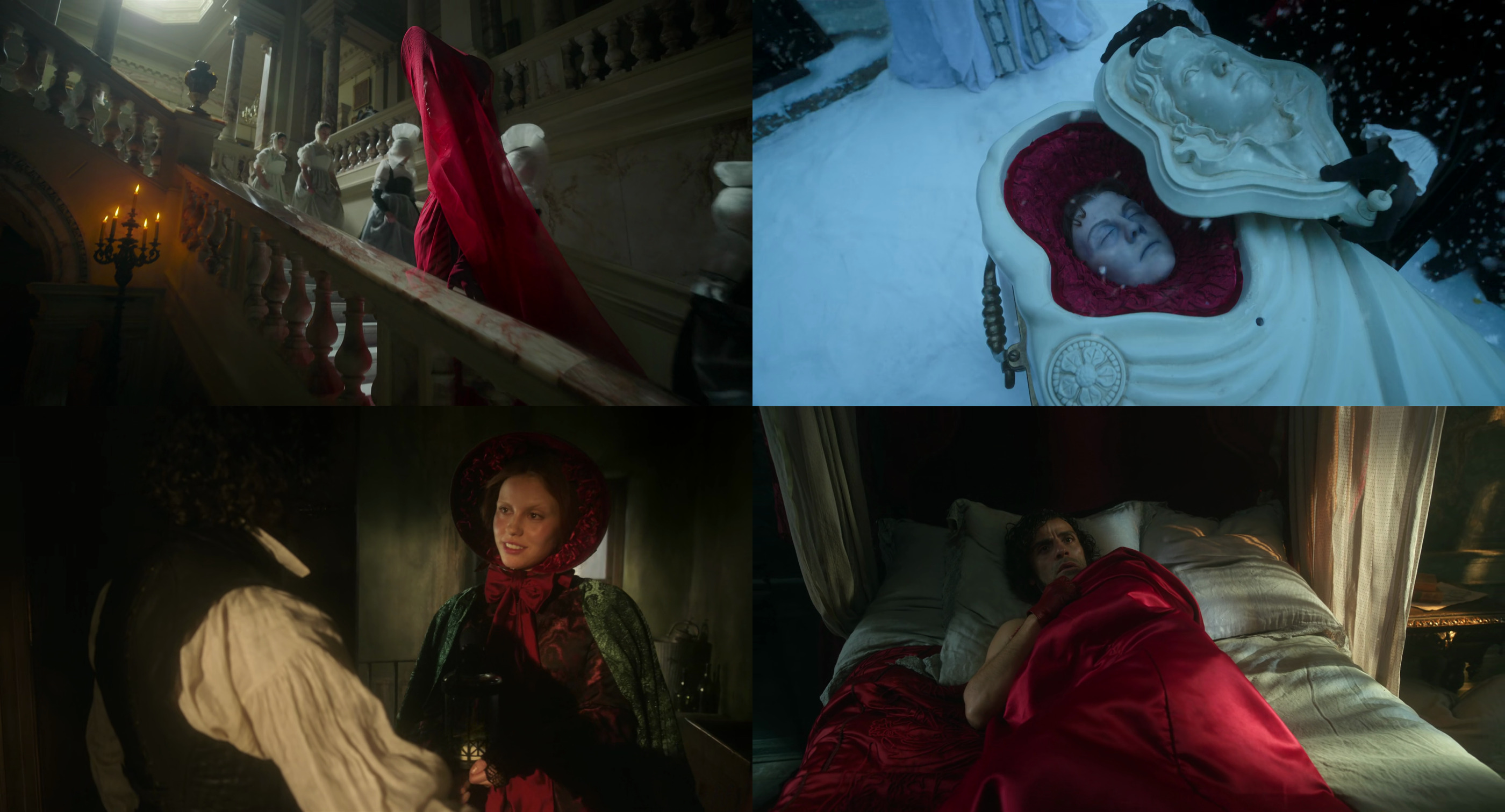
Red elements in “Frankenstein”, courtesy of Netflix.
Kirill: What is the significance of the color red for Victor and for the story?
Tamara: Very important for Guillermo, and you’ll see the use of red in all his films. We had it in “Nightmare Alley”, with Molly, the girlfriend of the main character, who was wearing a red coat. He used it in “Pan’s Labyrinth” and all his other movies.
In “Frankenstein,” the red was the signifier for the womb and the mother. Part of it was Kate Hawley with costumes, with whom I worked closely. It starts with the mother wearing the red, with the red veil. And when the mother dies, she has this red ruching fabric around her in the coffin, which we see later repeated in Elizabeth in the red of her bonnet, mirroring the connection between Elizabeth and the mother in Victor’s mind. You see it with her wedding dress in the red of the blood. You see the red blood handprint on the mother’s back when she goes into labour and dies in childbirth.
Then we created a red bed, which is the mother’s bed that Victor takes to his apartment and later on to the lab. You see the red in the battery towers in the lab, and that space feels like entering the interior of the human body. Victor wears his mother’s red gloves as an adult, and it speaks to him as a character.
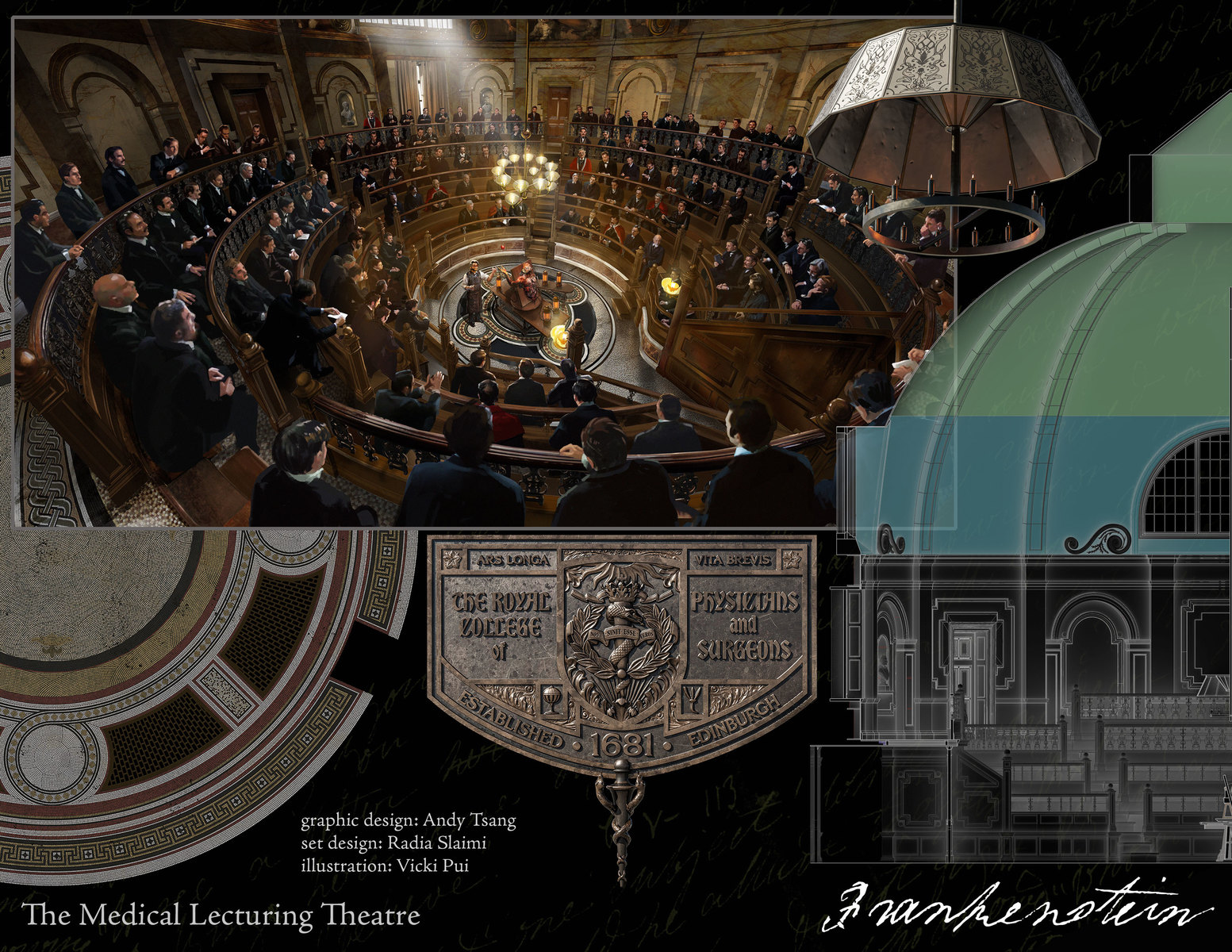
Sketches of the medical theatre in “Frankenstein”, courtesy of Tamara Deverell and Netflix.
Kirill: Out of these two years, what was the most challenging day?
Tamara: There were so many challenging days, and it’s hard to pin it down. The lab was the most challenging and the most rewarding. I felt a bit like Frankenstein because I was concerned about what I was creating. Those sets were so dangerous, and I was concerned every day that somebody would get hurt. Thankfully, nobody was hurt on the lab set. You’re dealing with big sets with lots of moving parts, and it’s unnerving. As a woman and as a mother, it gets me unsettled.
Kirill: As a piece of advice to the younger generation of filmmakers, why should they push to make as many physical builds as possible, and not go for green screens and visual effects?
Tamara: One reason is giving the space to the actors. I’ve seen actors walking on a green screen set, and not able to deliver the same quality of acting.
The other one is how it looks. It’s the way the light hits and the paint reacts to that light. When I’m doing a set, I’m thinking about making a painting. When I’m working with Guillermo, Dan and Kate, all of us together are trying to make a visual masterpiece. Every frame of it should look like a painting – and you cannot get that with green screen, no matter how hard you try. I just don’t see it. I know there are great things that are being done, but you see it in wide shots, and you see it in tight shots. When our camera goes tight on young Victor’s carved ivory figurine with the pregnancy elements, you can’t recreate that on a computer.
It’s all about the human touch, and how light reacts, and how you’re going to get that cinematic magic by lighting a set. Now, I’m not saying you can’t do that with a location. There are great locations that give you the same magic. We did both on “Frankenstein”. We found locations that were historic, and even though we couldn’t touch the color, it worked for us, especially with the way we lit it. All the lighting was single source lighting from outside the set. Dan doesn’t light from inside the set. You’re painting with light, and you can’t do that in a green screen environment.

On the set of the icefield in “Frankenstein”, courtesy of Netflix.
Kirill: You mentioned generative AI a few times. Not looking into the future of how it might turn out down the road, but how do you want people in your industry and artists in general to see it?
Tamara: I’ve played around with it, and I would never use it to design a film. It is utterly ridiculous. You don’t have any backstory. You don’t have any human element. You don’t have any understanding of the world. There’s no nuance.
I had this conversation with our VFX coordinator once while we were waiting in an airport. He said he did an experiment where he typed in “Post-apocalyptic staircase to nowhere” to see what AI would come up with visually. He got 300 images back, and out of those there were maybe one or two that were vaguely inspiring for him, but not even. He said it was a waste of his time, as he can go and create something of his own. Our VFX people are digital artists who are hand painting. They’re not just pushing buttons on the screen.
If I’m writing an article or a brief, and I put it through ChatGPT to get an idea of how it could be improved, that’s a handy tool. I’m not going to deny it. And the same thing with Photoshop and its blending tools – those are handy tools that we should use and be in command of. But it’s absolutely berserk to start with an initial concept or idea and go straight to AI, which I understand some designers do.
You cannot be a storyteller, and be using AI and having it tell the story. It doesn’t have your memory. It doesn’t have your feelings. It doesn’t have your human emotion.
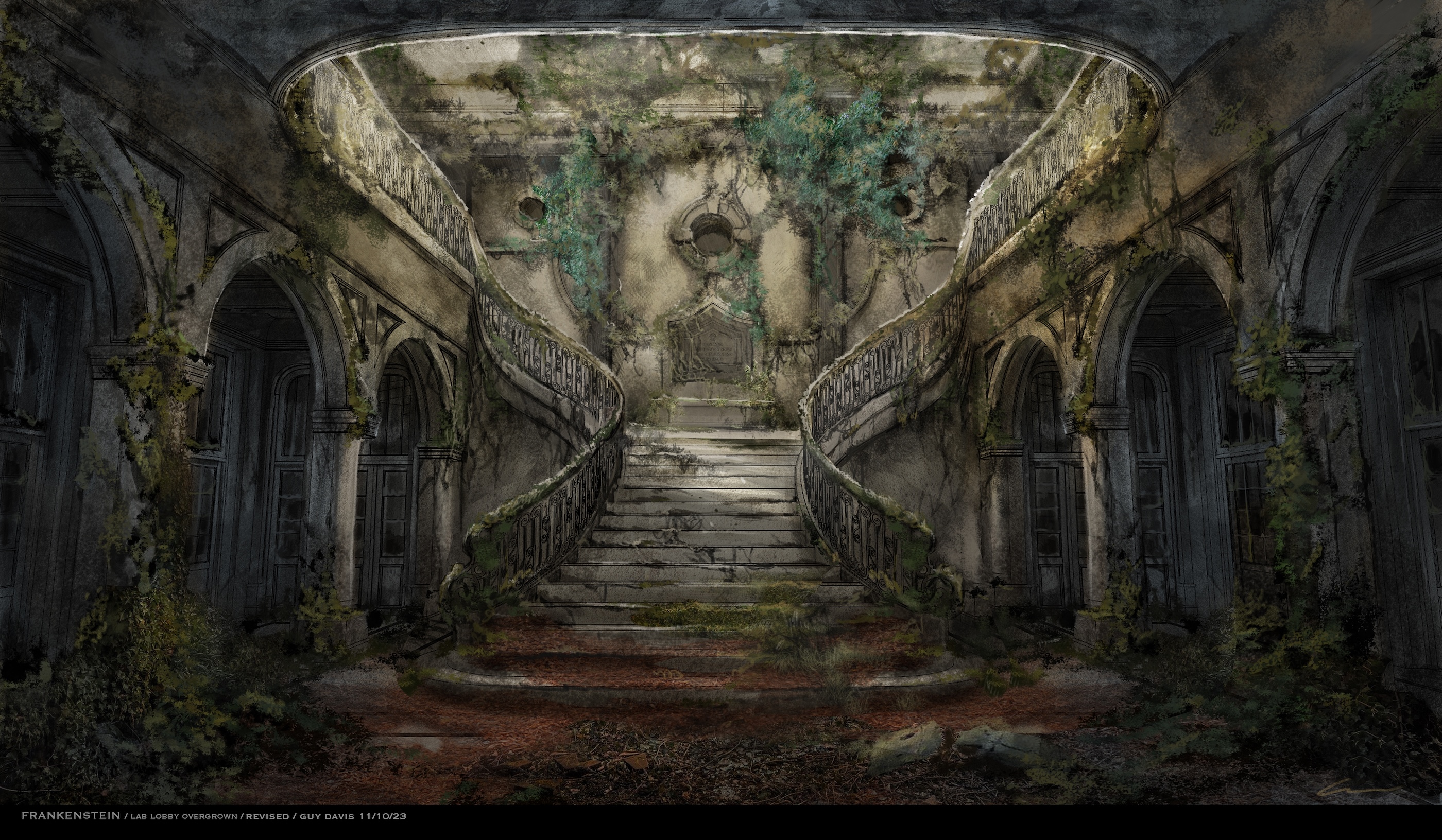
Sketch of the lobby stairs in the water tower in “Frankenstein”, courtesy of Tamara Deverell and Netflix.
Kirill: Last two questions about your favorite things. What would you consider to be the golden standard of production design?
Tamara: The one that I keep going back to in my head, and I went back there with “Frankenstein”, is the musical “Oliver!” from when I was a kid. That was so well done and magical for me. Back then, I didn’t understand what the art department did, and I know that now that they built these sets and this crazy Dickensian world, with all the aging and the rotting wood where the orphans are housed. I always go back to that. It was a pinnacle for me of the kind of sets I like, and when I was doing “Frankenstein, I thought a lot about that movie. As a little kid, it really shaped my world.
Kirill: Out of all the places that this particular movie, “Frankenstein,” took you to, what was your favourite place to eat at?
Tamara: It’s a place in Edinburgh, The Palmerston, with local Scottish food, but a new age culinary twist to it. They had amazing sourdough. Scotland is not known for great food, but this one was outstanding.
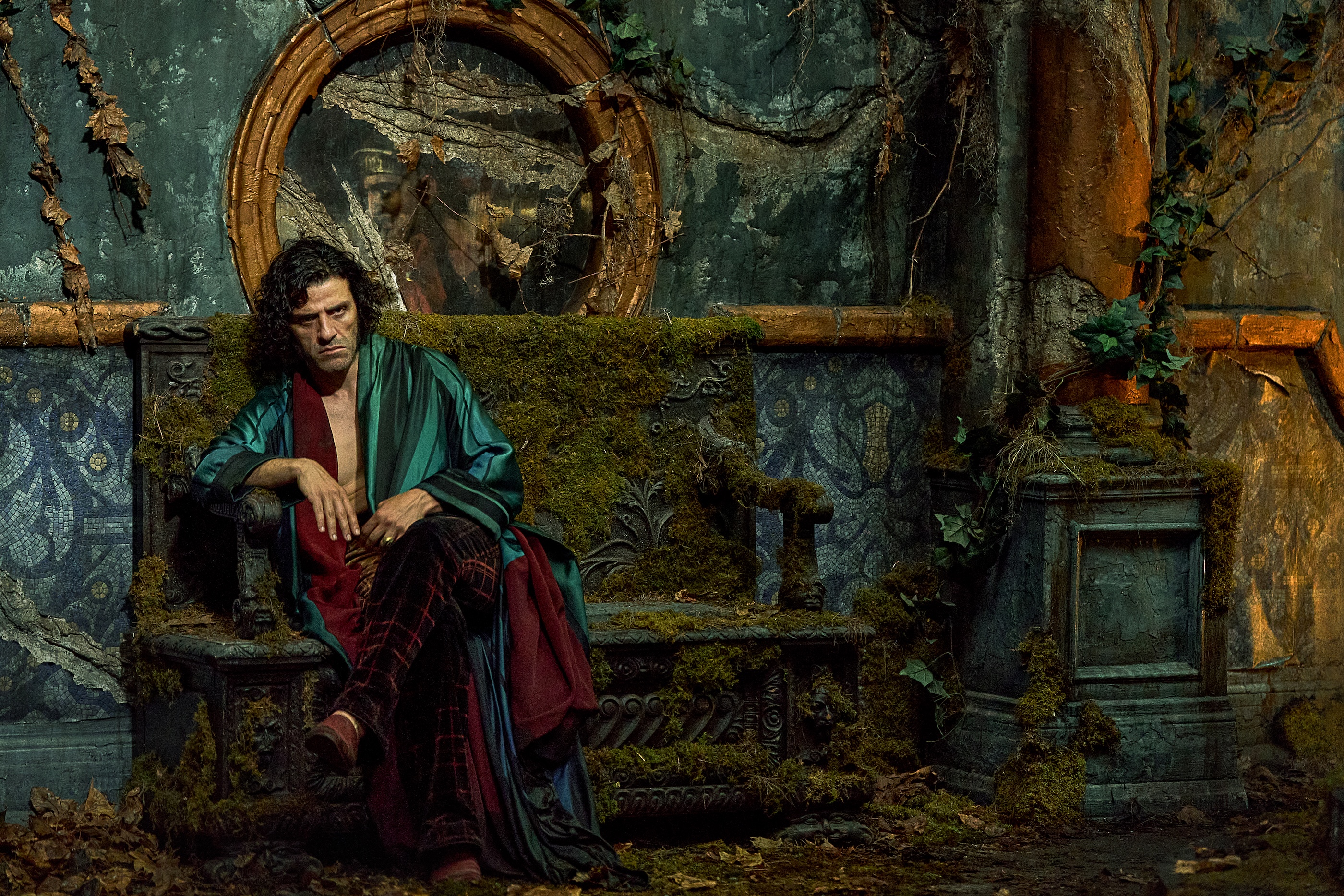
Production design of “Frankenstein” by Tamara Deverell, courtesy of Tamara Deverell and Netflix.
And here I’d like to thank Tamara Deverell for taking the time to talk with me about the art and craft of production design, and for sharing supporting materials. “Frankenstein” is available for streaming on Netflix. Finally, if you want to know more about how films and TV shows are made, click here for additional in-depth interviews in this series.
